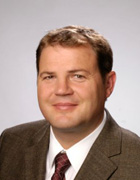
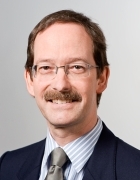
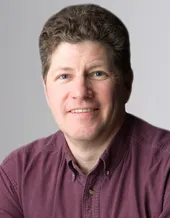
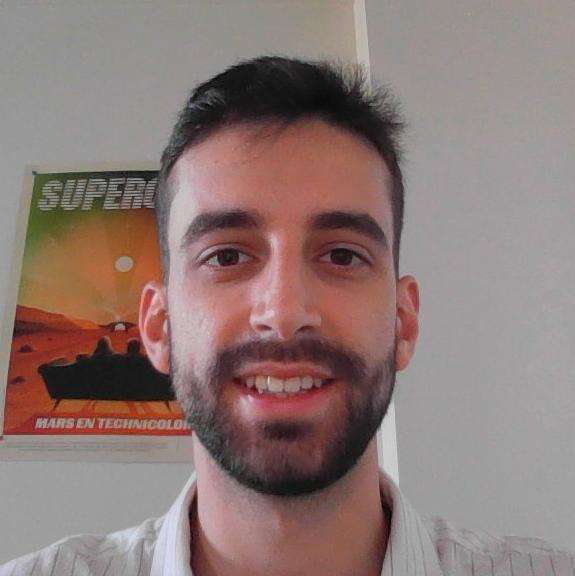
Prof. Franz Kreupl is a Professor of Electrical Engineering and Head of the Department of Hybrid Electronic Systems at the Technische Universität München (TUM) since 2011. He holds a Diploma in Physics (1994) and a Dr. rer. nat. in Physics (1999) from the University of Regensburg. His research focuses on carbon-based materials (nanotubes, nanowires, graphene) for electronic components, sensors, interconnects, and energy storage. Key contributions include pioneering work on graphenic carbon for DRAMs, 3D storage technologies, and X-ray transmission windows. Prof. Kreupl has held roles at Siemens, Infineon, Qimonda, and SanDisk, leading R&D in nanomaterials and memory systems. He is a Senior Member of IEEE, member of the German Physical Society (DPG), and contributed to the International Technology Roadmap for Semiconductors (ITRS). His awards include the Rohde & Schwarz Prize (2017), SanDisk Patent Awards (2011/2010), and the Qimonda Innovation Award (2008). Key Projects: First integrated carbon nanotube vias (2001), graphene-based DRAM (2005), graphenic carbon X-ray windows (2015). Professional Roles: Vice Chairman of the Supervisory Board of Erlus AG, reviewer for Science/Nature, and expert for EU and BMBF initiatives. His research spans nanomaterials integration into semiconductor devices, with over 100 publications, 390+ patents (110 granted), and citation index h=44.
Prof. Urs Hugentobler is a full professor at the Institute for Astronomical and Physical Geodesy at Technische Universität München (TUM), leading the Satellite Geodesy Department and the Forschungseinrichtung Satellitengeodäsie (FESG). His work focuses on precise geodetic applications of GNSS systems, satellite orbit determination, and Earth rotation studies. He holds a doctorate in astronomy from the University of Bern (1997) and has extensive experience with the ESA and international geodetic networks. Education: Master’s in theoretical physics (University of Bern, 1989), PhD in astronomy (University of Bern, 1997). Professional roles include leadership at the Bernese GPS Software group and the Wettzell Geodetic Observatory collaboration. His research emphasizes satellite gravimetry, solar radiation pressure modeling, and multi-technique geodetic observations. Research interests span satellite geodesy, GNSS applications, time/frequency transfer, and Earth system monitoring. Key contributions include advancements in Galileo and BeiDou satellite modeling, and the development of the Bernese GNSS Software. His work bridges geodesy with space science, addressing challenges in precision positioning and global reference frames. Publications highlight innovations in multi-GNSS analysis, satellite orbit determination, and Earth rotation parameters. His lab, FESG, supports TUM’s geodetic research and operational activities at Wettzell. Ongoing projects include the ESA Baltic+ and NEROGRAV initiatives, focusing on gravimetry and Earth dynamics.
Andreas Kronfeld is a Senior Fellow at the Technical University of Munich's Institute for Advanced Study (TUM-IAS) since 2014, with a primary affiliation at Fermi National Accelerator Laboratory (Fermilab) since 1988. He holds a PhD in Physics from Cornell University (1985) and has been pivotal in advancing lattice gauge theory to interpret particle physics experiments. His research focuses on Quantum Chromodynamics (QCD), leveraging high-performance computing to study hadron properties and inform searches for physics beyond the Standard Model. Key contributions include calculations of meson decay constants and form factors critical for precision experiments. Education & Career: PhD (Cornell, 1985), Postdoc at DESY (1985–1988), Fermilab staff since 1989. Active in evaluating future accelerator projects like the ILC and Project X. Research Interests: Lattice QCD applications, hadron spectroscopy, high-energy physics, and computational methods for QCD simulations. His work bridges theoretical frameworks and experimental validation. Awards: Fellow of AAAS (2013) Fermilab Exceptional Performance Award (2013) Fellow of APS (2002) Grants & Collaborations: Leads lattice QCD collaborations involving multi-institutional teams, focusing on precision calculations for B- and D-meson decays. His work supports global efforts in particle physics experiments and theory. Labs/Teams: Part of Fermilab's Theoretical Physics Department and TUM-IAS's Physics with Effective Field Theories focus group, collaborating with Nora Brambilla and international teams.
Eleni Chatzi is an Associate Professor and Chair of Structural Mechanics and Monitoring at ETH Zürich's Department of Civil, Environmental and Geomatic Engineering. She leads the ERC-funded WINDMIL project on smart life-cycle assessment of wind turbines. Her research focuses on Structural Health Monitoring (SHM), nonlinear system identification, and data-driven methods for predictive maintenance. Chatzi holds a PhD from Columbia University and has authored over 280 peer-reviewed publications. Research interests include computational mechanics for plasticity/fracture, machine learning applications in SHM, and decision-support systems for infrastructure. She serves as editor for journals such as Journal of Sound and Vibration and Mechanical Systems and Signal Processing . Notable awards include the 2020 ASCE Walter L. Huber Research Prize and EASD Junior Research Prize. Her work bridges theory and practice through projects like VOI4SH (Value of Information for Structural Health Monitoring), advancing methodologies to quantify monitoring benefits. Current research emphasizes integrating sensor data with advanced analytics for intelligent infrastructure management.
Ramón García Alarcia is a Research Associate and Doctoral Candidate at the Chair of Spacecraft Systems, Technical University of Munich (TUM), under Prof. Alessandro Golkar. He holds dual Bachelor's degrees in Aerospace and Telecommunication Systems Engineering from the Polytechnic University of Catalonia (UPC), and a Master's in Aerospace Engineering (Space Systems specialization) from ISAE-SUPAERO. His research focuses on applying Large Language Models (LLMs) to streamline space mission design, particularly in requirements generation and high-level documentation. This work aims to reduce costs and democratize access to space. Key areas include generative AI for complex systems, autonomous space systems, and federated satellite networks. Ramón teaches courses on spacecraft systems, including 'Design and Simulation of Microsatellites' and 'Systems Engineering – Advanced.' He has authored/co-authored over a dozen peer-reviewed publications, covering topics like AI-driven mission design tools, event-based cameras for situational awareness, and telecommunication network analysis. His doctoral project involves developing a prototype AI-assisted mission design tool, leveraging generative models to enhance efficiency in early-stage spacecraft planning. Collaborations span institutions like ISAE-SUPAERO and UPC, with a focus on interdisciplinary aerospace challenges.
Prof. Hans-Arno Jacobsen is a full professor at TUM's Department of Informatics, holding the Chair of Application and Middleware Systems since 2012 via an Alexander von Humboldt Professorship. He previously worked at the University of Toronto in Computer Science and Electrical & Computer Engineering. His research integrates computer science, engineering, and information systems, focusing on middleware systems, event processing, and energy-efficient ICT solutions. Notable collaborations include work with Bell Canada, IBM, and Sun Microsystems. Education: Doctoral studies across Germany, France, and the USA, followed by postdoctoral research at INRIA Paris. His applied research explores FPGA integration into middleware architectures to enhance performance and energy efficiency. Scientific Awards: Alexander von Humboldt Professorship (2012) Research Trends: Recent publications emphasize database indexing (BE-tree), adaptive content routing, and distributed SOA architectures for business processes. His work bridges theoretical computer science with industrial scalability challenges. No listed grants or advisees are explicitly mentioned in the text, though his industry partnerships suggest significant collaborative projects. His lab focuses on middleware innovations for modern hardware environments.
Prof. Abigail Morrison is a Professor and Group Leader of the Computation in Neural Circuits group at the Institute for Advanced Simulation (IAS-6), part of Forschungszentrum Jülich. Her work focuses on advancing neuromorphic computing, reservoir computing, and spiking neural network simulations. She leads development of the NEST simulator and NESTML modeling language, tools critical for large-scale brain modeling. Key research areas include: Neuromorphic hardware-software co-design Biophysically plausible neural network models GPU-accelerated simulation frameworks Multi-scale brain co-simulation techniques Applications in embodied AI and neuroscience Her lab contributes to the European EBRAINS infrastructure and has pioneered methods for parallel GPU-based network construction. Recent work explores topographic neural circuit architectures for signal processing and reinforcement learning in neuromorphic systems. Notable achievements include: Development of NESTML (v8.0+) ODE-toolbox for ODE solver selection Co-design of HNC neuromorphic compute nodes Advances in dendritic computation modeling Current efforts emphasize exascale computing readiness, neuromorphic system validation, and bridging biological plausibility with computational efficiency in neural network simulations.
Dr. Johanna Senk is a Team Leader of the Future Simulation Architectures team at the Institute for Advanced Simulation (IAS-6), part of Forschungszentrum Jülich GmbH. Her research focuses on spiking neural networks, neuromorphic computing, and high-performance computing, with an emphasis on simulation technology and reproducible science. She leads efforts to develop scalable architectures for large-scale neuronal network simulations, particularly leveraging GPU-based systems and neuromorphic hardware. Her work bridges theoretical neuroscience and computational engineering, addressing challenges such as network connectivity design, metadata standardization for scientific workflows, and optimizing simulation efficiency. Key contributions include the development of the NNMT toolbox for mean-field analysis and the beNNch framework for performance benchmarking. Senk’s team collaborates extensively on multi-area cortical models and has published extensively on topics like GPU-accelerated neuronal network construction, synaptic dynamics modeling, and the reconciliation of spiking activity with local field potentials. Her research aims to advance both computational methods and biological understanding of neuronal systems.
UnivProf. Dr. Jens Grabowski is a full professor at the Institute of Computer Science at Georg-August-Universität Göttingen, leading the Software Engineering for Distributed Systems group. His primary roles include teaching advanced courses on software engineering, software testing, and parallel computing, as well as supervising practical internships in these domains. His research focuses on software engineering methodologies, cloud computing architectures, static analysis tools, and model-driven approaches to system design. Education details are not explicitly listed, but his academic position implies a PhD in Computer Science. His work spans both theoretical contributions (e.g., defect prediction models, developer behavior studies) and applied systems (e.g., cloud resource management frameworks, testing tool development). He is actively involved in open-source software research, particularly analyzing Apache projects and Python ecosystems. Key research themes include: Model-driven cloud orchestration using standards like TOSCA and OCCI Static analysis tool evaluation and warning management Empirical studies on software evolution and developer practices Simulation-based approaches for system validation His recent publications (2021-2025) demonstrate sustained contributions to cloud computing infrastructure, static analysis tool efficacy, and software testing methodologies. Notable frameworks developed include MoDMaCAO for cloud application management and the SmartShark ecosystem for mining software repositories. Grants and advising activities are not explicitly detailed in the provided texts, but his leadership in multiple research groups implies significant involvement in academic funding and PhD supervision. He maintains collaborations in distributed systems, cloud computing, and software engineering education.
Prof. Arno Zürbes holds the position of Professor of Design Theory, Machine Elements, and Technical Mechanics at the University of Applied Sciences Bingen and Technical University Bingen since 2009. Previously, he served as a Professor of Mechanical Engineering at the Institut Supérieur de Technologie, Luxembourg (2002–2009). His professional background includes roles as Head of Testing/Calculation Department (BOMAG, 1997–2002) and Project Manager in Soil Mechanics (BOMAG, 1992–1996). He earned a Diplom-Ingenieur from the University of Kaiserslautern (1987) and a doctorate in Machine Dynamics (1992). Research interests focus on vibration analysis, mechanical systems design, materials fatigue, noise reduction, and structural mechanics. His work bridges academia and industry, addressing challenges in automotive, aerospace, and civil engineering sectors. Publications span topics like crankshaft vibration modeling, lightweight panel fatigue, and acoustics in construction machinery. Collaborations with institutions like the University of Luxembourg and industry partners (e.g., BOMAG) highlight applied research approaches.
Bernd Becker is a Professor in the Department of Computer Science at the Faculty of Engineering, University of Freiburg, Germany. He has been actively publishing in the fields of formal methods, hardware verification, and automated reasoning since the 1980s, with a sustained record of high-impact publications up to 2025. His research interests span formal verification, SAT and SMT solving, hardware testing, probabilistic systems, and embedded systems security. His work bridges theoretical advances in automated reasoning with practical applications in processor design, RISC-V verification, and safety-critical systems. The recent articles highlight a strong focus on applying formal methods to emerging challenges in hardware and AI, including POMDPs for robot planning, RISC-V security, GPU verification, and energy-efficient monitoring. There is a clear trend toward integrating symbolic computation with machine learning and probabilistic reasoning. Bernd Becker has collaborated extensively with researchers such as Ralf Wimmer, Ilia Polian, and Matthias Sauer, indicating leadership in a large, interdisciplinary research group. His work has been supported by numerous grants, though specific details are not listed in the source text. He has contributed to major conferences such as DATE, FMCAD, and SAT, and has mentored several students and researchers, though specific names are not provided. He is involved in projects related to secure scan networks, physical unclonable functions, and smart home systems.
Dr.-Ing. Peter Scholz is a Senior Research Fellow at the Institute of Fluid Mechanics , Technische Universität Braunschweig. With a PhD in Mechanical Engineering (2009) and a background in Aerospace Engineering from TU Braunschweig, he specializes in aerodynamics , active flow control , and experimental fluid dynamics , particularly using fluidic vortex generators and numerical simulations . He leads research groups and played a pivotal role in designing the university’s large water tunnel. Core Research Areas: Aerodynamics, Flow Control, Fluid Mechanics, Experimental Methods, Numerical Simulations, Aerospace Applications. His recent publications focus on supersonic flow dynamics , laminar flow control , and wake structure analysis , with methodologies spanning Large-Eddy Simulation , PIV measurements , and high-speed flow diagnostics . Though no formal awards are documented, his work is integral to Germany’s flow control research initiatives. Dr. Scholz collaborates extensively with institutions like DLR and Fraunhofer WKI, advancing sustainable propulsion and flow control technologies.
Helmuth Haak serves as a Researcher at the Max Planck Institute for Meteorology in Hamburg, Germany, where he works within the Department of Climate Variability as part of the Director's Research Group (CVR). His technical expertise as a Scientific Programmer focuses on advanced climate modeling systems, particularly the ICON (Icosahedral Non-hydrostatic) modeling framework. His primary research interests span climate modeling, ocean dynamics, climate variability, and Earth system modeling, with particular emphasis on numerical methods and high-performance computing applications. Haak's work frequently addresses ocean-atmosphere interactions, model parameterization schemes, and the computational challenges of simulating complex Earth system processes at increasingly fine resolutions. Analysis of his recent publications reveals a strong focus on model development and validation, particularly in simulating ocean circulation patterns, sea level changes, and climate feedback mechanisms. His research increasingly incorporates high-resolution modeling approaches to better capture small-scale processes that influence global climate dynamics. As a key contributor to the ICON Earth System Model development, Haak collaborates extensively with an international network of climate scientists. His technical programming expertise supports critical advances in climate modeling capabilities, particularly in ocean model components and coupled system integration.
Markus Holzbach is a Professor of Visualization and Materialization at the Offenbach University of Art and Design (HfG Offenbach), where he has been a faculty member since 2009. He leads the Institute for Materials Design (IMD) and has held significant leadership roles, including Dean and Vice Dean of the Design Department. His academic affiliations extend internationally through visiting professorships at Politecnico di Milano, MIT, RWTH Aachen, and the Berlage Institute. His research centers on material innovation , parametric design , and bio-materialization , exploring the dialogue between materials and their environments. Holzbach’s work emphasizes interdisciplinary experimentation, digital fabrication, and sustainable design practices. Projects like the Angel’s Trumpet and ECHOLOT Pavilion exemplify his integration of nature-inspired forms with interactive technologies. The 15 most recent projects reflect a consistent focus on computational design , material transfer , and sustainable architecture . Themes include responsive environments, modular systems, and the reinterpretation of natural forms through digital tools. His work spans product design, pavilions, housing, and industrial structures, often involving CNC fabrication and algorithmic modeling. Notable scientific awards include the Red Dot Design Award , BEST of SHOW ’16 at ISE 2016 , and the Music Super NAMM Award 2016 for the CURV 500® speaker. He has served on design juries such as the materialPREIS 2018 and Werk.Klasse. Markus Holzbach advises students and leads research teams at the IMD, fostering innovation in material design. His projects often receive institutional or corporate sponsorship, such as Palmengarten Frankfurt and Sonosfera. He has not received mention of formal grants, but his work is supported through collaborative and applied research funding. He directs the Institute for Materials Design (IMD) , a hub for experimental material research, student projects, and public exhibitions. The IMD has showcased work at events like the Triennale di Milano and Passagen Köln, emphasizing hands-on, interdisciplinary exploration of materiality.
Prof. Dr.-Ing. Frank Ulrich Rückert is a Professor of Fluid Energy Machines at the University of Applied Sciences Saarland (HTW Saar), where he teaches Thermodynamics, Fluid Dynamics, and Computational Fluid Dynamics. He serves as Spokesperson for the Institute for Physical Process Technology, Study Director for the Master's program in Safety Management, and Deputy Study Director for the Bachelor's program in Industrial Engineering. His work spans multiple research projects including WiPaKü, ELTROSOL, and H2-Schmiede. Dr. Rückert earned his degree in Environmental Engineering and Process Engineering with a focus on Process and Plant Engineering at BTU Cottbus, followed by a doctorate at the University of Stuttgart on technical combustion. His professional experience includes significant work at Robert Bosch GmbH at various international locations, where he developed nozzle and valve systems for liquid fuels and gases, and contributed to the pre-development of micro-steam turbines for waste heat recovery for over four years. His research focuses on modeling and simulation of physical and chemical processes, with particular expertise in Computational Fluid Dynamics (CFD), Computer Aided Engineering (CAE), digital twins, and programming mathematical models. He investigates renewable energy systems, heat transport, thermodynamics, energy storage, waste heat recovery, and high performance computing applications. His work bridges theoretical knowledge with practical engineering applications across power plant technology and grate firing systems. Dr. Rückert's recent publications demonstrate a strong trend toward digital twin technology across multiple engineering domains including hydraulic, pneumatic, electric, and mechanical systems. His work increasingly integrates artificial intelligence with simulation techniques, as evidenced by publications on AI-based positioning systems and metaverse applications for education. The research spans both fundamental engineering principles and cutting-edge applications in renewable energy systems. Honorary Golden Spike Award 2002 from the High Performance Computing Center Stuttgart (HLRS) Saarland Higher Education Teaching Award 2021 Dr. Rückert has secured funding for numerous research projects including WiPaKü (development of gearless wind energy generators), ELTROSOL (electrofilters for aerosol capture), H2-Schmiede (CO2 reduction in forging processes), and RePowerFish (renewable power supply for fish farming). He serves on the Scientific Committee for the SYMKOM conference and is actively involved with the Commercial Vehicle Cluster CVC Südwest. His external engagements include membership on the Landstuhl City Council and the Saarland Energy Innovation Initiative (LIESA). As Spokesperson for the Institute for Physical Process Technology and member of the wi-institute, Dr. Rückert leads several research teams focused on simulation and measurement technology. His work with the Wind Energy Lab demonstrates practical application of theoretical knowledge, while his involvement in the eClose project shows commitment to innovative educational approaches. The Competence Center for Fluid Machinery, Simulation and Measurement Technology serves as the hub for his interdisciplinary research activities.