M.W.A. Wijntjes is a researcher at the Faculty of Industrial Design Engineering, Delft University of Technology, where he contributes to the Perceptual Intelligence research group. His work bridges vision science, art history, and computer vision, focusing on how humans perceive visual depictions, particularly in paintings. His research interests include material perception , color and lighting interpretation , spatial and temporal cues in art , and visual cognition . He investigates how people interpret surface properties, shadows, and time of day from 2D artworks, using psychophysical experiments and computational models. The recent publications show a consistent trend in analyzing perceptual cues in historical and artistic imagery, with a focus on interdisciplinary datasets and objective annotation methods. His work often involves collaborations with experts in art history and computer vision. Scientific Contributions: Co-developed the 'Materials In Paintings (MIP)' dataset Published in high-impact perception journals Active in interdisciplinary research networks Dr. Wijntjes has supervised multiple research projects and presented at international conferences and workshops since 2013. He has not received any publicly listed awards in the provided text. He is involved in creating tools like the 'new synopter' for visual analysis and has contributed to understanding perceptual qualities in material mixtures. Research Labs and Teams: Perceptual Intelligence Lab, TU Delft Collaborator in interdisciplinary teams combining design, vision science, and art history
Jules Epstein is the Edward D. Ohlbaum Professor of Law and Director of Advocacy Programs at Temple University's Beasley School of Law. He previously served as a partner at the Philadelphia criminal defense firm Kairys, Rudovsky, Messing, Feinberg, & Lin LLP and remains of counsel there. Epstein also held roles as Director of the Taishoff Advocacy, Technology, and Public Service Institute at Widener School of Law and an adjunct professor at the University of Pennsylvania Law School from 1988 to 2006. Epstein earned his Juris Doctor from the University of Pennsylvania School of Law in 1978 and a Bachelor of Arts in Liberal Arts (Magna cum Laude, Phi Beta Kappa) from the University of Pennsylvania in 1975. His legal career began at the Defender Association of Philadelphia. His research focuses on criminal law, evidence, capital cases, eyewitness reliability, and forensic science validity. He has authored numerous articles and book chapters, including co-editing Scientific Evidence Review (2013) and The Future of Evidence (2011). Epstein has also served on national and state-level committees addressing wrongful convictions, forensic science standards, and jury instructions. Epstein's awards include the Lindback Award for Distinguished Teaching (2011), the Liberty Award (2013), and the Outstanding Faculty Award (2015). He frequently lectures on evidence law, capital case strategies, and forensic science at judicial colleges and CLE programs. He leads Temple's advocacy programs, emphasizing practical training for students in trial advocacy and forensic analysis. Epstein remains actively involved in high-stakes capital litigation and serves as an expert witness on eyewitness identification and forensic validity issues.
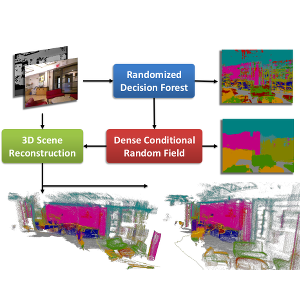
Dr. Alexander Hermans is a researcher at the Institute for Vision and Graphics, Faculty of Electrical Engineering and Information Technology, RWTH Aachen University. He is actively engaged in cutting-edge research at the intersection of computer vision, deep learning, and robotics, with a focus on 3D perception, segmentation, and anomaly detection. Research Interests: His primary research areas include Computer Vision , Deep Learning , Robotics , 3D Scene Understanding , Semantic and Instance Segmentation , and LiDAR-based Perception . His work often addresses the practical challenges of deploying vision systems in real-world robotic applications. Publication Trends: Dr. Hermans' recent publications demonstrate a strong trend towards leveraging transformer architectures for 3D and video understanding, developing robust methods for anomaly detection, and creating unified frameworks for diverse vision tasks. His research on diffusion models and self-supervised learning also highlights his engagement with the latest advancements in AI. Scientific Awards: Best Vision Paper Award at ICRA 2014 Advising and Grants: While no specific students or grants are listed, his role as a senior author on numerous publications and his leadership in creating benchmarks (like OoDIS) and software indicate a significant mentoring and project leadership role. His work is often supported by large-scale datasets and collaborations, suggesting involvement in substantial research grants and projects (e.g., the STRANDS project). Labs and Teams: He is a core member of the research group led by Prof. Bastian Leibe at RWTH Aachen, a group renowned for its work in computer vision and robotics. His research is closely tied to this lab, which focuses on developing robust, real-world applicable vision systems for autonomous agents.
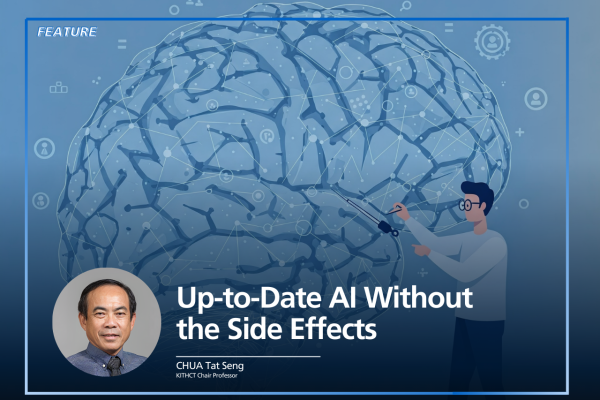
Professor Chua Tat Seng is a distinguished academic at the National University of Singapore's School of Computing, serving as KITHCT Chair Professor and Director of the NUS-Tsinghua Extreme Search Center (NExT). He also holds Distinguished Visiting Professorships at Tsinghua and Zhejiang Universities in China. PhD in Computer Science (University of Leeds, 1983) Founding Dean of School of Computing (1998-2000) Co-founded ViSenze and 6Estates technology startups His research focuses on unstructured multimodal data analytics, with particular emphasis on multimedia information retrieval, social media analytics, recommendation systems, and trustworthy AI. He has pioneered work in computational wellness and fintech applications, establishing the Lab for Media Search and leading NExT++ research initiatives. Over 300 publications in leading venues (CVPR, SIGIR, WWW, AAAI) Recipient of ACM SIGMM Technical Achievement Award (2015) Supervised 37 PhD students since 2004 Editorial leadership in ACM Transactions and IEEE Multimedia Recent work explores multimodal LLMs, knowledge editing techniques (AlphaEdit), and 3D generation frameworks, reflecting his commitment to advancing web intelligence and user empowerment.
Cihang Xie is an Assistant Professor of Computer Science and Engineering at the University of California, Santa Cruz, where he conducts cutting-edge research at the intersection of computer vision and machine learning. He co-leads the Vision · Learning · Assured Autonomy (VLAA) Lab with Professor Yuyin Zhou, focusing on building human-level computer vision systems with robust performance under distribution shifts and developing deep representation learning with minimal supervision. Dr. Xie received his Ph.D. from Johns Hopkins University under the supervision of Bloomberg Distinguished Professor Alan Yuille. During his doctoral studies, he gained valuable industry experience as a research intern at Facebook AI Research (FAIR) working with Kaiming He and Laurens van der Maaten, and at Google Brain with Quoc Le. His research spans multiple critical areas including adversarial machine learning, vision-language models, 3D vision, and robust AI systems. Dr. Xie's work often bridges theoretical foundations with practical applications, particularly in developing methods that maintain performance under challenging conditions such as distribution shifts and adversarial attacks. His recent focus has expanded to include large language model safety evaluation, high-quality image editing datasets, and efficient transformer architectures. Dr. Xie's publication record demonstrates consistent output across top-tier computer vision and machine learning venues including CVPR, ICCV, ECCV, NeurIPS, and ICML. His work shows a clear progression from foundational research in adversarial robustness to more recent explorations in vision-language alignment, 3D representation learning, and efficient model architectures. Awards and Recognition 2020 Facebook Fellowship Dr. Xie has advised numerous Ph.D. students at UC Santa Cruz and maintains collaborations with students from Johns Hopkins University and other institutions. His service to the academic community includes serving as Area Chair for major conferences including CVPR (2024/2023), ICLR (2024/2023/2022), ICML (2024/2023), ICCV (2023/2021), and NeurIPS (2024/2023/2022), as well as Senior Program Committee for AAAI 2022 and IJCAI 2021. The VLAA Lab, which Dr. Xie co-leads, has multiple openings for summer interns and visiting students, indicating active growth and research momentum. Recent lab achievements include releasing Recap-DataComp-1B, HQ-Edit dataset, and D-iGPT with impressive ImageNet performance.
Kasim Terzić is a Lecturer in the School of Computer Science at the University of St Andrews, where he conducts research and teaches in computer vision, machine learning, and robotics. He is affiliated with the Centre for Research into Ecological & Environmental Modelling and the Coastal Resources Management Group, reflecting his interdisciplinary focus on technology for environmental conservation. Education: PhD in Computer Science, University of Hamburg MSc in Information and Communication Systems, Hamburg University of Technology MSc in Global Technology Management, Hamburg University of Technology BEng (Hons) in Electronic Engineering, University of East Anglia His research interests center on computer vision and machine learning with applications in ecological monitoring and robotics. He focuses on bridging low-level pixel data with high-level semantic understanding, active vision, and the perception-action loop, often implemented on robotic platforms. He also advocates for open-source software and open data to democratize access to technology. Recent publications highlight his work in robotic manipulation of deformable objects like cloth and applications of deep learning in biological monitoring, such as fish age estimation and seal counting. His research spans computer science, ecology, and conservation, demonstrating a strong interdisciplinary approach. Professional Activities: External Examiner at Robert Gordon University (2020–2024) Invited speaker on machine learning in conservation and automated seal counting Organizing committee member for EAI MobiHealth conference Participant in public outreach events like Doors Open @ Computer Science Kasim Terzić supervises postgraduate research students and contributes to teaching in core and specialized computer science modules, including Computer Graphics, Machine Learning, programming, Operating Systems, and Databases. He is actively engaged in research output, dataset creation (e.g., Arctic charr re-identification), and promoting sustainable technology through open-source initiatives.
Dr. Martin R. Oswald is an Assistant Professor in the Computer Vision Group at the University of Amsterdam and a Senior Researcher in the Computer Vision and Geometry (CVG) lab at ETH Zurich under Prof. Marc Pollefeys. His work bridges academia and research institutions, focusing on advanced computer vision and artificial intelligence. Education: PhD in Computer Vision, Technische Universität München (2015), supervised by Prof. Daniel Cremers Masters in Civil Engineering, Universidad Técnica Federico Santa María, Chile (2008), supported by DAAD fellowship Master of Science (Diplom) in Computer Science, TU Dresden (2007) Research Interests: Oswald specializes in 3D computer vision, semantic reconstruction, learning-based shape representations, and machine learning. His work spans neural networks, video processing, motion estimation, and optimization methods, with applications in high-level scene understanding and artificial intelligence. Awards: Recipient of the DAAD fellowship during his civil engineering studies in Chile. Labs & Teams: Leads research within the CVG Group (ETH Zurich) and the Computer Vision Group (UvA), focusing on interdisciplinary projects in computer vision and geometry.
Seyoon Jeong is a Professor in the Department of Computer Science and Engineering at Korea University's College of Engineering, with an extensive research career spanning over two decades in video coding, image compression, and computer vision. His scholarly contributions demonstrate consistent engagement with cutting-edge research topics in multimedia processing. Jeong's research primarily focuses on video and image compression technologies, with recent emphasis on Video Coding for Machines (VCM), High Efficiency Video Coding (HEVC), and machine learning applications for visual data processing. His work bridges traditional signal processing with modern AI techniques, particularly in optimizing compression algorithms for both human perception and machine vision tasks. Over the past five years, his research has increasingly concentrated on feature map compression, multi-scale processing, and the development of specialized coding techniques for machine-oriented applications. Analysis of his recent publications (2020-2024) reveals a clear research trajectory toward optimizing video coding specifically for machine vision systems rather than traditional human viewing. This emerging field addresses the challenge of efficiently transmitting visual data to AI systems that process video for tasks like object detection and scene understanding, where conventional perceptual quality metrics are less relevant. His work often involves collaboration with researchers from Korean institutions and international partners, reflecting the global nature of multimedia research. While specific awards aren't documented in the provided materials, his consistent publication record in top-tier journals and conferences (IEEE Transactions, CVPR, NeurIPS) indicates significant recognition within the multimedia research community. His research has practical applications in areas including 5G video transmission, machine vision systems, and efficient visual data processing for AI applications.
Overview Pedro Hermosilla Casajus is an Assistant Professor at the Department of Computer Vision within the Faculty of Informatics at Technische Universität Wien (TU Wien). His research focuses on advanced computer vision techniques with applications in medical imaging, 3D scene understanding, and deep learning methodologies. He is actively involved in teaching multiple courses including Fundamentals of Computer Vision, Deep Learning for Visual Computing, and Scientific Research and Writing. Projects & Collaborations MyeFLOW (2020–2025) : Developing automated analysis systems for flow cytometry data. EVOCATION (2018–2022) : Real-time shape acquisition technologies. Modeling the World at Scale (2020–2026) : Large-scale 3D modeling techniques. Research Highlights His work bridges computer vision with medical diagnostics, particularly in measurable residual disease detection using flow cytometry. He explores geometric deep learning for 3D point cloud analysis and scene graph generation, advancing unsupervised semantic segmentation methods. Recent contributions include stylized Gaussian splatting for neural rendering and open-vocabulary 3D scene understanding frameworks. Teaching He teaches core courses like Fundamentals of Computer Vision and supervises student projects in medical informatics, visual computing, and human-centered computing.
Aline Frey is a Lecturer at Aix-Marseille University, affiliated with both the Psychology and Neuroscience Research Center and the INSPE (Institute of Higher Education and Teaching) of Aix-Marseille. She conducts research on the impact of musical practice and singing on children's cognitive development and academic learning. Her work focuses on understanding how rhythm, music, and creative activities influence various aspects of children's development including handwriting, reading, and cognitive skills. She teaches learning psychology to future teachers and is a member of the LaMA (Language and Music in Action) research team. Dr. Frey's research interests span cognitive development, educational psychology, and music cognition. She investigates how musical practice and rhythmic activities affect children's handwriting, reading abilities, and overall cognitive development. Her work particularly examines these relationships in children from diverse backgrounds, including those with learning difficulties such as dyslexia and those from disadvantaged socioeconomic backgrounds. Through longitudinal studies and experimental designs, she explores the potential of music and creative activities as educational interventions that can enhance learning outcomes. Her recent publications reveal a strong focus on the intersection of music, rhythm, and cognitive development in educational contexts. Frey's research demonstrates how rhythmic cues influence handwriting kinematics differently across age groups and skill levels. She has conducted significant work on choral singing and creative writing interventions for children from low socioeconomic backgrounds, showing positive impacts on cognitive development and creative thinking. Her methodological approach often combines behavioral measures with neuroimaging techniques like EEG to understand the underlying neural mechanisms. Dr. Frey is actively involved in the LaMA (Language and Music in Action) research team, where she collaborates with interdisciplinary researchers to investigate the connections between language, music, and cognitive development. Her work has practical implications for educational practices, particularly in developing interventions that leverage music and creative activities to support children's learning and development across various domains.
Tom Franken, MD, PhD, is an Assistant Professor of Neuroscience at the Department of Neuroscience, Washington University School of Medicine in St. Louis. He leads the Franken Lab which focuses on understanding how the primate brain parses complex sensory information to construct organized representations of the external world. Dr. Franken's research centers on visual perception mechanisms, particularly border ownership computation where neurons in early visual areas (V2, V4) signal which side of a border belongs to a foreground object. His work has revealed that border ownership signals are organized in columnar clusters with deep layer neurons carrying the earliest signals, supporting the hypothesis of feedback from higher brain areas. The lab employs high-channel count electrophysiology (Neuropixels) in behaving non-human primates, behavioral techniques, causal approaches, and computational methods to study these neural mechanisms. Analysis of Dr. Franken's recent publications shows a strong focus on visual scene segmentation and neural computation, with significant contributions to understanding how the brain organizes visual input into meaningful objects. His 2025 work demonstrates that brain-like border ownership signals emerge in deep recurrent artificial neural networks trained to predict natural videos, suggesting these signals are fundamental to efficient visual processing. Earlier work also extends into auditory neuroscience, particularly sound localization mechanisms. Dr. Franken's laboratory is actively recruiting researchers, indicating ongoing projects in visual and auditory neuroscience with applications to understanding conditions where perceptual organization fails, such as agnosia, schizophrenia, or autism.
Kees van Deemter is a Professor in the Department of Computing Science at the University of Aberdeen's School of Natural and Computing Sciences. With a research career spanning over three decades, he has established himself as a leading figure in Natural Language Generation and Computational Linguistics. His work bridges theoretical linguistics with practical NLP applications, with particular focus on referring expression generation, multilingual processing, and evaluation methodologies. Van Deemter's research interests center on Natural Language Generation, with special emphasis on Referring Expression Generation (REG), computational modeling of linguistic phenomena across languages, and the development of robust evaluation frameworks for NLP systems. His work spans theoretical foundations to practical applications, including logic-to-text generation, cross-linguistic studies comparing East Asian and European languages, and addressing challenges in hallucination and reproducibility in NLP. His recent publications demonstrate a consistent focus on improving evaluation methodologies in NLP, with particular attention to task-based assessments rather than purely ratings-based approaches. He has made significant contributions to understanding how linguistic features influence reference production across languages, with extensive work on Chinese and Mandarin processing. His research group has developed several important corpora including QTUNA for quantifier studies and Mtuna for Mandarin referring expressions. Co-authored the influential survey 'Computational Generation of Referring Expressions: A Survey' (2012) Developed the Mtuna corpus for Mandarin referring expressions Contributed foundational work on the incremental algorithm for referring expression generation Pioneered research on vague language generation from a game-theoretic perspective Investigated cross-linguistic differences in reference production between English and East Asian languages Van Deemter has supervised numerous PhD students who have become active researchers in NLP, including Guanyi Chen, Fahime Same, and Albert Gatt. His collaborative work extends across multiple institutions and has significantly shaped current approaches to referring expression generation and evaluation in NLP. His recent work critically examines the limitations of current evaluation practices in NLP and proposes more scientifically grounded assessment frameworks.
Saining Xie is an Assistant Professor of Computer Science at NYU Courant Institute of Mathematical Sciences and affiliated with the NYU Center for Data Science. He leads the CILVR research group and teaches courses including Computer Vision, Machine Learning, and Learning with Large Language and Vision Models at the graduate level. His educational background includes a Ph.D. and M.S. from UC San Diego's CSE Department under Zhuowen Tu's supervision, and a bachelor's degree from Shanghai Jiao Tong University. During his doctoral studies, he interned at NEC Labs, Adobe, Facebook, Google, and DeepMind. Dr. Xie's research focuses on advancing robust visual intelligence through scalable and reliable systems that interpret visual events and develop common sense understanding of the world. His work spans computer vision, machine learning, representation learning, and multimodal systems, with particular emphasis on developing architectures that bridge vision and language understanding. His publications demonstrate significant contributions to vision-language models, diffusion models, convolutional neural networks, and 3D scene understanding, with numerous papers appearing at top conferences including NeurIPS, CVPR, and ICCV, often receiving recognition as oral or spotlight presentations. Oral Presentation at NeurIPS 2024 Oral Presentation at CVPR 2024 Spotlight Presentation at ICLR 2023 Oral Presentation at ICCV 2023 Best Paper Nomination at CVPR 2020 Dr. Xie actively mentors PhD students including Ellis Brown, Fred Lu, Xichen Pan, Peter Tong, and others. He has organized major tutorials at CVPR and ECCV on Visual Recognition for Images, Video, and 3D, and his research has practical applications in visual grounding, multimodal reasoning, and robust AI systems. His lab maintains strong connections with industry research labs including FAIR, where he previously worked as a research scientist.
Professor Brian Curless is a faculty member at the Paul G. Allen School of Computer Science & Engineering at the University of Washington , where he has been since 1998. His research focuses on 3D reconstruction , computer graphics , computer vision , and computational photography , with a particular emphasis on neural rendering , human shape modeling , and augmented reality . He leads the Graphics and Imaging Laboratory (GRAIL) and co-founded the UW Reality Lab . Education : B.S. in Electrical Engineering (University of Texas at Austin), M.S. and Ph.D. in Computer Science (Stanford University) His recent work includes NeRF-based view extrapolation , real-time background matting , and generative 3D modeling using photo collections. He has contributed to CVPR , SIGGRAPH Asia , and ECCV conferences, focusing on dynamic scene animation , light diffusion , and shadow removal . Honors : Best Paper Award (3D Vision 2013) Professor Curless has taught courses in computer graphics (CSE 457/557/558) and co-developed software tools like VripPack for volumetric range image processing. He maintains collaborations with institutions like Stanford University and Microsoft , and his work spans applications in digital art preservation , virtual production , and interactive technologies .
Jens Behley is a Lecturer (Privatdozent) at the Institute of Geodesy and Geoinformation, University of Bonn, where he actively teaches graduate courses in robotics and computer vision while leading cutting-edge research in 3D perception. His work bridges theoretical advances with real-world agricultural and automotive applications, focusing on robust algorithms for unstructured environments. Behley's research centers on 3D point cloud processing, semantic segmentation, and SLAM systems, with specialized expertise in agricultural robotics for crop phenotyping and autonomous vehicle navigation. He develops novel techniques for plant organ-level analysis, fruit shape completion, and radar-based localization, emphasizing solutions that function under real-field conditions with sensor noise and dynamic changes. His methodologies frequently integrate deep learning with geometric computer vision to achieve precision in challenging outdoor settings. Analysis of his recent publications reveals a dominant trend toward neural implicit representations (e.g., Gaussian Splatting) and diffusion models for 3D scene understanding, alongside continued innovation in LiDAR processing for agricultural robotics. Key thematic clusters include plant phenotyping (18% of recent work), neural mapping techniques (24%), and robust sensor fusion for autonomous systems (31%), with growing emphasis on generative models for data synthesis. Scientific Awards Outstanding Reviewer at IEEE Robotics and Automation Letters (RA-L), 2024 Outstanding Reviewer at European Conference on Computer Vision (ECCV), 2024 Best Agri-Robotics Paper Award for “BonnBeetClouds3D...” at IROS, 2024 Best Paper Award in Workshop “Agricultural Robotics for Sustainable Futures” at IROS, 2024 Best Paper Award Second Place in Workshop “AI and Robotics For Future Farming” at IROS, 2024 Outstanding Reviewer at CVPR, 2024 Finalist Best Paper Award in Service Robotics at ICRA, 2024 Best Paper for “KISS-ICP...” by RA-L, 2023 Honorable Mention for “High Precision Leaf Instance Segmentation...” by RA-L, 2023 Outstanding Reviewer at CVPR, 2023 Outstanding Reviewer at ECCV, 2022 Finalist IROS Best Paper Award on Agri-Robotics, 2022 Outstanding Reviewer at RA-L, 2022 Outstanding Reviewer at ICRA, 2022 Outstanding Reviewer at ICCV, 2021 Faculty Award for Geodesy from Agricultural Faculty of University of Bonn, 2021 Outstanding Reviewer at CVPR, 2021 Finalist Best System Paper at RSS, 2020 Diplomarbeitspreis der Bonner Informatik Gesellschaft e.V., 2009 Behley actively mentors students through advanced coursework including “Machine Learning for Robotics and Computer Vision” and “Techniques for Self-Driving Cars,” though specific advisees aren't documented. His research is supported by extensive collaborations with Prof. Cyrill Stachniss's robotics group at Bonn, with publications appearing in top venues like RA-L, ICRA, and CVPR. Current projects focus on neural scene representations for agricultural robotics and robust localization in changing environments, with datasets like BonnBeetClouds3D establishing new benchmarks in plant phenotyping.