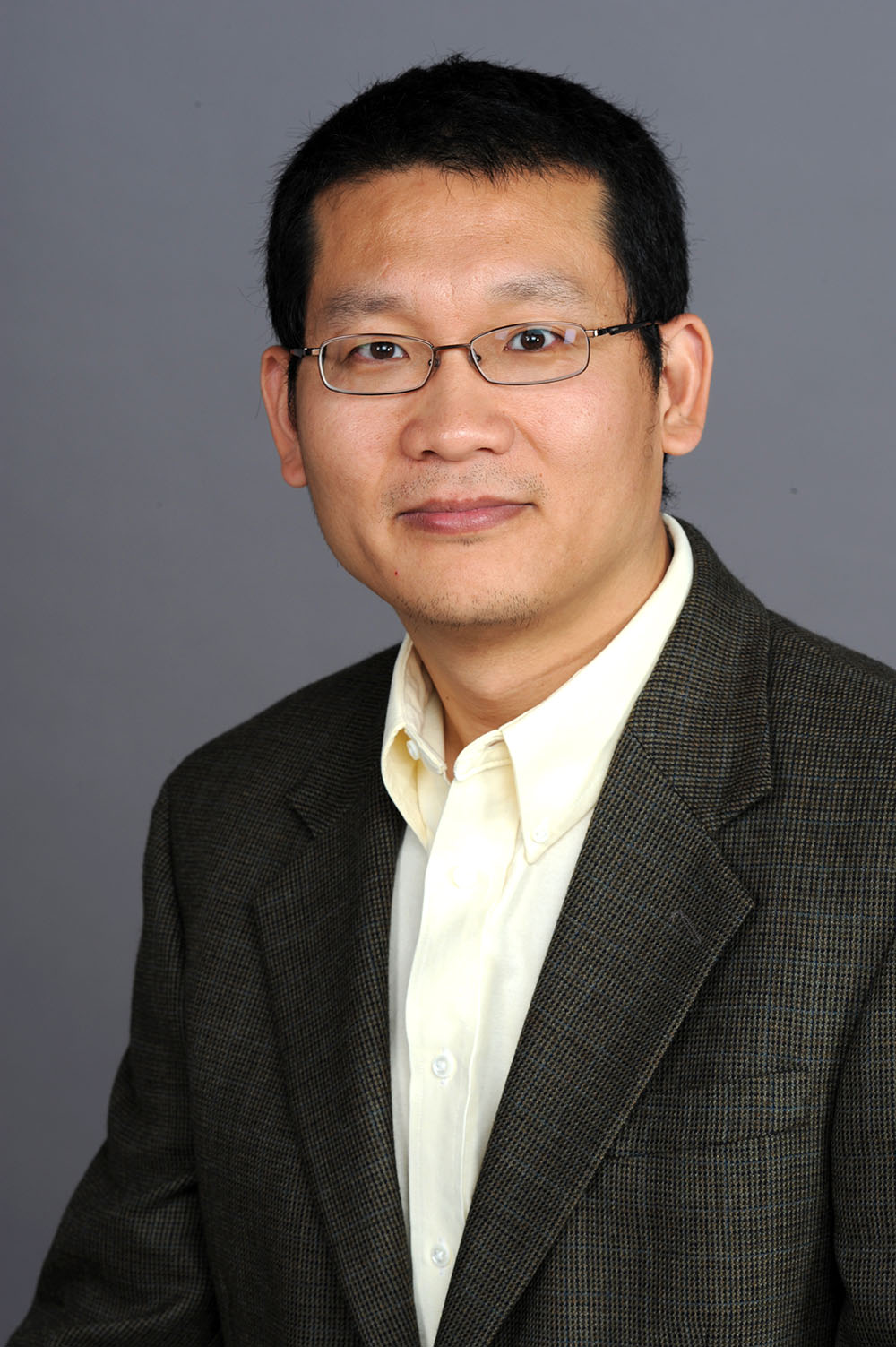
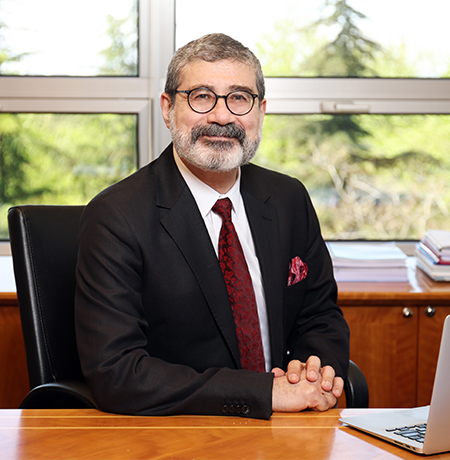
Robert Fox is an Associate Professor and ECE Associate Chair at the University of Florida's Department of Electrical & Computer Engineering. He holds a Ph.D. in Electrical Engineering from Auburn University (1986), an M.S. in Electrical Engineering from Auburn University (1981), and a B.S. in Physics from the University of Notre Dame (1972). His research focuses on analog integrated circuit design, with contributions to photonics, semiconductor technology, and high-density components. Notable awards include the UF EDGE Outstanding Faculty Award (2005) and the SRC Inventor Recognition Award (2005). His work spans cutting-edge areas like monolithic silicon photonics and 3D integrated laser technologies. While no advising or grant details are explicitly listed, his publications reflect a strong emphasis on innovation in electronics and biomedical applications.
Herman Lam is an Associate Professor in the Department of Electrical & Computer Engineering at the University of Florida. He also serves as the UF Site Director for the NSF SHREC Center, focusing on reconfigurable computing and high-performance systems. His research emphasizes heterogeneous computing, FPGA acceleration, and computer architecture design. Dr. Lam holds a PhD in Electrical Engineering (University of Florida, 1979), an ME in Electrical Engineering (University of Florida, 1974), and a BSEE from Georgia Institute of Technology (1972). His work spans academic and industrial collaboration, with notable contributions to scalable reconfigurable supercomputing (e.g., Novo-G) and FPGA-based machine learning acceleration. His research interests include high-performance heterogeneous computing, reconfigurable computing, and computer architecture optimization. He has pioneered frameworks like HgPCN for embedded point cloud inference and APR-OIS for near-sensor processing. Recent work focuses on fault-tolerant systems, FPGA-pipelined simulations, and science gateway platforms like SCAIGATE. Dr. Lam has received prestigious awards, including the 2018 Dell EMC AI Challenge for a heterogeneous computing system and the 2012 NSF Schwarzkopf Prize. He is also recognized for teaching excellence, earning the 1993 University of Florida Teaching Improvement Award. His research teams collaborate with NSF-funded initiatives and industry partners, advancing applications in computational fluid dynamics, genomics, and embedded AI systems. Key projects include the CHREC Space Processor (CSP) for hybrid space computing and virtual FPGA platforms like VirtualRC.
Sertac Karaman is a Professor in the Department of Aeronautics and Astronautics at the Massachusetts Institute of Technology (MIT). He serves as the Director of the Laboratory for Information and Decision Systems (LIDS), an interdepartmental research center focused on information sciences and decision-making. Additionally, he is Faculty Co-Director of Mission Innovation Experimental (MIx) and Faculty Director of the Amazon MIT Science Hub. His affiliations underscore leadership in cross-disciplinary research initiatives bridging academia and industry. Karaman holds a B.S. in Mechanical Engineering and Computer Engineering from Istanbul Technical University (2007), an S.M. in Mechanical Engineering from MIT (2009), and a Ph.D. in Electrical Engineering and Computer Science from MIT (2012). His research spans mobile robotics, autonomous vehicles, and embedded systems, with emphasis on aerospace applications. Key areas include: Algorithmic Foundations : Probability theory, stochastic processes, optimization, and formal methods. Technological Applications : Self-driving cars, UAVs, consumer robotics, and extended reality. Interdisciplinary Integration : Combines machine learning, computer vision, and hardware design for energy-efficient autonomy. Karaman's recent publications (2020–2023) focus on high-speed autonomous navigation, energy-efficient computing, and robust control systems. Trends include trajectory optimization for agile vehicles, AI-driven perception, and sustainability in autonomous systems. Machine learning (especially reinforcement/imitation learning) and hardware-software co-design are recurring themes. No scientific awards are explicitly mentioned in the provided text. Karaman advises a large cohort of doctoral and master's students (45+ listed), spanning robotics, control theory, and computer vision. His research is supported by collaborations with entities like the Amazon MIT Science Hub. He leads two primary research groups: AREA (Autonomy and Embedded Systems Accelerated): Focuses on high-speed autonomous navigation. LEAN (Low-Energy Autonomy and Navigation): Specializes in energy-efficient hardware-algorithm co-design.
Bryan Wilder is an Assistant Professor in the Machine Learning Department at Carnegie Mellon University (CMU). He directs the Lab for AI and Social Impact (LASI), focusing on AI methods for equitable decision-making in public health, medicine, and human services. Previously, he was a postdoctoral Schmidt Science Fellow at Harvard School of Public Health and earned his PhD in Computer Science from Harvard under Milind Tambe. His work spans algorithmic fairness, optimization, and causal inference, with funding from NSF, NIH, CDC, and Schmidt Futures. Education: PhD in Computer Science (Harvard, 2021), MSc from USC (2019), BS from UCF (2015). Key Roles: Chair of EAAMO Board, Co-PI of CDC Innovation Center at CMU, Guest Lecturer at multiple institutions. Research Interests: Integrating ML, optimization, and causal inference for high-stakes social systems. Current projects include maternal/child health, infectious disease modeling, and fair resource allocation. His lab emphasizes real-world impact through partnerships with public health organizations. Articles Trends: Recent work addresses federated epidemic surveillance, reinforcement learning for coupled systems, and auditing fairness in AI. Earlier papers focus on HIV prevention interventions, risk-sensitive optimization, and cultural evolution modeling. Awards: Includes the Schmidt AI2050 Fellowship, IFAAMAS Dissertation Award, and Siebel Scholarship. Over 30+ peer-reviewed papers in top venues (NeurIPS, ICML, AAAI). Advising & Grants: Supervises PhD students at CMU and USC. Leads projects funded by NSF, NIH, CDC, and Schmidt Futures. Collaborates with global health institutions. Labs/Teams: LASI lab develops AI tools for equitable decision-making, with applied work in maternal health, HIV prevention, and pandemic response.
Fatma Kilinc-Karzan is a Professor of Operations Research at the Tepper School of Business, Carnegie Mellon University, and holds the Frank A. and Helen E. Risch Faculty Development Chair. She is also an Associate Professor of Computer Science (by courtesy) and affiliated with the Algorithms, Combinatorics, and Optimization (ACO) PhD Program. Her career includes visiting roles at institutions like the Simons Institute at UC Berkeley and extensive professional service on editorial boards and conference committees. PhD in Industrial and Systems Engineering (minor in Mathematics) from Georgia Institute of Technology B.S. and M.S. in Industrial Engineering (minor in Information Systems) from Middle East Technical University Research Interests : Her work focuses on convex optimization , structured nonconvex optimization , and their applications in optimization under uncertainty (robust optimization, chance constraints), machine learning (preference learning from limited data), and business analytics . She explores theoretical aspects like semidefinite programming (SDP) relaxations, convex hull characterizations, and algorithmic efficiency for large-scale problems. Article Trends : Her recent publications emphasize semidefinite programs , rank-one function optimization , and chance-constrained programming with applications in portfolio optimization , healthcare , and recommender systems . Key methodologies include perspective reformulation , submodularity , and first-order algorithms . Scientific Awards : 2015 INFORMS Optimization Society Prize for Young Researchers 2014 INFORMS JFIG Best Paper Award Advising and Grants : She has advised over a dozen PhD students, many of whom won awards like the INFORMS Optimization Society Best Student Paper Prize. Her research is supported by grants including an NSF CAREER Award , ONR grant , and AFOSR grant . She collaborates with institutions like IBM and the Simons Institute.
Professor Thanos Athanasiou is a Consultant Cardiothoracic Surgeon and Professor of Cardiovascular Sciences at Imperial College London's Department of Surgery & Cancer. His academic leadership roles include Clinical Lead of Complex Aortic Disease, Academic Lead of Cardiovascular Metabonomics, and Director of the Health Informatics Module in the Health Policy MSc. He holds an MBA from Warwick University, specializing in High-Performance Teams and Change Management. His research focuses on aortic mechanobiology, integrating advanced imaging, genomics, and computational models to improve diagnostic accuracy and treatment strategies for thoracic aortic aneurysms. He pioneered risk stratification tools reducing dissection misdiagnosis, published in Int J Cardiol . Professor Athanasiou’s clinical expertise includes minimally invasive CABG and aortic surgery for elderly patients. He has supervised over 70 researchers, with 22 completed PhD/MD students, and authored/co-edited influential textbooks like Key Topics in Surgical Research and Methodology . Recipient of the ACCEA Silver Award (2021) and Best Supervisor Award, his work has influenced NICE guidelines and generated over £4.5M in research funding through 22 grants. His team developed the 'structural virality' metric, enhancing innovation diffusion in healthcare systems.
Adriana Encinas-Oropesa is a Senior Lecturer in Design and Materials at Cranfield University's Faculty of Engineering and Applied Science. She holds roles as MSc Programme Director for the Jiangsu University Cranfield Tech Futures Graduate Institute and module leader for Engineering Design and Project Management. Her expertise spans sustainable design, materials science, and circular economy principles. Education: BSc Industrial Design (Universidad Autónoma de Guadalajara), MSc Industrial and Product Design (Universitat Politècnica de Catalunya), PhD Advanced Materials (Cranfield University). Affiliations: Fellow of UK HEA, Fellow of RSA, member of CONACyT. Research Interests: Sustainable materials development, product lifecycle analysis, circular economy frameworks, and materials degradation. Her work focuses on bridging industry collaboration through innovative teaching and advancing materials testing standards. Recent studies include hot corrosion mechanisms and bio-composite fabrication. Publications: Over 40 technical papers, including contributions to corrosion science, sustainable supply chains, and bio-composite applications. Notable work includes a through-life cost analysis model for solar power investments. Awards: Recognized for contributions to materials science and education through FHEA and RSA Fellowships. Grants & Industry: Collaborations with Rolls-Royce, Siemens Energy, and the EPSRC. Leads joint programs with Jiangsu University and develops curricula for Environmental Engineering and Circular Innovation. Labs/Teams: Centre for Digital and Design Engineering, Cranfield School of Management Sustainability MSc program.
Dr. Laine Mears is a Professor in Automotive Engineering at Clemson University's International Center for Automotive Research (CU-ICAR). With over 10 years of industry experience, he leads research in intelligent machining systems, manufacturing process control, and electrically-assisted manufacturing. His research develops model-based control strategies for manufacturing processes, precision positioning systems, and novel techniques for processing difficult materials. Current projects focus on friction welding, tool wear monitoring using computer vision, and explainable AI for manufacturing quality control. Dr. Mears has established the Manufacturing Automation and Intelligence Lab that bridges fundamental research with industrial applications. He has received numerous honors including the NSF CAREER Award, IMechE George Stevenson Gold Medal, and SAE Ralph Teetor Award. Dr. Mears actively contributes to professional societies through leadership roles in ASME and SME.
Won Namgoong is a Professor in Electrical and Computer Engineering at the University at Albany (SUNY). His research centers on DSP-assisted analog/RF circuits for cognitive radios, high-speed links, and sensor systems. An NSF CAREER Award recipient, he previously worked at UT Dallas, USC, and Atheros Communications. Namgoong's innovations include digital distortion cancellation for SAW-less receivers, sub-Nyquist cognitive radios, and noise-suppressed PLL designs. He has served on editorial boards for IEEE Transactions on Circuits and Systems and the Journal of Signal Processing Systems. His industry-academia hybrid expertise bridges signal processing theory with practical RF/analog implementations.
Joachim Scholz is an Assistant Professor of AR/XR Marketing at the Goodman School of Business, Brock University. His research focuses on the transformative impact of emerging technologies like augmented reality (AR) and extended reality (XR) on marketing strategies and consumer-brand dynamics. He explores how immersive technologies reshape digital engagement, brand communication, and consumer experiences in evolving market landscapes. Scholz's core research interests include: Augmented Reality Marketing and its applications in consumer engagement Social media influence mechanisms and crisis management during viral controversies Luxury brand strategies for technology integration Narrative transportation in mixed-reality environments Ethical consumption patterns in digital contexts His scholarly publications demonstrate consistent focus on technology-driven consumer behavior, with recent works examining AR marketing frameworks (2024), social media firestorm dynamics (2024), and luxury brand AR deployments (2021). Earlier research established foundations in mixed-reality storytelling, consumer-brand relationships in mobile contexts, and theoretical models of behavioral transformation.
Dr. Jason Liu is Eminent Scholar Chaired Professor and Interim Director at Florida International University's Knight Foundation School of Computing and Information Sciences. His research focuses on high-performance modeling/simulation of computer systems/networks, with emphasis on parallel discrete-event simulation techniques. Funded by NSF, DOE, DOD, DHS, and NIH, he has developed innovations in network emulation and performance prediction. Liu holds a BS from Beijing University of Technology (1993), MS from College of William and Mary (2000), and PhD from Dartmouth College (2003). Professional experience includes positions at Dartmouth ISTS, University of Illinois Urbana-Champaign, and visiting appointments at Tsinghua University, LANL, and UPMC/LINCS. Honors include NSF CAREER Award (2006) and ACM Distinguished Scientist (2014). He serves on editorial boards of ACM TOMACS, SIMULATION, and IEEE Networking Letters, and leads organization of SIGSIM-PADS conferences. Recent publications address cache management, federated learning, and virtual network functions.
Alessia Antelmi is an Assistant Professor (RTD-A) in the Department of Computer Science at the University of Turin, where she contributes to the Parallel Computing Group. Her work bridges theoretical computer science with real-world applications in social and technological systems. Her educational background includes: Ph.D. in Computer Science with honors from the University of Salerno, focusing on diffusion phenomena modeling using high-order networks Her research centers on complex network structures and human behavior in digital environments: Develops hypergraph representation learning techniques for modeling complex relationships Investigates social influence diffusion and user behavior evolution in online networks Designs agent-based simulations for large-scale system analysis Creates tools for data literacy and knowledge graph education Her approach integrates mathematical modeling with computational experimentation to address challenges in social dynamics and information systems. Analysis of her 15 recent publications (2023-2025) reveals three dominant trends: hypergraph-based methods for complex data representation, large-scale analysis of online communities using agent-based models, and educational tools for data literacy. Her work increasingly incorporates LLMs for social network analysis while maintaining strong theoretical foundations in network science. Her scientific recognition includes: Best paper nominee at CSEDU 2023 for open data education research Best paper nominee at AsiaSim 2019 for Rust-based simulation frameworks She has secured competitive research funding: 55,200 DKK grant under the COCOONS project (2023) led by Prof. Luca Maria Aiello at IT University of Copenhagen Erasmus+ Traineeship grant (2018) to work with Prof. John Breslin at Galway's Data Science Institute Though no advisees are listed, her collaborative publications suggest active mentorship in computational research. She actively contributes to the Parallel Computing Group at the University of Turin, developing frameworks like SWH-Analytics for large-scale software analysis and HypergraphRepository for community-driven data curation.
Prof. Dr. Yusuf Leblebici is the Rector of Sabancı University (since 2018) and a renowned academic in microelectronics and integrated circuits. He holds a BS/MS from Istanbul Technical University (1984/1986) and a PhD from the University of Illinois at Urbana-Champaign (UIUC, 1990). Prior roles include faculty positions at UIUC, Istanbul Technical University, Worcester Polytechnic Institute (WPI), and Sabancı University, where he established the microelectronics program. From 2002 to 2018, he led the Microelectronic Systems Laboratory at EPFL as Chair Professor. His research focuses on high-speed CMOS ICs, VLSI design, smart sensors, semiconductor modeling, and reliability. He has authored/co-authored 9 textbooks, including the seminal CMOS Digital Integrated Circuits: Analysis and Design , with 250,000+ copies sold globally. His work spans 350+ scientific publications. Notable awards include IEEE Fellow (2009), UIUC ECE Distinguished Alumni (2020), and membership in Academia Europaea (2023). He has advised 58 PhD and over 100 MSc students. His labs and collaborations have driven innovations in nanoelectromechanical systems, biomedical SoCs, and high-speed communication circuits.
Dr. Mun-Kit Choy is a Senior Lecturer in Cardiovascular Science at Manchester Metropolitan University with honorary appointments as Senior Research Fellow at the University of Manchester and Life Member at Clare Hall, University of Cambridge. His research employs stem cell/differentiation models to investigate cardiovascular development and disease through chromosomal interactomics, epigenomics, and transcriptomics. Research interests focus on: Cardiovascular genomics and congenital heart disease mechanisms Long non-coding RNAs in cardiac development Epigenetic regulation of heart pathogenesis Stem cell-based disease modeling Publication analysis reveals consistent focus on genomic approaches to cardiovascular development, with recent emphasis on cardiac organoids, lncRNA functions, and congenital heart defect epidemiology. Awards include FHEA recognition and Clare Hall Life Membership.
Dr. Satish Puri is an Associate Professor in the Department of Computer Science at Missouri University of Science and Technology. He also serves as the Associate Chair of Research and directs the High Performance Computing Lab. His research focuses on Parallel and Distributed Computing, Spatial Big Data, and High Performance Computing for Geospatial Analytics. Current interests include analytics in cloud computing environments, nearest neighbor similarity search for shapes, and heterogeneous computing with processing-in-memory paradigms. His work is supported by NSF grants, including the NSF CAREER Award. Education: Ph.D. in Computer Science, Georgia State University (2015) B.Tech. in Computer Science and Engineering, National Institute of Technology, Durgapur (2008) Research interests span Parallel Algorithms, GPU Computing, and Geospatial Analytics. His contributions include optimizing spatial join operations, developing efficient indexing methods for large datasets, and leveraging emerging architectures like SmartNICs and DPUs. He has organized workshops such as EduHPC and contributed to educational initiatives in High-Performance Computing. Awards include the NSF CAREER Award and a Best Paper Award at SC’18. His research emphasizes communication-efficient designs for geo-spatial analytics and explores sequential decision-making algorithms for subset selection in black-box optimization. He has led projects like MPI-GIS and MPI-ACC_GIS, advancing HPC systems for geospatial computations. His lab focuses on accelerating geospatial workloads via heterogeneous and distributed computing frameworks.