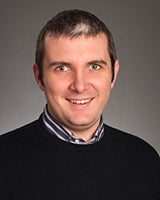
William Hobbs is the Lois and Mel Tukman Assistant Professor in the Department of Psychology at Cornell University , affiliated with the College of Human Ecology. His research intersects politics and health , focusing on social spillover effects of government actions and adaptation to life changes through computational social science methods. Teaches Data Science for Social Scientists I & II (HD/Psych 2930/2940) Co-teaches graduate course Text and Networks in Social Science Research (HD/Soc/Info 6610, Govt 6619) Research strengths include causal inference , representative sampling , and machine learning applications for small training sets. His work has been featured in The Atlantic , Science Magazine , and other major outlets. Current Data Science Lab projects analyze: Political polarization in social media Health behavior networks Government policy feedback Content moderation systems Lab hires Cornell undergraduates with R/Python experience for data management tasks through HD 4010 research credit.
Prof. Dr. Wolfgang Hillert is a leading physicist at the University of Hamburg , serving as the Bjørn-Wiik Professor for Accelerator Physics since 2016. Affiliated with the Institute of Experimental Physics under the Faculty of Mathematics, Informatics and Natural Sciences, he specializes in Accelerator Physics , Superconducting Accelerator Technology , and Free-Electron Lasers (FEL) . His work focuses on polarized electron beams, SRF cavity optimization, and gravitational wave detection methods. Education: Physics degree from University of Bonn (1987), Promotion in Atmospheric Physics (1992), Habilitation in Physics (2001) Leadership Roles: Head of Accelerator Physics Group (2016–present), Managing Director of Institute of Experimental Physics (2019–2021) Research Trends: His recent work spans superconducting RF cavities for gravitational wave detectors ( 2025 ), resonant slow extraction in electron boosters, and atomic layer deposition of superconducting thin films. Publications highlight advancements in beam dynamics , cryogenic systems , and terahertz generation . Teaching & Outreach: He has lectured on Accelerator Physics since 2002 and engaged in public science communication, including talks on Physics of Music (2005–2021) and teacher training programs at DESY. Labs & Collaborations: Leads the Accelerator Physics Group at DESY, collaborates on projects like XFELO and BGO-OD beamline , and contributes to international schools (CAS) and symposia.
Jing Yang is a full Professor and Director of MS CS Program in the Computer Science Department at the University of North Carolina at Charlotte (UNCC). She has been actively involved in data visualization and visual analytics research since joining UNCC in 2005 after completing her PhD at Worcester Polytechnic Institute. Dr. Yang earned her Bachelor's degrees in Engineering Mechanics and Computer Science from TsingHua University in 1997 and completed her Ph.D. in Computer Science from Worcester Polytechnic Institute in May 2005 under advisors Matthew O. Ward and Elke A. Rundensteiner. Her research focuses on developing visual analytics techniques for abstract data including multidimensional data, time-oriented data, networks, hierarchies, text documents, and trajectory data. She conducts design studies for application domains such as sports, bioinformatics, finance, network security, and health, while exploring fundamental visualization topics like interactions, insight management, clustering-based approaches, and animations. Her recent work emphasizes sports analytics, urban data, and multivariate time series visual analytics. Analysis of Dr. Yang's publication record reveals a strong focus on practical applications of visualization techniques across diverse domains. Her work consistently bridges theoretical visualization frameworks with real-world data challenges, particularly in transportation (taxi trajectories), sports (tennis match analysis), financial transactions, and bioinformatics. The publications demonstrate an evolution from foundational visualization techniques to increasingly sophisticated domain-specific applications. Dr. Yang has secured substantial research funding from NSF, EPA, DHS, and industry partners including Google and Bank of America. Her grants portfolio includes significant projects like TrajAnalytics (NSF, $200,950), Visualizing Event Dynamics (NSF EAGER, $75,317), and Visualizing High Dimensional Categorical Datasets (Google Faculty Research Award, $60,000), among others totaling over $4 million in research support. As an educator, Dr. Yang has taught numerous courses including Visual Analytics, Information Visualization, and Database Design. She directs the Charlotte Visualization Center and has mentored numerous students through research projects. Her collaborative approach is evident in her extensive co-authorship network spanning multiple institutions and disciplines. Current research directions include narrative animation for streaming text visualization and advanced techniques for exploring high-dimensional categorical datasets.
Xin Li is a Professor in the Department of Electrical and Computer Engineering at Duke University and serves as the Associate Vice Chancellor at Duke Kunshan University. He holds a Ph.D. from Carnegie Mellon University (2005) and has held leadership roles in research consortia like the FCRP Focus Research Center and the Center for Silicon System Implementation (CSSI). His research bridges integrated circuits , machine learning , and cyber-physical systems , with applications in autonomous driving, battery lifetime prediction, and smart buildings. Education : Ph.D., Carnegie Mellon University (2005); M.S., Fudan University (2001); B.S., Fudan University (1998) His work emphasizes robust design methodologies for analog/RF circuits, data-driven predictive modeling , and Bayesian inference for high-dimensional variation spaces. Recent publications focus on generative adversarial networks for circuit design, multi-view imputation for incomplete data, and knowledge-driven autonomous systems . He has received numerous accolades, including the NSF CAREER Award (2012) , IEEE Donald O. Pederson Best Paper Awards (2013, 2016) , and IEEE Fellow (2017) . He has served as Editor for journals like IEEE Transactions on Biomedical Engineering and as Chair for conferences including ISVLSI and CAD/Graphics.
Yinqiu He is an Assistant Professor in the Department of Statistics at the University of Wisconsin-Madison. They hold affiliations with the School of Computer, Data & Information Sciences and the Data Science Institute at Columbia University (2021-2022 postdoc). Their research focuses on developing statistical methodologies for high-dimensional and complex data, with applications in genomics, metabolomics, and network analysis. Key areas include mediation pathway analysis, asymptotic theory for U-statistics, and functional connectivity modeling. Education includes a B.S. in Statistics from the University of Science and Technology of China (2016) and a Ph.D. in Statistics from the University of Michigan-Ann Arbor (2021), advised by Professors Gongjun Xu and Xuming He. They were awarded the ProQuest Distinguished Dissertation Award (2022) and received multiple travel grants from the Institute of Mathematical Statistics and ASA. Teaching includes core Ph.D. courses like STAT 849 (Regression Analysis) and applied courses like STAT 456 (Multivariate Statistics). Current mentoring includes MS student Yuhan Zheng (now pursuing UW-Madison Ph.D.) and Xiangyi Liao (Ph.D. in Educational Psychology). Research outputs include foundational work on adaptive U-statistics testing frameworks and scalable methods for large-scale genomic data analysis. Active in methodological contributions to biostatistics, their work bridges statistical theory and computational efficiency. Recent projects involve dynamic functional connectivity estimation from fMRI data and latent space modeling in heterogeneous networks. GitHub repository 'Adaptive-U-stats' hosts open-source implementations of high-dimensional testing algorithms developed in their research.
Geoffrey Handsfield is an Assistant Professor at the University of North Carolina at Chapel Hill, holding appointments in the Department of Orthopaedics and the Lampe Joint Department of Biomedical Engineering. His work integrates advanced medical imaging, computational modeling, and mechanical experimentation to improve clinical orthopaedic medicine and understand musculoskeletal form and function. Educated at East Carolina University (B.S. Physics, Summa Cum Laude with Mathematics Minor), the University of Virginia (Ph.D., Biomedical Engineering), and as a Whitaker Postdoctoral Scholar at the University of Auckland, his research focuses on musculoskeletal MRI, computational modeling of muscle-tendon interactions, and pediatric cerebral palsy rehabilitation. Education: Ph.D., Biomedical Engineering, University of Virginia, 2014 Postdoctoral Fellowship, Auckland Bioengineering Institute, 2014–2016 (Whitaker Scholar) B.S., Physics (Summa Cum Laude), Mathematics Minor, East Carolina University, 2008 Research Interests: Dr. Handsfield’s lab pioneers techniques like ultra-high contrast MRI and 3D ultrasound to study muscle-fascia interactions, tendon mechanics, and pediatric cerebral palsy. Key areas include: Image-based computational models for personalized musculoskeletal analysis Muscle architecture and regeneration in children and athletes Biomechanical interventions for cerebral palsy rehabilitation Non-invasive muscle profiling for clinical decision-making Awards: Aotearoa Early Career Research Fellow, Robertson Foundation Early Career Research Award, Australia-New Zealand Orthopaedic Research Society Whitaker Postdoctoral Scholar Academic All-American in Swimming & Diving (2007–2008) Advising & Grants: While specific grant details are not listed, his lab’s focus on pediatric cerebral palsy and musculoskeletal modeling suggests involvement in NIH-funded or foundation-sponsored research. No formal advisees are listed in the provided data. Labs & Teams: His interdisciplinary lab collaborates with clinicians and engineers to translate imaging and modeling innovations into clinical practice, focusing on tools like the dSIR MRI sequence and high-dimensional muscle clustering for athlete and pediatric populations.
Yudong Chen is an Assistant Professor in the Department of Statistics at the University of Warwick, starting September 2024. Previously, he was an LSE Fellow (2023–2024) and a postdoctoral researcher at the London School of Economics. He holds a PhD in Statistics from the University of Cambridge (2023), with a thesis on High-dimensional Online Changepoint Detection, supervised by Richard J. Samworth and Tengyao Wang. His research focuses on changepoint detection, high-dimensional statistics, robust methods, and machine learning. Education: PhD in Statistics, University of Cambridge (2023) MA & MMath in Mathematics, University of Cambridge (2018) BA in Mathematics, University of Cambridge (2018) Teaching: University of Warwick: Module leader for ST420 Statistical Learning and Big Data (2024/25) LSE: Taught ST202/6 Probability, ST447 Data Analysis, and ST449 Artificial Intelligence His research interests span statistical methodologies including online algorithms, robust statistics, and spatial models. He has published in top journals like the Journal of the American Statistical Association and presented at venues such as the IMS Annual Meeting. Awards include the LSE Class Teacher Award (2023) and the Smith–Knight Prize (2020). Grants: Worked on EPSRC-funded research on 'Change-point analysis in high dimensions' at LSE. Labs/Teams: Engaged in collaborative projects on online changepoint detection and statistical methodologies.
Aleksandar Mijatović is a Professor of Probability at the Department of Statistics, University of Warwick, and Deputy Head of Department for Research. He was previously Chair in Probability at King's College London and Reader in Probability at Imperial College London. His research focuses on probability theory, stochastic processes, mathematical finance, numerical stochastics, and data science. He holds a Ph.D. in low-dimensional topology from Trinity College Cambridge and worked as a quantitative analyst in foreign exchange derivatives before academia. Research interests include stochastic analysis of processes with jumps, simulation methods (e.g., Monte Carlo), stochastic control, and applications in finance. He is a Fellow of the Alan Turing Institute and maintains a YouTube channel, Prob-AM, explaining his research. His work often bridges theoretical probability with practical applications in finance and data science. Key publications explore topics like reflected Brownian motion, Lévy processes, branching processes, and stochastic gradient descent. Collaborations with institutions like King’s College London and Imperial College London highlight his academic networks. His contributions span theoretical advancements and computational methodologies, with applications in risk management, option pricing, and algorithm development.
Dr. Jonathan Pillow is Professor at Princeton Neuroscience Institute, directing research at the interface of computational neuroscience and machine learning. His lab develops statistical tools for analyzing high-dimensional neural data and models how neurons process information. Research focuses on neural encoding/decoding, perceptual decision-making, and theoretical principles governing sensory systems. He received the Graduate Mentoring Award for his educational contributions.
Dr. Xianghong Jasmine Zhou is a Professor in the Department of Pathology and Laboratory Medicine at the University of California, Los Angeles (UCLA) School of Medicine . Her work focuses on integrating genomic , epigenetic , and bioinformatic approaches for non-invasive cancer detection and monitoring through cell-free DNA analysis . Principal Investigator for multiple NIH grants (R01CA246329, U01CA230705, etc.) Developed software tools ( cfSNV , cfTools , CancerDetector ) for cell-free DNA mutation and methylation analysis Co-developed CancerLocator and HCC EV ECG score for tumor-of-origin prediction and hepatocellular carcinoma monitoring Research Interests: Specializes in 3D genome modeling , epigenetic regulation , and machine learning for liquid biopsy applications. Her work bridges computational biology with clinical translation , particularly in cancer diagnostics and treatment response assessment . Scientific Contributions: She has pioneered deep learning and population-based modeling approaches for cell-free DNA deconvolution , isoform-level functional annotation , and multi-omics integration . Her 2016 Cell paper on alternative splicing has been highly influential, with over 266 mentions.
Edoardo Serra is an Associate Professor in the Department of Computer Science at Boise State University (BSU), a role he has held since July 2021. He previously served as an Assistant Professor at BSU from 2015 to 2021 and holds a joint appointment as a Senior Researcher at Pacific Northwest National Laboratory (PNNL) since June 2021. Since January 2023, he has co-directed the Computing Ph.D. Program at BSU and serves as General Chair of the 2024 ACM CIKM Conference. His academic journey includes a Ph.D. in Computer Science Engineering from the University of Calabria, Italy (2012), followed by postdoctoral positions at the University of Calabria and the University of Maryland. He also served as a Visiting Researcher at UCLA (2010–2011). His research focuses on AI/ML applications in cybersecurity, graph representation learning, generative AI, and robust AI systems. Notable projects include: NSF-funded cybersecurity curriculum integration Department of Defense-funded analysis of terrorist networks Idaho Department of Commerce precision agriculture initiatives Key research areas include graph neural networks, adversarial robustness, and ML-driven security solutions. His work has been recognized with awards such as Best Application Paper (2021) and Best Paper Award (2018). He actively contributes to professional service roles, including program chairs and editorial boards. Current projects emphasize AI ethics, generative models, and scalable graph algorithms. He advises on applied AI consulting for industry and government, focusing on model interpretability and cybersecurity implications.
Xueheng Shi is an Assistant Professor in the Department of Statistics at the University of Nebraska-Lincoln (UNL), with a joint appointment in Biological System Engineering . He joined UNL in August 2022 after postdoctoral positions at UC Santa Cruz (2020–2021) and UC Davis (2021–2022) under mentors Robert Lund, Alexander Aue, and Thomas Lee. Dr. Shi teaches graduate courses including mathematical statistics, asymptotic theory, probability, stochastic processes, and time series analysis. Research Interests: Dr. Shi's work focuses on developing statistical methodologies for time series analysis , changepoint detection , and high-dimensional data . Key applications include climate science, signal processing, and machine learning. His research emphasizes computational algorithm development and theoretical foundations across domains like climate modeling and stochastic optimization. Publications: Recent articles (2019–2024) concentrate on climate change detection , particularly global warming trends and temperature series analysis. Methodological innovations include autocovariance estimation around changepoints, comparative studies of detection algorithms, and reviews of best practices in climatological statistics. Dominant themes are changepoint techniques, environmental data diagnostics, and statistical computing. Advising: Dr. Shi actively mentors graduate students in statistics and invites prospective applicants interested in his research areas to contact him directly.
Igor Jankovic is an Associate Professor in the Department of Civil, Structural and Environmental Engineering at the University at Buffalo's School of Engineering and Applied Sciences. His research focuses on groundwater flow and contaminant transport in heterogeneous aquifers, with particular emphasis on the impact of aquifer heterogeneity on solute movement and transport modeling. Education: PhD in Civil Engineering, University of Minnesota (1997) MS in Civil Engineering, University of Minnesota (1993) BS in Civil Engineering, University of Split, Croatia (1990) His work addresses critical issues in groundwater hydrology including: Advective transport mechanisms in heterogeneous media Breakthrough curve prediction and analysis Effective hydraulic conductivity modeling Upscaling of flow and transport parameters Application of the Analytic Element Method (AEM) for complex aquifer simulations Comparison of transport models (CTRW, MRMT) in heterogeneous environments Research trends in his publications reveal a focus on: Three-dimensional heterogeneous aquifer modeling Non-Fickian and anomalous transport behavior Impact of spatial variability on contaminant migration Development of numerical algorithms for large-scale groundwater simulations Validation of stochastic transport theories against field experiments (e.g., MADE and Borden aquifers) Interaction between physical and chemical heterogeneity in reactive transport
Liqun Wang is a Professor of Statistics at the University of Manitoba, within the Faculty of Science. His research focuses on statistical inference in complex models, measurement error correction, boundary crossing problems in stochastic processes, and Monte Carlo simulation methods. He holds a prominent role in advancing methodologies for nonlinear time series analysis and Bayesian inference. His work integrates theoretical rigor with practical applications, addressing challenges in econometrics, environmental science, and public health. Notable contributions include advancements in instrumental variable estimation, second-order least squares methods, and high-dimensional covariance estimation. He actively mentors graduate students in these areas and has published extensively in top-tier statistical journals. Recent research highlights include Bayesian bias correction techniques, sparse covariance matrix estimation, and modeling SARS-CoV-2 dynamics via wastewater data. His methodologies often bridge computational efficiency with statistical accuracy, making them applicable to diverse fields such as finance, biostatistics, and environmental monitoring. Despite prolific output (over 70 publications since 1990), Dr. Wang has yet to be explicitly noted for formal scientific awards. His academic profile emphasizes methodological innovation, with a strong focus on real-world data challenges and interdisciplinary collaboration.
Lenka Zdeborová is an Associate Professor at EPFL, jointly affiliated with the School of Basic Sciences and School of Computer and Communication Sciences. She leads the Laboratory of Statistical Physics of Computational Systems, where her research bridges statistical physics, machine learning, and computational biology. Education: PhD in Physics, Université Paris-Cité (2012) MSc in Fundamental Physics, École Normale Supérieure (2009) BSc in Physics, École Normale Supérieure de Lyon (2007) Her work focuses on phase transitions in learning algorithms, high-dimensional statistics, and neural network theory. Current projects investigate fundamental limits of machine learning, dynamics of graph neural networks, and applications to biological systems. Recent publications explore attention mechanisms in transformers, neural network depth advantages, and Bayes-optimal learning. Methodological innovations include cavity methods for hypergraphs and analysis of high-dimensional inference problems. Supervises doctoral students researching statistical physics approaches to machine learning and optimization. Teaches graduate courses in data science and machine learning for physicists.