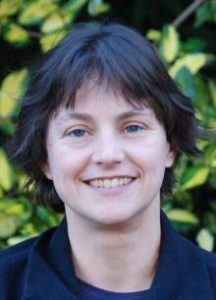
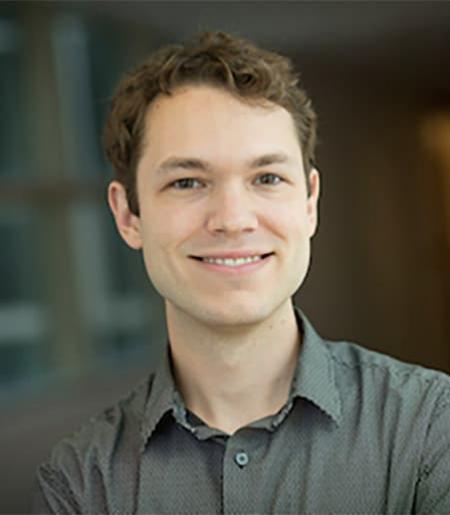
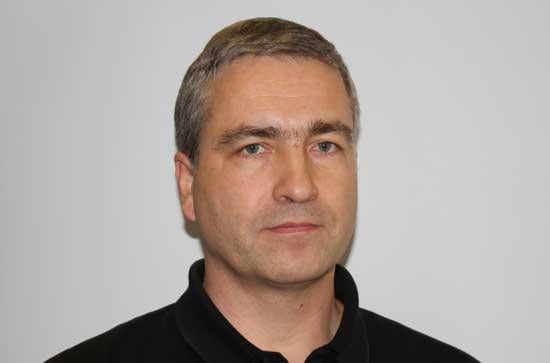
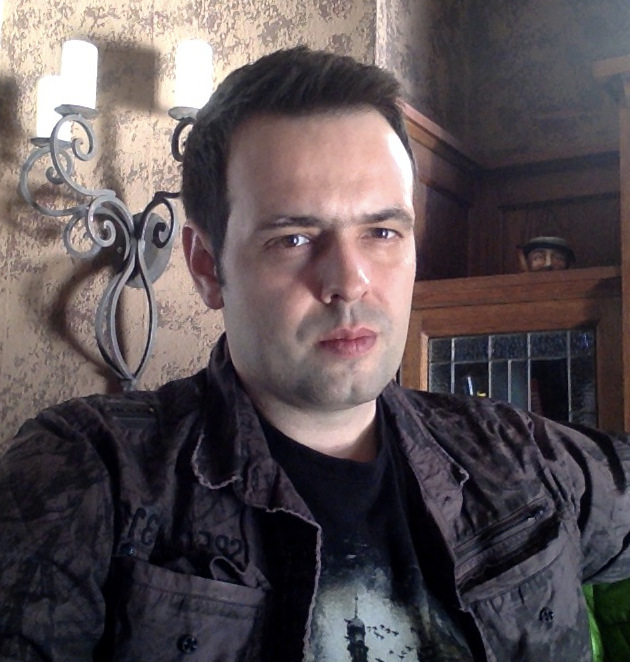
Dr. Hilary Weller is an Associate Professor in Meteorology and Computational Atmospheric Dynamics at the University of Reading's Department of Meteorology. Their research focuses on numerical methods for atmospheric modelling, including adaptive meshes, finite volume methods, and multi-fluid approaches for convection. Dr. Weller leads projects such as the Moving Meshes for Global Atmospheric Modelling initiative and contributes to the Gung Ho project for the UK's next-generation atmospheric model development. Research Interests: Numerical methods for atmospheric flows Adaptive mesh techniques Multi-fluid convection modelling Implicit time stepping for long time steps Mesh adaptation on spherical geometries Key Projects: Moving Meshes for Global Atmospheric Modelling (NERC-funded) Gung Ho: UK's dynamical core development Development of the AtmosFOAM framework for atmospheric simulations Advising: Current and past students include James Shaw (PhD on mountain representation), Amber te Winkel (implicit advection), and James Woodfield (conservative monotone schemes). Labs/Tools: Creator of AtmosFOAM, an OpenFOAM-based toolset for atmospheric modelling with capabilities in mesh redistribution and optimal transport.
Robert T. Jantzen is a Professor in the Department of Mathematics and Statistics at Villanova University, affiliated with the College of Arts and Sciences. He holds an A.B. in Physics from Princeton University (1974) and a Ph.D. in Physics from UC Berkeley (1978), specializing in general relativity. His research focuses on mathematical general relativity, cosmology, differential geometry, and Lie groups, with collaborations at institutions like the University of Rome's ICRA. He teaches applied mathematics courses, coordinates the Differential Equations with Linear Algebra course, and advocates for active learning in STEM education. Notable awards include the 2018 Mendel Award. His work bridges mathematics and physics, exploring topics like gravitoelectromagnetism and spacetime splitting. He is an honorary member of the Italian research group G9 and contributes to interdisciplinary projects, including climate change advocacy. Education A.B. in Physics, Princeton University, 1974 Ph.D. in Physics, UC Berkeley, 1978 Research Interests Focuses on general relativity, cosmological models with symmetry, observer-based spacetime analysis, gravitoelectromagnetism, differential geometry, and applications of Lie groups. His work integrates abstract mathematics with physical interpretation, often using computational tools like Maple. Publications & Talks His articles appear in journals like Classical and Quantum Gravity and General Relativity and Gravitation . Recent talks include discussions on geodesics on pasta surfaces and relativity. He has organized international conferences, including Marcel Grossmann Meetings, and co-edited their proceedings. Teaching & Innovation Develops Maple-based educational resources for calculus and differential equations. Emphasizes active learning, problem-solving, and technical communication. Maintains extensive course materials, including quizzes, tests, and grade calculators. Collaborations & Outreach Collaborates with Italian researchers on relativistic astrophysics. Engages in public science communication and progressive activism, supporting independent media and climate change initiatives. Serves as faculty advisor for student groups like the Armenian Student Organization and Villanova Against Sweatshops. Labs & Teams Active in the International Center for Relativistic Astrophysics (ICRA) network and the Vatican Observatory collaboration. Leads interdisciplinary projects blending mathematics, physics, and technology.
Damek Davis is an Assistant Professor in the Department of Mathematics at Cornell University, affiliated with both the College of Engineering and the College of Arts and Sciences. He holds a Ph.D. in Mathematics from the University of California, Los Angeles (2015). His research focuses on developing and analyzing optimization algorithms for large-scale, nonconvex, and nonsmooth problems arising in machine learning and signal processing. He emphasizes theoretical guarantees on algorithm performance and practical implementations that leverage modern computing architectures. His work spans stochastic optimization, subgradient methods, and convergence analysis, with applications to computational microscopy, phase retrieval, and decentralized systems. Recent contributions include advancements in adaptive stepsize methods, sharpness-aware optimization, and global optimality conditions for mixture models. Davis collaborates on theoretical foundations and algorithmic innovations in high-dimensional statistics, nonlinear optimization, and parallel computing. His scholarly output includes over 50 peer-reviewed articles, with recent highlights in top venues such as SIAM Journal on Optimization, Mathematical Programming, and IEEE Transactions on Signal Processing. His research is supported by grants from NSF and AFOSR, focusing on topics like robust statistical estimation and algorithmic scalability.
Manu Madhav is Assistant Professor at the School of Biomedical Engineering, University of British Columbia, and Tier 2 Canada Research Chair in Neural Circuits of Cognition and Control. His research investigates neural circuit mechanisms underlying spatial navigation and memory through rodent electrophysiology and human virtual reality experiments. Research focuses on neural computation of spatial representations, virtual reality paradigms for behavior analysis, neural manifold geometry, and translational applications for Alzheimer's detection. The lab develops novel experimental systems including the Dome VR apparatus for freely locomoting rodents and non-invasive field tracking methods. Recent publications examine path integration recalibration, neural coding strategies, and geometric representations in hippocampal circuits. Field research advances include techniques for tracking electric fish in natural habitats. Tier 2 Canada Research Chair in Neural Circuits of Cognition and Control Leads the Neural Circuits of Cognition and Control Laboratory developing neuroengineering approaches to map cognition. Research combines electrophysiology, virtual reality, computational modeling, and field biology to understand neural algorithms.
Professor Jiri Vala is a faculty member in the Theoretical Physics Department at Maynooth University, part of the Faculty of Science & Engineering. He holds a PhD from the Hebrew University of Jerusalem (2001) in quantum control of molecular dynamics. His research focuses on topological quantum computing, quantum information theory, and condensed matter physics. Key areas include Kitaev honeycomb models, topological phases, quantum lattice systems, and quantum gate optimization. His work spans theoretical studies of topological materials, non-Abelian statistics, and quantum error correction. He has contributed to foundational research in quantum control, entanglement dynamics, and supersymmetric lattice models. Notable collaborations include studies on perfect entanglers, topological nanowire networks, and quantum computing architectures. Recent articles explore topological phases on surfaces of high genus, lattice defects in Kitaev models, and quantum gate optimizations. He has presented at major conferences including the International Congress of Mathematical Physics and workshops on quantum information foundations. His research is affiliated with the Hamilton Institute at Maynooth University.
Ryan Cory-Wright is an Assistant Professor in the Analytics and Operations Group at Imperial Business School (Imperial College London) and an affiliated faculty member of Imperial-X. His research focuses on optimization, machine learning, and statistics, with applications in sustainability and decision-making. He holds a PhD in Operations Research from MIT and a BE (1st class Hons) in Engineering Science from the University of Auckland. He has received prestigious awards including the INFORMS Nicholson Prize (2020), Pierskalla Award (2020), and IBM Outstanding Technical Achievement Award (2024). His work bridges optimization and machine learning, addressing challenges in low-rank matrix completion, sparse PCA, and energy systems decarbonization. Key research areas include renewable energy investment strategies, certifiable optimization algorithms, and AI-driven scientific discovery frameworks like AI-Hilbert. He collaborates with industry partners such as OCP on large-scale projects and actively publishes in top journals like Nature Communications, Operations Research, and Mathematical Programming. Teaching responsibilities include courses on Decision Making Under Uncertainty, Optimization Models, and Data Structures/Algorithms at both undergraduate and graduate levels. He advises PhD students in analytics/operations and is involved in organizing academic events like the London Operations Research Day.
Michael Groom is an Associate Lecturer at the School of Aerospace, Mechanical and Mechatronic Engineering, The University of Sydney. He holds a BSc in Applied Mathematics (2013, University of Tasmania), MPE (2016), and PhD (2020) in Aerospace Engineering from the University of Sydney. His research focuses on computational fluid dynamics, turbulent mixing, aerodynamics, and physics-informed machine learning. He has published extensively on Richtmyer-Meshkov instability, shock wave dynamics, and CFD applications. Notable grants include the 2022 Kirby Foundation grant and 2021 Open Philanthropy Project scholarship. He is a member of The Net Zero Institute and teaches AERO3260 and AERO3560 courses. Research interests include fundamental studies of compressible turbulence and applied aerodynamics, with recent emphasis on combining machine learning with physics-based methods. Major publications span journals like Journal of Fluid Mechanics and conferences such as the Australasian Fluid Mechanics Conference. His work bridges computational modeling and real-world applications in aerospace engineering.
Francesco Quinzan is a Researcher at the University of Oxford's Department of Computer Science. His work focuses on advancing AI alignment, causal machine learning, and combinatorial optimization with applications in medical imaging, reinforcement learning, and fair algorithm design. He leads the ELSA project under Prof. Marta Kwiatkowska's supervision. Research interests include: Safe AI development through causal representation learning and doubly robust methods Optimization techniques for submodular functions and evolutionary algorithms Counterfactual analysis for bias detection in medical AI systems Reinforcement learning frameworks incorporating human feedback Recent publications (2020-2025) demonstrate contributions to: Causal feature selection and invariant predictors Scalable optimization methods for large-scale problems Robustness in multi-agent systems and diffusion-based models Algorithmic fairness in constrained feature selection Current projects involve: ELSA: Developing explainable and safe AI systems Optimal transport applications for domain correction Causal discovery from temporal data streams
Tomáš Dohnal is a Professor at the Institute of Mathematics , Martin Luther University Halle-Wittenberg, Germany. His research lies at the intersection of partial differential equations, wave dynamics, and mathematical physics, with a focus on dispersive and nonlinear PDEs, bifurcation theory, and spectral analysis. Education : PhD in Mathematics (University of New Mexico, 2005), Habilitation at Karlsruhe Institute of Technology (2012). Current Research : Waves in periodic media, surface plasmon polaritons, amplitude equations, numerical methods for nonlinear waves, and spectral problems. Recent Articles : 15 most recent works span nonlinear Schrödinger-Poisson systems, Choquard equations, quasilinear Maxwell transmission problems, bifurcation in PT-symmetric systems, and asymptotic methods in wave propagation. Grants : DFG projects on surface plasmon polaritons (2019-2022) and gap solitons in periodic structures (2014-2017). Collaborators : Alejandro Aceves, Thomas Bartsch, Guido Schneider, and others across Europe and the US. Software : Co-author of PDE2PATH , a MATLAB package for bifurcation analysis in elliptic systems. Advising : Supervised 12 PhD, Master’s, and Bachelor students, including Maximilian Hanisch (Maxwell spectral analysis) and Erik Schwob (nonlinear wave equations). His scientific awards include the Humboldt Research Fellowship (2007-2009) .
Lucas C. Wilcox is a Professor in the Department of Applied Mathematics at the Naval Postgraduate School. His research focuses on scientific computation, particularly in the numerical solution of partial differential equations with emphasis on wave propagation and uncertainty quantification using high-order methods. He is active in developing scalable algorithms for adaptive mesh refinement and parallel computing.
Rohan Sarkar is an Assistant Research Professor (postdoc) in the Mathematics Department at the University of Connecticut. His research focuses on Probability Theory, Functional Analysis, and Geometry, with emphasis on spectral theory of non-self-adjoint Markov semigroups and functional inequalities. He completed his Ph.D. in 2022 from Cornell University's Department of Operations Research and Information Engineering, under the supervision of Pierre Patie. He holds a Master's and Bachelor's in Statistics from the Indian Statistical Institute, Kolkata. His research interests bridge spectral theory and stochastic processes, exploring connections between functional inequalities and geometric properties of operators. Recent work includes studies on Lévy-Ornstein-Uhlenbeck semigroups, dimension-independent functional inequalities, and solutions to the van Dantzig problem linked to the Riemann hypothesis. His articles address topics ranging from spectral analysis of Markov processes to applications in PDEs and bioinformatics. Notable contributions include isospectral schemes for stochastic processes and clustering methods for large biological datasets.
Nicola Anselmi is a Researcher (RTD-A) at the University of Trento, affiliated with the Department of Civil, Environmental and Mechanical Engineering. He also contributes to the Department of Physics through teaching and research. His work focuses on advanced antenna array design, quantum computing applications in electromagnetics, and modular phased array architectures. Key research areas include tolerance analysis of reconfigurable systems, compressive sensing techniques for antenna characterization, and optimization strategies for next-generation wireless communication systems. He teaches courses such as Antenna Theory and Synthesis Methods (Civil Engineering) and Quantum Electromagnetics (Physics), emphasizing theoretical foundations and practical software applications. His research leverages quantum computing for solving complex electromagnetic problems and explores novel array configurations for low Earth orbit (LEO) satellite communications and urban wireless networks. Anselmi’s recent work highlights advancements in interval arithmetic for robust array tolerance analysis, Bayesian compressive sensing for microwave imaging, and self-replicating tiling techniques for modular array design. His publications span IEEE journals and conferences, addressing topics like electromagnetic environment optimization, sparse array synthesis, and AI-driven antenna optimization. Though no scientific awards are explicitly mentioned, his contributions reflect cutting-edge innovations in electromagnetics and quantum engineering. His research also involves collaborations with the ELEDIA Research Center, focusing on task-oriented reflectarrays and system-by-design methodologies for multi-scale applications. Current interests include overcoming electromagnetic challenges in smart cities and next-generation radar systems.
Benoit Merlet is a Professor at Université de Lille, specializing in advanced mathematical analysis with a focus on Calculus of Variations, Geometric Measure Theory, and Partial Differential Equations. His research explores non-convex functionals, optimal transport problems, and pattern formation in materials science. He collaborates extensively with researchers such as M. Goldman, M. Pegon, and A. Chambolle on topics ranging from Aviles-Giga functionals to liquid drop models. Merlet's work bridges theoretical mathematics with applications in physics and engineering, particularly in energy minimization problems and phase transitions. He organizes international conferences, including the Calculus of Variations in Lille series, and contributes to seminar programs on geometric measure theory and variational methods. His publications span high-impact journals like Arch. Rat. Mech. Anal. , Journal de l’École polytechnique , and SIAM J. Math. Analysis , reflecting his expertise in rigorous mathematical analysis and interdisciplinary problem-solving.
Edoardo Mainini is an Associate Professor at the University of Genova, specializing in mathematical analysis and applied mathematics. His research focuses on calculus of variations, partial differential equations, elasticity theory, optimal transport, and nonlinear dynamics. He has contributed to studies on fractional equations, material science, and stochastic processes. His work often bridges pure and applied mathematics, addressing problems in mechanics, probability, and geometric analysis. Mainini has collaborated extensively with researchers such as M. Kružík, D. Percivale, and U. Stefanelli, producing influential papers in journals like Calc. Var. Partial Differential Equations and Arch. Ration. Mech. Anal. . His recent articles (2020–2025) address topics ranging from fractional linear equations to Bayesian nonparametric models. Education includes a PhD in Mathematical Analysis from the University of Genova (2010) and a thesis on Infinite-dimensional porous media equations and optimal transportation . He has organized international conferences and seminars on variational methods and geometric structures. His research emphasizes rigorous mathematical frameworks for physical phenomena, including the linearization of elasticity models and the study of ground states in diffusion-dominated systems. Mainini’s contributions to carbon nanotube geometries and optimal transport theory have been recognized through invited talks at major events, such as the International School of Mathematics “Guido Stampacchia” . His work often explores the interplay between discrete and continuous models, with applications to materials science and geometric optimization.
Dmitriy Bilyk is a Professor in the School of Mathematics at the University of Minnesota, based in Vincent Hall. His research explores harmonic analysis, functional analysis, and discrepancy theory, with applications to geometric inequalities and optimization problems on spheres. Research focuses on: Energy minimization and measure discreteness on spheres Discrepancy theory in arbitrary dimensions Geometric inequalities and spherical optimization Publications address mathematical structures in discrepancy theory, energy optimization, and geometric inequalities, with recent emphasis on sphere packing and measure theory applications. No awards are documented in the provided text. Research is supported by NSF grants and the Simons Foundation Collaboration Grant.