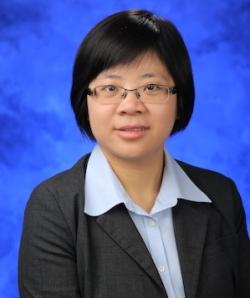
Madhuchhanda Bhattacharjee is a Professor of Statistics and Data Science with expertise in statistical methodology for large-scale data analysis. Her research focuses on Bayesian integrated modeling of omics data, spatio-temporal processes, and stochastic processes. She holds advanced degrees including a Ph.D. in Statistics from the University of Pune (2000), an M.Phil. in Statistics from the University of Pune (1995), and a Master of Statistics from the Indian Statistical Institute (1993). She is a Fellow of the Royal Statistical Society and an Elected Member of the International Statistical Institute, among other prestigious memberships. Her work addresses critical areas such as microbiome analysis, spatial epidemiology of diseases like cancer, and modeling climate variability using random matrix theory. She has contributed to the development of novel statistical methods for assessing dependence structures in spatio-temporal data and has published extensively on Bayesian approaches to integrate multi-omics datasets. Key research themes include: Inference on large-scale data using random matrices and parallel processing Bayesian modeling of heterogeneous biomedical data Spatio-temporal modeling of public health crises like the 2020 pandemic Her recent work explores statistical methods for predicting preterm birth via maternal blood multi-omics integration and spatial association measures for time series. She co-leads the Statistical Advisory Unit (SAU), providing advanced statistical methodologies for interdisciplinary research projects. Major awards include Fellow of the Royal Statistical Society (2005) and Elected Membership in the International Statistical Institute (2005). She has advised on several grants focusing on omics data integration and disease marker identification. Her contributions span academic leadership roles, including memberships in global statistical societies like the International Indian Statistical Association and the Caucus for Women in Statistics. She has pioneered statistical methodologies applied to environmental and healthcare challenges, emphasizing reproducibility in data-intensive research.