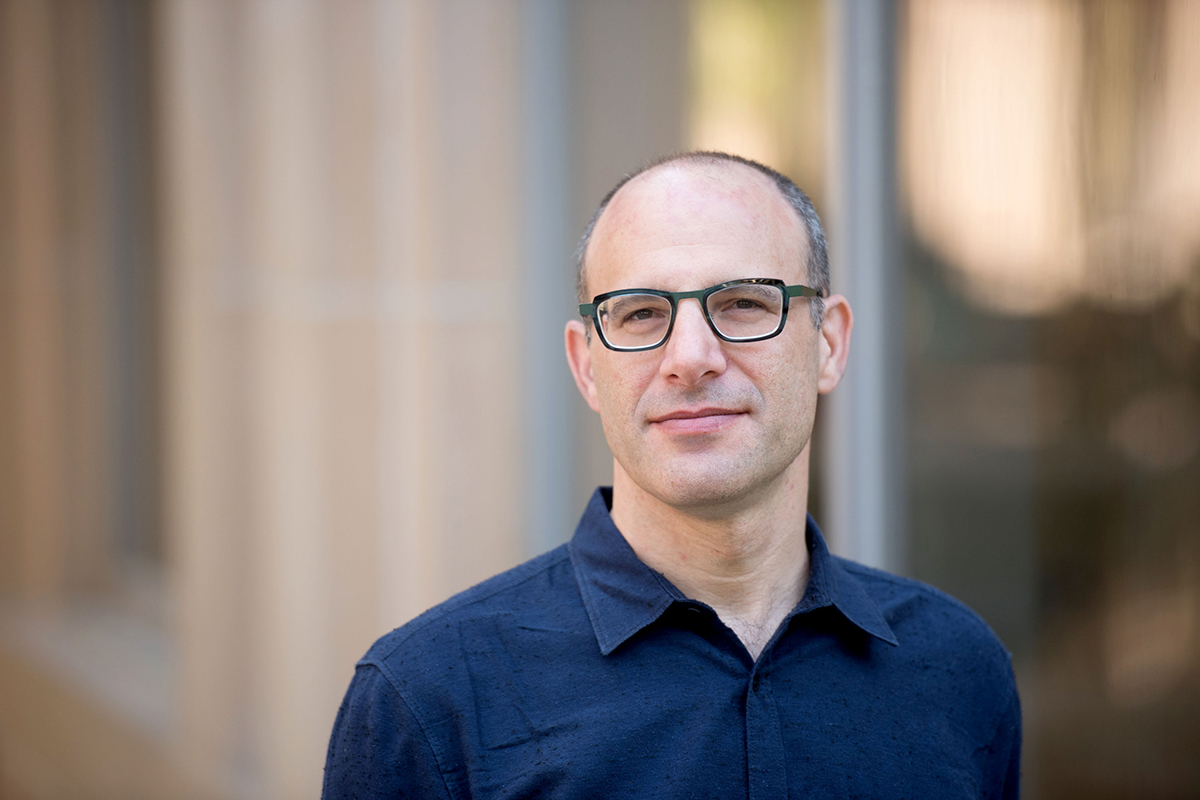
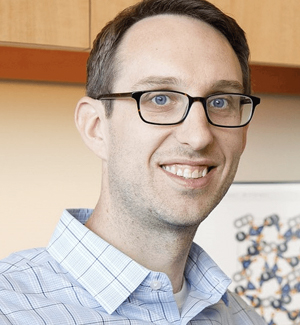
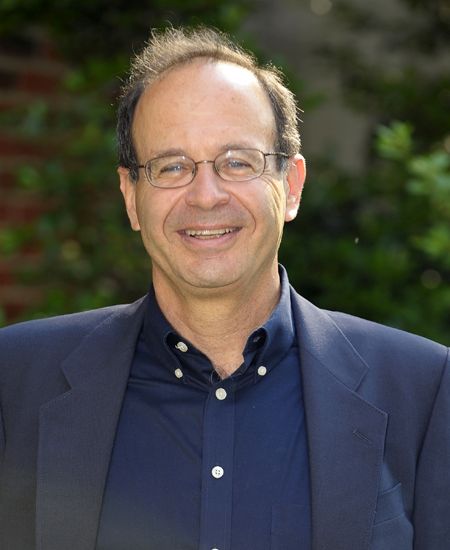
Emmett Witchel is a Professor of Computer Science at the University of Texas at Austin , with research spanning computer architecture, systems, networking, security, and privacy . His work focuses on low-level systems optimization and secure concurrent execution. Research Interests: Concurrent systems, secure execution environments, GPU integration, distributed systems. Teaching: CS 380L (Advanced Operating Systems), CS 371M (Mobile Computing). Scientific Awards: Runner-up Best Paper, ASPLOS 2013 Runner-up Award for Outstanding Research, USENIX Symposium 2012 IEEE Micro Top Pick Award 2007 ACM Honorable Mention 2004 George M. Sprowls Award, MIT EECS 2004 Recent Publications demonstrate leadership in CXL pod databases ( Tigon ), stateful serverless computing ( Boki ), SmartNIC-accelerated file systems ( LineFS ), and GPU security ( Telekine ). His work bridges hardware-software co-design and practical systems implementation.
Prof. Ivan Cole is an Adjunct Professor at RMIT University's School of Engineering, specializing in rapid materials discovery for corrosion protection, nanostructures, and additive manufacturing. His work integrates computational modeling with high-throughput experimentation, focusing on corrosion inhibitors, biocompatible surfaces, and additive manufacturing process optimization. With over 30 years of experience across academia and industry (including leadership roles at CSIRO and Centro-Svilluppo Materiali), he leads the Rapid Discovery & Fabrication Team (RDF) to advance these research areas. Research Interests: Corrosion science, microbially induced corrosion (MIC), additive manufacturing surfaces, nanostructure sensing, multiscale modeling, and green materials discovery. His team addresses challenges in corrosion protection, biomedical implants, and environmental remediation through innovative methodologies. Awards: 2019 Australian Corrosion Medal 2016 CSIRO Lifetime Achievement Award 2013 Best Paper in NACE Corrosion Supervision & Projects: Active in mentoring PhD/Master’s students across corrosion inhibition, additive manufacturing, and nanostructure design. Notable projects include developing quorum sensing inhibitors for biofilm control, in-situ monitoring for metal AM, and eco-friendly corrosion inhibitors. Labs & Collaborations: Leads the Rapid Discovery & Fabrication Team and collaborates with industry partners to translate research into practical solutions for materials durability and sustainability.
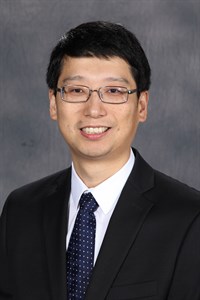
Bingzhang Chen is a Senior Lecturer in the Department of Mathematics and Statistics at the University of Strathclyde, Faculty of Science. He previously held positions as a Chancellor’s Fellow at the same institution, a researcher at the Japan Agency of Marine-Earth Science and Technology (JAMSTEC), and was affiliated with Xiamen University and Mount Allison University. His academic journey began with a PhD from the Hong Kong University of Science and Technology. Education: PhD in Trophic interactions within the microbial food web, Hong Kong University of Science and Technology (Awarded 2009) His primary research interests lie at the intersection of biological oceanography and theoretical ecology, with a strong focus on ecosystem modeling. He investigates how biodiversity, particularly of phytoplankton, influences marine ecosystem functioning such as primary production and the biological carbon pump. A central theme in his work is understanding the differential temperature sensitivity between autotrophs and heterotrophs, a question that bridges statistical analysis, metabolic theory, and Earth system science. His recent publications highlight a consistent trend in developing and applying individual-based models (e.g., PIBM 1.0), analyzing large datasets on plankton thermal responses, and studying the impacts of climate change and anthropogenic activities (like nutrient input) on marine microbial communities across diverse regions from the South China Sea to the North Pacific and Scottish coastal waters. His work often combines modeling with observational data to address fundamental ecological questions. Scientific Awards: David Cushing Prize (2015) from the Journal of Plankton Research New Century Excellent Talent (2012) from the Ministry of Education of China Dr. Chen is actively involved in research supervision, currently guiding five PhD students. He has been the Principal Investigator on multiple research projects funded by organizations such as the Leverhulme Trust, FILAMO, and the National Science Foundation. His expertise in programming (R, Fortran, MATLAB) underpins his methodological approach. He also contributes to the scientific community as an Associate Editor for the prestigious journal Limnology and Oceanography . His work is associated with efforts to understand and model invasive species dynamics, such as the spread of Sargassum muticum in Scottish waters, and he is involved with external advisory groups like the MASTS Marine Artificial Intelligence Forum.
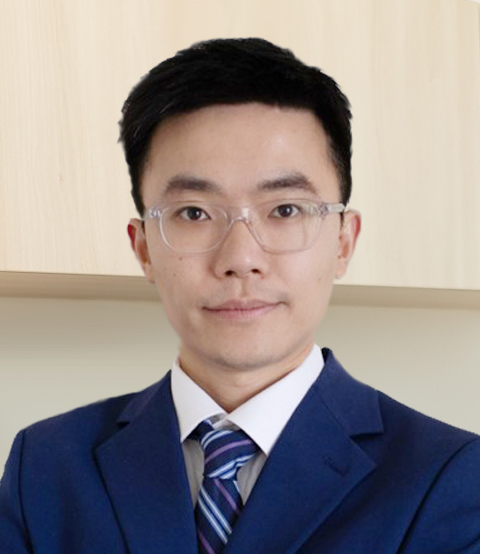
Dr. Xiaofeng Qian is an Associate Professor in the Department of Materials Science & Engineering at Texas A&M University, with joint appointments in Physics and Astronomy, and Electrical & Computer Engineering. His research focuses on materials theory , quantum materials design , and high-throughput computational discovery , particularly for 2D materials and energy applications . Educational Background: Ph.D., Nuclear Science and Engineering, Massachusetts Institute of Technology (2008) B.S., Engineering Physics, Tsinghua University (2001) Research spans first-principles electronic structure methods , nonlinear optical responses , and multiscale modeling of electronic, thermal, and ionic transport. Key areas include quantum spin Hall effect , ferroelectric switching , and machine learning for materials prediction . Notable Awards: Dean of Engineering Excellence Award (2024) Engineering Genesis Multidisciplinary Award (2024) AZZ Faculty Fellow (2021) NSF CAREER Award (2018) Manson Benedict Fellowship (2006) Actively recruiting PhD, MS, and UG researchers with backgrounds in physics, materials science, or computational methods. Collaborates extensively on hybrid AI-materials projects and topological device concepts .
Asst. Prof. OU Pengfei is an Assistant Professor and NUS Presidential Young Professor in the Department of Chemistry at the National University of Singapore, Faculty of Science. He leads the AI for Chemistry (AI4Chem) research group, focusing on computational catalysis, machine learning, and materials science. Previously, he was a Research Associate at Northwestern University and a Postdoctoral Fellow at the University of Toronto under Prof. Edward H. Sargent, and earned his Ph.D. from McGill University. Education: Ph.D., McGill University, 2020 M.Eng., Central South University, 2015 B.Eng., Central South University, 2012 Research interests include catalyst design for electrochemical reactions using ab initio DFT, molecular dynamics simulations, and AI-driven methods. He develops dynamic simulations of chemical processes under reaction conditions and machine learning tools for accelerated catalyst discovery. His work addresses challenges in energy and environmental applications such as CO2 reduction and hydrogen evolution. Notable awards include the NUS Presidential Young Professorship (2024), Climate Positive Energy Postdoctoral Fellowship (2021), and Chinese Government Award for Outstanding Self-Financed Students Abroad (2020). Labs/Teams: The AI4Chem group integrates theory-guided and data-driven approaches to advance computational catalysis, with three core research directions: (1) reaction mechanism exploration and catalyst optimization, (2) dynamic structure-performance relationships under reaction conditions, and (3) machine learning algorithms for high-throughput screening.
Natalie Enright Jerger is a Professor in the Department of Electrical and Computer Engineering at the University of Toronto's Faculty of Applied Science and Engineering. She holds the Canada Research Chair in Computer Architecture and serves as Director of the Division of Engineering Science (2023-2028). Previously, she was the Percy Edward Hart Professor (2016-2019). She received her B.S. in Computer Engineering from Purdue University (2002), and M.S./Ph.D. in Electrical Engineering from University of Wisconsin-Madison (2004/2008). Her research focuses on: Multi/many-core architectures and on-chip networks Cache coherence protocols and memory hierarchy optimization Approximate computing and sustainable systems Intermittent computing for energy-harvesting devices Hardware acceleration for machine learning Her publications demonstrate strong emphasis on networks-on-chip (NoC) innovations, including routing algorithms, deadlock handling, power-efficient designs, and topology optimizations. Recent work expands into approximate computing, mobile architectures, and ML-driven hardware design. Major Awards: Fellow of Engineering Institute of Canada (2023) McLean Senior Fellow (2019) IEEE Micro Top Picks (2016) ACM/IEEE Microarchitecture Hall of Fame (2015) Sloan Research Fellowship (2015) Canada Research Chair (current) Distinguished Scientist, ACM Fellow, IEEE She leads the NEJ research group and collaborates with industry partners including Intel, AMD, Qualcomm, and IBM. Her work is funded by NSERC, CFI, and industrial grants. She co-chaired ASPLOS 2023 and HPCA 2014, and actively promotes diversity through WICARCH and ACM initiatives.
Wan Shou is an Assistant Professor in the Department of Mechanical Engineering at the University of Arkansas. His research focuses on multiscale manufacturing, advanced materials, and functional devices, with applications in wearables, robotics, and sustainable technologies. Ph.D., Mechanical Engineering, Missouri University of Science and Technology M.S., Mechanical Engineering, University of Louisiana at Lafayette B.E., Textile Engineering, Tianjin Polytechnic University, China Dr. Shou’s research spans laser-based manufacturing , nanomanufacturing , machine learning-assisted processes , and bioresorbable electronics . He explores 3D printing of polymer and metal composites, energy materials , and functional textiles for wearable sensors and environmental applications. Recent publications highlight his work in additive manufacturing , computational design of composites, and self-powered sensing systems . His team integrates machine learning with materials discovery to optimize performance. Editor’s pick of Science Magazine US Patent 11,752,700: Data-driven material formulation US Patent 11,993,850: Laser-assisted nanoparticle printing Dr. Shou’s patents and publications reflect a commitment to innovative manufacturing and environmentally conscious design . His work bridges materials science , robotics , and smart systems , advancing energy and water technologies.
Yashar Ganjali is a Professor in the Department of Computer Science at the University of Toronto , leading the Systems and Networking Group . His research spans computer networks , with a focus on data center networking , software-defined networking (SDN) , and congestion control . Education : Not explicitly detailed, but inferred from academic rank as a Professor. His work on flow consolidation , load migration in SDN controllers , and machine learning for network management has been influential. Recent projects include FORESIGHT (2025) for ML-driven scheduling and Meta-Migration (2023) to reduce switch migration latency. Scientific Awards include the IFIP Networking 2025 Best Paper Award . Collaborations with institutions like Google (2024) and Facebook (2019) highlight his industry impact. Advisees include Sepehr Abbasi Zadeh (PhD, 2024). Current projects integrate optical packet switching and eBPF-based network augmentation , aiming to address scalability, micro-bursts, and resource allocation efficiency in cloud environments.
Steven Swanson is a Professor in the Department of Computer Science and Engineering at the University of California, San Diego, within the Jacobs School of Engineering. He is the Director of the Non-Volatile Systems Laboratory (NVSL), where he leads cutting-edge research in non-volatile memory, storage systems, and hardware-software co-design. His work bridges computer architecture, systems, and software to develop efficient, reliable, and secure computing platforms. Ph.D., University of Washington, 2006 B.S., University of Puget Sound, 1999 Dr. Swanson's research centers on non-volatile and persistent memory systems , exploring how next-generation storage technologies can transform computing. His lab develops full-stack solutions including file systems like NOVA and Orion , programming models such as NV-Heaps , and hardware prototypes like Moneta and Onyx . The team also works on low-power co-processors (e.g., GreenDroid ) and tools for debugging and verifying persistent memory programs. Research spans system reliability, security, energy efficiency, and performance optimization. His recent publications reveal a strong focus on persistent memory safety , zero-copy I/O , RDMA-based distributed file systems , and real-world characterization of Intel Optane . These works appear in top venues including ASPLOS, FAST, MICRO, and USENIX ATC, demonstrating sustained innovation in storage and systems research. Scientific honors include: NSF CAREER Award Google Faculty Award Facebook Faculty Award NetApp Faculty Fellow Dr. Swanson has advised 15 PhD students and 4 postdocs , many now faculty or senior engineers at Google, Microsoft, Intel, and other leading tech firms. He has secured significant research funding and leads major community initiatives such as the annual Non-Volatile Memories Workshop and Persistent Programming In Real Life (PIRL) . His educational efforts include innovative courses on robotic system design, quadcopter building, and modern storage systems, emphasizing hands-on learning and real-world implementation. The Non-Volatile Systems Laboratory (NVSL) under his leadership fosters a collaborative, international research environment, hosting visitors and postdocs from around the world. The lab is recognized globally as a pioneer in storage systems research and a key contributor to the adoption of persistent memory technologies in industry.
Matthew R. Jones is an Associate Professor in the Department of Chemistry at Rice University and holds the Gene and Norman Hackerman Junior Chair and Norman Hackerman-Welch Young Investigator titles. He joined Rice in 2017 after postdoctoral research at UC Berkeley under Paul Alivisatos and a PhD at Northwestern University under Chad Mirkin. His research focuses on systems-level nanoparticle assembly, plasmonics, and metamaterials, with applications in energy storage and biomedicine. Jones has pioneered techniques like 4D-STEM for catalytic nanoparticles and developed adaptive materials via strain-controlled synthesis. Education: B.S. in Materials Science and Biomedical Engineering (Carnegie Mellon University), Ph.D. in Chemistry (Northwestern University as an NSF Fellow). Key awards include the Packard Fellowship (2018) and NSF CAREER Award (2022). His lab hosts over 20 graduate students and postdocs, with notable advisees including Bukky, Zhihua Cheng, and Saxton. Research emphasizes interdisciplinary approaches: combining in-situ microscopy, ligand engineering, and computational modeling to control nanoparticle behavior. Recent studies include strain-preserved nanocatalysts (2024) and chiral superlattices (2024). Collaborations span Rice’s Center for Nanoscale Imaging Sciences and the Electrochemical Society. Lab: Jones Research Group Grants: NSF CAREER, Packard Fellowship, Rice Seed Award Publications: Over 50 peer-reviewed articles, including Science Advances (2024) and Nature Communications (2023)
Michio Honda is an Associate Professor (Reader) at the School of Informatics , University of Edinburgh , specializing in computer networking and operating systems . His research focuses on network stack designs, including co-design of networking and storage systems, and transport scale-out architectures. He has contributed to foundational work such as identifying TCP extensibility challenges (IMC'11) and pioneering TCP/IP stacks for persistent memory (NSDI'18). Research Trends : His 15 most recent works emphasize systems research, with keywords spanning Networking , Operating Systems , and High-Performance Computing . Sub-fields include TCP Protocol Design , Persistent Memory Optimization , and Network Scalability . Awards : Notable honors include the ISOC/IRTF Applied Networking Research Prize (2011), Facebook Research Award (2021), and Google Research Scholar Award (2022). Grants & Collaborations : Current projects involve network/storage co-design (HotNets'21) and transport scale-out (NSDI'21), often in collaboration with institutions like VMWare and Google.
Aman Arora is an Assistant Professor at Arizona State University's Ira A. Fulton Schools of Engineering, specializing in the School of Computing and Augmented Intelligence. His research focuses on reconfigurable computing, hardware acceleration of machine learning, and non-traditional computing paradigms like Processing-In-Memory. With over a decade of semiconductor industry experience, he bridges academic research and industrial applications. PhD in Computer Science from The University of Texas at Austin Research interests emphasize domain-specific acceleration through FPGA optimization , compute-in-memory architectures , and machine learning for CAD/EDA . His work addresses critical challenges in energy efficiency and throughput for AI workloads. Recent publications demonstrate trends toward compute-in-memory systems , FPGA-based deep learning acceleration , and sustainable hardware design . Key contributions include frameworks like SAF, CSR, and GAMA for dynamic hardware optimization. Laboratory Website: ADVENT Lab Teaching includes courses on digital hardware design (CSE 320) and advanced topics in machine learning acceleration (CEN 524/CSE 524). Industry experience informs his practical approach to research and education.
Ion Stoica is a Professor in the Electrical Engineering and Computer Sciences Department at the University of California, Berkeley, where he holds the Xu Bao Chancellor Chair. He serves as Director of the Sky Computing Lab and is Executive Chairman of both Databricks and Anyscale. His research spans distributed systems, cloud computing, and AI systems, with significant contributions to large-scale data processing frameworks. Stoica's research interests focus on the intersection of AI and systems, with emphasis on developing practical implementations that bridge theoretical foundations with real-world deployability. His work addresses fundamental challenges in distributed computing, resource management, and large-scale machine learning systems. Current projects include Ray (a distributed execution framework), vLLM (a high-throughput inference engine for LLMs), Chatbot Arena (an open platform for human preference evaluations), and SkyPilot (a framework for running AI workloads across clouds). His research output demonstrates a consistent trajectory toward more efficient, scalable systems for modern AI workloads, particularly focusing on optimizing inference performance, resource utilization, and cross-cloud deployment. Recent publications reflect growing interest in large language model serving, video generation optimization, and agent-based systems. ACM Fellow SIGOPS Hall of Fame Award (2015) SIGCOMM Test of Time Award (2011) ACM Doctoral Dissertation Award (2001) Member of National Academy of Engineering Honorary Member of the Romanian Academy Stoica has advised an extensive number of doctoral students who have gone on to prominent positions in academia and industry, including assistant professorships at Stanford, MIT, Carnegie Mellon, and other top institutions. He has received significant research funding through his lab activities and startup ventures. His research group has been particularly successful in translating academic research into widely adopted open-source technologies and commercial products. Stoica leads the Sky Computing Lab at UC Berkeley, which focuses on developing systems for AI workloads across multiple clouds. His research group has produced numerous influential open-source projects including Apache Spark, Apache Mesos, and Alluxio, which have become industry standards for large-scale data processing. The lab maintains strong industry partnerships while pursuing fundamental research in distributed systems and AI infrastructure.
Jakoah Brgoch is an Assistant Professor in the Department of Chemistry at the University of Houston. His research focuses on leveraging machine learning to design inorganic compounds for applications in LED-based lighting and superhard materials. Key areas include phosphor development, sparse data handling, and predicting material formation. He leads the Brgoch Group, which emphasizes interdisciplinary approaches combining computational modeling and experimental synthesis. Research interests span luminescent materials, crystal chemistry, and defect engineering, with a particular emphasis on optimizing phosphors for solid-state lighting and high-performance materials under extreme conditions. His work bridges data science and traditional materials discovery to accelerate innovation in optoelectronics and mechanical materials. Recent publications highlight advancements in cyan-emitting nitridation processes, machine learning-guided phosphor discovery, and understanding oxidation resistance in silicides. His team has developed novel phosphors like Na2CaZr2Ge3O12:Cr³⁺ for NIR bioimaging and explored luminescent properties of Sr-based solid solutions. Active in translational research, Dr. Brgoch collaborates on applications like smartphone-readable diagnostic platforms using nanophosphors and point-of-care testing. His lab emphasizes open science practices and has pioneered methods like Single-crystal automated refinement (SCAR) for structural determination.
Uzi Vishkin is a Professor at the University of Maryland's Institute for Advanced Computer Studies (UMIACS) and Department of Electrical and Computer Engineering, with additional affiliation in the Department of Computer Science. His work focuses on parallel computing, including the PRAM-On-Chip vision to bridge parallel algorithms and hardware. He holds a D.Sc. from Technion (1981), M.Sc. and B.Sc. in Mathematics from Hebrew University (1975/1974). Research interests span parallel algorithms, PRAM (Parallel Random Access Machine) architecture, machine learning applications, and pattern matching. His PRAM-On-Chip project aims to create a coherent computing stack for many-core processors. Vishkin has contributed to theoretical foundations and practical implementations, including the XMT architecture and compiler. He has been recognized with ACM Fellow (1996), Highly Cited Researcher (2003), and National Academy of Inventors Fellow (2024). Awards highlight his pioneering work in parallel algorithms and computing systems. Teaching spans courses like Parallel Algorithms and Mathematical Foundations for Computer Engineering. He emphasizes parallel algorithmic thinking in education and has developed teaching materials for high school and university levels. Key projects include the XMT architecture, simulations, and tools for parallel programming. His work integrates algorithmic theory with hardware design to address programming challenges in many-core systems.