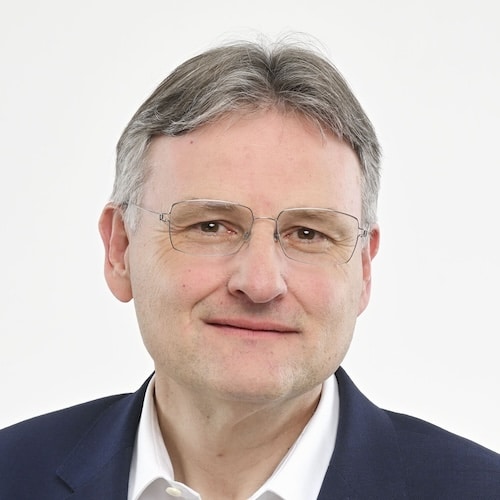
Bhaskar Reddy Sudireddy is an Associate Professor in the Department of Energy Conversion and Storage at the Technical University of Denmark (DTU). His research focuses on advanced materials for energy technologies, including solid oxide fuel cells, electrocatalysts, and ceramic processing. He contributes to UN Sustainable Development Goals related to affordable and clean energy (SDG 7) and industry innovation (SDG 9). His work emphasizes the development of high-performance electrodes, metal-supported solid oxide cells, and gas sensors. He leads projects on eco-friendly fabrication methods for energy storage systems and collaborates on piezoelectric materials sintered in humid air. His research group, Applied Ceramics and Processing, explores novel ceramic materials for applications in renewable energy and environmental monitoring. Advises five PhD students working on projects like high-temperature electrolysis cells and antiferroelectric materials. Supervises interdisciplinary research spanning electrochemistry, materials synthesis, and device fabrication. Located at DTU’s campus in Kgs. Lyngby, Denmark, with extensive international collaborations.
Arthur Merkel is a Research Fellow in the Department of Food Science at the University of Copenhagen, specializing in membrane and electromembrane processes for the dairy industry. His research focuses on electro-chemical membrane systems, including electrodialysis and bipolar membrane electrodialysis, for applications in dairy processing and sustainable food production. His primary research interests include membrane technology for dairy science, particularly in the areas of whey processing, electro-acidification, and demineralization. He investigates fouling and scaling of ion-exchange membranes and promotes green and sustainable science in food engineering. His work bridges fundamental electrochemical processes with industrial dairy applications. Recent publications (2021-2025) demonstrate a strong trend in applying electrodialysis and bipolar membrane electrodialysis to dairy streams such as skim milk and whey, with a focus on improving process efficiency, valorizing byproducts, and addressing challenges like fouling and scaling. His research integrates experimental and modeling approaches to optimize membrane processes for sustainable dairy production. Merkel actively contributes to the scientific community through peer review for several journals: Desalination Separation and Purification Technology Future Foods He is a member of the European Membrane Society and the Czech Membrane Platform, and has participated in conferences including EuroMembrane 2022 and the European Membrane Summer School (2024).
Frede Blaabjerg is a Professor at Aalborg University (AAU Energy) , affiliated with the Faculty of Engineering and Science . Since 1998, he has pioneered power electronics research in applications such as wind turbines , photovoltaic (PV) systems , reliability engineering , and Power-2-X technologies. Education : PhD in Electrical Engineering (1995, Aalborg University) Honorary Degrees : Honoris Causa at University Politehnica Timisoara (2017) and Tallinn Technical University (2018) His research focuses on power electronics control , system optimization , and reliability for renewable energy and electric mobility . Recent work includes grid-forming converters , virtual synchronous generators , and smart EV charging systems. Key publication trends span 15+ years , with over 3,733 peer-reviewed articles and 900+ journal papers in power electronics , renewables , and energy storage . Notable book series: Control of Power Electronic Converters and Systems (4 volumes, Elsevier). Scientific Awards : 46 IEEE Prize Paper Awards 2020 IEEE Edison Medal 2019 Global Energy Prize 2014 IEEE William E. Newell Power Electronics Award Leadership Roles : Editor-in-Chief, IEEE Transactions on Power Electronics (2006–2012) Chairman, Danish Council for Research and Innovation Policy (2020–) President, IEEE Power Electronics Society (2019–2020)
Wenjing Zhang is a Professor and Head of the Section for Water Technology and Processes at the Department of Environmental and Resource Engineering, Technical University of Denmark (DTU). She is also affiliated with the DTU Microbes Initiative, contributing to interdisciplinary research in sustainable water technologies and environmental nanomaterials. Professor, DTU Head of Section, Water Technology & Processes Member, DTU Microbes Initiative Her research spans nanofiber technology, electrospinning, membrane processes, and catalytic materials for environmental applications. She focuses on innovative solutions for water purification, plastic waste recycling, CO2 photoreduction, and green hydrogen production, aligning with UN Sustainable Development Goals. The recent publications highlight a strong trend in advanced materials for environmental sustainability, particularly electrospun nanofibers, heterojunction photocatalysts, and ceramic membranes. These works emphasize applications in microplastic degradation, solid oxide cells, and chemical recycling of plastics, reflecting a multidisciplinary approach combining materials science, electrochemistry, and environmental engineering. Researcher at DTU Energy becomes honorary professor in China Wenjing Zhang actively supervises PhD students and leads multiple research projects, including EU and nationally funded initiatives on decentralized wastewater treatment and biocatalytic membrane systems. She collaborates with leading researchers and institutions, securing funding for high-impact environmental technologies. Her lab focuses on nanostructured membrane design and advanced fabrication of porous ceramics for industrial and municipal applications.
Professor Riikka Rinnan (University of Copenhagen) is a leading expert in ecosystem-atmosphere interactions, focusing on volatile organic compounds (VOCs) in Arctic environments. Her groundbreaking discovery of VOCs in permafrost has advanced climate prediction models, revealing complex interactions between climate warming, insect herbivory, microbial activity, and vegetation shifts. Current position: Professor, Department of Biology, University of Copenhagen Major research themes: Permafrost VOCs, Arctic climate feedbacks, plant-insect-microbial interactions International collaborations: China, Germany, Russia Her work combines field expeditions in extreme Arctic conditions with laboratory experiments and advanced VOC analysis. Climate warming experiments show VOC emissions could increase 40-fold with combined warming and insect attacks, while Arctic soils may act as unexpected VOC sinks. Key publications appear in Nature Communications , Nature Geoscience , and Global Change Biology . Riikka Rinnan has received prestigious awards including the EliteForsk Award, European Research Council Consolidator Grant, and Sapere Aude Research Leader. She leads international research teams, advises five PhD candidates, and supervises four postdocs (including two Marie Curie fellows). Her Siberian expedition plans demonstrate commitment to real-world scientific challenges.
Pooya Davari is a Professor and Head of the Section for Applied Power Electronic Systems at Aalborg University , Denmark. He leads the EMI/EMC in Power Electronics Research Group and serves as Vice Chair of the Energy Efficiency Mission. His research focuses on electromagnetic interference (EMI) and harmonic mitigation in power electronic systems, with over 200 publications and significant contributions to renewable energy integration. Education: B.Sc. and M.Sc. in Electronic Engineering (2004, 2008), Ph.D. in Power Electronics from Queensland University of Technology (2013) Prior Roles: Lecturer at QUT (2013–2014), Postdoc at AAU (2014) Research Interests: Harmonic and EMI analysis in grid-tied converters High power density converter design Signal processing for converter modeling Reliability of power electronic systems Article Trends: Recent work emphasizes EMI/EMC in renewable energy systems, wide bandgap semiconductors (SiC/GaN), and reliability modeling for EVs and hydrogen production via electrolysis. Sub-fields include converter topologies, grid integration challenges, and AI-driven diagnostics. Scientific Awards: Equinor 2022 Prize (Denmark’s oldest engineering award) IEEE EMC Society Young Professional Award (2020) World’s Top 2% Highly Cited Scientist (Stanford, 2021–2025) Multiple best paper awards (IEEE, Applied Sciences, etc.) Grants & Editorial Roles: Recipient of grants from Innovation Fund Denmark (Supra-EMC project), Horizon Europe (SOLARIS), and industry partnerships. Serves as Area Editor for IEEE Transactions on Transportation Electrification , Associate Editor for IEEE Transactions on Power Electronics , and Editor-in-Chief of Circuit World Journal (2020–2025). Labs & Standards: Coordinator of the EMC Laboratory at Aalborg University. Member of IEC standardization Working Groups 6 and 8 (TC77A), focusing on EMC strategies for power grids.
Peter Vang Hendriksen is a Professor and Head of Section at the Department of Energy Conversion and Storage, Technical University of Denmark. He holds a Ph.D. in Materials Research (1993) from the same institution, focusing on nano-sized particles and particulate systems. His research emphasizes solid-state electrochemistry, solid oxide fuel cells, and electrolysis technologies, contributing to UN Sustainable Development Goals related to clean energy. He supervises multiple PhD projects on advanced materials for energy conversion and storage systems. He has authored over 416 publications and actively contributes to conferences and editorial work, including co-editing the Fuel Cells journal (2020-2021). His work addresses challenges in high-temperature materials durability, electrolysis efficiency, and green ammonia production. He has pioneered advancements in oxide compound stability and interconnect materials for solid oxide cells. Current projects include eco-friendly solid oxide electrolysis cell fabrication and novel ammonia synthesis routes. He collaborates internationally on materials characterization and techno-economic assessments of renewable energy systems.
Jesper Nygård is a Professor at the Niels Bohr Institute, University of Copenhagen, specializing in solid state physics, nanophysics, and quantum technology. He leads the Center for Quantum Devices and has held leadership roles including Head of Section for Nanophysics and Solid State Physics (2007–2017) and Deputy Head of Research (2017–present). His research focuses on hybrid superconductor-semiconductor systems, nanowire-based quantum devices, and low-temperature quantum transport. PhD in experimental nanophysics (2000) and MSc/BSc in physics/mathematics from the University of Copenhagen International research experience at Harvard, Berkeley, and CNRS Grenoble His work bridges nanofabrication, quantum electronics, and Kondo physics, with recent publications analyzing nanowire junctions, microwave dynamics in superconducting systems, and heat dissipation mechanisms. He co-founded multiple technology startups and served as a Danish astronaut candidate (2005–2008). Scientific Awards: Member of the Royal Danish Society of Letters Member of the Danish Academy of Sciences
Farshad Moradi is a Professor at the Department of Electrical and Computer Engineering at Aarhus University, specializing in neuromorphic engineering, spintronics, and biomedical device design. His work focuses on integrating advanced materials and circuits for applications in neural interfaces, energy-efficient computing, and wireless biomedical systems. Research Interests include: Spintronic-based neuromorphic computing architectures Ultra-low power analog/mixed-signal integrated circuits Ultrasonically powered implantable medical devices Neural signal processing and seizure detection systems Wireless energy transfer and structural health monitoring Key Projects (2016-2026): SPICE: Spintronic-Photonic Integrated Circuit Platform PHOTON-NeuroCom: Photonic-assisted Neuromorphic Computing Neuro-Sense: Flexible bioinspired neuroprostheses CorroSense: Self-powered corrosion monitoring HERMES: Hybrid Enhanced Regenerative Medicine Systems Recent innovations include: Ultrasonically powered optogenetic implants Low-power neural amplifiers for deep-brain interfaces Spin-torque nano-oscillator-based neuromorphic hardware Energy harvesting systems for structural monitoring
Andreas Kugi is the Scientific Director at the AIT Austrian Institute of Technology and a full professor of Complex Dynamical Systems at TU Wien (Vienna University of Technology) in the Faculty of Electrical Engineering and Information Technology, Institute of Automation and Control. He has held significant academic and leadership roles across Europe, including professorships at Saarland University and offers from TU Dresden and KIT. His research focuses on the modeling, control, and optimization of complex dynamical systems , with strong applications in mechatronics, robotics, and industrial automation . He has led major research centers such as the Christian Doppler Laboratory for Model-Based Process Control in the Steel Industry and the Center for Vision, Automation & Control at AIT. His work bridges theoretical control design and real-world industrial implementation. The recent publications reflect a consistent focus on nonlinear, hybrid, and distributed parameter systems , with applications in robotics, manufacturing, energy, and process industries. His research integrates advanced control theory with practical engineering challenges, emphasizing real-time optimization, robustness, and system efficiency. Scientific Awards: Mechatronic Systems Outstanding Investigator Award (IFAC, 2022) Goldene Stefan-Ehrenmedaille (OVE, 2023) 16 best paper awards Andreas Kugi has supervised over 50 completed PhD dissertations and has been deeply involved in research leadership, including serving as Editor-in-Chief of Control Engineering Practice (2010–2017) and Vice President of the OVE Austrian Electrotechnical Association (2017–2023). He has secured and led numerous research grants, particularly through industrial collaborations in automation and process control. He leads and contributes to major research initiatives, including the Center for Vision, Automation & Control at AIT and the Christian Doppler Laboratory , fostering interdisciplinary teams focused on industrial digitalization and smart systems.
Marcel A. J. Somers is a Professor in the Department of Civil and Mechanical Engineering at the Technical University of Denmark (DTU), specializing in Materials and Surface Engineering. He holds a Dr. degree from Delft University of Technology and has been a full professor at DTU since 1997. He established and led an internationally recognized research section in Materials Science and Engineering from 2000 to 2020. His research focuses on physical metallurgy , surface engineering , heat treatment , and materials characterization , with a strong emphasis on gas-metal interactions and microstructure analysis. His work bridges fundamental science and industrial application, particularly in stainless steels, titanium alloys, and advanced thermochemical processing. The most recent publications highlight trends in expanded austenite modeling , stacking fault energy in high-entropy alloys , and ultrafine-grained martensitic steels , reflecting his sustained leadership in computational and experimental metallurgy. Scientific Awards: Brandsma Prize (1989) ASM European Lecturer (1999/2000) Reinholdt W. Jorck Prize (2001) DTU Innovation Prize (2007) Alexander Foss Gold Medal (2014) Fellow of ASM International (2016) IFHTSE Medal (2019) Knight of the Order of the Dannebrog (2022) Advising and Grants: He has supervised multiple PhD students, including Felix Grüner and B. Ali. He is Principal Investigator (PI) or co-PI on several major projects, such as Green Steel UG (2024–2029) and Surface engineering of titanium alloys for biomedical applications . He previously chaired the Danish Research Council for Technology and Production Sciences (2007–2009). Labs and Teams: He was instrumental in establishing DTU’s Centre for Electron Nanoscopy and led the scientific framework for the Danish Hydrocarbon Research and Technology Centre. His research group at DTU is a leading center in thermochemical surface engineering and microstructure analysis.
Gerald Englmair is an Associate Professor in the Section of Energy and Services within the Department of Civil and Mechanical Engineering at the Technical University of Denmark (DTU). He leads research and teaching initiatives in thermal energy storage, flexible heating and cooling systems, and solar energy integration at DTU campuses in Lyngby and Sisimiut. He actively contributes to international energy research collaborations, including EU-funded projects and IEA tasks. His research focuses on the experimental development, testing, and demonstration of thermal energy storage technologies, particularly those based on phase change materials (PCM) and supercooled sodium acetate trihydrate. His work enables compact, decentralized, and efficient energy storage solutions that support energy flexibility and sustainability. The recent publications highlight a strong trend in advancing the stability, performance, and real-world integration of thermal storage systems. Key areas include discharging dynamics, material degradation, and application in buildings and data centers. His research bridges engineering science with practical implementation in energy systems. Kalundborg Refinery Prize (2024) PhD Paper of the Year 2018 Innovation Award by FH Upper Austria (2015) Gerald Englmair has led multiple research projects, including EU-CETP “La-Flex”, EU "TREASURE", and IEA SHC Task 67/ES Task 40, where he serves as subtask lead and national coordinator for Denmark. He is also vice chair of the thermal energy storage working group at DaCES. His advisory roles include consultancy for public sector and international projects like STES4D in Spain. He mentors students and collaborates widely across Europe and China. He is actively involved in research networks, public outreach, and educational initiatives, including guest lectures, media appearances, and scientific advisory roles. His laboratory work focuses on experimental validation of thermal storage units and their integration into real-world energy systems.
Shuai Zhao is an Assistant Professor at the AAU Energy Department, Faculty of Engineering and Science, Aalborg University. His research focuses on applying machine learning and artificial intelligence techniques to enhance reliability and condition monitoring in power electronic systems, with specific interests in lifetime estimation, fault diagnosis, and health management of critical components like capacitors and semiconductor devices. Institution: Aalborg University School: Faculty of Engineering and Science Department: AAU Energy Email: szh@energy.aau.dk His research spans multiple domains including: Physics-informed machine learning for power converter systems Remaining useful life prediction with hybrid Bayesian deep learning Thermal transient analysis and stress emulation methods IoT-enabled monitoring schemes for semiconductor devices Neural network applications in lithium-ion battery prognostics Recent publications show a strong trend toward integrating domain-specific physics with machine learning frameworks to address real-world challenges in: Power electronics reliability under operational stress Anomaly detection in multivariate time-series data Robust fault diagnosis for railway traction systems Temperature estimation in electric vehicle motors Imbalanced data handling in diagnostic systems Capacitance degradation modeling under environmental factors Current projects demonstrate collaboration with leading institutions on: AI-assisted long-term maintenance strategies Physics-informed neural network architectures Smart agricultural monitoring systems via IoT platforms Advanced particle filter methods for life prediction
Rudi P. Nielsen is an Associate Professor in the Department of Chemistry and Bioscience at the Faculty of Engineering and Science, Aalborg University, Denmark. His research lies at the intersection of chemical engineering, sustainable energy, and materials innovation, with a focus on high-pressure, high-temperature processes, biofuels, pyrolysis, hydrothermal liquefaction, and chemical recycling—particularly of wind turbine blades and polymer waste. Department: Department of Chemistry and Bioscience School: Faculty of Engineering and Science University: Aalborg University (AAU), Esbjerg Campus Email: rudi@bio.aau.dk ORCID: 0000-0001-8820-1445 Phone: +45 9940 3565 Address: Niels Bohrs Vej 8, C2-416, 6700 Esbjerg, Denmark His research interests include sustainable chemical production, carbon capture and storage (CCS), production chemicals in the oil and gas sector, and the development of green fuels. He is actively involved in national and industry-linked projects aiming to decarbonize energy systems and enable circular economy solutions. His work often integrates experimental and process analysis approaches for environmental and industrial applications. The recent publications reflect a strong trend toward sustainability, energy transition, and waste valorization. Topics include carbon capture plant efficiency, repurposing wind turbine blades, hydrothermal lignin depolymerization, and enhancing cement for well abandonment. These works span disciplines such as chemical engineering, materials science, environmental technology, and renewable energy systems, demonstrating interdisciplinary impact. Scientific Awards: Esbjerg Universitetspris (2010) – Recognizing contributions to research, education, and innovation. Advising and Grants: Rudi P. Nielsen has supervised at least one PhD student and served as an external examiner for BSc and MSc projects. He is actively securing research funding, serving as Principal Investigator (PI) or Co-Investigator (CoI) on multiple projects funded by Innovation Fund Denmark, EUDP, Danish Offshore Technology Center, and regional development funds. Key projects include Pyrogreen (pyrolysis for green fuels), CarbonAdapt (CO2 storage infrastructure), and SCBarrier (well abandonment materials). Labs and Research Teams: He is part of the Chemical and Bioengineering research group at AAU Esbjerg, collaborating closely with researchers such as M. E. Simonsen, M. Maschietti, and S. Pedersen. The team engages in experimental and applied research with strong industry partnerships, particularly in offshore technology, energy systems, and sustainable materials.
Fan Zhou is a Researcher at Aalborg University's Department of Thermal Engineering within the Faculty of Engineering and Science, specializing in hydrogen and electro-fuels. His work focuses on high-temperature proton exchange membrane (HT-PEM) fuel cells and solid oxide electrolysis systems, with applications in power-to-X and micro combined heat and power (micro-CHP) solutions. He holds a PhD awarded in February 2016 and maintains an active research profile with 27 documented publications. His research interests center on Fuel Cell Technology , Hydrogen and Electro-fuels , and Thermal Engineering , with specific expertise in performance degradation mechanisms, fault diagnosis using electrochemical impedance spectroscopy (EIS) and machine learning, thermal management, and dynamic operation of energy conversion systems. Current investigations address real-time monitoring challenges in residential microgrids and power-to-X applications, examining how operational parameters like temperature, pressure, and gas composition affect system efficiency and durability. Analysis of his 15 most recent publications (2021-2025) reveals a strong emphasis on data-driven approaches for fault detection in fuel cells, dynamic operation effects on electrolysis cells, and integration of clean energy systems. Key trends include the application of convolutional neural networks for online diagnostics, investigation of AC/DC frequency effects in solid oxide electrolysis, and development of control systems for micro-CHP applications using HT-PEM fuel cells. Dr. Zhou currently participates in two major research projects: Robust And Dynamic Electrolysis for Power-to-X (2024-2027), focusing on advanced electrolysis technologies for power-to-X applications, and FC-COGEN (2023-2025), developing micro combined heat and power systems. Both projects are funded by the Energy Technology Development and Demonstration Program (EUDP) and involve collaboration with industry partners and researchers including Søren H. Jensen and Simon L. Sahlin from AAU's Power Electronics and Drives group.