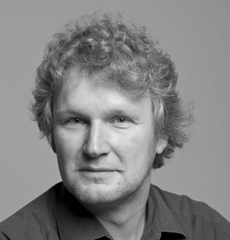
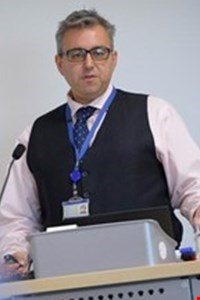
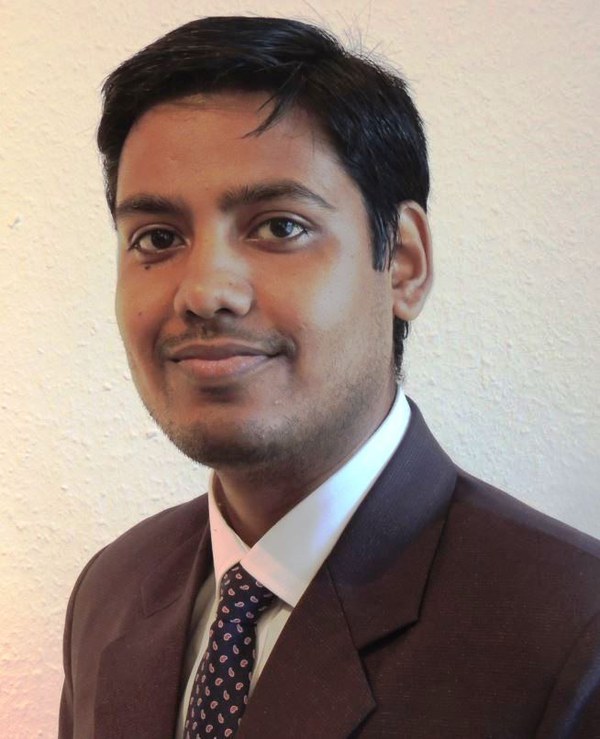
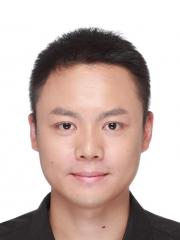
Prof. Roland Lenz is a Professor for Conservation and Restoration of Wall Paintings, Architectural Surfaces, and Stone Polychromy at the State Academy of Fine Arts Stuttgart since 2008. He chairs the Conservation-Restoration Department and serves as a Senate member. His work bridges material science and cultural heritage preservation, focusing on non-invasive diagnostics and historical building materials. Studied Restoration and Conservation at Dresden Academy of Fine Arts (1994–2000) Freelance qualified restorer (2000–2007) Assistant at Dresden HfBK (2001–2007) Teaching assignments at Dresden HfBK and Stuttgart (2006–2007) His research spans gypsum mortars , multispectral imaging , historical pigment analysis , and non-invasive diagnostics . Projects include UNESCO collaborations (e.g., Carolingian wall paintings in Müstair, Romanesque stucco in Hildesheim) and DBU-funded initiatives for stucco tomb conservation. Key publications address photoluminescence imaging , material composition , and stucco technology . Awards include the 2013 State Teaching Award. Affiliated with ICOMOS, IIC, and the Saltwiki research network.
Hilde Lea Lein is a Professor at the Department of Materials Science and Engineering, Norwegian University of Science and Technology (NTNU), where she has served as Deputy Head of Department for Education since 2019. She holds a master's degree (1999) and PhD (2005) in Inorganic Chemistry/Functional Materials from NTNU. Her research group affiliation is the Inorganic Materials and Ceramics Research Group. Her educational background includes: PhD in Inorganic Chemistry / Functional Materials (NTNU, 2005) Master of Technology in Inorganic Chemistry (NTNU, 1999) Research interests span: Functional coatings : Anti-icing/anti-fouling technologies and performance evaluation Ceramics & energy materials : Functional oxides for fuel cells/membranes Corrosion science : High-temperature degradation mechanisms and protection strategies Pedagogy : Teaching methodologies in chemistry/materials science Her publications emphasize materials synthesis (spray pyrolysis, hydrothermal methods), characterization of functional coatings/ceramics, and catalytic/perovskite systems. Recent work shows strong focus on energy materials (fuel cells), anti-icing surfaces, and hierarchical porous catalysts. Awards include: Excellent Teaching Practitioner (NTNU Teaching Excellence) She leads educational initiatives as Deputy Head and teaches core courses including TMT4110 Chemistry. Laboratory manuals authored by her are used in NTNU's curriculum.
Professor James G Broughton is a Professor and Research Lead in Engineering at Oxford Brookes University, affiliated with the School of Engineering, Computing and Mathematics. He leads research in joining technology and composite materials, with a strong focus on sustainability, disassembly, and industrial applications across aerospace, automotive, and civil engineering sectors. Professor & Research Lead in Engineering School of Engineering, Computing and Mathematics Oxford Brookes University Email: jgbroughton@brookes.ac.uk His research interests revolve around structural adhesives, bonded composite materials, design for disassembly (DfD), recycling of multi-material structures, surface treatments for timber and composites, and durability of bonded joints. He has led significant projects in sustainable engineering, including the development of disbondable adhesives and recyclable wind turbine blades (ECORE WINDS project). His work bridges fundamental mechanics with industrial implementation, particularly in adhesion science and composite repair. The recent publications highlight a consistent trend in adhesion mechanics , composite durability , and recycling-focused design . Keywords across articles include composite materials, mechanical testing, computational modeling, and sustainable engineering. Subfields such as particle debonding, cohesive zone modeling, strain-rate sensitivity, and surface activation reflect a deep engagement with both theoretical and applied aspects of material interfaces and joint performance. Innovate UK Research Excellence Award 2014 JEC Manufacturing Production Winner 2011 (full-composite nodal trusses) Professor Broughton has supervised multiple PhD and MSc students and serves as a volunteer peer research mentor at the university. He has led major research initiatives including the Joining Technology Research Centre (JTRC) and participates in knowledge transfer through consultancy, training, and industrial collaboration. His projects often involve funding from Innovate UK and European programs, with applications in YASA Motors, 3M, Bostik, and the National Composites Centre. He led the Joining Technology Research Centre (JTRC) , now integrated into the Materials Processing and Modelling (MPM) group, and is part of the Mechanics, Materials and Design (MMD) research group. These labs support interdisciplinary research in adhesives, composite manufacturing, and structural analysis, serving both academic and industrial partners.
Ocean Cheung is an Associate Professor and Senior Lecturer at the Department of Materials Science and Engineering, Uppsala University, Sweden. He is affiliated with the Division of Nanotechnology and Functional Materials at the Ångström Laboratory, where he leads the 'Cheungsters' research group focused on functional porous materials. Associate Professor in Engineering Physics (Nanotechnology and Functional Materials), Uppsala University, 2020 PhD in Materials Chemistry, Stockholm University, 2014 MChem in Chemistry, University of Warwick, UK, 2009 His research spans the synthesis and application of inorganic porous materials, particularly targeting environmental and biomedical challenges. Key interests include sol-gel synthesis , drug delivery systems , water treatment , and carbon dioxide capture . His group explores both micro and mesoporous frameworks with functional properties. The publication record shows a strong trend toward multifunctional materials, integrating environmental remediation and biomedical engineering , with a focus on sustainability and practical applications. Research themes include CO₂ sorption, catalytic degradation, and responsive drug carriers using inorganic carbonates. Ocean Cheung has been recognized with prestigious awards: Swedish King Gustaf's 50th Birthday Award for Sciences, Engineering and Environment (2018) Oscar Prize for young scientists (2020) He has mentored students and researchers within his group and secured research funding for projects in nanotechnology and functional materials. His work involves collaborations across Europe, including past affiliations with Heriot-Watt University and Stockholm University. He actively promotes scientific discourse through the MOFCast podcast and maintains a strong digital presence. The Cheungsters group operates at the intersection of chemistry, materials science, and engineering, contributing to sustainable solutions for global challenges in health and environment.
Mariana Dimitrova Ichkova is a Lecturer at the Technical University - Gabrovo , affiliated with the Faculty of Mechanical Engineering and Instrument Making and the Department of Materials Science and Mechanics of Materials . Email: ichkova@tugab.bg Her research focuses on residual stress analysis , finite element modeling of cold working processes, and mechanical behavior of aluminum and steel alloys . Key areas include surface treatment optimization, thermo-mechanical simulations, and strengthening techniques for fastener holes. Over the past decade, her work has emphasized finite element simulations for residual stress modeling, cold expansion of holes, and creep behavior in aluminum alloys. Publications span both Bulgarian and international journals, with a strong focus on materials processing and structural integrity applications.
Prof. Dr.-Ing. Andreas Penirschke is a Professor at Technische Hochschule Mittelhessen (THM) in the Department of Electrical Engineering and Computer Science, where he leads research in high-frequency technology and serves as NAC Study Program Director. His academic appointment includes teaching advanced courses in high-frequency measurement technology, signal processing, and sensor systems, and he actively participates in the Examination Board for Communications Engineering and Computer Networks (Bachelor). Professor Penirschke's research focuses on cutting-edge developments in terahertz technology, microwave sensor systems, and beam diagnostics for particle accelerators. His work spans both theoretical and applied aspects, with significant contributions to high-frequency circuit design, terahertz detectors, and novel sensing techniques for industrial applications including flow measurement and humidity detection. His interdisciplinary approach bridges electrical engineering, physics, and materials science to solve complex measurement challenges in accelerator physics and industrial process monitoring. Analysis of Professor Penirschke's recent publications reveals a strong trend toward ultra-precise measurement systems for particle accelerators and advanced microwave sensor technology. His work on beam diagnostics for X-ray free-electron lasers demonstrates expertise in femtosecond-precision timing systems, while his research on microwave-based sensors shows innovative applications of metamaterials and composite right/left-handed transmission lines for permittivity measurements and flow monitoring. The interdisciplinary nature of his publications reflects collaborations across accelerator physics, semiconductor device engineering, and industrial process control. Professor Penirschke actively supervises multiple PhD and Master's students across several major research projects. His grant portfolio includes significant funding from the German Federal Ministry of Education and Research (BMBF), the Federal Ministry for Economic Affairs and Energy (BMWi), and the European Union's Horizon 2020 program. Current projects include HisTeD (High Speed Room Temperature Terahertz Devices), ULCBAMs (Ultra-Low Charge Bunch Arrival-time Monitors), DFMP (sensor systems for flow and humidity measurement), and DIAGNOSE PASST-THM (beam structure analysis). Professor Penirschke leads the High-frequency technology RF laboratory at THM, where his team develops advanced measurement systems for both academic research and industrial applications. The laboratory serves as a hub for collaborative projects with major research institutions including Technical University of Darmstadt, DESY Hamburg, HZDR Dresden, and KIT. The research environment combines theoretical modeling, circuit design, and experimental validation to push the boundaries of high-frequency measurement technology across multiple application domains.
Dr Mihalis Kazilas serves as Reader and Director of the Brunel Composites Centre (BCC) within Brunel University London's College of Engineering, Design and Physical Sciences. With over 20 years of industry and academic experience, he leads a major innovation center established through collaboration between Brunel University and TWI. His research focuses on polymer composites manufacturing, joining processes, and polymers characterisation. Key expertise includes thermoplastic composite processing, interfacial phenomena in composites, and rapid high-temperature manufacturing techniques. His work addresses critical challenges in thermal degradation prevention, interface optimization, and out-of-autoclave production methods for aerospace applications. Analysis of his 15 most recent publications reveals a dominant focus on thermal damage prevention in composite-metal joining, CF/PEEK interface characterization, and laser processing techniques. His research consistently targets industrial applicability with strong emphasis on numerical modeling, multi-scale degradation analysis, and sensor-integrated manufacturing solutions. Kazilas actively collaborates with industry partners through major research projects including CoPropel (marine propellers), smart wind turbine blades development, and graphene sensor implementation for defect detection. His leadership extends to the Non-Metallics Innovation Centre, a joint initiative between TWI, Saudi Aramco, and ADNOC. As Director of BCC since 2016, he oversees research groups focused on composites innovation and material mechanics. His technical management roles at TWI include Business Group Manager for Polymer and Composite Technologies since 2019, demonstrating strong industry-academia integration.
Maria Jose Perez Comuñas is a Professor at the University of Santiago de Compostela, holding dual appointments in the Department of Applied Physics within the Faculty of Biology and the Materials Institute (iMATUS). She leads research in the NaFoMat (Nanomaterials, Photonics and Soft Matter) Group under the Strategic Grouping in Materials (AEMAT). Her research spans tribology , nanomaterial-enhanced lubricants , and high-pressure thermophysics , with particular focus on biodegradable lubricants, nanoparticle additives (zirconia, graphene, cellulose nanocrystals), and pressure-viscosity relationships. Recent work demonstrates expertise in sustainable lubrication solutions using vegetable oil derivatives and advanced nanomaterials. Analysis of her 15 most recent publications (2018-2025) reveals consistent specialization in Nanoparticle dispersion stability in base oils Tribological performance of eco-friendly lubricants High-pressure rheological characterization Structure-property relationships of synthetic lubricants with increasing emphasis on sustainable materials since 2020. She earned her Doctorate from the University of Santiago de Compostela in 2002 with thesis work on high-pressure densities and viscosities of synthetic lubricants, supervised by Dra. Josefa Fernández, Dr. Christian Boned, and Dr. Enriqueta R. López Iglesias.
Dr. Vaibhav Vibhu is an Acting Team Leader in Material Development for Solid Oxide Cells (SOCs) at Forschungszentrum Jülich, Germany. He works at the Institute of Energy Technologies (IET), within the Fundamentals of Electrochemistry (IET-1) department, focusing on advanced electrochemical systems for energy conversion. Institution: Forschungszentrum Jülich Department: Fundamentals of Electrochemistry (IET-1) Academic Rank: Researcher His research concentrates on solid oxide electrolysis cells (SOECs) and fuel/electrode materials, including Ni-free alternatives (e.g., praseodymium/gadolinium-doped ceria), oxygen electrode development , and degradation analysis under industrial conditions. He explores seawater utilization and CO2 electrolysis for sustainable hydrogen production. Recent publications highlight innovations in perovskite-based electrodes , in situ transmission electron microscopy for catalytic mechanisms, and LSM electrode performance under multispecies electrolysis. His work bridges materials science , electrochemical stability , and industrial scalability .
Mikael Skrifvars serves as a Professor in the Department of Resource Recycling and Community Development at the Academy of Textiles, Technology and Economics, University of Borås, where he has worked since 2003. He holds the position of Area Representative for the Resource Recovery research area and maintains an active role in academic leadership. His educational background includes postgraduate studies at the University of Helsinki, Finland, culminating in a doctoral thesis defense in 2003. Prior to his academic appointment, he gained industry experience in the Finnish chemical sector and at Swerea SICOMP research institute in Piteå. Professor Skrifvars specializes in Resource Recovery with a focus on developing polymeric materials from renewable resources. His research encompasses: Natural fiber and biopolymer composites for industrial applications Economically viable manufacturing processes for sustainable materials Recycling methodologies for post-consumer textile waste Advanced biocomposite development for structural and packaging uses Analysis of his recent publications (2024-2025) reveals a dominant research trajectory in sustainable material systems, particularly biobased composites derived from textile waste streams. His work demonstrates significant innovation in natural fiber reinforcement (jute, flax, hemp), biopolymer formulation (PLA, PHA), and circular economy implementation. Key thematic clusters include thermo-mechanical property optimization, flame-retardant surface engineering, and degradation control mechanisms for polymers in energy storage applications. Professor Skrifvars actively supervises four doctoral candidates—Matilda Johansson, Sabrina Kopf, Emmanuel Ifeanyi Kalu, and Shahab Nasr—and leads two major Mistra-funded research projects. His international collaborations span institutions in Korea and India, reflecting the global relevance of his work in sustainable materials science. While specific laboratory infrastructure isn't detailed in available sources, his research operates within the Resource Recovery framework at University of Borås, likely involving interdisciplinary teams focused on polymer engineering and circular material flows.
Branko Škorić serves as a Full Professor at the University of Novi Sad's Faculty of Technical Sciences , currently leading the Chair of Forming Technologies and Surface Engineering since 2015. His academic career spans over 35 years at the same institution, progressing from Assistant (1985) to Full Professor (2011). His educational background includes a Bachelor's degree in Mechanical Engineering (1984), Magister degree (1994), and PhD (2001), all from the Faculty of Technical Sciences. Research focuses on tribology, surface engineering, and nano-coating technologies , particularly examining plasma nitriding, PVD/IBAD coatings, and duplex surface treatments for enhanced mechanical properties. Analysis of his 15 most recent publications (1994-2012) reveals a consistent research trajectory in surface modification techniques , evolving from fundamental plasma technology studies to advanced nanoscale characterization. Key themes include ion implantation effects on coating adhesion, tribological behavior of duplex systems, and precision manufacturing processes like EDM. Administrative roles include Head of Department (2006-2009) and multiple chair leadership positions. His scholarly output includes a nationally significant monograph Karakterizacija mikro i nano slojeva (2007) and 15+ publications in journals like Thin Solid Films and Materials Chemistry and Physics .
Pal Terek is an Associate Professor at the University of Novi Sad's Faculty of Technical Sciences, Department of Production Engineering. He serves as Head of the Center for Surface Engineering and Nanotechnologies and teaches undergraduate, graduate, and doctoral courses in surface engineering, heat treatment, casting technology, nanotechnology, and mechanical engineering in medicine and bioengineering. Current Position: Associate Professor (since April 1, 2022) Previous Positions: Assistant Professor (2017-2022), Assistant with PhD (2016), Assistant - Master (2016) Education: PhD in Mechanical Engineering (2016), Bachelor's in Mechanical Engineering (2007) Professor Terek's research spans multiple interdisciplinary fields with a focus on surface engineering applications. His work bridges traditional manufacturing technologies with cutting-edge nanotechnology applications, particularly in biomedical contexts. He has developed expertise in protective coatings for industrial tools and their adaptation for medical devices, creating a unique research niche that connects mechanical engineering with biomedical applications. His publication record reveals a consistent trajectory of research evolution from traditional casting technologies toward advanced surface engineering and nanotechnology applications. The most recent publications (2023-2025) demonstrate a significant expansion into biomedical applications of surface engineering, particularly in dental materials and biodegradable scaffolds, while maintaining strong foundations in industrial coating technologies. Professor Terek actively contributes to the academic community as a member of the editorial board of the journal Advanced Technologies and Materials and serves as a reviewer for numerous international scientific journals. He has participated in many international scientific and exchange projects and maintains fruitful collaborations with industry partners, applying academic research to real-world manufacturing challenges. His work with the Center for Surface Engineering and Nanotechnologies represents a hub for interdisciplinary research that bridges traditional mechanical engineering with emerging nanotechnology applications in both industrial and biomedical contexts.
Dr. Steven William Lewis serves as an Honorary Fellow at The University of Queensland's School of Mechanical and Mining Engineering, specializing in experimental hypersonics and aerothermodynamics. His work focuses on simulating Earth re-entry and gas giant atmospheric entry conditions using advanced expansion tube facilities. His academic foundation includes a PhD in Mechanical Engineering from The University of Queensland (2017), with doctoral research titled Hypervelocity shock layer emission spectroscopy with high temperature ablating models . This thesis established his expertise in high-temperature gas dynamics and thermal protection systems. Lewis's research program centers on hypervelocity flow physics, particularly ablation phenomena and radiation in shock layers during atmospheric entry. He employs cutting-edge diagnostics including spectrally filtered imaging, vacuum ultraviolet spectroscopy, and high-speed thermography to characterize extreme flow conditions. His experimental work frequently utilizes the X2 and X3 expansion tubes to achieve velocities exceeding 5 km/s, enabling simulation of spacecraft re-entry environments. Analysis of his publication record reveals consistent advancement in expansion tube methodology, with recent work optimizing super-orbital re-entry conditions (2022) and developing novel techniques for post-shock relaxation studies (2021). His contributions span Earth re-entry thermal protection, gas giant entry simulation through test gas substitution, and radiation measurement in high-enthalpy flows. As part of UQ's Hypersonics research group within the Advanced Materials Processing and Manufacturing cluster, Lewis collaborates on projects requiring pre-heated models and infrared scanning for component testing. The team maintains world-class expansion tube facilities capable of simulating conditions from terrestrial re-entry to outer planet atmospheric entry.
Dr. Yu Liu is a Postdoctoral Research Fellow at the School of Mechanical and Mining Engineering , The University of Queensland, with affiliations to the Centre for Hypersonics . His academic career focuses on hypersonic flight , planetary entry simulations , and advanced materials processing , particularly in radiation measurement and thermodynamic modeling. Yu Liu holds a PhD in Mechanical and Aerospace Engineering from The University of Queensland (2021) and a Bachelor (Honours) in Power and Energy Systems Engineering from Xi'an Jiaotong University. His research centers on non-equilibrium radiation in planetary entry conditions , validated through expansion tube experiments and spectroscopic analysis. Key contributions include electron density measurements , test gas substitution for Saturn entry simulations, and high-speed thermography using near-infrared cameras. The 15 most recent articles (2018–2025) span journal publications in Acta Astronautica , AIAA Journal , and Experiments in Fluids , alongside conference proceedings at major aerospace symposia. Topics emphasize hypersonic flow diagnostics , plasma radiation , and planetary mission testing . Dr. Liu is available for supervision and has participated in 2024 AEDS Sarl grant for radiation reconstruction in ExoMars capsule flowfields.
Dr. Keyu Tao is a Postdoctoral Research Fellow at the School of Chemical Engineering, University of Queensland. His research focuses on molecular structure-property relations in food science, particularly starch and biopolymer applications. University of Queensland School of Chemical Engineering His work addresses starch molecular structures in rice and barley, their impact on food texture and digestibility, and innovative applications in food packaging and brewing. Notable studies include collagen-based biodegradable films , rice starch digestibility optimization , and molecular brewing processes . Keyu Tao has co-authored 15 recent publications spanning Food Science , Materials Engineering , and Biomedical Applications . His 2024 conference paper explores glycosaminoglycan additives for stem cell therapy. Research trends include starch structural analysis , cereal processing , and food quality evaluation . Collaborations involve experts in food chemistry , biopolymer engineering , and agricultural biotechnology . Dr. Tao is available for supervision in fields related to starch science and food molecular engineering . He contributes to projects on starch biosynthesis , functional food design , and bioprocess innovation .