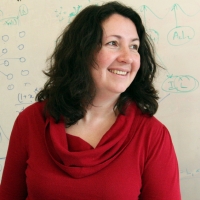
Polina Golland is a Professor in the Department of Electrical Engineering and Computer Science (EECS) at MIT and a Principal Investigator in the Computer Science and Artificial Intelligence Laboratory (CSAIL). Her research focuses on developing novel techniques for biomedical image analysis and understanding, particularly in medical vision, AI/ML, and health care applications. She leads the Medical Vision Group and collaborates with the Vision Group at CSAIL. Her work emphasizes statistical modeling of medical images, shape modeling, and predictive analytics for biological processes. Current projects include fetal MRI analysis, cardiac MRI segmentation, and quantitative assessment of pulmonary edema in chest X-rays. She has secured grants from NIH, MIT-IBM Watson AI Lab, and other institutions to support her research. Dr. Golland teaches courses on inference, probability, and probabilistic systems. She advises graduate students in MIT's EECS program and has mentored numerous postdocs and researchers. Her lab focuses on translating advanced imaging techniques into clinical workflows, with applications in neuroimaging, fetal health monitoring, and cardiovascular disease analysis. Notable collaborations include work with Harvard Medical School affiliates, Brigham and Women's Hospital, and the MIT Jameel Clinic. Her research aims to bridge computational methods with clinical needs, improving diagnostic tools and treatment planning through machine learning and medical imaging innovation.
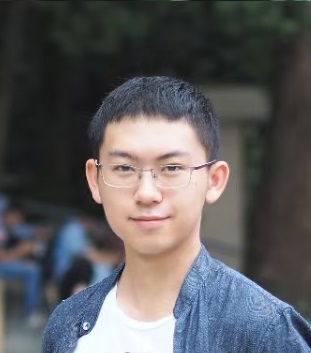
April Yi Wang is a tenure-track Assistant Professor in the Department of Computer Science at ETH Zürich, where she directs the Programming, Education, and Computer-Human Interaction Lab (PEACH Lab). She is a core faculty member at the Institute for Intelligent Interactive Systems and associated with the ETH AI Center. Wang is also an active member of ETH HCI and Swiss CHI communities, contributing significantly to human-computer interaction and educational technology research. Dr. Wang's educational background includes: Ph.D. in Information Science from University of Michigan (2023), advised by Steve Oney and Christopher Brooks M.Sc. in Computer Science from Simon Fraser University (2018), advised by Parmit Chilana B.Eng in Computer Science from Zhejiang University (2016) Dr. Wang's research focuses on human-centered approaches to programming and data science. Her work reimagines programming as a form of literature that communicates with both machines and people, exploring creative representations like text, shapes, animations, and everyday objects. She investigates how to make programming more natural and intuitive through literate programming environments, with applications in professional and educational contexts. Her research spans human-computer interaction, educational technology, and AI-assisted programming tools. Analysis of Dr. Wang's recent publications reveals a strong focus on AI-enhanced educational tools, particularly for programming and data literacy. Her work increasingly integrates large language models to scaffold learning while maintaining user agency. There's a clear trajectory toward developing situated learning approaches that connect abstract concepts to real-world contexts through augmented reality and tangible interfaces. Her research bridges HCI, education, and AI to create more accessible and engaging technical learning experiences. Dr. Wang has received numerous prestigious awards including: 2023 Gary M. Olson Award and Honourable Mention Award at ACM CHI 2022 Rising Stars in EECS and Heidelberg Laureate Forum Young Researcher 2020 Best Short Paper Award at IEEE VL/HCC and Honourable Mention at ACM CHI 2019 Best Paper Award at ACM CSCW Dr. Wang actively mentors students through thesis projects at ETH Zürich, supervising numerous bachelor's and master's students on topics ranging from AI-assisted programming to data literacy tools. Her lab, PEACH Lab, has secured funding including the recent innovedum funding for the Coducate project. She serves on program committees for major conferences including CHI and UIST, and regularly reviews for top HCI and education journals. The PEACH Lab, directed by Dr. Wang, focuses on creating expressive, intelligent, and human-centered systems that make technical topics more accessible. The lab explores textual, visual, and embodied representations for programming, with emphasis on enhancing communication, collaboration, and learning. Current research directions include balancing automation with user agency, supporting diverse learning needs, and developing tools for interdisciplinary technical communication.
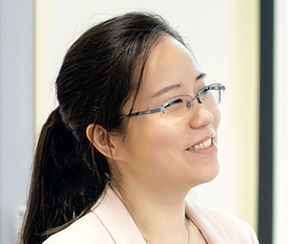
Payton Brown, AuD, is a Clinical Assistant Professor in the USC Caruso Department of Otolaryngology — Head and Neck Surgery at the Keck School of Medicine of USC. She specializes in clinical audiology, focusing on hearing loss evaluation and rehabilitation for adults and children, with particular expertise in cochlear implants and assistive listening technologies. Dr. Brown emphasizes equitable access to high-quality care and patient empowerment through evidence-based practices. Education: Doctor of Audiology (AuD) from the University of Texas at Dallas, with an externship at Keck Medicine of USC. Research Interests: Dr. Brown’s work centers on advancing hearing healthcare accessibility, including over-the-counter hearing aid innovations and clinical service delivery. She advocates for inclusive practices to support diverse patient needs, leveraging both clinical and personal insights to improve patient outcomes. Affiliations: Member of the American Academy of Audiology and the American Speech-Language-Hearing Association. Labs/Teams: Active within the USC Caruso Department’s clinical and educational initiatives, though specific lab affiliations are not detailed in the text.
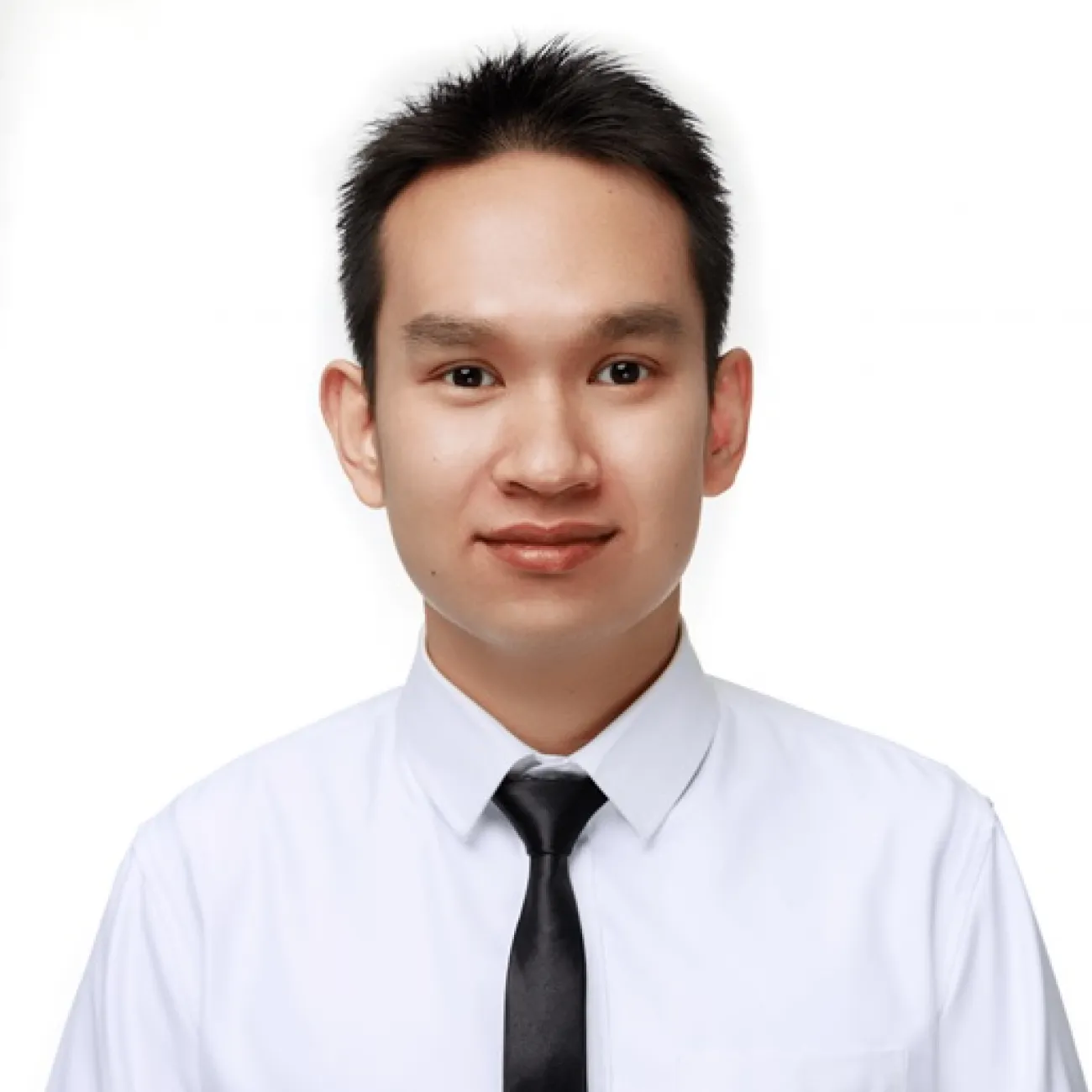
Prof. Dr.-Ing. Rüdiger Daub serves as Professor and Chair of Production Engineering and Energy Storage Systems at the Technical University of Munich (TUM), operating within the Department of Mechanical Engineering. His leadership encompasses research direction, academic supervision, and strategic development of battery production technologies at TUM's Garching campus (Boltzmannstr. 15), with active industry collaborations driving innovation in sustainable manufacturing. Daub's research program pioneers advanced production methodologies for lithium-ion and solid-state batteries, focusing on electrode manufacturing, electrolyte filling, and cell assembly processes. His work investigates critical parameter interdependencies affecting battery safety and performance, developing inline monitoring systems and digital twin technologies for real-time process optimization. Key contributions include moisture control in electrode production, electrochemo-mechanical characterization of solid-state systems, and robotics solutions for deformable object assembly, all integrated with machine learning for quality assurance in industrial settings. Analysis of his 2023-2025 publications reveals a dominant research trajectory toward solving production bottlenecks in next-generation energy storage. The work demonstrates increasing integration of computational modeling with empirical validation, particularly in solid-state battery manufacturing and high-voltage electrolyte systems. A notable trend is the cross-pollination of robotics, computer vision, and uncertainty quantification techniques to address complex assembly challenges and distribution shifts in quality monitoring, reflecting industry's urgent need for adaptable, data-driven production systems. Leading TUM's specialized laboratories for battery cell production, Daub's team maintains comprehensive facilities for electrode calendering, electrolyte filling, and cell assembly with integrated tracking and tracing capabilities. The research infrastructure supports collaborative projects with automotive OEMs and battery manufacturers to develop scalable production processes, emphasizing environmental sustainability through water-based electrode production and footprint optimization. Current initiatives focus on digital factory modeling and prelithiation technologies for next-generation battery systems.
Dimitra Psychogiou is a Full Professor of Microwave Engineering at University College Cork and Principal Investigator at Tyndall National Institute's CONNECT Centre in Cork, Ireland. She leads the Advanced RF Technology Group, driving innovation in reconfigurable RF systems for next-generation wireless networks. Her academic credentials include: Dipl.-Eng. in Electrical and Computer Engineering, University of Patras (2008) Ph.D. in Electrical Engineering, ETH Zurich (2013) Prof. Psychogiou's research pioneers reconfigurable microwave filters , non-reciprocal RF components , and additive manufacturing for antenna systems . Her work bridges theoretical microwave engineering with practical implementations in 5G/6G front-ends, emphasizing sustainability through hyperflexible filtering architectures that reduce hardware complexity and energy consumption. Key innovations include acoustic-wave resonator filters and 3D-printed RF components enabling unprecedented miniaturization. Analysis of her 2022-2025 publications reveals a strategic shift toward multifunctional RF integration , where filtering coexists with isolation, amplification, and switching in single modules. This trend addresses critical industry needs for compact, software-defined radio front-ends in satellite communications and IoT networks, with increasing emphasis on reflectionless topologies and spatiotemporal modulation techniques. Her scientific recognition includes: 2023 MTT-S Outstanding Young Engineer Award 2021 Roberto Sorrentino Prize 2021 SFI Research Professorship 2020 NSF CAREER Award 2020 URSI Young Scientist Award UC Boulder Junior Faculty Research Award Prof. Psychogiou actively shapes her field through leadership roles as Chair of IEEE MTT-13 Committee and Secretary of USNC-URSI Commission D, while serving as Associate Editor for IEEE MWCL and IJMWT. Her group collaborates extensively with semiconductor foundries and wireless infrastructure companies to transition lab innovations to commercial applications. The Advanced RF Technology Group operates state-of-the-art facilities for GaAs MMIC prototyping, 3D-printed RF component fabrication, and full-wave electromagnetic characterization, supporting Ireland's strategic position in European telecommunications research.
Qian Yang is an Assistant Professor in Information Science at Cornell University, with a faculty appointment in Computer Science. Her research focuses on human-AI interaction, designing AI applications for healthcare, autonomous systems, and UX design. She holds a PhD in Human-Computer Interaction from Carnegie Mellon University and has industry experience in design consultancy (2007–2014). Yang co-directs the Cornell Digital and AI Literacy Initiative and is a Senior Fellow at the Cornell Brooks Tech Policy Institute. Her work emphasizes bridging AI technologies with societal needs, supported by awards like the Schmidt Futures AI2050 Fellowship. She leads the DesignAI research group, focusing on AI-driven design methods and tools for practitioners. Education: PhD in HCI (Carnegie Mellon), M.S. in HCI (CMU), M.Des in Design, B.Eng in Industrial Design (Shanghai Jiao Tong University). Research interests include AI ethics, healthcare decision support systems, and context-aware mobile services. Notable contributions include: Developing AI systems for life-critical healthcare decisions (e.g., artificial heart implants) Innovating UX design methods for integrating AI into practice Advancing human-centered AI evaluation frameworks Awards include the SIGCHI Outstanding Dissertation Award and AI2050 Fellowship. She actively collaborates across disciplines, with work published in top HCI venues like CHI and ACM Transactions.
Lisa Soder serves as Senior Policy Researcher and Acting Head of Technical AI Governance at Interface, a leading European tech policy think tank, and is an incoming Visiting Research Fellow at Stanford University's Intelligent Systems Laboratory within the School of Engineering. She holds a Master's degree from the London School of Economics focusing on comparative transatlantic approaches to technology regulation and competition law, and brings prior experience from the Centre for the Governance of AI, Boston Consulting Group, and global health NGO work in Ethiopia. Her research centers on establishing AI accountability infrastructures with particular emphasis on developing third-party auditing ecosystems and bridging technical and regulatory aspects of AI governance. She has developed a taxonomy for Technical AI Governance organized along technical targets (Data, Compute, Algorithms and Models, Deployment) and governance capacities (Assessment, Access, Verification, Security, Operationalization, Ecosystem Monitoring). Her work examines open problems across these dimensions, highlighting the critical need for technical tools to support effective AI governance. Analysis of her publications reveals a strong focus on practical implementation challenges in AI regulation, particularly regarding the EU AI Act's provisions for general-purpose AI systems. Her research consistently addresses the gap between policy aspirations and technical capabilities, with particular attention to verification mechanisms, risk assessment frameworks, and the development of technical infrastructure necessary for oversight. She advocates for closer collaboration between technical experts and policymakers to ensure governance mechanisms are both feasible and effective. Lisa has been actively engaged in high-level policy discussions, participating in events such as the AI Action Summit in Paris, Sino-German Track 2 Dialogues on AI governance, and expert briefings on frontier AI systems. Her upcoming visiting research fellowship at Stanford University represents a formal academic affiliation that complements her policy-focused work at Interface.
Dr. Tan Viet Tuyen Nguyen is a New Frontiers Fellow (Lecturer) in AI at the University of Southampton, specializing in Human-Centered Artificial Intelligence and Social Human-Robot Interaction. His research focuses on multimodal learning for robots to adapt their behavior to human social needs, with applications in healthcare, education, and service environments. Prior to this role, he was a Research Associate at King’s College London and a Research Assistant on the EU-funded CARESSES project, developing culturally-aware assistive robots for elderly support. Education: PhD in Information Science (Robotics) from Japan Advanced Institute of Science and Technology. He has organized conferences such as the IEEE RO-MAN 2022 special session on nonverbal communication and served as a reviewer for top-tier robotics and AI conferences. Research Interests include: Human-Robot Collaboration, Multimodal Perception, Generative AI for Social Interaction, and Context-Aware Robot Behavior Generation. His work has been recognized with awards including the Best Paper Award at ROMAN 2022 and the Prospective Research Award at ICServ 2023. Teaching Responsibilities include courses on Biologically Inspired Robotics, High-Level Programming, and MSc/Undergraduate project supervision. He currently oversees two PhD students and collaborates on projects like 'Exploring the impact of AI-driven writing of engagement in climate change' and 'Bridging Generations and Cultures through Generative AI.' Labs/Teams: Member of the Agents, Interaction and Complexity Centre and the Centre for Robotics Research at Southampton.
Dr. Zoë Bell is a Research Fellow at King's College London, affiliated with the Department of Nutritional Sciences within the School of Life Course and Population Sciences. Her work focuses on maternal health, food insecurity during pregnancy, and public health interventions. Currently, she holds a 12-month Economic and Social Research Council fellowship, collaborating with Lambeth Council’s Health Determinants Research Centre (HEART) to address perinatal food insecurity through qualitative methodologies and co-design workshops. Her research interests include maternal and child nutrition, behavioral determinants of food choices, and systemic drivers of health disparities such as racism and environmental pollution. She has supervised students at undergraduate, master’s, and PhD levels and previously led the BSc/MSc Clinical Nutrition module. Recent articles highlight her contributions to understanding gestational diabetes intervention acceptability, food insecurity’s impact on pregnancy outcomes, and elite athletes’ perceptions of pregnancy. Her work has been recognized with the 2025 Outreach and Engagement Prize, awarded for collaborative health policy initiatives. Zoë also serves on the Association for the Study of Obesity’s events committee and actively engages in policy translation, bridging academic research with practical health solutions. Her interdisciplinary approach integrates biomedical, nutritional, and social science methodologies to inform equitable healthcare practices.
Dongwook Yoon is an Associate Professor at the Department of Computer Science , University of British Columbia , and serves as Director of the SOCIUS Lab . He actively contributes to research in Human-Computer Interaction, Human-AI Interaction, and Virtual/Augmented Reality as a member of the Designing for People (DFP) and CAIDA research clusters. Education : PhD in Computer Science from Cornell University (2017), MS (2009) and BS (2007) in Computer Science from Seoul National University Research Focus : Designing socio-technical systems that bridge the gap between technology and human social processes, with innovations in AR/VR, multimodal interaction, and inclusive design Article Trends show his work spans: Temporal and bichronous learning environments AI self-clones and ethical implications Income inequality in virtual platforms Enhanced multimodal collaboration in VR Eyes-reduced interfaces for situational impairments Speculative participatory design for gig economy challenges Scientific Awards include: Google Academic Research Award (2024) Best Paper Award at CHI 2024 High Impact Award in Educational Technology (2024) CHCCS/SCDHM Graphics Interface Early Career Award (2023) Multiple Honorable Mentions at CHI, DIS, and CSCW Students & Collaborators range from active PhD candidates (Anika Sayara, Yuri Kim) to notable alumni (Thitaree Tanprasert, Ashish Chopra) across his SOCIUS Lab projects. His research receives funding from NSERC , KIST , Adobe , Microsoft , and Google grants.
John F Valliant is a Professor in the Department of Chemistry and Chemical Biology at McMaster University. His research focuses on radiopharmaceutical chemistry, molecular imaging, and targeted therapies, particularly in cancer diagnostics and therapeutics. He co-founded Fusion Pharmaceuticals, a company acquired by AstraZeneca for $2.4 billion (US), which specializes in targeted alpha therapy for cancer treatment. His work includes developing radiolabeled imaging agents for prostate cancer (e.g., [18F]DCFPyL), targeted alpha therapies (e.g., FPI-1434), and bioorthogonal chemistry strategies for pretargeted imaging. Valliant has contributed to advancements in photoacoustic imaging, SPECT/PET modalities, and theranostic agents for conditions like bacterial infections and bone diseases. Key projects include the Phase II clinical trial using 18F-DCFPyL PET-MRI for oligometastatic prostate cancer and studies on individualized dosimetry in Lu-177 therapies. He has pioneered platforms for radiolabeled antibody-recruiting molecules and fluorous-phase chemistry for high-specific-activity probes. Valliant’s research bridges disciplines, integrating chemistry, biology, and clinical applications to address unmet medical needs in oncology and diagnostic imaging.
Lieselotte Ahnert serves as a Visiting Professor for Developmental Psychology at the Free University of Berlin's Department of Education and Psychology, specifically within the Department of Developmental Science and Applied Developmental Psychology. Her academic journey began at Humboldt University in East Berlin, where she studied psychology during a period of significant political change in the GDR. After completing her doctorate in 1982, she held various research positions including director of the Interdisciplinary Center for Applied Socialization Research (IZAS e.V.) from 1991-1996 and a visiting scientist position at the National Institutes of Health in Washington from 1996-1999. Prior to her current position at FU Berlin (since 2019), she was a Professor of Developmental Psychology at the University of Vienna from 2008-2019. Professor Ahnert's research focuses on early childhood development, attachment theory, and the specific contributions of fathers to child development. Her work examines how children develop within various caregiving contexts, including the transition from home to childcare settings, the effects of socioeconomic disadvantage on attachment security, and the unique role fathers play in children's language development and emotional regulation. She has conducted extensive research on stress responses in infants during childcare transitions and how care providers influence these responses. Her interdisciplinary approach draws from behavioral biology, genetics, neuroscience, pediatrics, and education to understand the complex interplay between genetic and environmental influences in early development. Ahnert's publication record demonstrates significant contributions to understanding father-child relationships, with recent work exploring how fathers' attachment security and education contribute to early child language skills beyond mothers' influence. Her research has also examined the 'terrible twos' phase, investigating how children cope with frustration and tantrums and how parents support them through these developmental challenges. She has published extensively in high-impact journals including Child Development, Developmental Psychobiology, and Attachment and Human Development. Professor Ahnert has received recognition for her expertise, including being commissioned to provide expertise for the Federal Chancellery of Austria in 2021. Her work has practical applications in early childhood education and intervention programs, particularly in understanding how public childcare can compensate for developmental risks in socioeconomically disadvantaged children. In addition to her research, Ahnert has made significant contributions to academic training and supervision. Her book publications, including 'It's the fathers who matter' (2023) and 'How much mother does a child need?' (2020), bridge the gap between academic research and public understanding of child development. Her work continues to influence both academic discourse and practical approaches to early childhood care and education.
Dr. XiaoYue Cathy Liu is an Associate Professor in the Department of Civil & Environmental Engineering at the University of Utah. She holds a PhD in Transportation Engineering from the University of Washington and advanced degrees in Transportation Planning and Electronics Engineering. Her research focuses on sustainable transportation systems, shared mobility, public transit optimization, managed lanes, and intelligent transportation systems. She actively serves on committees including the Transportation Research Board's Highway Capacity Quality of Service (HCQS) Committee and chairs its Technology Transfer Subcommittee. She also advises the Utah Model Advisory Committee and previously served on Salt Lake City’s Transportation Advisory Board. Dr. Liu is a licensed professional engineer in Utah. Education: PhD, Transportation Engineering, University of Washington (2013) MA, Transportation Planning & Management, Texas Southern University BS, Electronics & Electrical Engineering, Beijing Jiaotong University Graduate Certificate, Global Trade & Logistics, University of Washington (2011) Research Interests: Electric vehicle infrastructure and charging networks Smart transportation systems and agent-based modeling GIS-based asset management for transportation infrastructure Snowplowing operations optimization and winter maintenance Managed lanes and high-occupancy toll (HOT) lane analysis Public transit equity and accessibility Her recent publications emphasize data-driven approaches to transportation challenges, including EV demand forecasting, drone delivery networks, and resilience in interdependent transit systems. She collaborates on projects addressing Utah’s unique transportation needs, such as optimizing snowplow routes and integrating renewable energy into public transport systems. Professional Contributions: Board member, Utah Model Advisory Committee Former Chair, Salt Lake City Transportation Advisory Board (2013-2016) TRB Managed Lane Committee member TRB Transit Capacity & Quality of Service (TCQS) Committee member (2016-2019) Dr. Liu’s work bridges transportation engineering with computational methods, focusing on equity, sustainability, and operational efficiency. She leads research initiatives involving large-scale modeling, geospatial analytics, and interdisciplinary solutions for modern mobility challenges.
R. Kenneth Marcus serves as the Robert Adger Bowen Professor of Chemistry in Clemson University's College of Science Department of Chemistry, where he has maintained an active research program for 38 years. His work bridges analytical instrumentation development and advanced separation science with applications spanning nuclear safeguards to biomedical diagnostics. His academic foundation includes dual Bachelor of Science degrees in Chemistry (with honors) and Physics from Longwood College (1982), followed by a Ph.D. in Chemistry from the University of Virginia (1986). This multidisciplinary training underpins his innovative research approach. Dr. Marcus's research focuses on two synergistic thrusts: (1) plasma-based atomic spectrochemical techniques using glow discharge sources, particularly the liquid sampling-atmospheric pressure glow discharge (LS-APGD) microplasma for optical emission and mass spectrometry; and (2) capillary-channeled polymer (C-CP) fiber stationary phases for high-speed protein and extracellular vesicle separations. Current efforts target field-deployable nuclear safeguards instrumentation and exosome isolation platforms for clinical applications, leveraging commodity polymers like polypropylene and nylon. His 2024-2025 publications reveal a strategic convergence where LS-APGD mass spectrometry enables ultra-high-resolution isotopic analysis for nuclear applications, while C-CP fiber chromatography advances exosome purification across diverse biological matrices. This dual focus positions his work at the intersection of national security needs and emerging biomedical diagnostics. His distinguished recognition includes: Fellow of the Royal Society of Chemistry (2010) Fellow of the American Association for the Advancement of Science (2012) Fellow of the Society for Applied Spectroscopy (2016) Fellow of the National Academy of Inventors (2018) Clemson University Researcher of the Year (2019) South Carolina Governor’s Award for Excellence in Science Research (2001) Dr. Marcus has mentored 44 Ph.D. and 17 M.S. students to completion. His research receives sustained support from the National Nuclear Security Administration (NNSA) through Oak Ridge National Laboratory for nuclear safeguards instrumentation, the National Science Foundation (NSF) for chromatography development, and the Advanced Mammalian Biomanufacturing Innovation Center (AMBIC) for metal speciation studies in bioreactors. His laboratory occupies dedicated spaces (BRC 102, 102A, and 106) within Clemson's AG Biotech/Biosystems Research Complex, housing specialized instrumentation for plasma source development, mass spectrometry coupling, and high-throughput fiber chromatography systems that support collaborative work with nuclear security agencies and biomedical researchers.
Dr. Alexa Quinn is an Assistant Professor in the Department of Early, Elementary, and Reading Education at James Madison University's College of Education. Her research focuses on culturally responsive teaching, family-school interactions, and inclusive education practices. She holds a terminal degree in Education and is dedicated to preparing future educators to address the diverse needs of students, particularly in early childhood and elementary settings. Her work emphasizes the importance of teacher training programs that foster cultural competence and self-efficacy, alongside strategies for supporting students with disabilities. Dr. Quinn’s scholarship bridges theory and practice, advocating for policies that prioritize equitable educational access and family engagement. Her publications span topics such as inquiry-based learning, morning meeting practices in social studies, and the role of wordless picturebooks in multilingual families. While no formal awards are listed, her contributions to teacher education and policy-relevant research reflect her commitment to impactful educational solutions. Dr. Quinn advises no listed students and does not mention current grants or labs, though her research interests suggest involvement in collaborative projects focused on early childhood education equity and teacher development.