Massimo Rundo is an Associate Professor at the Polytechnic of Turin 's Department of Energy (DENERG) and coordinator of the Fluid Power Research Laboratory (FPRL) . With over 70 Scopus-indexed publications, his work focuses on modeling, simulation, and experimental validation of fluid power systems. Research Interests: Positive displacement pumps (gerotor, gear, vane, piston) Hydraulic valves (flow forces, pressure control) Mobile hydraulics (excavators, telehandlers) CFD and lumped parameter modeling Incomplete filling phenomena at high speeds Recent Publications analyze flow dynamics in pumps, vibration-based fault detection, and energy-efficient hydraulic architectures through 1D/3D simulations. He has coordinated industry-funded projects with companies like Casappa and Pierburg Pump Technology. Honors: MDPI Energies Editor's Choice (2018) SAE Excellence in Oral Presentation (2004) SAE Certificate of Appreciation (2000) Rundo teaches graduate courses in Mobile and Industrial Fluid Power and advises master's theses, while serving as Associate Editor for the International Journal of Fluid Power and committee member for major conferences including ASME/BATH Symposium and International Maha Fluid Power Conference.
Alexandre Sébastien Julien Levisse is a Lecturer at the Institute of Electrical Engineering within EPFL's School of Engineering, with additional roles as System Specialist in PAT/SEL departments and Scientist in IEM. His work centers on energy-efficient hardware architectures for edge computing and AI applications. Research focuses on: Computer Architecture & VLSI Design Low-Power Electronics for edge devices Emerging Memory Technologies (RRAM, OxRAM) Neuromorphic & Approximate Computing In-Memory/ Near-Memory Computing Edge AI Hardware Acceleration His 2022-2025 publications reveal strong emphasis on specialized edge AI hardware, including near-DRAM architectures (SideDRAM), RISC-V microcontrollers for healthcare (HEEPOcrates), and overflow-free memory systems. Key innovations involve hardware-software co-design for energy efficiency, variable precision computation, and novel memory hierarchies targeting wearable sensors and edge inference. Levisse teaches Fundamentals of VLSI Design and Lab in Advanced VLSI Design at EPFL. He actively contributes to digital education as a member of EPFL's Centre for Digital Education (CCE), developing curricula for next-generation hardware engineers.
Prof. Dr. Michael Layh is a Professor in the Faculty of Mechanical Engineering at Kempten University of Applied Sciences . He serves as the Institute Director for the Institute for Computer Vision and heads the Optical 3D Metrology and Computer Vision Laboratory (3Dvisionlab) . His expertise lies in Machine Vision, Optical Design , and Simulation and Modeling . Teaching Areas: Physics, Engineering Mathematics, Optical Measurement Technology, Technical Optics Research Focus: Development of advanced optical measurement systems, including spectrometer-free chromatic confocal metrology and synthetic image-based neural networks for industrial applications Current Projects: ReGAIN (2023-2024) and opTWINspect (2024-2026) with funding from the German Federal Ministry for Economic Affairs and Climate Action and Bavarian Research Foundation His recent work includes innovations in 3D imaging and high-speed optical scanners , with patents covering EUV projection lithography and micro mirror arrays. Collaborations span Carl Zeiss SMT GmbH and iron foundry industries .
Dr. Alexandros Kapsalis is a post-doc researcher at the Optical Communications Laboratory of the National and Kapodistrian University of Athens (NKUA), affiliated with the Department of Informatics and Telecommunications. He holds a PhD in Optical Communication Devices from the University of Athens (2010) alongside a B.S. (2002) and M.Sc. (2004) in Telecommunications. Research Interests: Photonic design, novel optical devices, silicon photonics, all-optical signal processing, semiconductor lasers, optomechanical systems, and system automation. Article Trends: Focuses on silicon/silicon germanium waveguides, quantum dot lasers, four-wave mixing, phase regeneration, and mid-infrared conversion. Keywords span Photonics , Telecommunications , and Nonlinear Optics . Service: Serves as a reviewer for IEEE and Elsevier journals, with 20+ publications in national and EU projects.
Michael Johnston is Professor of Physics at the University of Oxford's Department of Physics and a Fellow of Corpus Christi College since 2002. He leads a research group focused on high-frequency semiconductor devices, semiconductor charge dynamics, and spectroscopy, bridging fundamental physics with real-world applications in terahertz technology, semiconductor nanostructures, and perovskite optoelectronics. His educational background includes a PhD in Physics from the University of New South Wales (Sydney, Australia), where he researched electron behavior in quantum-confined systems. Prior to Oxford, he established a terahertz spectroscopy research program at the Cavendish Laboratory, University of Cambridge (1999-2002). Professor Johnston's research centers on charge dynamics in semiconductors and light-matter interactions , with three core thrusts: Terahertz Science : Developing instrumentation and theories for terahertz spectroscopy, radiation emission, and ultrafast modulation using semiconductor nanostructures Semiconductor Nanostructures : Investigating electron dynamics to create novel photonic devices like single nanowire terahertz detectors with picosecond switching Perovskite Optoelectronics : Pioneering vapor deposition methods for metal halide perovskites enabling efficient planar heterojunction solar cells His publication record (2002-2020) demonstrates consistent innovation in terahertz device engineering and perovskite solar cell technology, with high-impact contributions across fundamental charge-carrier dynamics, nanoscale device fabrication, and industrial-scale material processing for clean energy applications. His scientific excellence is recognized through: Harrie Massey Medal Friedrich Wilhelm Bessel Research Award IUMRS Somiya Award Clarivate Highly Cited Researcher status Professor Johnston actively mentors students through undergraduate physics tutoring at Corpus Christi College (covering Electromagnetism, Quantum Mechanics, and Condensed Matter Physics) while leading his research group. His key contributions include inventing single-nanowire terahertz detectors, ultrafast terahertz modulators, and vapor deposition techniques critical for industrial perovskite solar cell production. He directs Oxford's Terahertz Physics research group (www-thz.physics.ox.ac.uk), which integrates experimental and theoretical approaches to semiconductor charge dynamics, with strong industry connections for translating fundamental discoveries into photonic devices and solar energy solutions.
Carlos Portera-Cailliau is a Professor at the David Geffen School of Medicine at University of California, Los Angeles (UCLA) , with joint appointments in the Departments of Neurology and Neurobiology . He co-directs the UCLA-Caltech Medical Scientist Training Program and is affiliated with UCLA’s Brain Research Institute , Integrated Center for Learning & Memory , and Neuroscience Theme . Dr. Portera-Cailliau earned a B.A. in Biochemistry & Cell Biology from UC San Diego (1990), followed by an MD-PhD from Johns Hopkins School of Medicine (1997). After neurology residency at Massachusetts General Hospital and Brigham & Women’s Hospital (2001), he conducted postdoctoral research at Columbia University and Cold Spring Harbor Laboratory. The Portera-Cailliau laboratory employs a symptom-to-circuit approach to study neurodevelopmental disorders like autism and Fragile X syndrome. Key research areas include sensory hypersensitivity , neuronal connectivity , and synaptic plasticity , using in vivo two-photon calcium imaging , patch-clamp electrophysiology , and head-fixed behavioral assays . Recent work explores GABAA receptor roles in cortical development and EPAC2 as a therapeutic target in Fragile X mice. Publications highlight neurodevelopmental circuit defects , excitation-inhibition imbalance , and interventions to restore plasticity in autism and Fragile X models. His lab also develops open-source tools like EZcalcium for calcium imaging analysis. Dr. Portera-Cailliau’s affiliations include UCLA’s Brain Research Institute , Integrated Center for Learning & Memory , and Neuroscience Theme . His research integrates behavioral assays , optogenetics , and chemogenetics to identify therapies for neuropsychiatric conditions.
Magnus Karlsson is a Professor of Photonics at Chalmers University of Technology and serves as Deputy Dean of the Department of Microtechnology and Nanoscience (MC2), responsible for research and graduate education. He co-leads the fiber optics research group with Prof. Peter Andrekson and co-founded the Chalmers Center for Optical Communication (FORCE) in 2010 alongside Prof. Erik Agrell. Karlsson teaches courses in Wireless and Photonics System Engineering and Photonics and Lasers, and holds editorial leadership as Editor-in-Chief of the IEEE/Optica Journal of Lightwave Technology. His research centers on optical fiber communication systems with expertise in light propagation, polarization dynamics, and nonlinear optical effects. Current investigations focus on capacity-enhancing techniques including Voronoi constellation geometric shaping, silicon nitride integrated photonics for microwave applications, and machine learning-driven polarization sensing. His work bridges theoretical modeling of phase-noise channels with experimental validation of novel receiver architectures for deep-space communication through atmospheric turbulence. Recent publications reveal strong trends in overcoming nonlinear transmission limits through multidimensional modulation and MIMO processing for coupled-core fibers. His group pioneers integrated photonic solutions for high-frequency signal generation while advancing real-time network monitoring capabilities in operational fiber infrastructure. Key themes include power-efficient signaling, distributed sensing, and computational methods for channel compensation. Karlsson's leadership in the fiber optics group and FORCE drives collaborative research in next-generation optical networks. His editorial role and ECOC program committee membership position him as a key influencer in shaping global optical communication standards and disseminating cutting-edge research advancements.
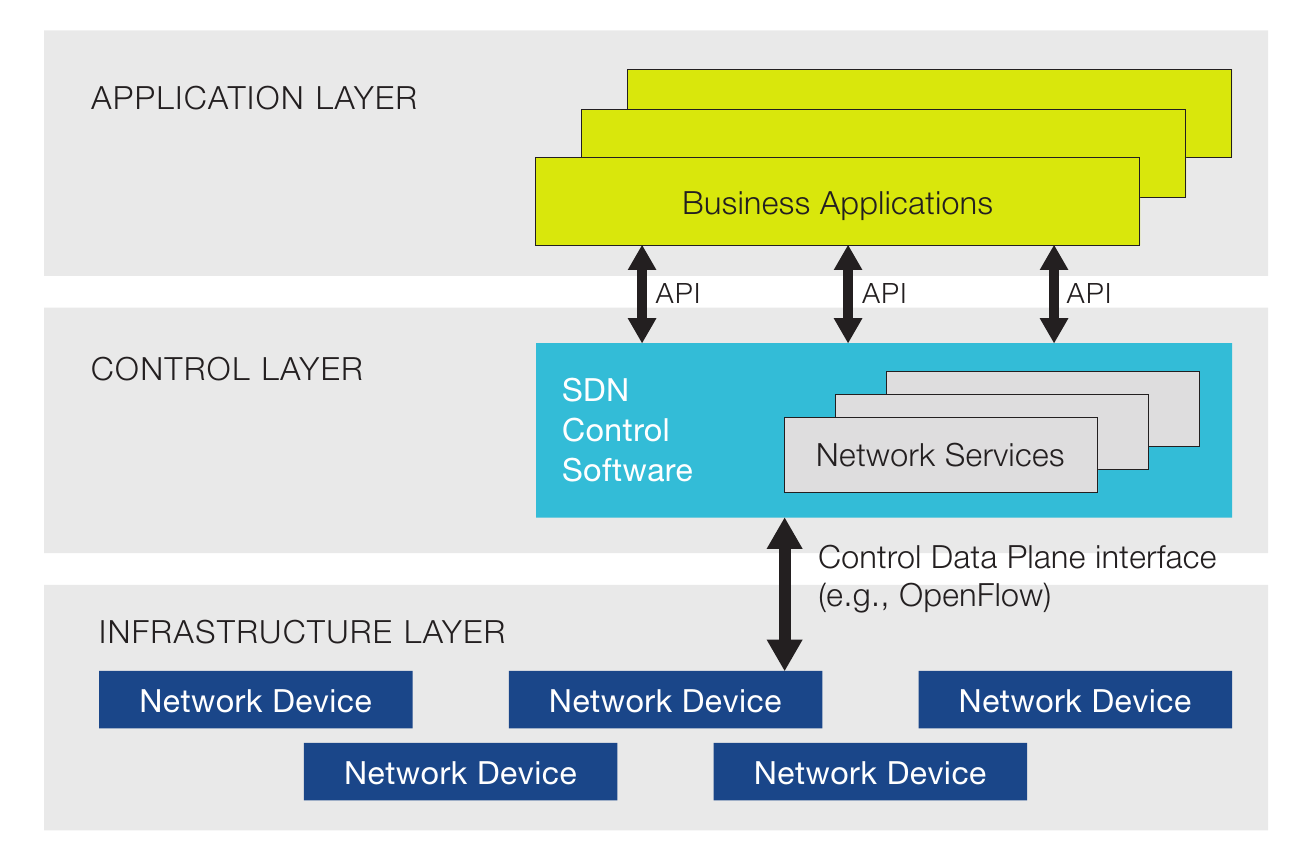
Fabian Ihle is a Researcher & PhD Student at the Chair of Communication Networks , Department of Computer Science , University of Tübingen . He works on Software-Defined Networking (SDN) , P4 Programming Language , and MPLS Network Actions , focusing on Time-Sensitive Networking and Network Resilience . His research includes data plane programming , network protocol development , and high-speed switching using hardware like Intel Tofino. He has contributed to IETF Internet Drafts and presented at workshops including ReNeSys 2025 and IETF MPLS WG meetings. Academic Background : B.Sc. and M.Sc. in Computer Science from University of Tübingen (2021-2023) His publications address MPLS extensions , BIER-TE , and P4-based tools for traffic generation and runtime control. He actively participates in KuVS workshops and serves as a reviewer for journals like IEEE Transactions on Cognitive Communications .
Ahmad Lalti serves as a Research Fellow at Northumbria University within the School of Engineering Physics and Mathematics, focusing on experimental space plasma physics and collisionless shock phenomena. His work bridges theoretical models with multi-spacecraft observational data to unravel fundamental processes in near-Earth space environments. His educational background includes a PhD awarded on May 31, 2024, with ongoing status indicated by an end date of December 31, 2099. Dr. Lalti's research spans Space Physics, Plasma Physics, and Geophysics with concentrated expertise in shock wave dynamics, particle acceleration mechanisms, and wave-particle interactions. His investigations particularly target Earth's bow shock structures, quasi-perpendicular collisionless shocks, and transient plasma phenomena using data from major space missions like Cluster, MMS, and THEMIS. This work has significant implications for space weather prediction and fundamental plasma theory. Analysis of his 2025 publications reveals a cohesive research trajectory examining non-stationary shock behavior, electron/ion acceleration through Fermi mechanisms, and wave instabilities in space plasmas. His studies consistently employ multimission datasets to correlate transient events like high-speed jets with relativistic electron acceleration, demonstrating sophisticated cross-mission data fusion techniques. No scientific awards were documented in the provided materials. Dr. Lalti maintains an extensive international collaboration network evidenced by co-authorship with researchers from Swedish Institute of Space Physics, University of Colorado, and multiple European institutions. His work appears in premier journals including Journal of Geophysical Research and Geophysical Research Letters, though no specific grant funding or student supervision details are disclosed. He operates within global space physics consortia analyzing data from NASA and ESA missions, contributing to shock physics working groups that coordinate multi-spacecraft observational campaigns across international agencies.
Xiaodan Pang is a Tenure Professor at Riga Technical University (RTU) specializing in cutting-edge photonics and communications research. Her work focuses on developing next-generation optical and wireless technologies for high-speed data transmission systems, with significant contributions to silicon photonics, terahertz communications, and integrated sensing and communication architectures. Her primary research interests include: Digital signal processing Wireless communications Signal processing Fiber optics Optoelectronics Photonics Professor Pang's recent publications demonstrate leadership in overcoming fundamental challenges in high-speed communications. Her 2025 work spans silicon photonics ring-resonator modulators for optical-amplification-free links, photonic terahertz chaos systems for secure ranging, and analog fronthaul solutions for 6G networks. Key themes include neural network equalization for ultra-high baudrate transmission, energy-efficient unamplified optical links, and integrated sensing-communication systems leveraging terahertz frequencies. This research directly addresses critical bottlenecks in data center interconnects, 6G mobile infrastructure, and secure high-precision wireless applications. Her technical profile is documented through ORCID (0000-0003-4906-1704), Scopus (54407301300), and Web of Science (D-5032-2015) identifiers, with active professional engagement via LinkedIn.
Robin Angus Silver is Professor of Neuroscience at University College London (UCL), a Wellcome Trust Principal Research Fellow, and Fellow of the Royal Society. He has held leadership roles since 2011 and is renowned for groundbreaking work in synaptic transmission, neural computation, and neuroinformatics. Education: B.Sc. in Physical Sciences (1st Class Hons), Coventry Polytechnic (1986) Ph.D. in Physiology, UCL (1990) Dr. Silver's research focuses on information processing in cerebellar and neocortical circuits. He discovered fundamental properties of central excitatory synapses, elucidated how neurons perform arithmetic operations, and pioneered tools like NeuroConstruct and NeuroML for 3D neuronal modeling. His development of high-speed two-photon microscopy with acousto-optic lenses revolutionized in vivo imaging. His work spans synaptic physiology, computational modeling, and neuroinformatics infrastructure. He has contributed to open-source platforms like OpenSourceBrain, enabling browser-based visualization and simulation of neural models. Awards include Royal Society Fellowship (2017), Wellcome Trust Principal Research Fellowships (2011, 2016), and ERC Advanced Investigator Award (2011). Scientific Awards Fellow of the Royal Society (2017) Wellcome Trust Principal Research Fellowship (2011, 2016 renewal) European Research Council Advanced Investigator Award (2011) Hungarian Academy of Sciences Distinguished Guest Scientist Fellowship (2012) Multiple Wellcome Trust Senior/Principal Research Fellowships Wellcome Trust Research Career Development Fellowship (1996) Dr. Silver has organized international workshops including OpenSourceBrain meetings and INCF Congress events. He serves on steering committees for neuroinformatics initiatives and evaluation panels for funding bodies like the Wellcome Trust and US BRAIN Initiative.
Roberto Leiras Gonzalez is an Assistant Professor in the Department of Neuroscience at the University of Copenhagen's Faculty of Health and Medical Sciences. His research focuses on the neural mechanisms underlying locomotion and motor control, with particular emphasis on brainstem and spinal cord circuits. Dr. Leiras Gonzalez's research interests span several key areas in neuroscience: Neural circuits controlling locomotion and gait Brainstem-spinal cord interactions in motor control Neural basis of locomotor asymmetries Central pattern generators for movement Neuroanatomical organization of motor systems Computational approaches to brain imaging analysis His publication record demonstrates a consistent focus on understanding how specific neural populations in the brainstem and midbrain control different aspects of locomotion. His work combines advanced techniques in neuroanatomy, electrophysiology, and behavioral analysis in mouse models to unravel the complex circuitry underlying movement control. Recent work has particularly emphasized the role of specific neuron populations in generating locomotor asymmetries and controlling gait patterns. Dr. Leiras Gonzalez is affiliated with the Kiehn Lab at the University of Copenhagen, where he contributes to cutting-edge research in systems neuroscience. His work has gained significant attention in the scientific community, with multiple publications in high-impact journals including Nature and Nature Neuroscience, and has been referenced in Wikipedia pages and picked up by numerous news outlets.
Piet Demeester is a Full Professor at the Faculty of Engineering and Architecture, Ghent University, and serves as Director of the IDLab-Department (imec/UGent/UA). His research spans optical and wireless communication networks, networked intelligence, and electromagnetic field exposure analysis. Key affiliations: Ghent University, University of Antwerp, imec Labs: IDLab (350+ researchers focusing on optical/wireless networks, cloud infrastructures, AI for robotics) His work includes foundational contributions to ultra-high-capacity wireless networking under the ERC Advanced Grant "ATTO." Scientific awards include IEEE Fellowship (2009). Publications demonstrate technical leadership in 5G/6G architectures, analog radio-over-fiber systems, and human EMF exposure modeling. Major research themes Optical/Wireless Network Integration Millimeter-Wave Communication Exposure Assessment Methodologies Photonic Antenna Systems Notable collaborations include leadership in European testbed federations like Fed4fire and co-development of standards for networked intelligence.
Mustapha CE Yagoub serves as a Professor in the School of Electrical Engineering and Computer Science at the University of Ottawa, where he has maintained an active academic position since joining in 2001. His professional background spans both industry and academia across three continents, with significant contributions to microwave engineering and RF circuit design. His research interests focus on RF/Microwave CAD, RFID Design, Neural networks for high-frequency applications, Planar antennas, and Applied electromagnetism. This specialization is reflected in his extensive publication record of over 300 journal and conference papers, along with two books including 'Conception de circuits linéaires et non linéaires micro-ondes' (2000) and 'Computer Manipulation and Stock Price Trend Analysis' (2005). His recent work demonstrates strong continuity in microwave circuit analysis, RFID applications, and neural network implementations for high-frequency systems, with particular emphasis on practical engineering solutions for wireless communications and sensor networks. As an educator, Professor Yagoub teaches undergraduate courses including Circuit Theory I (ELG 2538) and Electronics for Mechanical Engineers (ELG 3736), along with graduate-level Nonlinear Microwave Devices (ELG 6369). He actively supervises fourth-year undergraduate projects and graduate research in his specialty areas. Professor Yagoub maintains active professional standing as a Senior Member of the IEEE Microwave Theory and Techniques Society, a member of the Professional Engineers of Ontario (Canada), and a member of the Ordre des ingénieurs du Québec (Canada). His international academic journey began with engineering education at École nationale polytechnique in Algiers, continued with doctoral studies in Toulouse, France, and included academic positions at Houari Boumediene University of Science and Technology in Algiers before his current appointment at uOttawa.
Gian Carlo Cardarilli is a researcher specializing in digital hardware design and machine learning acceleration. His work focuses on FPGA implementations, Residue Number System (RNS) architectures, and reconfigurable computing for applications in wireless communication, edge AI, and fault-tolerant systems. Key collaborations with institutions like IEEE and ACM through publications. Active in translating theoretical algorithms into practical hardware solutions for real-time systems. Research interests include: Optimizing deep learning models for heterogeneous platforms. Developing radiation-hardened memory systems. Creating energy-efficient signal processing architectures. Advancing reconfigurable functional units for embedded processors. His article analyses span fields like Quantum Cellular Automata , Variable Fractional Delay Filters , and RNS-Based Position Estimation , reflecting a trend toward adaptive, low-power, and domain-specific hardware.