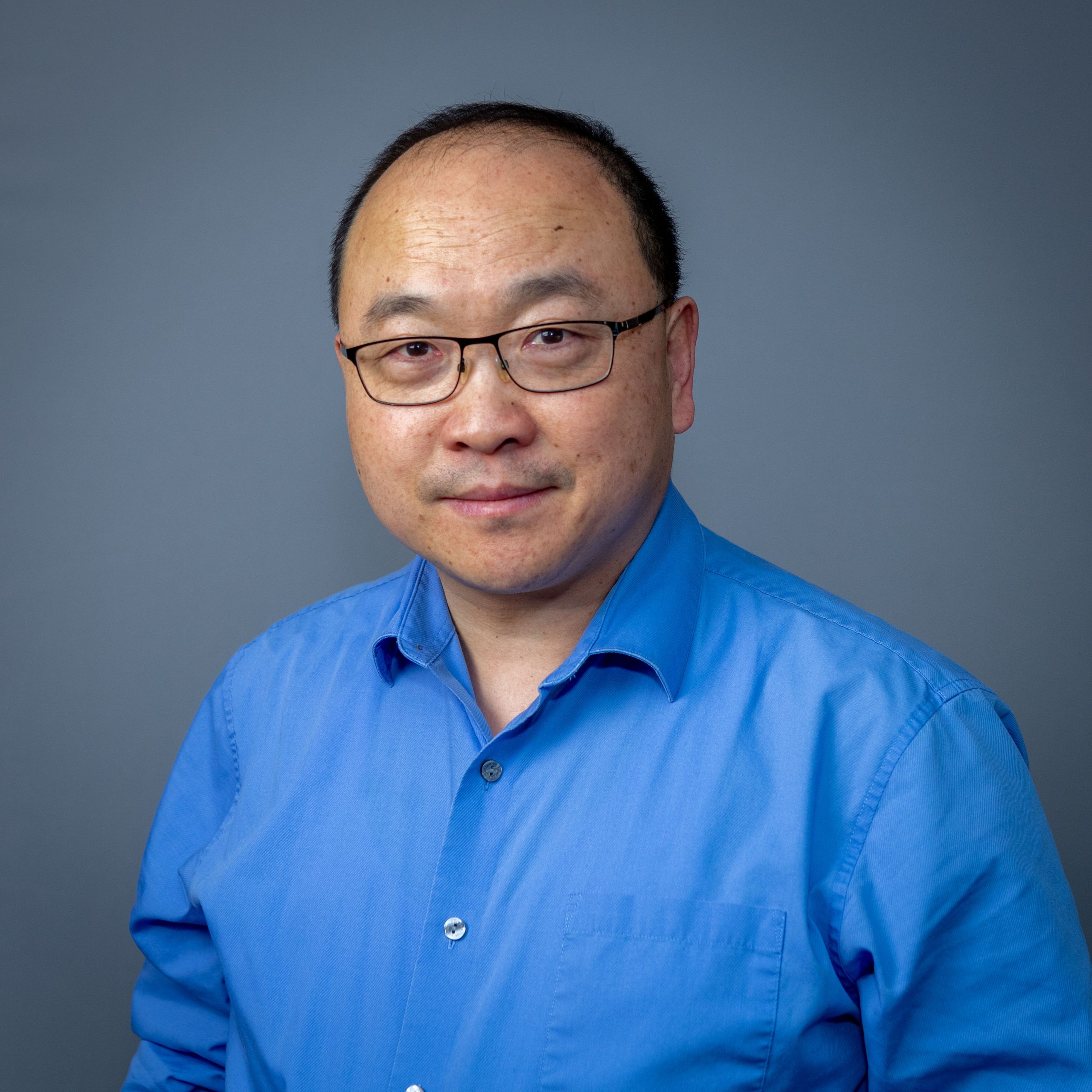
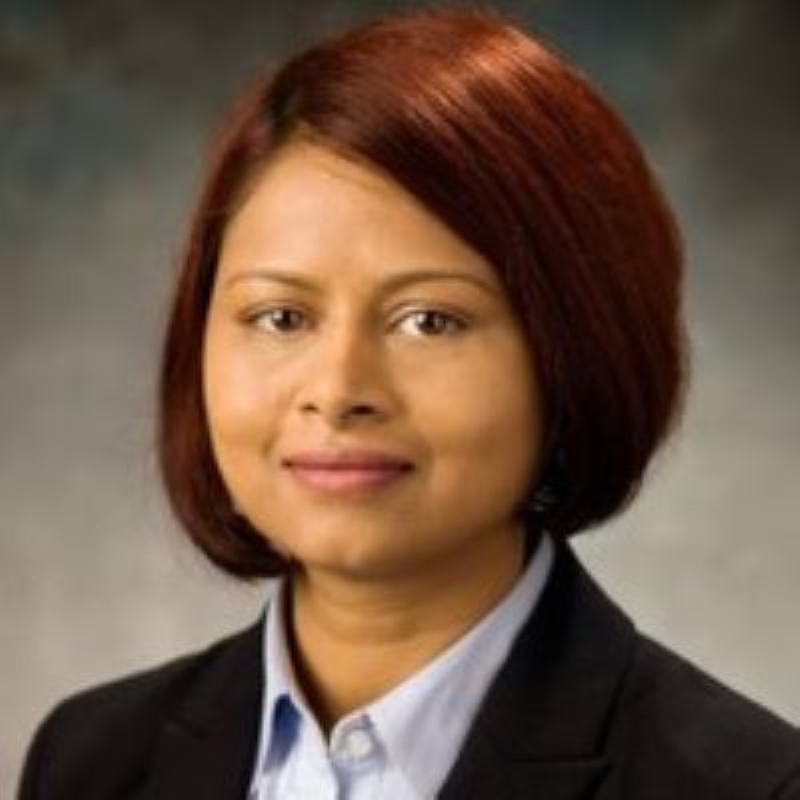
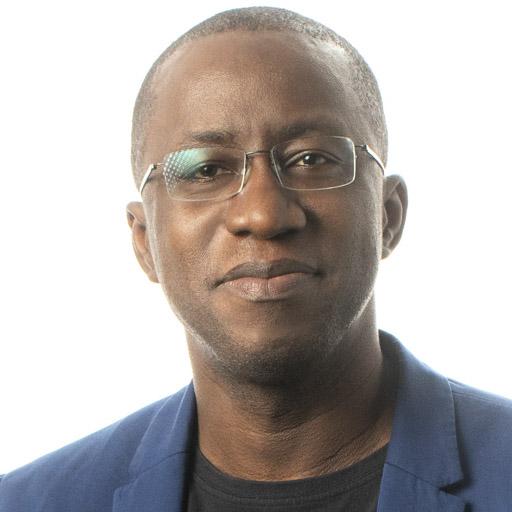
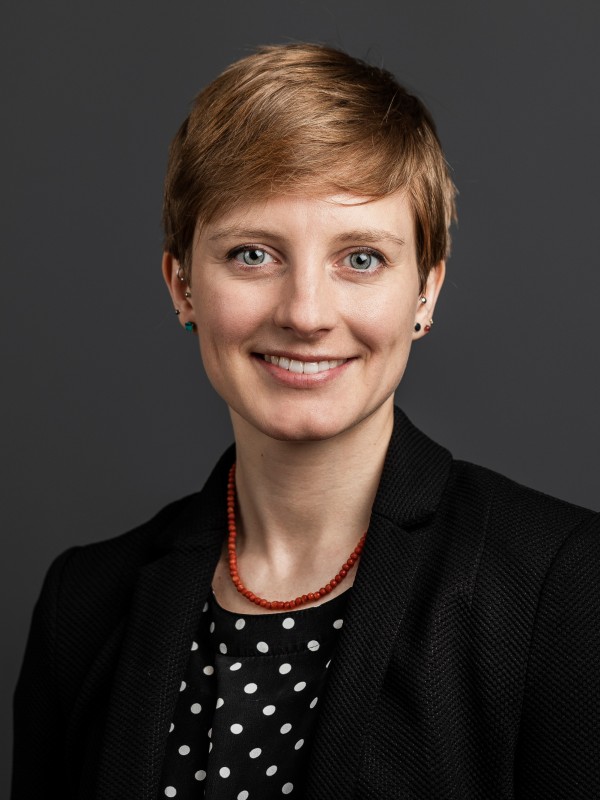
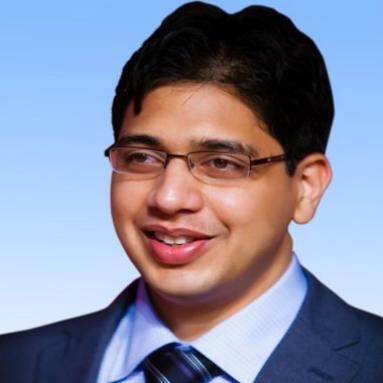
Daniel Bonn is a Professor at the Faculty of Science, University of Amsterdam, affiliated with the WZI (Van der Waals-Zeeman Institute for Physics). His research laboratory is located at Science Park 904, room C4.230, with contact email D.Bonn@uva.nl and phone +31 (0)20 525 5887. His research focuses on: Soft Matter Physics Fluid Dynamics Surface Science Granular Materials Colloid Science Biophysics Professor Bonn's experimental work investigates fundamental mechanisms in complex fluid systems, including emulsion stabilization by plant proteins, ice-water interfacial phenomena, and aerosol dynamics. His recent publications demonstrate strong interdisciplinary connections between fundamental physics and applications in environmental science (indoor air pollution mitigation), biotechnology (lung surfactant preservation), and agriculture (pesticide delivery optimization). The integration of high-speed imaging, rheological characterization, and fluorescence microscopy enables novel insights into interfacial dynamics across multiple scales.
Professor Tianfeng Lu is a faculty member in the School of Engineering at the University of Connecticut, where he joined as an Assistant Professor in 2008 and was appointed as the United Technologies Associate Professor of Engineering Innovation in 2016. His research focuses on computational fluid dynamics, combustion chemistry, and turbulent flow simulations. He earned his B.S. and M.S. in Engineering Mechanics from Tsinghua University and his Ph.D. in Mechanical and Aerospace Engineering from Princeton University. Dr. Lu's work emphasizes reducing complex chemical mechanisms for efficient simulations of multidimensional turbulent flows and engineering systems. His contributions include advancements in ignition dynamics, detonation modeling, and plasma-assisted combustion. Key projects involve exascale simulations through initiatives like PELE and collaborations on real-fuel combustion models for engines. His articles highlight breakthroughs in combustion diagnostics, engine efficiency, and pollutant reduction, with recent efforts addressing hydrogen-methane mixtures and low-temperature combustion strategies. Awards include his endowed chair position, reflecting recognition of his impactful contributions to combustion science.
Riccardo Bonazza is a Professor in the Department of Mechanical Engineering at the University of Wisconsin-Madison, affiliated with the College of Engineering and the Nuclear Engineering & Engineering Physics program. His research focuses on experimental investigations of impulsive fluid flows, shock-interface interactions, and shock-driven mixing phenomena with applications in inertial confinement fusion, combustion systems, and aerospace engineering. Bonazza holds a PhD (1992) and MS (1985) from Caltech, and a Laurea in Mechanical Engineering (1983 cum laude) from Università di Ancona. His experimental work uses advanced techniques like planar Mie scattering, laser-induced fluorescence (PLIF), and particle image velocimetry (PIV) in the Wisconsin Shock Tube Laboratory. Key research areas include Richtmyer-Meshkov instability dynamics, shock-accelerated vortex rings, and reactive shock flows. His studies explore both detrimental mixing effects in fusion applications and beneficial mixing enhancement in supersonic combustion systems. Recent experiments involve shock-bubble interactions, reshock phenomena, and turbulent mixing quantification. Notable awards include the 2016 Leaders in Engineering & Diversity Scholar Award and 2011 Outstanding Instructor Award. His 2023 work includes novel bovine thermodynamic models and advanced shock tube diagnostics. Bonazza teaches courses in aerodynamics, gas dynamics, rocket propulsion, and independent research supervision. Key facilities: Wisconsin Shock Tube Laboratory. Active collaborations include CFD validation, laser diagnostics development, and multi-phase flow studies.
Patrick Le Tallec is a Professor of Mechanics at École Polytechnique in France, where he currently serves as Dean of the Bachelor Program and is a member of the M3DISIM project. His distinguished academic career spans multiple institutions including Université Paris Dauphine, INRIA (French National Institute for Research in Digital Science and Technology), and international universities such as Stanford University, University of Wisconsin, and Shanghai Jiao Tong University. He has held leadership positions including Vice President for Education and Head of the Laboratory of Solid Mechanics at École Polytechnique. His educational background includes: Graduate from École Polytechnique Ph.D. in Engineering Mechanics from The University of Texas at Austin (1980) Thèse d'Etat in Applied Mathematics from Université Pierre et Marie Curie in Paris (1981) Professor Le Tallec's research focuses on computational mechanics and applied mathematics with expertise in nonlinear mechanics, domain decomposition methods, and multiscale modeling. His work bridges theoretical mathematics with practical engineering applications, particularly in material science and fluid-structure interactions. He has developed advanced numerical methods for elasticity, viscoelasticity, and fluid dynamics with applications in industrial manufacturing and biomedical engineering. His recent publications demonstrate progression from foundational numerical methods to sophisticated multiscale approaches addressing complex engineering challenges in material science. The research shows particular emphasis on rubber mechanics, fatigue analysis, and computational methods for nonlinear structures, reflecting his ongoing commitment to solving real-world engineering problems through mathematical innovation. His scientific honors include: CISI award in Scientific Computing Prize Blaise Pascal of the French Academy of Sciences Chevalier des Palmes Académiques Chevalier de la Légion d'Honneur Officier de l'Ordre National du Mérite Professor Le Tallec has directed over 40 Ph.D. students from 10 different nationalities, demonstrating significant impact in academic mentoring. His research has been supported through extensive collaborations with industrial partners including Michelin, PSA Group, and Dassault Aviation, as well as scientific advisory roles at the French Alternative Energies and Atomic Energy Commission. He has served as president of the French Society of Applied and Industrial Mathematics and held editorial positions with leading journals in his field. His laboratory work centers around computational mechanics research, particularly through the M3DISIM project at École Polytechnique. His research team brings together mathematicians, engineers, and computer scientists to develop innovative solutions for complex problems in material science and structural mechanics, with applications ranging from industrial tire manufacturing to biomedical engineering.
Professor Luming Shen is a distinguished academic in the School of Civil Engineering at The University of Sydney. With over two decades of experience in mechanical behavior of materials research, he leads cutting-edge investigations at the intersection of civil engineering, materials science, and computational mechanics. His work spans multiple scales from nano to macro, focusing on fundamental understanding that can be applied to real-world engineering challenges in water purification, structural safety, and sustainable infrastructure. Professor Shen's educational background includes: Bachelor's degree in Building Engineering from Tongji University, China Master's degree in Structural Engineering from Tongji University, China PhD in Civil Engineering from the University of Missouri-Columbia, USA Professor Shen's research focuses on the mechanics and behaviors of materials across multiple scales. His primary interest lies in understanding both brittle materials (concrete, rock, glass) and ductile materials (aluminum, titanium, metals). Two major thrusts of his work include nano-mechanics and materials research, particularly developing carbon nanotube membranes for water purification, and studying novel composite materials under impact and extreme loading conditions for applications in blast-resistant structures and vehicle safety. He employs high-performance computing for molecular and macro-level analyses, complemented by physical laboratory testing. Professor Shen's extensive publication record demonstrates a consistent focus on multiscale modeling of materials behavior, with recent work emphasizing granular materials dynamics, carbon nanotube applications, 3D-printed concrete technology, and energy storage systems. His research shows a clear evolution toward increasingly complex multiphysics problems that integrate mechanical, thermal, and fluid dynamics phenomena at multiple scales. The interdisciplinary nature of his work bridges civil engineering, materials science, computational mechanics, and environmental engineering, with applications spanning from fundamental material science to practical civil infrastructure solutions. Professor Shen actively supervises multiple research students, including Yifang Cao working on 3D printing concrete, Jiangshuai Meng studying granular materials under impact loads, and Runda Wang applying machine learning to rock burst prediction. His research is supported by access to advanced computational resources and laboratory facilities at The University of Sydney, particularly through his membership in The University of Sydney Nano Institute. The university has provided specialized space and equipment necessary for conducting physical tests on materials under high-speed impact conditions. Professor Shen maintains active laboratory facilities for conducting physical tests on materials under various loading conditions, particularly high-speed impact testing. His work is supported by computational resources for molecular dynamics and multiscale modeling. As a member of The University of Sydney Nano Institute, he collaborates with interdisciplinary researchers working at the nanoscale, particularly in applications related to water purification technologies using carbon nanotube membranes.
Denis Jeandel is a Researcher at the Laboratory of Fluid Mechanics and Acoustics (LMFA), University Claude Bernard Lyon 1, France. He specializes in turbulence modeling, flow instability analysis, and fluid dynamics. His work encompasses a wide range of applications, including electric arc dynamics, combustion chamber aerodynamics, and numerical methods for multiphysics problems. He is part of the Turbulence & Instabilities research team and contributes to advancements in computational fluid dynamics (CFD), finite element methods, and boundary layer studies. Research Interests: Turbulence Modeling and Simulation Electric Arc Behavior in Circuit Breakers Internal Aerodynamics of Combustion Chambers Thermal-Hydraulic Phenomena Lagrangian Stochastic Modeling for Atmospheric Dispersion Shock-Wave and Multiphase Flow Dynamics Publications Highlight Key Contributions: His work spans numerical methods for second-order turbulence closures, coupled electromagnetic-aerothermal simulations, and boundary layer stability analysis. Recent publications focus on improving accuracy in high-speed flow simulations and electric arc initiation modeling. Awards and Recognition: No specific awards mentioned in the provided texts, though his sustained research output indicates active recognition in the field. Lab and Team Involvement: He collaborates with the Turbulence & Instabilities team at LMFA to address complex fluid dynamics challenges, leveraging state-of-the-art experimental and numerical tools.
Jean-Philippe Matas is a Professor at the Laboratory of Fluid Mechanics and Acoustics (LMFA - UMR 5509), affiliated with Claude Bernard Lyon 1 University (University Lyon 1). He is a key member of the EM³ team (Ecoulements Multi-physiques Multi-phasiques & Multi-échelles), focusing on complex fluid phenomena. His research spans fundamental and applied aspects of fluid mechanics with significant contributions to multiphase flow understanding. Matas holds an HDR (Habilitation à Diriger des Recherches) obtained in 2014 and completed his doctoral thesis in 2003. His expertise has been recognized through numerous publications in high-impact journals and invitations to present at prestigious institutions like the Institut d'Alembert. His primary research interests center on two-phase flows, with specific focus on liquid fragmentation and drop formation mechanisms, spray dynamics, air entrainment mechanisms, bubble dynamics, jet and mixing layer instabilities, vibrated granular media, and inertial migration phenomena in suspensions. His work combines experimental approaches with theoretical analysis to uncover fundamental principles governing complex fluid behaviors. Matas's publication record demonstrates consistent contributions to fluid dynamics, with recent work (2018-2021) focusing on jet instabilities, bubble dynamics in rotational flows, and diving jet phenomena. His research shows a clear trajectory from fundamental investigations of interfacial phenomena to more complex multiphase systems with practical applications. As an academic advisor, Matas has supervised doctoral students including Antoine Delon (thesis on liquid jet instabilities), Narendra Dev (featured in Journal of Fluid Mechanics), and Majid Rodgar (research on bubble break-up in rotational flows). His laboratory utilizes advanced experimental techniques including high-speed imaging, PIV (Particle Image Velocimetry), and other sophisticated measurement methods available at the LMFA facility.
David B. Brown serves as Assistant Professor in the Department of Mechanical and Aerospace Engineering at the University of Virginia's School of Engineering and Applied Science, located in MEC Room 307 at 122 Engineer's Way, Charlottesville. Holding both B.S. and Ph.D. in Mechanical Engineering from Georgia Institute of Technology, his career includes thermal design work at Raytheon Intelligence and Space, followed by postdoctoral fellowships at UCLA and University of Michigan. Education: B.S., Mechanical Engineering, Georgia Institute of Technology Ph.D., Mechanical Engineering, Georgia Institute of Technology His research centers on experimental and theoretical studies of energy transport mechanisms across multiple length scales, with primary focus on thermal management for hypersonic vehicles and electronic systems. Key interests include two-dimensional material properties, thermal boundary conductance, and hypersonics, addressing critical challenges in aerospace thermal control and nanoscale heat transfer. Recent publications (2023-2025) demonstrate a clear trajectory toward hypersonic thermal management solutions, featuring integrated multimode cooling systems for high-speed leading edges and advanced plasma sheath modeling. Earlier work (2018-2019) established foundational insights into thermal transport at metal-2D material interfaces, while his initial research (2013-2015) developed thermoelectric generator technologies for on-chip cooling applications. Selected honors: University of California Chancellor’s Postdoctoral Fellowship (2021) IEEE ITherm Outstanding Paper Award (2018) Alfred P. Sloan Foundation Minority Ph.D. Fellowship (2015) National Science Foundation Graduate Research Fellowship (2013) Dr. Brown's research is supported by competitive federal fellowships and industry partnerships, with current projects focused on next-generation thermal management systems for hypersonic flight. He teaches MAE 2100 (Thermodynamics) and MAE 6100 (Thermomechanics), mentoring students in thermal-fluid sciences while advancing experimental methodologies for extreme environment applications. He leads an active research group at UVA developing novel thermal characterization techniques and computational models for energy transport in engineered systems, with particular emphasis on bridging nanoscale material properties to macroscopic thermal management solutions for aerospace and electronics industries.
Ragini Acharya is an Associate Professor in the Department of Mechanical, Aerospace, and Biomedical Engineering at the University of Tennessee. Her research focuses on hypersonic propulsion systems, uncertainty quantification, and combustion dynamics. She holds a PhD in Mechanical Engineering from Pennsylvania State University (2008), an MS from the same institution (2004), and a BS (Honors) from the Indian Institute of Technology (2000). Education: PhD, Mechanical Engineering, Pennsylvania State University, 2008 MS, Mechanical Engineering, Pennsylvania State University, 2004 BS (Honors), Mechanical Engineering, Indian Institute of Technology, 2000 Her research interests include hypersonic propulsion, advanced propulsion systems, and combustion modeling. She has authored/co-authored books on turbulent and multiphase combustion and contributed to studies on scramjet unstart challenges and rocket nozzle erosion. Key awards include the AIAA Associate Fellow designation and Best Paper Awards at international propulsion symposia. She actively serves on the AIAA Technical Committee and as STEM Outreach Director for the AIAA Huntsville Section. Her professional experience includes roles at CFD Research Corporation and Raytheon Missiles & Defense, where she led hypersonic technology initiatives and served as a Senior Principal Engineer. She collaborates with institutions like the University of Michigan and Oak Ridge National Laboratory through her research and advisory roles.
Moussa Tembely is an Assistant Professor in the Department of Mechanical, Industrial and Aerospace Engineering at Concordia University. His research focuses on Multiphase Flows, Computational Fluid Dynamics (CFD), Flow in Porous Media, Machine and Deep Learning, Thermal Spray, and Icing phenomena. He supervises graduate students in Mechanical Engineering (MASc and PhD programs). His work integrates advanced computational methods and AI-driven approaches to solve complex problems in fluid dynamics, reservoir engineering, and materials science. Key research interests include predictive modeling of droplet dynamics, enhanced oil recovery (EOR) optimization using machine learning, and the analysis of porous media flow. He leads the Multiphase Thermofluids Learning Lab , which explores interdisciplinary solutions for energy and environmental challenges. Recent studies emphasize data-driven derivation of governing equations and analytical solutions for fluid-structure interactions. Teaching responsibilities include courses such as HEAT TRANSFER I (MECH 352), DYNAMICS (ENGR 243), and FLUID MECHANICS II (MECH 361). His publications span over two decades, showcasing contributions to multiphase flow physics, thermal spray technology, and AI applications in geoscience and engineering.
Prof. Ilya Karlin is a Lecturer at the Department of Mechanical and Process Engineering at ETH Zürich. His research focuses on advanced computational fluid dynamics, particularly leveraging lattice Boltzmann methods for simulating complex fluid phenomena. Key areas include non-ideal fluid behavior, multiphase flows, combustion processes, and hydrodynamic closures. He has contributed extensively to improving numerical methods for compressible flows, turbulent systems, and reactive mixtures in porous media. His work bridges kinetic theory with continuum mechanics, addressing challenges in hydrodynamic manifolds and non-local effects. Dr. Karlin's publications emphasize rigorous mathematical analysis alongside computational innovation, such as spectral closure techniques and entropy-based models. His research often explores the interplay between microscopic kinetic descriptions and macroscopic hydrodynamic equations. He has developed novel algorithms like the 'particles on demand' method for handling strong discontinuities in flows. Recent work includes studies on rarefaction effects, capillarity-viscosity balance, and exact hydrodynamic manifolds for BGK equations. His studies span diverse applications from microfluidics and phase transitions to detonation modeling and environmental fluid mechanics. While no specific awards are listed in the provided text, his prolific publication record indicates significant contributions to the field of computational fluid dynamics.
Outi Supponen is an Assistant Professor of Multiphase Fluid Dynamics at ETH Zurich's Department of Mechanical and Process Engineering, leading the Institute of Fluid Dynamics since 2020. She holds a MEng in Aeronautical Engineering from Imperial College London (2013) and a DSc in Mechanics from EPFL (2017). Prior to ETH, she was a Postdoctoral Fellow at the University of Colorado (2018–2019) and an Assistant Professor at McGill University (2019). Education: MEng, Aeronautical Engineering, Imperial College London (2013) DSc, Mechanics, Ecole Polytechnique Fédérale de Lausanne (2017) Her research focuses on experimental investigations of high-speed multiphase fluid phenomena, with applications in biomedical engineering , material science , and hydraulic machinery . Key areas include cavitation bubble dynamics, ultrasound-driven microbubble behavior, and fluid-structure interactions in medical and industrial contexts. Her work bridges fundamental fluid dynamics with practical applications, such as targeted drug delivery via microbubble jetting and kidney stone fragmentation mechanisms. She collaborates extensively with biomedical and engineering communities, leveraging advanced imaging techniques like X-ray phase-contrast and high-speed visualization. Grants & Advising: Supervises research on multiphase systems and collaborates on EU-funded projects on medical fluid dynamics. Labs/Teams: Leads the Fluid Dynamics Group at ETH, specializing in advanced experimental setups for high-speed fluid phenomena.
Scott McCue is a Professor of Applied Mathematics at the School of Mathematical Sciences, Queensland University of Technology (QUT), Brisbane, Australia. His academic journey includes a PhD from the University of Queensland (2000), followed by postdoctoral roles at the University of Nottingham and University of Wollongong. He joined Griffith University in 2004 before moving to QUT in 2007, progressing through academic ranks to full Professor in 2016. Education: PhD in Applied Mathematics, University of Queensland (2000) Bachelor of Science, University of Queensland Research Interests: Scott's work spans fluid mechanics, mathematical biology, and free boundary problems. Key areas include Stefan problems (melting/freezing), free surface flows, Hele-Shaw flows, and droplet impaction. His research integrates theoretical analysis with computational modeling, addressing challenges in biological systems, agricultural fluid dynamics, and complex fluid phenomena. Grants & Awards: EO Tuck Medal (2019) for research and service to ANZIAM JH Michell Medal (2009) Australian Competitive Grants: 'Mathematical and Computational Analysis of Ship Wakes' (DP180103260), 'Mathematical and computational models for agrichemical retention on plants' (LP160100707) Teaching & Supervision: Scott teaches courses in differential equations, fluid flow, and perturbation methods. His supervision focuses on moving boundary problems, nonlinear waves, and stochastic models of cell proliferation. He has advised numerous PhD and MPhil students on topics ranging from drug release modeling to ship wake analysis. Professional Engagement: Editor for journals including Proceedings of the Royal Society A and European Journal of Applied Mathematics . Active member of ANZIAM, SIAM, and the Australasian Fluid Mechanics Society.
Nikhil Karanjgaokar is an Associate Professor of Aerospace Engineering at Worcester Polytechnic Institute (WPI), where he has been since August 2015. His research focuses on experimental and computational mechanics of novel materials and structures, particularly in granular media dynamics, nanostructured materials, and optical measurement techniques. He leads the Structures and Materials Laboratory (HL 028) , equipped with advanced tools such as Digital Image Correlation (DIC), high-speed imaging systems, and laser Doppler vibrometers. Education: B.Tech. in Mechanical Engineering, National Institute of Technology Calicut, India (2006) M.S. in Mechanical Engineering, Carnegie Mellon University (2007) Ph.D. in Mechanical Engineering, University of Illinois at Urbana-Champaign (2013) Research Interests: Micro/nano-scale experimental mechanics Temperature and strain rate effects on nanostructured materials Dynamic response of granular media and inhomogeneous materials Optical measurement techniques for material characterization His lab investigates granular systems under impact, adaptive metamaterials, and thin-film mechanics. Notable projects include developing bulletproof vests with self-optimizing materials and exploring interfacial adhesion in polymer-based composites. His work has been featured in media such as WBUR and the Worcester Business Journal .
Jamal Naser is a Senior Lecturer in the School of Engineering at Swinburne University of Technology, where he actively contributes to research, teaching, and supervision. He holds the academic rank of Senior Lecturer and is involved in numerous research projects focusing on computational fluid dynamics (CFD), energy systems, and materials processing. Research Interests: His primary research areas include fluid mechanics, thermal engineering, chemical engineering, and extractive metallurgy. He specializes in CFD modeling applied to hydrogen use in steelmaking, wildland fire spread, composite manufacturing, and renewable energy systems such as wind turbines. His work bridges fundamental fluid dynamics with industrial applications in clean energy and sustainable manufacturing. The analysis of his recent publications reveals a strong trend in applying numerical modeling to environmental and industrial challenges—particularly decarbonization in steelmaking, fire safety in timber buildings, and bio-inspired wind turbine design. His research consistently employs advanced simulation tools like ANSYS Fluent and AVL FIRE, often incorporating user-defined subroutines for multiphase and reactive flows. Scientific Contributions: Lead and co-author of over 190 publications, with recent work appearing in high-impact journals such as Metallurgical and Materials Transactions B , Fire , and Energies . Active researcher in hydrogen-based steelmaking, fire dynamics, and composite preforming, contributing to sustainable development goals related to clean energy and climate action. Advising and Grants: Jamal Naser supervises multiple PhD and Master’s students and has secured several external research grants from organizations including CSIRO, Australian Mathematical Sciences Institute, and Lunar Resources. His grants support projects on hydrogen in steelmaking, lunar metal casting, and anaesthesia data analysis, demonstrating interdisciplinary collaboration and industry engagement. Labs and Teams: He collaborates with researchers in multiphase flow modeling, combustion, and materials engineering, often working with teams involving G. Brooks, W.D.S. Fernando, and S.M. Hayajneh. His work integrates experimental validation with computational modeling, ensuring robust and scalable solutions.