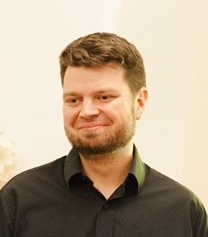
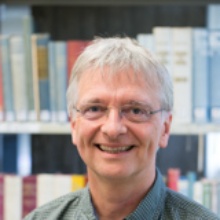
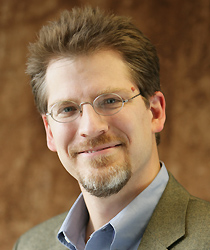
Dr. Niklas Jüngst is a Group Leader at the Institute for Energy and Materials Processes – Reactive Fluids, University of Duisburg-Essen. His research focuses on imaging techniques , statistical image analysis , and nanoparticle synthesis in multiphase combustion systems . PhD in Mechanical Engineering (2021), University of Duisburg-Essen Master of Science (2016), University of Bremen Research areas include in situ diagnostics , neural networks for image analysis , and droplet-particle interactions . Recent work emphasizes metal oxide nanoparticle visualization and combustion dynamics . His publications (2019–2025) span combustion physics , optical diagnostics , and machine learning applications for droplet breakup and soot analysis . Best presentation in 'Multiphase Flow' at DECHEMA (2023) Bremen Engineering Prize (2017) Research scholarship from Prof. Dr.-Ing. Erich Müller Foundation (2015) He develops measurement technologies for nanoparticle visualization and studies evaporation-condensation processes in reactive flows.
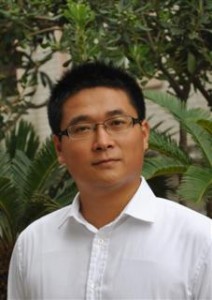
Knut Erik Teigen Giljarhus is an Associate Professor at the University of Stavanger's Faculty of Science and Technology within the Department of Mechanical and Structural Engineering and Materials Science. Appointed to a full-time faculty position in 2018 after transitioning from industry roles, he currently serves as Study Program Leader for Mechanical Engineering programs since 2020. Education: PhD from the Norwegian University of Science and Technology (NTNU) Research Interests: His primary expertise lies in Computational Fluid Dynamics (CFD) , with significant contributions to multiphase flow systems (oil/water separation, annular displacements), urban aerodynamics (pedestrian wind comfort, building interactions), and biomedical fluid applications (blood pumps, vascular flow). He employs advanced numerical methods including lattice Boltzmann modeling, large eddy simulations, and machine learning integration for rapid wind prediction. Publication Trends: Analysis of his 2024-2025 output reveals strategic expansion into ML-enhanced CFD for urban wind assessment while maintaining core multiphase flow research. Key themes include non-Newtonian fluid behavior in medical contexts, density-unstable displacement mechanisms, and aerodynamic optimization for sports engineering—all published in high-impact journals like Physics of Fluids and Building and Environment . Scientific Awards: No awards or fellowships were documented in the provided materials Advising and Grants: Formal advisees are not listed in the source material No research grants or funding sources are explicitly mentioned Labs and Teams: As Study Program Leader, he directs mechanical engineering curriculum development at the University of Stavanger. His research leverages the Department's computational facilities and collaborates with SINTEF Energy Research (evidenced in publications) alongside international partners in biomedical engineering and urban wind studies.
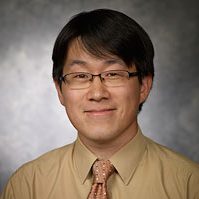
Prof. François Avellan is a prominent academic at École Polytechnique Fédérale de Lausanne (EPFL), affiliated with the School of Basic Sciences and the Department of Mechanical Engineering. His research focuses on hydraulic machinery, particularly Francis turbines, Pelton turbines, and cavitation phenomena. Key areas include CFD simulations, turbine design optimization, and hydropower system analysis. He leads projects like DuoTurbo (counter-rotating hydroturbines for energy recovery) and investigates fluid-structure interactions in off-design turbine operations. His work bridges experimental fluid mechanics with computational modeling, addressing challenges in renewable energy and grid stability. Education details are not explicitly provided in the text, but his extensive scholarly output indicates a strong academic background in mechanical engineering and fluid dynamics. Collaborations with institutions like the Laboratory of Hydraulic Machines (LMH) and the Swiss Federal Institute of Technology underscore his interdisciplinary involvement. Research interests emphasize cavitation dynamics, turbine instability mechanisms, and hydroacoustic resonance prevention. Recent studies explore part-load resonance risks, vortex rope behavior, and the integration of emerging hydropower technologies. His contributions span both fundamental and applied research, impacting turbine efficiency, energy recovery systems, and sustainable energy solutions. Publications highlight advancements in CFD validation, particle-based methods for erosion prediction, and predictive control of unstable flows. Innovations like the Y-junction hydraulic short-circuit and variable-speed pump-turbine simulations demonstrate practical applications of his research. Ongoing work includes multiscale erosion modeling and strategic hydropower potential assessments for Switzerland. Laboratory affiliations include the Laboratory of Hydraulic Machines (LMH), where experimental facilities support his investigations into turbine dynamics and fluid mechanics. His research directly informs industrial practices in hydropower plant design and operational reliability.
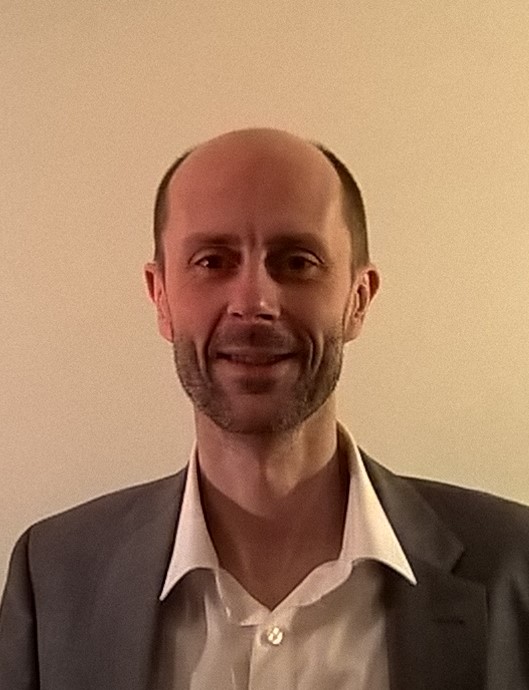
Charitha de Silva is a Senior Lecturer and Associate Head of School (Education) in the School of Mechanical and Manufacturing Engineering at the University of New South Wales. His research focuses on turbulent flows, advanced flow diagnostics, and aerobiology, with applications in microfluidics, biofluids, and noise control. He leads the Flow Noise Group and collaborates with institutions globally, including the University of Melbourne, Sydney, and international partners in Germany, the Netherlands, and the USA. Affiliations : UNSW School of Mechanical and Manufacturing Engineering, Flow Noise Group, Vision Fluid Dynamics Research Group Education : PhD (2014) and Bachelor of Engineering (Mechanical, First-class honours) from the University of Melbourne Dr. de Silva's research investigates wall-bounded flows, turbulent structures, and aerodynamic noise reduction. His work includes CFD modeling of infection risks in indoor environments and experimental frameworks for cough and sneeze dynamics. He actively supervises postgraduate students in turbulent flow measurements and microfluidics. Key collaborations involve aerosol transmission studies with public health researchers and aeroacoustic wind tunnel experiments. His lab facilities include an anechoic wind tunnel and advanced PIV systems for flow diagnostics.
Yannis Hardalupas is a Professor of Multiphase Flows at the Department of Mechanical Engineering, Imperial College London. His affiliations include the Centre for Translational Nutrition and Food Research, Climate and Health, Energy Futures Lab, and the Institute for Molecular Science and Engineering. He holds a PhD in Mechanical Engineering from Imperial College (1989) and has over 30 years of academic experience, including roles as Reader (2003–2009) and Advanced Research Fellow (1994–1998). His research focuses on multiphase flows, combustion, turbulence, and nanofluids. Notable interests include laser-induced flame dynamics, spray flow modeling, and energy systems. He has contributed to interdisciplinary fields like food engineering and sustainable energy, addressing challenges in thermal storage and alternative fuels. Recent work emphasizes data-driven approaches for cryogenic hydrogen release, hydrogen-ammonia combustion systems, and erosion-resistant wind turbine materials. His labs combine experimental diagnostics (e.g., PIV, chemiluminescence imaging) with computational modeling (LES, CFD). Hardalupas leads collaborations in climate resilience, energy transition, and material science, reflecting his role as a cross-disciplinary academic leader.
Radu Cimpeanu is an Associate Professor (Reader) at the Warwick Mathematics Institute, University of Warwick, and holds honorary/visiting roles at Imperial College London and the University of Oxford. His research focuses on fluid mechanics, microfluidics, computational acoustics, and industrial mathematics. He leads the Warwick Fluid Dynamics Research Centre and participates in national initiatives like the UK Fluids Network and the KE Hub. His work bridges theoretical, numerical, and experimental approaches, with applications in aerospace, biomedical engineering, and industrial optimization. He actively collaborates with international groups and industry partners, contributing to innovations in fluid control, interfacial dynamics, and high-performance computing. Education: PhD in Mathematics from Imperial College London (pre-2017). Prior roles include Hooke Research Fellow at Oxford (2017-2019). His research has advanced methodologies for drop impact dynamics, electrohydrodynamic control, and laminar flow modeling. He maintains strong ties with Imperial College through honorary affiliations and co-supervision of students. Key areas of current research include high-speed fluid-structure interactions, feedback control for liquid films, and computational acoustics. He frequently participates in international conferences and has organized workshops on multiphase flows and optimal control. His work emphasizes practical industrial applications, such as optimizing port terminal operations and developing medical devices.
Professor Yi Sui is a faculty member at the School of Engineering and Materials Science at Queen Mary University of London , where he serves as Director of Research . His work bridges biofluid mechanics and microfluidics , with a focus on label-free cell phenotyping/sorting and real-time AI algorithms . He leads the Intelligent Biofluid Mechanics Group , integrating high-fidelity mechanical models and high-speed imaging for biomedical tools. Research Interests : Biofluids, Cell biomechanics, Multiphase flows, Transport phenomena, Microfluidics, High-speed imaging, Real-Time AI Key Techniques : Immersed-boundary lattice-Boltzmann, Machine learning (MLP/DCNN-LSTM), Computational modeling, Phase diagram analysis Recent Publications explore cancer cell deformation in microchannels, real-time microcapsule characterization, viscoelastic capsule dynamics in cross-slot channels, and high-throughput AI-driven biomedical devices. His grants include projects funded by the Royal Society , EPSRC , and Horizon 2020 , covering topics like microfluidic cell mechanoporation and multiscale wetting modeling. Collaborative teams involve co-investigators from bioengineering, materials science, and computational physics. Grants span 2015–2027, with recent awards for Newton International Fellowships and MSCA PF programs.
Jacques Andrieu is a researcher at the Laboratory of Fluid Mechanics and Acoustics (LMFA - UMR 5509) affiliated with École Normale Supérieure de Lyon (ENS Lyon). His work focuses on aeroacoustics and compressible flow dynamics , particularly in rotating machinery and environmental flow contexts. Key research areas include: nonlinear acoustic wave propagation , multiphase flow instabilities , and active flow noise control He utilizes advanced experimental techniques such as PIV/PLIF , phase Doppler anemometry , and digital holography Collaborates with international institutions on industrial fluid dynamics applications for Michelin, Renault, and TOTAL Technical Expertise : Developed urban air quality model (SIRANE) for environmental impact analysis Co-inventor of tire groove velocity measurement patent (Michelin partnership) Specializes in high-turbulence environments and complex boundary flows
Guillermo Paniagua is the Reilly Professor of Mechanical Engineering and Professor of Aeronautics & Astronautics (by courtesy) at Purdue University, affiliated with the College of Engineering, Zucrow Labs, and the Global Engineering Program. His research focuses on advanced turbomachinery, rotating detonation combustion, and high-speed flow diagnostics. His work explores Supersonic and hypersonic fluid dynamics Turbine aerothermal performance under extreme conditions Cooling systems for combustors and high-temperature components Rotating detonation engine design and control Laser diagnostics for high-speed flows Optimization of diffusive stator vanes and nozzles Recent publications (2025–2024) emphasize rotating detonation combustion for sustainable propulsion, supersonic turbine efficiency analysis, and advanced diagnostics in high-temperature flows. His team investigates hydrogen-air combustion dynamics, cavity flow interactions, and shock-boundary layer control. Guillermo leads experimental and numerical studies at Purdue's Zucrow Labs, a premier facility for aerospace propulsion and fluid mechanics research. His work supports decarbonization efforts through supercritical CO2 cycles and pressure gain combustion technologies.
Nathanaël Machicoane is a CNRS Researcher at the Laboratory of Geophysical and Industrial Flows (LEGI) within Grenoble Institute of Technology at University Grenoble Alps. His research focuses on experimental and theoretical aspects of fluid dynamics, particularly in multiphase flows, atomization processes, and turbulence phenomena. He leads investigations using advanced imaging techniques including X-ray radiography and high-speed visualization to study complex fluid behaviors. His educational background includes a Habilitation from University Grenoble Alps (2024), a Ph.D. in Fluid Mechanics from ENS de Lyon (2014), and a Master degree in Physics from ENS de Lyon (2011). Prior to his current position, he completed postdoctoral research at the University of Washington's Multiphase & Cardiovascular Flow Lab (2016-2020) and at FAST laboratory. Machicoane's research interests span atomization and sprays, multiphase flows, turbulence, drops and bubbles, geophysical flows, particles/flow interactions and transport, heat transfer, mixing in two-phase flows, and Lagrangian and Eulerian approaches. His work combines theoretical modeling with sophisticated experimental techniques to investigate fundamental fluid phenomena with applications ranging from industrial processes to biomedical engineering. He has developed expertise in using synchrotron-based X-ray imaging to study liquid jet fragmentation and spray formation mechanisms. His publication record shows a strong focus on atomization mechanisms, particularly gas-assisted atomization, with significant contributions to understanding liquid jet fragmentation, spray formation, and particle dynamics in turbulent flows. His recent work increasingly incorporates advanced imaging techniques and computational validation, with emerging applications in biomedical fluid dynamics as evidenced by his publications on intracranial aneurysm hemodynamics. Machicoane actively participates in the EDT (Two-Phase Flows and Turbulence) team at LEGI, utilizing the laboratory's extensive experimental facilities including hydrodynamic tunnels, rotating platforms, and wave channels. His research often involves international collaborations with institutions such as the University of Washington, where he previously conducted postdoctoral research. His laboratory work employs a variety of sophisticated experimental setups, including high-speed flow visualization systems, Phase Doppler Particle Analysis, and synchrotron-based X-ray imaging. These techniques enable detailed characterization of complex fluid phenomena at multiple scales, from macroscopic spray patterns to microscopic interfacial dynamics.
Wonjae Choi is an Associate Professor and Program Coordinator of Mechanical Engineering and Mechanical Engineering Technology at the Gildart Haase School of Computer Science and Engineering, Fairleigh Dickinson University (FDU), New Jersey. He holds a PhD in Mechanical Engineering from the Massachusetts Institute of Technology (MIT), with a focus on oil-repelling surfaces, and earned his BS and MS from Seoul National University. Prior to FDU, he served as an Assistant Professor at the University of Texas at Dallas and as a Research Fellow at Harvard University. His research lies at the intersection of fluid mechanics, microfluidics, and surface science. Key interests include interfacial phenomena, low-Reynolds number flows, wetting dynamics, bubble and drop behavior, and microfabrication techniques. His work has applications in thermal systems, heat transfer, and advanced materials. The 15 most recent articles reflect a consistent focus on microscale fluid dynamics, surface engineering, and thermal-fluid systems. Broad keywords include Mechanical Engineering, Fluid Mechanics, Microfluidics, Heat Transfer, and Materials Science. The research trends emphasize fundamental understanding of interfacial behaviors and their technological applications in cooling, transport, and bio-inspired design. Oil-Repelling Surfaces: Design and Applications (2023) Dynamics of Bubbles in Microconfined Geometries (2023) Low-Reynolds Number Hydrodynamics in Bio-Inspired Microfluidic Devices (2023) Wetting Transitions on Hierarchical Microstructured Surfaces (2022) Thermal Management Using Microfluidic Evaporative Cooling (2022) Dr. Choi has published 30 journal papers and 9 conference papers. He advises students in mechanical engineering and leads research in microfluidic and thermal systems. There is no mention of external grants in the provided texts. He is associated with the Mechanical Engineering and Mechanical Engineering Technology program at FDU, contributing to both education and research in thermal sciences and fluid dynamics.
Alf Kristian Gjerstad is an Associate Professor in the Department of Energy and Petroleum Engineering at the University of Stavanger, Faculty of Science and Technology. His research focuses on automated drilling systems, optimization of drilling parameters (such as rate of penetration and tripping speed), and computational modeling for real-time hazard detection (e.g., kicks, losses, differential sticking). He is based in Stavanger, Norway, and can be reached at alf.k.gjerstad@uis.no. His research interests span automated drilling , drilling fluid rheology , mechanical and flow modeling , multiphase flow , and geothermal drilling . He emphasizes practical simulation tools for real-time applications, particularly in high-pressure, high-temperature (HPHT) environments. His work bridges petroleum engineering, fluid dynamics, and control systems, promoting interdisciplinary collaboration. The recent publications (2012–2024) highlight a strong trend in modeling non-Newtonian and multiphase flows in drilling, with applications in surge/swab pressure prediction, gas kick simulation, and real-time optimization. His work frequently appears in SPE journals and ASME/IEEE conferences, indicating a focus on both theoretical and applied aspects of drilling engineering. Scientific Awards: No scientific awards mentioned in the provided text. Advising and Grants: While specific students and grant details are not listed, Dr. Gjerstad has co-authored research with academic and industry collaborators, suggesting involvement in funded projects and student supervision. His publications in optimization and control systems imply engagement in research teams and potential advising of graduate students in petroleum and mechanical engineering. Labs and Teams: Though not explicitly mentioned, his research in real-time modeling and automated drilling suggests affiliation with simulation labs or drilling automation research groups at the University of Stavanger, possibly involved in digital oilfield or smart drilling initiatives.
Muhammed Burak Agir is a Researcher in Mechanical and Aerospace Engineering, specializing in computational fluid dynamics and rarefied gas dynamics. His work focuses on vortex engineering, shock wave interactions, and multiphase flow phenomena. He contributes to the Space Systems Research Group, addressing challenges in aerospace engineering such as planetary surface interactions and high-speed flow modeling. Research Interests: His primary focus includes vortex dynamics in low-pressure environments, shock wave diffraction, and the development of open-source computational tools for multiphase rarefied flows. His work bridges theoretical modeling with practical applications in space systems, particularly in understanding plume-surface interactions for lunar missions. Publications & Projects: Agir has contributed to peer-reviewed articles on topics like gas-surface interactions and rarefied flow simulations. He collaborates on projects involving low Earth orbit systems and space thrusters. His research utilizes advanced numerical methods and open-source software to model complex fluid dynamics scenarios. Award & Editorial Roles: While no specific awards are cited, he actively participates in peer review for journals like CEAS Space Journal and serves on the editorial board of Asrel Aerospace Research Letters.
Bernhard Weigand is a Professor and Director of the Institute of Aerospace Thermodynamics (ITLR) at the University of Stuttgart's Faculty of Aerospace Engineering and Geodesy. His work focuses on heat transfer, droplet dynamics, and supersonic combustion. He leads research initiatives such as the Collaborative Research Center (Transregio 75) on droplet dynamic processes under extreme conditions. Prof. Weigand has contributed to advancements in fluid mechanics, multiphase flow, and computational modeling, with particular expertise in droplet impact dynamics, microstructured surfaces, and data-driven turbulence models. His research also involves experimental and numerical investigations of aerothermal phenomena in turbine cooling systems and high-speed flows. He has published extensively in top journals and conferences, addressing topics like evaporation, phase change, and the application of machine learning in turbulence modeling. As director, he oversees the ITLR's facilities, including the Multiphase Flow Lab, and collaborates internationally on projects related to aerospace engineering and energy systems. His contributions have been recognized through leadership roles and impactful publications in the field.
Kenneth Kiger is a Professor and Associate Dean of Undergraduate Programs in the Department of Mechanical Engineering at the University of Maryland, College Park. He holds the endowed Keystone Professor title and is affiliated with the Maryland Energy Innovation Institute and Brain and Behavior Institute. His research focuses on fluid mechanics and experimental techniques, with emphasis on multi-phase flows, particle-turbulence interaction, turbulent mixing in complex geometries, and applications in nuclear reactor safety, spray cooling, and sediment transport. Dr. Kiger earned his Ph.D. in Mechanical Engineering from the University of California, San Diego (1995). He has received the National Science Foundation CAREER Award (1997) and the Distinguished Scholar-Teacher award from the University of Maryland. His work has advanced fluid dynamics education and curriculum development, particularly in hands-on engineering pedagogy. His research employs advanced experimental methods like Particle Image Velocimetry (PIV) and Laser Induced Fluorescence (LIF). Notable projects include studying air entrainment by plunging jets, boron mixing in nuclear reactors, and the dynamics of sediment-laden flows. He has contributed to biomimetic fluid dynamics, exploring gill kinematics in mayfly nymphs, and developed novel measurement techniques for two-phase flows. Prof. Kiger actively engages in academic service, serving on the organizing committee for the APS Division of Fluid Dynamics Annual Meeting (2000) and as a reviewer for journals including Physics of Fluids and Journal of Fluid Mechanics. He has mentored numerous students and pioneered educational initiatives such as mastery-based assessment approaches in engineering education. His lab work involves fluid-structure interaction studies, particularly flexible plate impacts on water surfaces, and high-fidelity simulations of complex fluid dynamics phenomena. Recent contributions address environmental fluid mechanics (e.g., foundry physics modeling) and energy-related applications (e.g., spray cooling for electronics).