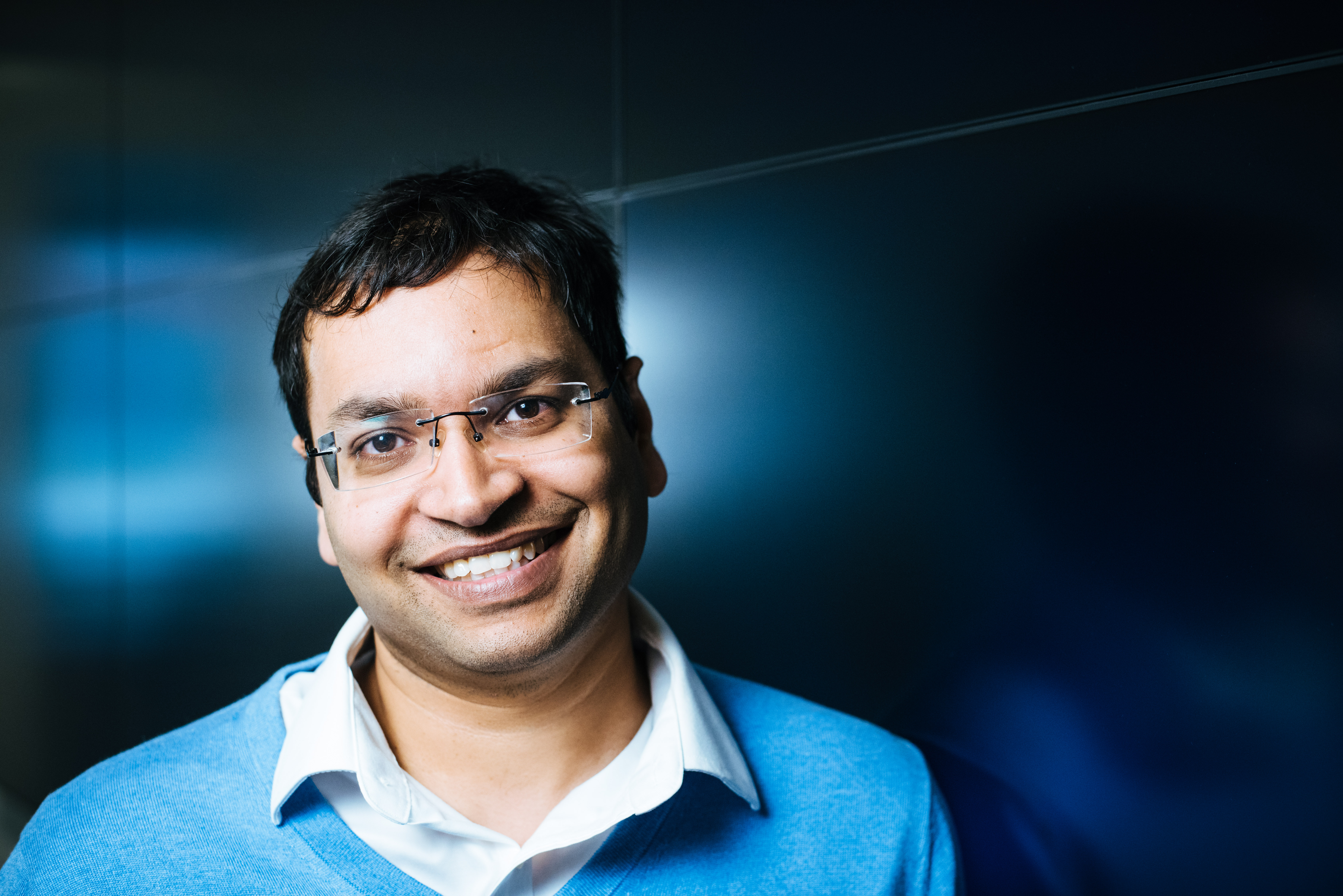
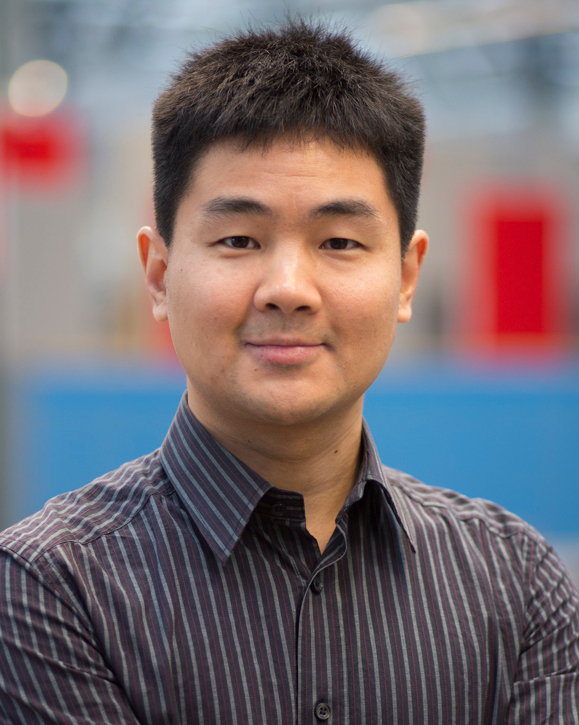
Rakesh Kumar is a Professor and John Bardeen Faculty Scholar in the Electrical and Computer Engineering Department at the University of Illinois at Urbana-Champaign. His work focuses on computer architecture, system-level design automation, and low-power computing. PhD in Computer Engineering from University of California, San Diego BS in Electrical Engineering from IIT Kharagpur His research spans all layers of the computing stack, with key contributions to flexible computer systems , waferscale computing , error-resilient architectures , and approximate computing . He has pioneered work on voltage-reliability tradeoffs and peak power management techniques. Recent publications highlight trends in space microdatacenters , printed microprocessors , and neural graph accelerators . His work on plastic chips was recognized as one of the three biggest semiconductor headlines of 2022 by IEEE Spectrum. IEEE Fellow (2024) ISCA Influential Paper Award MICRO Test-of-Time Award ICCAD Ten Year Retrospective Most Influential Paper Award Best Paper Awards at CASES, SELSE, HPCA He has received teaching accolades including the Stanley H. Pierce Faculty Award and Ronald W. Pratt Outstanding Teaching Award . His research group explores hardware-software co-design for emerging applications in AI, IoT, and sustainable computing.
Róbert Tornai serves as an Associate Professor in the Department of Data Science and Visualization at the Faculty of Informatics, University of Debrecen, Hungary. His institutional affiliation encompasses active participation in the department's core mission of advancing data processing, visualization, and computational methodologies within Hungary's academic landscape. His primary research focuses on high-performance data transfer in supercomputing environments, parallel data processing using memory-safe Rust programming, and virtual collaboration system development. These interconnected domains emphasize optimizing data-intensive workflows while ensuring system security and user accessibility, reflecting contemporary challenges in distributed computing infrastructure. Analysis of his 15 most recent publications reveals dominant trends in high-speed connectionless networking protocols (2020-2025), where he investigates performance optimization, error detection, and encryption for file transfer systems. Significant secondary themes include biometric security applications (iris/voice recognition) and GPU-accelerated image processing techniques leveraging WebAssembly and Vulkan API, demonstrating technical versatility across networking, security, and visualization domains. His scholarly output consistently addresses practical implementation challenges in data transfer and secure systems, with recent work extending into educational technology applications of 3D printing. This trajectory indicates sustained engagement with evolving computational paradigms while maintaining focus on real-world system performance and security requirements.
Professor David Gethin is a faculty member in the Department of Mechanical Engineering at Swansea University. He holds a position within the Faculty of Science and Engineering and is affiliated with the Welsh Centre for Printing and Coating. His research focuses on net shape manufacturing, powder forming technologies, and printing/coating innovations. He is available for postgraduate supervision and maintains a basic proficiency in Welsh. Research Contributions: Professor Gethin has pioneered numerical/experimental techniques for casting process variants, including squeeze casting simulation and optimization. He contributed to early continuum-based powder compaction modeling and developed combined discrete/finite element methods for tabletting processes. His work bridges mechanical response characterization of powders with industrial validation. Recent efforts emphasize polymer electronics and biopolymer applications in biosensing devices, leveraging thin film hydrodynamics for scientific process development. Lab Affiliations: Core researcher at the Welsh Centre for Printing and Coating, where high-volume printing process fundamentals have been transformed from craft-based to scientifically validated methodologies over the past decade. Professional Links: Maintains an ORCID profile (https://orcid.org/0000-0002-7142-8253) documenting his technical contributions to manufacturing and materials science.
Prof. Dr. İbrahim ÇAYIROĞLU currently holds a full-time Professor position at Karabük University's Faculty of Engineering and Natural Sciences, Department of Mechatronics Engineering. He has served as Department Chair since 2024 and previously held administrative roles including Dean Assistant and Department Chair between 2003-2021. Education: PhD in Mechanical Engineering (2002), Kırıkkale University MSc in Mechanical Engineering (1996), Kırıkkale University BSc in Mechanical Engineering (1991), Istanbul Technical University Research Focus: Specializes in Computer-Aided Design/Manufacturing, Finite Element Analysis, and Machine Dynamics. His work spans robotics, 3D printing optimization, welding technology, and mechanical system simulation. Recent Trends: 2024 publications highlight autonomous robotics, AI-integrated quality control in manufacturing, and advanced finite element analysis. Earlier works focused on SIFT-based object tracking, 3D printing reinforcement, and welding process evaluation. Advising Record: Supervised 11 graduate theses across diverse topics including autonomous robots, composite materials, and 3D printer design. Technical Projects: Led 12 projects between 2007-2023, including TÜBİTAK-funded excavator simulators, composite 3D printers, and automated glass mosaic tiling systems.
Jun Wu is an Associate Professor in the Department of Sustainable Design Engineering at Delft University of Technology (TU Delft), Faculty of Industrial Design Engineering, where he has been a tenure-track faculty member since 2016 and was promoted to Associate Professor in August 2022. He holds two PhDs: one in Computer Science from Technische Universität München (2015) and another in Mechanical Engineering from Beihang University (2012). Prior to TU Delft, he was an HC Ørsted Postdoctoral Fellow at DTU Denmark. Research Interests: His research lies at the intersection of computational design, digital fabrication, and structural optimization. He specializes in topology optimization (generative design) for additive manufacturing, with a focus on space-time optimization, stress-constrained design, multi-material lattices, and bio-inspired infill structures. His work bridges mechanical engineering, computer graphics, and materials science to create high-performance, lightweight, and printable structures. Recent Research Trends: His most recent publications (2023–2025) demonstrate a strong trend toward integrating physical constraints—such as residual stress, thermal distortion, and manufacturability—into topology optimization frameworks. He is pioneering space-time optimization for multi-axis additive manufacturing, developing methods for stress-aligned lattices, and exploring differentiable microstructures. His interdisciplinary work spans biomedical implants, soft robotics, and educational tools for design. Scientific Awards: Frontiers of Science Award, International Congress of Basic Science (2023) 2023 ISSMO Haftka Young Investigator Award 2021 SMA Young Investigator Award Best Paper Award (2nd place), SPM 2019 ISSMO/Springer Prize (2020) Multiple ESI Highly Cited Papers Advising and Grants: He leads a vibrant research group with numerous PhD students and postdocs. In 2023, he was awarded a Vidi grant from the Dutch Research Council (NWO) for his project on Space-time optimization for additive manufacturing . He has also secured funding under the Dutch Research Agenda (NWA) for the project AM4Micro . He actively mentors PhD candidates and has co-organized the IDEA League summer school on Computational Design for Additive Manufacturing since 2020. Labs and Teams: He is affiliated with the Computational Design Lab at TU Delft and is the initiator and convener of the TOP Webinar series since 2020, fostering global collaboration in topology optimization. He serves on the editorial boards of Computer-Aided Design and Structural and Multidisciplinary Optimization , and has been a program committee member for major conferences including SPM, CGI, and CVM.
Sasan Gooran is a Senior Associate Professor at Linköping University's Department of Science and Technology (ITN), specializing in Media and Information Technology (MIT). He holds a PhD in Media Technology from Linköping University (2001), following M.Sc. (1994) and Licentiate (1998) degrees in related fields. His research focuses on digital halftoning, image reproduction, and 3D printing technologies. He has supervised seven PhD students and over 50 M.Sc. theses, contributing significantly to graphic technology and appearance modeling. Teaching includes courses in Graphic Arts, Computer Graphics, Image Processing, and Python programming. His work integrates theory and application in visual information technology, with collaborations in interdisciplinary projects like material appearance digitization and BRDF modeling. He actively participates in research groups exploring 3D printing materials and visualization technologies. Recent research highlights include 3D printing material analysis via spectrophotometry, empirical BRDF models for reflective inks, and adaptive halftoning algorithms. His contributions span over 20 years, emphasizing quality enhancement in printing and digital imaging.