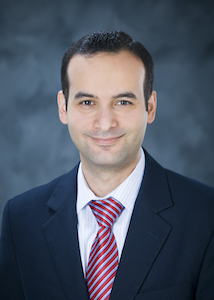
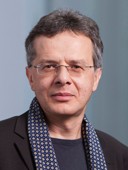
Dr. Charles Dubois is a Full Professor in the Department of Chemical Engineering at Polytechnique Montréal, specializing in reactive polymer processing, nanothermites, and composite materials. He is a member of the Research Center for High-Performance Polymer and Composite Systems (CREPEC) and has supervised 35 graduate students (19 PhD, 16 Master’s) since 2005. B.Eng., M.Sc.A. (Sherbrooke), Ph.D. (Laval) Affiliation: CREPEC His research interests span polymer nanocomposites, thermosetting resins, chemorheology, and energetic materials. Recent work focuses on graphene-based EMI shielding composites, aluminum-based nanothermites for propulsion, and polymer-coated metal powders for controlled combustion. Dr. Dubois has contributed to 167 publications, with recent trends in nanothermite combustion kinetics, polymer composites for electromagnetic shielding, and sustainable energetic materials. He has provided expert commentary to media outlets like La Presse and Radio-Canada on explosive material safety and propellant design.
Professor Geraint Jewell is affiliated with the University of Sheffield , serving as Director of the Rolls-Royce University Technology Centre in Advanced Electrical Machines (since 2006) and Director of the EPSRC Future Electrical Machines Manufacturing Hub (since 2019). He is a graduate of the university (BEng 1988, PhD 1992) and has held academic roles since 1994. EPSRC Advanced Research Fellowship (2000-2005) Royal Society Industry Fellowship at Rolls-Royce (2006-2008) Former Faculty Director of Research and Innovation (2008-2011) Former Head of Department (2013-2019) His research focuses on power-dense electrical machines for aerospace applications , including permanent magnet machines , switched reluctance machines , and linear actuators . He has supervised ~20 PhD students and led collaborations with Rolls-Royce on high-temperature devices (up to 800°C) and aero-engine starter-generators. Recent publications analyze stator insulation thermal degradation , eddy current control in additively manufactured materials , and magnetic loss prediction in silicon steel. His work spans electromagnetic modeling , core loss calculation , and advanced manufacturing techniques for electrical machines. EPSRC Advanced Research Fellowship (2000-2005) Royal Society Industry Fellowship (2006-2008) He has advised PhD students across topics like consequent-pole PM machines , doubly salient SynRMs , and core loss characterization . His Electrical Machines and Drives Research Group explores modular motor design and magnetic material optimization for aerospace and electric vehicles.
Jonathan Freund is Professor of Mechanical Science and Engineering and Aerospace Engineering at the University of Illinois at Urbana-Champaign, holding the Donald Biggar Willett Professorship since 2016. He serves as Head of Aerospace Engineering (2020-present) and is Co-Director of the Center for Exascale-enabled Scramjet Design (CEESD). His academic journey began with all three degrees in Mechanical Engineering from Stanford University (B.S. 1991, M.S. 1992, Ph.D. 1998), followed by faculty positions at UCLA (1997-2001) before joining UIUC. Freund's research spans fluid mechanics with applications in biomedical systems, aeroacoustics, and materials science. His work focuses on computational modeling of cellular blood flow, jet noise control, plasma-coupled combustion, uncertainty quantification, and nanoscale material processing. He develops advanced simulation tools to investigate phenomena ranging from atomically thin liquid films to spacecraft propulsion systems. His laboratory leverages high-performance computing to solve complex multiphysics problems requiring exascale capabilities. Analysis of his recent publications reveals a strong emphasis on computational fluid dynamics applied to biological systems (35%), aeroacoustics and jet noise (25%), materials processing at nanoscale (20%), and uncertainty quantification methods (20%). His work consistently bridges fundamental fluid mechanics with practical engineering applications, particularly in medical technologies and advanced propulsion systems. Donald Biggar Willett Professor (2016-present) Kritzer Faculty Scholar (2011-2016) Fellow of the American Physical Society (2011) Campus Excellence in Faculty Mentoring Award (2017) APS DFD Gallery of Fluid Motion Winner (2000) Associate Fellow of AIAA (2012) Freund has advised numerous graduate students and received multiple teaching honors including the Engineering Council Award for Excellence in Advising (2008, 2012) and repeated recognition on the List of Excellent Teachers. His research has been supported by agencies including the Department of Energy's National Nuclear Security Administration. He leads the CEESD center which develops physics-faithful predictive simulations for scramjet design using advanced high-temperature composite materials.
Dr Leok Lee is a Lecturer in the School of Electrical and Mechanical Engineering at the University of Adelaide . He is also an active member of the Centre for Energy Technology , contributing to cutting-edge research in renewable energy systems. Research Interests: Renewable energy systems, with a focus on solar thermal energy and energy storage. System integration and optimisation of complex transient energy systems. Computational fluid dynamics (CFD) and experimental design for energy applications. Decarbonisation of heavy industry through clean energy technologies. His research spans from fundamental studies in heat transfer and fluid mechanics to applied engineering solutions for decarbonising industrial processes. He has led and contributed to projects funded by ARENA and HILT CRC, targeting the integration of concentrated solar thermal energy into industrial applications such as the Bayer Alumina process. Supervision & Mentorship: Dr Lee is eligible to supervise Masters and PhD students and actively mentors undergraduate, Masters, and PhD candidates. He encourages prospective students to contact him via email to discuss research opportunities. Contact: Email: leok.lee@adelaide.edu.au Location: Room 3, Engineering South, North Terrace Campus
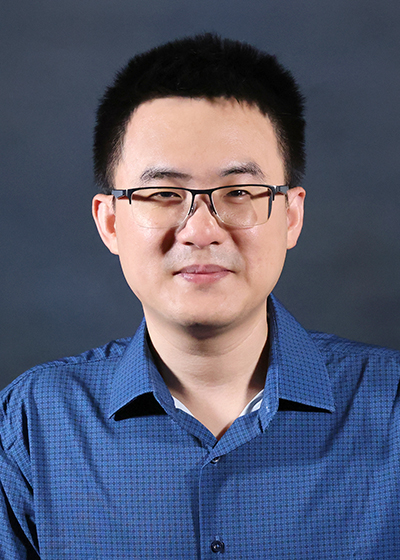
Yingbin Hu is an Assistant Professor in the Industrial and Systems Engineering Department at Mississippi State University (MSU), part of the Bagley College of Engineering. Prior to joining MSU in 2024, he held an Assistant Professor position at Miami University. His educational background includes a Ph.D. in Industrial Engineering from Texas Tech University (2019), an M.S. in Manufacturing Engineering from the University of Texas-Rio Grande Valley (2015), and a B.S. in Mechanical Engineering from Shandong University (2013). Dr. Hu’s research focuses on additive manufacturing, materials processing, and advanced machining, with specializations in composite materials, laser-assisted manufacturing, and ultrasonic vibration techniques. His work has yielded over 70 peer-reviewed publications in journals like Composites Part B: Engineering and Additive Manufacturing , along with patents and conference contributions. He received the Miami University Junior Faculty Scholar Award and serves as an associate editor for Materials and guest editor for multiple journals. His research interests include: (1) additive manufacturing of composites, ceramics, and biomaterials; (2) ultrasonic vibration-assisted laser additive manufacturing; (3) laser alloying of metallic materials; and (4) rotary ultrasonic machining of hard materials. His contributions bridge fundamental material science with advanced manufacturing processes. Lab Affiliation: The AIM Laboratory (Additive Manufacturing & Innovation) Professional Memberships: SME, ASME, IISE Dr. Hu’s work emphasizes sustainable and high-performance material systems, with applications in biomedical engineering, aerospace, and advanced manufacturing. His recent articles explore 4D printing, functional graded ceramics, and acoustic field-assisted additive manufacturing techniques.
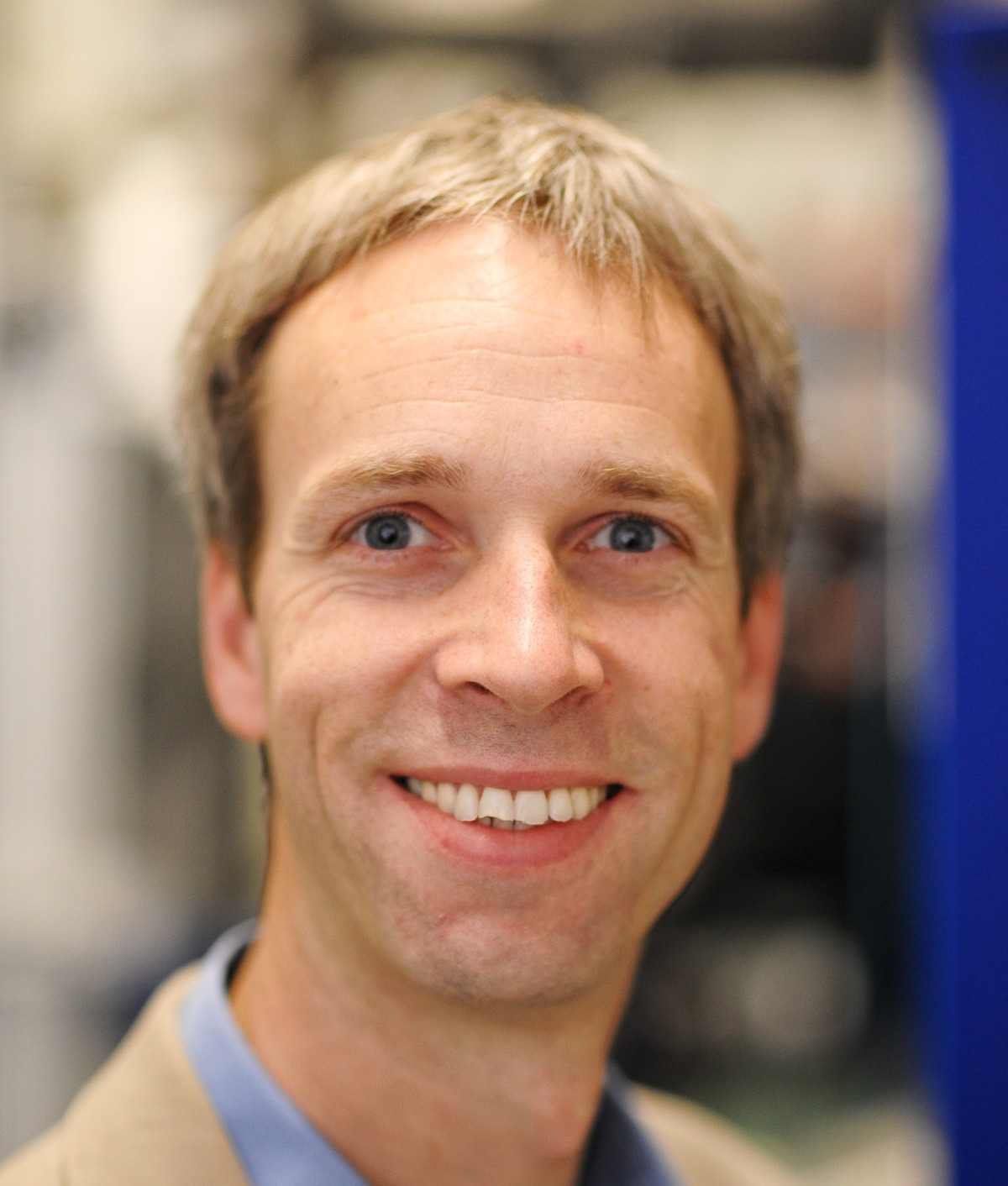
Prof. Sebastian Kaiser is a full professor at the University of Duisburg-Essen's Institute for Combustion and Gas Dynamics, where he leads research on reactive fluid dynamics since 2011. His academic background includes a Bachelor's from Dartmouth College, Diplomingenieur from RWTH Aachen, and PhD from Yale University, followed by postdoctoral work at Sandia National Laboratories. Research Focus: Kaiser specializes in optical diagnostics for reactive systems with emphases on: High-speed imaging of combustion processes Nanoparticle synthesis via spray-flame techniques Tribology and fluid-structure interactions Engine diagnostics using laser-based methods His work bridges experimental techniques and simulation development for energy and propulsion systems. Publication Trends: Recent articles (2023-2025) demonstrate consistent focus on advanced optical diagnostics applied to combustion systems, nanoparticle synthesis, and engine research. Key methodologies include laser-induced fluorescence, high-speed imaging, and machine learning for fluid dynamics analysis. Awards & Honors: Harding-Bliss Prize for Engineering Excellence (Yale, 2005) SAE Excellence in Oral Presentation Award (2008) NRW Returning Scientists Grant (2010) Professional Affiliations: Member of Society of Automotive Engineers (SAE) and The Combustion Institute, with extensive experimental facilities for reactive flow characterization.
Prof. Dr.-Ing. Katharina Schmitz serves as Institute Director and Vice Dean at the Institute for Fluid Power Drives and Systems, RWTH Aachen University. Her leadership within the Production Technology Cluster and extensive contributions to fluid power engineering establish her as a leading authority in mechanical engineering research and education. Her research spans fluid power systems, hydraulic component design, tribology, and physics-informed machine learning applications. She pioneers sustainable propulsion solutions through bio-hybrid fuels research while addressing fundamental challenges in polymer material behavior under hydraulic stresses. Current work focuses on carbon-neutral heavy-duty transportation, physics-based neural networks for lubrication modeling, and advanced control systems for electro-hydraulic actuators. Analysis of her 15 most recent publications reveals a dominant trend toward integrating physics-based modeling with deep learning to solve complex engineering problems. Her team consistently develops novel frameworks for cavitation prediction, flow rate determination, and material compatibility assessment - significantly advancing fluid power system reliability, efficiency, and digitalization. Scientific recognition includes: GfT Förderpreis 2023 for experimental and simulative investigation of partially hydrostatic relieved contacts in variable speed axial piston machines As head of the Institute for Fluid Power Drives and Systems, she leads cutting-edge research in sustainable fluid power technologies. The institute maintains strong industry partnerships while driving innovation in hydraulic component design, digital twins for condition monitoring, and next-generation propulsion systems through its position within RWTH Aachen's Production Technology Cluster.
Matthew Hobbs is a Lecturer in Semiconductor Materials and Devices at the University of Sheffield's School of Electrical and Electronic Engineering. He also serves as an Electrical and Electronic Engineering Y1 & 2 Tutor. His academic journey includes an MEng (2009) and PhD (2014) in Electronic Engineering from the University of Sheffield, followed by a Knowledge Transfer Partnership (KTP) role with AMETEK Land. Since 2016, he has contributed to research on single-pixel measurement instruments and non-contact thermometry within the Sensor Systems Research Group. His current research focuses on developing novel optical instrumentation, including luminescence metrology, hyperspectral imaging, and aerosol jet-printed electronics. He actively supervises PhD students in optical sensing and instrumentation. Education: MEng (Hons) in Electronic Engineering, University of Sheffield (2009) PhD in Electronic Engineering, University of Sheffield (2014) Research Interests: Hobbs' work centers on advanced measurement technologies such as non-contact temperature sensing, hyperspectral imaging, and luminescence-based techniques. He is pioneering innovations in printed electronics via Aerosol Jet Printing and advancing instrumentation for industrial and academic applications. His research bridges fundamental science and practical industrial challenges in sectors like foundation industries and environmental monitoring. Grants & Leadership: PI of Game Changers grant: "Single-Pixel Salt Concentration Mapping" (2023-2023) PI of TFI Network+ grant: "Accurate Emissivity Characterisation of Metals" (2022-2023) Teaching & Mentorship: Teaches undergraduate courses including EEE117 (Electrical Circuits), EEE123 (Introduction to Circuits), and EEE126 (General Skills). He balances research with teaching roles since 2021. Professional Activities: Member of the Institution of Engineering and Technology (IET). Collaborates with industry partners such as AMETEK Land and actively publishes in high-impact journals like Optics Express and Sensors .
Kurt Rouser is an Assistant Professor in the Department of Mechanical and Aerospace Engineering at Oklahoma State University (OSU), part of the College of Engineering, Architecture and Technology (CEAT). He holds a Ph.D., M.S., and B.S. in Aeronautical/Mechanical Engineering from institutions including the Air Force Institute of Technology and the US Air Force Academy. His research focuses on thermodynamics, aerospace propulsion systems, gas turbine engines, and pressure gain combustion. Rouser has received numerous awards, including the 2020 Golden Torch Faculty Award and the Frank J. Seiler Award for Research Excellence. He teaches advanced courses such as MAE 5343 (Advanced Aircraft Propulsion & Power) and MAE 4374 (Aerospace System Design). He serves as faculty advisor for Tau Beta Pi and Sigma Gamma Tau honor societies. His work spans academic teaching, military engineering roles, and contributions to propulsion system design and validation. Rouser’s publications address topics like turboelectric power systems, pulsed detonation turbines, and unmanned aircraft inlet design. His career combines academic research with practical engineering experience, emphasizing both technical innovation and educational excellence.
Armin Wehrfritz is an Assistant Professor in the Department of Mechanical Engineering at the University of Turku. His research focuses on high-fidelity numerical simulations of multiphase and chemically reacting flows, particularly involving low-carbon fuels like hydrogen. He holds a Master's degree from the University of Kaiserslautern and a Ph.D. from Aalto University. During his doctoral studies, he was a visiting researcher at Eindhoven University of Technology, and later worked as a Research Associate at the University of New South Wales in Sydney. His expertise spans computational fluid dynamics (CFD), turbulence modeling, combustion physics, and high-performance computing (HPC), with a growing interest in machine learning applications for numerical methods. Education: Doctoral Degree: Aalto University, Finland Master's Degree: University of Kaiserslautern, Germany Research interests include: Direct numerical simulation (DNS) and large-eddy simulation (LES) of combustion processes Hydrogen integration in compression-ignition engines Development of advanced micro-mixing models for transported PDF methods Data-driven approaches for optimizing combustion systems His recent work emphasizes reducing carbon emissions through hydrogen-diesel dual-fuel systems and improving simulation accuracy for engine-relevant conditions. Collaborations have involved institutions in the Netherlands, Australia, and the U.S., focusing on topics like plasma-ignited hydrogen jets and NOx reduction mechanisms.
Erica L. Belmont is an Associate Professor in the Department of Mechanical Engineering at the University of Wyoming, leading the Belmont Energy Research Group (BERG). Her work focuses on experimental combustion science, renewable energy conversion, and sustainable materials development within the university's Carnegie R1 research framework. Her academic credentials include: B.S. in Chemical Engineering from Tufts University M.S. in Mechanical Engineering from Tufts University Ph.D. in Mechanical Engineering from the University of Texas at Austin Dr. Belmont's research integrates three interconnected domains: low-temperature combustion chemistry (particularly cool flames for advanced engine applications), biomass energy systems (including co-combustion of beetle-kill wood with coal), and biochar valorization (for carbon sequestration and materials production). Her experimental approach combines species/temperature measurements with numerical modeling to address energy efficiency and environmental sustainability challenges. Recent publications demonstrate consistent innovation in combustion diagnostics and biomass thermochemical conversion, with increasing emphasis on wildfire-derived carbon analysis and sustainable material synthesis. The work bridges fundamental chemical kinetics with practical energy applications, particularly in Western U.S. contexts affected by bark beetle infestations. She mentors a robust cohort of graduate researchers, with 21 advised students (11 Ph.D., 10 M.S.) contributing to BERG's mission. Her group secures research support through university and external partnerships focused on clean energy transitions. BELMONT ENERGY RESEARCH GROUP (BERG) operates specialized facilities for cool flame stabilization, biomass pyrolysis/gasification, and biochar characterization. Current projects include wildfire carbon quantification in Medicine Bow National Forest and development of biomass-derived battery components, reflecting Wyoming's energy landscape and ecological challenges.
Professor Tianfeng Lu is a faculty member in the School of Engineering at the University of Connecticut, where he joined as an Assistant Professor in 2008 and was appointed as the United Technologies Associate Professor of Engineering Innovation in 2016. His research focuses on computational fluid dynamics, combustion chemistry, and turbulent flow simulations. He earned his B.S. and M.S. in Engineering Mechanics from Tsinghua University and his Ph.D. in Mechanical and Aerospace Engineering from Princeton University. Dr. Lu's work emphasizes reducing complex chemical mechanisms for efficient simulations of multidimensional turbulent flows and engineering systems. His contributions include advancements in ignition dynamics, detonation modeling, and plasma-assisted combustion. Key projects involve exascale simulations through initiatives like PELE and collaborations on real-fuel combustion models for engines. His articles highlight breakthroughs in combustion diagnostics, engine efficiency, and pollutant reduction, with recent efforts addressing hydrogen-methane mixtures and low-temperature combustion strategies. Awards include his endowed chair position, reflecting recognition of his impactful contributions to combustion science.
Prof. Dr. Heinz Burtscher serves as Professor at the FHNW University of Applied Sciences Northwestern Switzerland since 1996, where he founded and led the Institute of Aerosol and Sensor Technology until 2018. Affiliated with the School of Engineering and Environment , he specializes in Aerosol Measurement Technology and Measurement and Sensor Technology with focus on combustion-generated nanoparticles, environmental aerosol monitoring, and sensor development for particulate matter analysis. PhD in Electrical Engineering (1980) from ETH Zurich Postdoctoral qualification in experimental physics (1991) on combustion aerosols His research interests span: Characterization of small particles from combustion processes (e.g., diesel soot, wood burning) Development of field measurement techniques for particle emissions Advancements in sensor technology for ambient air monitoring Toxicological evaluation of nanoaerosols Innovations in exhaust gas cleaning systems Recent publications address sub-23 nm particle measurement , e-cigarette vapor characterization , and real-time SOA formation potential in combustion emissions. He received the Smoluchowski award (1994) from the Gesellschaft für Aerosolforschung (GAeF) and maintains active membership in GAeF and the Swiss Aerosol Group. As both educator and researcher, Burtscher teaches Power electronics , Electrical drives , and Sensor systems while leading projects on: Volcanic ash detection systems Nanoparticle exposure assessment Vehicle cabin air filtration Periodic emission inspection protocols He works closely with the Institute for Sensors and Electronics at FHNW and collaborates with ETH Zurich's combustion research groups.
Omid Askari is an Assistant Professor in the Department of Mechanical Engineering at Mississippi State University, College of Engineering. His research focuses on combustion science, plasma-assisted ignition, alternative fuels, and high-pressure flame dynamics. He leads the Plasma and Combustion Research Laboratory and has an extensive publication record in high-impact journals such as Applied Energy , Fuel , and Journal of Energy Resources Technology . Education: Ph.D., Mechanical Engineering, Northeastern University, 2016 M.S., Mechanical Engineering, Sharif University of Technology, 2007 B.S., Mechanical Engineering, University of Karaj, 2005 His research interests include combustion kinetics , plasma-assisted ignition , alternative and low greenhouse gas fuels , high-pressure spray combustion , flame stability , and laser diagnostics . His work bridges fundamental thermodynamic modeling with practical energy applications, particularly in propulsion and sustainable fuel systems. He has made significant contributions to understanding the behavior of syngas, hydrogen, and gas-to-liquid fuels under extreme conditions. The recent articles highlight a strong trend in combustion of alternative fuels (syngas, GTL, H2/CO), flame speed and stability analysis , thermal plasma properties , and turbine cooling . These works employ advanced computational and experimental techniques, often involving high-pressure environments and kinetic modeling. Scientific Awards: Outstanding and Recognized Reviewer Award, Journal of Fuel, Elsevier, 2016 Alfred Ferretti Award for Excellence in Mechanical Engineering, Northeastern University, 2015 Best Student Paper Award, ASME Solar Energy Division, 2015 Outstanding Graduate Award, Sharif University of Technology, 2007 Distinguished Student Award, University of Karaj, 2005 Scientific Elite, National Elite Institute, 2005 Dr. Askari has secured research funding through assistantships and institutional support. He has mentored students through the Young Scholar Program at Northeastern University and has served as a reviewer for leading journals. His past roles include postdoctoral research and laboratory management, demonstrating leadership in academic research teams. He currently advises graduate students and leads an active research group focused on next-generation combustion technologies. He directs the Plasma and Combustion Research Laboratory , which focuses on experimental and computational studies of ignition, flame propagation, and emissions in advanced combustion systems. The lab utilizes optical diagnostics and high-pressure combustion chambers to investigate fundamental flame properties relevant to aerospace and automotive applications.
Prof. Ilya Karlin is a Lecturer at the Department of Mechanical and Process Engineering at ETH Zürich. His research focuses on advanced computational fluid dynamics, particularly leveraging lattice Boltzmann methods for simulating complex fluid phenomena. Key areas include non-ideal fluid behavior, multiphase flows, combustion processes, and hydrodynamic closures. He has contributed extensively to improving numerical methods for compressible flows, turbulent systems, and reactive mixtures in porous media. His work bridges kinetic theory with continuum mechanics, addressing challenges in hydrodynamic manifolds and non-local effects. Dr. Karlin's publications emphasize rigorous mathematical analysis alongside computational innovation, such as spectral closure techniques and entropy-based models. His research often explores the interplay between microscopic kinetic descriptions and macroscopic hydrodynamic equations. He has developed novel algorithms like the 'particles on demand' method for handling strong discontinuities in flows. Recent work includes studies on rarefaction effects, capillarity-viscosity balance, and exact hydrodynamic manifolds for BGK equations. His studies span diverse applications from microfluidics and phase transitions to detonation modeling and environmental fluid mechanics. While no specific awards are listed in the provided text, his prolific publication record indicates significant contributions to the field of computational fluid dynamics.