
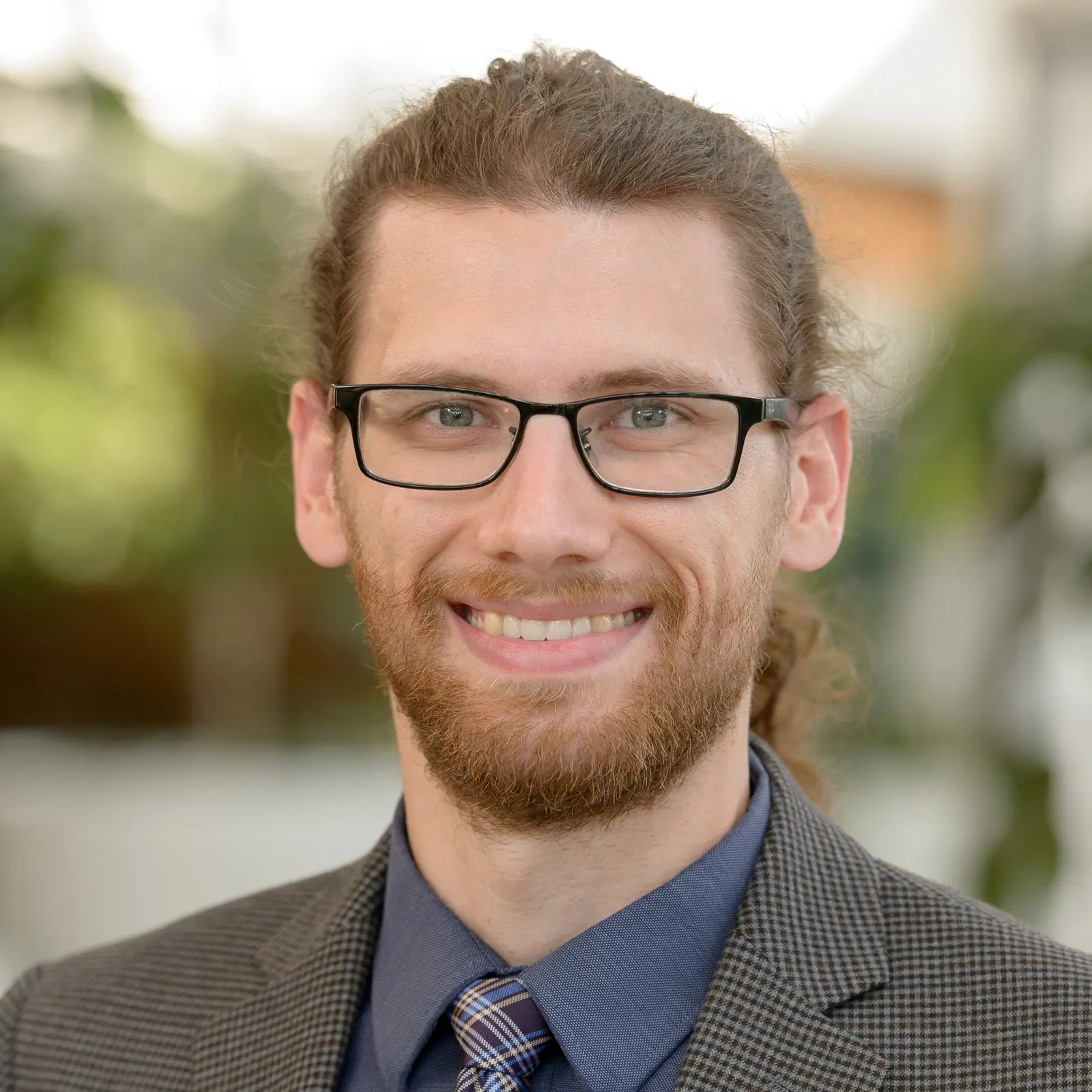
Noah Van Damمشاهده پروفایل
دانشیار
- Multi-phase flows
- Reacting flows
- Combustion
- +۶ مورد دیگر
Noah Van Dam is an Associate Professor in the Mechanical and Industrial Engineering Department at the Francis College of Engineering, University of Massachusetts Lowell. He joined UMass Lowell in Fall 2018 after completing his Ph.D. at the University of Wisconsin-Madison in 2015 and working as a postdoc at Argonne National Laboratory. His educational background includes: Ph.D. in Mechanical Engineering from University of Wisconsin-Madison (2015) B.S. in Mechanical Engineering from Iowa State University of Science and Technology Professor Van Dam's research focuses on high-fidelity modeling of multiphase and reacting flows, with particular emphasis on verification, validation and uncertainty quantification techniques for computational fluid dynamics models. His work spans multiple applications including internal combustion engines, gas turbines, aerospace propulsion systems, and energy generation processes. Key research areas include: Multi-phase/reacting flows Combustion modeling Computational Fluid Dynamics (CFD) Lagrangian-Eulerian methods Verification, validation, uncertainty quantification (VVUQ) Machine learning applications in combustion His recent publications demonstrate a strong focus on alternative fuels, particularly ammonia-hydrogen blends, and their application in internal combustion engines. His work also addresses critical challenges in marine propulsion systems, thermal energy storage, and advanced numerical methods for multiphase flows. Professor Van Dam's research has significant implications for developing cleaner, more efficient energy conversion technologies. Among his notable achievements are: Outstanding Teaching Assistant Award (2015) Robert G. Sachs Award for Outstanding Poster Presentation (Third Place) (2015) DAAD RISE Professional Scholarship (2010) University Fellowship & Vilas Welcome Award (2010) Professor Van Dam has advised numerous graduate and undergraduate students on research projects related to computational fluid dynamics, combustion, and alternative fuels. His students have gone on to positions at national laboratories, research institutions, and industry. He has also secured funding from organizations including the Office of Naval Research for his work on marine burners and ammonia combustion. His research group, the Multi-phase and Reacting Flows group, actively investigates high-fidelity computational fluid dynamics modeling of complex flows with applications to energy systems. Current research directions include ammonia-hydrogen combustion, low-pressure marine burners, advanced fuel spray modeling, machine learning applications in chemical kinetics, and thermal energy storage using CO2 clathrate hydrates.