Professor Gita Alaghband is Chair and PhD Director at the Department of Computer Science and Engineering, University of Colorado Denver. Her work bridges high-performance computing with AI applications in computer vision, facial recognition, and deep learning optimization. Current research focuses on real-time multi-human tracking for autonomous systems Develops explainable AI solutions for medical and financial domains Leads the Parallel Distributed Systems (PDS) Lab Key publication trends include: 2025: Medical imaging AI for pediatric trauma analysis 2024: Financial forecasting with causal econometrics and adversarial defense systems 2023: Trajectory prediction models and HEVC compression frameworks Scientific recognition: IRC Best Paper Award (2020) for facial recognition research Students advised include industry leaders at Google, VMWare, and Nissan, with research spanning parallel computing, medical imaging AI, and autonomous systems.
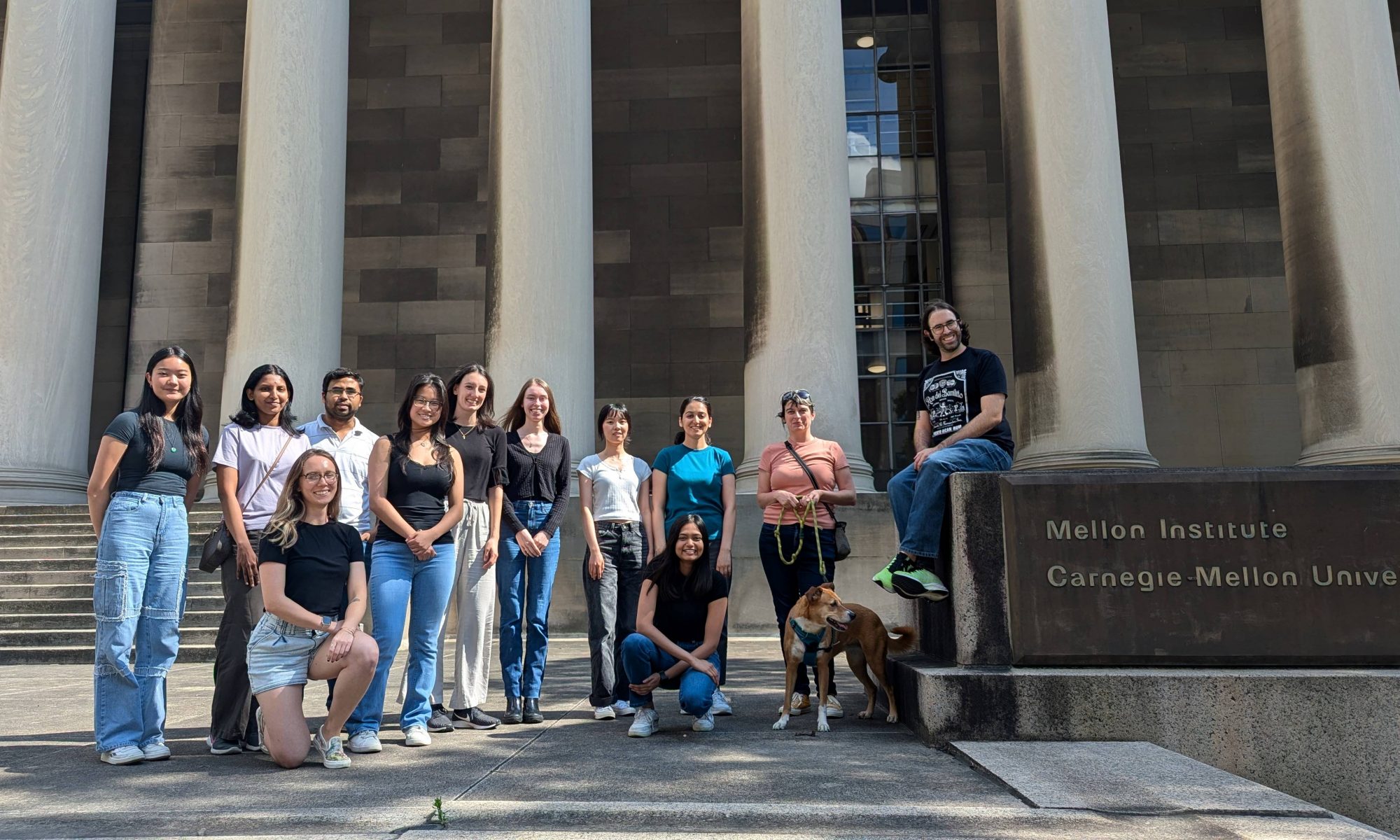
Carrie McDonough is an Associate Professor in the Department of Chemistry at Carnegie Mellon University. Her research focuses on environmental analytical chemistry, PFAS contamination, bioavailability, bioaccumulation, and toxicology, using high-resolution mass spectrometry and bioanalytical methods to assess risks of organic pollutants to aquatic ecosystems and human health. 2017–2019 Postdoctoral Fellow, Colorado School of Mines 2017 Ph.D. in Chemical Oceanography, University of Rhode Island Graduate School of Oceanography 2008 B.Sc. in Chemistry, Massachusetts Institute of Technology Her work develops bioaccumulation-directed prioritization tools for ionizable organics, virtual organisms for contaminant isolation, and in vitro techniques to study PFAS transformation. Current projects include evaluating sediment-associated PFAS bioavailability in marine organisms and short-chain PFAS in human urine (CDC NIOSH-funded). Recent publications highlight PFAS isomer differentiation , electron beam remediation , and human exposure via seafood . Her team has identified previously undetected bioaccumulative PFAS in AFFF-dosed mice and developed interactive software for PFAS analysis . 2025 Emerging Investigator Series, Environ. Sci.: Processes & Impacts Postdoctoral Fellow, Colorado School of Mines She mentors 8 graduate/undergraduate students and has trained 5 alumni now in academia, EPA, and public health. Her lab collaborates on SERDP ER22-4003 (marine PFAS) and CDC NIOSH grants. Personal interests include brewing beer and spending time with her dogs, Millie and Pickles.
Dr. Bill Brocklesby is an Associate Professor at the Zepler Institute for Photonics and Nanoelectronics, University of Southampton. He has been with the university since 1989, initially joining as a lecturer in the Physics Department before moving to the Optoelectronics Research Centre (ORC), now known as the Zepler Institute, in 2003. His work bridges physics, engineering, and biological imaging through advanced optical techniques. Dr. Brocklesby's primary research interests focus on novel imaging and microscopy techniques across the visible and extreme ultraviolet (XUV) spectral regions. His work encompasses: Coherent diffractive imaging of nanoscale systems using XUV radiation generated by high-power ultrashort pulse lasers Large-scale beam combination for applications like wake-field acceleration Raman microscopy and near-field techniques including scanning near-field optical microscopy (SNOM) Atomic force microscopy and scanning tunneling microscopy Optical spectroscopy of rare-earth doped materials and optical fibers Analysis of Dr. Brocklesby's recent publications reveals a strong focus on XUV imaging applications in biological systems, particularly neural tissue. His work increasingly incorporates AI and machine learning approaches for image reconstruction and analysis. The research spans fundamental optical physics, engineering of specialized equipment, and practical applications in fields ranging from neuroscience to fuel quality monitoring. Dr. Brocklesby's significant scientific recognition includes: Being named one of the 'Beacons of the Photonics Industry' in teaching by Photonics Spectra magazine (2016) Multiple teaching awards from the Southampton Students Union, including runner-up for 'best lecturer' (2017) Recognition for innovation in laboratory technology development As an academic advisor, Dr. Brocklesby currently supervises Michael Blakey (MSc Chemistry by Research) and Rhys Jacob William Donovan (PhD ORC). His research has been supported by diverse funding sources including the European Union (ICAN project), Breakthrough Starshot Foundation LLC, Biotechnology & Biological Sciences Research Council, and EPSRC. These projects span from fundamental optical physics to practical applications in biological imaging and industrial monitoring. Dr. Brocklesby is an active member of multiple research groups including the Nanophotonics Group, Institute for Life Sciences, and Southampton Imaging Ultrafast X-ray Group. His work on the ICAN project, conceived by Nobel laureate Gérard Mourou, demonstrates his involvement in cutting-edge international collaborations focused on large-scale beam combination of ultrafast fiber lasers.
Bahram Javidi is a Professor in the Department of Biomedical Engineering at the University of Connecticut. His research focuses on advanced optical imaging technologies, including real-time 3D sensing, visualization, and information processing. He integrates nanotechnology, biomedical photonics, and quantum optics into novel imaging systems for medical and underwater applications. Key Research Areas: 3D integral imaging, digital holography, compressive sensing, optical encryption, and biomedical imaging. Recent Publications: Highlight innovations in underwater signal detection, lensless imaging for disease screening, and adversarial attack defense using optical systems. Technological Impact: Develops portable, low-cost medical diagnostic tools and augmented reality visualization systems. Collaborations: Works with interdisciplinary teams in biomedical engineering, computer science, and optical physics.
İlkay Öksüz is an Associate Professor in the Department of Computer Engineering at Istanbul Technical University (ITU), where he has been serving since 2021, following his appointment as a Doctoral Academic Staff member in 2020. He previously held research positions at King's College London (2017–2020), The University of Edinburgh (2016), and Yale University (2015–2016). He earned his Ph.D. in Computer, Decision and Systems Science from IMT School for Advanced Studies Lucca, Italy, in 2017, under the supervision of Prof. Sotirios Tsaftaris. B.Sc. in Electronics Engineering, Istanbul Technical University (2010) M.Sc. in Electrical-Electronics Engineering, Bahçeşehir University (2013) Ph.D. in Computer, Decision and Systems Science, IMT School for Advanced Studies Lucca (2017) His research focuses on medical image analysis, particularly in cardiac MRI, with core interests in image segmentation, registration, quality assessment, and reconstruction using deep learning. He also explores electricity price forecasting and explainable AI. His work bridges machine learning with clinical applications, aiming to improve diagnostic accuracy and automation in radiology. The 15 most recent publications highlight a strong trend in applying deep learning to medical imaging, especially cardiac and prostate MRI, mammography, and ECG analysis. A significant emphasis is placed on explainability , optimization , and clinical applicability , with frequent participation in MICCAI challenges and collaborations with radiology departments. Projects also extend into energy forecasting, showing interdisciplinary versatility. Scientific awards include: 2024 ITU Young Scientist Award in Engineering 2024 Parlar Research Incentive Award He leads the Predictive Intelligence and Medical Imaging (PIMI) Lab at ITU, mentoring graduate students and managing multiple funded projects, including the TUBITAK International Fellowship. His lab has achieved top placements in national and international AI competitions such as Teknofest and MICCAI challenges. He serves as principal investigator (PI) on several active grants focused on interpretable deep learning for medical imaging and electricity forecasting. The PIMI Lab, under his leadership, actively participates in high-impact medical AI challenges and has consistently achieved top rankings in competitions related to prostate cancer detection, breast imaging, and cardiac MRI reconstruction, demonstrating strong translational research impact.
Ben Bartlett is a Researcher at the University of Limerick's School of Engineering, specializing in robotics and unmanned systems for environmental and infrastructure applications. His work bridges engineering innovation with practical solutions for challenging real-world environments. His research focuses on: Development of UAV systems for wildlife monitoring and offshore wind farm surveys Cooperative multi-robot path planning for bridge and infrastructure inspection Fault-tolerant control systems for inaccessible environments Maritime robotics using integrated aerial and surface vehicles Automated 3D reconstruction of unknown structures using LiDAR Analysis of his 2023-2025 publications reveals a consistent trend toward real-time, automated systems that balance wide-area coverage with high-resolution precision. His work demonstrates particular strength in adapting robotic systems to dynamic environments like offshore wind farms, aging infrastructure, and maritime settings, with emphasis on efficiency, safety, and cost-effectiveness through modular design and fault tolerance. Contact: Ben.Bartlett@ul.ie
Richard N. Zare, the Marguerite Blake Wilbur Professor in Natural Science and Professor of Chemistry at Stanford University, is a pioneering figure in physical chemistry and nanochemical analysis . His career spans institutions including MIT, University of Colorado, Columbia University, and Stanford since 1977. He has chaired Stanford's Chemistry Department and served on numerous national science policy boards. Education : Ph.D. in Chemical Physics (1964) and B.A. in Chemistry & Physics (1961) from Harvard University Appointments : Professor (1977–Present), Professor of Physics (1992–Present), Howard Hughes Medical Institute Professor (2006–2010) Zare's research focuses on laser-based reaction dynamics , microdroplet chemistry , and interfacial electrochemistry , with applications in green chemistry , chemical analysis , and biomolecular systems . His team has developed techniques like laser-induced fluorescence , cavity ring-down spectroscopy , and Hadamard transform mass spectrometry . Recent publications highlight breakthroughs in metal nanoparticle synthesis , CO2 conversion , and biomolecular condensate electrochemistry . His work bridges physical chemistry , analytical chemistry , and environmental science . Major Awards : National Medal of Science Wolf Prize in Chemistry BBVA Foundation Frontiers of Knowledge Award King Faisal International Prize Presidential Award for Science Mentoring (PAESMEM) 11 Honorary Doctorates Zare teaches Stanford's Chemistry in the Kitchen course and has mentored numerous Ph.D. students and postdocs . He leads the Zarelab, with affiliations to Bio-X , Woods Institute , and Cardiovascular Institute .
Volkan Otugen is a Professor in the Department of Mechanical Engineering at the University of South Florida (USF), College of Engineering, where he serves as founding director of the Optical Sensors Laboratory. Holding a Ph.D. in Mechanical Engineering from Stanford University, his career spans advanced optical sensor development for aerospace and fluid mechanics applications. His research focuses on: Micro-optical sensors using whispering gallery mode (WGM) resonators Wall shear stress, pressure, acceleration, and electromagnetic field detection MEMS-based instrumentation for extreme environments Structural health monitoring systems Smart materials integration Aerospace fluid dynamics diagnostics Recent publications (2024-2014) demonstrate sustained innovation in WGM resonator applications, particularly for high-speed transient sensing and aerospace instrumentation like EDL air-speed sensors and cryogenic seismometers. This work bridges photonics, fluid dynamics, and MEMS engineering with emphasis on resolution, data rate, and environmental robustness. Scientific recognition includes: ASME Fellow designation Otugen has secured major research funding and mentored graduate students through projects with NASA and the National Science Foundation: Advising: Extensive mentorship of PhD/Master's candidates in optical sensor development Grants: NASA for atmospheric sensors, NSF for SGER projects on wall shear stress sensors The Optical Sensors Laboratory at USF specializes in designing and testing photonic sensors for propulsion systems, structural monitoring, and space exploration missions.
Rahul M. Kohli is an Associate Professor of Medicine in the Division of Infectious Diseases at the Perelman School of Medicine, University of Pennsylvania. He holds affiliations with multiple graduate groups including Pharmacology, Biochemistry and Molecular Biophysics, Cell and Molecular Biology, and Immunology. He is also the Co-Director of the Penn Measey Scholars in Molecular Medicine and Associate Program Director of the MD/PhD Program. Education: B.S. in Biochemistry, University of Michigan (1998) M.D. and Ph.D. (Biochemistry & Molecular Pharmacology), Harvard Medical School (2004) Dr. Kohli's research lies at the intersection of chemical biology, enzymology, epigenetics, and infectious diseases. His laboratory investigates DNA-modifying enzymes such as AID/APOBEC deaminases and TET oxygenases, which introduce chemical diversity into the genome through deamination, oxidation, and methylation of cytosine bases. His team also studies bacterial SOS response pathways governed by LexA/RecA, which contribute to antibiotic resistance and pathogen evolution. These areas are central to understanding immune defense mechanisms, epigenetic regulation, and antimicrobial strategies. The analysis of Dr. Kohli's recent publications reveals a strong focus on the mechanistic and biotechnological applications of DNA-modifying enzymes. His work spans epigenetics, genome editing, infectious disease, and cancer immunotherapy, with frequent use of biochemical assays, chemical probe development, and biological validation in microbial and mammalian systems. Key themes include the detection of 5-hydroxymethylcytosine, engineering of activity-based probes for TET enzymes, and modulation of bacterial stress responses to combat antibiotic resistance. Scientific awards and honors include: Penn Scholar in Molecular Medicine Francis C. Wood Endowed Chair, University of Pennsylvania Dr. Kohli is actively involved in mentoring through the MD/PhD Program and the Penn Measey Scholars initiative. His research is supported by extensive grants related to infectious diseases, epigenetics, and chemical biology, though specific grant details are not listed. He has contributed to high-impact collaborative studies, particularly in the development of epigenetic tools and therapeutic strategies involving TET2 in CAR T-cell therapy. He leads the Kohli Lab, which integrates chemical, biochemical, and biological methodologies to study diversity-generating pathways. The lab focuses on both fundamental enzyme mechanisms and their translational applications in biotechnology and medicine.
Fauzia Ahmad is an Associate Professor in the Department of Electrical and Computer Engineering at the College of Engineering, Temple University. She has previously held the position of Research Professor and Director of the Radar Imaging Lab at Villanova University. Her research is supported by major U.S. federal agencies, with over $7M in awarded research funding as Principal or Co-Principal Investigator. Ph.D. in Electrical Engineering, University of Pennsylvania, 1997 Dr. Ahmad's research focuses on statistical signal and array processing , computational imaging , and multi-modal sensing . Her work spans applications in through-the-wall radar , ground-penetrating radar , remote patient monitoring , and structural health monitoring . She employs advanced techniques in compressive sensing , sparse reconstruction , and machine learning to solve real-world sensing challenges. The recent publications highlight a strong trend in radar micro-Doppler signature analysis for human activity recognition, coprime array signal processing for super-resolution, and tensor decompositions in MIMO radar and communications. Her work increasingly integrates machine learning with traditional signal processing for robust detection and classification in noisy, real-world environments. Dr. Ahmad has received several prestigious honors: Fellow of the IEEE Fellow of the SPIE Chair of the IEEE Dennis J. Picard Medal Committee (2018-2020) She has served as an Associate Editor for multiple top-tier journals including IEEE Transactions on Signal Processing , IEEE Transactions on Aerospace and Electronic Systems , and IEEE Transactions on Computational Imaging , where she is currently a Senior Area Editor. She has led major conference series such as the SPIE Compressive Sensing and SPIE Big Data conferences. Her research is conducted through the Multi-modal Sensing and Imaging Lab , where she mentors students and collaborates on interdisciplinary projects involving radar, communications, and biomedical applications.
Dr. Martin Saraceno is a Senior Scientist at the Chair of Photonics and Ultrafast Laser Science, Ruhr University Bochum, Germany. He holds a Diploma and Ph.D. in Physics from ETH Zurich (2007, 2011). Prior roles include Researcher at Cyber Laser Inc. (2012–2013) and Senior Scientist at the University of Neuchatel (2013–2016). He specializes in ultrafast lasers, THz technology, and high-power laser systems. Education: Diploma in Physics, ETH Zurich (2007) Ph.D. in Physics, ETH Zurich (2011) Research interests focus on high-power ultrafast lasers, THz generation, and advanced laser technologies. His work emphasizes energy scaling of modelocked oscillators, nonlinear compression, and applications in terahertz systems. Recent publications highlight advancements in laser-driven THz sources, multipass cell compressors, and Kerr-lens modelocking. His contributions include developing high-average-power lasers and novel compression techniques, advancing fields like laser engineering and nonlinear optics. He is affiliated with the High Energy Laser Lab and collaborates on cutting-edge photonics research.
Alois Herkommer is a Professor and Chairman of the Joint Commission for Mechanical Engineering at the University of Stuttgart (GKM). His research focuses on advanced optical systems, particularly 3D-printed micro-optics, biomedical imaging, and quantum technology applications. He has pioneered innovations in magnetic actuators, fiber-optic probes, and miniaturized spectrometers. His work integrates mechanical engineering, photonics, and material science to develop cutting-edge devices for medical diagnostics, optical metrology, and quantum communication. Notable contributions include ultra-compact laser combiners, endoscopic microsystems for cardiovascular imaging, and advanced fabrication techniques using two-photon lithography. Recent publications highlight advancements in single-photon source coupling, magnetic actuation for microscopy, and high-resolution metrology tools. His research bridges fundamental optics with practical applications in healthcare and engineering, emphasizing precision and miniaturization.
Dr. Jackson David Cothren is a Professor in the Department of Geosciences at the University of Arkansas, where he also serves as the Leica Geosystems Chair in Geospatial Imaging. He holds dual leadership roles as Director of the Center for Advanced Spatial Technologies (CAST) and the Arkansas High Performance Computing Center (HPCC). His academic affiliations are deeply rooted in geospatial science, computer vision, and high-performance computing, bridging engineering and environmental applications. Ph.D. in Geodetic Science and Surveying, The Ohio State University M.S. in Geodetic Science and Surveying, The Ohio State University B.S. in Applied Mathematics, United States Air Force Academy Dr. Cothren's research spans digital photogrammetry, computer vision, UAV-based geospatial monitoring, and spatial archaeometry. He investigates non-traditional sensor modeling, feature extraction, surface generation, and integration with enterprise geospatial systems. His work increasingly incorporates deep learning, transformer models, and AI-driven analytics for applications in renewable energy, autonomous systems, and environmental sustainability. His recent publications highlight innovations in solar PV profiling, aerial image segmentation, and fairness-aware domain adaptation. The trends in his recent scholarly output reflect a strong shift toward machine learning and AI in geospatial analysis, particularly using transformer architectures for high-resolution imaging and cross-domain adaptation. His work integrates Lidar, GPS, and InSAR for deformation monitoring and leverages HPC for large-scale data processing. Applications span archaeology, agriculture, transportation, and energy infrastructure. Dr. Cothren has received numerous competitive grants from NSF, NEH, and USDA, supporting interdisciplinary research in geospatial analytics, smart transportation, and cultural heritage. His projects emphasize data-driven decision-making, community engagement, and workforce development in geospatial technologies. Principal Investigator, NSF E-RISE Rll: Arkansas Smart Transportation Research Incubator (2025–2029) Lead, RII Track-1: DART – Data Analytics that are Robust and Trusted (NSF, 2020–2025) Director, OPEN-GATE: Expanding Geospatial Education (NSF, 2016–2020) He mentors a broad interdisciplinary team and leads collaborative research initiatives involving computer vision, environmental science, and archaeology. His labs and research centers—CAST and HPCC—serve as hubs for innovation in spatial technologies, high-performance computing, and data-intensive research across the university and beyond. These centers support large-scale projects in archaeo-geophysics, UAV monitoring, and enterprise GIS integration.
Charles A. DiMarzio is an Associate Professor in the Department of Electrical and Computer Engineering at Northeastern University , with affiliations in Mechanical and Industrial Engineering and Bioengineering. His research spans advanced optical imaging techniques for biomedical applications. Education: PhD in Electrical and Computer Engineering, Northeastern University (1996) MS in Physics, WPI BS in Engineering Physics, University of Maine Research interests focus on optics , microscopy , coherent detection , hyperspectral imaging , and collagen studies . His group develops hardware and computational methods for multi-modal biomedical imaging , including the Keck 3-D Fusion Microscope . Recent publications highlight innovations in: Collagen monomer orientation measurement Super-resolution structured illumination Ultrasound-modulated light imaging Coded-illumination Fourier ptychography Awards include: SPIE Fellow (2022) SPIE Senior Member (2021) Optica Senior Member (2021) He supervises capstone design projects and teaches graduate courses in Optics for Engineers and undergraduate classes in Circuits and Signals , Electronics , and Subsurface Sensing . Collaborations include the Gordon Center for Subsurface Sensing , ALERT , and institutions like Memorial Sloan Kettering Cancer Center.
Miguel A. Nunes serves as Assistant Researcher and Deputy Director at the Hawaiʻi Space Flight Laboratory (HSFL) within the University of Hawaiʻi at Mānoa's College of Engineering. Specializing in small satellite design and multi-agent robotic systems , he leads systems engineering for missions like Neutron-1 and HyTI, while teaching space systems design in programs including the Vertical Integrated Project Aerospace Technologies and Earth and Planetary Exploration Technology (EPET) capstone courses. PhD in Aerospace Engineering (2010) focusing on autonomous satellite swarm control Developed COSMOS mission operations system for managing multiple spacecraft Key work in thermal control systems for hyperspectral imagers and satellite constellations His 10+ years of subsystem expertise spans ADCS, OBC, flight software, and radio communications. Recent publications highlight advancements in T2SL detector arrays and active thermal management for CubeSats. As Deputy-PI for HyTI mission, he contributes to volcanic monitoring and agricultural sensing applications through high-resolution thermal imaging. Research trends show consistent focus on distributed satellite systems and autonomous operations , transitioning from foundational work on multi-agent control to current applications in Earth observation constellations . His collaborations span JPL, NASA, and Saraniasat Inc., with technical contributions to 6U CubeSat standardization and onboard computing architectures.