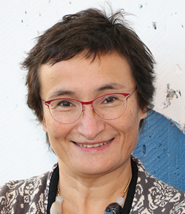
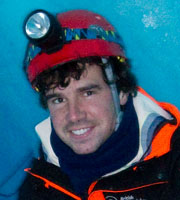
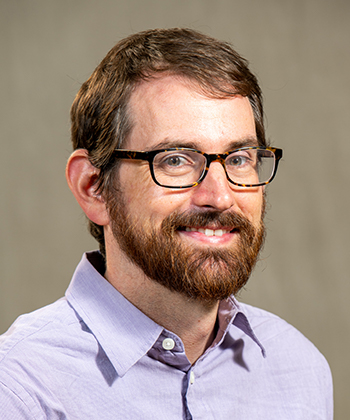
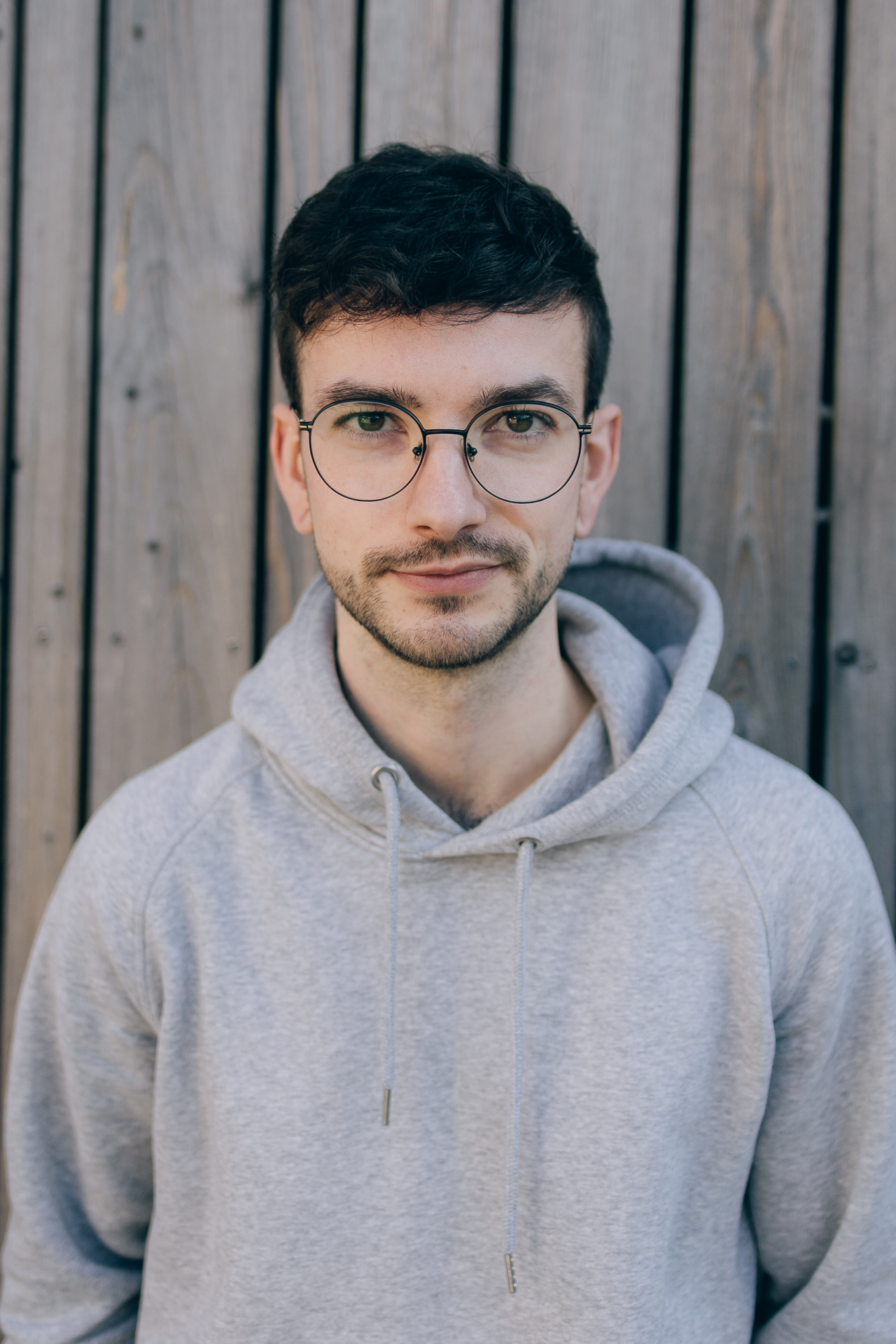
Cathleen Elaine Jones is a part-time Professor in Earth Observation at the Department of Physics and Technology, UiT The Arctic University of Norway. Research Focus: Remote sensing applications for oil spill detection, sea ice dynamics, and climate monitoring using Synthetic Aperture Radar (SAR) imagery. Collaborations: Worked with researchers like Camilla Brekke, Benjamin Holt, and Malin Johansson on oil spill characterization and polarimetric SAR techniques. Recent Work: Investigated natural oil seeps (2025), operational sea ice monitoring (2025), and developed novel SAR-based oil slick discrimination methods (2024-2025). Key Contributions: Authored studies on oil spill damping ratios (2023), SAR imaging geometry (2016), and multisensor comparisons (2016). Technological Expertise: Specializes in polarimetric SAR data analysis, environmental signal processing, and geospatial modeling for marine and polar regions.
Virginia Dignum is Professor of Responsible Artificial Intelligence and Director of the AI Policy Lab at Umeå University's Department of Computing Science. She serves as senior advisor for AI policy to the Wallenberg Foundations and is an active member of the UN High Level Advisory Body on AI. Her institutional affiliations include the Faculty of Technology Policy and Management at Delft University of Technology. Her research centers on the complex interdependencies between people, organizations, and technology. Key interests include: Responsible AI: Moral/ethical issues in autonomous agent teams and regulatory frameworks Social interaction formalization: Developing computational architectures for agent deliberation based on social practices Human-agent teamwork: Investigating negotiation, trust, and collaboration dynamics in socio-technical environments Her work bridges theoretical AI foundations with real-world policy implementation. Analysis of her recent publications reveals strong focus on AI governance frameworks, explainability mechanisms, and fairness operationalization. Key trends include development of context-sensitive ethical assessment tools, regulatory sandbox implementations, and formal models for human-AI coevolution. Her research increasingly addresses planetary-scale AI impacts and children's rights in digital environments. Major recognitions include: Election to Swedish Royal Academy of Engineering Sciences (IVA), 2020 Fellowship in European Artificial Intelligence Association (EURAI), 2018 Veni Fellowship from NWO for agent-based organizational frameworks, 2006 AI Ethics Professional of the Year award, 2022 Dignum actively shapes global AI policy through leadership roles in the UN High Level Advisory Body, Global Partnership on AI (GPAI), and World Economic Forum Council on AI. She chairs major conferences including AAMAS'24 and serves as Ethics Chair for AAAI'24. Her advisory work extends to the European Commission, IEEE Global Initiative, and UNESCO AI Ethics Recommendation implementation. Current initiatives include the Vatican lecture series on AI ethics and regional AI policy development in Västerbotten. She directs Umeå University's AI Policy Lab, focusing on translating ethical principles into actionable governance frameworks. The lab develops tools for regulatory compliance assessment and stakeholder engagement in AI deployment. Recent projects address digital contact tracing governance and AI's impact on democratic processes.
Mike Stukel is an Associate Professor of Oceanography at Florida State University's Department of Earth, Ocean and Atmospheric Science, affiliated with the Center for Ocean-Atmospheric Prediction Studies (COAPS). His research focuses on the intersection of plankton ecology and marine biogeochemistry, particularly the roles of gelatinous zooplankton like appendicularians, salps, and ctenophores in global biogeochemical cycles and fisheries productivity. His work emphasizes understanding how microscopic organisms influence climate and marine ecosystems through carbon export mechanisms and trophic interactions. Stukel's studies span coastal upwelling systems (e.g., California Current) to open ocean environments such as the Southern Ocean, exploring topics including plankton size spectra, food web dynamics, and climate change impacts. His recent research highlights the ecological importance of gelatinous filter feeders in enhancing carbon sequestration and ecosystem efficiency. He has contributed to interdisciplinary projects like the Deep-C Consortium, investigating Gulf of Mexico ecosystem responses to oil spills, and developed methodologies linking observations with high-resolution ocean models. His articles frequently address carbon export pathways, plankton community responses to environmental stressors, and the role of mesozooplankton in biogeochemical cycles. Stukel’s work bridges laboratory studies with field observations, emphasizing the application of emerging genomic techniques and Lagrangian analysis to understand large-scale oceanographic processes. His research underscores the critical link between microscopic plankton dynamics and planetary-scale biogeochemical processes.
Andrew Merwin is an Associate Professor of Biology at Baldwin Wallace University, specializing in insect ecology and conservation. His research integrates field studies with advanced analytical techniques to address critical questions in entomology and biodiversity preservation. Ph.D. in Biological Science, Florida State University M.S. in Entomology, University of California, Davis B.S. in Biology, California State University, Long Beach B.A. in Spanish, University of California, Los Angeles Merwin's research focuses on insect ecology and conservation biology , particularly examining how biological and climatic factors influence insect distribution and traits. His lab employs spatial-temporal modeling, flight mills for movement quantification, acoustic monitoring, and field collection techniques to study invasive species like spotted lanternflies and endangered species such as the Salt Creek tiger beetle. Current projects investigate latitudinal clines in butterfly morphology and bioclimatic predictors for endangered beetles. Analysis of Merwin's 15 most recent publications reveals strong emphasis on invasive species dynamics , plant-insect interactions , and conservation applications . His work frequently employs spatial modeling and field experiments across diverse ecosystems, from longleaf pine forests to urban habitats. Key trends include trait evolution in spreading invasives, natal habitat effects on insect behavior, and practical conservation strategies for imperiled species. Merwin actively mentors students, with numerous undergraduate and graduate co-authors on his publications. His lab utilizes advanced equipment including flight mills, high-resolution imaging systems, and acoustic recording devices to study insect behavior and physiology. Current research collaborations extend to Nebraska and multiple field sites across the United States.
Prof. Dr. Sebastian Krastel serves as Professor of Marine Geophysics and Hydroacoustics at Kiel University's Institute of Geosciences, where he leads the Marine Geophysics and Hydroacoustics research team. His academic journey includes previous positions as Professor for 'Submarine Hazards at Continental Margins' at GEOMAR (2008-2012), 'Akademischer Rat' at Bremen University (2007-2008), and Scientific Assistant at the same institution (2001-2006). Dr. Krastel earned his Ph.D. in Earth Sciences in 1999 from GEOMAR Research Center with a thesis on 'Growth processes and destructive events during the evolution of volcanic islands: a case study from the Canary Islands.' His educational background includes MSc (Diploma Geophysicist) studies at Christian-Albrechts-University, Kiel (1988-1995). His research focuses on submarine hazards, slope stability mechanisms, and sediment processes along continental margins. Krastel's work integrates advanced marine geophysical methods with hydroacoustic techniques to investigate geological processes with significant implications for tsunami generation and coastal hazard assessment. His expertise spans the evolution of lakes, submarine volcanoes, and mass wasting phenomena across diverse global settings. Analysis of his recent publications reveals a strong emphasis on submarine landslide dynamics, volcanic flank collapses, and their geohazard implications. His research spans critical regions including the Canary Islands, Mediterranean Sea, Northwest African margin, and various lake systems, employing high-resolution bathymetric data, seismic reflection profiling, and sedimentological analysis. Dr. Krastel coordinates the SSP106 Priority Program: International Continental Drilling Program (ICDP) and has participated in over 40 research cruises as chief scientist. He serves on the IODP Scientific Technology Panel and Site characterization panel, contributing to international scientific drilling initiatives. He leads an extensive research group comprising numerous doctoral researchers, postdocs, and master's students including Dr. Jens Schneider von Deimling, Dr. Philipp Held, Dr. Rachel Barrett, and others. His team conducts fieldwork worldwide with strong international collaborations across Europe, Africa, and the Americas, maintaining active involvement in major research projects related to marine geohazards and continental margin processes.
Felix Pohl is a postdoctoral researcher at the Helmholtz Centre for Environmental Research (UFZ) in Leipzig, Germany, affiliated with the Department of Computational Hydrosystems . His work focuses on data-driven analysis of ecosystem fluxes and the impact of extreme weather events, particularly droughts, on environmental systems. Education : M.Sc. in Applied Physical Geography, University of Würzburg (2013-2016) B.Sc. in Geography with minor in Philosophy, University of Würzburg Dr. Pohl’s research investigates climatic and environmental changes , the impact of weather extremes on ecosystems , and mitigation strategies for climate change. He also emphasizes science communication and addressing climate change skepticism through interdisciplinary dialogue. His recent publications highlight trends in drought legacy effects , hydrometeorological modeling , and ecosystem phenology across temperate forests. Articles span topics like soil moisture dynamics , carbon cycling , and remote sensing applications for environmental monitoring. Scientific Recognition : Co-author on ASCE-EWRI 2023 Award-winning study (Mai et al., 2021) for Best Case Study in Hydrologic Engineering Dr. Pohl collaborates with teams at ICOS , TERENO , and 4DHydro projects, contributing to robust drought forecasting systems and high-resolution environmental data infrastructure .
Lynnette Dray is a Principal Research Fellow at the University College London (UCL) , affiliated with the UCL Air Transportation Systems Lab and Bartlett School of Environment, Energy and Resources . With over 20 years of experience in aviation systems modeling, her work focuses on decarbonization, policy impact assessment, and stakeholder behavior simulation. PhD in Astrophysical Numerical Modeling (University of Cambridge, 2003) BA and MSci in Natural Science (University of Cambridge, 1999) Her research centers on aviation sustainability , including projects like ACCLAIM (airport expansion impacts), ToZCA (net-zero aviation), and AIM2015 (open-source aviation modeling). She specializes in: Economic and environmental impact assessment Integrated transport modeling Hydrogen and electric aircraft feasibility Policy uncertainty analysis Carbon leakage and taxation Lynnette’s scientific contributions include: High-resolution emissions inventories (GAIA model) Aviation profit maximization under constraints Long-term scenarios for pandemic recovery Ground-air multi-modal disruption management At UCL, she supervises student projects through MSc courses such as EPEE , ESDA , and SEBE , while collaborating with policymakers on climate-neutral aviation pathways.
Dr. Tommaso Cancellario is a researcher in the Department of Biology at Universitat de les Illes Balears , focusing on freshwater ecology, biodiversity informatics, and invasive species dynamics. His work bridges ecological research with data science through tools like the biomonitoR package for biomonitoring indices. Key Research Areas: Invasive species modeling (crayfish, gammarids) Freshwater biodiversity databases (Stygofauna Mundi, World of Crayfish™) Climate change impacts on aquatic ecosystems Ephemeral stream ecology and nutrient dynamics Macroinvertebrate community responses to stressors Recent Contributions: Developed high-resolution climate datasets for the Balearic Islands Highlighted discrepancies in European water management ecoregions Created open-access platforms for global freshwater species tracking Notable Publications explore topics like sediment respiration pulses in intermittent rivers, terrestrial plant litter dynamics in non-perennial waterways, and the role of vultures in ecosystem sustainability. His work emphasizes data-driven approaches to conservation and management challenges.
Dr. Haochen Tan serves as an Assistant Atmospheric Scientist at Argonne National Laboratory's Environmental Science Division, specializing in regional and urban climate modeling with emphasis on Chicago-area impacts of urbanization and climate change. His research leverages high-resolution numerical modeling and observational data to investigate microclimate variability during extreme weather events, particularly heat waves, and their implications for energy infrastructure resilience. Education: Ph.D. in Atmospheric Science (2017-2021), Florida Institute of Technology, Melbourne, FL, USA M.S. in Atmospheric Science (2013-2016), Florida Institute of Technology, Melbourne, FL, USA B.E. in Atmospheric Science (2009-2013), Chengdu University of Information Technology, Chengdu, China Dr. Tan's research program centers on quantifying urban-climate interactions through advanced modeling techniques. He has pioneered studies on roofing mitigation strategies and their dual impact on near-surface temperature reduction and energy conservation during heatwaves. His work integrates field observations with high-fidelity simulations to dissect complex feedback mechanisms between urban morphology, atmospheric dynamics, and energy systems, with particular attention to lake-urban interactions in the Great Lakes region. Analysis of his 15 most recent publications (2023-2025) reveals a pronounced focus on Chicago-specific urban climate challenges, including lake-urban precipitation modulation, future urban expansion scenarios, and advanced urban canopy parameterizations. His research increasingly employs the MODEX (Modeling-Observation-Experimentation) framework through the CROCUS project, demonstrating a methodological shift toward integrated observational-modeling approaches for urban climate science. Dr. Tan serves as Co-Principal Investigator for the U.S. Department of Energy-funded Community Research on Climate and Urban Science (CROCUS) project, a major initiative examining Chicago's urban climate system. While no formal student advisement is documented, his leadership role in CROCUS indicates active mentorship of junior researchers within the project's collaborative framework involving multiple national laboratories and academic institutions. As a core member of the CROCUS project team, Dr. Tan contributes to developing the first comprehensive observational-modeling campaign targeting an entire metropolitan climate system, utilizing advanced instrumentation across Chicago's urban canopy to validate next-generation climate models under extreme weather conditions.
Mark Bateman is Professor in Palaeoenvironmental Reconstruction at the University of Sheffield's School of Geography and Planning, where he has held positions since 1998 (Lecturer to Professor). He directs the Sheffield Luminescence Dating Laboratory and leads research on Quaternary environmental change, glacial systems, and coastal dynamics. His work integrates geomorphology, sedimentology, and advanced dating techniques to understand past climate impacts. Education includes a First Class BSc in Geography (University of London, 1991) and DPhil from Sussex University (1995). Research focuses on three core themes: (1) Past glacial and periglacial landscapes, (2) Aeolian activity in deserts/coasts, and (3) Innovations in luminescence dating. His projects span the British-Irish Ice Sheet, Mekong Delta evolution, and West African paleoenvironments. Publications emphasize methodological advances in geochronology (portable luminescence readers, ESR-OSL comparisons) and reconstructing ice sheet dynamics, tsunami impacts, and dune system responses to climate. Trends include high-resolution glacial chronologies, coastal vulnerability studies, and integrating archaeological contexts with sedimentary records. Awards include the Sorby Medal (Yorkshire Geological Society, 2018) for contributions to Yorkshire geology. He has supervised numerous PhD students and secured funding from NERC, Leverhulme Trust, and National Geographic. Leads the Britice Chrono consortium and collaborates globally on ice sheet modeling and landscape evolution projects.
Joern Callies is a Professor of Oceanography and Environmental Science at the California Institute of Technology (Caltech), affiliated with the Division of Geological and Planetary Sciences and the Department of Environmental Science and Engineering. He holds an M.S. from the University of Hamburg (Germany, 2011) and a Ph.D. from MIT (2015). His research focuses on ocean circulation dynamics, using in situ and satellite observations, dynamical models, and numerical simulations to understand climate regulation mechanisms. Education: M.S., University of Hamburg, Germany, 2011 Ph.D., Massachusetts Institute of Technology, 2015 Research Interests: Dr. Callies investigates submesoscale and mesoscale ocean processes, including turbulence, eddy dynamics, and abyssal circulation. His work emphasizes the interplay between observational data and theoretical models to uncover governing principles of oceanic fluid dynamics. Key Research Themes (2023–2025): Seismic oceanography for temperature monitoring Submesoscale eddy impacts on heat flux and turbulence Abyssal T-waves and deep-ocean dynamics Advances in airborne and fiber-optic observational techniques Lab/Team: His research group collaborates with international institutions, deploying cutting-edge observational platforms like autonomous floats and satellite altimeters to study oceanic processes at high resolution.
Qiuhua Liang is a FREng Professor of Water Engineering at Loughborough University and UNESCO Chair in Informatics and Multi-hazard Risk Reduction. She co-directs the EPSRC Centre for Doctoral Training Water-WISER and leads research in computational hydraulics, disaster risk reduction, and flood management. Her work focuses on high-performance numerical models for hydro systems affected by natural hazards like floods and landslides. Her research integrates AI, agent-based modeling, and crowd-sourced data to enhance real-time flood forecasting and resilience strategies. Notable projects include the PYRAMID platform for hyper-resolution flood risk assessment and the GCRF Living Deltas Hub addressing deltaic sustainability. Research Interests: Hydrodynamic modeling of fluvial, pluvial, and coastal floods Natural hazard dynamics (debris flows, tsunamis, glacial lake outbursts) AI-driven hydroinformatics and smart monitoring systems Climate change adaptation and nature-based solutions Key Projects (selective): EPSRC Water-WISER CDT (2019–2027) NERC-funded PYRAMID platform (2020–2023) Living Deltas Hub (UKRI GCRF, 2019–2024) CHANS frameworks for urban flood mitigation Awards: Fellow of the Royal Academy of Engineering (FREng) Grants & Collaborations: £9M+ research funding from NERC, EPSRC, and UKRI International partnerships in Bhutan, Vietnam, and China Industry engagement through smart infrastructure solutions Her research also explores multi-hazard interdependencies, SDG interlinkages, and innovative drainage systems using GPU-accelerated models.
Dr. Peter Flaig is a Research Professor at the Bureau of Economic Geology within the Jackson School of Geosciences at The University of Texas at Austin. He holds an Affiliate Faculty position at the University of Alaska Fairbanks, Department of Geology. His research integrates clastic sedimentology , paleoenvironmental reconstruction , and high-resolution imaging technologies to study ancient fluvial-deltaic systems and their applications to petroleum reservoirs and paleoclimatology. Dr. Flaig earned a Ph.D. in Geology (2010) from the University of Alaska-Fairbanks, an M.S. in Geology (2005) and B.S. in Geology (2002) from the University of Wisconsin-Milwaukee. His fieldwork spans Alaska, Antarctica, Canada, Colorado, Patagonia, Svalbard, Texas, Utah, and Wyoming , focusing on high-latitude clastic depositional systems and dinosaur-bearing successions. Research Highlights: Analysis of fluvial-deltaic deposits as reservoir analogs Collaborative projects in detrital zircon geochronology, paleobotany, and 3D photogrammetry Studies on extinction event sedimentation changes and paleoclimatic indicators Development of digital outcrop preservation methods using drones and LiDAR His recent publications (2019-2025) explore topics such as tidally modified deltas , Arctic paleohydrology , and reservoir-scale sediment heterogeneity . Dr. Flaig's work emphasizes interdisciplinary integration, combining sedimentology with paleontology, geochemistry, and geophysics to solve complex stratigraphic problems. Contact: peter.flaig@beg.utexas.edu
Joseph Michael Wheaton is a Professor in the Department of Watershed Sciences at Utah State University, where he leads the Ecogeomorphology and Topographic Analysis Lab (ET-AL) as part of the Fluvial Habitats Center. His research integrates fluvial geomorphology and ecohydraulics to advance river restoration, focusing on uncertainties in environmental management and sediment budgeting. He mentors graduate students and develops tools for topographic analysis and habitat monitoring. Utah State University, Department of Watershed Sciences PhD in Geography, University of Southampton (2008) MS in Hydrologic Sciences, University of California Davis (2003) BS in Hydrology, University of California Davis (2002) Wheaton's research spans fluvial geomorphology , ecohydraulics , and river restoration , with applications in: Sediment Budgeting in regulated rivers Beaver-Assisted Restoration for hydrologic and thermal regime improvement GIS Tools like the CHaMP Transformation Tool Uncertainty Quantification in topographic and flow modeling Multi-Scale Feedbacks in ecogeomorphology Climate Change Impacts on streamflow dynamics His 15 most recent publications emphasize fluvial processes, sediment transport, and restoration technologies. Key themes include: High-resolution topographic analysis for landscape dynamics Beaver dams' influence on stream ecosystems Geomorphic change detection for restoration monitoring Sediment budgeting in regulated river systems GIS-based tools for habitat mapping Scientific awards include: Overseas Research Studentship (2003) Citation for Undergraduate Hydrology Excellence (2002) LAWR Opportunity Fund (2002) California Groundwater Association Scholarships (2000-2001) Engineering Contractors Association Scholarship (2000) He teaches courses on fluvial geomorphology , ecohydraulics , low-tech restoration , and GIS applications , including field-based workshops. His lab collaborates on projects like the Beaver Restoration Assessment Tool and BRAT for watershed-scale planning.
Dr. Carsten Simon is a Postdoctoral Researcher at the Helmholtz-Centre for Environmental Research (UFZ) in Leipzig, Germany, where he works in the Department of Analytical Chemistry as part of the MADDOMS project since June 2022. His research focuses on environmental analytical chemistry with specialization in dissolved organic matter analysis using advanced mass spectrometry techniques. Previously, he held postdoctoral positions at ETH Zurich and the Max Planck Institute for Biogeochemistry. Current Position: Postdoc, MADDOMS project at UFZ Leipzig Previous Positions: ETH Zurich, Eawag Dübendorf, Max Planck Institute Education: PhD in Geosciences from University of Jena and Max Planck Institute Simon's research interests center on understanding soil organic matter composition and transformation processes using ultrahigh-resolution mass spectrometry. His work examines molecular changes in dissolved organic matter during soil passage, carbon cycling in various ecosystems, and the impacts of agricultural practices on soil chemistry. He specializes in Orbitrap and FT-ICR mass spectrometry techniques to analyze complex environmental samples from terrestrial, aquatic, and marine systems. His publication record reveals a strong focus on environmental biogeochemistry with particular attention to soil-plant interactions, organic matter cycling, and analytical method development. Simon's most influential work includes studies on dissolved organic matter persistence in soils, international laboratory comparisons of organic matter analysis, and molecular signatures of terrestrial environments. His recent publications demonstrate increasing focus on agricultural impacts on soil organic matter, carbon cycling in wetlands, and advanced analytical techniques for environmental samples. Simon actively contributes to the scientific community through peer review for numerous high-impact journals including Nature Communications, Environmental Science & Technology, and Biogeosciences. He is a member of both the Deutsche Bodenkundliche Gesellschaft (DBG) and the European Geosciences Union (EGU), demonstrating his engagement with the broader soil science and environmental research communities. As a postdoctoral researcher, Simon collaborates extensively with international research teams across Europe and South America, particularly on projects related to Amazon rainforest ecosystems and European soil systems. His work bridges analytical chemistry, biogeochemistry, and environmental science to address fundamental questions about organic matter cycling in natural and managed ecosystems.