Robert Georges is a Professor in the Department of Molecular Physics at the University of Rennes. His research focuses on molecular spectroscopy, astrophysics, and chemical kinetics, with applications in exoplanetary atmospheres and astrochemical processes. He utilizes advanced techniques such as cavity ring-down spectroscopy, Fourier transform infrared spectroscopy, and computational fluid dynamics to study gas-phase molecular behavior under extreme conditions.
Jonathan Cohen is Professor of Marine Science and Undergraduate Coordinator in the College of Earth, Ocean & Environment at the University of Delaware . Based at the School of Marine Science & Policy in Lewes, Delaware, he leads research that bridges neurobiology, visual ecology, and polar biology while coordinating academic programs for marine science majors. Education Postdoctoral Fellow, Harbor Branch Oceanographic Institution (2005–2006) Ph.D., Biology, Duke University (2004) B.S., magna cum laude, Biology & Environmental Science, Dickinson College (1999) Research Interests Prof. Cohen’s interdisciplinary program centers on how marine animals perceive and respond to light . His laboratory combines comparative physiology, neurobiology, and field ecology to investigate: Visual systems of crustaceans and fish across ontogeny Behavioral and physiological adaptations to extreme Arctic light regimes Interactions between light fields, zooplankton migrations, and estuarine transport processes Ecological impacts of microplastics mediated through sensory disruption Recent work leverages autonomous vehicles, high-resolution optical sensors, and next-generation biophysical models to quantify how environmental change alters marine sensory landscapes. Publication Trends Between 2020 and 2025, Prof. Cohen has authored or co-authored more than 20 papers that collectively chart a trajectory from organismal sensory biology to large-scale physical-biological coupling. The corpus reveals three dominant themes: (1) Polar-night marine optics and bioluminescence as ecological drivers; (2) Estuarine transport and retention of buoyant particles including microplastics; and (3) Visual ecology and sensory physiology of larval and adult crustaceans. These studies integrate laboratory microcosm experiments, high-latitude field campaigns, and numerical modeling to provide a mechanistic understanding of how light governs organismal behavior and ecosystem processes. Scientific Awards & Honors No specific awards are listed in the provided materials; however, sustained NSF and collaborative funding is evident from the publication record. Advising & Grants As the Marine Science Undergraduate Coordinator , Prof. Cohen mentors a large cohort of majors, oversees curriculum development, and supervises senior theses and research projects. Graduate students and postdocs routinely participate in his externally funded projects, though individual names are not disclosed in the supplied text. Laboratories & Field Assets Research is conducted within the Cannon Laboratory Complex in Lewes, DE, providing access to running seawater systems, optics labs, and microscopy suites. Field programs utilize UD’s coastal vessels, autonomous surface vehicles, and partnerships at Arctic stations such as Ny-Ålesund, Svalbard.
Stefan Pieter Sobolowski is a Research Professor at NORCE Norwegian Research Centre in Bergen, Norway, leading the research theme on Regional Climate Impacts and Modeling within the Regional Climate and Climate Services group. His work bridges fundamental climate science with practical applications, focusing on large-scale atmospheric circulation dynamics, regional climate impact assessments, and the translation of research into actionable climate services through interdisciplinary collaboration. He holds a PhD from Columbia University (2010) and completed postdoctoral research at the University of North Carolina, Chapel Hill. His research portfolio centers on three interconnected strands: advancing understanding of large-scale circulation responses to external forcing; improving regional-scale analysis of climate impact drivers; and developing co-produced climate services with social scientists, humanities scholars, and public/private sector partners to address real-world challenges. Recent publications (2023-2025) demonstrate leadership in high-resolution regional climate modeling, particularly through the EURO-CORDEX initiative and convection-permitting simulations. Key trends include extreme event analysis (heatwaves, winds, precipitation), model evaluation at kilometer scales, and dataset development for climate impact studies across Europe, the Arctic, and Africa. His work emphasizes model uncertainty quantification and the societal relevance of climate projections. Professor Sobolowski coordinates the WCRP Euro-CORDEX initiative and leads major projects including EMULATE (model error analysis), CORDEX-FPSCONV (convection-permitting models), Climate Futures SFI, CONFER, and the Centre for Early Sapiens Behaviour (SapienCE). These initiatives involve extensive cross-sectoral collaborations with industry, public agencies, and international research networks to advance climate science and its application. He actively contributes to the Regional Climate and Climate Services group at NORCE, driving innovation in regional climate modeling frameworks and their implementation for stakeholder-relevant climate information. His work integrates paleoclimate perspectives with contemporary modeling to address long-term climate challenges.
Francisco Arriaga is a Professor in the Department of Soil Science within the College of Agricultural and Life Sciences at the University of Wisconsin-Madison. His research focuses on applied soil physics and sustainable soil management, with direct contact via farriaga@wisc.edu and active engagement in the Sustainable Soil Management Laboratory. His research expertise spans conservation agriculture systems, soil hydraulic properties, and soil-water management. Key interests include developing conservation tillage practices using cover crops and non-inversion techniques to enhance soil quality, studying soil macropore characteristics through X-ray computed tomography, and optimizing water retention in salt-affected soils. His work integrates field studies with remote sensing for global soil moisture mapping at 100m resolution. Analysis of his 15 most recent publications (2018-2022) reveals strong emphasis on practical agricultural solutions: 40% address tillage impacts on crop emergence (particularly corn/soybean systems), 30% focus on nutrient management in dairy agroecosystems, and 30% advance soil moisture monitoring techniques. His research bridges fundamental soil physics with on-farm conservation applications across Midwestern and Southeastern US cropping systems. While no specific scientific awards are documented in the source material, his publication record demonstrates sustained contributions to soil science through high-impact journals covering soil conservation, water management, and sustainable agriculture. Dr. Arriaga leads the Sustainable Soil Management Laboratory, which investigates conservation tillage effects on soil health, winter nutrient loss reduction strategies, and precision management of soil physical properties. His extension work includes practical programming for grain management in low-margin years and technical guidance on cone penetrometer use for soil compaction detection.
Rebecca Beadling is an Assistant Professor at Temple University in the Department of Earth and Environmental Sciences . Her research focuses on understanding the ocean's critical role in the global climate system, particularly in the Southern Ocean , using observations and climate model simulations to reduce uncertainties in climate projections. Dr. Beadling's work emphasizes ocean circulation , biogeochemical processes , and model diagnostics to address biases in climate models. She collaborates with NOAA's Geophysical Fluid Dynamics Laboratory and contributes to international initiatives like the World Climate Research Programme’s Coupled Model Intercomparison Project (CMIP) . Research Interests Her research investigates the Southern Ocean's disproportionate influence on global heat and carbon budgets , Antarctic ice sheet interactions , and remote climate impacts . She develops process-oriented diagnostics for climate models and explores high-resolution climate modeling benefits through projects like FAFMIP . Scientific Awards NOAA Climate and Global Change Postdoctoral Fellow Lab Members PhD Students: James Milward, Kirstin Petzer Undergraduate Researchers: Tyler Wassel, Megan Siwak, Grace Woolslayer Alumni: Will Ellinger, Hunter Barbieri, Anna Coomans Teaching & Outreach Dr. Beadling teaches courses such as EES 2096: Climate Change - Oceans To Atmosphere and EES 3506/5506: Observing and Modeling Climate Change , emphasizing Python programming , climate data analysis , and reproducible science .
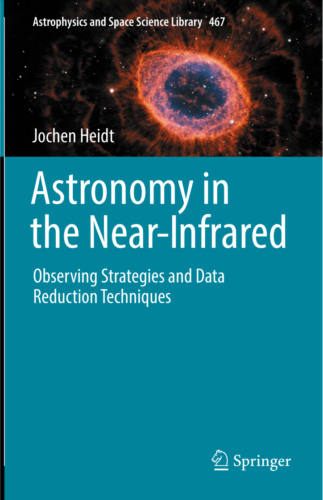
Prof. Dr. Jochen Heidt is a faculty member at Heidelberg University , specifically affiliated with the Landessternwarte Königstuhl . His research focuses on Near-Infrared (NIR) instrumentation , adaptive optics , and the study of active galactic nuclei (AGN) , including BL Lac objects , quasars , and binary AGN . He has published extensively on topics ranging from host galaxy environments to fast radio bursts and photometric reverberation mapping . Education : Not explicitly mentioned in the text. Institutional Roles : Organizes Astro-labs for students at Heidelberg University, co-author on LUCI@LBT instrument commissioning , and contributor to the Euclid Collaboration . His research interests span: High-resolution NIR imaging and spectroscopy of AGN and galaxies. Adaptive optics development and application for LBT instruments. Gravitational lensing studies, particularly the lensing galaxy of the triply lensed QSO APM 08279+5255. Blazar variability across electromagnetic spectra, including 3C 279 and OJ 287 . Photometric reverberation mapping for AGN continuum size-luminosity relations. Galaxy evolution in clusters and the Tully-Fisher relation at intermediate redshifts. Publications from 2013–2024 reveal a focus on instrumentation , AGN environments , and high-energy astrophysics . He has not received explicit scientific awards mentioned in the text. He supervises Bachelor’s and Master’s thesis projects and actively engages in student education through observational astronomy labs , including coordinating sessions at the Landessternwarte Königstuhl for both undergraduate and graduate students.
Prof. Norbert Frank is a leading researcher at the University of Heidelberg , where he serves as Professor and Managing Director of the Institute of Environmental Physics. His work focuses on high-resolution climate archive dating using 230Th/U and 14C methods, with a particular emphasis on reconstructing past climate parameters and biogeochemical cycles through trace elements and radiogenic isotopes in natural archives like sediments, corals, and speleothems. Academic Leadership : Director of the Institute of Environmental Physics (2023–2025), Bridge Professor at Heidelberg (2012–present) Key Institutions : Laboratoire des Sciences du Climat et de l'Environnement (France), Lamont-Doherty Earth Observatory (USA) His research spans Quaternary climate systems , particularly the nonlinear dynamics of ocean circulation and freshwater cycles during climatic instabilities. Current projects include: 2023–2025 DFG: Northern Hemisphere source of the Mid-Pleistocene Transition 2022–2025 DFG: Maya culture hydroclimate reconstruction 2019–2023 DFG: Radiocarbon in speleothems Scientific awards include the 2018 Physics Faculty Teaching Award , 2009 CEA Outstanding Achievement Prize , and 2001 EU Marie-Curie Fellowship . He has established two fully funded geochemical laboratories in France and Germany, trained hundreds of students, and contributed to over 30 funded projects totaling more than €10 million. Despite numerous rejections, his perseverance led to significant breakthroughs in cold-water coral dating and Quaternary climate dynamics research.
Prof. Dr. Johannes Orphal is a distinguished academic at the Karlsruhe Institute of Technology (KIT), serving as Division Manager for the Natural and Built Environment. His research focuses on atmospheric chemistry, spectroscopy, and remote sensing, with particular emphasis on trace gas analysis, stratospheric processes, and greenhouse gas monitoring. He leads the Collaborative Carbon Column Observing Network (COCCON) and the GLORIA airborne limb-imaging project, advancing technologies for atmospheric observation. Orphal’s work integrates satellite data (e.g., MIPAS) with ground-based and airborne measurements, contributing to climate models and pollution studies. Key areas include bromine chemistry in the stratosphere, ammonia cycles in urban environments, and isotopic analysis of water vapor. His research also explores historical scientific concepts, such as Rudolph Clausius’ contributions to mathematical physics. Publications span high-resolution spectroscopic studies, validation of satellite measurements, and analyses of pollution transport in the upper troposphere-lower stratosphere (UTLS). His work bridges fundamental science with applied challenges like urban emission monitoring and wildfire plume analysis.
Ronan FABLET is a Professor in the Mathematical and Electrical Engineering (MEE) department at IMT Atlantique, a member of the Institut Mines-Télécom. His research focuses on signal processing, computer vision, and machine learning applied to ocean remote sensing and geophysical data analysis. He has held academic and research positions since 2002, including postdoctoral fellowships and industry collaborations. Education and Career: Bachelor's degree from École Nationale Supérieure de l'Aéronautique et de l'Espace (SUPAERO), France (1997) PhD in Signal Processing and Telecommunications from University of Rennes (2001) Postdoctoral fellowship at Brown University, USA (2002) Researcher at Ifremer Brest (2003–2007) Associate Professor at Telecom Bretagne (2008–2012) Professor at IMT Atlantique since 2012 Visiting researcher at IRD/IMARPE (Peru) and IMEDEA (Spain) Research Interests: Dr. FABLET specializes in data assimilation, neural networks for geophysical dynamics, and ocean-atmosphere interactions. His work integrates machine learning with physical models to enhance predictions of climate phenomena like the Atlantic Meridional Overturning Circulation (AMOC) and ocean eddies. Key areas include: Neural data assimilation for regime shift monitoring SWOT satellite data integration for ocean mapping Machine learning for particle trajectory prediction and sediment trap analysis Uncertainty quantification in high-dimensional systems Recent Contributions: His team develops frameworks like 4DVarNet for spatiotemporal interpolation of satellite and in situ data, advancing applications in ocean color reconstruction, wind speed estimation, and submesoscale dynamics. Published work emphasizes hybrid modeling, end-to-end learning, and uncertainty-aware systems. Labs and Collaborations: Active in the Lab-STICC (Laboratoire des sciences et techniques de l'information, de la communication et de la connaissance) and the ODYSSEY team (Océan Dynamique Observations Analyse). Collaborates with institutions like Mercator Ocean International and Naval Group on operational oceanography and maritime applications.
Ryan Sriver is an Associate Professor of Atmospheric Sciences at the University of Illinois at Urbana-Champaign, with a joint appointment at the National Center for Supercomputing Applications (NCSA). He has been with UIUC since 2012, after previously working as a research associate in Penn State's Department of Geosciences and as a NOAA Climate and Global Change postdoctoral fellow in Penn State's Department of Meteorology. His educational background includes: Ph.D. in Earth and Atmospheric Science from Purdue University (2008) M.S. in Physics from Purdue University (2003) B.S. in Physics from Purdue University (2001) Ryan Sriver's research focuses on developing a deeper understanding of the physical processes influencing variability within Earth's climate system and quantifying relevant uncertainties surrounding future climate projections. His work combines observational products, statistical methods and tools, and numerical models spanning a wide range of complexities and scales to understand how extreme weather and climate events are changing with global warming, their physical drivers, and implications for natural and human systems. His primary research areas include Climate Dynamics, Earth System Modeling, Ocean-Atmosphere Interactions, Uncertainty and Risk, Weather and Climate Extremes, Tropical Cyclones, Sea-Level Rise, Seasonal Prediction, and Multi-Sector Dynamics. Professor Sriver teaches multiple courses in atmospheric sciences, including ATMS 140: Climate and Global Change, ATMS 302: Atmospheric Dynamics I, ATMS 404: Risk Analysis in the Earth Sciences, ATMS 491: General Circulation of the Atmosphere and Ocean, ATMS 491: Physical Oceanography, ATMS 500: Dynamic Meteorology, ATMS 507: Climate Dynamics, ATMS 526: Risk Analysis in the Geosciences, and ATMS 571: Professional Development. His research output demonstrates a strong focus on climate modeling, uncertainty quantification, and the impacts of climate change on extreme events. His work often involves analyzing climate model ensembles, particularly from the Coupled Model Intercomparison Project (CMIP), and developing methods to understand and communicate climate-related risks. His research has implications for decision-making related to climate adaptation and mitigation strategies. Based in the Natural History Building (Room 3046) at UIUC, Professor Sriver can be reached at rsriver@illinois.edu or by phone at +1.217.300.0364.
Dr. Martina Scacco is a Postdoc researcher at the Max Planck Institute of Animal Behavior (MPI-AB) in Radolfzell, Germany, and a Guest researcher at the Swiss Federal Institute for Forest, Snow and Landscape Research (WSL), Birmensdorf, Switzerland. Her primary affiliation is with the Department of Migration within the Animal-Environment Interactions team, specifically in the Research Group Safi. She holds a PhD from the Max Planck Institute for Ornithology (2021) and a Master’s (2015) and Bachelor’s (2012) in Ecobiology and Natural Sciences from the University of Rome 'La Sapienza.' Her research focuses on how environmental factors shape animal movement, particularly in soaring birds. Key areas include atmospheric uplift dynamics, energy expenditure during flight, and the interplay between morphology and environmental dependence. She employs GPS, accelerometers, and radar systems to analyze flight behaviors across spatial and temporal scales. Current projects investigate gravity waves' role in eagle flight, vulture foraging decisions, and the impact of wind turbines on avian species. Her work bridges movement ecology with conservation applications, emphasizing predictive modeling for environmental scenarios. Notable collaborations include the Drylands project, vulture research consortia, and studies on fine-scale atmospheric flows. She has contributed to methodological advancements in tracking technology and bias analysis within scientific communities. Labs/Teams: Animal-Environment Interactions Team (MPI-AB), Research Group Safi.
Dr. Theodoros Christoudias is an Associate Professor at The Cyprus Institute (CyI), leading the Earth System modelling group within the Climate and Atmosphere Research Center (CARE-C). His research focuses on global climate-chemistry modeling, regional air quality modeling, and computational model development. Prior to CyI, he served as an International Fellow at Fermilab (USA) and holds a BSc and PhD in Physics from Imperial College London. Research Interests: Climate-chemistry interactions and Earth system modeling Aerosol formation and atmospheric particle dynamics Machine learning applications in environmental science CERN CLOUD experiment collaboration MESSy Earth system model development Key Contributions: Developed high-resolution ultrafine particle concentration models using machine learning Assessed global NOx emissions using TROPOMI satellite data Studied ammonia's role in tropospheric particle formation Modeled radionuclide dispersion risks from nuclear accidents Labs & Teams: Earth System Modelling Group (CARE-C) Modular Earth Submodel System (MESSy) steering group CERN CLOUD collaboration
Katiana Constantinidou is an Associate Research Scientist at the Environmental Predictions Department (EPD) of the Climate and Atmosphere Research Center (CARE-C) at The Cyprus Institute. Her research focuses on regional climate modeling, urban and land surface interactions, and climate change impacts. She completed her PhD in Energy, Environment and Atmospheric Sciences at The Cyprus Institute in 2020, followed by a postdoctoral fellowship (2020–2024) in the same institution. She holds a BSc in Physics and MSc in Astrophysics, Geophysics, and Meteorology from Sofia University, Bulgaria. Education: BSc Physics, Sofia University MSc Astrophysics, Geophysics & Meteorology (Meteorology specialization), Sofia University PhD in Energy, Environment & Atmospheric Sciences, Cyprus Institute Research Interests: Regional climate modeling with WRF Urban climate dynamics and heat islands Land surface parametrization impacts on climate simulations Climate change impacts on Mediterranean/MENA regions Key Contributions: Developed frameworks for urban thermal environment modeling Evaluated climate model performance across varying resolutions and schemes Explored urbanization effects on temperature extremes in MENA regions Lab/Team Affiliation: Member of the Climate System Processes (CliSP) research group at CARE-C.
Maria Kezoudi is an Associate Research Scientist in Atmospheric Aerosol Sciences at the EMME-CARE group within the Climate and Atmosphere Research Center (CARE-C) at The Cyprus Institute. She holds a BSc in Physics from the University of Cyprus (2015), an MSc in Applied Meteorology and Climate with Management from the University of Reading, UK (2016), and a PhD in Atmospheric Physics from the University of Hertfordshire, UK (2019). Her work focuses on experimental characterization of atmospheric aerosols, particularly mineral dust, using advanced techniques such as UAV-based in-situ measurements and remote sensing. Research interests include aerosol size distribution profiling, dust transport dynamics, instrument development (e.g., UCASS and OPC-Pod), and validation of satellite missions (e.g., EarthCare, Aeolus). She has led field campaigns in Cyprus, Greece, Spain, and Cabo Verde to study dust outbreaks and their environmental impacts. Her contributions span aerosol optics, particle charging mechanisms, and interdisciplinary applications in climate modeling. Publications highlight UAV integration with remote sensing for aerosol profiling, lidar depolarization analysis, and dust mineralogy studies. She is affiliated with the Unmanned Systems Research Laboratory (USRL), advancing UAV technologies for atmospheric observations. No scientific awards are explicitly mentioned, but her research has led to collaborations with international agencies and institutions. Maria’s work bridges laboratory instrumentation, field campaigns, and global climate studies. Current projects involve improving dust aerosol quantification and understanding their role in Mediterranean and tropical climate systems. Future efforts aim to expand UAV applications in environmental monitoring and satellite validation.
Lea Hirsch is an Assistant Professor, Teaching Stream at the University of Toronto Mississauga (UTM), affiliated with the Department of Chemical and Physical Sciences. Her research focuses on discovering and characterizing exoplanets using radial velocity and direct imaging methods, with particular emphasis on planetary orbits, brown dwarfs, and the effects of binary star systems on planet formation. She holds a Ph.D. from the University of California, Berkeley (2018). Her research interests include studying exoplanet demographics, occurrence rates, and the dynamics of planets in binary systems. She investigates how binary companions influence planetary formation and stability, leveraging statistical comparisons between single and binary star systems. She emphasizes innovative teaching methods in astronomy courses, integrating computational skills and problem-based learning. Lea collaborates extensively with projects like the TESS-Keck Survey and the California Legacy Survey, contributing to large-scale exoplanet detection and cataloging efforts. Her work bridges observational astronomy with planetary science, addressing fundamental questions about our galactic neighborhood and the prevalence of Earth-like worlds.