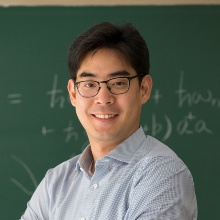
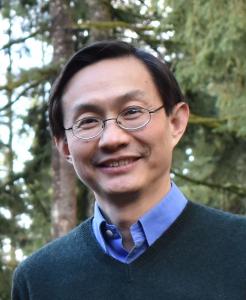
Prof. Zheshen Zhang is a Professor in the Department of Electrical and Computer Engineering at the University of Michigan College of Engineering . He leads the Quantum Engineering Lab , focusing on harnessing quantum mechanical resources like entanglement to advance sensing, communication, and computing systems. Academic Rank: Professor Institution: University of Michigan School: College of Engineering Department: Electrical and Computer Engineering Research Interests: His work spans quantum engineering, emphasizing: Quantum computing architectures using continuous-variable cluster states Quantum communication via entanglement-assisted protocols Quantum sensing for precision metrology and dark matter detection Hybrid photonic circuits with Scandium Aluminum Nitride and Silicon Nitride Application of machine learning to quantum information processing Publications Trends: Recent articles highlight: Advances in integrated photonics for scalable quantum devices Development of entanglement-enhanced sensors for covert and precision applications Exploration of exceptional points in optical cavities for metrology Quantum network prototypes enabling open-access quantum computing Machine learning integration with quantum data acquisition
Dr. Sudha Mokkapati is an Associate Professor in the Department of Materials Science and Engineering at Monash University. Her research focuses on semiconductor nano-photonics, nano-lasers, and nanostructured solar cells. She holds a PhD from the Australian National University (2008) and has held academic positions at Cardiff University (2016–2019) and postdoctoral roles at ANU's Centre for Sustainable Energy Systems and Research School of Physics and Engineering. Education: M.Sc. Physics, University of Hyderabad M.Tech. Materials Science and Engineering, Indian Institute of Technology Kanpur Ph.D. Physics, Australian National University Research Interests: Semiconductor nanostructures for optoelectronics Nanowire-based lasers and solar cells Photon management in thin-film solar cells Plasmonic and nanophotonic device engineering Her recent publications emphasize advancements in gas sensing technologies, photonic resonators, and nanoscale optoelectronic devices. She leads projects on chemical detection platforms and wafer-scale 2D heterostructure synthesis. Collaborations span international institutions, addressing sustainable energy and nanotechnology challenges aligned with UN Sustainable Development Goals. Grants/Projects: All-electronic platform for real-time toxic gas detection (2024–2025) Low-cost wireless sensors for chemical hazards (2021–2023) van der Waals Epitaxy for flexible optoelectronics (2017–2020) Labs/Teams: Engaged in nanophotonics and materials engineering research groups at Monash, focusing on device fabrication and characterization for energy and sensing applications.
Kerry J. Vahala serves as the Ted and Ginger Jenkins Professor of Information Science and Technology and Applied Physics at the California Institute of Technology, where he has maintained continuous faculty appointment since 1985. He progressed from Research Fellow (1985) to Assistant Professor (1986-90), Associate Professor (1990-96), Professor (1996-2002), and Jenkins Professor (2002-present), serving as Executive Officer of the Department of Applied Physics from 2013-2025. His academic background includes: B.S. in Applied Physics, Caltech (1980) M.S. in Applied Physics, Caltech (1981) Ph.D. in Applied Physics, Caltech (1985) Professor Vahala's research pioneers ultra-high-Q optical microresonators that confine light for exceptionally long durations (Q factors exceeding 1 billion in chip-based devices). His work explores nonlinear optical phenomena including soliton microcombs and second-harmonic generation, cavity optomechanics involving radiation-pressure coupling, and integrated photonic systems for quantum and classical applications. The Vahala Research Group has established foundational techniques for high-Q resonator fabrication and demonstrated breakthrough applications in low-noise microwave generation and quantum light sources. Analysis of his 2023-2025 publications reveals strong emphasis on system integration of microresonators with photonic circuits, particularly using silicon nitride platforms. Key trends include development of practical microwave photonics systems (spiral resonators, low-noise oscillators), quantum light generation (photon pairs, 780nm sources), and novel resonator architectures (micro-Fabry-Pérot cavities, Moiré-effect devices) addressing previously intractable challenges in the 'green gap' and thermal limitations. His scientific recognition includes: Charles Hard Townes Medal (2025) As Executive Officer until 2025 and current Jenkins Professor, Vahala has directed departmental strategy while maintaining active research leadership. His group receives substantial research funding evidenced by advanced nanofabrication capabilities and recent high-impact publications, though specific grant details aren't provided in source materials. The group maintains strong industry and academic collaborations visible through multi-institutional publications. The Vahala Research Group operates specialized laboratories for nanofabrication and optical characterization at Caltech, focusing on pushing Q-factor limits and developing application-specific resonator systems. Their current work integrates microresonators with photonic circuits to create self-contained systems for communications, sensing, and quantum information processing, as demonstrated by recent advances in isolator-free lasers and microwave photonics.
Takao Aoki is a Professor at the School of Advanced Science and Engineering , Waseda University. His research focuses on Quantum Optics , Nanophotonics , and Quantum Information Science , particularly in cavity quantum electrodynamics (QED) systems with nanofiber optics and microtoroidal resonators. Key Research Areas : Semiconductors, optical properties of condensed matter, atomic physics, quantum computing, and photon pair generation. Notable Projects : Japan Society for the Promotion of Science grants for time-domain-multiplexed quantum cluster states and nonlocal coherent coupling in cavity QED systems. Recent publications highlight advancements in single-photon sources , coupled-cavity QED , and graphene optical nonlinearity . His work has enabled ultra-low-loss tapered optical fibers and high-fidelity quantum teleportation , contributing to scalable quantum technologies and secure optical communications. Scientific Awards : 2024 Waseda Research Award 2018 Waseda Research Award He has supervised master's research and taught courses in Optics , Quantum Electronics , and Advanced Quantum Optics . His patents include quantum computing units, photon generators, and entanglement devices.
Dr. Aneesh Vincent Veluthandath is a Research Fellow at the Integrated Photonic Devices Lab, Optoelectronics Research Centre (ORC), University of Southampton since December 2019. His research focuses on developing low-cost photonic platforms for biomedical diagnostics, including rapid diagnosis of neonatal respiratory distress syndrome using mid-infrared and Raman spectroscopy. He also investigates high-Q microcavities for applications in lasing and nonlinear signal conversion, as well as rolled-up microcavities and photonic-plasmonic hybrid resonators. Previously, he held postdoctoral positions at the Indian Institute of Technology Madras (IIT Madras) and IFW Institute for Integrative Nanosciences in Dresden, Germany. He earned his PhD in Physics from IIT Madras in 2018, where his doctoral work explored whispering gallery modes (WGMs) of microspheres on quantum dots and 2D semiconductors, along with inventing a method for self-assembling polymer micro-bottle resonators. His current projects emphasize integrating experimental systems and machine learning to enhance diagnostic accuracy and device versatility. Research interests include photonics, spectroscopic techniques (mid-IR, Raman, FTIR), microcavity design, nanomedicine, and biomedical applications. He collaborates on interdisciplinary projects linking optics, materials science, and healthcare technology. Publications Recent work highlights advancements in vibrational spectroscopy, exosome analysis, and microcavity-based sensing systems, with contributions to conferences and journals like Analytical Chemistry and Talanta . His research addresses challenges in biomarker quantification, atmospheric interference correction, and sub-wavelength photonic structures. Scientific Awards No awards explicitly mentioned in the provided texts. Advising and Grants Currently supervising Eleanor Louisa Osborne in her PhD studies at the ORC. No specific grants are detailed here, but his work aligns with broader research initiatives in biomedical photonics. Labs and Teams Primary affiliation with the Integrated Photonic Devices Lab at the ORC, University of Southampton. Collaborates across teams specializing in nanophotonics, spectroscopy, and biomedical engineering.
Jianping Yao is a Distinguished University Professor and University Research Chair in Microwave Photonics at the School of Electrical Engineering and Computer Science , University of Ottawa, Canada. He holds a PhD in Electrical Engineering and is a licensed Professional Engineer (PEng) in Ontario. His academic affiliations include prestigious fellowships: Fellow of the Optical Society of America (FOSA) , Fellow of IEEE (FIEEE) , and Fellow of the Canadian Academy of Engineering (FCAE) . Education: PhD in Electrical Engineering (Université de Toulon, 1997) Professor Yao is a leading expert in Microwave Photonics , focusing on photonic generation and processing of microwave signals, radio over fiber, optical sensors, and biomedical applications. His work spans photonic arbitrary waveform generation, microwave photonic filters, and silicon photonic integrated circuits. He has supervised over 20 NSERC-funded projects and published extensively (510+ papers, H-index: 55). Notable contributions include photonic convolution processors, optoelectronic oscillators, and high-speed sensing systems. His research also intersects with Biophotonics , including optical coherence tomography and Fourier-transform spectroscopy, and he has developed innovative microfluidic and fiber Bragg grating technologies. He served as Director of the Ottawa-Carleton Institute for Electrical and Computer Engineering (2007-2010) and held academic roles at Nanyang Technological University, Singapore, prior to joining UOttawa. Scientific Awards: 2005 International Creative Research Award (University of Ottawa) 2007 George S. Glinski Award for Excellence in Research 2008 NSERC Discovery Accelerator Supplements Award He actively contributes to editorial and conference leadership, including roles as Associate Editor for journals and Technical Program Committee leadership for international microwave photonics conferences.
Daniel Blumenthal is a Distinguished Professor of Electrical and Computer Engineering at the University of California, Santa Barbara (UCSB). His research focuses on advanced photonic systems, including optical communications, integrated photonics, and quantum sensing technologies. He leads efforts in developing ultra-low-loss waveguides, Brillouin lasers, and laser stabilization techniques for applications in atomic clocks, quantum computing, and optical networking. Education: PhD in Engineering, University of Colorado MSEE, Columbia University BSEE, University of Rochester Research interests include optical packet switching, ultrafast signal processing, and photonic integration in silicon nitride (SiN) platforms. His work bridges fundamental photonics with practical applications, such as low-noise lasers for atomic cooling and high-capacity photonic interconnects for data centers. Awards and Fellowships: 2020 C. E. K. Mees Medal (OSA) Presidential Early Career Award for Scientists and Engineers (PECASE) Fellowships from NAI, IEEE, and OSA Grants and Advising: His research has been supported by NSF, ONR, and other agencies. He collaborates on trapped-ion quantum computers and compact atomic sensors. Labs and Teams: Active in UCSB’s integrated photonics research groups, focusing on wafer-scale fabrication and quantum photonics integration.
Professor Tao Lu holds a faculty position in the Department of Electrical and Computer Engineering at the University of Victoria. His research focuses on electromagnetics, photonics, optomechanical systems, and machine learning applications. He has contributed to advancements in microdisk lasers, optical sensing, wireless communication systems, and AI-driven signal processing. BSc from University of Manitoba MSc from Queen's University PhD from University of Waterloo Research interests emphasize nanoscale optomechanical sensors, high-Q microcavity fabrication, and UAV communication systems. Recent work includes 3D biological neural network models and resilient aerial communication under environmental conditions. His publications span topics from spectral analysis to WiFi fingerprinting for indoor localization. Key contributions include ultra-narrow linewidth lasers, electro-optic tuning mechanisms, and integrated photonics on lithium niobate platforms. His lab explores the intersection of photonics, materials science, and machine learning for next-generation sensing and communication technologies.
Tobias Kippenberg is a Full Professor of Physics at École Polytechnique Fédérale de Lausanne (EPFL), where he leads the Laboratory of Photonics and Quantum Measurements (LPQM) within the School of Basic Sciences and the Institute of Physics. He holds joint affiliations with the School of Engineering (STI) and teaches in departments including Electrical Engineering, Microengineering, and Physics education programs. His office is located at EPFL’s PH D3 355 building in Lausanne, Switzerland. Bachelor of Arts in Physics, RWTH Aachen (1998) Bachelor of Arts in Electrical Engineering, RWTH Aachen (1998) Master of Science in Applied Physics, California Institute of Technology (2000) PhD in Physics, California Institute of Technology (2004) Habilitation in Physics, Ludwig-Maximilians-Universität München (2009) Professor Kippenberg’s research centers on experimental and theoretical photonics, with a focus on high-Q optical microcavities and their applications in cavity quantum optomechanics and precision frequency metrology. His group has pioneered the development of chip-scale optical frequency combs and observed radiation pressure effects that laid the foundation for cavity optomechanics. His work bridges fundamental quantum science with practical applications in communications, sensing, and quantum information processing. The 15 most recent publications reflect a strong trend toward integrated quantum photonics, with emphasis on soliton microcombs, low-loss photonic circuits, piezoelectric tuning, microwave-optical transduction, and quantum optomechanics. These works span high-impact journals such as Nature , Science , and Optica , showcasing innovations in materials like lithium tantalate and silicon nitride, and applications in quantum computing and ultrafast communications. His scientific achievements have been recognized with numerous awards: ZEISS Research Award (2018) Klung-Wilhelmy Prize (2015) Swiss Latsis Prize (2014) ICO Prize in Optics (2013) Fresnel Prize (EPS, 2009) Helmholtz Prize for Metrology (2009) Thomson Reuters Highly Cited Researcher (2014–2017) Fellow of APS and OSA Kippenberg has advised over 40 PhD students, both current and former, many of whom have gone on to prominent research careers. His group has secured major grants, including a Marie Curie Excellent Grant, and continues to lead cutting-edge research in quantum photonics. He teaches advanced courses such as Statistical Physics IV and Quantum Electrodynamics and Quantum Optics , contributing significantly to graduate education at EPFL. He leads the Laboratory of Photonics and Quantum Measurements (LPQM), a multidisciplinary team focused on developing novel photonic devices and exploring quantum phenomena in engineered systems. The lab emphasizes scalable, chip-based platforms for quantum technologies and collaborates widely across disciplines and institutions.
Sungkun Hong is a Tenure-Track Junior Professor (Assistant Professor) at the Institute for Functional Matter and Quantum Technologies, University of Stuttgart. His research focuses on developing hybrid optical quantum device technologies, particularly leveraging optomechanical systems involving levitated nanoparticles and photonic crystal cavities. He leads the Hong Group, which explores quantum sensing, quantum information processing, and fundamental quantum physics at mesoscopic scales. Education details are not explicitly provided in the text, but his research career includes collaborations with institutions such as the University of Vienna and TU Delft, evident from co-authorships. His work emphasizes combining optical, solid-state, and mechanical systems to create novel quantum technologies. Research interests span quantum optomechanics, levitated nanoparticles, cavity quantum electrodynamics (cQED), and nanophotonic devices. The group actively seeks students and postdocs for projects involving optical trapping, microfabrication, and quantum control. Recent achievements include advancements in vacuum-based levitation platforms and enhanced optomechanical coupling. Key Projects: Quantum levitodynamics, optomechanical entanglement, and nanoscale magnetic imaging. Current Focus: Exploiting levitated dielectric particles for quantum sensing and probing quantum-classical boundaries. Lab activities include designing fiber-based optical tweezers, photonic crystal cavities, and nanofabricated optomechanical devices. The group collaborates internationally, as reflected in co-authored publications with institutions worldwide. Open positions are available for experimental and theoretical researchers in quantum technologies.
Dr. Khalil As'Ham is a Research/Lecturer Associate at the School of Engineering & Technology, University of New South Wales (UNSW), Canberra. With a PhD in Engineering (2022) from UNSW and prior degrees from the University of Malaya (M.Sc. 2017) and Taiz University (B.Sc. 2013), his expertise lies in nanophotonics and optoelectronic device optimization , particularly using advanced simulation tools. PhD in Engineering (UNSW, 2022) M.Sc. Eng. with Distinction (University of Malaya, 2017) B.Sc. Eng. with First Class Honors (Taiz University, 2013) His research spans strong light-matter coupling , self-powered photodetectors , and machine learning for optoelectronic design . Recent work focuses on ternary chalcogenides, graphene-based infrared sensors, and hybrid perovskite-TMDC systems. As a mentor, he supports HDR students and teaches courses like Radar Techniques , Communication Systems , and Digital Electronics . Key awards include the UNSW Postgraduate Scholarship (2018-2022), OSHC for RTPs, and the Yemeni Embassy's recognition (2017). His publications highlight trends in 2D material integration , thermal rectification , and UV photodetection with applications in eco-friendly electronics and on-chip sensing. University International Postgraduate Scholarship (2018-2022) OSHC for RTPs University College PG TopUP (2018-2022) Award of Honouring Graduates and Excellent Yemeni Students (2017) M.Sc. Scholarship Programme in Science and Technology (2016-2017)
Professor Hailin Wang holds the Alec and Kay Keith Chair in Physics at the University of Oregon, within the Department of Physics, College of Arts and Sciences. He earned his B.S. and Ph.D. in physics from the University of Science and Technology of China (1982) and the University of Michigan (1990), respectively. His research focuses on experimental quantum optics and condensed matter physics, particularly quantum coherence manipulation in semiconductors, spins in diamond, and optomechanical systems. He pioneered work on amplitude-squeezed light from diode lasers and developed silica optical resonators for directional evanescent tunneling. Current projects include quantum information processing using exciton spins and nanomechanical oscillators. Recipient of NSF-CAREER Award (2000s) Fellow of the Optical Society of America Over 150 peer-reviewed publications, including seminal work in Phys. Rev. Lett. , Science , and Nature Physics His lab explores quantum control of spins, excitons, and mechanical systems, with applications in quantum sensing and hybrid quantum networks. Key achievements include demonstrating electromagnetically induced transparency in semiconductors and cryogenic cooling of optomechanical resonators. He advises numerous graduate students and collaborates on NSF- and AFOSR-funded projects.
Vinod Menon is a Professor of Physics at the City University of New York (CUNY) and affiliated with the Center for Discovery and Innovation. His research focuses on advancing nano and micro photonics, quantum technologies, and 2D material systems. Key areas include exciton-polariton condensation, optoelectronic devices (e.g., OLEDs), and light-matter interactions in van der Waals magnets and layered materials. His work spans theoretical and experimental studies of photonic microcavities, meta-optical resonators, and engineered material systems. Notable contributions include achieving room-temperature polariton condensates in organic systems, optimizing plasmonic OLED efficiency, and exploring strain-engineered optical properties in 2D semiconductors like MoS₂. He has pioneered techniques like self-patterning of liquid metals for semiconductor performance enhancement and developed novel approaches to tune moiré superlattice potentials in twisted hexagonal boron nitrides. Research themes emphasize nonlinear optics, topological photonics, and quantum embedding studies in materials like WS₂. Recent efforts explore applications of van der Waals magnets for magneto-optical devices and neural computing with coherent laser networks. His lab works at the intersection of photonics, quantum materials, and nanotechnology to address challenges in next-generation optoelectronics and quantum information systems. Publications highlight breakthroughs in polariton condensation dynamics, defect engineering in layered semiconductors, and device-scale applications of 2D materials. While no specific awards are listed, his high-impact contributions suggest recognition in photonics and materials science fields. Ongoing projects include developing meta-optical systems for visible light applications and advancing quantum state engineering in photonic chips.
Mikko Huttunen is a Lecturer in the Department of Physics at Tampere University, within the Faculty of Engineering and Natural Sciences. His research focuses on photonics, nonlinear optics, and plasmonic metasurfaces, with particular emphasis on nanocavities, surface lattice resonances, and biomedical imaging applications. He is affiliated with the NLO Group and has contributed to advancing optical materials characterization and super-resolution imaging techniques. His work spans theoretical and applied photonics, including studies on enhancing nonlinear optical effects in nanostructured materials. Key contributions include exploring structural disorder effects in perovskite-inspired materials, developing methods for fiber-reinforced implants, and advancing label-free super-resolution microscopy through nonlinear optics. He has collaborated on projects involving high-Q plasmonic metasurfaces and epsilon-near-zero microcavities, contributing to fields such as sensing, imaging, and nanolasing technologies. No scientific awards are explicitly mentioned in the provided texts. His research group (NLO Group) is active in both fundamental and translational research, with applications in biomedical diagnostics and nanophotonic device engineering.