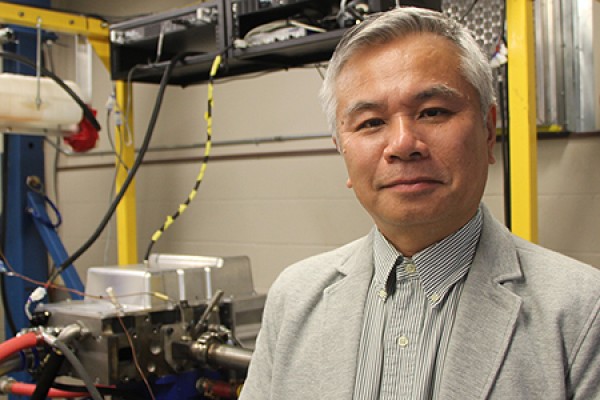
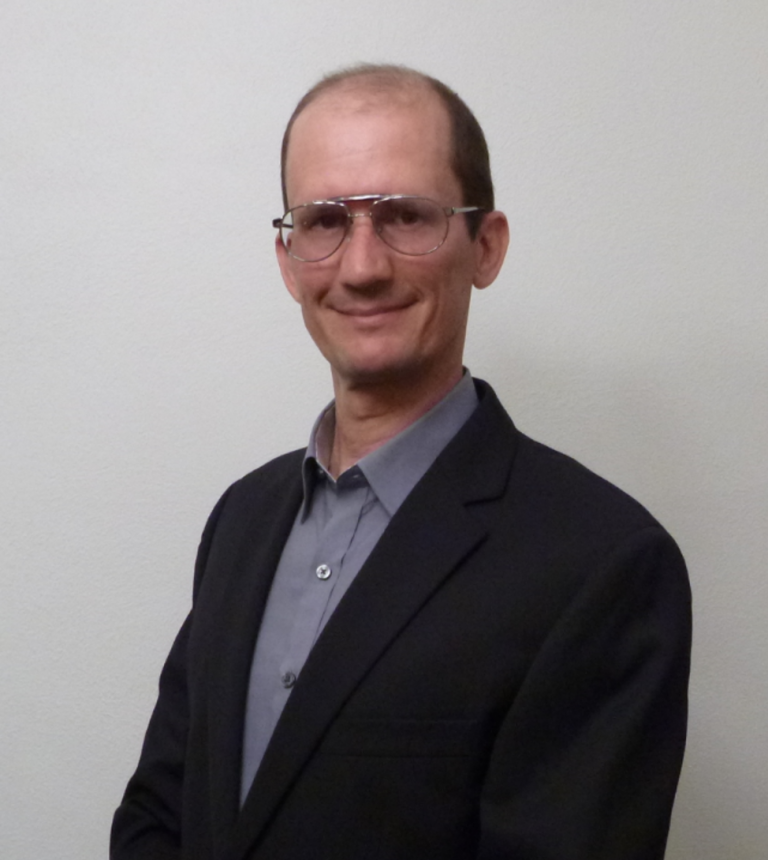
Ming Zheng is a Professor at the University of Windsor's Faculty of Engineering, specializing in automotive and combustion engineering. His research focuses on advanced ignition strategies, clean fuels (e.g., DME), emissions reduction, and engine efficiency improvements. He is recognized for contributions to combustion science and automotive innovation. Key achievements include his SAE Fellow designation (2015) and Engineering Medal of Excellence (2017). His work addresses decarbonization in road transportation and sustainable propulsion systems. Recent studies explore plasma-based ignition, oxygenated fuels, and catalytic NOx aftertreatment technologies. Research Highlights: DME combustion optimization, lean burn strategies, hydrogen-methane combustion, and renewable fuel applications. Awards: SAE Fellow, Medal of Excellence (UWindsor Engineering). Grants: Involved in NSERC-funded projects advancing automotive technologies.
Gordon McTaggart-Cowan is an Associate Professor and Associate Director in the School of Sustainable Energy Engineering at Simon Fraser University (SFU). He holds a Ph.D. (2006), M.A.Sc. (2002), and B.Eng. (1999) in Mechanical Engineering from the University of British Columbia and the University of Victoria. His research focuses on clean, low-carbon transportation technologies, including vehicle modeling, renewable gaseous fuels, and emissions control in internal combustion engines. He has pioneered work on hydrogen-diesel dual-fuel systems, natural gas engine optimization, and high-pressure fuel injection strategies. Recent publications highlight advancements in hydrogen compression systems, hybrid electric truck performance analysis, and thermoelectric energy harvesting. He has contributed to over 50 peer-reviewed articles and holds multiple patents on fuel injection and combustion control technologies. McTaggart-Cowan is an Associate Editor for the Proceedings of the Institution of Mechanical Engineers, Part D and collaborates internationally through visiting fellowships at Loughborough University and Michigan Technological University. Teaching responsibilities include fluid mechanics, thermodynamics, and sustainable energy design projects. His work aligns with global efforts to decarbonize heavy-duty transport and stationary power systems through innovative engine design and alternative fuel integration.
Dr Abbey Waldron is a Lecturer in Particle Physics at Queen Mary University of London, affiliated with the School of Physical and Chemical Sciences and the Centre for Fundamental Physics. Her research focuses on neutrino oscillations, matter-antimatter asymmetry, and neutrino-nucleus interactions, with a strong emphasis on experimental techniques and machine learning applications in detector systems. She contributes to major international experiments such as DUNE and ProtoDUNE, advancing liquid argon time projection chamber (LArTPC) technologies. Her work includes cross-section measurements, detector performance optimization, and high-energy physics collaborations. Education: PhD in Physics (focus on neutrino physics). Her research interests span experimental neutrino physics, including neutrino oscillations, scattering cross-section measurements, and detector development. She explores how machine learning enhances neutrino detection precision and addresses fundamental questions like the origin of matter-antimatter imbalance in the universe. Her recent publications analyze neutrino interactions in diverse materials (e.g., argon, hydrocarbon), detector performance in high-pressure environments, and algorithmic improvements for event reconstruction. She leads efforts in DUNE’s far detector technology and contributes to international collaborations like T2K and NOvA. Grants: £12,000 Royal Society grant (2024–2026) for machine learning in neutrino interactions. £291,349 STFC grant (2023–2025) supporting experimental PPRC exploitation at QMUL. She collaborates with global teams on detector development and neutrino physics, contributing to cutting-edge projects like the DUNE experiment’s vertical drift technology and ProtoDUNE’s pixelated LArTPC simulations.
Mike Mooney is a Professor of Mechanical Engineering at the Colorado School of Mines, holding the Grewcock Chair in Underground Construction & Tunneling. He directs the Center for Underground and leads the Heavy Construction Studio, focusing on advancing smart, rapid, and cost-effective construction technologies for urban tunneling and challenging ground conditions through instrumentation integration and field experimentation. His educational background includes: PhD in Civil Engineering, Northwestern University, 1996 MS in Civil Engineering, University of California, Irvine, 1993 BS in Civil Engineering, Washington University, St. Louis, 1991 BA in Physics, Hastings College, 1991 Mooney's research integrates instrumentation into tunnel boring machines and horizontal directional drilling systems, studying robotic excavation, soil transformation using polymers/foams, and ground-mechanical interactions via physics models and machine learning. His group conducts extensive field campaigns embedded in real construction projects worldwide, emphasizing data-driven approaches to complex geotechnical challenges. Recent publications (2018-2023) demonstrate expertise in TBM performance optimization, boulder detection systems, soil conditioning, and machine learning applications for ground prediction. Key contributions include real-time vibration monitoring for Venice lagoon restoration, annular pressure management, foam stability analysis, and autonomous tunneling frameworks across major projects in Seattle, Toronto, Los Angeles, and New York City. No scientific awards or fellowships were mentioned in the provided text. Professor Mooney actively advises graduate students as evidenced by extensive student co-authorship in publications. His research is directly applied to international construction projects including the Venice lagoon restoration and urban tunneling initiatives. He is a registered Professional Engineer in Colorado (License #39682) and provides technical consultation for construction projects globally. He directs the Center for Underground at Colorado School of Mines, where his Heavy Construction Studio develops instrumentation systems and conducts field experiments integrated into active construction sites. The lab specializes in real-time monitoring technologies, ground characterization methods, and machine learning applications for tunneling operations.
Scott Nooner is a Professor of Geophysics at the University of North Carolina Wilmington, leading the Crustal Dynamics and Geophysics Laboratory. His research focuses on mid-ocean ridge systems, seafloor geodesy, and crustal deformation processes. He specializes in using geophysical techniques like seafloor gravity, compliance measurements, and pressure gauges to study magma dynamics at Axial Seamount and other volcanic systems. His work includes studying the interplay between tectonics and hydrothermal systems, monitoring CO₂ sequestration at the Sleipner Project in the North Sea, and analyzing deformation caused by monsoonal flooding in Bangladesh. He teaches courses such as Natural Disasters, Geological Oceanography, and Introduction to Geophysics. Key Research Areas: Axial Seamount eruption dynamics, magma chamber compartmentalization, seafloor geodetic monitoring, CO₂ storage, and crustal deformation in subduction zones. Notable Projects: Collaborative monitoring of Alaska and Cascadia subduction zones, long-term studies at Axial Seamount, and Bangladesh delta subsidence analysis. Nooner advises a diverse group of graduate and undergraduate students, including Audra Sawyer, Will Hefner, and Kevin Lally. His lab maintains active partnerships with oceanographic institutions and operates advanced seafloor instrumentation networks.
Peter Winter is a physicist in the High Energy Physics Division at Argonne National Laboratory, serving as Intensity Frontier Group Leader since 2019 and Co-Spokesperson for the Muon g-2 Collaboration since 2023. He earned a Dr. rer. nat. (2005) and Dipl. Phys. (2001) from the University of Bonn, Germany. Research Interests: Winter focuses on precision measurements in muon physics to test fundamental symmetries and the Standard Model. His work includes the Muon g-2 experiment, investigating anomalous magnetic moments, and developing advanced magnetometry techniques for particle physics applications. Scientific Awards: DOE Office of Science Early Career Research Award (2015) Günther-Leibfried Award (2001) Notable Contributions: Winter has led key advancements in magnetic field calibration for muon experiments, improved understanding of muon decay dynamics, and optimized detector systems for precision measurements.
Karl Oskar Pires Bjørgen is a Research Fellow in the Department of Energy and Process Engineering at the Norwegian University of Science and Technology (NTNU), part of the Faculty of Engineering. His work focuses on combustion engineering, particularly in alternative fuels like ammonia and biofuels, alongside emissions control and thermal fluid dynamics. He has contributed to over 15 peer-reviewed articles since 2016, exploring topics such as ammonia combustion in compression ignition engines, dual-fuel systems, and advanced optical diagnostics for soot measurement. His research emphasizes sustainable energy solutions, including waste-to-energy processes and biofuel development. Bjørgen actively participates in international conferences, presenting findings on combustion optimization, injector performance, and renewable fuel integration in engines. Key research trends in his publications include the experimental and numerical analysis of ammonia-based fuels, high-pressure spray dynamics, and the environmental impact of biofuels derived from hydrothermal liquefaction. He collaborates with institutions globally, contributing to projects like the retrofitting of agricultural tractors for ammonia-biodiesel use. While no formal awards are listed, his extensive publication record and conference contributions highlight his expertise in combustion science and sustainable energy technologies.
Rachel J. Beane is the Anne T. and Robert M. Bass Professor of Natural Sciences at Bowdoin College , where she serves as Associate Dean for Faculty Recruitment and Student Advising in Academic Affairs. A geologist by training, she combines mineralogical analysis with tectonic studies through fieldwork and advanced microscopy techniques. Education: PhD in Geology (Stanford University, 1997), BA in Geology (Williams College, 1993) Research Interests: Focuses on mineral composition analysis to decode Earth's geological processes across diverse regions including New Zealand, Russia, Kazakhstan, Greece, western U.S., and Maine. Her work spans solid earth processes, metamorphic petrology, and volcanic systems, utilizing electron microscopy and field studies. Science Education Leadership: Pioneered national faculty development programs through NSF-funded initiatives like On the Cutting Edge and the SAGE 2YC program. Her education research examines diversity trends in geoscience, inclusive teaching practices, and professional development diffusion models. Recent Publications: Highlights include analyses of geoscience diversity trends (2021), faculty development workshops (2022), and metamorphic process studies in the Urals (2000). Her work integrates geoscience research with educational innovation. Scientific Awards: Geological Society of America Fellow (2017) Neil Miner Award (2018) Sydney B. Karofsky Prize (2004) NSF Graduate Research Fellowship (1993) Grant Leadership: Directed multiple NSF grants totaling over $4 million, including SEM acquisition for undergraduate research (2015-17) and large-scale faculty development projects (2010-17). Her administrative roles include acting director of Bowdoin's Baldwin Center for Learning and Teaching (2019).
Dr. Melissa Uchida is an Associate Professor in High Energy Physics at the University of Cambridge, leading the neutrino physics research group. She serves as a General Trustee of the Institute of Physics (IOP) for the term 2022-2026 and chairs the IOP's High Energy Particle Physics and Particle Accelerators and Beams groups. Additionally, she holds positions on the Science and Technology Facilities Council Projects Peer Review Panel, the Accelerator Science and Technology Centre (ASTeC) advisory board, and the Deep Underground Neutrino Experiment Target (DUNE) Oversight Committee. Her educational background includes a PhD from Queen Mary University of London (T2K neutrino oscillation experiment, Japan), followed by postdoctoral positions at Sussex University (cryogenic neutron electric dipole moment experiment at Institut Laue-Langevin, Grenoble) and Imperial College London (International Muon Ionization Cooling Experiment and high-pressure gas time projection chamber). Dr. Uchida's research centers on understanding the matter-antimatter asymmetry of the Universe through neutrino oscillation characterization via DUNE and MicroBooNE experiments. She pioneers muon collider R&D for next-generation physics reach and develops the Atom Interferometer Observatory and Network for mid-frequency gravitational wave detection, bridging particle physics and cosmology. Scientific Awards: Breakthrough Prize in Fundamental Physics (2016) for neutrino oscillation research As leader of Cambridge's neutrino physics group, she mentors researchers within major international collaborations. Her board memberships and experimental leadership indicate substantial grant funding across particle physics infrastructure, though specific awards aren't detailed. She directs the neutrino physics research group at Cambridge while actively contributing to DUNE, MicroBooNE, and the Atom Interferometer Observatory and Network collaborations, driving innovation in detector technology and fundamental symmetry studies.
Eigil Samset is a Professor II in the Department of Informatics at the University of Oslo, affiliated with the Faculty of Mathematics and Natural Sciences. He is a key member of the Digital Signal Processing and Image Analysis (DSB) research group and contributes to the Strategic Research Initiative MEDIMA (Multimodal Medical Imaging and Image Analysis). His work is also associated with the INIUS (Intelligent Image-Guided Surgery) project, reflecting his strong focus on translational research in medical imaging. His research interests span artificial intelligence, deep learning, medical image analysis, echocardiography, and image-guided surgery . He specializes in developing advanced computational methods for cardiac ultrasound, including automated segmentation, motion tracking, and 3D/4D reconstruction. His work bridges computer science and clinical cardiology, aiming to improve diagnostic accuracy and procedural guidance. The recent publications show a consistent trend in applying deep learning to automate measurements in echocardiography, such as left ventricular strain, outflow tract diameter, and chamber segmentation. There is also a strong emphasis on biomechanical modeling, image fusion (e.g., ultrasound with fluoroscopy or CT), and real-time visualization for surgical applications. His work frequently appears in high-impact journals in medical imaging and biomedical engineering. He has advised or collaborated closely with numerous researchers and students, as evidenced by his frequent senior authorship on publications involving PhD candidates and postdocs. His research is supported by institutional affiliations and collaborative projects rather than individual grant mentions in the provided text. He is actively contributing to the field, with recent work in 2024, and maintains an academic email at the University of Oslo. There is no indication of retirement or emeritus status.
Asher Kaboth is a Senior Lecturer in the Department of Physics at Royal Holloway, University of London. He is part of the Centre for Particle Physics and Astronomy, focusing on particle astrophysics and detector development. His roles include mentoring in the Royal Society's Neutrinos through a PRISM project (2022–2026) and leading the STFC-funded High Pressure Gas TPCs for Neutrinos project (2022). Education PhD in Physics from MIT (2006–2012), working on KATRIN and DMTPC experiments A.B. in Physics from University of Chicago (2006) Research Associate at Imperial College London (2012–2015) Research Interests Neutrino oscillations via T2K experiment to explore matter-antimatter asymmetry LZ experiment: world's largest liquid xenon dark matter detector (2019 onwards) Detector calibration and high-pressure time projection chamber development Grants & Projects Consolidated STFC grants for Centre for Particle Physics (2019–2025) Responsive PDRA applications grant (2023–2025) Labs & Collaborations Active in international collaborations like T2K and LZ, with recent partnerships across 7 countries.
Dr. Ningning Zhang serves as Chair of Geotechnical Engineering and leads the Institute of Geomechanics and Underground Technology (GUT) at RWTH Aachen University. Her research bridges computational mechanics and practical geotechnical applications, with a focus on soil-structure interaction and bio-inspired solutions for underground engineering challenges. Her primary research domains include Geotechnical Engineering , Geomechanics , and advanced Discrete Element Modeling (DEM) . She investigates granular material behavior under complex loading conditions, specializing in bio-inspired penetration mechanics, soil creep phenomena, and particle-scale interactions. Current projects explore self-burrowing robotics for granular media, multi-scale particle shape effects on soil stiffness, and deep-learning applications for geotechnical testing. Her work consistently integrates experimental validation with high-fidelity numerical simulations to address fundamental soil mechanics questions. Dr. Zhang's recent publication trajectory reveals a strategic shift toward bio-inspired geotechnics and AI-enhanced modeling. Over 70% of her 2023-2024 publications focus on self-burrowing systems and granular material characterization, demonstrating expertise in translating biological burrowing strategies into engineered solutions. Her research uniquely combines gravitational effects analysis, crushable soil modeling, and multi-cycle penetration dynamics, establishing new methodologies for simulating complex soil behaviors. As an active mentor, she has supervised five Master's theses on topics including discrete element modeling of bio-inspired penetration processes, manufacturing trials of self-burrowing robots, and numerical analysis of trapdoor mechanisms in granular soils. Her academic leadership extends to international collaborations with institutions like Universidad Técnica Federico Santa María and research groups in India, fostering global innovation in geomechanics. The Institute of Geomechanics and Underground Technology operates state-of-the-art laboratories for soil and rock mechanics testing under Dr. Zhang's direction. The facility specializes in custom equipment development for granular material characterization, including bespoke setups for simulating bio-inspired penetration processes and virtual calibration chambers for cone penetration testing. This experimental infrastructure synergizes with their computational research to provide comprehensive solutions for geotechnical challenges.
Marcus Agåker is a Researcher at Uppsala University's Department of Physics and Astronomy, specializing in X-ray Physics and Chemical and Biomolecular Physics. He works at The Ångström Laboratory in Uppsala and serves as project leader for the VERITAS beamline at MAX IV Laboratory in Lund, Sweden's state-of-the-art synchrotron radiation facility. His educational background includes: PhD in Physics from Uppsala University (2006) with thesis "Double Excitations in Helium Atoms and Lithium Compounds" Dr. Agåker's research focuses on instrument and method development in soft x-ray emission spectroscopy. With expertise spanning over 25 years since joining Uppsala University in 1999, his work bridges theoretical physics and practical instrumentation. His specialty in vacuum-ultraviolet spectroscopy and soft x-ray emission techniques has positioned him as a key contributor to advancing x-ray analysis capabilities for materials science, molecular physics, and quantum mechanics research. His publication record demonstrates a clear progression from fundamental studies of atomic and molecular systems to increasingly sophisticated instrumentation for next-generation light sources. Recent work emphasizes instrument automation, high-resolution imaging, and novel approaches to studying quantum systems, with significant contributions to journals like Nature, Science Advances, and Journal of Synchrotron Radiation. As project leader for the VERITAS beamline, Dr. Agåker oversees the development of novel mirror systems, experimental chambers, and a 10m high-resolution x-ray spectrometer. This project represents a major contribution to Sweden's research infrastructure in x-ray science and supports interdisciplinary research across physics, chemistry, and materials science.
Carl Knowlen is a Research Associate Professor in the Department of Aeronautics and Astronautics at the University of Washington. He holds a PhD from the same institution, specializing in ram accelerators and hypervelocity propulsion. His roles include teaching and leading experimental research in shockwave reactors, detonation engines, and green propellant technologies. Knowlen has collaborated internationally, including a 3-month stint in Japan (1996), and transitioned from postdoctoral roles to senior research positions before his current faculty appointment in 2015. Education: PhD (1991), MSAA (1985), BSAA (1983) in Aeronautical and Astronautical Engineering from the University of Washington. Research focuses on energy conversion, combustion physics, and hypervelocity propulsion systems. Key areas include ram accelerators for space launch applications, rotating detonation engines (RDEs), and cryogenic energy storage. His work emphasizes integrated experimental and computational modeling, with notable contributions to baffled-tube ram accelerator design and detonation wave dynamics. Recent studies address pre-ignition propellant mixing in RDEs and scaling effects in rocket propulsion systems. Students advised include Quentin Roberts (AIAA Zarem award winner) and Carter Vu (NSF GRFP recipient). Research facilities utilized include the Kirsten Wind Tunnel and experimental setups for RDE combustor testing. Labs/Teams: Active in the UW Ram Accelerator Program and collaborations with Tohoku/Hiroshima Universities. Current projects include shockwave reactors for hydrocarbon upgrading and green microthrusters for CubeSats.
Dr. David Montgomery is an Adjunct Associate Professor in the Department of Mechanical Engineering at Colorado State University (CSU), holding this position since August 2018. With over 20 years of industry experience at Johnson/Evinrude and Caterpillar, his work focuses on engine research and development. He manages Caterpillar’s Natural Gas and Alternative Fuels Research group and oversees the Caterpillar/CSU Cat Lab at the Engine and Energy Conversion Laboratory (EECL), involving 6 graduate and undergraduate students. Dr. Montgomery also teaches an advanced course on Industrial Natural Gas and Dual-Fuel Engines at CSU. His educational background includes a Ph.D. (2000) and M.S. (1996) in Mechanical Engineering from the University of Wisconsin-Madison, and a B.S. (1993) in Mechanical Engineering from Colorado State University. Dr. Montgomery’s research interests span alternative fuels, engine combustion optimization, emissions reduction, and fuel system design. His work has led to over 17 peer-reviewed publications and 23 patents, emphasizing innovations in engine efficiency and environmental sustainability. His recent studies focus on natural gas engines, dual-fuel systems, and cryogenic technologies. Through his industry-academia collaborations, he bridges cutting-edge research with practical applications, particularly in reducing greenhouse gas emissions and improving fuel efficiency in heavy-duty engines. His lab’s projects highlight advanced fuel injection systems, exhaust gas recirculation strategies, and cryogenic seal technologies.