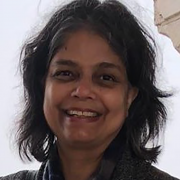
Professor Merlyne De Souza is a Chair in Microelectronics at the University of Sheffield's School of Electrical and Electronic Engineering. Her research spans multi-disciplinary microelectronics, focusing on GaN CMOS, neuromorphic computing, RF power amplifiers, and healthcare sensors. University of Sheffield (2007-) De Montfort University (2003-2007) Research Interests: GaN-based CMOS and power devices Magnetic materials for power management Memristive neuromorphic systems Perovskite solar cells Scientific Trends: Recent publications emphasize GaN device architectures, solid electrolyte transistors for neural networks, and sustainability in semiconductor materials through graphene oxide recycling and thermoelectric composites. Awards: No specific awards mentioned in the text. Advising: Supervised 7 PhD/MPhil students including Balakrishnapillai P, Casterman D, and Rasheduzzaman M. Secondary supervision of Baltynov T and Unni V.
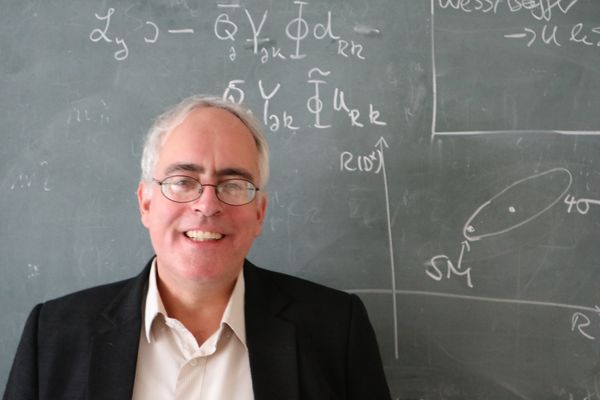
Prof. Ulrich Nierste is a Professor at the Institute for Theoretical Particle Physics (TTP) of the Karlsruhe Institute of Technology (KIT), where he has been a member since September 2005. His research focuses on flavour physics, studying transitions between quarks or leptons of different generations as powerful probes of physics beyond the Standard Model (BSM), with sensitivity to new particles at mass scales exceeding 100 TeV. His primary research interests include CP violation, supersymmetric theories, models with unified gauge forces, and interactions between Standard Model particles and Dark Matter. He specializes in high-precision calculations for decays of hadrons containing strange, charm, or bottom quarks, improving Standard Model predictions and exploring BSM observables. His work bridges theoretical frameworks with experimental data from facilities like Belle II, as evidenced by contributions to The Belle II Physics Book . Analysis of his 15 most recent publications (2022–2025) reveals a dominant focus on B and Kaon physics, with recurring themes of next-to-next-to-leading order QCD corrections, rare decays (e.g., B→K axion-like particles), leptoquark scenarios, and Dark Matter connections. His group actively addresses flavor anomalies and develops model-independent constraints for new physics. Prof. Nierste advises graduate students including Berkan Demir, Philipp Goller, and Jonathan Witte. His research group at TTP comprises postdoctoral researchers (Drs. Ashanujjaman, Khan, Moretti, Ziegler) and junior members, fostering collaborative work on theoretical particle physics challenges. The Research Group of Prof. Nierste operates within KIT's TTP, maintaining a robust publication pipeline and contributing to international collaborations. Their work emphasizes computational rigor in flavor physics, with direct implications for current and future high-energy experiments.
Matteo Chiesa is a Professor in Renewable Energy at UiT The Arctic University of Norway, working within the Department of Physics and Technology. His research focuses on creating and implementing sustainable energy technologies, with particular expertise in nanomaterials for solar energy conversion and storage systems. He is an active member of the Renewable Energy research group, the Smart Senja/RENEW project, and the SusSTEMEd Center for Sustainable STEM Education. Chiesa's research interests span renewable energy systems with a dual focus on Arctic and desert environments. He designs and engineers nanomaterials to address specific challenges in deploying renewable energy under extreme conditions. His work combines interdisciplinary approaches to create optimal solutions that integrate harmoniously within societal contexts, aiming to achieve sustainable lifestyles and well-being. His research methodology emphasizes the symbiotic relationship between technology development and social implementation. Analysis of his recent publications reveals a strong trend toward practical applications of nanomaterials in environmental monitoring, energy storage, and power grid stability, particularly in challenging environments like the Arctic. His work shows increasing integration of machine learning techniques with traditional materials science approaches, especially in atomic force microscopy applications. The publications demonstrate consistent collaboration across international boundaries with researchers from multiple institutions. Active member of Renewable Energy research group Member of Smart Senja/RENEW project Member of SusSTEMEd: Center for Sustainable STEM Education Chiesa has made significant contributions to photovoltaic technology development, with his research at Masdar Institute (now KU) contributing to projects achieving record-low electricity prices through power purchase agreements as low as 1.79c/kWh. His current work focuses on adapting these technologies for Arctic conditions while maintaining the interdisciplinary approach that has characterized his career.
Angel V Peterchev is a Professor in Psychiatry and Behavioral Sciences, Neurosurgery, Biomedical Engineering, and Electrical and Computer Engineering at Duke University. He directs the Brain Stimulation Engineering Lab (BSEL) and holds affiliations with the Duke Institute for Brain Sciences and MEDx. Harvard University: B.A. (1999) University of California, Berkeley: M.S. (2002), Ph.D. (2005) His research focuses on transcranial brain stimulation (TMS, tACS) device development, computational modeling of neural activation, and integration with robotics, imaging, and machine learning. He has pioneered technologies like ElevateTMS, SAMT software, and noise-reduction TMS coils. Recent publications emphasize multi-scale modeling , motor threshold algorithms , magneto-genetic interfaces , and neuroimaging-guided stimulation . His work bridges power electronics and clinical neuroscience , aiming to enhance TMS precision and therapeutic applications. Scientific accolades include the 2024 Brainbox Initiative John Rothwell Award . He has secured continuous NIH funding since 2008 and collaborated with institutions globally to translate lab developments into clinical practice. His lab, BSEL, develops quiet TMS devices , individualized dose tools , and multi-modal stimulation systems , while maintaining open-source platforms like SimNIBS.
Jian Yang is a Professor in the Antenna research group at Chalmers University of Technology. His work focuses on advanced antenna systems, particularly gap waveguide technology, millimeter-wave communication, and high-performance antenna arrays for 5G and automotive radar applications. Recent publications highlight innovations in circular polarization, beam steering, and decoupling techniques for D-band and E-band systems. Email: jian.yang@chalmers.se His research spans from Ka-band satellite communications to ultra-wideband (UWB) antenna design, with a strong emphasis on practical implementation and mechanical-electrical co-design. Scientific contributions include novel transitions, power dividers, and metasurface applications for sidelobe reduction.
Dr. Guochen Bao is a Chancellor's Research Fellow and Group Leader at the University of Technology Sydney (UTS), specifically within the School of Mathematical and Physical Sciences. He holds dual PhD degrees from Hong Kong Baptist University (2020) and UTS (2021) and has established himself as an emerging leader in the field of nanomaterials and biomedical applications. His research program is supported by prestigious fellowships including an NHMRC Emerging Leadership 1 Fellowship (2024) and a UTS Chancellor's Research Fellowship (2023). Dr. Bao's research expertise spans organic synthesis, analytical chemistry, spectroscopy, hybrid nanomaterials, and nanophotonics characterizations, with a focus on biomedical engineering applications. His work centers on developing hybrid materials with tailored optical and nanophotonic properties and integrating these into molecular/nano-probes for ultrasensitive bioassay, biomedical imaging, and precise therapy. His research interests include: Optical probes and lanthanide-based materials Drug discovery and chemical/biosensors Biomaterials and diagnostics/therapeutics Point-of-care diagnostics and smartphone-based detection Lanthanide coordination chemistry and upconversion nanomaterials Nanofabrication and energy transfer mechanisms Dr. Bao's research output demonstrates a strong trajectory of high-impact publications in top-tier journals including Nature Reviews Materials, Light: Science & Applications, Nature Photonics, Nano Letters, and ACS Nano. His work on lanthanide-doped nanomaterials, responsive microrobots, and hybrid upconversion systems has established him as a rising expert in nanophotonics and biomedical applications. His publications reveal a consistent focus on overcoming fundamental challenges in nanomaterial design while developing practical biomedical applications. Dr. Bao has secured significant research funding exceeding $1.5 million, including: NHMRC Emerging Leadership 1 Fellowship (2024, $674,000) Tour De Cure Grant (2024, $50,000) UTS Chancellor's Research Fellowship (2023-2027, $585,000) iCare grant (2024-2026, $250,000) As a mentor, Dr. Bao supervises Masters and PhD students and has taught courses including Organic Chemistry 1, Analytical Chemistry 1, Chemistry and Materials Science. He serves on HDR panels at UTS and is actively building his research group focused on developing innovative nanomaterials for biomedical applications.
Walter Leon-Salas, Ph.D. is an Associate Professor at the School of Engineering Technology at Purdue University, where he directs the tinyLab research group focused on the integration of electronic circuits with sensors and wireless communications. He received his B.Sc. in electronic engineering from Universidad Nacional de San Agustín in Peru, and his M.Sc. and Ph.D. in electrical engineering from the University of Nebraska-Lincoln in 2001 and 2006, respectively. His educational background includes: B.Sc. in Electronic Engineering, Universidad Nacional de San Agustín, Arequipa, Peru M.Sc. in Electrical Engineering, University of Nebraska-Lincoln (2001) Ph.D. in Electrical Engineering, University of Nebraska-Lincoln (2006) Dr. Leon-Salas' research focuses on low-power analog design, CMOS image sensors, solar energy harvesting, optical communications, and data compression. His work explores innovative ways to integrate electronic circuits with sensors and wireless communication systems, particularly through energy harvesting techniques that allow devices to operate with minimal external power sources. His research group has developed novel applications including Optical Frequency Identification (OFID) technology using solar cells for wireless communication, wireless soil health monitoring systems, and reconfigurable energy-harvesting CMOS image sensors. His recent publications (2023-2025) show a strong trend toward sustainable energy applications, particularly in the areas of solar cell-based optical communications, environmental monitoring systems, and energy-efficient technologies for agricultural and high-altitude applications. His work bridges electrical engineering with environmental sustainability, food-water-energy nexus research, and practical IoT implementations. His scientific achievements have been recognized with several prestigious awards: National Science Foundation CAREER Award (2011) Outstanding Faculty in Discovery, School of Engineering Technology, Purdue University (2014) Leadership Excellence Achievement Program (LEAP) Award from the Missouri Society of Professional Engineers (2011) Outstanding Doctoral Dissertation Award from UNL College of Engineering (2007) Best runner up live demo award at IEEE ISCAS conference (2018) Dr. Leon-Salas actively mentors students at all levels, from undergraduates to post-doctoral researchers, and has secured significant grant funding for his research. He serves as Co-Director of the Arequipa Nexus Institute for Food, Energy, Water and the Environment and as Secretary of the IEEE Sensory Systems Technical Committee. His teaching responsibilities include Analog IC Design, Mixed-Signal IC Design, Logic Design, Advanced Digital Design, and Digital Signal Processing courses. His tinyLab research group maintains several active projects including Optical Frequency Identification (OFID), Wireless Soil Health Monitoring, Solar Radiation Sensors, Circuit Printing, Reconfigurable Energy-Harvesting CMOS Image Sensors, RFID-based Corrosion Sensor, Optical Stimulator for Fruit Flies, and LED Lighting Testing for Airport Taxiways.
Xia Shen is a Senior Research Specialist at the Karolinska Institutet , working within the Department of Medical Epidemiology and Biostatistics . She is part of Yudi Pawitan's research group, focusing on statistical and bioinformatics analyses of high-throughput molecular data. PhD in Statistical Genetics (2012), Uppsala University MSc in Applied Statistics (2008), Dalarna University BSc in Statistics and Actuarial Science (2007), Renmin University of China Her research spans statistical genetics , computational biology , and bioinformatics , with particular emphasis on genetic correlation estimation, pleiotropy analysis, and omics data modeling. She has developed multiple R packages including TGCA (Total Genetic Contribution Analysis) and HDL (High-Definition Likelihood) for advanced genetic analyses. Key scientific contributions include: 2021 Nature Communications paper on improved phenotypic correlation estimation from GWAS data 2020 Nature Genetics work on genetic correlation methodology 2020 Nature Human Behaviour study on neuro-related protein genetics 2019 Frontiers in Genetics analysis of CCR5Δ32 pleiotropy She has previously held positions at the Karolinska Institutet and Sun Yat-sen University , and maintains active collaborations in polygenic risk score development and multi-trait GWAS analysis.
Ümit Akin Uslu serves as Assistant Professor in the Department of Electrical and Electronic Engineering at Rafet Kayış Faculty of Engineering, Mersin University. His research centers on electrical machines, energy conversion systems, electrical facilities design, and advanced control theory applications with emphasis on power electronics and renewable energy integration. Education: Doctorate in Electrical and Electronic Engineering, Mersin University (2005-2009) Licence in Electrical and Electronic Engineering, Mersin University (2010-2012) Degree in Electrical and Electronic Engineering, Gazi University (2013-2019) His research program bridges theoretical control methodologies with industrial applications, particularly in power converter systems and renewable energy infrastructure. Key contributions include novel disturbance rejection techniques for grid-tied inverters and energy-efficient designs for industrial heating and welding systems. Analysis of his 8 publications (2017-2024) reveals three dominant research thrusts: (1) Advanced control algorithms (backstepping, passivity-based, UDE) for power electronic converters; (2) Grid integration challenges for renewable energy sources; (3) Industrial implementation of resonant converters in manufacturing processes. His work consistently addresses mismatched disturbances and stability concerns in dynamic power systems. Scientific Awards: No major scientific awards documented in source materials Dr. Uslu secured three national projects through Turkey's Ministry of Industry SAN-TEZ program (2013-2015) focusing on industrial electrical applications. Project documentation indicates titles were partially redacted ("xxx", "te") but relate to power conversion systems. No graduate student advising activities are recorded in the available information. Research infrastructure details including laboratory facilities, research teams, and ongoing industrial collaborations are not specified in the provided documentation.
Dr. Wojciech Suder is a Senior Lecturer in Laser Processing and Additive Manufacturing at the Cranfield University , specifically affiliated with the Welding Engineering and Laser Processing Centre . His expertise spans laser-matter interactions, hybrid laser welding, and additive manufacturing, with a focus on industrial collaboration and applied research. Education: PhD in hybrid laser welding from Cranfield University MSc in Materials Science from Gdansk University of Technology His research emphasizes empirical modeling , process optimization , and development of novel welding techniques , particularly for challenging materials and applications like pipeline steels , Ti-6Al-4V aerospace components , and high-productivity additive manufacturing . Recent publications highlight hybrid plasma arc-laser systems , WAAM process control , and thermal behavior modeling . Key collaborations include Rolls-Royce , BAE Systems , and SPI Lasers , with clients such as Heerema Marine Contractors and M2i Materials . His work aims to eliminate the 'black art' perception of laser welding through rigorous scientific understanding.
Bjorn Verrelst is a postdoctoral researcher in Applied Mechanics at the Faculty of Engineering, Vrije Universiteit Brussel (VUB), with significant contributions to robotics and mechanical systems research. His work focuses on pneumatic systems, actuator design, and torque control for robotic applications. His research interests span across multiple domains of mechanical engineering with emphasis on pneumatics , robotics , actuators , and artificial muscles . Verrelst has developed innovative approaches for trajectory planning, compliance control, and torque management in robotic systems, with applications in humanoid robotics and industrial machinery. Analysis of his recent publications shows a strong trend toward practical applications of robotic systems, particularly in gas compression technology, torque control mechanisms, and linear compressor systems. His work bridges theoretical control algorithms with practical mechanical implementations. Scientific Awards: Best Conference Paper Award (2006) Finalist Altran Foundation Award (2005) Verrelst actively supervises multiple graduate students and is involved in significant research projects including Brubotics (sustainable human-centered robotics), novel actuation systems for gas pulsation control, and modular high-speed integrated drive systems. His research has generated substantial industry interest, leading to multiple patent filings. He is affiliated with research groups focusing on robotics and mechanical systems, particularly working with the Brubotics consortium which develops human-centered robotic solutions. His work often involves collaboration with industry partners to translate academic research into practical applications.
Xiaoquan (William) Wen is Professor of Biostatistics in the University of Michigan School of Public Health , Department of Biostatistics. Since earning his PhD in Statistics from the University of Chicago in 2011, he has been a continuous member of the Michigan faculty and is an active contributor to the NIH GTEx Consortium and the Center for Statistical Genetics . Education PhD in Statistics, University of Chicago, 2011 Research Focus Wen’s methodological work lies at the intersection of Bayesian statistics , computational genomics , and probabilistic graphical models . He develops scalable algorithms for Bayesian model comparison and false discovery rate control , with particular emphasis on multi-tissue eQTL discovery , causal inference from high-dimensional omics data, and integrative analysis of genome, transcriptome, and proteome to dissect the molecular basis of complex human traits. Applied domains include functional genomics, pharmacogenomics, immunogenomics, and pediatric gene–environment interactions, where he translates statistical innovation into biologically meaningful insight. Publications Snapshot (2022–2025) Recent work spans large-scale GWAS meta-analyses, single-cell multi-omics, metabolome-wide Mendelian randomization, and robust replicability frameworks. Recurring themes are causal gene prioritization, fine-mapping, and rigorous statistical validation across diverse human tissues and disease contexts. Scientific Awards (no awards explicitly listed in provided text) Grant & Team Activity Wen is an ongoing NIH GTEx project investigator and contributes to the Michigan Center for Statistical Genetics . While explicit grant numbers are absent, his sustained publication stream and consortium involvement indicate active federal and collaborative funding. No advisees are named in the supplied material. Laboratory & Software He maintains an active GitHub repository releasing open-source tools such as BLIMP (Best Linear IMPutation), SLAT (gene- and pathway-level testing), and QuASAR (quantitative allele-specific analysis).
Vikren Sarkar, PhD, DABR, is a tenured Associate Professor in the Department of Radiation Oncology at the University of Utah and a medical physicist at Huntsman Cancer Hospital. He specializes in advanced radiotherapy techniques including proton therapy, stereotactic radiosurgery (SRS), and adaptive radiotherapy. Dr. Sarkar is an active member of the American Association of Physicists in Medicine (AAPM) and the American Society for Therapeutic Radiology and Oncology (ASTRO). Education: Executive MBA, Quantic School of Business and Technology Postdoctoral Fellow, University of Utah PhD in Medical Physics, University of Texas Health Science Center BS, Columbia University BA, Colorado College Research Focus: Dr. Sarkar's work emphasizes clinical innovations in image-guided radiotherapy (IGRT), surface-guided positioning, proton therapy verification, and brachytherapy workflows. His recent studies validate new technologies like ultra-fast cone-beam CT and surface imaging systems to enhance treatment precision and safety in radiation oncology. Publication Trends: His articles (2022–2025) predominantly address technical advancements in radiotherapy delivery, including surface-guided alignment, proton dose validation, TBI techniques, and brachytherapy optimization. Recurring themes include quality assurance, motion management, and clinical implementation of emerging technologies. Awards: No scientific awards listed. Teams & Collaborations: Dr. Sarkar leads proton therapy and SRS/SBRT initiatives at Huntsman Cancer Hospital, collaborating extensively with clinical teams on adaptive radiotherapy and treatment planning optimization.
Lizhi Sun is a Professor in the Civil and Environmental Engineering Department at the Samueli School of Engineering, University of California, Irvine. His research focuses on micro/nanomechanics of heterogeneous composite materials with applications spanning civil, mechanical, aerospace, electronic, and biomedical engineering disciplines. He maintains the Smart Nanocomposites Lab at UCI and has established himself as a leading researcher in advanced materials mechanics. Education: Ph.D., University of California, Los Angeles, Structural Mechanics, 1998 M.S., University of California, Los Angeles, Civil Engineering, 1997 M.S., Peking University, China, Solid Mechanics, 1990 B.S., Zhejiang University, China, Engineering Mechanics, 1987 Professor Sun's research centers on the micro/nanomechanics of heterogeneous composite materials, with particular emphasis on magnetorheological elastomers, computational mechanics, and multiscale modeling approaches. His work bridges fundamental mechanics with practical applications in civil infrastructure, aerospace systems, and biomedical devices. Recent research has expanded into sustainable materials, energy harvesting from waste materials, and AI-enhanced computational mechanics for structural analysis. Professor Sun's publication record demonstrates consistent leadership in materials mechanics, with a noticeable shift toward sustainable engineering solutions and AI integration in recent years. His work spans from fundamental micromechanics to practical applications in structural health monitoring and energy harvesting. The interdisciplinary nature of his research is evident in publications spanning civil engineering, materials science, mechanical engineering, and biomedical applications. Scientific Awards: Fellow of AAAS (2017) Fellow of ASCE's Engineering Mechanics Institute (2014) UCI Civil and Environmental Engineering Professor of the Year (2013) AFRL Faculty Fellow (2011) UCI School of Engineering Fariborz Maseeh Best Faculty Research Award (2008) Honda Research Initiation Award (2006) Iowa Chapter Chi Epsilon Special Recognition Award (2003) University of Iowa Old Gold Fellow (2003) University of Iowa CARVER Research Award (2000) UCLA Engineering School Outstanding Ph.D. Award (1998) Professor Sun has secured significant research funding from diverse sources including NSF, Army, Air Force, Navy, Northrop Grumman, and Honda R&D. He serves as editor of the International Journal of Damage Mechanics and associate editor for several ASCE journals. With over 180 publications including 95 peer-reviewed journal papers, he has organized more than 50 symposia and reviewed for over 80 journals and 10 funding agencies. His professional service includes leadership roles in ASCE committees focused on nanomechanics and multiscale behavior. Professor Sun leads the Smart Nanocomposites Lab at UCI, which focuses on developing advanced materials with applications in structural health monitoring, energy harvesting, and sustainable engineering solutions. The lab employs both experimental and computational approaches to investigate material behavior across multiple scales, from nanoscale interactions to macroscopic structural performance.
M.Sc. Moritz Weißbrich is a Researcher at the Chair for Chip Design for Embedded Computing , part of the Institute of Theoretical Computer Science at Technische Universität Braunschweig. Holding an M.Sc. in Electrical Engineering and Information Technology from Leibniz Universität Hannover, his academic focus spans high-performance/low-power processor architectures , approximating arithmetic circuits , and stochastic computation techniques for fault-tolerant systems. His research portfolio includes 20+ peer-reviewed publications since 2017, with recent work on Nano-scale controllers for FPGA systems Biomedical sensor design in 22nm FDSOI Energy-aware VLIW processor optimization Stochastic timing analysis frameworks He has been developing ultra-low-power embedded solutions since 2021, following prior research assistant roles at Leibniz Universität Hannover's Institute of Microelectronic Systems (2017-2021). Key technical contributions appear in venues like Springer LNCS , IEEE RFIC Symposium , and Journal of Systems Architecture , focusing on processor customization , energy harvesting systems , and radiation-hardened circuit design . His work addresses challenges in autonomous computing, harsh environment electronics, and precision agriculture applications.