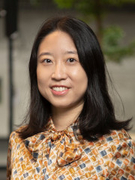
David Latulippe is a Professor in the Department of Chemical Engineering at McMaster University. He joined McMaster in 2012 after postdoctoral work at Cornell University and a PhD at Penn State University, focusing on membrane filtration for DNA purification. His industrial experience includes roles at ZENON Environmental (now GE Water) in hollow-fiber membrane design for water treatment. Research interests include Membrane science and technology Bioprocessing of therapeutic viruses Microscale systems for biological applications Environmental engineering solutions for water treatment Current projects involve collaborations with industry partners like Ceapro and Aevitas, and the development of a biomanufacturing automation lab with Sartorius. Recent publications highlight advancements in Nanofiltration and microfiltration for viral vectors Conductive membranes for electrochemical applications Microfluidic systems for DNA analysis Environmental monitoring of biocides and microplastics Scientific recognition includes the Young Membrane Scientist Award (2014). Teaching activities focus on Fluid Mechanics (CHEMENG 2O04) and Industrial Separation Processes (CHEMENG 4M03).
Mark Burris is the Herbert D. Kelleher Professor in the Department of Civil & Environmental Engineering at Texas A&M University's College of Engineering, where he also serves as Division Head of Transportation & Materials Engineering. He is additionally a Research Engineer with the Texas A&M Transportation Institute, demonstrating his dual commitment to academic research and practical transportation solutions. With a career spanning over two decades since joining Texas A&M in 2001, Burris has established himself as a leading expert in transportation economics and traveler behavior. Burris's research focuses on the intersection of transportation economics, behavioral psychology, and infrastructure management. His work primarily investigates traveler responses to pricing mechanisms, particularly value pricing and high-occupancy toll (HOT) lanes. He has pioneered research combining traditional transportation engineering with behavioral economics to understand seemingly irrational traveler choices, such as paying to use express lanes that are sometimes slower than toll-free alternatives. His research has significantly advanced the understanding of travel time value, reliability valuation, and how psychological factors influence transportation decisions. Analysis of Burris's recent publications reveals a strong trend toward integrating behavioral economics with transportation engineering, with increasing attention to equity considerations in road pricing, the impacts of emerging technologies like autonomous and connected vehicles, and innovative methods for measuring traveler responses. His work consistently addresses practical transportation challenges while advancing theoretical understanding of travel behavior. Burris has served in prominent leadership roles, including a six-year term as chair of TRB's transportation economics committee. He has advised numerous federal agencies, serving on NCHRP panels and participating in FHWA expert forums on road pricing. His expertise is widely recognized in both academic and professional transportation circles. As an educator, Burris has advised over 60 graduate students and numerous undergraduates, teaching core courses including CVEN 307 (Introduction to Transportation Engineering), CVEN 454 (Urban Planning for Engineers), and CVEN 632 (Transportation Engineering: Economics). His research portfolio includes substantial funding from FHWA, NCHRP, and various state transportation agencies, with recent projects focusing on behavioral economics applications to managed lanes, vehicle miles traveled fee equity, and the impact of emerging mobility technologies.
Katalin Piniel is an Assistant Professor at the Department of English Applied Linguistics within the School of English and American Studies at Eötvös Loránd University, Budapest. Her work bridges applied linguistics and educational psychology , focusing on the dynamic interplay of emotions , including language anxiety , motivation, and self-efficacy in foreign language learning contexts, particularly in Hungary. PhD in Language Pedagogy (ELTE) Associate Editor of Studies in Second Language Learning and Teaching Active reviewer for applied linguistics journals Her research integrates complex dynamic systems theory to analyze longitudinal changes in affective variables and employs meta-analytic techniques to validate anxiety measurement tools like the Foreign Language Classroom Anxiety Scale (FLCAS) . She explores formative and summative assessment practices in Hungarian high schools and investigates flow experiences during language tasks. Her methodological interests include quantitative tools (e.g., Rasch analysis), collaborative research , and cross-cultural comparisons (e.g., Hungarian-Kazakh studies). Recent publications highlight trends in emotion-motivation dynamics , skills-based anxiety measurement , and the impact of online education on affective variables. She collaborates on projects examining special needs learners , including Deaf and hard-of-hearing students , in foreign language acquisition. Contact: brozik-piniel.katalin@btk.elte.hu | ORCID | Google Scholar | ResearchGate
Daniele Venturi is a Professor of Applied Mathematics at the University of California, Santa Cruz, where he has been faculty since 2015, rising from Assistant Professor to full Professor by 2021. Previously, he was a Research Assistant Professor at Brown University from 2010-2015. His academic journey began at the University of Bologna, where he earned both his combined B.S./Sc.M. in Mechanical Engineering (2002) and Ph.D. in Applied Physics with a focus on thermo-fluid dynamics (2006). University of Bologna: B.S./Sc.M. Mechanical Engineering (2002), Ph.D. Applied Physics (2006) Brown University: Research Assistant Professor (2010-2015) UC Santa Cruz: Assistant to Associate to Full Professor (2015-present) Professor Venturi's research spans multiple cutting-edge areas in computational mathematics. His primary interests include stochastic modeling and uncertainty quantification, numerical tensor methods for high-dimensional PDEs, data-driven modeling approaches, approximation of functional-differential equations, and theoretical/computational fluid dynamics. His work bridges theoretical mathematical frameworks with practical computational implementations, particularly focusing on overcoming the curse of dimensionality in complex systems. His recent research has been heavily focused on hierarchical tensor methods for solving high-dimensional partial differential equations. The analysis of his publication record reveals a strong emphasis on developing computational frameworks that address high-dimensional challenges in uncertainty quantification and model reduction. His work frequently intersects machine learning techniques with traditional numerical methods, particularly in developing physics-informed neural networks and multifidelity modeling approaches. A consistent theme across his publications is the development of mathematical frameworks that maintain computational tractability while preserving physical fidelity in complex systems. Professor Venturi has secured substantial research funding from major agencies including the Air Force Office of Scientific Research (AFOSR), Department of Energy (DoE), National Science Foundation (NSF), Army Research Office (ARO), and Defense Advanced Research Projects Agency (DARPA). His most significant current grant is a 2024-2029 AFOSR MURI award totaling $7.5M as co-PI for 'Tensor Network for simulating kinetic systems.' 2024-2029: AFOSR MURI, $7.5M (co-PI) 2023-2027: DoE, $3.8M (co-PI) 2023-2026: AFOSR, $2.5M (co-PI) 2020-2025: NSF TRIPODS, $2.3M (co-PI) At UC Santa Cruz, Venturi teaches a range of courses including Fundamentals of Uncertainty Quantification, Applied Dynamical Systems, Nonlinear Dynamical Systems, and Numerical Methods for Differential Equations. His teaching spans both undergraduate and graduate levels, reflecting his expertise across theoretical and computational mathematics. His lecture notes for these courses are publicly available and demonstrate his commitment to pedagogical excellence in complex mathematical subjects.
Jaal Ghandhi is a Professor in the Department of Mechanical Engineering at the University of Wisconsin-Madison. His research focuses on combustion and fluid mechanics in internal combustion engines, utilizing laser-based diagnostics to study temperature and concentration fields. He holds significant academic roles and has received multiple prestigious awards, including the John Bollinger Chair and ASME/Society of Automotive Engineers Fellowships. Education: PhD 1995 (Princeton University), MS 1988 (UW-Madison), BS 1986 (UW-Madison) His research interests include laser diagnostics, turbulent flow, and advanced engine design. Recent work emphasizes thermal barrier coating performance, diesel engine efficiency, and hydrogen-based fuels. Over 20 years, his publications span combustion dynamics, material durability, and engine thermodynamics. Awards include the NSF CAREER Award, Grainger Professorship, and multiple teaching accolades. He teaches graduate courses in energy sustainability, combustion, and engine experiments. His research contributes to sustainable engineering through improved engine efficiency and reduced emissions, with collaborations in automotive and energy sectors.
Phillip J Ansell is an Associate Professor in the Department of Aerospace Engineering at the University of Illinois. He serves as the Director of the Center for High-Efficiency Electrical Technologies for Aircraft (CHEETA), focusing on advancing sustainable aviation through innovative propulsion and energy systems. His research interests include aerodynamics optimization, hydrogen propulsion, electric aircraft integration, and cryogenic technologies. Ansell has received prestigious awards such as the AFOSR Young Investigator Award (2015), ARO Young Investigator Award (2017), and the Lawrence Sperry Award (2023), recognizing his contributions to sustainable aviation and flow control technologies. His work spans interdisciplinary areas like hydrogen fuel cell systems, airfoil design, and electrified aircraft architectures. Recent research emphasizes sustainable aviation frameworks, cryogenic hydrogen storage, and propulsion-airframe integration. Ansell has collaborated on projects involving distributed propulsion systems, wind energy optimization, and advanced plasma actuators for flow control. His leadership in CHEETA drives innovations in superconductivity and high-temperature superconducting components for next-generation aircraft. Notable contributions include studies on laminar flow control, transonic aerodynamics, and the technical challenges of integrating MW-scale hydrogen propulsion systems. His publications reflect a blend of theoretical modeling, experimental validation, and systems engineering approaches to address aviation's sustainability challenges.
Deodat Edward Mwesiumo is a Professor of Supply Chain Management at Molde University College (HiMolde), part of the Faculty of Logistics. He holds a PhD in logistics from the same institution and has extensive teaching and research experience since 2012. His roles include Head of the Supply Chain Management Research Group and member of the PhD committee. Previously, he directed the Bachelor program in Supply Chain Management and Logistics. His research focuses on supply chain resilience, digital business transformation, and tourism management. Key areas include procurement strategies, sustainability, circular economy models, and interorganizational relationships in tourism. He has published in high-impact journals like Production Planning and Control , Journal of Purchasing and Supply Management , and Annals of Tourism Research . Dr. Mwesiumo has led externally funded projects and contributed to over 50 peer-reviewed publications. He is affiliated with research groups such as MIIBS (Marketing, Innovation, International Business & Strategy) and the Transport Research Group (TRG). His teaching spans BSc and MSc levels, including courses on value chain analysis, digital business, and supply chain theory. Recent work emphasizes airport digital maturity, supply chain risk mitigation, and the impact of data-driven decision-making in public procurement. He has authored books like Making Value Chains Work and Fundamentals of Digital Business Management , underscoring his commitment to both academic and applied knowledge dissemination.
Moinuddin Qureshi is a Professor of Computer Science at Georgia Institute of Technology, affiliated with the School of Computer Science and involved in the Online Master of Science in Computer Science (OMSCS) program. He holds a Ph.D. and M.S. from the University of Texas at Austin. His research focuses on computer architecture, memory systems, hardware security, and quantum computing, with notable contributions to mitigating rowhammer vulnerabilities and advancing quantum error correction. Previously, he was a Research Staff Member at IBM T.J. Watson Research Center (2007–2011), where he contributed to caching algorithms for Power-7 processors. He has held leadership roles, including Program Chair of MICRO 2015 and Selection Committee Co-Chair of Top Picks 2017. His work has been recognized with prestigious awards, including the 2019 Persistent Impact Prize and multiple best paper awards. Key research areas include secure memory design (e.g., rowhammer mitigation techniques like MINT and Moat), quantum computing (e.g., Flag-Proxy Networks and Élivágar), and hardware vulnerability analysis (e.g., Roguerfm attacks and COAXIAL memory systems). His publications span 2009–2025, addressing topics like error correction, secure tracking, and quantum annealing optimization. Awards include membership in ISCA, MICRO, and HPCA Hall of Fame, alongside contributions to conferences like HiPC and IEEE MICRO. His work bridges theoretical advancements with practical implementations in both classical and quantum domains.
Roya Nasimi, Ph.D., is an Assistant Professor in the Department of Engineering at California State University, East Bay, where she joined in Fall 2023. Her expertise spans structural engineering, computer vision, and artificial intelligence, with a focus on developing innovative solutions for infrastructure monitoring and safety. Dr. Nasimi's educational background includes: Ph.D. with distinction in Structural Engineering from the University of New Mexico Master’s degree in Structural Engineering from the University of Tabriz Bachelor’s degree in Civil Engineering from the University of Tabriz Her research focuses on structural health monitoring using advanced technologies. She integrates computer vision , artificial intelligence , and machine learning to develop systems for monitoring aging infrastructure, particularly bridges. Her work includes designing low-cost and high-end sensor systems, conducting full-scale bridge experiments, and collaborating on interdisciplinary projects to enhance infrastructure safety and resilience. Her recent publications (2021-2025) demonstrate a strong emphasis on non-contact monitoring techniques using drones, lasers, and computer vision. Key trends include the application of deep learning for displacement measurement, digital twinning for infrastructure, and rockfall prevention through machine learning. Her work bridges civil engineering with cutting-edge technology to address critical infrastructure challenges. Dr. Nasimi's research is supported by multiple grants: U.S. Army Corps of Engineers Transportation Research Board (TRB) Transportation Consortium of South-Central States (Tran-SET) New Mexico Consortium She serves on two TRB standing committees and mentors students in structural health monitoring and infrastructure technology. Dr. Nasimi leads interdisciplinary research teams focused on infrastructure monitoring, utilizing drones, lasers, and computer vision systems. Her work involves field experiments on bridges and rail systems, often in collaboration with government agencies and research consortia.
Dr. Sylvie Albert is a Professor of Strategy and Leadership at the University of Winnipeg, former Dean of the Faculty of Business and Economics, and past Associate Dean of Laurentian University's Faculty of Management. With 15 years in academia, she has extensive experience in municipal/provincial governance, management consulting, and economic development. A leading expert in smart cities and digital urban innovation, her work bridges academia, policy, and practice through roles like Senior Advisor to Infrastructure Canada's Smart Cities Challenge and lead jurist for the Intelligent Community Forum. Her research focuses on sustainable urban development, digital governance, and community telecommunication networks, informed by activism on local-to-international boards and think tanks. She is authoring her fourth book on smart cities and has led projects nationwide through her consultancy, Planned Approach Inc. Education & Experience: 12 years in government roles 10 years in management consulting Founder/owner of Planned Approach Inc. (economic development consulting) Leadership roles in Northern Ontario economic development corporations Research Interests: Her interdisciplinary work examines strategy development , entrepreneurship , innovation ecosystems , and the intersection of digitalization with urban policy. Key themes include: Smart/intelligent/sustainable city frameworks Community wireless networks and ICT adoption Online learning pedagogy in business education Labour market barriers for immigrant professionals Grants & Advising: Her advisory contributions include: Global Forum on Digitalization in Europe (yearly participation) Infrastructure Canada's Smart Cities Challenge (Senior Advisor) UN Voluntary Local Reviews methodology development Her consultancy work emphasizes economic development projects and smart community planning across Canada. Labs & Collaborations: Engaged with global networks like the Intelligent Community Forum and cross-sectoral partnerships to advance urban innovation, digital equity, and participatory governance models.
Robert S. Allison is a Professor in the Department of Electrical Engineering & Computer Science at York University's Lassonde School of Engineering. His research focuses on human perceptual responses in virtual environments, stereoscopic vision, and eye movement analysis. He is affiliated with the York Centre for Vision Research, Sensorium (Digital Arts & Technology), and the Centre for Innovation in Computing at Lassonde. His research interests include depth perception in natural and virtual environments, human-computer interface design for VR, machine vision applications, and the measurement of human motion. He has supervised multiple graduate students and contributed to over 260 publications. His work spans topics like cybersickness mitigation, display lag effects, and perceptual adaptation in VR. Key grants include NSERC-funded projects on perception in virtual environments and collaborations with institutions like the Australian Research Council. His teaching includes courses on human perception in human-computer interaction and digital logic design. Recent articles highlight advancements in understanding motion perception, VR-induced sickness, and multisensory integration. He collaborates widely, with affiliations including the VISTA program and York's Connected Minds initiative.
Professor Myrto Tsakatika is a distinguished academic in the Department of Politics at the University of Glasgow's College of Social Sciences, where she has been employed since 2007. She holds the position of Professor in Political & International Studies and serves as Undergraduate Programme Director. Her office is located in the Adam Smith Building (R1311 Level 13), a prominent building housing the university's social sciences disciplines. Dr. Tsakatika earned her PhD from the University of Essex and previously taught at the Athens University of Economics. She has held prestigious visiting positions at the University of Trieste, the Juan March Foundation in Madrid, and the Centre Emile Durkheim at SciencesPo Bordeaux, establishing her as a scholar with significant international connections. Professor Tsakatika's research spans several interconnected domains within political science. Her primary focus lies in European Union politics and governance, particularly examining the democratic deficit, new governance modes, and evolving public attitudes toward European integration. More recently, she has developed expertise in radical left parties and populism, with special attention to Southern European cases including Greece, Portugal, Italy, and Spain. Her work often bridges comparative politics with European studies, analyzing how domestic political developments interact with broader European integration processes. She has made significant contributions to understanding SYRIZA's rise and governance in Greece as well as similar phenomena across Southern Europe. Analysis of Professor Tsakatika's recent publications reveals a consistent scholarly trajectory focused on the intersection of European integration, radical left politics, and populism in Southern Europe. Her work demonstrates increasing specialization in comparative analysis of radical left parties, particularly examining their organizational structures, electoral strategies, and governance challenges. The geographical focus remains firmly rooted in Southern Europe while maintaining connections to broader European political dynamics. Her publications appear in high-impact journals and prestigious academic presses, indicating recognition within the political science community. Professor Tsakatika has successfully supervised numerous PhD students whose research aligns with her expertise, including projects on populism's impact on foreign policy, EU peacebuilding, and the democratic deficit in the European Union. Her grant portfolio reflects sustained research activity, including projects funded by the Carnegie Trust, Caledonian Research Foundation, Royal Society of Edinburgh, and European Commission programs such as PADEMIA (2013-2016) and EUROSUD (2018-2024). These grants have supported comparative research on Southern European politics, European integration, and radical left parties. Within the academic community, Professor Tsakatika serves as Associate Editor for South European Society and Politics and as Editor for Politics Politics and International Relations. She teaches undergraduate courses on the Politics of the European Union (POLITIC4020) and postgraduate courses on Global Social Movements (POLITIC 5111), directly connecting her research expertise to her teaching responsibilities.
Jun.-Prof. Dr. Christian Krupitzer is a Tenure Track Professor in Food Informatics at the University of Hohenheim's Institute of Food Science and Biotechnology, part of the Faculty of Natural Sciences. He leads the Department of Food Informatics and is a member of the Computational Science Hub (CSH). His research focuses on self-adaptive software systems, machine learning (especially edge computing), IoT technologies, and software engineering applied to food processing and agricultural systems. Education: PhD in Business Information Systems (Dr. rer. pol.), University of Mannheim (2018) M.Sc. and B.Sc. in Business Information Systems, University of Mannheim (2010–2012) High School Diploma (Abitur) from Wilhelmi-Gymnasium Sinsheim (2007) Research Interests: Krupitzer’s work integrates computational methods with food science, emphasizing adaptive systems for food quality monitoring, IoT in agriculture, and machine learning for predictive analytics. He explores edge computing’s role in real-time decision-making and secure group communication schemes for IoT networks. Publications: His recent work spans predictive maintenance in Industry 4.0, digital twins in food systems, and blockchain applications in supply chain authentication. The articles highlight trends in interdisciplinary approaches combining AI, IoT, and domain-specific challenges in food production and logistics. Awards: No scientific awards explicitly listed in the provided materials. Grants & Advising: While specific grants are unmentioned, his roles as department head and tenure-track professor suggest involvement in research funding. No formal advisee list provided, though his team includes postgraduate researchers like Dana Jox, Daniel Einsiedel, and others. Labs & Teams: Leads the Food Informatics department and collaborates with the Computational Science Hub. His team focuses on developing innovative solutions for food systems through computational methods.
Lin Cai is an Associate Professor in the Department of Electrical and Computer Engineering at Illinois Institute of Technology, serving as Director of Graduate Affairs. She holds a Ph.D. in Electrical and Computer Engineering from the University of Waterloo, Canada (2010). Her research focuses on sustainable wireless communication and networking, particularly in energy harvesting, IoT, and deep reinforcement learning for resource management. Key research projects include energy sustainability in renewable-energy-powered networks, energy-efficient 5G protocols, and radio resource management over unlicensed bands. She has received the NSF CAREER Award (2016-2020), Best Paper Awards, and NSERC Postdoctoral Fellowship. Her work spans theoretical frameworks and practical implementations in HetNets, MIMO, and UAV-based systems. Education: Ph.D., E&CE, University of Waterloo, Canada (2010) Affiliations: Executive Editorial Committee member, IEEE Transactions on Wireless Communications (2021–present); Associate Editor for multiple IEEE journals Teaching: Courses include ECE 407/408 (Computer Networks) and ECE 517 (Modern Wireless Network Protocols) Her research emphasizes cross-layer protocol design, sustainable capacity planning, and topology control. Notable contributions include frameworks for energy sustainable radio resource management and optimization in dense HetNets. She actively contributes to conference organization and technical program committees for IEEE INFOCOM, GLOBECOM, and ICC.
Dr. Yiting Xia is a tenure-track faculty member at the Max Planck Institute for Informatics (MPI-INF), leading the Network and Cloud Systems research group. She previously worked as a research scientist at Facebook and holds a PhD in Computer Science from Rice University (2018) and a B.S. in Telecommunications Engineering from Beijing University of Posts and Telecommunications and Queen Mary University of London (2011). Her research focuses on high-performance and energy-efficient networking for cloud computing, including reconfigurable data center networks, optical communications, and network protocols. Notable contributions include innovations in transport protocols, time synchronization for optical networks, and failure-resilient network design. Education: PhD in Computer Science, Rice University, 2018 M.S. in Computer Science, Rice University, 2014 B.S. in Telecommunications Engineering, BUPT & QMUL, 2011 Research Interests: Data center networking, optical communications, cloud systems, network protocols, distributed systems, and network security. Her work bridges theoretical contributions with practical implementations, addressing challenges in latency-sensitive flows, traffic engineering, and system reliability. Awards include the Ken Kennedy-Cray Fellowship and the N2Women Rising Star Award (2021). She has co-lectured courses on distributed systems and data networks at Saarland University and previously contributed to teaching at Rice University. Key projects include Aurora (for MoE inference optimization), Lighthouse (an open research framework for optical networks), and Occam (a reliable network management system). Grants & Projects: Focus on deployable optical network architectures and resilient backbone management during pandemic-driven traffic shifts. Labs/Teams: Leads the Network and Cloud Systems group at MPI-INF, collaborating with academia and industry on cutting-edge networking solutions.