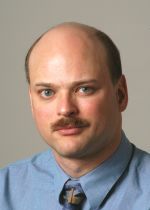
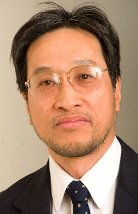
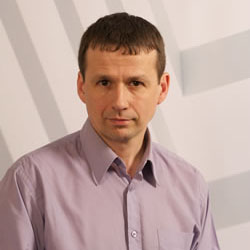
Professor John D. Kubiatowicz is a faculty member at the University of California at Berkeley in the Department of Electrical Engineering and Computer Sciences since 1998. He holds a PhD in Electrical Engineering and Computer Science (minor in Physics) from MIT (1998), an M.S. in EECS (1993), and a double B.S. in Electrical Engineering and Physics (1987) from MIT. His research interests span Quantum Computing Architectures Distributed Systems and Storage Network Security and Peer-to-Peer Protocols Introspective and Manycore Operating Systems Edge and Fog Computing Hardware-Assisted Security He has pioneered systems like OceanStore , a global-scale distributed file system, and Tessellation , a manycore OS with continuous adaptation. The scientific awards he has received include Presidential Early Career Award (PECASE, 2000) Scientific American 50 (2002) Diane S. McEntyre Teaching Award (2003) IEEE ICRA Best Paper (2025) George M. Sprowls Award for MIT PhD thesis (1998) Okawa Research Grant (1998) Best Paper at International Conference on Supercomputing (1993) His recent publications focus on Quantum Circuit Design and Optimization Edge/Fog Computing Architectures Secure Runtime Systems Distributed Garbage Collection Manycore OS Innovations Hardware-Assisted Security Mechanisms He leads the Quantum Architecture Research Center and co-founded the SWARM Lab at Berkeley, advancing a vision of self-adapting, secure systems from the chip level to internet scale.
Rainald Loehner is a Distinguished Professor of Fluid Dynamics at George Mason University's Center for Computational Fluid Dynamics. Since 2003, he has led the Center for Computational Fluid Dynamics at George Mason University. He is currently a Hans Fischer Senior Fellow at the Technical University of Munich's Institute for Advanced Study (TUM-IAS) for 2023, hosted by Professors Kai-Uwe Bletzinger and Roland Wüchner in the 'Adjoint-Based System Identification of Large-Scale Structures' Focus Group. Loehner received his Diplom Ingenieur (Maschinenbau) degree from the Technical University of Braunschweig, and his PhD and a DSc in civil engineering from the University College of Swansea, Wales. After teaching at Swansea for a year, he worked at the Naval Research Laboratory in Washington, DC, followed by a research professorship at George Washington University. He joined George Mason University as an associate professor and was promoted to full professor in 1995 and distinguished professor in 2004. With over 35 years of experience, Professor Loehner's research spans the complete pipeline of numerical solvers and simulation tools. His expertise includes pre-processing, grid generation, numerical methods, field solvers, parallel computing, adaptive mesh refinement, fluid-structure interaction, shape optimization, system identification, and computational crowd dynamics. His current work focuses on developing advanced field solvers for compressible and incompressible flows, acoustics, electromagnetic wave propagation, heat and mass transfer, structural mechanics, and fluid-structure interaction. Key application areas include blast mitigation, ship hydrodynamics, blood flow, contaminant transport, and pedestrian safety. Loehner's recent research output (2020-2024) shows a strong trend toward digital twin technology and adjoint-based methods for structural analysis and optimization. His publications focus on high-fidelity digital twins for detecting structural weaknesses, risk assessment in engineering systems, and optimization of sensor placement. His work bridges computational mechanics with machine learning approaches, particularly in system identification and inverse problems, demonstrating how computational methods can solve complex real-world engineering challenges. 2020: Ranked #15119 in the Stanford List of Most Influential Scientists of the World; #8 in Aerospace and Aeronautics 2010: Distinguished International Career Award, Argentine Association of Computational Mechanics 2008: Fellow, International Association for Computational Mechanics 2006: Associate Fellow, AIAA 2005: Honorary Professor, University of Wales Swansea 2005: Advisory Professor, Shanghai Jiao Tong University 2004: Distinguished Professor of Fluid Dynamics, George Mason University 1999: Computational Mechanics Achievements Award, Japan Society of Mechanical Engineering 1993: Doctor of Science in Civil Engineering, University College of Swansea 1979-1983: Studienstiftung des Deutschen Volkes (Top 1% of German Students) Professor Loehner has mentored numerous students through his work at George Mason University and has supervised research in computational fluid dynamics, structural mechanics, and related fields. His research has been supported by various grants from government agencies and industry partners, enabling the development of advanced simulation tools applied in aerodynamics, hydrodynamics, shock-structure interaction, and medical applications. His codes and methods have been widely adopted in industry and academia for applications ranging from aircraft and ship design to medical simulations and urban pathogen transmission modeling. Loehner leads the Center for Computational Fluid Dynamics at George Mason University, which focuses on developing cutting-edge computational methods for fluid dynamics and related multiphysics problems. The center works on strategic application areas including blast mitigation, ship hydrodynamics, blood flow simulation, and pedestrian movement modeling. As a TUM-IAS Fellow, he collaborates with the Chair of Computational Modeling and Simulation at TUM on adjoint-based system identification of large-scale structures, bringing together expertise in computational mechanics and digital twin technology to address complex engineering challenges.
Professor Akram Hourani is a Discipline Leader and Professor in the Department of Electrical & Electronic Engineering at RMIT University's School of Engineering. He holds roles as Program Manager for the Master of Engineering (Telecom & Network Eng.) and Deputy Director of the Centre for Opto-electronic Materials and Sensors (COMAS). Prior to academia, he was an ICT Program Manager in the telecommunications industry, leading projects in satellite and telecommunications infrastructure. His research focuses on advanced signal processing, satellite communications, radar systems (including SAR), neuromorphic hardware, and IoT. He has secured grants from ARC, CRC, government departments, and DSTG, with over 130 publications. His work aligns with UN Sustainable Development Goals 9 (Industry, Innovation & Infrastructure), 11 (Sustainable Cities), and 10 (Reduced Inequalities). Education: PhD in Electronics & Telecommunications (2016, RMIT University) Non-academic roles: R&D Engineering Program Manager at Inteltec Emirates (2006–2013) Key research themes include interference mitigation, 5G/6G networks, neuromorphic sensing, and AI-driven satellite IoT. He is listed in Stanford's top 2% scientists for career-long and single-year impact. His teaching includes courses on satellite communications and wireless sensor networks. Grants & Funding: ARC, CRC, DSTG, and government-funded projects since 2017 Collaborations: CSIRO, industry partners in telecommunications and aerospace His lab focuses on next-generation communication systems, with active projects in mega satellite networks, neuromorphic hardware, and AI for IoT sensing. He supervises PhD/Masters research in areas like satellite connectivity and machine learning applications.
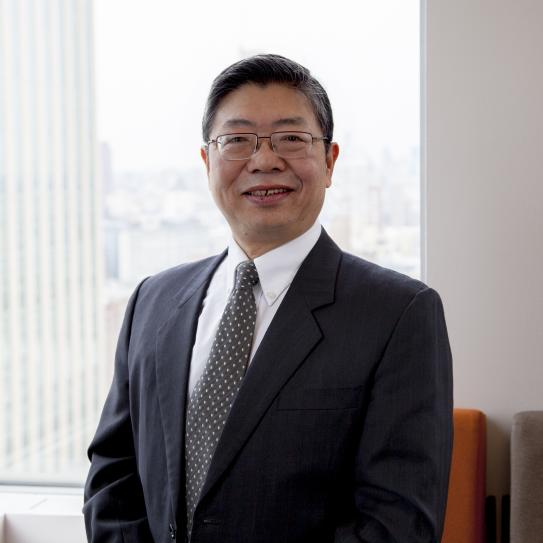
H. Jonathan Chao is a Professor in the Department of Electrical and Computer Engineering at New York University (NYU Tandon School of Engineering). He is the Director of the High-Speed Networking Lab, leading a team of 6 PhD students and 10 Master’s students. His research focuses on software-defined networking, network function virtualization, datacenter networks, and high-speed packet processing. Chao has held significant roles, including Head of the ECE Department (2004–2014) and former CTO of Coree Networks. He has authored over 200 publications and holds 58 patents. His awards include IEEE Fellow and National Academy of Inventors (NAI) Fellow. Education: B.S. and M.S. from National Chiao Tung University (Taiwan), Ph.D. from Ohio State University. Research Highlights Developing solutions for data center networks, network security, and quality of service control. Pioneering work in programmable packet schedulers, reinforcement learning for traffic engineering, and SDN security frameworks like SDNShield. Contributions to hybrid SDN networks, bufferless switch architectures, and energy-efficient data center designs. Awards Fellow of National Academy of Inventors (NAI) Fellow of IEEE Telcordia Excellence Award (1987) IEEE Best Paper Award (2001) IEEE New Jersey Coast Section Speaker of the Year (2003) Advisees & Labs Supervises 6 PhD and 10 Master’s students in the High-Speed Networking Lab. Collaborates with the Center for Advanced Technology in Telecommunications (CATT) to advance telecom innovations. Labs & Teams Directs the High-Speed Networking Lab, focusing on cutting-edge networking solutions, and contributes to CATT’s mission of technology transfer and entrepreneurship.
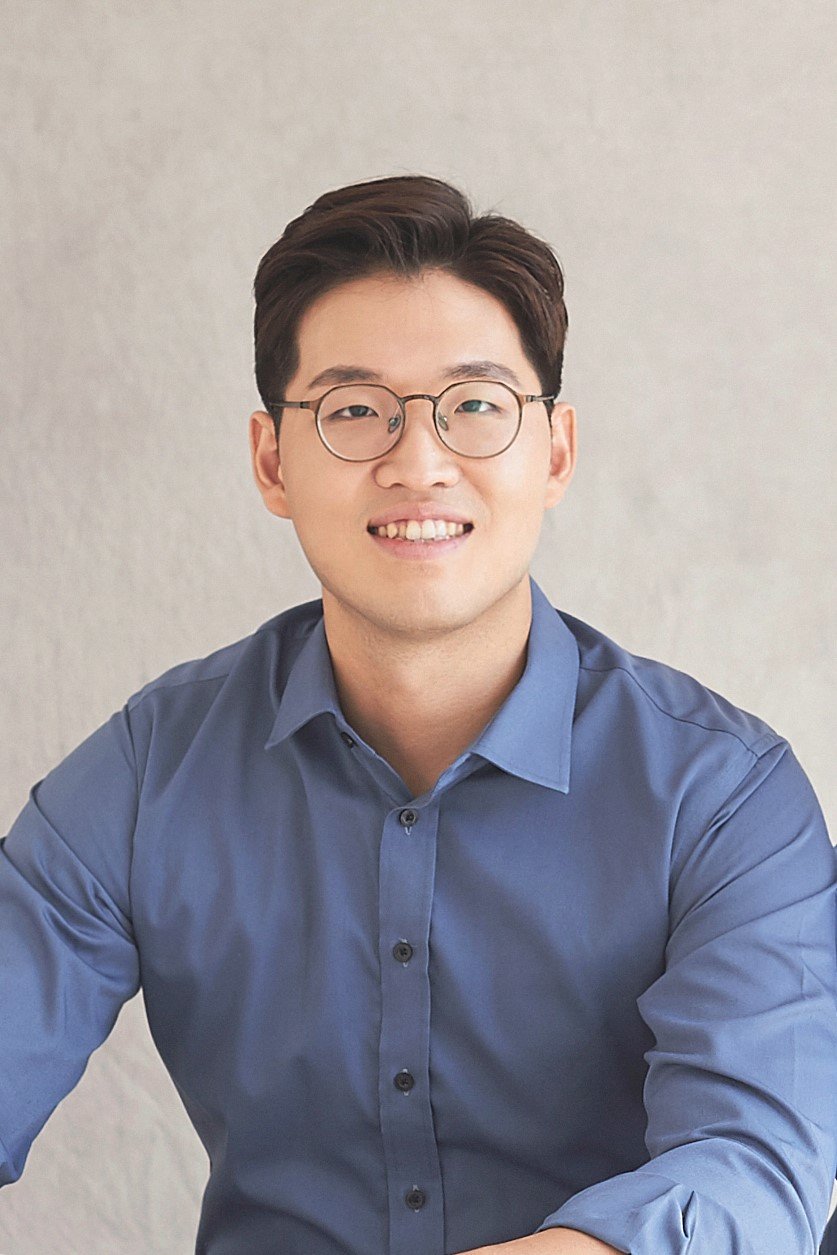
Seongjin Choi is an Assistant Professor in the Department of Civil, Environmental, and Geo-Engineering at the University of Minnesota, Twin Cities , where he began his role in January 2024. His research bridges Urban Mobility Data Analytics , Spatiotemporal Modeling , and Deep Learning to advance transportation systems. Affiliated with the Center for Transportation Studies , Minnesota Robotics Institute , and Data Science Initiative , he leads the Choi Research Group . Education: Ph.D., Civil and Environmental Engineering, Korea Advanced Institute of Science and Technology (KAIST), 2021 M.S., Civil and Environmental Engineering, KAIST, 2017 B.S., Civil and Environmental Engineering, KAIST, 2015 His research focuses on Urban Mobility Data Analytics and Deep Learning to optimize transportation systems. Key areas include: Spatiotemporal Data Modeling for forecasting and imputation Generative AI applications in transportation data Reinforcement Learning for Connected Automated Vehicles (CAV) Cooperative Intelligent Transport Systems (C-ITS) Recent publications in Transportation Science and Transportation Research Part C highlight his work on probabilistic traffic forecasting , deep generative models , and vision-language-action frameworks for autonomous systems. His methodologies often combine AI-driven analytics with real-time mobility optimization . Dr. Choi serves as: Associate Editor of The Journal of the Korean Society of Transportation (JKST) , 2023–Present Guest Editor for Journal of Advanced Transportation special issue on "Advanced Data Intelligence Theory and Practice in Transport 2023", 2023–2024 He actively seeks PhD students/postdocs for 2025 cohorts focused on machine learning for transportation challenges. Current projects include AI-enhanced traffic forecasting, CAV control, and urban air mobility (UAM) integration studies.
Thuy T. Le is a Professor of Electrical Engineering at San Jose State University's College of Engineering. With a distinguished career spanning several decades, he teaches graduate and undergraduate courses in digital system design, computer architecture, microprocessor systems, and related fields. His academic journey began with earning B.S., M.S., and Ph.D. degrees from the University of California, Berkeley. Professor Le's research interests encompass a broad spectrum of cutting-edge technological domains. His primary focus areas include System-on-Chip (SoC) and Embedded System Design, Hardware Accelerators for complex algorithms, Quantum Computing, implementation of Probability theory and Monte Carlo simulation, and radiation effects on electronic devices and systems. His work bridges traditional electrical engineering with emerging computational paradigms, demonstrating a consistent ability to adapt to evolving technological landscapes while maintaining strong foundations in core engineering principles. Analysis of Professor Le's publication record reveals a consistent trajectory from nuclear reactor physics and computational methods toward modern hardware acceleration and quantum computing. His early work focused on nuclear reactor simulation and radiation shielding, then evolved to parallel computing and distributed systems, and has recently centered on hardware acceleration for complex algorithms, quantum computing applications, and AI hardware. This progression demonstrates his ability to transition between major technological paradigms while maintaining expertise in computational methods and hardware implementation. Professor Le has demonstrated significant leadership in professional service, having served as keynote speaker, general chair, technical program chair, session chair, reviewer, and committee member for numerous international conferences. His service extends beyond academia through his role as Co-Founder and Advisor of the Vietnamese Strategic Ventures Network and Chairman of the Board of the United States–Vietnam Foundation. In his educational role, Professor Le has made substantial contributions to engineering curriculum development and assessment. He has taught a wide range of courses including EE271 (Advanced Digital System Design), EE210, EE250, and various project/thesis courses. His research advising spans digital system design, ASIC, SOC, and hardware accelerators. He has also collaborated with local companies on projects related to high-performance system architectures, parallel algorithms, digital arithmetic, and System-on-Chip verification.
Ameya Jagtap is an Assistant Professor (Tenure-Track) in the Department of Aerospace Engineering at Worcester Polytechnic Institute (WPI), USA. Prior to this, he served as an Assistant Professor of Applied Mathematics (Research) at Brown University from 2021 to 2024. He holds a Ph.D. and M.E. in Aerospace Engineering from the Indian Institute of Science (IISc), and completed postdoctoral research at TIFR-CAM (India) and Brown University's Division of Applied Mathematics. His research bridges mechanical/aerospace engineering, applied mathematics, and computation, focusing on scientific machine learning algorithms that integrate data and physics. Key areas include physics-driven deep learning, uncertainty quantification, multi-scale simulations, and novel neural network architectures like quantum and graph networks. He serves on editorial boards for Neural Networks , Neurocomputing , and others. His work emphasizes interpretable neural operators for PDE solutions, domain decomposition methods, and adaptive activation functions to enhance PINN convergence. Notable contributions include XPINNs (extended physics-informed neural networks) and causal sweeping frameworks for PDEs. His research has been widely cited, particularly for PINN applications in supersonic flows and high-dimensional PDEs. Jagtap has delivered invited talks at institutions like Los Alamos National Laboratory, Tsinghua University, and the Alan Turing Institute. He is also recognized as a Top 2% World Scientist by Stanford University.
Stephen E. Ralph is Professor and Glen Robinson Chair in Electro-Optics within Georgia Tech's School of Electrical and Computer Engineering, serving as Director of the Georgia Electronic Design Center (GEDC) and founder of the Terabit Optical Networking Consortium. His leadership spans cross-disciplinary research in electronics, photonics, and signal processing for revolutionary system performance. Educational background includes a BEE with highest honors from Georgia Tech (1980) and PhD in Electrical Engineering from Cornell University (1988), followed by postdoctoral work at AT&T Bell Laboratories and IBM Watson Research Center. His research integrates integrated photonics , machine learning , and aerospace applications to develop ultra-high-capacity optical communication systems. Current focus areas include photonic topology optimization, radiation-hardened space systems, and converged optical/mm-wave technologies, emphasizing the synergistic development of electronic-photonic components for next-generation interconnects. Analysis of 2024-2025 publications reveals dominant themes in foundry-compatible photonic design (topology optimization, inverse design), aerospace photonics (radiation testing, analog/digital signal transport), and machine learning applications for nonlinear equalization. The work bridges fundamental device engineering (grating couplers, waveguide bends) with system-level implementations for 5G/6G networks and space communications. Key recognition includes: Fellow of the Optical Society (OSA) Professor Ralph has mentored over 20 PhD students and secured significant research funding including the IUCRC Phase I EPICA project (2021) for aerospace photonic integration. His industry partnerships through the Terabit Optical Networking Consortium drive translational research in high-speed communications. He leads the Georgia Electronic Design Center's multidisciplinary team developing photonic-electronic co-design methodologies, with recent emphasis on topology-optimized devices for commercial foundries and radiation-tolerant systems for space applications.
Prof. Danny Dolev is a distinguished academic holding the Berthold Badler Chair in Computer Science at The Hebrew University of Jerusalem's Rachel and Selim Benin School of Computer Science and Engineering. He is an ACM Fellow and IEEE Fellow. His research focuses on distributed computing, fault-tolerant systems, algorithms, and secure protocols. He has held leadership roles, including Director of his school (1999–2002) and Chair of the Israeli National Committee for Information Technology (1994–1998). Education: B.Sc., The Hebrew University of Jerusalem, 1971 M.Sc., Weizmann Institute of Science, 1973 PhD., Weizmann Institute of Science, 1979 Research Interests: Danny Dolev's work spans distributed algorithms, Byzantine fault tolerance, consensus protocols, and hardware algorithms. His contributions include groundbreaking research on self-stabilizing systems, secure communication, and fault-tolerant clock synchronization. His HEX and Chronos protocols exemplify innovations in scalable synchronization and network security. Publications: His recent work emphasizes Byzantine agreement, asynchronous fault tolerance, and game-theoretic distributed systems. Key papers address optimal resilience in consensus algorithms and secure multi-party computation. Awards: ACM Fellow (2010) IEEE Fellow (2004) Grants & Leadership: Member of the Scientific Council, European Research Council (2010–2014) Chair of Israel's National Committee for Information Technology (1994–1998) Leadership roles at IBM Almaden Research Center (1987–1993) and Stanford University (1979–1981) Labs & Teams: His research group at Hebrew University focuses on distributed systems, with collaborations on projects like Steward (wide-area Byzantine replication) and Self-Stabilizing Circuits .
Dr. Axel Lubk is a Group Leader at the Institute for Solid State Research (IFW Dresden) , specializing in advanced electron microscopy techniques for materials science. His research spans four key areas: (1) TEM method development (high-resolution imaging, tomography, holography, and in-situ techniques), (2) charge particle optics and scattering theory , (3) magnetic nanotextures (domain walls, skyrmions), and (4) plasmonics (mode hybridization in heterogeneous structures and semiconductor heterostructures). Dr. Lubk’s work focuses on three-dimensional magnetic texture analysis using electron holography and tomography, particularly in systems like skyrmion tubes , FeGe , and Cr2O3 thin films . He has pioneered techniques for vector-field electron tomography and phase retrieval under varying boundary conditions, advancing nanoscale magnetic imaging. His recent studies include plasmonic properties in AgAu nanosphere chains , thermoelectric multilayer systems , and topological insulators like NiRh2Sb and TaTMTe4 . Dr. Lubk has published extensively in high-impact journals such as Nature Communications and Advanced Materials , with a focus on TEM instrumentation and quantitative analysis . He frequently presents at international conferences like the International Microscopy Congress and European School of Magnetism , emphasizing applications in spintronics , quantum materials , and nanostructured systems . His contributions to holographic vector-field electron tomography and machine learning for spectrum-image data have set new standards in electron microscopy.
Zhishu Qu is a Visiting Professor at Queen Mary University of London's School of Electronic Engineering and Computer Science. Her research focuses on reconfigurable antenna systems, particularly leveraging gallium-based liquid metals to enable dynamic beam steering, frequency agility, and phase control. She explores applications in millimeter-wave communications, LEO satellite systems, and phased array configurations. Key contributions include innovations in transmitarray unit cells, substrate integrated waveguide (SIW) phase shifters, and adaptive antenna designs. Her work spans theoretical analysis of antenna performance limits and practical implementations of liquid metal actuation in RF components. Research interests also encompass microwave engineering, electromagnetic compatibility, and next-generation wireless infrastructure. Current trends in her publications emphasize miniaturization, low-loss solutions, and reconfigurability for 5G and beyond. Notable research areas include: Beamforming algorithms for satellite communications Liquid metal integration in RF systems Millimeter-wave phased array optimization Adaptive antenna pattern reconfiguration Publications since 2020 demonstrate sustained contributions to reconfigurable antenna architectures, with recent work (2024-2025) focusing on beam switchable antennas and distributed beamforming schemes.
Dr. Arwa Dabbech is an Assistant Professor at Heriot-Watt University's School of Engineering & Physical Sciences, affiliated with the Institute of Sensors, Signals & Systems. Her research focuses on radio interferometric imaging, combining machine learning, optimization algorithms, and computational methods to advance astronomical data analysis. Key areas include high-dynamic range imaging, algorithm scalability, and deep neural networks like R2D2 for precision imaging. Her work emphasizes innovative techniques such as Faceted HyperSARA and parallel processing frameworks, addressing challenges in wideband imaging and large-scale data handling. Collaborations involve advanced telescopes like the VLA and ASKAP, contributing to datasets that validate novel algorithms. Dr. Dabbech’s research bridges theoretical developments with practical applications, enhancing the resolution and accuracy of radio astronomical observations. Notable projects include R2D2’s application to Cygnus A imaging and uncertainty quantification, demonstrating real-time imaging capabilities. Her contributions span algorithm design, AI integration, and scalable solutions for modern radio interferometry, positioning her at the forefront of computational astrophysics.
Adam Dysko is a Reader (equivalent to Associate Professor) in the Department of Electronic and Electrical Engineering at the University of Strathclyde, Faculty of Engineering. He has been with the university since 1994, progressing from PhD student to research fellow and then to academic staff. Since 2007, he has served as a lecturer and continues to be an active faculty member. Doctor of Philosophy (PhD), University of Strathclyde, 1998 Master of Science (MSc), Łódź University of Technology, 1990 His research focuses on power system protection, particularly unconventional fault detection methods, stability and control of future power systems with high renewable penetration, power system modelling and simulation (including real-time), and power quality. His expertise includes dynamic and transient simulation, protection system modelling, and performance assessment. The recent publications highlight a strong trend in developing and validating advanced protection schemes for modern power systems, especially those integrating distributed and renewable generation. Key themes include loss-of-mains protection using satellite communication, coordinated PSS design for stability enhancement, and addressing protection challenges in UK distribution networks. The work spans both theoretical development and practical hardware validation, often in collaboration with industry. The IET Best Paper Award 2025 (DPSP APAC 2025) Dr Dysko is actively involved in multiple research projects, often as a co-investigator, collaborating with principal investigators like Dr Qiteng Hong and Prof Campbell Booth. These projects, such as SETTLE-INSIGHT (NIA), Shell-iCase, and SIF BLADE, are funded by industry partners including SSE and Shell, focusing on protection system innovation. He has delivered short courses to industry and contributes to industrial working groups like the Grid Code Review Panel (GCRP), Distribution Code Review Panel (DCRP), and Energy Networks Association (ENA). He also participates in international organizations such as CIGRE, IET, and IEEE, serving on programme committees and as an invited speaker. He is actively engaged in research leadership through participation in international conferences, journal peer review, and advisory roles, such as in the CIGRE Joint Working Group B5-C4.79. His work bridges academia and industry, contributing directly to the evolution of grid codes and engineering standards for safe and reliable power system operation in a renewable-rich future.
Lale Tükenmez Ergene is a Professor at Istanbul Technical University 's Department of Electrical Engineering, specializing in Electrical Machines and Energy Conversion . Her work bridges theoretical research and practical applications in motor design for electric vehicles and home appliances. Ph.D. in Electrical Engineering from Rensselaer Polytechnic Institute 20+ years of academic and administrative leadership Focus areas: Permanent Magnet Motors, Synchronous Reluctance Motors, and Sensorless Control Systems Her research explores: Optimization of traction motors for electric vehicles Advanced sensorless control algorithms for motor drives Reduction of voltage distortion in high-performance motors Integration of predictive diagnostics in motor systems Applications of neurofuzzy control systems in multicopters Recent publications highlight trends in PMaSynRM parameter estimation , flux weakening capabilities , and real-time motor diagnostics . Her work spans both traditional electrical engineering and cross-disciplinary innovations like VR-based language learning systems for EU workforce mobility. Scientific recognition includes: Best Poster Paper Award (2016) 2nd Prize in Graduation Design Competition (2015) Doctoral Thesis Excellence Award (2015) She leads projects such as: Pmasynrm's Innovative Real-Time Model Diagnostic System (2021-2024) Sensorless Magnet-Supported Motor Drive for Washing Machines (2019-2022) VR-based Business English Training for Engineers (2018-2022)
Kyle Chard is a Research Professor in the Department of Computer Science at the University of Chicago and a researcher at Argonne National Laboratory. He holds a Ph.D. in Computer Science from Victoria University of Wellington (2011) and focuses on cloud computing, distributed systems, and high-performance computing. His work emphasizes scalable data management and automation in scientific research. Education: Ph.D., Computer Science, Victoria University of Wellington, 2011 BSc (Hons) and BSc in Computer Science and Mathematics, Victoria University of Wellington Research Interests: Kyle’s research bridges computational systems and scientific domains such as biology, earth science, and astrophysics. Key areas include distributed function serving (e.g., funcX), reproducible research (Whole Tale), and cost-aware cloud computing. His interdisciplinary approach addresses challenges in data-intensive computing and research automation. Publications: Over 150+ publications in top venues like IEEE/ACM conferences, focusing on workflow systems, distributed computing, and scientific data management. Recent work explores AI-driven workflows and exascale computing. Awards: IEEE TCHPC Early Career Award (2020) R&D100 Award (Globus Team, 2019) New Zealand Top Achiever Doctoral Scholarship Grants & Leadership: NSF-funded projects on distributed computing, reproducibility, and cloud infrastructure. Co-leads Globus Labs and the CERES Center for Unstoppable Computing. Community contributions include Parsl (parallel Python), DLHub (ML model serving), and funcX (function-as-a-service). Labs & Collaborations: Globus Labs: Data management and automation CERES Center: Resilient computing systems Collaborations with NASA, DOE, and NSF initiatives