

Andrew J. Spence is an Associate Professor in the Department of Bioengineering at Temple University's College of Engineering, where he leads the Spence Lab focused on locomotor neuromechanics and spinal cord injury. His work integrates experimental biology, mathematical modeling, robotics, and molecular genetic tools to understand how animals move and how movement can be restored after injury. PhD in Applied and Engineering Physics, Cornell University Postdoctoral training at UC Berkeley with Bob Full and Eileen Hebets Former RCUK Fellow and faculty at the Royal Veterinary College, London Joined Temple University in 2013 His research interests center on the control of locomotion, gait analysis, spinal cord injury, neuroprosthetics, and the application of optogenetics and chemogenetics (DREADDs) in neuromuscular disorders. He also explores biomechanics in diverse species, from insects to racehorses, seeking general principles of movement. The 15 most recent publications reveal a strong trend toward integrating genetic tools with biomechanical analysis, particularly in rodent models of spinal cord injury. His work spans fundamental questions in animal locomotion and applied research in rehabilitation, with increasing emphasis on closed-loop systems, automated tracking, and neuromodulation. RCUK Tenure Track Research Fellowship W.M. Keck Foundation predoctoral fellowship Spence advises a multidisciplinary team of students and postdocs, collaborates with Professors Michel Lemay and George Smith on spinal cord injury projects, and leads NIH-funded research. His lab develops open-source tools for locomotion analysis and has contributed significantly to understanding stability, gait transitions, and sensory feedback in movement. He teaches courses in neuroengineering and biomechanics at both undergraduate and graduate levels. The Spence Lab is actively involved in developing neurogenetic interventions for spinal cord injury, studying gait adaptation in complex environments, and creating innovative instrumentation for neuromechanical research.
جستوجوی استاد و پژوهشگر
استاد راهنما، استاد دانشگاه یا پژوهشگر مناسب برای مسیر پژوهشیتان را پیدا کنید و با او ارتباط بگیرید.
نمایش ۷۲۱-۷۳۵ از ۳٬۹۷۲ استاد راهنما
اطلاعات این پروفایلها از صفحات عمومی دانشگاهها جمعآوری شده و ممکن است بهروز نباشد.
Professor John Howell is a Chair in Virtual Geosciences at the School of Geosciences, University of Aberdeen. He has been a Professor there since 2012, following academic and industry roles in Norway and the UK. His research bridges sedimentology, digital field methods, and energy transition geoscience. He leads multiple international research initiatives and collaborates widely across academia and industry. Education: BSc in Geology, Cardiff University, 1988 PhD in Geology, University of Birmingham, 1992 — Dissertation: Sedimentology of the Rotliegend of the UK Southern North Sea John Howell's research is centered on virtual geosciences, focusing on digital outcrop modeling using LiDAR and drones, virtual field trips, and the use of geological analogues to improve subsurface models for reservoirs, carbon capture and storage (CCS), and hydrogen storage. His work spans clastic sedimentology, sequence stratigraphy, and reservoir modeling, with field areas including the Colorado Plateau (Utah), the North Sea, and global deep-water systems. He pioneered virtual outcrop geology and co-founded V3Geo, a public repository hosting over 500 virtual models. His recent publications reflect a strong trend toward integrating digital technologies—such as machine learning and photogrammetry—into geological analysis and education. Themes include reservoir heterogeneity, virtual field trip efficiency, and the application of modern depositional systems to ancient subsurface analogues. His work increasingly supports the energy transition, particularly in subsurface storage and sustainable resource management. Scientific Awards: Perce Allen Award (2018) ExxonMobil Young Researcher Award (2000) Alaister Pilkinton Award for Excellence in Teaching (2000) John Howell has supervised 56 PhD students and leads or co-leads five major Joint Industry Projects (JIPs), including the fifth phase of the SAFARI project, funded by nine energy companies and the Research Council of Norway. His research has attracted significant industry and public funding, supporting numerous postdocs and PhD candidates. He collaborates with institutions in Bergen, Leeds, Manchester, Oslo, and Barcelona. He is actively involved in knowledge exchange, having developed V3Geo, presented TEDx talks, and appeared in numerous TV documentaries such as 'The Big Monster Dig', 'Dinosaur Detectives', and 'World's Deadliest Jobs'. He also produced educational content like 'Drone vs Volcano' with over 375,000 views.
Dr. André Bénard is a Professor in the Department of Mechanical Engineering at Michigan State University (MSU), affiliated with the College of Engineering. His research focuses on sustainable manufacturing, multiphase flows, heat transfer, and technologies for a circular economy, including water treatment, recycling, and renewable energy systems. His current projects include ARPA-E-funded initiatives on heat exchanger design and solar desalination chimneys. Education: Ph.D., Mechanical Engineering (University of Delaware, 1996); M.Sc., Mechanical Engineering (École Polytechnique de Montréal, 1991); B.S., Mechanical Engineering (University of Sherbrooke, 1988). Postdoctoral research at Los Alamos National Laboratory. Research interests span clean energy, plastics recycling, chemical recycling via hydrolysis, and global water treatment systems with a geographic focus on India, Germany, and China. He advises SPARTA, a student organization retrofitting MSU’s campus for energy efficiency. Recent teaching includes courses on heat transfer, alternative energy systems, and finite element methods. His group includes 9 PhD students and postdocs working on projects like solar desalination, greenhouse integration, and advanced heat exchanger designs. Awards include a $961,954 ARPA-E grant (2021). Labs/Teams: Active in MSU’s sustainable engineering initiatives, leading projects on topology optimization for heat exchangers and solar-driven water solutions. Collaborates with industry and international partners on circular economy technologies.

- Heat Transfer
- Two-Phase Flow
- Numerical Modeling
- +۳ مورد دیگر
Seyhan Onbaşıoğlu is a Professor in the Department of Mechanical Engineering at Istanbul Technical University (ITU), actively engaged in thermal engineering research with current projects extending to 2025. Affiliated with ITU's Ayazağa Campus in Istanbul, Turkey, the profile shows ongoing research leadership including principal investigator roles in multiple national projects. Research interests center on heat transfer enhancement, two-phase flow phenomena, and thermal system optimization, with fingerprint analysis indicating strong expertise in heat transfer (100%), flow distribution (94%), and experimental investigation (83%). Key focus areas include nucleate boiling, ice sublimation dynamics, and energy-efficient appliance design. Publication trends since 2016 emphasize experimental validation of thermal systems, with significant contributions to refrigeration technology, domestic appliance efficiency, and microchannel heat transfer. Recent works (2023-2025) increasingly integrate numerical modeling with experimental verification, particularly in suction muffler design and ice sublimation under humidity effects. h-index: 12 Total Citations: 129 (Scopus) Research Outputs: 27 publications Active Projects: 1 (2025) Completed Projects: 6 (2012-2022) As principal investigator, leads projects funded by TUBITAK, SRP, and TTO including refrigerator system development, steam generation technology, and ship diesel engine turbocharger design. Supervised 53 research works to date across thermal engineering applications. Current projects focus on refrigerator cooling system enhancement (2025) and ejector-integrated refrigeration design (2022).
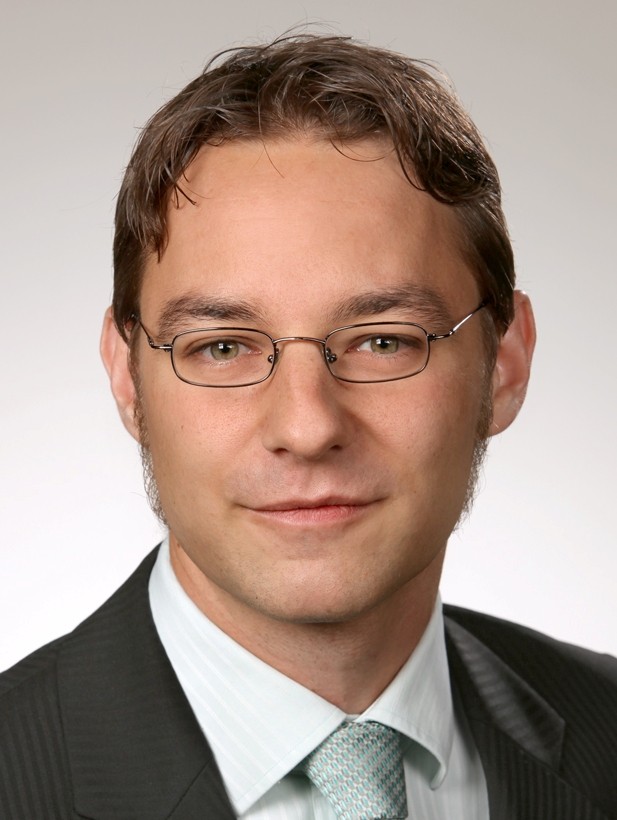
Prof. Dr.-Ing. Markus Gallei is a Full Professor of Polymer Chemistry at Saarland University, Faculty of Natural Sciences and Technology, where he leads the Gallei Lab. His research focuses on the development of nano-structured and stimuli-responsive polymeric materials inspired by natural hierarchical design principles. He holds a W3 professorship and is actively involved in interdisciplinary research bridging polymer chemistry, colloidal science, and self-assembly for advanced applications. His primary research interests include polymer chemistry , self-assembly of block copolymers , stimuli-responsive materials , smart membranes , photonic materials , and ceramic templating . His group develops novel synthetic strategies such as controlled radical polymerization and post-functionalization to create functional hybrid nanostructures. These materials are applied in fields like photonics , separation technologies , and energy storage . The recent publications reflect a strong trend toward redox-responsive systems , metallopolymer-based materials , 3D-printed structural colors , and environmental applications such as PFAS removal. The research combines fundamental polymer synthesis with applied materials engineering, emphasizing scalable and sustainable approaches. Reimund-Stadler-Prize donated by the GDCh (2017) Emerging Investigator 2016, RSC Journal of Materials C Fond der Chemischen Industrie (2016) Emerging Investigator 2016, RSC Polymer Chemistry Fellowship Max-Buchner-Foundation (DECHEMA) (2015) Young Talents 2015, Polymer Science, Macromolecular Chemistry and Physics Prize of the Familie-Bottling-Foundation (2011) Honor for PhD Thesis (summa cum laude), TU Darmstadt (2010) Prize of the Foundation of the Ehemaligen des Deutschen Kunststoff-Instituts (2007) GDCh-Prize for Chemistry (Abitur) (2000) Markus Gallei has led a junior research group at TU Darmstadt and has been a visiting scientist at MIT. He advises students and collaborates extensively on interdisciplinary projects. His lab is supported by national and EU-level funding, particularly in the area of smart inorganic polymers. He is a member of the editorial board of Frontiers in Polymer Science (Colloids) and part of the EU network 'Smart Inorganic Polymers'. The Gallei Lab operates within a well-equipped research environment, focusing on the self-assembly of core-shell particles , melt-shear organization , and functional hybrid films . The group actively develops new methodologies for creating porous membranes , ceramic precursors , and stimuli-responsive opal films .

- Flywheel Energy Storage Systems
- Low Carbon Power Generation
- High-Speed Electrical Machines
- +۷ مورد دیگر
Professor Keith Robert Pullen is a distinguished academic and inventor in energy systems engineering at City St George’s, University of London , where he has served since 2008. His career spans both academia and industry, with a focus on flywheel energy storage , high-speed electrical machines , and low-carbon power generation . He co-founded multiple spin-out companies, including Hydroventuri Ltd and Gyrotricity , and holds numerous patents in axial flux generators and turbo-compressors. His research integrates engineering innovation with practical applications for rural transport and developing countries . Education: PhD & DIC in Mechanical Engineering (1991), BEng in Mechanical Engineering (1987) from Imperial College London , sponsored by Rolls-Royce . Research Interests center on electrically driven flywheel systems, turbo compressors for fuel cells, and energy technologies for rural Africa. His work bridges mechanical engineering , renewable energy , and automotive innovation , with applications in hybrid vehicles and rail transport. Recent projects explore acoustic microdevices for biomedical engineering. Publications emphasize kinetic energy storage , microturbines , and phase-change materials . His grants include EPSRC-funded SCORE (Thermoacoustic engine), BIPED (EV batteries), and VESI (EV integration), alongside InnovateUK projects like LCEF (automotive flywheels with Nissan) and FCAMS (fuel cell compressors). Awards: Enterprise Fellowship (Royal Academy of Engineering), Fellow of the Institution of Mechanical Engineers, and Esso Teaching Fellow. Leadership: Director of Ascending Power Ltd and Dynamic Boosting Systems Ltd , and co-founder of Hydroventuri Ltd and Gyrotricity .
- Cloud Computing
- Distributed Systems
- Edge Computing
- +۴ مورد دیگر
Adrian Spătaru serves as a Lecturer at the Faculty of Mathematics and Computer Science, West University of Timisoara, Romania, with his office located in room 058. He maintains active academic engagement through direct contact channels including email (adrian.spataru@e-uvt.ro) and phone ((0256) 592 157), reflecting ongoing institutional affiliation and research activities within computer science. His research centers on the integration of edge, cloud, and high-performance computing resources within the cloud continuum framework. Key focus areas include service orchestration, resource management, blockchain applications for decentralized systems, and AI-driven optimization of cloud infrastructures. His work addresses critical challenges in heterogeneous platform integration, fault tolerance, and predictive maintenance across large-scale distributed environments, with notable contributions to container deployment and accelerator-aware application specification. Analysis of his publication trends reveals sustained emphasis on the edge-cloud-HPC continuum since 2018, evolving toward intent-based AI orchestration and heterogeneous hardware integration in recent works. His research bridges theoretical distributed systems concepts with practical applications in environmental monitoring (solar forecasting, freshwater quality assessment) and industrial cloud reliability, demonstrating both academic rigor and real-world impact. No scientific awards are documented in the provided institutional information. Details regarding student supervision, research grants, or laboratory affiliations are not specified in the available materials. Current research directions appear focused on advancing the edge-cloud-HPC continuum through heterogeneous platform integration, with 2025 publications indicating active development in this domain.
Ben Lindleyمشاهده پروفایل
استادیار
Ben Lindley is an Assistant Professor of Nuclear Engineering and Engineering Physics at the University of Wisconsin-Madison since 2020. He leads research in advanced reactor design, reactor physics, and integrated energy systems with a focus on cost reduction, nuclear-solar co-generation, and multiphysics modeling. His work spans computational methods development, safety analysis, and fuel cycle optimization, supported by DOE grants and collaborations with Argonne National Laboratory. Education: PhD in Nuclear Engineering (Cambridge, 2014), MEng & BA in Mechanical Engineering (Cambridge, 2011) Affiliations: Joint faculty appointment at Argonne National Laboratory His research explores nuclear reactor design , flexible operation (load-following, thermal storage), and economic viability of advanced reactors. Recent publications highlight innovations in microreactors, molten salt systems, and fusion-fission hybrids, with methodological advances in reinforcement learning for reactor control and open architecture design . Key article trends include: Advanced reactor cost reduction Nuclear-solar synergy Accident-tolerant fuel analysis Fusion energy commercialization Uncertainty quantification High-fidelity computational modeling Scientific Awards : 2021 ICONE21 Best Paper Award 2011 Babcock Award Runner-Up IET Bill Kerss Scholarship ANS 40 Under 40 Cambridge Rex Moir Prize Ben leads the RETI Lab (reti.ep.wisc.edu), mentoring graduate students through courses like Nuclear Reactor Theory (NE405) and advising on advanced reactor projects with national laboratories.
Mehdi Etezadi-Amoli is a Professor in the Department of Electrical and Biomedical Engineering at the University of Nevada, Reno's College of Engineering. His research focuses on power systems, renewable energy integration, fault detection, and energy storage optimization. His research interests include: Power Systems Stability and Fault Analysis Renewable Energy and Smart Grid Integration Machine Learning Applications in Microgrid Protection Energy Recovery from Pressure Reducing Valves His recent scientific contributions highlight: Hardware-in-the-loop (HIL) platforms for relay performance evaluation Deep belief networks for microgrid fault detection Time-time transform methodologies in protection systems Hydropower recovery systems in water distribution networks Student Advising : He has mentored graduate students including M. Afshar, M. Majidi, and O. A. Gashteroodkhani in research areas like power system fault analysis and energy recovery systems. Key Publications Overview : His work spans three decades, covering topics from harmonic distortion analysis (1980s) to modern AI-driven protection systems for microgrids (2019-2024). Recent articles focus on: Transient stability analysis in multi-contingency scenarios (2024) Resonance effects in interagency transmission lines (2023) AI-enhanced fault detection methodologies (2019-2022) Energy recovery through in-conduit hydropower systems (2018-2020)
Lixia Zhang is a Professor at the Computer Science Department of University of California, Los Angeles (UCLA) . She leads the Internet Research Lab (IRL) and has been a key figure in the Named Data Networking (NDN) project since 2010, building on Van Jacobson's Content-Centric Networking (CCNx) vision. Education : PhD from MIT (TCP/IP research), advised by Dr. David Clark Experience : Xerox PARC (7 years), currently at UCLA since 1998 Labs : Director of Internet Research Lab (IRL) at UCLA Her research focuses on Internet architecture design , NDN protocol development , and network security . She has published extensively on topics like DDoS defense patterns , LEO satellite networking , and decentralization frameworks . Her work spans applications in mHealth data sharing , edge computing , and augmented reality . Recent publications show trends in NDN scalability , secure communication , and decentralized internet infrastructure , with 15 most recent articles covering LEO satellite networks , metaverse security , scientific data distribution , and stateful forwarding mechanisms . Scientific Awards : PAM 2010 Best Paper Award Best Poster Award at ACM ICN 2018 Grants & Leadership : Recipient of Cisco Systems grant (2022) for satellite networking research, co-chair of IRTF Decentralized Internet Infrastructure Research Group (2021), and organizer of multiple NDN Community Meetings and Hackathons . Her lab has produced notable alumni including Mohit Lad (co-founder of ThousandEyes) and Lucas Wang .
Dr. Zhubing He is a Professor in the Department of Materials Science and Engineering at Southern University of Science and Technology (SUSTech), where he serves as Director of the Shenzhen Key Laboratory of Functional Materials for Full-spectrum Power Generation. He is recognized as a Shenzhen 'Peacock Plan' Class B Talent and is an expert in solar energy conversion technology with extensive contributions to photovoltaic research. His educational background includes a PhD in Applied Physics and Materials Science from City University of Hong Kong (2009), a Master's degree in Materials from University of Science and Technology of China (2006), and a Bachelor's degree in Materials from Hefei University of Technology (2001). Professor He's research focuses on developing carbon-neutral photovoltaic-thermal synergistic solar full-spectrum power generation technology, with particular emphasis on interface physical chemistry of materials, devices and systems. His work spans five main areas: (1) high-efficiency photovoltaic cells; (2) interfacial carrier transport and recombination; (3) nano-optics-based interfacial photothermal conversion; (4) organic-inorganic hybrid phase-change heat storage materials; and (5) photovoltaic-thermal synergistic power generation technology. His recent publications demonstrate a strong focus on tin-lead mixed perovskite solar cells, with numerous high-impact papers in journals like Nature, Science Advances, Joule, and Advanced Materials. His research shows consistent innovation in interface engineering, defect passivation, and molecular design for improved photovoltaic efficiency and stability. 2021 Shenzhen Natural Science Award Second Prize 2018 SUSTech Excellent Teaching Award 2017 SUSTech Young Research Award 2012 Shenzhen Peacock Plan Class B Talent 2009 City University of Hong Kong Outstanding Doctoral Thesis Award 2006 Chinese Academy of Sciences President's Award Professor He has mentored numerous graduate students and postdoctoral researchers, with several students contributing as co-authors on his recent publications. He has secured over 10 research projects including key projects from the National Natural Science Foundation of China and the Ministry of Science and Technology. His teaching portfolio includes graduate courses on advanced solar materials and undergraduate courses on photovoltaic technology and engineering fundamentals.
Yun Liمشاهده پروفایل
عضو هیئت علمی
Yun Li is a Research Assistant Professor and Master's Supervisor at Southern University of Science and Technology (SUSTech), affiliated with the Department of Earth and Space Sciences within the Faculty of Science. He serves as a youth council member of the mineral materials division of the Chinese Ceramic Society and holds multiple research grants including the National Natural Science Foundation of China Youth Fund Project. Research Assistant Professor at SUSTech (2022-present) Postdoctoral Research Associate at SUSTech (2020-2022) Youth Director of International Association of Clay Minerals (2025-2029) Principal Investigator for multiple research projects Dr. Li earned his B.S. in Petroleum Engineering from Yan'an University (2010-2014), M.S. in Oil and Gas Field Development Engineering from Southwest Petroleum University (2014-2017), and Ph.D. in Mineralogy, Petrology, Mineral Deposit Geology from Guangzhou Institute of Geochemistry, Chinese Academy of Sciences (2017-2020). Dr. Li's research focuses on mineral surface-interface interactions and gas hydrates, with particular emphasis on unconventional oil and gas resources including gas hydrates, shale oil and gas, and geological hydrogen/helium. His work investigates the geological storage and mineralization of carbon dioxide, employing surface-interface analysis techniques, molecular simulation methods, and in-situ visualization experimental techniques (X-ray and neutron) to study energy/environmental fluid interactions with clay minerals. His research has significant applications in unconventional oil and gas development and carbon capture technologies. Analysis of Dr. Li's recent publications reveals a strong focus on molecular dynamics simulations of hydrate formation mechanisms in clay minerals, particularly examining how different cations, organic matter, and mineral structures affect methane and carbon dioxide hydrate formation. His work bridges fundamental surface science with practical energy applications, showing increasing emphasis on carbon dioxide storage mechanisms in recent years. His publications appear in high-impact journals including ACS Sustainable Chemistry & Engineering, Applied Surface Science, Applied Clay Science, and Langmuir. Young Director of International Association of Clay Minerals (AIPEA) (2025-2029) Young Director of Mineral Materials Branch of Chinese Ceramic Society (2023-2028) SUSTech 'Qiming' and 'Taiyi' Star Scientific Research Achievement Awards (2024) Top Ten Young Scholars' Report at 10th National Conference on Mineral Science and Engineering (2024) Excellent Presentation Awards at multiple international clay and mineral conferences Outstanding reviewer for Applied Clay Science journal As a Master's Supervisor, Dr. Li mentors graduate students in earth sciences and energy-related research. He has secured significant research funding including the China Postdoctoral Science Foundation, Guangdong Basic and Applied Basic Research Foundation, and Shenzhen Science and Technology Program. His current projects include the National Natural Science Foundation of China Youth Fund Project (2025-2027) focusing on unconventional energy resources. Dr. Li has participated in major infrastructure projects including the material genomics experimental facility in Shenzhen and the high-pressure neutron diffraction/imaging spectrometer at Chinese Spallation Neutron Source. Dr. Li's research integrates computational modeling with experimental techniques through collaborations with major research facilities. His work on in-situ visualization techniques connects with neutron source facilities, while his molecular simulation research requires high-performance computing resources. He serves on editorial boards for journals including Unconventional Resources and special issues on unconventional oil and gas, demonstrating leadership in his research community.
Pererik Andreasson is a Lecturer at the Academy of Information Technology , Halmstad University. His research focuses on 3D printing, materials science, electromagnetic compatibility testing, and wireless communication. Key contributions include optimizing 3D-printed radar lenses, advancing phase-change material characterization via femtosecond x-ray diffraction, pioneering augmented reality methods for electromagnetic field visualization, and developing substrate integrated waveguide antennas for IoT devices. 3D printing of optical components Dynamic processes in phase-change materials Augmented reality for electromagnetic testing IoT antenna design His recent work on frequency-adjustable SIW antennas (2024) and AR-based EMC visualization (2021) demonstrates cross-disciplinary innovation. While no scientific awards are documented, his 15+ publications since 2007 highlight sustained expertise in material science and wireless technologies.

Dr. Federico Javier Hernández serves as a Lecturer in Computational Chemistry at the Centre for Chemical Research within the School of Physical and Chemical Sciences at Queen Mary University of London. His expertise centers on computational photochemistry and photophysics, with emphasis on excited-state mechanisms in complex molecular environments including aggregates, organic crystals, and solution-phase systems. Hernández completed his undergraduate studies in Physical Chemistry at the University of Córdoba (UC), Argentina, followed by a hybrid experimental and theoretical-computational PhD in Chemistry jointly awarded by UC and the University of Quilmes under Professors Gustavo Pino and Juliana Palma. His doctoral research investigated photophysical and photochemical processes relevant to Atmospheric Chemistry and Biochemistry. His laboratory focuses on elucidating fundamental mechanisms behind phenomena such as aggregation-induced emission, radiative quenching, singlet fission, ultralong organic phosphorescence, charge/exciton transport, and thermally activated delayed fluorescence. These investigations employ advanced computational methodologies including plane-wave DFT, multiscale electronic structure methods (QM:QM' and QM:MM), nonadiabatic dynamics simulations (surface hopping and Ehrenfest dynamics), and machine learning integration for materials discovery. This work directly supports rational design of functional molecules for optoelectronic applications and energy storage/conversion technologies. Analysis of Hernández's 15 most recent publications (2022-2025) reveals consistent focus on nonadiabatic dynamics in condensed phases, excited-state mechanisms in molecular aggregates, and atmospheric reaction kinetics. Key trends include development of computational benchmarks for photochemical processes, application of machine learning to photodynamics, and investigation of polaritonic effects in vibrational spectroscopy. His work bridges theoretical chemistry with practical materials design for optoelectronics. No major scientific awards or fellowships are documented in the available information. While current PhD advisees are not listed, Hernández maintains an active research group within the Centre for Chemical Research. His collaborative network spans international institutions including University College London, University of Bristol, and University of Santiago de Chile. He contributes to academic instruction through CHE 209 – Introductory Programming for Chemists and leverages his ORCID profile (https://orcid.org/0000-0001-7497-9424) for scholarly identification. His research infrastructure integrates high-performance computing with data science approaches to tackle complex photochemical problems.
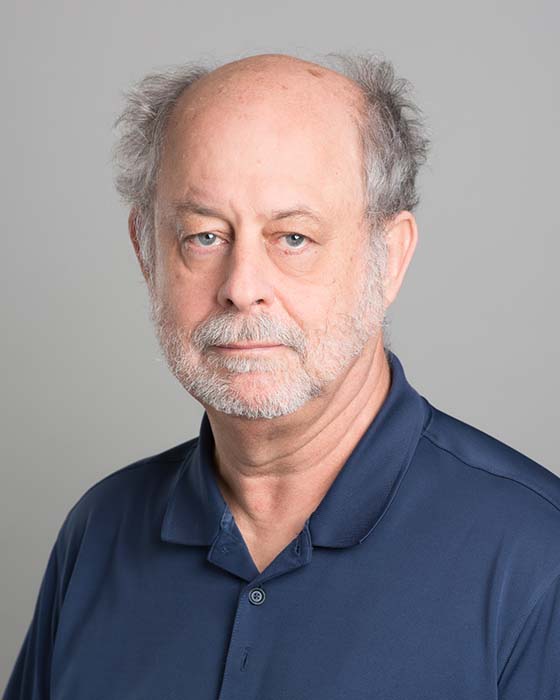
Professor Francis Dawson is affiliated with the Department of Electrical and Computer Engineering at the University of Toronto , under the Faculty of Applied Science and Engineering . He has been active in teaching and research since 1988, focusing on energy systems, power converters, and electromagnetic modeling. PhD in Electrical Engineering (University of Toronto, 1988) MASc in Electrical Engineering (University of Toronto, 1985) BASc in Electrical Engineering (University of Toronto, 1982) BSc in Physics (University of Toronto, 1978) His research spans static power converters , energy storage systems , signal processing in power applications, and electromagnetic compatibility . Recent publications focus on fault current limiters , digital phase-locked loops , and plasma physics , with keywords indicating strong ties to Electrical Engineering and Materials Science . Scientific accolades include: IEEE Fellow Myron Zucker Student Design Project 1st Prize (2012) K. Yamamoto Best Student Paper Award (2007) F. Farahmand 3rd Best Paper Prize (2005) He has collaborated on industrial projects in power electronics and contributed to the Power Group at the University of Toronto.