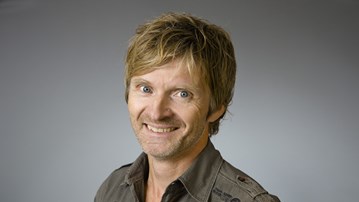
Tommy Persson is a Research Engineer at the Department of Computer and Information Science (IDA) within Linköping University. His research focuses on artificial intelligence, parallel computing, and robotics, with contributions to autonomous systems, distributed architectures, and high-performance computing. He is affiliated with the Artificial Intelligence and Integrated Computer Systems (AIICS) division, which emphasizes theoretical and applied AI research. His work spans domains such as unmanned aerial vehicle experimentation, parallel graphics code generation, and radar system optimization. Collaborations include projects with colleagues like Patrick Doherty and Peter Fritzson, reflecting a multidisciplinary approach to computational challenges. No scientific awards are explicitly mentioned, but his contributions to technical domains like MIMD systems and sensor technology highlight his expertise. Advising roles or grants are not detailed in the provided information. Persson is based at Campus Valla, contributing to both research and the academic community through his role in IDA and AIICS.
Ingo Sander is a Professor in Electronic Systems Design at KTH Royal Institute of Technology, affiliated with the Digital Futures Faculty and the Division of Electronics and Embedded Systems. He joined KTH in 1993 and has held his current professorship since 2018. His research focuses on formal system design methodologies like ForSyDe, emphasizing embedded systems, mixed-criticality applications, and design automation. He co-founded the cross-disciplinary Digital Futures research center, which addresses societal challenges through digital technology innovation. Education: MSc in Electrical Engineering (Technical University of Braunschweig, 1990), PhD and Docent at KTH (2003, 2009). Professional experience includes work at Ericsson (1991–1993). Research Interests: Design methodologies for embedded systems, models of computation (MoCs), formal verification, and cyber-physical systems. Key contributions include the ForSyDe framework and design space exploration techniques for multiprocessor platforms. His work bridges theoretical foundations with practical implementations, targeting safety-critical and high-performance embedded systems. Teaching: Ingo Sander supervises numerous master’s degree projects in computer engineering, electrical engineering, and ICT innovation. He leads courses on embedded software, systems design, and simulation. Labs & Projects: Digital Futures collaborates with Stockholm University and RISE, advancing innovations in digital technologies. Sander’s projects include the SAFEPOWER initiative for energy-efficient mixed-criticality systems and CONTREX for control systems design.
Oskar Kviman is a doctoral student at KTH Royal Institute of Technology working in the Lagergren Lab within the Division of Computational Science and Technology. His research bridges machine learning, statistics, and computational biology with a focus on developing and applying advanced probabilistic methods. His primary research interests include: Bayesian phylogenetics and probabilistic machine learning Variational inference, variational auto-encoders, and sequential Monte Carlo methods Generative AI techniques including flow matching, Schrödinger bridges, and diffusion models Computational cancer research focusing on differential expression testing and spatial transcriptomics Kviman's publication record demonstrates significant contributions to variational inference methodology, particularly in phylogenetics and generative modeling. His work spans top machine learning conferences including ICML, NeurIPS, and AISTATS, showing consistent development of techniques that improve efficiency and accuracy in probabilistic modeling. Recent publications focus on multi-marginal flow matching, variational resampling, and mixture learning in black-box variational inference. He has been recognized for his peer review contributions as a Top reviewer (10%) for AISTATS 2023. Kviman has supervised master's theses for Xindi Liu and Ricky Molén at KTH and serves as a lecturer for 'Statistical Methods in Applied Computer Science' since 2021, while previously working as a teaching assistant for 'Machine Learning, Advanced Course' and 'Deep Learning, Advanced Course'.
Patrik Jansson is a Professor of Computer Science at Chalmers University of Technology since 2011, with joint affiliation to Gothenburg University. His work bridges Functional Programming, Domain-Specific Languages (DSLs), and applications to Climate Impact Research, Fusion, and Physics.
Håkan Sundell is an Assistant Professor of Computer Science at the University of Borås , affiliated with the Faculty of Librarianship, Information, Education and IT and the Department of Information Technology . Since 2006, he has been active as a teacher in informatics and a research group leader for the CSL@BS research group , while also serving as program manager for the System Architecture Education with a Focus on Software Development . His research spans Artificial Intelligence , Parallel and Distributed Systems , Concurrent Programming , and Machine Learning Applications , with a particular emphasis on lock-free data structures and GPU algorithms . He has developed over 30 courses and supervised multiple doctoral students to completion. Scientific contributions include advancements in non-blocking algorithms, real-time systems, and AI-driven marketing tools. His article trends reflect interdisciplinary work in data science for fashion retail , district heating analytics , and marketing campaign optimization . Key Awards: Best Paper Award at IPDPS 2003 Recognized as a pioneer in Swedish computer game development As a main supervisor since 2012, he has driven externally funded research projects (VR, SSF, KKS, HUR) and served on university committees, including chairing the education committee from 2018–2022.
Joakim Andén-Pantera is an Associate Professor in the Division of Probability, Mathematical Physics and Statistics at the Department of Mathematics, KTH Royal Institute of Technology. His research spans signal processing, statistical data analysis, and machine learning with applications in cryo-electron microscopy, biomedical signal analysis, and audio classification. His educational background includes advanced training in mathematics and signal processing leading to his current academic position. Though specific degree details aren't provided in the text, his research profile indicates deep expertise in mathematical methods for signal representation. Professor Andén-Pantera's work focuses on developing mathematical frameworks that extract discriminative information from signals while remaining invariant to irrelevant variations like translation, frequency-shifting, and noise. His research bridges theoretical mathematics with practical applications across multiple domains: Developing wavelet scattering transforms for robust signal representation Applying these techniques to cryo-EM for molecular structure analysis Creating methods for audio and music classification through time-frequency analysis Designing algorithms for biomedical signal processing, particularly ECG analysis Contributing to computational methods for cosmological parameter estimation His publication record shows consistent contributions in both theoretical signal processing and practical implementations. The research trajectory demonstrates increasing sophistication in applying scattering transforms and deep learning to diverse signal processing challenges across biology, medicine, and acoustics. Notable scientific recognition includes: Best Paper Award (2nd Place) at IEEE International Workshop on Machine Learning for Signal Processing (2015) Best Paper Award (1st Place) at International Conference on Digital Audio Effects (2012) Best Paper Award at IPDPS for cuFINUFFT implementation Professor Andén-Pantera advises graduate students on degree projects in financial mathematics, mathematical statistics, and engineering mathematics. His research group develops computational tools including ASPIRE for cryo-EM and Kymatio for wavelet scattering transforms. He teaches courses in Applied Statistics, Probability Theory, and Statistical Learning at KTH. He leads the development of several influential open-source software projects that have become standard tools in their respective fields, with Kymatio particularly gaining widespread adoption across multiple research communities.
Hao Chen is a researcher at KTH Royal Institute of Technology, affiliated with the School of Electrical Engineering and Computer Science (EECS), specifically within the Computer Science department focusing on Communication Systems and the Optical Network Laboratory (ON Lab). He also contributes to research in Intelligent systems and Information Science and Engineering. Chen completed his doctoral dissertation titled 'Reliable and Efficient Distributed Machine Learning' in 2022, establishing himself as an emerging expert in distributed machine learning systems. Chen's research interests center around distributed and federated machine learning architectures, with particular emphasis on optimizing communication efficiency in decentralized systems. His work addresses critical challenges in distributed learning including communication bottlenecks, straggler nodes (devices with slow responses), and privacy preservation. His research spans applications in wireless IoT networks, satellite communications, and edge computing environments. His publication record shows a clear trajectory of increasingly sophisticated approaches to distributed machine learning. Starting with foundational work on coded stochastic ADMM methods in 2021, he progressed to developing asynchronous parallel algorithms (2023) and exploring applications in specialized domains like speech fatigue recognition (2024). A consistent theme across his work is the optimization of communication resources while maintaining learning performance, with particular attention to real-world constraints in wireless and satellite networks. Chen has collaborated extensively with researchers including Ming Xiao, Mikael Skoglund, Yu Ye, and others across multiple publications. His research has been supported by funding sources including the EU Horizon 2020 program (grant 825272) and the Swedish Foundation for Strategic Research (APR20-0023). His work appears in high-impact journals including IEEE Transactions on Big Data, IEEE Internet of Things Journal, and IEEE Wireless Communications. As a researcher at KTH, Chen contributes to cutting-edge work at the intersection of machine learning and communication systems, developing techniques that enable efficient distributed intelligence across networked devices while addressing practical constraints of real-world deployment.
Hanna Holmgren is a Lecturer specializing in computer science and geospatial information systems at the University of Gävle. Her research bridges computational fluid dynamics and educational technology, with publications on microfluidic simulations and AI in learning environments. She contributes to academic discourse through conferences on engineering education innovations.
Stefan Engblom is a Professor in Scientific Computing at Uppsala University, Department of Information Technology. His research focuses on developing computational methods and software for scientific applications, with particular expertise in numerical methods, fast algorithms, and simulation of complex systems. He is affiliated with the Scientific Computing division within the Information Technology department at Uppsala University. Engblom's research spans several key areas including fast multipole methods for efficient computation of long-range interactions, stochastic simulation of reaction-diffusion processes in complex geometries, computational epidemiology for modeling disease spread, and fluid dynamics simulations. His work combines theoretical development with practical implementation, resulting in several widely used software packages. His publications reveal a consistent focus on developing efficient numerical algorithms that address computational challenges in various scientific domains. The research shows a progression from fundamental algorithm development (fast multipole methods) to applications in biology (reaction-diffusion systems) and public health (epidemic modeling), demonstrating the versatility and applicability of his computational approaches. Engblom maintains active software development through several research codes including SimInf for epidemic modeling, URDME for reaction-diffusion processes, FMM2D/FMM3D for fast multipole methods, and other specialized tools for fluid dynamics and fiber simulations. His stenglib provides general-purpose Matlab libraries used in his research and available to the broader scientific community.
Erik Elmroth is a Professor at the Department of Computing Science, Umeå University. He leads research in distributed systems, cloud/edge computing, and autonomous resource management, directing a 30+ member research group. His leadership includes transformative roles as department head (2009-2021) and Deputy Director at High Performance Computing Center North (HPC2N). Elmroth serves on executive committees for the SEK 6.2B Wallenberg AI program (WASP) and SEK 390M eSSENCE initiative, and leads multiple Kempe Foundation projects. Research interests center on: Autonomous control of cloud/edge infrastructures Software-defined systems and federated clouds AI-driven resource optimization High-performance computing architectures Robust machine learning for distributed environments His publications emphasize adaptive cloud systems, anomaly detection, and federated learning, with consistent focus on scalability and resilience in edge/cloud deployments. Awards and honors: Member of Royal Swedish Academy of Engineering Sciences (IVA) Nordea Scientific Prize (2011) SIAM Linear Algebra Prize (2000) National HPC Lecturer appointment He has supervised 40+ PhD students and secured major grants including the Swedish Research Council's second-largest award for the Cloud Control project. Elmroth founded the Control Workshops series and co-founded Elastisys AB, a cloud security firm with 50+ employees recognized as Umeå's Spin-off Company of the Year.
Robert-Zoltán Szász is a Researcher in the Department of Energy Sciences at Lund University, Faculty of Engineering, and a member of the LTH Profile Area: The Energy Transition. His work centers on numerical modeling of fluid flows. His research interests encompass: Numerical modeling of swirling reacting and non-reacting flows Computational aeroacoustics Wind turbine aerodynamics Ice accretion phenomena He employs Large Eddy Simulations and Computational Fluid Dynamics to address energy system challenges, with recent focus on hydrogen-enriched combustion dynamics and ice accretion modeling for renewable infrastructure. Szász has supervised 6 students and contributed to key projects: Numerical and experimental investigation of a gas turbine model combustor : Dissertation project examining swirling flows in combustion systems Computations of ice throw/fall : 2018-2019 research on ice formation/detachment modeling
Anders Västberg is a Lecturer at KTH Royal Institute of Technology within the Department of Communication Systems. His work spans teaching and examination roles across various courses in computer science, electrical engineering, and information and communication technology (ICT) innovation, including Wireless Communication Systems , Mobile Networks , and Programming of Parallel Systems . Teaches courses like Internet of Things and Introduction to Computer Security . Examiner for advanced-level degree projects in embedded systems and communication systems. Focuses on wireless networking, heterogeneous networks, and energy-efficient network design. His research interests include energy efficiency in telecommunications , green radio systems , and network optimization . Recent work explores power consumption in backhaul systems , heterogeneous network deployment , and signal propagation in ionospheric channels . Articles highlight trends in green networking , starting with 2016 studies on cell DTX and heterogeneous networks , followed by 2013 work on backhaul optimization and wideband efficiency . Earlier papers (1997–2008) focus on ionospheric signal distortion and HF channel analysis .