Christoph Kessler is a Professor and Head of the Software and Systems (SAS) division at the Department of Computer and Information Science (IDA), Linköping University, Sweden. He leads the Programming Environment Laboratory’s research group focusing on compiler technology, parallel computing, and heterogeneous systems. His work includes the development of tools like OPTIMIST, PARAMAT, and SkePU, and he has contributed over 100 publications in journals and conferences. He holds a PhD from the University of Saarbrücken and a Habilitation from the University of Trier. Research interests span parallel programming, compiler optimization, and energy-efficient scheduling for heterogeneous systems. He has secured a 30M SEK grant from SSF for the ASTECC project, advancing adaptive software for edge-cloud computing. Notable contributions include frameworks for GPU-based systems and methodologies for optimizing resource allocation on many-core architectures. His team’s work emphasizes practical applications in high-performance computing, including tools for course management (StASy) and energy-aware scheduling algorithms. The SAS division, under his leadership, focuses on software engineering and computer systems research with strong industry collaboration.
Seif Haridi is a Professor at KTH Royal Institute of Technology in Stockholm, Sweden, specializing in parallel and distributed computing systems. He holds dual roles as Chair-Professor of Computer Systems and Chief Scientific Advisor at RISE SICS. His research integrates systems engineering with theoretical foundations, focusing on programming systems, distributed computing, and big data technologies. Key contributions include co-designing SICStus Prolog, the Mozart Programming System, and Apache Flink, as well as leading the development of HOPS, a European big data platform awarded the IEEE Scale Prize 2017. He has led major EU projects like EIT-Digital’s cloud computing initiative and co-founded startups such as LogicalClocks and HiveStreaming. His teaching includes courses on distributed algorithms and peer-to-peer computing at KTH. Notable awards include the European Data Science Technology Innovation 2019. His work spans systems like HOPS, Flink, and Kompics, emphasizing scalability and robustness in distributed environments. Current projects include CDA (Continuous Deep Analytics) and ExtremeEarth for geospatial data analysis. Research interests include distributed algorithms, consensus protocols, and cloud-native systems. His lab’s contributions to scalable storage (e.g., HopsFS) and stream processing (Apache Flink) highlight his impact on both academia and industry.
Yuan Yao serves as an Assistant Professor in the Department of Information Technology at Uppsala University, Sweden. His academic role spans teaching and research within the Computer Systems division, focusing on cutting-edge computer architecture and parallel computing systems. He maintains active collaborations across international institutions, particularly in energy-efficient hardware design and emerging computing paradigms. His educational journey includes: B.S. in Micro-electronics from Northwestern Polytechnical University, China (2009) M.S. in System-on-Chip Design from KTH Royal Institute of Technology, Sweden (2014) Ph.D. in Electrical Engineering and Computer Science from KTH Royal Institute of Technology (2019) Yao's research centers on power and thermal management for chip multi-processors, Network-on-Chips (NoCs), and GPUs. He pioneers hardware/software co-design for high-performance computing, coherency mechanisms for emerging memory technologies, and performance analysis of on-chip networks. Recent work expands into neural network acceleration and battery-less Internet of Things architectures, reflecting a trajectory toward energy-constrained specialized systems. His methodology integrates formal modeling with practical implementation for real-world impact. Publication trends reveal consistent innovation in energy efficiency across parallel architectures. From foundational DVFS techniques for NoCs (2016-2018) to recent breakthroughs in battery-less IoT (2023-2024), his work demonstrates evolutionary progression toward novel computing domains. Key thematic threads include thermal-aware optimization, memory consistency protocols, and hardware acceleration for AI workloads, with applications spanning data centers to embedded systems. Scientific recognition includes: Best paper candidate at IEEE International Symposium on High Performance Computer Architecture (HPCA) 2018 for in-network packet generation research Yao actively supervises graduate researchers and leads collaborative projects in computer architecture. His grant portfolio supports work on battery-less IoT systems and neural network accelerators, though specific funding details aren't publicly enumerated. Current projects emphasize sustainable computing through novel architectures for energy-harvesting environments. He operates within Uppsala University's Computer Systems division, contributing to research groups focused on hardware acceleration, embedded systems, and networked architectures. His lab environment fosters interdisciplinary work bridging computer architecture, energy harvesting, and machine learning for next-generation computing platforms.
Mats G Larson is a Professor at the Department of Mathematics and Mathematical Statistics at Umeå University. He holds the research qualification of Docent and specializes in computational mathematics, numerical analysis, and finite element methods. His work focuses on advancing numerical techniques for partial differential equations, including CutFEM, Isogeometric Analysis (IGA), and hybridized methods for complex geometries and multiphysics problems. Research interests include error estimation, stabilized finite element methods, computational mechanics, and applications in engineering and fluid-structure interaction. Larson leads projects such as the 2022–2025 'Multi-shell CutFEM for problems with mixed dimensions' and the 2017–2021 project on computational methods for elliptic problems. His publications appear in top journals like Computer Methods in Applied Mechanics and Engineering . Key contributions include developments in CutFEM for embedded surfaces, augmented Lagrangian methods for contact problems, and geometric modeling with CAD integration. His research bridges theoretical analysis and practical applications, addressing challenges in mesh generation, stability, and high-performance computing.
Martin Karp is a Research Fellow and postdoctoral researcher at KTH Royal Institute of Technology's Department of Engineering Mechanics, working under Dan Henningson. His research focuses on high-fidelity numerical simulations of turbulence and transition, with a specialization in high-performance computing (HPC) and supercomputing architectures. He holds a PhD in computer science from KTH and an MSc in Engineering Physics from Lund University, complemented by studies at ETH Zürich's computer science department. His research interests explore computational limits in nonlinear chaotic systems and future computational advancements. He leads the development of the Neko framework, a scalable simulation tool for extreme-scale CFD with extensive accelerator support. Karp's work emphasizes GPU and FPGA acceleration, parallel computing, and optimizing algorithms for heterogeneous architectures. Key contributions include large-scale turbulence simulations using GPUs, reducing communication in conjugate gradient methods, and evaluating FPGA-based flow solvers. His publications span journals like Concurrency and Computation and Scientific Reports , with conference presentations at IEEE Cluster, PASC, and HPCAsia. Karp's research bridges theoretical computational limits and practical HPC implementation, addressing challenges in precision, scalability, and hardware utilization. His educational background combines engineering physics with computer science, enabling interdisciplinary approaches to fluid dynamics and high-performance simulation. Current projects aim to push the boundaries of computational fluid dynamics through novel algorithm design and leveraging emerging hardware capabilities.
Masoumeh Ebrahimi is an Associate Professor at KTH Royal Institute of Technology, Division of Electronics and Embedded Systems, and holds an Adjunct Professor position at the University of Turku, Finland. She leads research in hardware acceleration, neural architecture search, and fault-tolerant systems. Her work bridges machine learning, embedded systems, and network-on-chip (NoC) design. Research Interests: Hardware-Accelerated Machine Learning 6G Network Architectures Fault-Tolerant Computing High-Performance GPU Systems Network-on-Chip (NoC) Design Federated Learning Key Projects: Co-supervisor of Hui Chen’s postdoc project Generalizing hardware acceleration for nonlinear functions . Active in Digital Futures, a cross-disciplinary center focusing on societal challenges using digital tech. Collaborates on edge computing, 6G networks, and resilient embedded systems. Labs & Teams: Core member of KTH’s Digital Futures initiative, advancing AI accelerators and next-gen communication systems. Engaged in EU-funded projects on NoC reliability and federated learning frameworks.
Anders Lansner is a Professor of Computer Science at Stockholm University and holds an affiliated professorship at KTH Royal Institute of Technology. He leads the Lansner Lab (Computational Biology and Neurocomputing) at the Department of Computational Science and Technology (CST) within the School of Computer Science and Communication (CSC) at KTH. His research focuses on computational neuroscience and brain-like computing, emphasizing mathematical and computational models of neuronal networks in the neocortex and basal ganglia. Key projects include developing neuromorphic algorithms for supercomputers and FPGA-based hardware implementations. Lansner manages the computational neuroscience platform for the Stockholm Brain Institute (SBI) and the neuroinformatics platform for StratNeuro (Karolinska Institutet). His lab contributes to EU projects such as FACETS and NEUROChem, and collaborates with KTH’s Electronics Department on modular brain-inspired FPGA designs. Research interests span synaptic plasticity mechanisms, memory systems (episodic, semantic, and working memory), and applications in neuromorphic computing. He supervises graduate students and teaches courses in computational neuroscience. Lansner’s work bridges theoretical neuroscience with engineering, aiming to advance brain-inspired AI and hardware systems. His lab’s StreamBrain framework supports heterogeneous computing architectures for brain-like neural networks. Notable collaborations include cross-disciplinary efforts in neuromorphic hardware development (e.g., memristor-based learning engines) and olfactory system modeling. Lansner’s research addresses both fundamental brain mechanisms and technical applications in data analysis and neurorobotics.
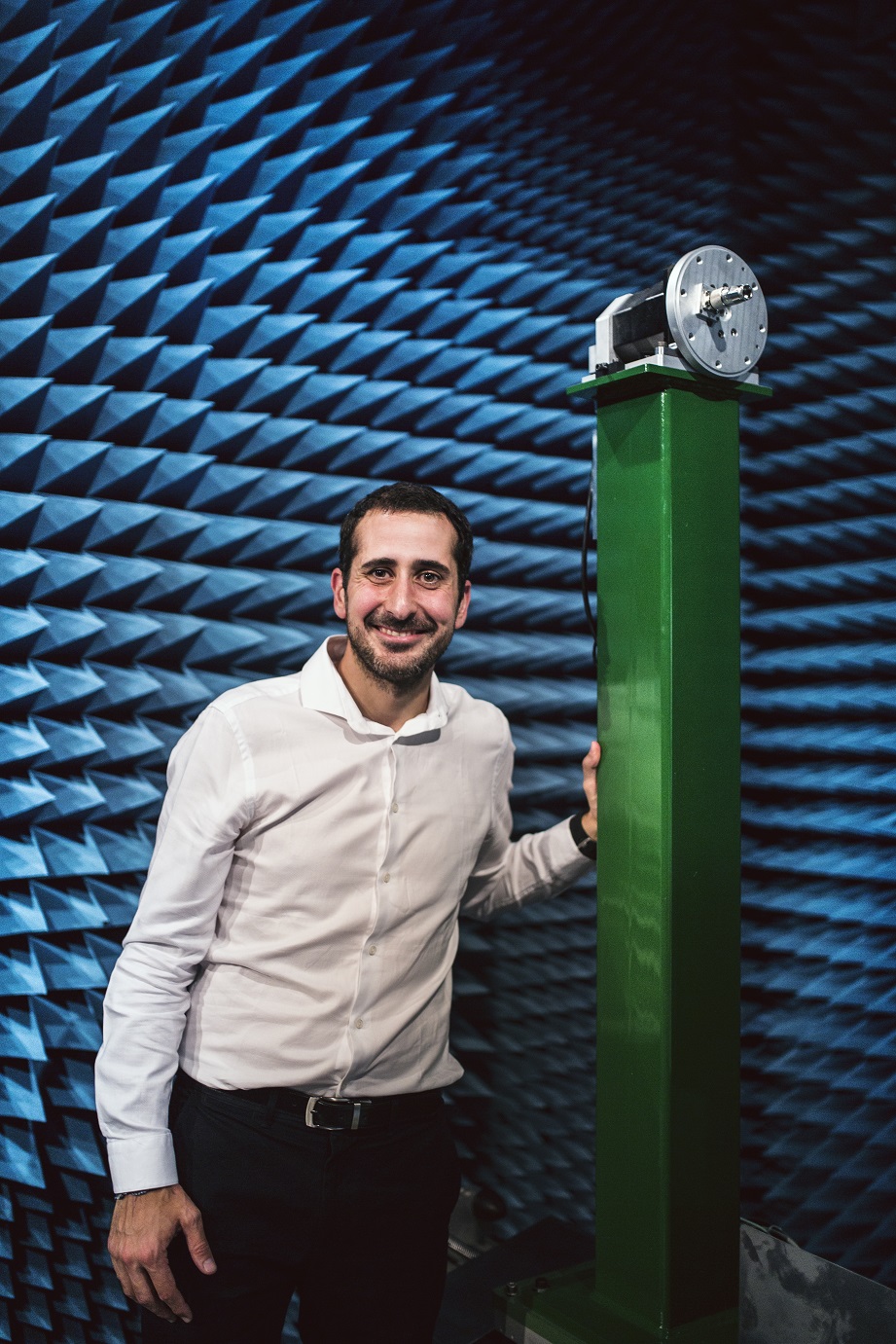
Oscar Quevedo Teruel is a Full Professor in the School of Electrical Engineering and Computer Science (EECS) at KTH Royal Institute of Technology, where he is affiliated with the Division of Electromagnetic Engineering and Fusion Science. He leads the Antenna Laboratory and serves as Director of the Master’s Programme in Electromagnetics, Fusion and Space Engineering. He is also an Associate Editor of IEEE Transactions on Antennas and Propagation and founder and Editor-in-Chief of Reviews of Electromagnetics. Research Interests: His research spans advanced electromagnetic structures, including glide symmetries, transformation optics, metasurfaces, lens antennas, and geodesic lenses. These are applied to 5G/6G communications, satellite systems, and millimeter-wave technologies. He investigates low-dispersive leaky-wave antennas, high-impedance surfaces, and periodic electromagnetic structures for enhanced performance in modern wireless systems. The recent publications highlight a strong trend in leveraging glide symmetry and metasurfaces to design compact, efficient, and broadband antennas—particularly for Ka-band and 60 GHz applications. His work integrates ray tracing, physical optics, and transformation optics to model and optimize geodesic and graded-index lenses. The research emphasizes industrial applications in telecommunications, satellite systems, and radar, often in collaboration with Ericsson, ESA, and other leading institutions. Scientific Awards and Leadership: Distinguished Lecturer, IEEE Antennas and Propagation Society (2019–2021) Chair, IEEE APS Educational Initiatives Programme (since 2020) Member and Vice-Chair, EurAAP Board of Directors (since 2021, Vice-Chair since 2022) EurAAP Delegate for Sweden, Norway, and Iceland (2018–2020) Advising and Grants: He supervises multiple PhD and Master’s students and leads numerous research projects funded by SSF, Vinnova, VR, ESA, STINT, ONR, and industry partners including Ericsson, SAAB, and Thales. These projects focus on innovative antenna systems for 5G/6G, satellite communications, and space instrumentation. He is also the KTH leader in several international collaborations, including MSCA Doctoral Networks and COST Actions. Laboratories and Teams: He is responsible for the Antenna Laboratory within the Sustainable Power Lab at KTH and leads the 'Radio electronics and antennas' area in SweWIN, the Swedish Wireless Innovation Network. His team actively collaborates with industrial and academic partners across Europe and the US.
David Black-Schaffer is a Professor at Uppsala University's Department of Information Technology, specializing in computer systems research. As of 2023, he serves as Dean of Research for the Faculty of Science and Technology. His work bridges software and hardware innovations to enhance data movement efficiency in computer systems, with applications commercialized through a startup and integrated into industry standards like OpenCL. Black-Schaffer earned his PhD in Electrical Engineering from Stanford University in 2008, focusing on many-core processor programming. His career spans roles at Apple Inc. (contributing to OpenCL standards), postdoctoral research at Uppsala University, and academic progression from assistant to full professor (2010–2017). He has held leadership roles including Head of the Division of Computer Systems (2022) and department representative on the faculty Advisory Committee for Research (2021). His research spans computer architecture, memory systems, parallel programming, and simulation techniques. Recent publications (2024–2020) explore garbage collection, cache optimization, memory contention, NUMA systems, and instruction scheduling. Key trends include software-hardware co-design for power efficiency, reuse-aware data placement, and machine learning for performance modeling. Knut & Alice Wallenberg Foundation: Wallenberg Academy Fellowship Prolongation (2020–2025), Wallenberg Academy Fellow (2016–2021) Swedish Research Council (VR): Project Grant (2019–2024), Young Researcher Grant (2015–2018), Framework Grant (2012–2017) European Research Council: ERC Starting Grant (2017–2022) Teaching Awards: Uppsala Engineering and Science Student Union Pedagogical Prize (2012), Uppsala University Pedagogical Prize (2016), Uppsala Technical Physics Students' Teaching Award (2019) Other Grants: ScalableLearning flipped classroom project (2012–2020), Arm Ltd. collaborations on memory system designs He pioneered flipped-classroom teaching through the ScalableLearning project, impacting over 80,000 students. His research is conducted in collaboration with institutions like Arm Ltd., with past contributions to Apple's OpenCL implementation and UPMARC research center.
Corentin Cadiou is a Research Fellow at Lund University's Department of Physics, specializing in Astrophysics. He holds dual positions as a Postdoctoral Fellow in both the Astrophysics division and the eSSENCE: The e-Science Collaboration initiative. His research focuses on computational astrophysics and cosmology, with particular expertise in dark matter, galaxy formation, and cosmic structure evolution. His primary research interests include: Dark matter physics and cosmic web dynamics High-resolution cosmological simulations Galaxy formation and evolution mechanisms Star formation processes in various environments Computational methods in astrophysics Large-scale structure of the universe He employs advanced simulation techniques to study galaxy-scale phenomena and cosmic evolution. Cadiou's recent publications demonstrate a strong focus on developing and optimizing astrophysical simulation codes, analyzing cosmic structures like filaments and dark matter halos, and investigating galaxy formation processes across cosmic time. His work frequently combines theoretical modeling with high-performance computing approaches to address fundamental questions in cosmology. He is currently engaged in the project: eSSENCE@LU 11:4 - Galaxy formation in the exascale era (2025-2026), where he serves as a researcher developing next-generation galaxy formation simulations.
Kent Palmkvist is an Associate Professor at Linköping University, affiliated with the Department of Electrical Engineering (ISY) and the Division of Electronics and Computer Engineering (ELDA). His work bridges research and education in digital, analog, and mixed-signal electronics, with a focus on programmable systems and processor design. Research Interests: Digital and mixed-signal circuit design FPGA-based high-performance computing Asynchronous (GALS) system architectures Low-power and energy-efficient design techniques Calibration and testing of high-resolution ADCs Hardware implementation of signal processing algorithms His recent publications highlight expertise in large-scale FFT implementations on FPGAs and innovative design flows for asynchronous systems, indicating a strong focus on hardware efficiency and scalability. Scientific Contributions: Pioneered design methodologies for integrating asynchronous modules using conventional synchronous tools Developed high-throughput FFT architectures capable of processing 1 million points on a single FPGA Advanced calibration techniques for flash ADCs using histogram methods Advising and Grants: While no formal students or grant details are listed in the provided text, his collaborative publications suggest active engagement in research teams and potential supervision of graduate students. His work likely involves industry and research collaborations, given the applied nature of his research and ISY’s emphasis on industrial partnerships. Labs and Teams: Kent Palmkvist is a key member of the Division of Electronics and Computer Engineering (ELDA), where he contributes to research in advanced electronic systems. The division conducts cutting-edge work in both analog and digital domains, supporting a collaborative environment for innovation in electronics and computing.
Seyedshahabaddin Mirjalili is an Assistant Professor in Fluid Mechanics at the Department of Engineering Mechanics, KTH Royal Institute of Technology, Sweden. He is affiliated with the Swedish e-Science Research Center (SeRC) and Digital Futures at KTH. Education: BS in Mechanical Engineering from Sharif University of Technology, MS and PhD in Mechanical Engineering from Stanford University. Former Positions: Research Associate (2022–2024) and Postdoctoral Fellow (2019–2022) at Stanford University. His research spans fluid mechanics, scientific computing, and machine learning, focusing on computational methods for multi-physics, multi-phase, and multi-scale flows. Applications include propulsion systems, additive manufacturing, biophysical systems, and environmental flows. He develops conservative phase field models, energy-preserving numerical schemes, and physics-informed machine learning frameworks for high-fidelity simulations and reduced-order modeling. Recent work involves inverse asymptotic treatments for discontinuities, microbubble dynamics in breaking waves, and energy-conserving momentum transport in two-phase flows. His methods emphasize boundedness, conservation properties, and reduced spurious currents in numerical simulations. Scientific Awards: Gallery of Fluid Motion Award (2018) from the American Physical Society Division of Fluid Dynamics He contributes to software initiatives under SeRC and collaborates on high-performance computing (HPC) applications. His teaching includes courses like Particle Dynamics (SG1115).
Yu Yang is a Researcher at KTH Royal Institute of Technology's Division of Electronics and Embedded Systems. He has been affiliated with KTH since at least 2020 and currently holds a postdoc position. His research focuses on neuromorphic computing, FPGA/ASIC implementation, approximate computing, and embedded systems design. He also explores ergonomic applications using wearable sensors to address workplace safety and musculoskeletal disorders. Yang has taught courses like Digital Design and Embedded Hardware Design in ASIC and FPGA , demonstrating expertise in both theoretical and applied electronics. His work bridges hardware acceleration (e.g., memristor-based neural networks) with practical applications like surgeon workload analysis and posture correction systems. Notable projects include the eBrainII ASIC implementation of a human-scale cortical model and developing smart workwear systems for real-time vibrotactile feedback. Publications span IEEE conferences (DATE, FDL, ASP-DAC) and journals like Frontiers in Neuroscience and Journal of Signal Processing Systems . His research often emphasizes low-power, high-performance computing while addressing ergonomic challenges in manufacturing and healthcare sectors.
Welf Löwe is a资深 researcher and faculty member at Linnaeus University's Faculty of Technology, Department of Computer Science and Media Technology, and also teaches at Linköping University's Department of Computer and Information Science. His research focuses on data-intensive technologies, software metrics, design pattern detection, and context-aware systems. He leads the Data Intensive Software Technologies and Applications (DISTA) group and contributes to the Linnaeus University Centre for Data Intensive Sciences and Applications (DISA). He actively collaborates on projects like the Data Intensive Applications (DIA) graduate school and the High-Performance Computing Center (HPCC). His work spans machine learning applications in healthcare, forestry, and industrial automation. Recent research includes feature engineering in medical data, skeleton avatar technology for aging studies, and AI-driven diagnostics. He has authored over 150 peer-reviewed publications and participates in interdisciplinary initiatives such as the iSchool project.
Lars Karlsson is an Associate Professor at the Department of Computing Science, Umeå University, where he serves as Assistant Head of Department with responsibilities for undergraduate education. His research focuses on developing efficient algorithms for matrix and tensor computations within high-performance computing environments. He is affiliated with the Parallel and Scientific Computing research group at Umeå. Karlsson's primary research areas include: Numerical Linear Algebra : Specializing in matrix factorizations and eigenvalue computations Parallel Algorithms : Designing scalable solutions for distributed and shared-memory systems Tensor Computations : Developing decomposition methods and completion algorithms Performance Optimization : Auto-tuning techniques for modern computing architectures His publications (2010-2025) demonstrate consistent focus on parallel algorithms for numerical problems, particularly matrix reductions, eigenvalue computations, and tensor decompositions. Recent work emphasizes auto-tuning, robustness in numerical methods, and efficient scheduling for high-performance systems. The majority of publications involve collaborative research within European computing consortia like NLAFET. Karlsson contributes to educational research, having explored mastery learning approaches in university settings. His administrative responsibilities include oversight of undergraduate programs at the Department of Computing Science.