Dr. Ivana Kovacevic is a Lecturer at the Department of Information Technology and Electrical Engineering at ETH Zürich. Her research focuses on power electronics, semiconductor device modeling, and electromagnetic analysis of wide bandgap devices. ETH Zürich, Department of Information Technology and Electrical Engineering Contact: kovacevic@aps.ee.ethz.ch Her research explores SiC power MOSFETs, emphasizing their dynamic performance, reliability, and optimization through advanced modeling techniques like the Partial Element Equivalent Circuit (PEEC) method. She investigates parasitic extraction, thermal behavior, and stability issues in power modules, contributing to design improvements for high-efficiency systems. Her publications highlight trends in electromagnetic modeling, device-circuit interactions, and reliability analysis under extreme conditions. Key subfields include gate resistance dynamics, frequency-dependent capacitances, and multi-chip module design. Current projects involve virtual prototyping for power electronics and mission profile-based optimization of wearable power systems.
Prof. Daniel Kressner is a Professor at the École Polytechnique Fédérale de Lausanne (EPFL), holding positions in the School of Basic Sciences (SB), Mathematics Institute (MATH), and the Numerical Algorithms and High-Performance Computing (ANCHP) group. He also leads the SMA-ENS unit within the SB-SMA division. His research focuses on numerical linear algebra, high-performance computing, and tensor approximation methods, with applications in scientific computing and data science. Education details are not explicitly listed, but his career at EPFL includes leadership in key research groups and doctoral programs. He supervises multiple doctoral students, including Alice Cortinovis, Peter Effenberger, and others. Research interests emphasize low-rank methods, matrix equations, and efficient algorithms for large-scale problems. Recent work includes advancements in randomized algorithms, tensor networks, and preconditioning techniques for eigenvalue problems. His publications span high-impact journals like Siam Journal on Matrix Analysis and Applications and Numerical Linear Algebra with Applications, addressing topics such as compressed sensing, multigrid methods, and distributed signal processing. Prof. Kressner advises doctoral candidates and contributes to the Program doctoral Mathématiques (EDMA-GE) committee. His lab, ANCHP, develops software tools for hierarchical matrices and tensor computations, such as the hm-toolbox for HODLR and HSS matrices.
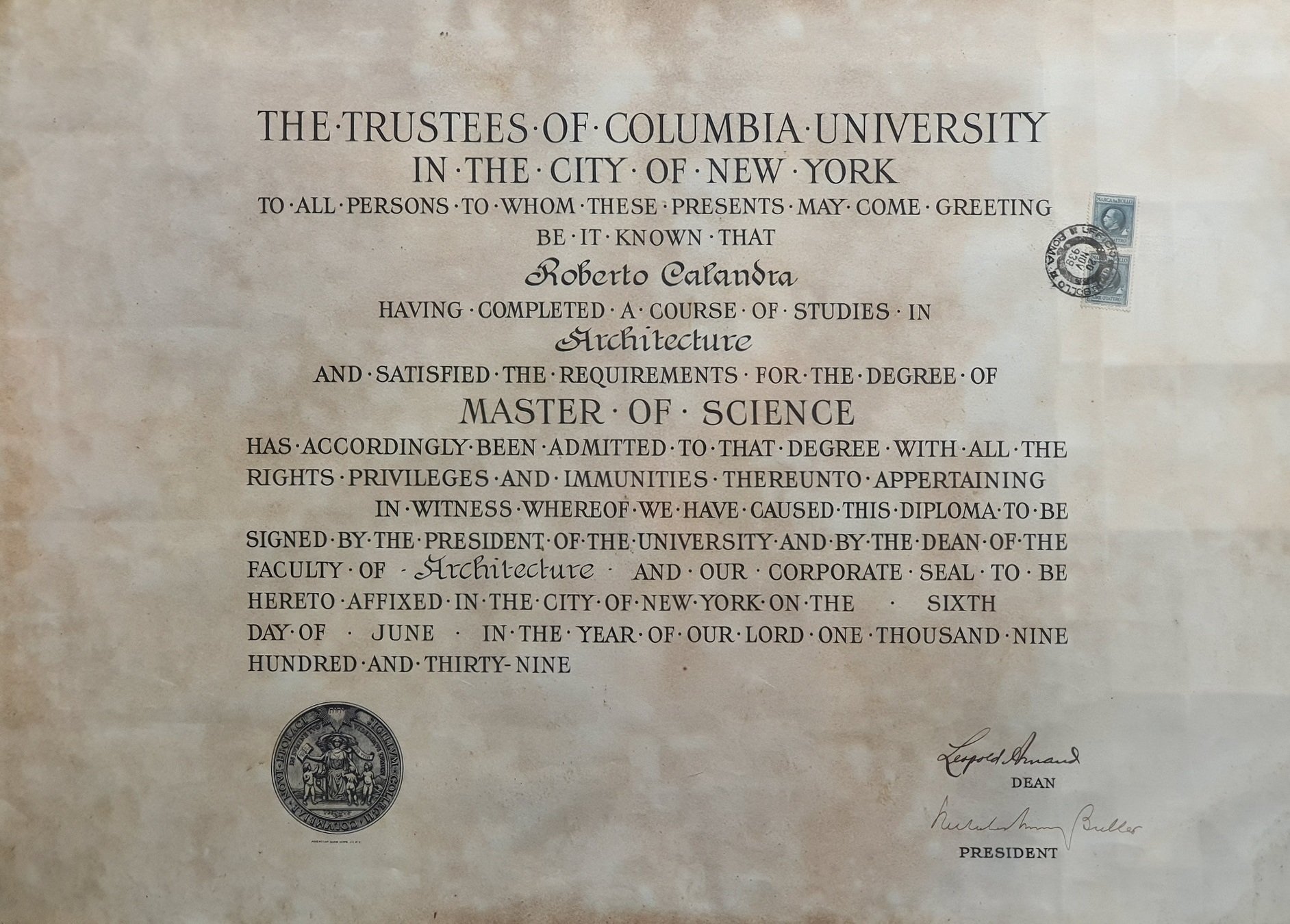
Roberto Calandra is a Full (W3) Professor at Technische Universität Dresden, where he leads the Learning, Adaptive Systems and Robotics (LASR) Lab. Previously, he served as a Research Scientist at Meta AI (formerly Facebook AI Research) and a Postdoctoral Scholar at UC Berkeley’s BAIR Lab under Sergey Levine. His academic journey includes a PhD in Robotics from TU Darmstadt, an M.Sc. in Machine Learning from Aalto University, and a B.Sc. in Computer Science from Università di Palermo. His research bridges Robotics and Machine Learning, focusing on tactile sensing, Bayesian Optimization, and model-based reinforcement learning. He pioneered the DIGIT tactile sensor , now the most widely used tactile sensor in robotics, and advocates for a computational field of Touch Processing to advance haptic understanding. His work emphasizes data-efficient learning, real-world dexterous manipulation, and multimodal perception. Recent publications highlight breakthroughs in tactile sensor design, in-hand object manipulation, and multimodal integration. He organizes workshops on robotics and machine learning (e.g., at NeurIPS, ICRA) and promotes open-source tools like PyTouch and TACTO .
Farhad Rachidi is a Full Professor at the Swiss Federal Institute of Technology (EPFL), where he serves as the Head of the Electromagnetic Compatibility (EMC) Laboratory within the School of Engineering's Department of Electrical Engineering. His research group has been active in EMC research since the early 1980s and maintains collaborations with numerous international institutions including Universities of Bologna and Rome (Italy), Uppsala University and KTH (Sweden), University of Toronto (Canada), University of Florida (USA), and others. Professor Rachidi's research spans electromagnetic compatibility, lightning electromagnetics, lightning and EMP interaction with transmission lines, electromagnetic time reversal, fault location, numerical computation of electromagnetic fields, and power line communications. His work integrates theoretical modeling with experimental validation, particularly in the context of lightning phenomena and electromagnetic interference. The research group develops innovative techniques such as electromagnetic time reversal for applications ranging from lightning detection to partial discharge localization in power systems. Analysis of his recent publications (2023-2025) reveals a strong focus on electromagnetic time reversal techniques, lightning physics and modeling, machine learning applications in electromagnetic phenomena, and advanced computational methods for electromagnetic field analysis. His work bridges fundamental electromagnetic theory with practical applications in power systems, atmospheric electricity, and security technologies. 2025 IEEE EMC Technical Achievement Award 2005 CIGRE Technical Committee Award 2006 Blondel Medal from SEE 2016 Berger Award from ICLP Best Paper Awards of IEEE Transactions on EMC (2016, 2018) Motohisa Kanda Award for most cited papers (2012-2018) 2024 Distinguished Honorary Professor at Tsinghua University 2014 Honorary Professor at Xi'an Jiaotong University Professor Rachidi has supervised numerous students through semester projects, diploma projects (equivalent to MS), and PhD programs at EPFL. His research is primarily sponsored by Swiss National Science Foundation, European Community programs, European Space Agency, Swiss Electrical Utilities, and private companies. He has served in leadership roles including President of the International Conference on Lightning Protection (2008-2014), Editor-in-Chief of IEEE Transactions on Electromagnetic Compatibility (2013-2015), and President of the Swiss National Committee of the International Union of Radio Science (2012-2020). The EMC Laboratory at EPFL, which he heads, maintains the Säntis lightning research facility and has been instrumental in advancing our understanding of lightning phenomena through direct measurements at instrumented towers. The group has developed innovative techniques including electromagnetic time reversal for fault location in power networks and lightning detection systems.
Renata Borovica-Gajic is an Associate Professor in Data Analytics and an ARC DECRA Fellow at the School of Computing and Information Systems (CIS), University of Melbourne. She also serves as Associate Dean (Diversity and Inclusion) for the Faculty of Engineering and IT, demonstrating leadership in both research and academic community development. Her research lies at the intersection of database systems, machine learning, and artificial intelligence, with a vision of creating adaptive, self-driving database engines that optimize query execution in real-time. Her work spans learned indexes, query optimization, data quality, and data-driven traffic optimization, aiming to reduce costs and improve performance in data analytics. The recent publications reflect a strong trend toward integrating machine learning into core database operations—particularly through learned indexes, bandit-based tuning, and reinforcement learning for traffic systems. These works emphasize automation, provable guarantees, and real-time adaptation, showcasing a cohesive research agenda focused on intelligent, self-optimizing data systems. Her scientific excellence is recognized by numerous awards, including: L'Oréal-UNESCO for Women in Science Fellowship (2023) Victorian Young Tall Poppy (2024) Test of Time Award at SIGMOD 2022 Multiple Research and Teaching Excellence Awards from the University of Melbourne Google Research Inclusion Award (2021) She actively mentors PhD students and leads significant research projects funded by the Australian Research Council, Google, and Telstra. Her service includes roles as Associate Editor for SIGMOD Record, conference organization (e.g., aiDM, ADC, VLDB), and leadership in diversity and inclusion initiatives. She has also contributed to influential publications such as a chapter in the 7th edition of Database System Concepts . Her research lab focuses on AI-powered databases, traffic optimization via reinforcement learning, and self-healing data systems, positioning her at the forefront of next-generation data management.
Saleh Ashkboos is a Ph.D. student in the Computer Science Department at ETH Zurich, advised by Professors Torsten Hoefler and Dan Alistarh. He is also a Research Assistant at the Scalable Parallel Computing Lab and an affiliated doctoral student of the ETH AI Center. His research focuses on accelerating deep neural network training and developing systems for large-scale graph processing. Prior to ETH Zurich, he earned his Master's degree in Computer Science from Sharif University of Technology, advised by Professor Amir Daneshgar. His work has led to notable contributions, including the best paper award at SC22 for 'ProbGraph.' Recent research emphasizes efficient LLM training and quantization techniques, with publications on topics like 4-bit inference, quantization-aware training frameworks, and scalable meteorological modeling. He has interned at Apple and Microsoft, and his work is accessible via Google Scholar and GitHub. Key projects include GPTQ (post-training quantization for transformers), SliceGPT (LLM compression), and ProbGraph (high-performance graph mining). His technical contributions span distributed systems, neural network optimization, and climate-related machine learning.
Prof. Dr. Robert Eberlein is a Senior Lecturer in Mechanics at the ZHAW School of Engineering , specifically working at the Institute of Mechanical Systems (IMES) . He has served as Director of IMES since 08/2017, following previous roles as Senior Lecturer at IMES (11/2013-07/2017) and industry leadership positions including CTO of Angst+Pfister Group (06/2006-10/2013). Dr. Eberlein holds a Dr.-Ing. (PhD) in Numerical Mechanics from Darmstadt University of Technology (1992-1997) and completed an exchange program at UC Berkeley (1991-1992). Education: Dr.-Ing. (PhD) in Numerical Mechanics, Darmstadt University of Technology (07/1992-07/1997); Exchange Student at University of California, Berkeley (07/1991-06/1992) Professional: Director of Institute IMES (08/2017-today); Senior Lecturer at IMES (11/2013-07/2017); CTO & Group Executive Committee, Angst+Pfister Group (06/2006-10/2013); Group Leader in Biomechanics, Sulzer Innotec (07/1998-04/2006) Dr. Eberlein focuses on experimental and numerical modeling of solid polymers and lightweight structures. His research spans material modeling, finite element analysis, and fatigue life prediction for materials like POM gears, TPU and vulcanizates. Recent work explores digital twin development for rubber spring elements and machine learning enhanced process simulation in additive manufacturing. His projects include Lifetime prediction of POM gears , Measurement of human soft tissue properties , and Optimization of plastic gear geometry . Scientific achievements include: Professor ZFH (Fachhochschulrat) - 12/2019 Dr.-Ing. (PhD) summa cum laude - Darmstadt University of Technology - 07/1997 Graduate Assistantship - Darmstadt University of Technology - 01/1993 His work appears in journals like International Journal of Non-Linear Mechanics , Rubber Chemistry and Technology , and Journal of Loss Prevention in the Process Industries . Publications since 2015 show a consistent focus on material characterization , finite element modeling , and fatigue analysis with applications in industrial components and biomedical systems.
Dr. Andrea Guerrieri is an Associate Professor at the University of Applied Sciences and Arts Valais-Wallis - School of Engineering , specializing in Reconfigurable Computing, Electronics Design Automation (EDA), and Post-Quantum Cryptography . His work focuses on accelerating FPGA compilation through tools like DynaRapid and optimizing security protocols via Dynamatic , with technologies adopted by industry leaders including Intel, AMD-Xilinx, and CERN . He holds a BSc in Industrial Systems and a MSc in Engineering from HES-SO, and teaches courses in Digital Design and Embedded Hardware. BSc HES-SO in Industrial Systems (2019) BSc HES-SO in Computer and Communication Systems (2017) MSc HES-SO in Engineering (2021) Guerrieri’s research bridges High-Level Synthesis (HLS) and Reconfigurable Architectures to enhance FPGA performance for both terrestrial and space applications . His 2025 publications highlight advancements in heterogeneous computing , energy-efficient PQC , and rapid compilation frameworks . Notably, his 2024 work on DynaRapid achieved 20× speedup in C-to-FPGA implementation. Key scientific contributions span dataflow circuit optimization , dynamic scheduling , and automated code transformations . His 2023 book Applications Enabled by FPGA-Based Technology and 2021 textbook System-on-Chip Design with Arm established foundational references in embedded systems. Awards include Best Paper at FPL 2024 , Outstanding TPC Member at DAC 2024 , and IEEE Senior Membership (2021) . 2024: Best Paper Award (FPL), Outstanding Short Paper Award (HPEC) 2023: H-Saber publication on PQC optimization 2021: IEEE Senior Member recognition As Chair of Onboard Computing for the CHEESE-NASA SSERVI consortium, he leads international collaborations with ETH Zurich, University of Geneva, California State University , and companies like NVIDIA, Arm, and NASA . His projects include the Innosuisse-funded DyReCte initiative (2019–2021) for reconfigurable cryptoengines in nanosatellites.
Andrea Guerrieri serves as an Associate Professor at the School of Engineering, University of Applied Sciences and Arts Western Switzerland Valais (HES-SO Valais-Wallis), specializing in reconfigurable computing and electronics design automation. His research has established significant industry impact through tools like DynaRapid and Dynamatic, with technology adopted by major semiconductor companies including MIPS, Intel, and AMD-Xilinx. BSc HES-SO in Industrial Systems - System-on-Chip specialization BSC HES-SO in Computer and Communication Systems - Digital Design specialization MSc HES-SO in Engineering - Embedded Hardware and Firmware specialization Professor Guerrieri's research focuses on reconfigurable computing, electronics design automation (EDA), and security, with particular emphasis on FPGA design, high-level synthesis, and post-quantum cryptography implementations. His work bridges the gap between theoretical computer architecture and practical hardware implementations, with strong applications in space technology and embedded security systems. His recent publications demonstrate increasing focus on energy-efficient implementations for space applications and quantum-resistant cryptographic systems. Analysis of his 15 most recent publications reveals a clear research trajectory toward optimizing FPGA implementations for post-quantum cryptography and space applications. His work consistently addresses the performance bottlenecks in high-level synthesis while maintaining practical applicability for industry partners like NASA, CERN, and major semiconductor companies. The recent surge in best paper awards (three in 2024 alone) reflects growing recognition of his contributions to efficient FPGA compilation techniques and cryptographic implementations. Scientific Awards: Best Paper Award at FPL 2024 Best Paper Award at HPEC 2024 Best Paper Award at ISFPGA 2020 Outstanding Short Paper Award at IEEE HPEC 2024 Outstanding TPC Member Award at DAC 2024 IEEE Senior Member (2021) Multiple Best Paper nominations (FCCM 2022, FPL 2022, HiPEAC 2022) Professor Guerrieri actively participates in international research projects including the DyReCte project (2019-2021) on dynamically reconfigurable cryptoengines for nano-satellites. He currently chairs the Onboard Computing topic for the Swiss consortium CHEESE affiliated with NASA SSERVI and collaborates extensively with industry partners including AMD-Xilinx, NVIDIA, Arm, NASA, and CERN, as well as academic institutions like ETH Zurich and University of Geneva. His current research focuses on developing next-generation EDA tools and reconfigurable computing platforms for both terrestrial and space applications. His laboratory work centers around FPGA-based prototyping and validation, with specialized facilities for space applications testing. Professor Guerrieri leads a research team that includes Andres Upegui, Quentin Berthet, Laurent Gantel, and Gabriel Da Silva Marques, focusing on practical implementations of reconfigurable architectures for security and space applications.
Olaf Schenk is a Professor at the Institute of Computing within the Faculty of Informatics at Università della Svizzera italiana (USI), Switzerland. He serves as Director of the Institute of Computing and Co-Director of the Master in Computational Science. He is also an adjunct member of the Computer Systems Institute at USI. PhD in Information Technology and Electrical Engineering, ETH Zurich (2001) Venia Legendi in Mathematics and Computer Science, University of Basel (2009) Applied Mathematics, Karlsruhe Institute of Technology (KIT), Germany His research focuses on high-performance computing , computational science and engineering , and applied algorithms for extreme-scale simulations. He bridges computer science with scientific computing needs, particularly in parallel algorithms , sparse solvers , graph analytics , and manycore architectures . His work emphasizes scalable software tools and programming models for emerging HPC systems. The 15 most recent publications reflect a consistent focus on sparse matrix computations , parallel and task-based algorithms , graph partitioning , and performance optimization for heterogeneous and manycore systems. Keywords span high-performance computing, numerical linear algebra, and large-scale data analysis, showing strong integration of theoretical algorithm design with practical implementation. Olaf Schenk has received several prestigious honors: Elected Fellow, Society for Industrial and Applied Mathematics (SIAM) Senior Member, IEEE and ACM SIAM Supercomputing Prize 2023 IBM Faculty Award Two Leadership Computing Awards from the U.S. Department of Energy He has held leadership roles as Chair, Vice Chair, and Program Director of the SIAM Activity Group on Supercomputing. He serves as Associate Editor for ACM Transactions on Mathematical Software and on the editorial board of SIAM Journal on Scientific Computing . He has participated in over 60 international program committees, including top-tier conferences such as SC, IPDPS, and IEEE CSE. He advises PhD and Master’s students in computational science and leads research projects funded by national and international agencies. He is also the Founder & Director of Panua Technologies Sagl, focusing on high-end software for simulation and optimization. His research group at USI works on next-generation computing tools for extreme-scale scientific simulations, with ongoing work in adaptive algorithms, resilience, and hybrid CPU-GPU computing. He leads collaborative projects with institutions in Europe and the U.S., aiming to develop scalable, robust, and efficient software for future exascale systems.
Joachim Voth is the UBS Foundation Professor of Economics and Scientific Director of the UBS Center for Economics in Society at the University of Zurich. His research focuses on Cultural Economics, Long-Run Growth, Asset Market Volatility, and the interplay between history and contemporary economic phenomena. He holds a Ph.D. from UCLA and has held visiting positions at institutions including Stanford and NYU. Research Interests : Voth’s work bridges historical analysis with modern economic challenges. Key themes include the impact of cultural factors on economic outcomes, the role of historical institutions, and the application of novel data sources (e.g., historical narratives, visual datasets) to understand societal trends. His recent projects analyze cultural convergence via high school yearbook portraits and the legacy of medieval anti-Semitism in Nazi-era violence. Publications : Over 50 peer-reviewed articles and three books, including Lending to the Borrower from Hell (2014) and Prometheus Shackled (2013). His work frequently combines economic theory with historical evidence, such as linking British industrialization to colonial slave wealth or explaining WWII resistance patterns through Allied bombing and radio propaganda. Grants & Awards : Supported by the UBS Foundation, European Research Council, and National Science Foundation. He is a frequent commentator in venues like VoxEU and The Economist , and his research has been featured in podcasts and documentaries. Advising : Supervised 10+ doctoral students now at top institutions like UCLA, NYU, Stanford, and the Norwegian School of Economics.
Julian Charles Shillcock is a Lecturer and computational modeling specialist at École Polytechnique Fédérale de Lausanne (EPFL), affiliated with the School of Life Sciences and the Lashuel Lab. He also serves as a Scientist in the UPDALPE group (Prof. Dal Peraro Group) and teaches in EPFL’s SSV (Teaching) and EDNE (Doctoral Education) sections. His work bridges biophysics, computational modeling, and cellular dynamics. PhD in Physics from Simon Fraser University (1996) Group Leader at Max Planck Institute of Colloids and Interfaces (2000-2005) Associate Professor at University of Southern Denmark (2005-2011) Blue Brain Project member since 2011 Shillcock’s research focuses on biomolecular condensates , membrane dynamics , and computational cell biology . He develops mesoscale simulation methods like Dissipative Particle Dynamics to study vesicle fusion , neuronal morphology , and neurodegenerative disease mechanisms . Recent work includes POETS computing platforms for accelerating simulations and Shiga toxin clustering on membranes. His publications (2022-2024) reveal trends in soft matter physics , computational neuroscience , and biomolecular condensate structure . Key collaborations include Imperial College London and University of Southampton on the POETS project. Scientific recognition includes: 2021 Polysphère prize for Best Teacher in Life Sciences He has advised PhD student Lida Kanari in computational morphology and contributed to neocortical microcircuit reconstruction . His research spans computational biophysics , toxin entry mechanisms , and novel computational platforms for life sciences education.
Dr. Konstantin Mikityuk is Group Leader of Advanced Nuclear Systems at Paul Scherrer Institute's Laboratory for Simulation and Modelling. He has researched fast reactor safety since 1992, focusing on neutronics and thermal-hydraulics of sodium-cooled systems. As coordinator of the Horizon-2020 ESFR-SMART project, he leads European sodium fast reactor safety research. He represents Switzerland in the Generation-IV International Forum Experts Group and co-chairs its Education Task Force. Dr. Mikityuk also serves as Swiss representative to IAEA's Technical Working Group on Fast Reactors. His research develops computational methods for reactor safety assessment, including advanced simulation tools for sodium boiling phenomena, core power distribution, and fuel performance. Recent work examines metallic fuel behavior, accident progression in loss-of-flow scenarios, and uncertainty quantification methodologies. He obtained his PhD from Russian Research Centre "Kurchatov Institute" (2002) and holds engineering degrees from Moscow Engineering Physics Institute.
Andreas Taras is a Full Professor at ETH Zurich's Department of Civil, Environmental and Geomatic Engineering, where he serves as Deputy Head of the Institute of Structural Engineering. His research focuses on steel and composite structures, structural stability, and fatigue behavior. Key research domains include: innovative steel-concrete-timber composite systems, stability and reliability of metallic structures, fatigue life prediction in bridges, and structural optimization using advanced analysis methods. His work integrates experimental testing with computational approaches to advance sustainable structural design. Recent investigations explore cutting-edge applications like iron-based shape memory alloys in structural glass systems, robotic additive joining for reclaimed steel, and novel hybrid systems combining folded sheet steel with cement-free concrete. Publications demonstrate consistent innovation in structural materials and connection technologies.
Zapater Sancho Marina is an Associate Professor at the ReDS Institute (Institute of Reconfigurable and Embedded Digital Systems) within the School of Engineering and Management Vaud (HEIG-VD), part of the University of Applied Sciences and Arts Western Switzerland (HES-SO). She holds dual master's degrees in Electronic and Telecommunication Engineering from Universitat Politècnica de Catalunya (2010) and a PhD in Computer Science from Universidad Politécnica de Madrid (2015). Her career includes postdoctoral work at EPFL (2016-2020) and assistant professorship at Universidad Complutense de Madrid (2015-2016). Education BSc & MSc in Electronic Engineering (UPC 2010) PhD in Computer Science (UPM 2015) Research Focus spans cross-layer optimization of heterogeneous architectures for performance and energy efficiency, with emphasis on: Embedded systems (IoT/edge computing) High-performance compute architectures Analog in-memory computing for AI Thermal/power management in 3D chips Cloud-edge AI workload orchestration Publication Trends show expertise in RISC-V simulation frameworks, analog computing tiles for CNNs, virtual memory redesign, and AI-driven cloud performance prediction. Her recent work explores thermal-aware 3D chip management, hybrid-cache reliability optimization, and open-source teaching platforms for radio theory. Awards include a Spanish government PhD fellowship. She has led 4 European H2020 projects since 2016 and currently serves as PI for 4 industrial collaborations (Facebook/Intel/Huawei), Innosuisse projects, and HES-SO initiatives. Labs & Teams include the ReDS Institute, EPFL's Embedded Systems Laboratory, and collaborations with Yale/Edinburgh. She co-developed the ALPINE simulation framework and SO3 operating system modifications for Midgard project validation.