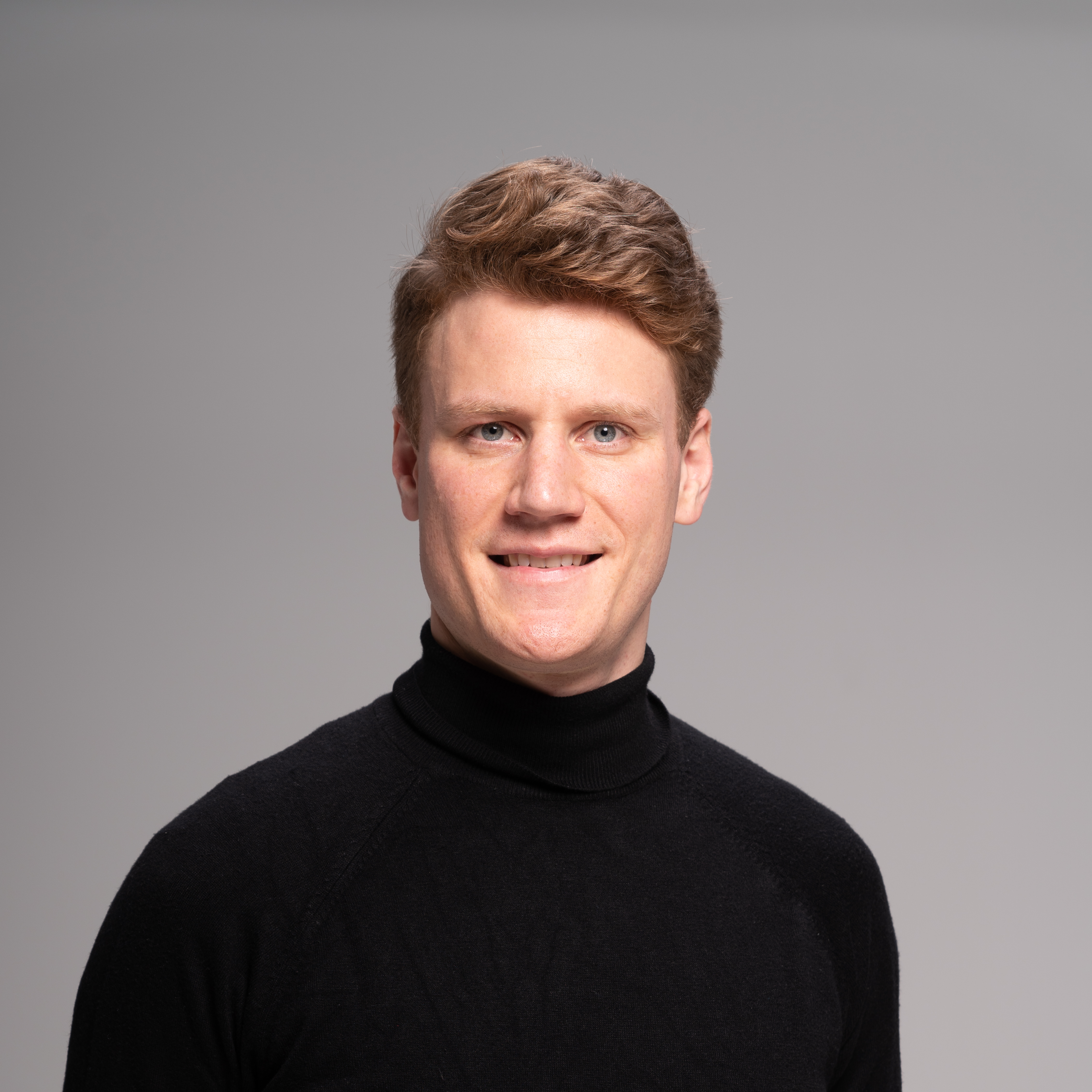
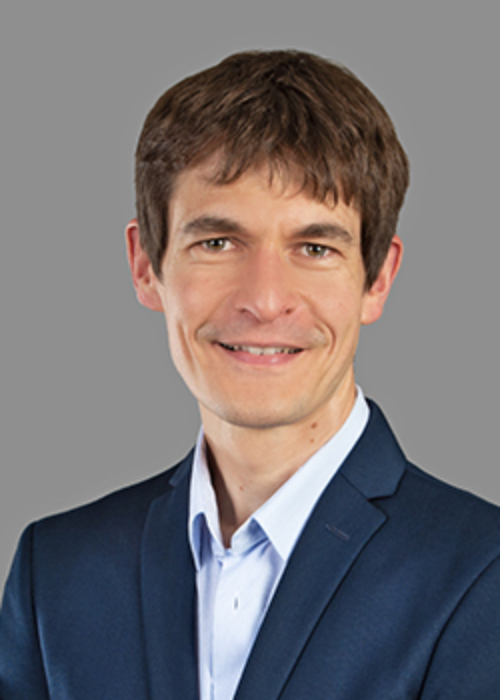
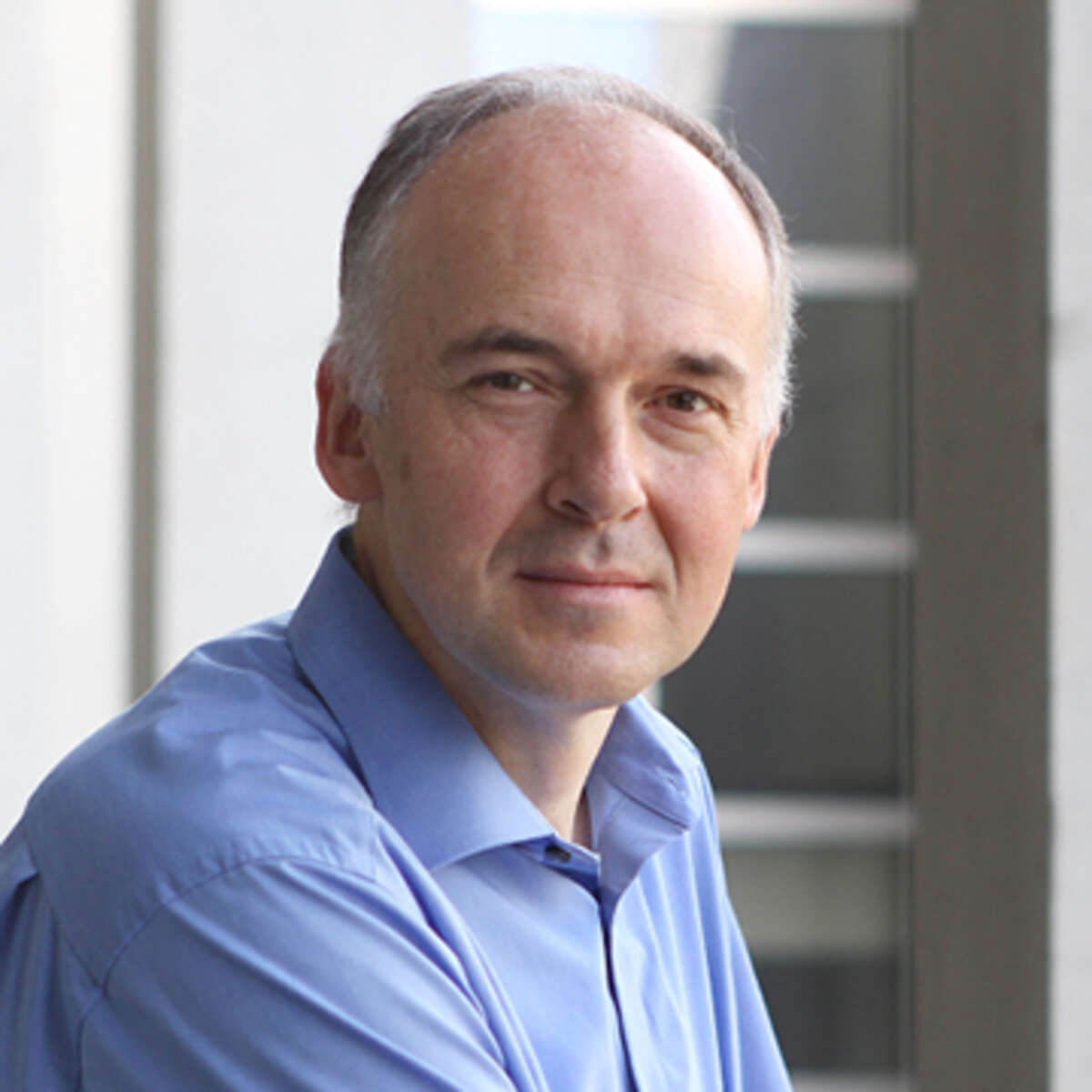
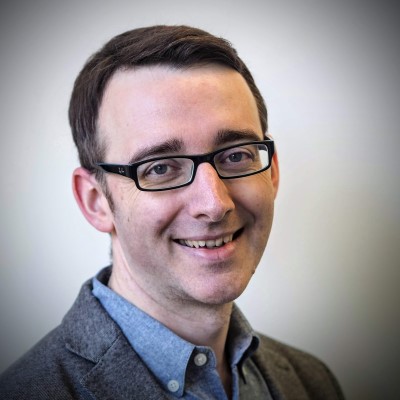
Nian Shao is a Researcher at the Department of Mathematics, School of Basic Sciences, École Polytechnique Fédérale de Lausanne (EPFL), affiliated with the Numerical Algorithms and High-Performance Computing group under the CADMOS Chair. His work focuses on computational methods and advanced numerical algorithms. Email: nian.shao@epfl.ch Research interests include Numerical Algorithms , High-Performance Computing , Computational Mathematics , Applied Mathematics , Scientific Computing , and Computer Science . Office: MA B2 454 (Bâtiment MA), Station 8, Lausanne.
Philipp Christoph Weder is a Doctoral Assistant and PhD candidate at the Chair of Numerical Modelling and Simulation (MNS) within the Department of Mathematics at École Polytechnique Fédérale de Lausanne (EPFL). He is supervised by Prof. Annalisa Buffa and specializes in isogeometric analysis, analysis-aware defeaturing, and nonlinear model reduction techniques. His academic background includes a Master’s in Computational Sciences and Engineering and a Bachelor’s in Mathematics from ETH Zürich. Research Interests Isogeometric Analysis Numerical Methods for Partial Differential Equations Machine Learning in Scientific Computing Wave Propagation Modeling Computational Physics Fluid Dynamics at Low Reynolds Numbers Recent Publications and Preprints 2025: Galerkin Neural Network-POD for Wave Propagation 2025: Neural Galerkin Schemes on Quadratic Manifolds 2025: Lumped Parameter Modeling for Congenital Heart Syndromes 2022: Stokesian Microswimmer Optimization Scientific Recognition EPFL PhD Excellence Program (2025) Teaching and Collaboration Main Teaching Assistant for Parallel and High-Performance Computing (2025) and Analysis III (2024) at EPFL Contributions to international conferences like the Swiss Numerics Day 2025 and the Functional Imaging and Modeling of the Heart International Conference (2025) Active participation in research networks including the SIAM Student Chapter at EPFL
Zhipeng Xue is a doctoral student and staff member at École Polytechnique Fédérale de Lausanne (EPFL), affiliated with the Department of Mathematics and the Chair of High-Performance Numerical Algorithms and Simulations. Role: Doctoral Assistant in the HPNALGS laboratory Education: Pursuing a Doctoral Program in Mathematics His research focuses on high-performance numerical algorithms and simulations, aligning with computational mathematics and parallel computing.
Mark Sawley is a Senior Scientist at École Polytechnique Fédérale de Lausanne (EPFL) with dual appointments in the Institute of Mechanical Engineering (IGM) for administration and the School of Management (SGM) for teaching. With over 30 years of experience in academic, government laboratory, and private institutions across Switzerland and Australia, he holds a PhD in Physics and has founded/co-founded two high-tech startup companies. His administrative roles include coordinating ACCES for Computational Engineering promotion and serving as Coordinator for Academic Affairs at the STI Faculty. Dr. Sawley's research spans computational fluid dynamics, discrete element method simulations, and high-performance computing applications. His work bridges multiple disciplines with applications in materials science (concrete simulation), bioengineering (blood flow modeling), marine engineering (America's Cup yacht design), avalanche dynamics, and industrial particulate processing. His recent publications (2018-2021) demonstrate continued activity in applying numerical methods to solve complex engineering problems. His scientific contributions include 37 peer-reviewed journal papers, 58 conference proceedings, and 21 articles for general audiences. His work uniquely connects technical research with science communication through projects like TIMBRE!! and the DEM Gallery, emphasizing the relationship between science and art. 37 scientific papers in international peer-reviewed journals 58 papers in international conference proceedings 21 science communication articles for general audiences Professor Sawley has advised PhD students including Serge Wüthrich (1992) and Olivier Byrde (1997). His Computational Granular Dynamics lab (http://cgd.epfl.ch) provides a platform for interdisciplinary research connecting physics, engineering, and computational science. His administrative leadership in academic affairs and computational engineering promotion demonstrates his commitment to advancing both research and education at EPFL.
Oliver Fuhrer is Lecturer at the Department of Environmental Systems Science, ETH Zurich, a role he has held since 2010. Concurrently, he is head of the Numerical Prediction unit at the Federal Office of Meteorology and Climatology MeteoSwiss, where he drives innovation and operational excellence in numerical weather-prediction models. Education: Ph.D. in Atmospheric Dynamics, ETH Zurich Studies in Environmental Physics, Department of Natural Sciences, ETH Zurich Research interests revolve around understanding and predicting the weather-climate system. His work emphasizes high-resolution numerical weather prediction , the intricate atmospheric dynamics over complex terrain , and the high-performance computing infrastructures required to run state-of-the-art models. He has been instrumental in establishing HPC-focused atmospheric modeling initiatives within the Center for Climate Systems Modeling (C2SM). Although no specific publications are listed in the provided material, his extensive authorship and co-authorship in peer-reviewed journals—coupled with service as reviewer for major funding agencies—demonstrates sustained scholarly impact. Professional roles & affiliations: Lecturer, Department of Environmental Systems Science, ETH Zurich (since 2010) Head, Numerical Prediction Unit, MeteoSwiss Former Senior Director for Climate Modeling, Allen Institute of Artificial Intelligence Former Research Associate, École Polytechnique Fédérale de Lausanne (EPFL), Institute of Environmental Engineering Former Research Associate, ETH Zurich, Institute of Atmospheric and Climate Science Member, Center for Climate Systems Modeling (C2SM) Dr. Fuhrer spearheads interdisciplinary teams that bridge academic theory with operational meteorology, ensuring that cutting-edge research translates into reliable forecast products for Switzerland and beyond.
Doris Sylvia Folini is a Lecturer at the Department of Environmental Systems Science, ETH Zürich. Her work focuses on global climate modeling and the interplay between aerosols, sea surface temperatures, and the hydrological cycle. Research Interests: Climate modeling, aerosol-climate interactions, hydrological cycle dynamics, numerical simulation of complex physical systems, and high-performance computing applications. Contact: Email: doris.folini@env.ethz.ch | Phone: +41 44 632 81 85 (Direct), +41 44 633 27 46 (Secretariat) Affiliation: Institut für Atmosphäre und Klima, ETH Zürich, Switzerland.
Simon Aeschbacher is an Independent Research Fellow at the Department of Evolutionary Biology and Environmental Studies, University of Zurich. His work bridges mathematical theory, computational methods, and genomic data to address fundamental questions in evolutionary biology. His educational background includes: M.Sc. in Zoology (2007) and undergraduate studies (2001-2003) at University of Zurich Ph.D. in Evolutionary Biology (2008-2011) at University of Edinburgh/IST Austria under Nick Barton Postdoctoral positions at University of Vienna (2011-2013), UC Davis (2014-2016), and University of Bern (2017) Aeschbacher's research centers on population genomics, specializing in the interplay between gene flow, natural selection, and recombination. His work combines mathematical modeling with genomic analyses to investigate local adaptation, speciation, and human evolutionary history. Key contributions include developing methods for demographic inference and quantifying selection against gene flow. His publication record shows a clear trajectory from theoretical foundations (early work on linkage effects) to applied genomic methodologies (recent development of gIMble for barrier detection). Current research emphasizes human evolution, plant speciation, and hybridization dynamics across diverse taxa. Scientific recognition includes: Swiss NSF Advanced Postdoc.Mobility Fellowship While not explicitly mentioned in the text, his role as Independent Research Fellow implies grant leadership and potential mentoring responsibilities. His work with multiple international collaborators suggests active participation in research networks across Europe and North America.
Torsten Schwede is a Professor for Structural Bioinformatics at the Biozentrum, University of Basel since 2018, and currently serves as President of the SNSF Research Council since 2025. Previously, he was Vice President for Research at the University of Basel (2018-2024), Director of the SPHN Data Coordination Center (2016-2019), and Scientific Director of sciCORE Center for Scientific Computing (2014-2019). He has been a Group Leader at the SIB Swiss Institute of Bioinformatics since 2002 and served as Associate Professor (2007-2018) and Assistant Professor (2001-2007) at the Biozentrum. Dr. Schwede earned his PhD in protein crystallography from Albert Ludwigs University, Freiburg, Germany (1995-1998), following diploma studies in biochemistry at Albert Ludwigs University (1991-1994) and University of Bayreuth (1988-1991). His early career included positions as a staff scientist at GSK GlaxoSmithKline R&D (2000-2001) and postdoctoral researcher at GWER GlaxoWellcome Experimental Research (1999-2000). His research focuses on computational methods for modeling and simulating three-dimensional protein structures, particularly through homology modeling. His work enables investigation of protein functions at the atomic level, with applications in understanding disease-causing mutations and structure-based drug development. Dr. Schwede is best known for developing SWISS-MODEL, an automated protein homology-modeling server that has become a standard tool in structural bioinformatics. His recent work centers on benchmarking protein structure prediction methods through CAMEO and developing high-throughput pipelines like AlphaPulldown2 for structural modeling. Dr. Schwede's research has been widely recognized, including being selected by ISI Thomson Reuters as having the highest cited Swiss paper during 1999-2009 for his work on SWISS-MODEL. In 2014, his Nucleic Acids Research manuscript on SWISS-MODEL achieved rank 6 in traditional impact measure according to a study by the Swiss National Science Foundation. His work on protein-ligand interactions and computational drug discovery has also received significant attention in the scientific community. President of the SNSF Research Council (2025-present) President of the SNSF Research Council (2025-present) Member of RCSB PDB scientific advisory board (2015-present) Member of CASP organizing committee (2011-present) Chair of ELIXIR board (2015-2016) Conference Chair for ISMB 2019 in Basel At the Biozentrum, Dr. Schwede leads a research group dedicated to advancing computational methods for protein structure prediction and analysis, with a particular focus on making these tools accessible to the broader scientific community through web-based platforms and standardized data formats. His team's work on ModelArchive and CAMEO has established critical infrastructure for the structural biology community.
Prof. Dr. Kurt Stockinger is a Professor of Computer Science at ZHAW School of Engineering and holds a doctorate at the University of Zurich . He serves as Head of the MAS Data Science program and co-leads the ZHAW Datalab . His research focuses on Intelligent Information Systems , bridging information systems, natural language processing, and machine learning. Affiliated with the University of Zurich, he contributes to Quantum Machine Learning and Open Data Exploration initiatives. Stockinger's educational background includes a PhD in Computer Science (University of Vienna & CERN), a Master in Business Informatics (University of Vienna), and a CAS in Didactics & Methodology (ZHAW). He has taught courses in Quantum Computing , Big Data for Natural Sciences , and Data Science programs at ZHAW and University of Zurich. His research spans Data Science , Big Data , Natural Language Query Processing , Knowledge Graphs , and Quantum Machine Learning . Recent publications focus on quantum autoencoders , hybrid quantum neural networks , and prompt engineering for knowledge graph question answering. He has developed frameworks like ScienceBenchmark for real-world NL-to-SQL evaluation and NQuest for natural language query exploration. Scientific awards include the Best Paper Award at 7th Swiss Conference on Data Science (2020) He leads major projects such as DataGEMS (Data Discovery Platform, Horizon Europe) Digital Health Zurich (Clinical Innovation Lab) INODE4StatBot.swiss (NL-to-SQL Translation) GraphQueryML (Graph Database Optimization) ScienceBenchmark (NL-to-SQL Evaluation) Stockinger's work intersects with computer vision , biomedical data , and industrial applications , demonstrated through collaborations with institutions like Lawrence Berkeley National Laboratory, CERN, and University of Washington. He has contributed to establishing QuantumBasel and ZHAW Datalab as research hubs.
Robert Feldmann is a Professor of Astrophysics at the University of Zurich's Department of Astrophysics within the Faculty of Science. His research combines computational astrophysics with data science to investigate galaxy formation and evolution across cosmic history. As a key contributor to the Feedback in Realistic Environments (FIRE) project and leader of MassiveFIRE, he develops sophisticated cosmological simulations to understand how galaxies form stars, grow, and evolve within the cosmic web. Feldmann's research interests focus on understanding how galaxies and their properties evolve over cosmic time, particularly examining the processes that determine galaxy sizes, regulate star formation rates, and shape morphology. His work bridges observational astronomy with theoretical modeling, leveraging the exponential growth in computing power and data science techniques to tackle complex astrophysical problems. He investigates the role of stellar feedback, cosmological starvation, and dark matter halo properties in shaping galaxy evolution, with particular emphasis on massive galaxies during the cosmic noon period (redshifts z~1.5-3). His publication record shows consistent output in leading astrophysics journals, with recent work focusing on applying machine learning to cosmological simulations (EMBER framework), studying submillimeter-bright galaxies, and analyzing quiescent galaxy formation. Feldmann has developed significant open-source tools including LEO-Py for statistical analysis of astronomical data and ZEBRA for photometric redshift determination, demonstrating his dual expertise in astrophysics and computational methods. Feldmann actively collaborates with researchers worldwide, including Phil Hopkins, Rachel Bezanson, and Eliot Quataert, and participates in major international projects. He regularly presents at conferences, including organizing the 2024 Ascona conference on 'Observing and Simulating Galaxy Evolution in the Era of JWST.' His work has been featured in media outlets like Sueddeutsche Zeitung, highlighting the public impact of his research on galaxy morphology. As an educator, Feldmann mentors Master's students from both University of Zurich and ETH Zurich, offering research projects in astrophysics and data science. His computational approach to galaxy evolution provides students with valuable experience in high-performance computing and data analysis techniques applicable across scientific disciplines.
Mamzi Afrasiabi is a Lecturer at the Department of Mechanical and Process Engineering, ETH Zurich. His research focuses on computational mechanics, fluid dynamics, and advanced manufacturing technologies. Computational Mechanics & Fluid Dynamics Manufacturing Process Simulation Multiphysics and Multiscale Modeling High-Performance Computing (HPC) Scientific Machine Learning (SciML) Dr. Afrasiabi holds a GRA Fellowship and Zienkiewicz Scholarship , with editorial roles in journals like the International Journal of Hydromechatronics . He received the CIRP Best Paper Award and is a Corporate Member of the International Academy for Production Engineering (CIRP).
Prof. Nicolas Salamin leads the Computational Phylogenetics group at the Department of Computational Biology, University of Lausanne (UNIL), with additional affiliations at the Swiss Institute of Bioinformatics (SIB) and the Center for Advanced Modeling of Sciences (CADMOS). His research applies computational methods and evolutionary modeling to investigate species evolution and adaptation using molecular, phenotypic, and ecological data. His team focuses particularly on understanding adaptation drivers at genetic/genomic levels and through phenotypic/ecological niche evolution across diverse biological systems. The group extensively utilizes high-performance computing facilities including SIB's vital-it infrastructure and CADMOS's BlueGene/Q system to develop and evaluate sophisticated evolutionary models. Administrative coordination for the group is handled by Mariona Lopez-Gil (mariona.lopezgil@unil.ch, +41 21 692 53 90).