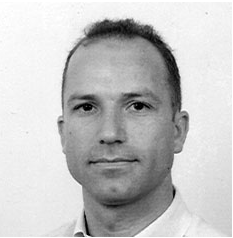
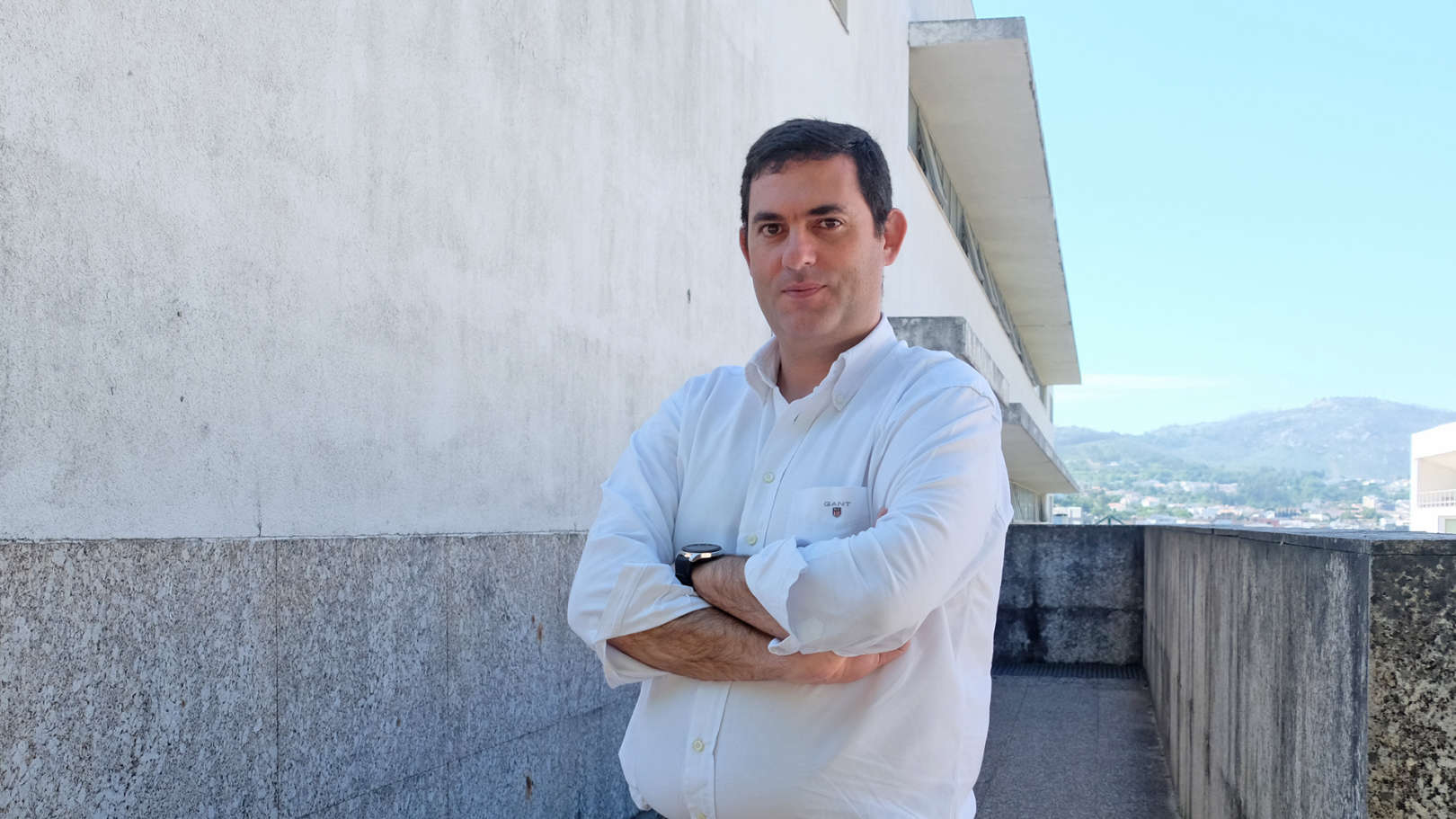
Fernando Jorge Coutinho Monteiro is an Adjunct Professor in the Department of Electrical Engineering at Polytechnic Institute of Bragança (IPB), Portugal. He serves as Programme Director for the Biomedical Technology Master's degree and collaborates with INESC TEC's Center for Biomedical Engineering Research. His educational background includes a PhD in Electrical and Computer Engineering from University of Porto (2008). His teaching portfolio includes: Medical Image Processing Medical Imaging Biomedical Image Analysis and Recognition Biomedical Instrumentation Bioelectricity Research focuses on medical technology applications: Computer vision for healthcare diagnostics Medical image analysis algorithms Biomedical instrumentation development Rehabilitation robotics systems AI applications in biological systems Recent publications emphasize deep learning applications in medical imaging, rehabilitation technology, and automated biological analysis. He supervises graduate students in biomedical engineering, electrical engineering, and applied mathematics, including research on rehabilitation systems and medical AI applications.
Nelson Rodrigues is a Researcher at the Polytechnic Institute of Bragança (IPB) and a Ph.D. candidate at the University of Porto, conducting research since 2010 with involvement in H2020 PERFoRM and GO0D MAN projects, as well as FP7 ARUM and GRACE initiatives. His academic credentials include: Master of Science in Information Systems, Polytechnic Institute of Bragança His research centers on Intelligent and Reconfigurable Manufacturing Control Systems, investigating Artificial Intelligence applications for self-adaptive manufacturing evolution. Additional expertise spans Industry 4.0, Cyber-physical systems, Multiagent systems, Simulation, and Advanced Data Analytics, with emphasis on enhancing manufacturing flexibility through cutting-edge computational methods. Recent publication analysis reveals a strategic pivot toward energy systems optimization, particularly virtual power plants, utilizing high-performance computing, quantum annealing, and evolutionary algorithms. Concurrent research explores intelligent transportation frameworks, assistive robotics, and manufacturing business analytics, demonstrating interdisciplinary technical agility. He maintains active affiliations with LIACC - Artificial Intelligence and Computer Science Laboratory and the IEEE Technical Committee on Industrial Agents, contributing to over 29 publications with an h-index of 11. Research funding derives from European Union projects including H2020 PERFoRM and GO0D MAN, and FP7 ARUM and GRACE, where he developed intelligent manufacturing control architectures and service reconfiguration systems. Within LIACC and IEEE collaborations, he advances industrial agent technologies for real-time manufacturing adaptation, focusing on dynamic reconfiguration and human-in-the-loop cyber-physical production systems.
Anna Luiza Barszczak Sardinha Letournel is a Researcher at the University of Lisbon's Institute of Biophysics and Biomedical Engineering and an Invited Assistant Professor at the Polytechnic Institute of Setúbal. She holds a PhD in Fundamental Physics (Lasers and Optics) from the Polytechnic School of France and an Integrated Master's in Biomedical Engineering from NOVA University of Lisbon. Her research focuses on neuroadaptive systems, biomedical engineering, and medical imaging, with recent work on virtual reality-based therapies and wearable sensor applications in biomechanics. She leads the 'Digital Health and Technological Innovation' Research Group at CIIAS and contributes to projects like Neuroadaptive Systems for Brain Restoration (NEURO-CONNECT STIM). She has authored over 20 publications, including high-impact studies on femtosecond spectroscopy, neuroimaging, and post-stroke recovery. Her teaching roles include courses on Biomechanics, Medical Imaging, and Nanotechnologies in Biomedicine at the Polytechnic Institute of Setúbal. Proficient in multiple languages (Portuguese, French, English, Polish, Italian), she actively participates in academic committees, thesis evaluations, and international conferences.
Rui Oliveira is an Associate Professor at Universidade do Minho in Portugal, affiliated with the Distributed Systems Group. His research focuses on dependable distributed systems, fault-tolerant database systems, and large-scale distributed systems. He teaches Distributed Systems across undergraduate, master's, and doctoral programs. Research Interests His work spans epidemic communication protocols, data management in cloud environments, and high-performance transactional middleware. Recent contributions include frameworks for privacy-preserving machine learning (SOTERIA), distributed tracing (CAT), and fault-diagnosis tools for I/O behavior analysis. Key Contributions Developed the Loom disaggregated database system, the TADA distributed agreement toolkit, and the DATAFLASKS epidemic storage substrate. His work emphasizes practical implementations of scalable and resilient distributed systems. Labs/Teams Affiliated with HASLab (Hardware and Software Systems Laboratory), focusing on distributed systems research. Collaborates with industry on cloud computing and cybersecurity challenges.
Dr. Alex Aiken serves as a Clinical Associate Professor in the Department of Infectious Disease Epidemiology and International Health at the London School of Hygiene & Tropical Medicine (LSHTM), where his research focuses on antimicrobial resistance (AMR) and infectious disease epidemiology in resource-limited settings across sub-Saharan Africa. His work bridges clinical practice and public health policy through large-scale epidemiological studies and intervention trials. His research portfolio centers on: Burden and mortality of AMR bloodstream infections Antibiotic treatment optimization and stewardship Infection prevention in maternity/neonatal units Environmental hygiene interventions in hospitals Policy evaluation for novel antimicrobial funding models Recent publications (2021-2025) reveal a dominant focus on AMR in African healthcare systems, featuring multi-country cohort studies (MBIRA), cluster-randomized trials (EWASH), and systematic reviews. While most work addresses bloodstream infections and antibiotic use, a 2025 computer science publication on GPU programming represents an unexpected interdisciplinary collaboration within his research network. Dr. Aiken's research is supported by major grants from the Bill & Melinda Gates Foundation (current genomic epidemiology study), Medical Research Council, and pharmaceutical partners. His findings directly inform WHO guidelines and national AMR action plans, with policy impact documented through government citations and clinical guideline references.
Maurício Breternitz is an Invited Assistant Professor and Principal Researcher at ISTAR-IUL, ISCTE - University Institute of Lisbon. With a PhD in Computer Engineering from Carnegie-Mellon University and extensive industrial research experience at AMD, Intel, and IBM, he focuses on bridging academia and industry for practical innovation. His academic service includes leadership roles in conferences like IISWC and editorial responsibilities at IEEE Micro. Education: Electronics Engineer (ITA, Brazil), MSc in Computer Science (UNICAMP), PhD in Computer Engineering (Carnegie-Mellon) Research: Machine Learning acceleration, Neuromorphic systems, Cloud workloads optimization, Heterogeneous computing His work spans two decades of patents (56 issued, 55 pending) and projects like the Horizon 2020 DIVIDEND CHIST-ERA and the FCT-funded AIMHealth initiative for AI-based public health solutions. Recent publications emphasize weightless neural networks, edge computing, and federated learning applications. Key contributions include: GPU acceleration for Hadoop MapReduce APU code migration techniques Microcode compression algorithms saving $18M Founding the International Workshop on Architectural Support for Binary Translation He has advised 7 Master's theses and 1 ongoing PhD project at UNICAMP, while serving on editorial boards and program committees for top-tier conferences like ISCA and CGO.
Eloi Figueiredo is a Full Professor at the Faculty of Engineering of Lusófona University in Lisbon. His expertise lies in Structural Health Monitoring (SHM) , Machine Learning , and Bridge Management . He leads the Civil Research Group focused on sustainable infrastructure and serves as Associated Editor for the Structural Health Monitoring: An International Journal . Research Interests : SHM algorithms, climate change adaptation of bridges, damage identification via machine learning, finite element modeling. Projects : ClimaBridge Project (EEA Grant), Buildingadapt Project on climate resilience. Collaborations : European Union, United States, Brazil, UK, Norway institutions. Awards : EEA Grant for climate-bridge research. His 15 most recent publications address transfer learning , Bayesian calibration , and climate impact on structural integrity , with 100+ total SHM publications and 70+ opinion pieces promoting science. He has delivered international keynote speeches and developed tools like SHMTools and smartphone-based monitoring applications.
Pedro Ribeiro is a Lecturer at Universidade Lusófona. He holds a Master's degree in Computer Engineering and Computing (2008) and a Bachelor's degree in Electrical and Computer Engineering (2001), both from the University of Porto. Additionally, he earned a Level 2 Computer Science Specialist degree from the University of Porto's Faculty of Engineering. His research focuses on: Software Engineering : Emphasizing model interpretation and system design. Requirements Engineering : Addressing consensus modeling and completeness validation. Information Systems : Applying data analysis techniques to improve model integration. His publications span predictive analytics in education, high-dimensional data estimation, and rule-based knowledge generalization. Recent works (2021–2025) demonstrate a shift toward analytical frameworks for combining interpretable models, while earlier contributions (2014–2019) centered on educational data mining and algorithm comparisons. He has collaborated with 12 co-authors but currently supervises no named students. No awards, grants, or lab affiliations are documented.
Paulo Jose da Costa Branco is a Full Professor in the Department of Electrical and Computer Engineering at Instituto Superior Técnico (IST), Lisbon. His research focuses on superconductivity, smart grids, photovoltaic systems, and electromechanical systems. He teaches courses such as Electrical Machines and Superconductivity and Applications in Engineering. Research Interests: Photovoltaic systems operation and maintenance Superconducting materials in electromechanical systems Cyber-physical grid reliability Cryogenic propulsion for electric aircraft HTS (High-Temperature Superconductors) applications Publications: Recent works emphasize HTS rotor designs, fuzzy-based grid failure analysis, and ZFC magnetic bearing prototypes. He has over 200 publications, with a focus on energy systems innovation. Awards: None explicitly stated in texts. Active in EU-funded projects related to renewable energy integration. Labs/Teams: Leads the Energy Scientific Area at IST, collaborating with international teams on superconductivity and smart grid projects.
Leonel Augusto Pires Seabra de Sousa is a Full Professor at the University of Lisbon's Instituto Superior Técnico and a principal researcher at INESC-ID. His primary research focuses on heterogeneous architectures for high-performance computing, computer systems technologies, and cryptographic hardware acceleration. He holds a Fellow status with the IET and has been recognized as a Senior Member of both ACM and IEEE. Roles: Full Professor, Researcher (INESC-ID) Education: Details not explicitly provided in text His work spans parallel computing, embedded systems, and bioinformatics applications. Key contributions include energy-efficient architectures, RNS-based cryptographic accelerators, and GPU-driven phylogenetic analysis. Over 150 publications highlight his impact in these areas. Recent projects include COPMA (post-quantum cryptography hardware) and low-power 5G positioning systems. Awards include the HiPEAC Paper Award and multiple academic recognitions. Advising focuses on PhD/MSc students in HPC and embedded systems. Collaborates with industry partners on FPGA and GPU-based solutions.
Valderi Reis Quietinho Leithardt is an Assistant Professor at the Department of Information Science and Technology, Iscte – University Institute of Lisbon , Portugal, where he holds a full-time position with exclusive dedication. He is an integrated researcher at ISTAR-Iscte (Research Center in Information Sciences, Technologies and Architecture) and a Senior Member of the IEEE . His academic affiliations also include collaborations with the University of Coimbra, University of Salamanca, and Fondazione Bruno Kessler. Education: Post-Doctorate , University of Salamanca, Spain (2019–2021) Post-Doctorate , University of Coimbra, Portugal (2017–2019) PhD in Computer Science , Federal University of Rio Grande do Sul, Brazil (2011–2015) Master’s in Computer Science , Pontifical Catholic University of Rio Grande do Sul, Brazil (2006–2008) Bachelor’s in Data Processing Technology , Higher Education Center of Foz do Iguaçu, Brazil (1999–2002) Research Interests: Valderi's research focuses on Distributed Systems, Data Privacy, Internet of Things (IoT), Cloud Computing, and Intelligent Systems . He explores algorithmic solutions for secure and efficient data management in heterogeneous environments, with applications in smart cities, precision agriculture, healthcare, and energy systems. His work integrates machine learning, blockchain, and federated learning to enhance privacy, security, and system performance. Publication Trends: His recent publications (2024–2025) emphasize time series forecasting, anomaly detection, JVM optimization, and privacy-preserving AI . A strong trend is observed in applying machine learning to power grid fault prediction, blockchain-based healthcare data privacy, and data quality in federated learning. His work bridges theoretical computer science with real-world applications in infrastructure, sustainability, and digital security. Scientific Contributions: Senior IEEE Member Active contributor to open science and reproducibility Involved in interdisciplinary research networks: Embedded and Distributed Systems Laboratory, COPELABS, CTS, CANDEIIA Member of professional societies: IEEE (since 2011), Brazilian Computer Society (since 2003) Academic Service and Leadership: He has held leadership roles in academic programs, including Director and Coordinator of the Master's in Computer Science and Management at Iscte (2025–2027). He actively organizes and participates in scientific events such as IEEE CIoT, DiTTEt, SBSeg, and MobiSPC, serving on organizing and scientific committees. He has coordinated workshops like WTTFC 2024 and 2025, promoting technological trends in future computing. Labs and Research Groups: He is a collaborator in several research networks, including: Embedded and Distributed Systems Laboratory (since 2016) Expert Systems and Applications Laboratory (since 2019) COPELABS – Human-Centered Computing and Cognition (since 2020) Fondazione Bruno Kessler (2021–2025) Center for Technology and Systems (CTS) (since 2023) Advanced Center for Development of Intelligent Systems and Artificial Intelligence (CANDEIIA) (since 2024)
António Luís Sousa is an Assistant Professor at the Department of Informatics, University of Minho, and a Senior Researcher at HASLab/INESC TEC. He has served as Centre Coordinator since 2011, focusing on high-assurance software systems. His research emphasizes dependable distributed systems, cloud computing, and applications in healthcare informatics. He actively supervises graduate students, with recent theses addressing topics like cloud-based medical imaging systems, workflow engines, and IoT platforms for medical sensors. Research interests include distributed database systems, scalable cloud architectures, and AI-driven solutions for medical imaging. Notable projects involve GAN-based MRI generation in HPC environments and privacy-preserving DICOM systems using Kubernetes. His work bridges distributed computing with healthcare challenges, leveraging frameworks like ChainerMN and Apache HBase. Publications span medical imaging generation, IoT healthcare monitoring, and deep learning for ECG classification. He collaborates with institutions like INESC TEC and has advised over a dozen students. No scientific awards are explicitly mentioned, but his contributions highlight advancements in both theoretical and applied computing for healthcare.
João Pedro Faria Mendonça Barreto is an Associate Professor at Instituto Superior Técnico (University of Lisbon) and a researcher in the Distributed Systems Group at INESC-ID. His work focuses on system support for persistent memory, exascale computing, transactional memory, and blockchain consensus protocols, with significant contributions to heterogeneous memory systems and NUMA optimization.
Rodrigo Bruno is an Assistant Professor at Instituto Superior Técnico (University of Lisbon) and Senior Researcher at INESC-ID Lisbon. His research bridges Systems and Programming Languages with a focus on optimizing language runtimes for cloud environments (Microservices, Serverless). He previously worked at Oracle Labs Zurich and ETH Zurich. Research Areas Systems Programming Languages Cloud Computing Serverless Computing Operating Systems Key projects include Shell (FCT-funded serverless platform), Graalvisor (polyglot runtime virtualization), and Naos (RDMA networking in Java). His work appears in top venues like NSDI, EuroSys, ATC, and SoCC. Scientific awards include the EdgeEmu Best Paper Award , Best Young Researcher 2022 (INESC-ID), and multiple teaching excellence recognitions. He has served on program committees for EuroSys, NSDI, ATC, and more. Rodrigo Bruno leads a dynamic team including PhD candidates Vasyl Lanko, Bernardo Ribeiro (co-advised), and MSc students like André Páscoa. His research integrates with production systems such as the V8 JS Engine and OpenJDK HotSpot JVM. Current teaching includes Cloud Computing and Virtualization , Computer Systems Engineering , and IT Infrastructure Management . His service spans organizing committees for SESAME, MoreVMs, and artifact evaluation for SOSP.
Anna Georgievna Volossovitch is an Associate Professor at Universidade de Lisboa's Department of Sports and Health, specializing in sports performance analysis. Her research focuses on team sports dynamics, including maturational timing effects, defensive strategies, and home advantage phenomena. Key research trends include: Defensive transitions in football analyzed via computer vision and performance indicators Maturational timing impacts on youth player selection and development Tactical innovations in handball and basketball game contexts Statistical modeling of home advantage across multiple sports Her publications span from 2025 to 2000, covering team sports performance analysis, youth development, and tactical decision-making. Contact: anavol@fmh.ulisboa.pt