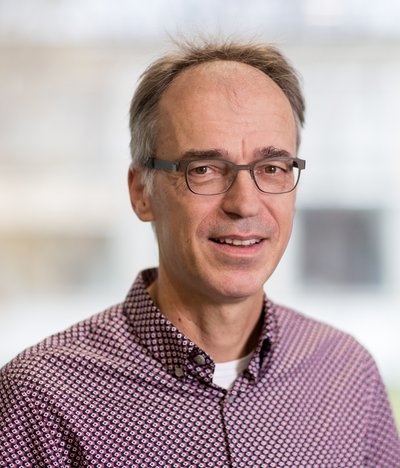
Arjan Palstra is a Researcher at the Animal Breeding & Genomics department of Wageningen University & Research. His work focuses on fish reproduction, aquaculture innovation, and biotelemetry technologies. He leads projects like LARVitAAL to optimize European eel propagation and collaborates internationally through initiatives like COST Action EEL SUPPORT. Key research areas include eel larval development, swimming physiology, and genetic analysis of fish performance. He has pioneered biosensor designs for real-time aquatic organism monitoring and contributed to breakthroughs in artificial eel reproduction. Supervised students: Agbeti W.E.K., Jéhannet P.J.M., and Kok B. Projects: EELRIC (Eel Reproduction Innovation Centre), implantable biosensor development, and fish exercise physiology studies. His work spans 151 research outputs, including high-impact studies on eel biology, aquaculture sustainability, and genomics.
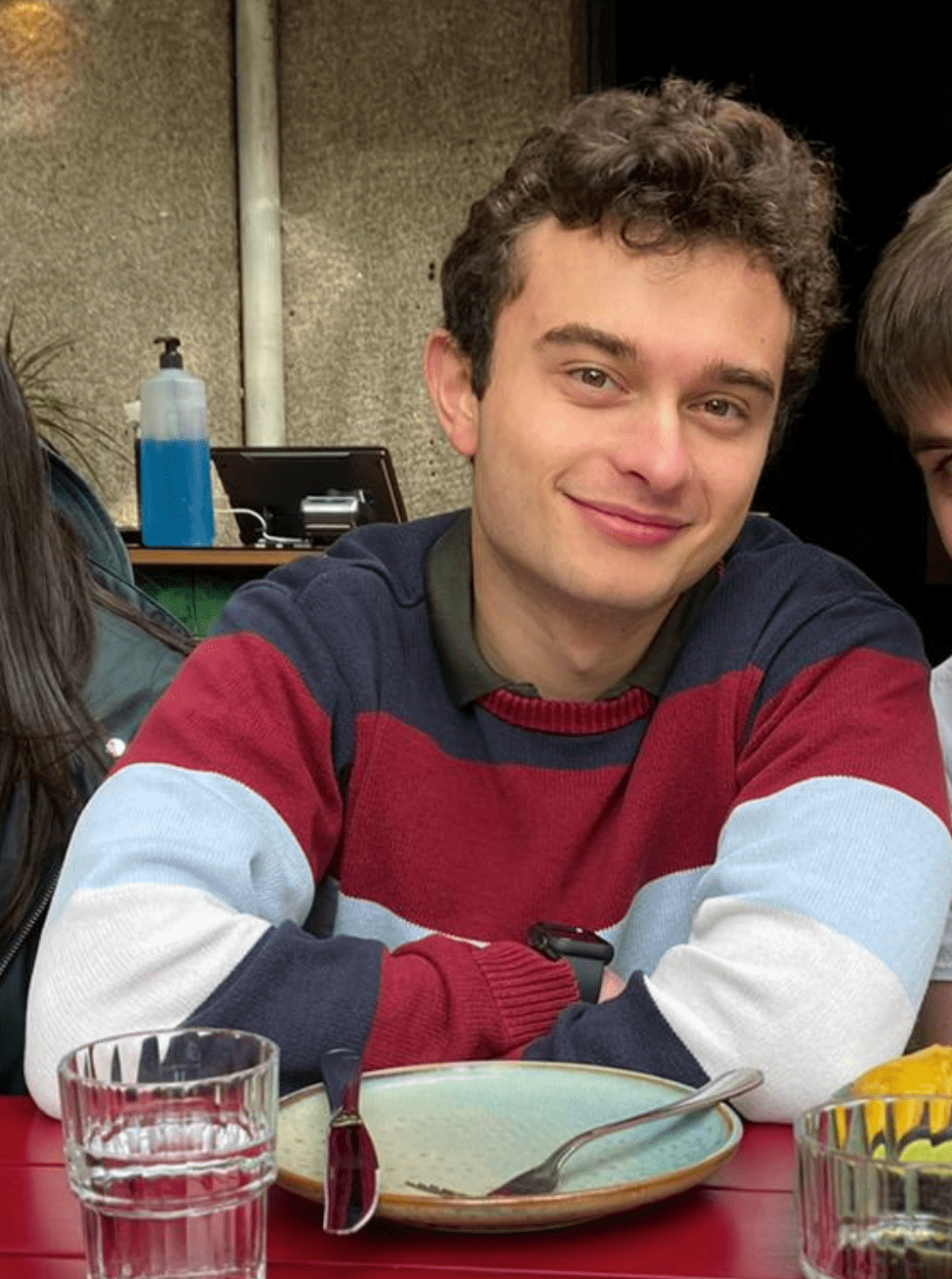
Simon Hengeveld is a Researcher and Software Developer for Health Research at Wageningen University. He holds a PhD from Université de Rennes (2024), and bachelor's/master's degrees in Computer Science from Utrecht University. His research focuses on computational geometry, protein structure determination via Distance Geometry, and human motion analysis. He has developed applications like the UNESCO World Heritage Collect app, combining software engineering with historical and travel interests. Education: Bachelor's/Master's in Computer Science, Utrecht University PhD in Structural Biology/Computational Geometry, Université de Rennes 1 Research Interests: His work bridges computational methods with biological applications, including protein structure determination using NMR data and optical computing. He also explores human motion retargeting and geometric algorithms for adaptive maps. Simon emphasizes practical implementations, such as GPU-based solutions for 1D Distance Geometry problems. Publications: His articles span computational geometry, bioinformatics, and algorithm design, with contributions to journals like Journal of Optics and conferences such as SOCG, GSI, and BIBM. Key themes include optical processors for matrix operations and geometric algorithms for skeletal posture analysis. Awards: No scientific awards explicitly mentioned. Advising/Grants: No formal advising roles or grants detailed in the text. Labs/Teams: Developed the UNESCO World Heritage Collect app with collaborators, though no formal university lab affiliation is noted.
Dr. Georg Petritsch is a Lecturer at Wittenborg and Senior Managing Partner at Gartner Consulting, leading healthcare and public sector IT transformations in Germany, Switzerland, and Austria. He specializes in IT-driven digital transformations, IT governance frameworks, and IT efficiency improvements, with 23+ years in management consulting and 10+ years in public services. He holds a PhD and Diplom in Chemical Engineering from the University of Hannover, Germany. Education: PhD in Chemical Engineering, University of Hannover Diplom (Master’s equivalent) in Chemical Engineering, University of Hannover Research Focus: Cloud-based transformations, performance management systems, IT shared services, and technology adoption strategies across industries like public services, insurance, banking, oil & gas, and utilities. His work emphasizes practical applications of IT governance frameworks in large-scale organizational change. Professional Experience: Former research assistant at Hannover’s Institute for Process Engineering; extensive consulting experience in optimizing IT infrastructure and digital strategies for multinational clients. Current dual role combines academic teaching with high-level strategic consulting.
Morris Swertz is a Professor of Genome Informatics and FAIR Data Science at the University of Groningen's Faculty of Medical Sciences. He leads the Genomics Coordination Center and holds a joint appointment with the UMCG (University Medical Center Groningen). His work focuses on genomic data integration, FAIR principles, and bioinformatics infrastructure for rare disease research. Education: MSc in Technology Management (IT) from the University of Groningen (2001) and a PhD in Bioinformatics (2007). Early career included software development for MOLGENIS (2002) and roles as a teaching assistant in software engineering and database theory. Research interests include genomic data harmonization, clinical-grade pharmacogenetic tools, and diagnostic innovations like nanopore sequencing for neurological disorders. He leads international projects like SOLVE-RD and contributes to initiatives such as DataSHIELD and FAIR Genomes metadata standards. Key contributions include the Lifelines Biobank infrastructure and over 235 peer-reviewed publications. Awards include the 2004 BioPartner grant for business plan development of MOLGENIS. Collaborates extensively across Europe on rare disease networks like ERN ITHACA.
Inge Stoter is a researcher at the University of Groningen , actively contributing to sports physiology and performance analysis, particularly in speed skating training methodologies. Her work leverages data-driven approaches and statistical modeling to enhance athlete monitoring systems. Her research interests include: Training Load Monitoring Self-Regulation in Athletes Data-Driven Dashboard Design Statistical Analysis in Sports Science Notable awards received: Boymans Award 2020 for academic contributions in sports science Best Oral Presentation at SECSI 2018 Research Output Trends (2023–2018): Stoter's publications focus on optimizing training specificity through pilot studies, kernel density estimation, and dashboard systems for real-time feedback. Key collaborations include researchers like Otter, R. T. A. , Elferink-Gemser, M. T. , and Lamberts, R. P.
Matthias de Visser is an Assistant Professor in the Department of Entrepreneurship, Technology, and Management at the University of Twente. His academic work bridges innovation management, technology strategy, and sustainable transitions, with strong interdisciplinary engagement across social sciences, engineering, and computer science. He actively contributes to research on organizational ambidexterity, supply chain localization, and public discourse on green energy. Research Interests: His research centers on innovation processes, particularly in the fuzzy front end, team dynamics, and interorganizational collaboration. He investigates how cognitive traits, network structures, and social capital influence innovation performance. His work also explores public perceptions of energy transition using Q-methodology and social media analysis. He applies both qualitative and quantitative methods to study high-tech SMEs, mature industries, and public-private partnerships. His recent publications show a trend toward socio-technical systems, integrating human behavior with technological innovation. Topics include social identity in green energy adoption, localized supply chains, and team integration in engineering projects. This reflects a growing focus on sustainability, resilience, and societal engagement in technological change. Scientific Awards: Christer Karlsson Best Paper Award (2009) Prize Runner Up Best Paper Award (2011) Advising and Grants: While specific students are not listed, his supervision of research outputs and involvement in collaborative projects suggest active mentoring. He has contributed to PhD theses and interdisciplinary studies, indicating engagement in academic training. Though grant details are not specified, his long-term research output and committee membership with the Netherlands Organisation for Scientific Research suggest involvement in funded projects. Labs and Research Teams: Matthias de Visser is embedded in a research environment focused on technology management and entrepreneurship. His collaborations span departments and institutions, particularly evident in studies involving social media analysis, energy policy, and international case studies. He is part of a broader network investigating innovation ecosystems, as reflected in his fingerprint and publication co-authors.
Roy G.J. Damgrave is an Assistant Professor at the Laboratory of Design, Production and Management, Faculty of Engineering Technology, University of Twente. His work integrates Virtual and Augmented Reality, Synthetic Environments, and digital twin technologies into product development and smart manufacturing processes. He is actively involved in both research and education, supervising student theses and contributing to curricula in Industrial Design Engineering and Mechanical Engineering. His research focuses on decision-making support for technology implementation in multi-stakeholder industrial settings, particularly within Industry 4.0. He manages the Virtual Reality and Smart Industry Lab, where immersive technologies are applied to enhance manufacturing, remote collaboration, and maintenance processes. His work contributes to UN Sustainable Development Goals related to industry, innovation, and infrastructure. Roy Damgrave's recent publications highlight trends in mixed reality applications for railway maintenance, digital twinning in SMEs, AR-based engineering education, and HMLV manufacturing insights. His work spans computer science, engineering, and human factors, emphasizing practical implementation and strategic integration of immersive technologies. Research Affiliate, International Academy for Production Engineering (CIRP) Member, Industrial Reality Hub Member, EuroXR Association Collaborator, Fraunhofer Project Center at University of Twente He actively supervises student projects and thesis work in engineering and design, though specific student names are not listed. His grants and funding sources are not explicitly mentioned, but his affiliations suggest involvement in collaborative and applied research initiatives. He is also engaged in educational innovation, testing new teaching methods in his courses. The Virtual Reality and Smart Industry Lab, which he manages, serves as a central hub for synthetic environment research, supporting prototyping, remote collaboration, and smart industry testbed development. This lab enables experimental validation of digital systems in real-world industrial contexts.
Mathieu Wijffels is a researcher in the Department of Surgery at Erasmus MC, focusing on orthopedic and trauma surgery. His work integrates advanced imaging techniques and artificial intelligence to improve diagnosis and treatment of fractures, particularly distal radius and rib fractures. His research interests center on improving clinical outcomes in fracture management, with emphasis on nonunion complications, surgical interventions, and the role of AI in radiographic interpretation. Key areas include distal radius fractures, rib fractures, intercostal hernias, and machine learning applications in trauma imaging. The recent publication trends show a strong focus on AI-driven tools for fracture detection and classification, particularly using convolutional neural networks. These studies compare algorithmic performance with human clinicians and explore predictive models for loss of alignment, reflecting a growing integration of data science into orthopedic practice. Though no formal scientific awards are listed, his contributions appear in high-impact journals such as The Journal of Hand Surgery , European Journal of Trauma and Emergency Surgery , and Bone and Joint Journal . Dr. Wijffels has supervised at least two research projects, indicating involvement in mentoring junior researchers or trainees. There is no mention of external grants, but his collaborative work with the Machine Learning Consortium suggests participation in interdisciplinary research initiatives. He is actively involved in a research network applying machine learning to trauma imaging, collaborating with multidisciplinary teams focused on enhancing diagnostic accuracy and surgical planning through AI integration.
Richard Haans is an Associate Professor in the Department of Strategic Management and Entrepreneurship at the Rotterdam School of Management, Erasmus University. His research bridges strategic management, organizational behavior, and digital methods, with a strong focus on creativity, international business, and longitudinal data analysis. He actively contributes to both academic and professional domains through peer-reviewed publications and policy reports. His research interests include strategic management, organizational identity, foreign language effects on creativity, optimal distinctiveness, and the application of big data and web scraping in organizational research. He leverages computational tools such as the Wayback Machine and word embedding models to analyze the evolution of organizational communication and sustainability discourse. His recent publications highlight a growing trend toward methodological innovation in management science, particularly through open-source, reproducible research. He has developed tools for longitudinal website data extraction and database construction, enabling new avenues for studying organizational change over time. Mariëtte Kaandorp Prize for Excellence in Thesis Mentoring (2021) ERIM Award for Outstanding Performance by a Young Researcher (2020) Haans has supervised student theses, as evidenced by his mentoring award, and has been involved in impactful research projects related to Dutch SMEs, including growth dynamics and credit guarantee policies. His work often involves collaboration with institutions and co-researchers such as Marc J. Mertens and Arjen van Witteloostuijn. He is part of the research environment at the Erasmus Research Institute of Management (ERIM), contributing to a vibrant academic community focused on high-quality, impactful research in management and business.
Ivo Adan is a Full Professor at Eindhoven University of Technology (TU/e) in the departments of Operations, Planning, Accounting and Control (Industrial Engineering & Innovation Sciences) and Dynamics and Control (Mechanical Engineering). He holds the Manufacturing Networks chair and has held visiting roles at the University of North Carolina and part-time positions at the University of Amsterdam. His research focuses on stochastic operations research, queueing models, and mathematical analysis of manufacturing systems, warehousing, and transportation systems. Adan received both his MSc and PhD in Mathematics from TU/e. He serves on editorial boards for Queueing Systems and Probability in the Engineering and Informational Sciences , and leads Beta, the national network for Operations Management and Logistics. He is a Senior Fellow of Eurandom and has contributed significantly to industry applications through his work on semiconductor manufacturing and logistics optimization. His research explores multi-dimensional Markov processes, variability management in manufacturing, and efficient modeling techniques. Recent work includes optimizing maintenance planning with reinforcement learning, aggregated simulation models for safety stocks, and autonomous mobile robotics in manufacturing systems. Key Awards: Senior Fellow of Eurandom, Research Director of Beta Education: MSc and PhD in Mathematics from TU/e Labs/Teams: EAISI High Tech Systems, Operations Planning & Control group Adan advises on semiconductor simulation studies, poultry processing optimization, and biomanufacturing yield improvements. His interdisciplinary approach bridges theoretical stochastic models with practical industrial challenges.
Herbert Hoijtink is a Professor of Methodology and Statistics at Utrecht University's Faculty of Social and Behavioural Sciences. He leads the Hoijtink Methodology and Statistics research group and specializes in Bayesian statistical methods, particularly the evaluation of informative hypotheses. His work focuses on improving empirical research through prior knowledge integration, with applications in psychology, education, and biomedical sciences. Research interests include Bayesian model comparison, multivariate statistics, and structural equation modeling. He has developed the bain software package for Bayesian evaluation of inequality-constrained hypotheses. Key contributions include advancing sample size determination for multilevel models and promoting open science practices through the Open Empirical Cycle . Hoijtink has secured significant grants, including NWO VICI and Gravity grants (€27.6 million), and holds fellowships like the NIAS-KNAW residency (2019). He co-authored influential papers on Bayesian replication studies and contributed to the Redefine Statistical Significance debate. His work bridges methodological innovation with practical applications in clinical, developmental, and educational research. Key Projects: Bayesian sample size calculation for longitudinal data, NWO-funded studies on child development Labs/Teams: Methodology and Statistics group at Utrecht University Awards: Psychometric Society Award (2016), VICI Grant (2005)
Erik Poll is an Associate Professor in the Digital Security (DiS) research group at the Institute for Computing and Information Science (ICIS), part of Radboud University's Faculty of Science. His work focuses on software security through formal methods and rigorous engineering approaches, addressing vulnerabilities in protocols like TLS, SSH, and payment systems (EMV, EV charging). He also explores applied security in smartcards, RFID, TEEs, and industrial IoT standards (OPC-UA). Research Interests: Core areas include secure input handling (LangSec), fuzzing techniques, cryptographic protocol analysis, and critical infrastructure security. He has pioneered protocol state fuzzing for analyzing implementations of OpenVPN, SSH, and TLS. Applied work spans smart grid security, automotive systems, and privacy in digital identity wallets. Teaching: Leads courses on Web Security, Software Security, and Security Protocol Projects in Radboud's Cyber Security and Software Science programs. Organizes the NymaCon hacking competition and maintains materials for cybersecurity education in Dutch high schools. Advising & Grants: Currently supervising four PhD students (listed above). Principal investigator on projects like Find2Fix (NWO 2025-2029), NOLAI (2022-2032), and INTERSECT (2020-2028). Collaborates with Dutch cybersecurity organizations like ACCSS and OWASP Netherlands. Labs/Teams: Active in ICIS's Digital Security group, leading the confidential contact team for PhD students. Co-developed open-source smartcard tools and contributes to standards like the Dutch National Cyber Security Research Agenda (NSCRA III).
Wilfred G. van der Wiel is a Full Professor in the Nano Electronics department at the MESA+ Institute for Nanotechnology, University of Twente. His work bridges nanotechnology, quantum physics, and unconventional computing, focusing on novel hardware for machine learning and brain-inspired systems. Full Professor, Nano Electronics, MESA+ Institute, University of Twente Research Interests: His research lies at the intersection of nanoelectronics and cognitive computing. He investigates disordered dopant-atom networks in silicon , gold nanoparticle assemblies , and in-materio computing to develop energy-efficient, adaptive hardware. His work explores how physical systems can inherently perform computation, bypassing traditional von Neumann architectures. Publication Trends: Recent articles (2023–2025) highlight a shift toward practical implementations of neuromorphic computing, including speech recognition in physical systems and systematic reviews of brain-inspired architectures. Earlier works focus on fundamental transport mechanisms in nanostructures. Collectively, his publications reveal a trajectory from basic physics of nanodevices to applied neuromorphic engineering and software frameworks like Brains-PY. Scientific Contributions: While specific awards are not listed, his high-impact publications in journals like Nature and Physical Review Applied , along with continuous funding and supervision of research, indicate significant recognition in the field. Advising and Grants: He has supervised at least 29 research projects, including PhD and postdoctoral work, as indicated by 'Supervised Work (29)'. He leads or participates in externally funded projects related to nanotechnology and neuromorphic computing, evidenced by collaborative publications and datasets. Labs and Teams: He is a key member of the MESA+ Institute for Nanotechnology at the University of Twente, working within the Nano Electronics group. He collaborates extensively with researchers in physics, materials science, and computer science, particularly on projects involving unconventional computing and nanofabrication.
Rik van Gorp is a Doctoral Candidate at the Eindhoven University of Technology , affiliated with the Department of Chemical Engineering and Chemistry and the Electrochemical Materials and Systems research group. His work focuses on advancing green hydrogen production through optimized alkaline water electrolysis technologies. BSc and MSc in Chemical Engineering from the University of Groningen and Eindhoven University of Technology Co-founder of Heratec, a spin-off commercializing sustainable electrochemical electrodes Rik's research spans computational modeling of porous electrode microstructures, pore network modeling, and electrochemical device optimization. He applies genetic algorithms to enhance electrode design for applications in fuel cells and redox flow batteries, aiming to address high capital costs and energy efficiency challenges in hydrogen deployment. His recent work trends include: Water management strategies in anion exchange membrane fuel cells Microstructure engineering for improved power density Redox flow battery electrode performance analysis Hydrogen's role in decarbonizing energy systems Scientific recognition includes: NWO Take-Off Grant Faculty of Impact Fellowship Teijin Innovation Challenge Grant TTT Innovation Grant Cum Laude distinction for MSc studies Rik has also contributed to evaluating pore network modeling's robustness for energy storage systems and explored electrode design principles through computational methods. His work aligns with UN Sustainable Development Goals for affordable clean energy and climate action.
Siep Weiland is a Full Professor and Chair at the Control Systems Group in the Department of Electrical Engineering at Eindhoven University of Technology. His research focuses on systems and control theory, including robust control, model predictive control, hybrid systems, and partial differential equations. Academic Background: MSc in Mathematics, University of Groningen (1986) PhD in Mathematics, University of Groningen (1991) Postdoctoral Researcher, Rice University (1991-1992) Weiland's work bridges theoretical advancements and practical applications in high-precision mechatronic systems, contributing to sustainable development goals through energy-efficient control engineering. His research outputs span over three decades, with recent emphasis on nonlinear systems, neural networks, and spatiotemporal modeling. Scientific Awards: Journal of Process Control Paper Prize Award 2020-Survey Category Weiland has supervised numerous projects, including contributions to electric vehicle battery management, thermal control in lithography, and port-Hamiltonian neural networks. His editorial roles and leadership in the Dutch Institute of Systems and Control highlight his influence in the field.