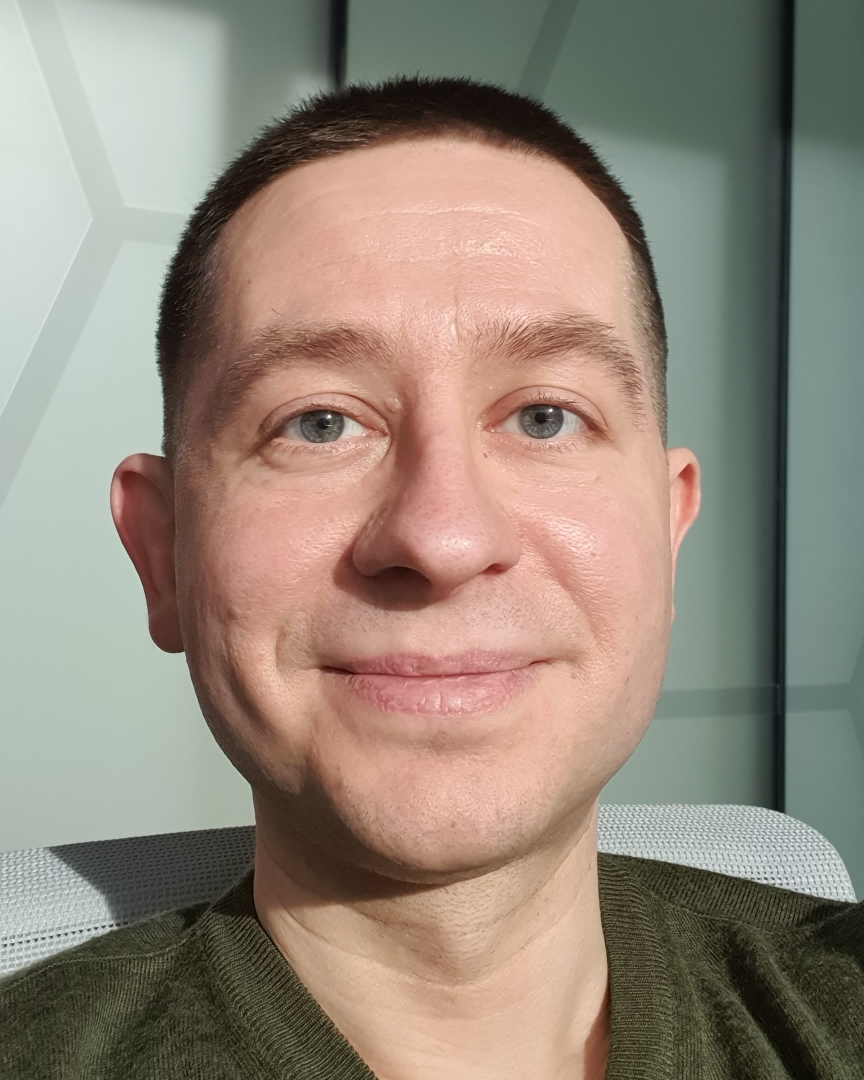
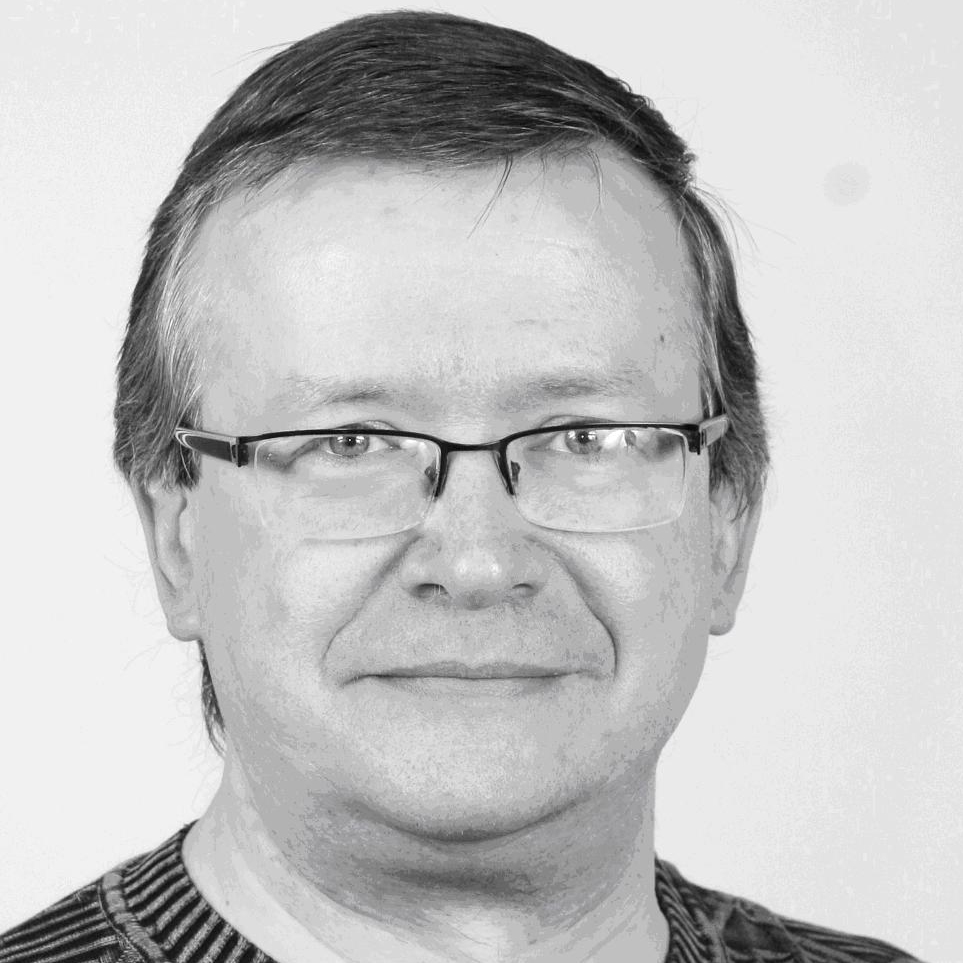
Dr. Saulius Rudys is a Senior Researcher at the Institute of Applied Electrodynamics and Telecommunications (IAET) within Vilnius University, focusing on electromagnetic engineering and aerospace technology. His work bridges material science with UAV detection systems and radar innovation. Research Interests : Antenna design, dielectric spectroscopy, UAV radar systems, microwave material analysis Projects : Led multiple high-budget UAV detection projects including EU-funded initiatives His recent publications analyze electromagnetic properties of advanced materials and develop counter-UAV systems using marine radar and GNSS antenna arrays. Key themes include: Microwave characterization of ferroelectrics and ferrites UAV detection via FMCW radar Physical layer security for aviation systems Scientific awards highlight his impact in aerospace security: DLR Galileo Masters winner (2013, 2015, 2016) EU SatCom Challenge Prize (2021) Vilnius University Best Applied Work Award (2020) He has contributed to computational electromagnetic analysis and developed methods for dielectric measurements in coaxial lines and waveguides.
Abdullah A. A. Ahmed is an Associate Professor in the Department of Physics at Thamar University, Yemen. He earned his Ph.D. from Universiti Putra Malaysia (UPM) in 2012 and served as a postdoctoral fellow there before returning to Yemen in 2013. He has been actively contributing to materials science research, particularly in nanomaterials, optoelectronics, energy storage, and hydrogen storage applications. Ph.D.: Universiti Putra Malaysia (UPM), 2012 Postdoctoral Fellowship: Universiti Putra Malaysia Appointment: Assistant Professor, Thamar University (2013) Promotion: Associate Professor (2019–2020) Dr. Ahmed's research spans advanced materials for energy and medical applications. His work includes the development of biopolymer electrolytes for supercapacitors, DFT studies on perovskite materials, photocatalytic nanocomposites, and nanomaterials for anticancer therapy. He frequently employs techniques such as co-precipitation, electrodeposition, and spectroscopic analysis. His recent publications (2021–2025) show a strong trend toward sustainable energy materials, including hydrogen storage in perovskite hydrides, supercapacitors using biopolymers, and photocatalytic nanocomposites for environmental remediation. There is also a growing interest in biomedical applications of nanomaterials and brain interfacing technologies. Dr. Ahmed serves as a Review Editor for Frontiers in Chemistry in the field of Medicinal and Pharmaceutical Chemistry, contributing to peer review and academic discourse. He has advised graduate students such as Annas Al-Sharabi and Ahmed Al-osta, both affiliated with Thamar University. While no specific grants are mentioned, his extensive publication record suggests active research funding and collaboration. His work is conducted within a collaborative network involving researchers from Malaysia, Saudi Arabia, India, and other international institutions, focusing on cutting-edge materials for energy, environment, and health applications.
Dr. Stepas Toliautas is an Associate Professor at the Institute of Chemical Physics (Vilnius University), specializing in quantum chemistry and AI applications in physical sciences. His research spans computational chemical physics, focusing on electronic excitations, potential energy surfaces, and high-performance computing (HPC) methods. Key Research Areas : Quantum Chemistry, AI in Physical Sciences, HPC, Molecular Rotors Teaching : Physical Kinetics, Computational Chemistry, Parallel Computing, Artificial Intelligence His recent publications highlight viscosity-sensitive BODIPY fluorophores for bioimaging, sigma-conjugated polymers for phosphorescence, and machine learning integration in quantum chemical models. He actively participates in HPC workshops and popularizes science through media appearances and educational initiatives. Supervision : Mentors 1 PhD student (R. Garbačauskas) and supervised 4 Master’s theses Expertise : National HPC Competences Center (2020–present), EuroCC Workshop co-instructor Science Communication : Café Scientifique speaker, children’s science educator
Dr. Valdas Jonauskas is a Researcher at the Institute of Theoretical Physics and Astronomy (ITPA), Vilnius University . His work focuses on theoretical atomic spectroscopy , electron-impact ionization , and plasma modeling , particularly for heavy ions in fusion and astrophysical contexts. Research Interests : Theoretical atomic spectroscopy Interactions of atoms/molecules with electrons/radiation Relativistic and many-electron effects Modeling high-temperature plasma processes Quantum chemistry of ions Recent Publications : Electron-impact ionization of neon and argon ions Photoionization of iron and silicon Quantum magnetic properties of nanodiamonds Teaching : Lecturer for Theoretical Atomic Spectroscopy (2012–present) and Python programming for physicists (2021). Grants & Leadership : Project leader for IAEA 2022–2027 and Research Council of Lithuania 2012–2015 . Committee Roles : Member of the VU High Performance Computing Open Access Committee (2013–2018), ICAMDATA 2022 Program Committee .
Dr. Jelena Tamulienė is a Senior Researcher at the Institute of Theoretical Physics and Astronomy (ITPA) at Vilnius University. Her work focuses on computational physics, density functional theory, and electronic structure analysis of organic and inorganic materials. Affiliation: Vilnius University, Institute of Theoretical Physics and Astronomy Research: Investigates quantum mechanical properties of clusters, materials science phenomena, and phase separation dynamics using computational methods. Her publications span topics like cluster physics , electronic structure , and computational materials science , with a focus on inorganic nanomaterials and organic semiconductors. She has supervised doctoral student Laura Baliulytė and postdoc Šarūnas Masys, and contributed to science popularization through educational outreach and public lectures. She led the 2014–2016 Lithuanian-Belarus research program and participated in high-performance computing initiatives. Her collaborative work includes studies on photoelectron spectroscopy, quantum chemistry, and nanodiamond functionalization.
Dr. Augustas Vaitkevičius is a Researcher and Lecturer at the Institute of Photonics and Nanotechnology (IPN) within Vilnius University. His scientific work focuses on semiconductor optoelectronics, with primary interests in scintillators, spatially resolved photoluminescence, and semiconductor materials. He contributes to radiation measurement technologies through experimental studies on Ce-doped materials. Research Trends : His publications highlight advancements in scintillator design for nuclear and radiation detection applications. Key themes include material composition optimization, Ce ion doping processes, and enhancing timing/spectral properties of scintillating crystals. These studies intersect materials science, optoelectronics, and radiation physics, with applications in detectors and instrumentation. Infrastructure & Collaboration : He is affiliated with the Science Researcher profiles system and the Spectroversum open-access infrastructure, indicating participation in interdisciplinary projects involving photonics, nanotechnology, and high-performance computing.
Prof. habil. dr. Leonidas Sakalauskas is an Affiliated Scientist at the Smart Technologies Research Group within the Institute of Data Science and Digital Technologies at Vilnius University. His extensive research career spans mathematical modeling, stochastic programming, and statistical analysis with significant contributions across multiple disciplines. He maintains an active research profile with recent publications extending into 2025. Professor Sakalauskas' research focuses on stochastic programming, mathematical modeling, financial mathematics, statistical analysis, optimization, and queueing theory. His work demonstrates a consistent pattern of interdisciplinary research, bridging theoretical mathematics with practical applications in finance, social sciences, and computer science. He has developed innovative approaches to agent-based modeling, fractal analysis, and Monte Carlo methods, contributing significantly to both theoretical frameworks and practical implementations. His recent publications reveal a continuing evolution of research interests, with increasing emphasis on data science applications, computational social science, and advanced statistical modeling techniques. The articles demonstrate sophisticated methodological approaches to complex problems across diverse domains including financial modeling, social cohesion analysis, and network performance optimization. Throughout his career, Professor Sakalauskas has maintained a strong publication record in high-impact journals and conference proceedings, reflecting his ongoing engagement with the international research community. His work shows consistent methodological rigor combined with practical relevance across multiple application domains. Professor Sakalauskas has collaborated extensively with researchers across Lithuania and internationally, demonstrating strong teamwork and interdisciplinary engagement. His research has practical applications in financial modeling, social science analysis, and computational systems optimization, contributing to both theoretical advances and real-world implementations.
Dr. Laura Baliulytė is a Research Fellow at the Institute of Chemical Physics at Vilnius University's Faculty of Physics. She specializes in computational chemistry with a focus on molecular aggregation, self-assembly, and the effects of radiation on biomolecules. Her research interests include Chemical physics, Computational chemistry, Molecular modelling, Quantum chemistry, Theoretical chemistry, Stereochemistry, High-performance computing, Molecular aggregation, and Molecular self-assembly. She employs advanced computational methods to investigate how low-energy ionizing radiation affects amino acids and how molecular structures form and interact. Dr. Baliulytė's publication record shows a consistent focus on quantum chemical investigations of amino acid fragmentation under radiation exposure, with recent work extending to porphyrin aggregation studies. Her research demonstrates strong interdisciplinary connections between theoretical chemistry, radiation physics, and biomolecular science. She is an active member of the national HPC competences center (NCC) of Lithuania since 2023 and participates in science popularization activities including the 'Tyrėjų naktis' event. Her current research is supported by the EuroHPC JU Call for Proposals for Development Access project 'Molecular dynamics of TPPS4 aggregates' (2024-2025).
Dr. Alytis Gruodis is a Senior Research Fellow (0.5 FTE) at the Institute of Chemical Physics within Vilnius University's Faculty of Physics. His research spans molecular electronics, quantum chemical simulations, and computational chemistry with a focus on conformational studies and molecular structure-property relationships. His scientific interests center on conformational studies , ground state/excited state geometry optimization , and understanding the role of substituents for polar molecular compounds . His work bridges theoretical chemistry with practical applications in semiconductor materials and optoelectronic devices. Dr. Gruodis has made significant contributions to the understanding of molecular charge transport, semiconductor materials design, and quantum chemical modeling approaches. Analysis of his publication record reveals a strong focus on molecular electronics applications, particularly in the development of organic semiconductor materials for solar cells and light-emitting devices. His research demonstrates expertise in quantum chemical calculations applied to complex molecular systems, with special attention to structure-property relationships that govern electronic behavior in organic materials. Dr. Gruodis has served as Editor-in-chief for the scientific journal "Innovative Infotechnologies for Science, Business and Education" from 2008 to 2018, and has been Editor-in-chief of the journal "Applied Business: Issues and Solutions" since 2022, demonstrating leadership in academic publishing. His collaborative research spans multiple international partnerships, with publications in high-impact journals including Journal of Physical Chemistry, Advanced Functional Materials, and Dyes and Pigments. His work shows consistent productivity across decades, with recent publications focusing on novel semiconductor materials, quantum chemical simulations, and applications of artificial intelligence in materials science.
Dr. Mindaugas Mačernis is an Associate Professor at the Institute of Chemical Physics (ICP), Vilnius University, specializing in theoretical chemical physics and quantum chemistry. His research leverages high-performance computing (HPC) to study molecular systems, including carotenoids, protein complexes, and quantum dynamics. He leads the HPC laboratory (supercomputer 'VU HPC Saulėtekis') and heads NCC Lithuania, a national competence center for supercomputing. Research Interests: His work spans computational physics, quantum chemistry, carotenoid photophysics, supercomputing applications, and quantum information technologies. Key methodologies include quantum chemical modeling, molecular dynamics simulations, and advanced spectroscopic analysis. Recent Publications (2020–2022) focus on computational studies of carotenoid dynamics, protein–pigment interactions, and proton transfer mechanisms. Trends include leveraging quantum computing frameworks and HPC for biomolecular simulations. Awards: Prize for research of young scientists, Lithuanian Academy of Sciences (2015) Leadership & Advising: Dr. Mačernis directs projects including EuroCC (NCC Lithuania) and LitGrid-HPC. He supervises doctoral candidates (Jonas Franukevičius, Laurynas Diska) and teaches courses on quantum computing, molecular dynamics, and database systems.
Dr. Žydrūnas Podlipskas is a Senior Researcher at the Institute of Photonics and Nanotechnology (IPN) under Vilnius University. His work focuses on semiconductor physics, particularly in III-nitrides and scintillator materials. Research Interests: Cathodoluminescence-SEM Microscopy, Time-resolved Characterisation, Nitrides, Semiconductor Defects, Computational Approaches for Image Processing. His recent publications highlight advancements in GaN epitaxy for Si integration, Mg-codoped garnet scintillators, and carrier dynamics in InGaN structures. He has supervised doctoral student Gabija Soltanaitė, focusing on spectro-spatiotemporal imaging of carrier transport phenomena. His work spans collaborations in high-energy physics instrumentation, semiconductor defect engineering, and computational materials analysis, with a strong emphasis on optimizing optoelectronic device performance through material science innovations.
Eduardas Kutka serves as a Lecturer at the Faculty of Mathematics and Informatics, Vilnius University, with documented teaching activity spanning from the 2016/2017 academic year through the upcoming 2025/2026 term. His academic focus centers on: Computer Networks (primary teaching responsibility) High Performance Computing infrastructure Supercomputing applications and education He integrates practical experience through MIF supercomputer facility excursions, emphasizing hands-on learning in computational systems for undergraduate students, particularly evident in his first-year lecture series "Supercomputer - what and for whom?"
Prof. Dr. Virginijus Marcinkevičius is a Professor at Vilnius University , serving as the head of the Smart Technologies Research Group and the Artificial Intelligence Laboratory within the Institute of Data Science and Digital Technologies . He is also a Senior Researcher , Project Lead Researcher , and Group Leader . Based in Vilnius, Lithuania, he has been instrumental in advancing research in machine learning , artificial intelligence , cybersecurity , and natural language processing . Research Interests: Machine Learning & AI Cybersecurity & Threat Detection Natural Language Processing Hyperspectral Imaging & Remote Sensing Autonomous Systems & Robotics Big Data & Cloud Computing His work spans both theoretical and applied aspects, including IoT security , visual analytics , and intelligent decision support systems . Recent projects include the development of propaganda detection systems , hyperspectral unmixing algorithms , and autonomous driving agents . Doctoral Supervision: He has supervised 19+ PhD students and 5+ consultants , covering topics from machine learning in cybersecurity to neural machine translation and autonomous UAV navigation . Projects & Grants: He has led or contributed to 15+ national and EU-funded projects , including: CognitiveSTATS – COVID-19 data literacy platform Propaganda and Disinformation Research – ML-based detection DAMIS – Data mining system for national research Raštija 2 – Lithuanian language resource integration Publications: He has authored or co-authored 60+ peer-reviewed publications in journals like IEEE Access , Informatica , Frontiers in Psychology , and Machine Vision and Applications . Professional Memberships: He is a member of the Lithuanian Computer Society , Lithuanian Mathematical Society , and Lithuanian Operations Research Society .
Prof. Dr. Remigijus Paulavičius is a Senior Researcher, Professor, and Group Leader at the Blockchain and Quantum Technologies Group of Vilnius University. He earned his Doctor of Science degree in Computer Science in 2010 from Vilnius University's Institute of Mathematics and Informatics, focusing on global optimization with simplex subdomains under the supervision of Dr. J. Žilinskas. Research Interests : His work bridges global optimization methods with blockchain and quantum computing. Key areas include non-convex bilevel programming, derivative-free optimization algorithms (e.g., DIRECT), and applications in blockchain scalability, consensus protocols, and quantum circuit design. Scientific Awards : Best Paper Award, Journal of Global Optimization (2014) Funding from Lithuanian State Science and Studies Foundation for doctoral students (2007–2009) Member, Young Academy of the Lithuanian Academy of Sciences (since 2019) Projects & Leadership : Leads research on blockchain simulators, quantum machine learning frameworks, and optimization toolboxes (e.g., DGO, DIRECTGO). Involved in international collaborations and conference committees, including AIChE and EUROPT. Publications : Over 70 works on global optimization algorithms, blockchain applications, and quantum computing, with recent focus on generative AI, energy consumption in blockchains, and reproducibility in machine learning.
Dr. Ernestas Filatovas is a Senior Researcher and Chief Researcher in the Project at Vilnius University's Institute of Data Science and Digital Technologies (formerly Institute of Mathematics and Informatics), where he has been affiliated since 2013. He leads the Blockchain and Quantum Technologies Group, focusing on cutting-edge research at the intersection of quantum computing, blockchain, and artificial intelligence. Previously, he served as an Associate Professor and Lecturer at Vilnius Gediminas Technical University's Faculty of Fundamental Sciences from 2013 to 2019. Dr. Filatovas earned his Doctor of Technology in Computer Science Engineering from Vilnius University Institute of Mathematics and Informatics in 2012. His dissertation, supervised by Prof. Dr. Olga Kurasova, focused on the interactive solution of multi-criteria optimization problems. His research spans multiple high-impact domains, with particular expertise in blockchain technologies, quantum computing, artificial intelligence, and machine learning. He has pioneered work in quantum blockchain implementations, reproducibility of AI research through blockchain verification, and quantum machine learning applications. His research bridges theoretical computer science with practical applications in financial markets, healthcare, and distributed systems. His extensive publication record—over 50 scientific papers, with more than 25 in Clarivate Analytics-indexed journals—demonstrates consistent productivity and international collaboration. Recent work shows a clear trajectory toward quantum-enhanced AI systems, blockchain-based research verification frameworks, and quantum algorithms for practical problems. Laureate of the 4th LMA Young Scientists' Conference (2014) INFOBALT scholarship 2nd place winner (2014) Lithuanian State Science and Studies Foundation funding recipient (2009, 2010) Recognized as one of Lithuania's most active doctoral students Master's degree with honors (2006) Dr. Filatovas leads multiple significant research projects, including the 2021-2024 project 'Solving the problems of reproducibility of scientific research in the field of artificial intelligence using blockchain technologies' as team leader, and the 2023-2027 project 'Development and validation of quantum machine learning methods using prepared datasets' as Chief Researcher. He has also contributed to international collaborations such as the Spanish-funded 'High Performance Solutions for Modern Scientific Computing Challenges' (2019-2021). His popular science contributions, including the VU news portal article 'Quantum Computing: Who and Why?', demonstrate his commitment to science communication. As a key member of Vilnius University's Blockchain and Quantum Technologies Group, Dr. Filatovas contributes to Lithuania's growing reputation in quantum computing research and blockchain innovation, working closely with international collaborators across Europe.