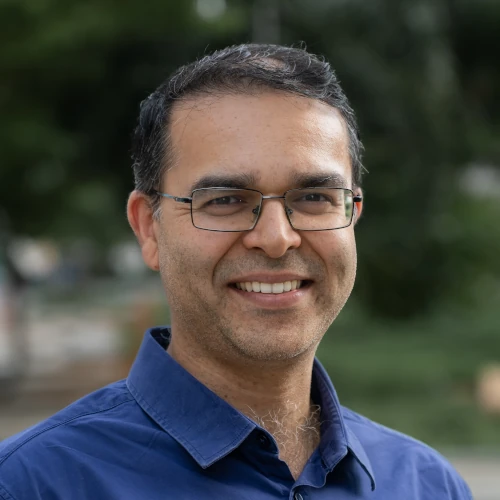
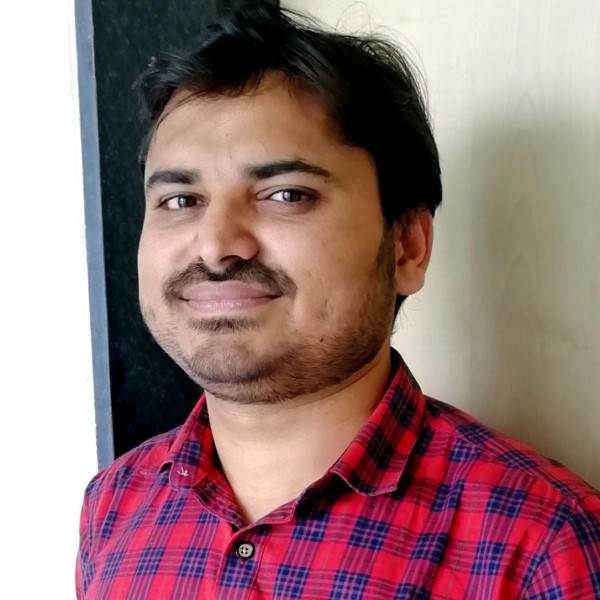
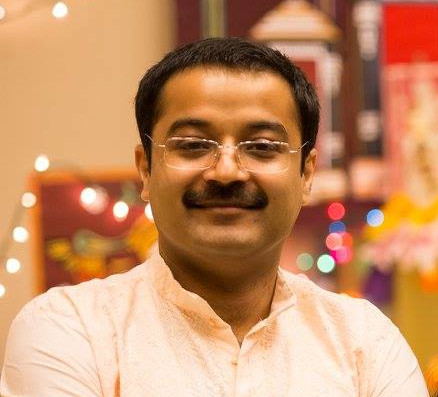
Niranjan Shrinivas Ghaisas is an Associate Professor in the Department of Mechanical and Aerospace Engineering at the Indian Institute of Technology Hyderabad. He holds a Ph.D. from Purdue University and focuses on computational fluid dynamics, energy systems, and climate-related research. Education: Ph.D., Purdue University His research spans numerical simulations of turbulent flows, wind energy applications, compressible solid-fluid multi-phase flows, and high-performance computing. He actively seeks motivated students at all levels for projects in these areas. For contact, reach him at: Email: nghaisas@mae.iith.ac.in Office: Block C 420, Indian Institute of Technology Hyderabad, Kandi, Sangareddy, Telangana 502284 Phone: (040) 23 01-6359
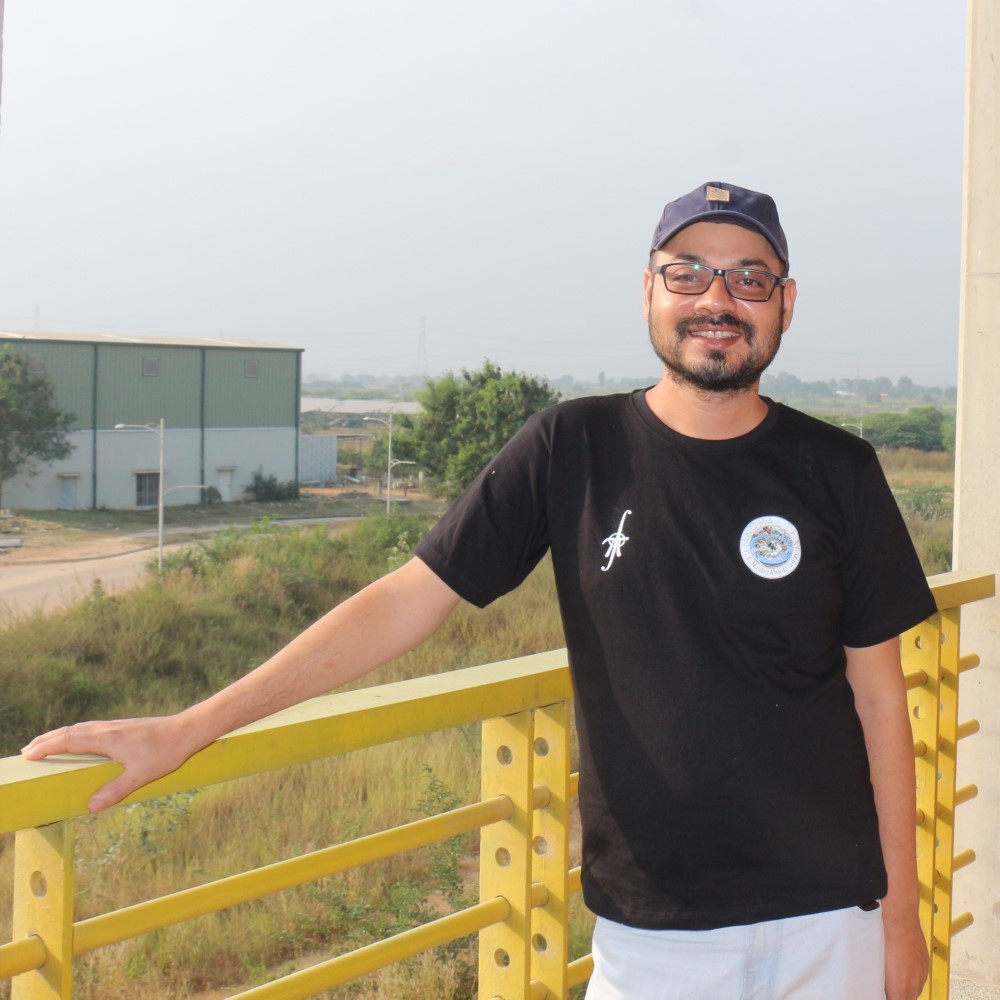
Priyotosh Bandyopadhyay is an Associate Professor in the Department of Physics at the Indian Institute of Technology Hyderabad , where he conducts research in high-energy physics. He earned his Ph.D. from the Harish Chandra Research Institute, Allahabad (Homi Bhabha National Institute). Research Interests: LHC Higgs Physics, Supersymmetry, Neutrino Physics, Collider Physics, High Energy Physics, and High Performance Computing (HPC). Office Address: Room PH-405, Physics Building, Indian Institute of Technology Hyderabad, Kandi-502284, Sangareddy, Telangana, India. Phone: (040) 2301 - 6716.
Raja Banerjee is a Professor in the Department of Mechanical & Aerospace Engineering at the Indian Institute of Technology Hyderabad . He holds a PhD from the University of Missouri Rolla (2001), an MTech from IIT Kharagpur (1998), and a BE from Govt. Engineering College, Rewa (1995). Research Interests include: Multiphase and interfacial flows Spray and atomization dynamics Turbulent combustion modeling High Performance Computing (HPC) for CFD Fluid-structure interaction in industrial systems His publications focus on: Coal/water slurry atomization LNG storage tank stratification Alternative fuel combustion (butanol, ethanol) Sloshing noise prediction in automotive systems GPU-accelerated CFD solvers Micro-scale cavitating flows Labs & Facilities under his leadership include: 3D Phase Doppler Particle Analyzer (PDPA) Constant Volume Spray Chambers Schlieren/Shadowgraph imaging setup High-end computational clusters with K80/P100 GPUs Optical engine for combustion visualization
Saranya Ghosh is an Assistant Professor in the Department of Physics at the Indian Institute of Technology Hyderabad. Her research spans experimental and computational domains within high-energy physics, with additional interests in sensor technology, artificial intelligence/machine learning, and high-performance computing. Ph.D. from Tata Institute of Fundamental Research Her work bridges fundamental particle physics experiments with advanced computational techniques, focusing on detector development and data-intensive scientific computing.
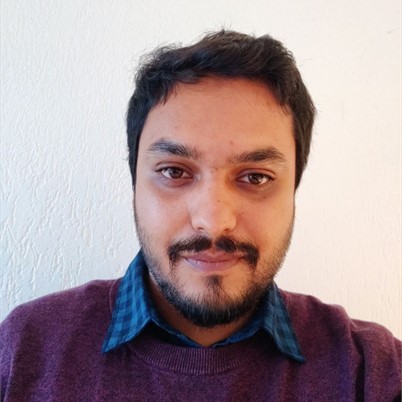
Mohd Suhail Rizvi is an Assistant Professor in the Department of Biomedical Engineering at Indian Institute of Technology Hyderabad . He is also affiliated with the Heritage Science & Technology program. His interdisciplinary research lies at the intersection of biology and physics, focusing on biomechanics, biophysics, systems biology, and biomedical materials. Education: Ph.D. from IIT Kanpur Research Interests: His work integrates multiscale modeling , first-principle calculations , and high-performance computing to explore complex biological phenomena. Key areas include: Cell-ECM interactions and mechanosensing Cancer metastasis mechanics Collective cell migration and motility Pattern formation in tissues Mechanoregulation in embryonic development 3D bioprinting mechanics Constitutive modeling of biomaterials AI/ML applications in bioengineering Teaching: He teaches a wide range of courses including Mathematical Models and Systems Biology , Computational Biomechanics Lab , Statistical Inference Methods in Bioengineering , Mechanobiology , Bayesian Inference in Bioengineering , and Control Systems . Contact: Email: suhailr@bme.iith.ac.in Office: BM305, BTBM Building, IIT Hyderabad, India Phone: +91 40 2301 6109
Dr. Gaurav Tiwari is an Associate Professor in the Department of Civil Engineering at the Indian Institute of Technology Kanpur . His research focuses on Rock Mechanics , with expertise in Geotechnical Engineering and Rock Engineering . Education : PhD in Geotechnical Engineering (Rock Mechanics) from IISc Bangalore, M.Tech in Geotechnical Engineering from IIT Roorkee, and B.E. in Civil Engineering from M.B.M. Govt. Engineering College, Jodhpur. His work emphasizes Experimental Rock Mechanics , Probabilistic Rock Engineering , and Reliability Analysis for rock structures with limited data. Key applications include rock slope stability , tunnel support design , and dynamic behavior of jointed rocks . He has developed hybrid reliability frameworks and sensitivity analysis methods for spatially varying rock properties and data-deficient scenarios , as evidenced by his recent articles in journals like International Journal of Rock Mechanics and Mining Sciences and Rock Mechanics and Rock Engineering . Dr. Tiwari’s students have contributed to high strain rate rock analysis , grouted flaw dynamics , and probabilistic modeling . His scientific awards include the IGS-Leonard’s Best PhD Thesis Award (2018-2019), ISSMGE scholarship (2017), and multiple IGS-Roorkee YGE Awards for Best Papers. Laboratory Facilities : Computational tools (FLAC-2D/3D, UDEC, Rocscience Academic Bundle) and experimental setups (high-rate direct shear testing, 3D-printed synthetic samples, rock durability tests).
Mainak Chaudhuri serves as a Professor in the Department of Computer Science and Engineering at the Indian Institute of Technology Kanpur, where he specializes in computer architecture research and teaching. Doctor of Philosophy, Cornell University, 2004 Master of Science, Cornell University, 2001 Bachelor of Technology, Indian Institute of Technology Kharagpur, 1999 Professor Chaudhuri's research focuses exclusively on computer architecture, with particular expertise in cache management systems, memory hierarchy optimization, and processor design. His work addresses critical challenges in modern computing systems where efficient memory access patterns significantly impact overall system performance across various computing platforms. His recent publications demonstrate consistent contributions to cache management research, particularly in last-level cache algorithms for both traditional processors and graphics processing units. The publications show an evolving research trajectory from general cache algorithms toward specialized implementations for graphics workloads, indicating strategic expansion of his research domain while maintaining core expertise in memory systems. Best paper award in the 11th IEEE International Symposium on High-Performance Computer Architecture, February 2005 While specific details about graduate student supervision aren't provided in the available documentation, his publication record suggests active research mentorship within computer architecture. The absence of explicit grant information in the source material prevents detailed commentary on funded research projects, though his award-winning work indicates successful research proposal development. Though not explicitly mentioned in the source documents, his specialization in computer architecture suggests potential involvement with computer systems laboratories at IIT Kanpur where architectural simulations and hardware implementations would be conducted, supporting both his research and educational mission in advanced computing systems.
Swarnendu Biswas is an Assistant Professor in the Department of Computer Science and Engineering at the Indian Institute of Technology Kanpur. He teaches courses including Programming for Performance (CS 610), Analysis of Concurrent Programs (CS 636), and Compiler Design (CS 335), demonstrating his expertise across multiple areas of computer systems. His research interests center on Programming Languages, Compilers, Runtime Systems, and Parallel Software Systems. He leads the PROSPAR (Programming Languages and PARallel Systems) research group, which focuses on developing techniques to build efficient and correct parallel software through program analysis, compiler optimizations, and runtime systems. His recent publications reveal a strong trend in addressing fundamental challenges in parallel computing, with work spanning cache coherence, false sharing detection, data race analysis for GPUs, verification of neural networks, and thermal-aware management of heterogeneous systems. His research bridges theory and practice with significant contributions to both hardware and software aspects of parallel systems. His scientific achievements have been recognized through multiple prestigious awards: Google India Research Award 2021 Google Explore CSR 2022 Research Grant from Intel Corporation SERB Start-up Research Grant 2019 Google Cloud Platform Research Credits (2019, 2020) IITK Initiation Grant 2019 As an advisor, he mentors several PhD and MTech students working on cutting-edge research in parallel systems. His PROSPAR group has secured significant funding from industry and government sources, supporting innovative research in programming languages and parallel systems. The group actively collaborates with industry partners including Google and Intel, addressing real-world challenges in parallel computing. He leads the PROSPAR research group at IIT Kanpur, which brings together faculty, PhD students, and MTech researchers to tackle challenging problems at the intersection of programming languages, compilers, and parallel systems. The group maintains strong industry connections and focuses on practical solutions that can be deployed in real systems.
Navaneeth Poonthottathil is an Assistant Professor in the Department of Physics at the Indian Institute of Technology Kanpur (IIT Kanpur), specializing in Experimental High Energy Physics with a focus on Neutrino Physics and Long-baseline neutrino experiments. His research contributes significantly to the Deep Underground Neutrino Experiment (DUNE) collaboration and related neutrino physics initiatives. Dr. Poonthottathil earned his PhD from Cochin University of Science and Technology and Fermilab, followed by postgraduate studies at Cochin University of Science and Technology and undergraduate education at Kannur University. Prior to joining IIT Kanpur, he served as a Postdoctoral Research Associate at Iowa State University (2018-2022), Visiting Physicist at Brookhaven National Lab (2018), Adjunct Faculty at Kannur University (2017), and Visiting Scientist at Fermilab (2012-2016). His research spans multiple areas of high energy physics with particular emphasis on neutrino interaction studies, vertex reconstruction techniques using deep learning, supernova neutrino detection capabilities, and long-baseline neutrino oscillation physics. He has also made contributions to cosmological research, particularly examining scalar field dominated models and dark energy phenomena. His methodological approach frequently integrates machine learning techniques with traditional particle physics analysis methods, demonstrating interdisciplinary innovation. Analysis of his recent publications reveals a strong focus on the DUNE experiment, with significant contributions to detector performance, neutrino interaction measurements, and analysis techniques. His work spans both experimental and theoretical aspects, with publications in journals such as The European Physical Journal C, Physical Review D, and Journal of Cosmology and Astroparticle Physics. He maintains active collaborations with major international physics laboratories including Fermilab and Brookhaven National Laboratory. Dr. Poonthottathil's research has important implications for understanding fundamental particle properties, neutrino characteristics, and cosmological phenomena. His work contributes to advancing detector technologies and analysis methodologies in high energy physics, with potential applications across multiple scientific domains.
Mohammed Ibrahim Sugarno is an Associate Professor in the Department of Aerospace Engineering at the Indian Institute of Technology Kanpur (IIT Kanpur), with additional appointment as Associate Professor at the Center for Lasers and Photonics. He holds a PhD from the Indian Institute of Science Bangalore and has established himself as a prominent researcher in hypersonic aerodynamics and shock wave phenomena. His research focuses on Experimental Hypersonic Aerothermodynamics, High Enthalpy Test Facilities, and Shock Waves. Dr. Sugarno's work has significant applications in aerospace vehicle design, particularly for high-speed flight and atmospheric re-entry systems. His expertise spans both experimental and computational approaches to studying complex fluid dynamics phenomena at hypersonic speeds. Over the past decade, Dr. Sugarno's publication record demonstrates consistent contributions to leading journals in fluid dynamics and aerospace engineering. His research has evolved from fundamental shock wave studies to more complex applications involving scramjet intakes, nozzle flows, and thermal management systems for hypersonic vehicles. The recent publications (2023-2025) show increasing sophistication in both experimental methodologies and computational modeling approaches. DLR-DAAD Senior Scientist Research Fellowship (2024) Early Career Research Award (ECRA) from Department of Science and Technology (2019) Dr. Mahua Menon and Mr. Ranodeb Roy Young Faculty Research Fellowship (2021) NAMASTE+ Scholarship (2019) Dr. Sugarno serves as Associate Editor for CEAS Space Journal and is a Senior Member of the American Institute of Aeronautics and Astronautics (AIAA). He actively participates in international research collaborations, including recent appointments as Visiting Associate Professor at Technion Israel Institute of Technology and as a DLR-DAAD Senior Scientist Research Fellow in Germany. His technical committee memberships in Hypersonic Technology and Space Plane (AIAA) and High Speed Vehicle Science and Technology (HiSST) reflect his standing in the international aerospace research community.
Purushottam Kar is an Associate Professor in the Department of Computer Science and Engineering at the Indian Institute of Technology Kanpur. He completed his PhD from IIT Kanpur in 2014 and his B.Tech. from the same institution in 2008. His academic career includes a post-doctoral research position at Microsoft Research India from July 2013 to August 2015, following a doctoral research internship there from May to August 2012. Dr. Kar's research focuses on the theoretical and practical aspects of machine learning. His primary interests include Machine Learning , Optimization , and Statistical Learning Theory . More specifically, he works on online and stochastic learning and optimization, multi-label classification, high dimensional statistics, kernel methods, and statistical learning theory. His work bridges theoretical foundations with practical applications in artificial intelligence. His recent publications demonstrate a strong focus on advancing machine learning methodologies, particularly in robust regression, non-decomposable performance measures, precision optimization, multi-label classification, and the theoretical foundations of online learning. His research spans both theoretical developments in statistical learning and practical implementations for complex classification problems. International Conference on Machine Learning (ICML) Reviewer Award (2015) Indian Unit of Pattern Recognition and Artificial Intelligence (IUPRAI) Doctoral Dissertation Award (2014) Yahoo! Key Scientific Challenges (Yahoo! KSC) Program Honourable Mention (2012) Microsoft Research (MSR India) PhD Fellowship (2010) Academic Excellence Awards by IIT Kanpur (2005, 2006) Dr. Kar teaches courses in Machine Learning, Online Learning, and Statistical Learning Theory. His research profile suggests he mentors PhD and Master's students in machine learning and related fields. His work with Microsoft Research indicates significant industry collaborations and grant funding in artificial intelligence research. His office is located in Room 509 of the CSE Extension building (Rajeev Motwani Building) at IIT Kanpur.
Rajat Moona is a Professor in the Department of Computer Science and Engineering at the Indian Institute of Technology Kanpur (IIT Kanpur). Professor Moona's research interests focus on Computer Hardware and Architecture and VLSI Design . His work contributes to the advancement of computer systems design and semiconductor technology, with applications in high-performance computing and embedded systems. His research likely spans theoretical foundations and practical implementations in processor architecture, circuit design, and system optimization. He received his PhD from the Indian Institute of Science (IISc) Bangalore, one of India's premier research institutions. His office is located in room CS 221 at IIT Kanpur, where he can be reached at phone number 0512-259-7652/7638 or via email at moona@iitk.ac.in.