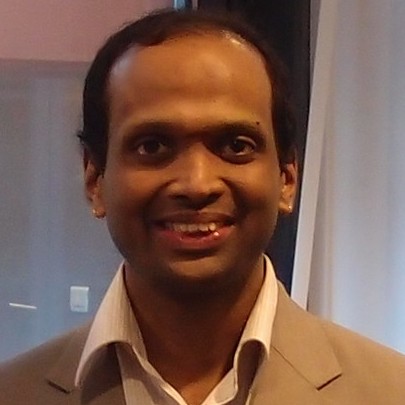
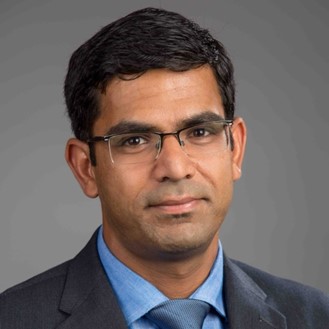
Ramakrishna Upadrasta is an Associate Professor in the Department of Computer Science & Engineering and Heritage Science & Technology at Indian Institute of Technology Hyderabad. He earned his PhD from University of Paris-Sud and INRIA, Paris, with a focus on improving scalability in polyhedral compilation tools. His academic journey includes an M.S. from Colorado State University, M.Tech from Indian Institute of Science (IISc), and B.E. in Electrical and Electronics Engineering from Andhra University. His research expertise includes: Domain Specific Programming Languages for Parallelization LLVM Optimizations Polyhedral Compilation Abstract Interpretation Sub-polyhedral Approximations High-Performance Computing (HPC) He leads the IITH-LLVM group and collaborates with industries on compiler technologies. His work addresses scalability vs. precision trade-offs in static analysis tools and extends polyhedral compilation frameworks like Pluto and Polly. Scientific Recognition : HiPEAC paper award for his POPL-2013 publication As an educator, he has taught advanced compiler courses (e.g., CS6250, CS5260) and coordinated interdisciplinary initiatives, including Sanskrit language courses via Samskrita Bharati. His students span PhD, M.Tech, and B.Tech levels, focusing on compiler design and parallelization.
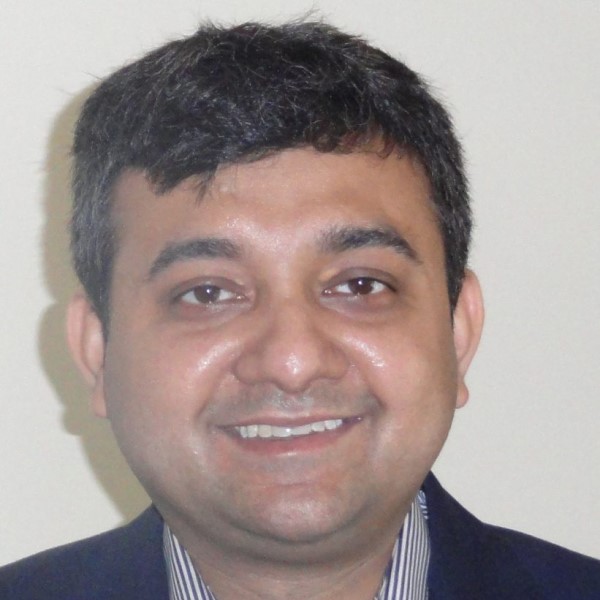
Saswata Bhattacharya is the Head (MS) & Professor in the Department of Materials Science and Metallurgical Engineering at the Indian Institute of Technology Hyderabad. He earned his Ph.D. from the Indian Institute of Science in Bengaluru and focuses on computational materials science and data-driven modeling. Education: Ph.D., Indian Institute of Science, Bengaluru Research Interests Phase-field modeling of microstructural evolution in alloys and oxides Phase transformations Micromechanical modeling Multiscale modeling AI/ML integration in materials science High Performance Computing (HPC) applications Materials Processing Office Address: Room MSME-402, MSME Block, Indian Institute of Technology Hyderabad, Kandi-502284, Sangareddy, Telangana, India.
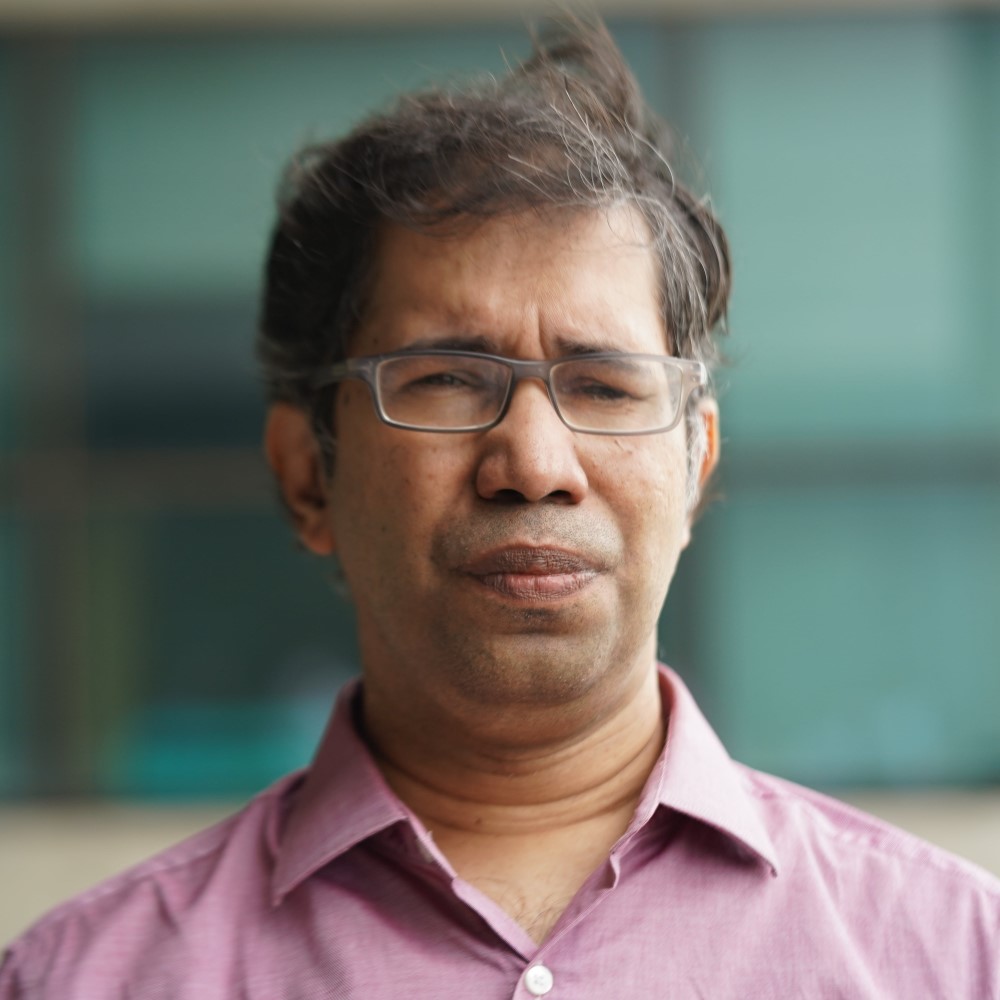
Shantanu Desai is a full-time Professor of Physics (and jointly of Artificial Intelligence) at the Indian Institute of Technology Hyderabad , a position he has held since October 2023 after serving as Associate Professor from 2016-2023. He earned his Ph.D. in Physics from Boston University in 2004 and is a member of several high-profile international collaborations, most notably the Super-Kamiokande Collaboration —sharing the 2016 Breakthrough Prize in Fundamental Physics for the discovery of atmospheric neutrino oscillations and solving the solar neutrino puzzle. Education Ph.D. in Physics, Boston University, May 2004 M.A. in Astronomy, Boston University, May 1997 B.Tech in Physics, Indian Institute of Technology Bombay, May 1995 Research Interests Desai’s work straddles observational cosmology, high-energy astrophysics, and data-driven methodologies. His core research areas include: Cosmology and Galaxy Clusters: probing dark energy, cluster abundances, and large-scale structure. Pulsar Timing & Gravitational Waves: member of the Indian Pulsar Timing Array searching for nano-Hertz gravitational waves. Neutrino Astrophysics: utilizing Super-Kamiokande data to study solar and atmospheric neutrinos. Gravitational Lensing: strong and weak lensing analyses within the Dark Energy Survey and Euclid. Machine Learning & Astrostatistics: developing AI/ML techniques for transient detection, lens finding, and survey optimization. High-Performance Computing: leveraging HPC resources for large-scale simulations and data processing. Publication & Research Trends Across 2024-2025, Desai’s publications reveal a focused synergy between multi-wavelength observations and advanced statistical methods. Topics include joint analyses of DES Y3 weak-lensing and ACT SZ data, targeted gamma-ray searches for dark matter signals in galaxy clusters, cosmological constraints on neutrino masses, and machine-learning-driven lens discoveries. These works consistently integrate large survey datasets (DES, ACT, Fermi-LAT, InPTA) with rigorous profile-likelihood techniques to address tensions in the standard cosmological model. Scientific Awards 2016 Breakthrough Prize in Fundamental Physics – shared as a member of the Super-Kamiokande Collaboration for the discovery of atmospheric neutrino oscillations and resolution of the solar neutrino problem. Student Supervision & Mentorship At IIT Hyderabad, Desai has mentored over 60 students ranging from B.Tech to Ph.D. levels, many proceeding to prestigious graduate programs worldwide (e.g., Penn State, University of Utah, Southern Methodist University, IUCAA, Swinburne, Florida Tech). Current advisees include Ph.D. students Siddhant Manna, Kamal Bora, Aman Srivastava, Gopika K., and Srinadh Reddy (co-supervised). Laboratory & Team Affiliations Desai leads a vibrant research group within the Physics Department at IIT Hyderabad. The group is actively involved in the Indian Pulsar Timing Array (InPTA) , Dark Energy Survey (DES) , Euclid Consortium , and Atacama Cosmology Telescope (ACT) collaborations, maintaining dedicated computational resources and close ties with international partners for joint observations and data analysis.
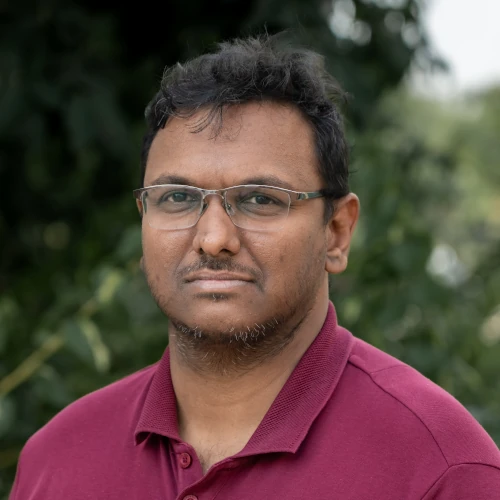
Syed Nizamuddin Khaderi is an Associate Professor in the Mechanical and Aerospace Engineering department at the Indian Institute of Technology Hyderabad , India. His research focuses on solid mechanics, impact mechanics, and fluid-structure interactions. Education: Ph.D., University of Groningen (2011) Master of Technology, Indian Institute of Technology Kanpur (2006) Bachelor of Engineering, University of Madras (2004) Diploma in Mechanical Engineering, Central Polytechnic, Chennai (2000) Experience: Assistant Professor, IIT Hyderabad (Dec 2014 - present) Research Associate, University of Cambridge (Apr 2012 - Oct 2014) Scientist, Institute of High Performance Computing, Singapore (Jun 2011 - Mar 2012) His current research includes high strain rate material characterization , computational solid mechanics , and impact loading of structures . He works extensively with lattice materials and metal foams . Contact: snk@iith.ac.in | Office: Room C-510, Academic Block C, IIT Hyderabad, Telangana 502285, India | Phone: (040) 2301 - 6667
Sathesh Mariappan is a Professor in the Department of Aerospace Engineering at Indian Institute of Technology Kanpur. His research focuses on thermoacoustic interactions, dynamical systems theory applied to thermo fluid systems, and mechanisms of dynamic stall in rotorcrafts. He has made significant contributions to the understanding of nonlinear phenomena in thermo-fluid systems. Education: PhD in Aerospace Engineering from Indian Institute of Technology Madras, Chennai (2012, direct admission from B.E) B.E. in Aeronautical Engineering from Madras Institute of Technology, Chennai (2007) Dr. Mariappan's research interests span several critical areas in aerospace engineering and fluid dynamics. His work on fundamentals of thermoacoustic interactions has provided valuable insights into the complex coupling between heat release and acoustic waves in combustion systems. His research on the application of dynamical systems' theory to thermo fluid systems has advanced our understanding of nonlinear phenomena in these systems. He has also made significant contributions to understanding the mechanism of dynamic stall in rotorcrafts , which is crucial for improving helicopter performance and safety. His expertise in optical flow diagnostics and acoustic measurements provides him with powerful tools to investigate these complex phenomena experimentally. His publication record shows a consistent focus on thermoacoustic instability, with several high-impact papers in the Journal of Fluid Mechanics. His work bridges theoretical analysis with practical applications in combustion systems and aerospace engineering. The research demonstrates sophisticated use of dynamical systems theory, bifurcation analysis, and advanced diagnostic techniques to unravel complex nonlinear phenomena in fluid-thermal systems. Scientific Awards and Honors: Alexander von Humboldt fellowship for Postdoctoral Researchers at the German Aerospace Center, Goettingen, Germany (2012-2013) Session co-chair on Combustion Instabilities (51-PC-3) at the 47th AIAA/ASME/SAE/ASEE Joint Propulsion Conference & Exhibit, San Diego (2011) Session co-chair on Aero- and Thermo-Acoustical Coupling in Energy Applications II (40-AA-40) at the 16th AIAA/CEAS Aero acoustics Conference, Stockholm (2010) Dr. Mariappan has been actively involved in the international research community, serving as session chair for major conferences in propulsion and aeroacoustics. His Humboldt fellowship indicates recognition of his research potential by the international scientific community. While specific grant information is not provided in the available data, his publication record suggests involvement in research projects related to thermoacoustics and rotorcraft dynamics. Though specific laboratory information is not detailed in the provided text, his research areas suggest involvement with facilities for thermoacoustic experiments, optical flow diagnostics, and acoustic measurements at IIT Kanpur's Department of Aerospace Engineering.
Dr. Chinmoy Kolay is an Assistant Professor in the Department of Civil Engineering at the Indian Institute of Technology Kanpur (IITK). He specializes in Structural Engineering with a focus on the behaviour of structures under extreme load events such as earthquakes, windstorms, and blasts. Education: PhD in Structural Engineering, Lehigh University, USA (2016) M.Tech., IIT Kanpur, India (2009) B.C.E. (First Class with Honours), Jadavpur University, Kolkata (2006) Research Interests: Dr. Kolay’s research spans several critical areas in structural and earthquake engineering. He investigates the behaviour of civil structures subjected to extreme dynamic loads, develops real-time hybrid (pseudo-dynamic) simulation techniques, and advances nonlinear structural analysis methods. His work also encompasses structural dynamics and control, numerical techniques for complex systems, soil-structure interaction, and the development of renewable building materials to enhance sustainability. Publications Overview: His recent publications demonstrate a strong emphasis on computational and experimental approaches to structural engineering challenges. These include the development of novel explicit integration algorithms for dynamic analysis, collapse simulation of reinforced concrete structures, and seismic analysis of geotechnical systems. The research outputs are consistently targeted at improving structural safety and performance under extreme loading conditions. Awards & Fellowships: Gibson Fellowship, Lehigh University (Spring 2015) Rossin College of Engineering and Applied Science (RCEAS) Fellowship, Lehigh University Yen Fellowship, Lehigh University (Fall 2014) P.C. Rossin Doctoral Fellow, Lehigh University (2013–2016) Academic Excellence Award, IIT Kanpur (2009) Professional Experience & Contact: Prior to joining IIT Kanpur, he served as a Research Scientist I & NHERI Lehigh Research Engineer at the ATLSS Engineering Research Center, Lehigh University (2016–2017), and as an Assistant Professor at KIIT University, Bhubaneswar (2009–2011). His office is located in the Structural Engineering Laboratory at IIT Kanpur, and he can be reached via email at ckolay@iitk.ac.in or by phone at +91-512-259-6282.
Rajiv Shekhar is a Professor in the Department of Materials Science & Engineering at the Indian Institute of Technology Kanpur (IITK). With a PhD from the University of California, Berkeley, his career spans over 30 years of teaching, research, and leadership in metallurgy, electrochemistry, and sustainable energy systems. Education: PhD in Metallurgical Engineering, UC Berkeley (1988) MS in Metallurgical Engineering, UC Berkeley (1985) BTech in Metallurgical Engineering, IITK (1982) His research focuses on extractive metallurgy , solar thermal energy , electrochemical processes , and environmental remediation . He has pioneered advancements in Hall-Heroult cell design, rare earth extraction, and solar energy applications for metal processing. His work bridges metallurgy with environmental engineering and energy policy. Scientific Contributions: He has developed novel methods for electroremediation of heavy metals, electrochemical drilling, and large-scale solar thermal systems. His 15 most recent publications highlight innovations in open volumetric air receivers, neodymium electrolysis, and sustainable steel production. Projects & Grants: Led major initiatives for MNRE, ADB, and BRNS, including establishing a solar thermal research center at IIT Jodhpur. His consultancy work spans industries like Hindalco and Shree Cements, focusing on process optimization and feasibility studies.
Professor Arvind Kumar is a distinguished faculty member in the Department of Mechanical Engineering at the Indian Institute of Technology Kanpur. His research focuses on additive manufacturing technologies, heat transfer and CFD modeling, manufacturing process modeling, solidification, thermal storage technologies, and laser/plasma surface coating technologies. Professor Kumar earned his PhD and M.Sc (Engg) from the Indian Institute of Science Bangalore in 2008 and 2003 respectively, and completed his B.Tech from NIFFT, Ranchi in 2001. His academic journey has established him as a leading researcher in advanced manufacturing processes. His research interests span metal additive manufacturing (including DfAM and AM process development), heat transfer and computational fluid dynamics, multiphysics and multiscale modeling of manufacturing processes, machine learning applications in manufacturing, droplet-surface interactions, and thermal energy storage systems. His work bridges the gap between theoretical modeling and practical industrial applications. Professor Kumar's publication record shows a strong focus on laser-based additive manufacturing, particularly with titanium and aluminum alloys. His research examines thermal modeling, solidification phenomena, defect formation, and process optimization. Recent work (2023-2024) has concentrated on high-fidelity modeling of laser-material interactions, lattice structure performance, and thermal management in additive manufacturing processes. H.A.L. Chair Professor Position, IIT Kanpur (2024-2027) Best Poster Award, 7th International Conference on Solidification Science and Processing (2018) Best Research Paper Award, 12th IIR Conference on Phase Change Material (2018) PK Kelkar Young Faculty Research Fellowship (2018-2021) Marie Curie Fellowship, University of Southampton, UK (2011-12) Professor Kumar leads multiple research projects funded by CSIR, SERB, ISRO, and EU-Indo collaborations. His research group operates the Manufacturing Science Lab in the Northern Laboratories at IIT Kanpur, focusing on experimental and computational analysis of advanced manufacturing processes. Current projects include additive manufacturing of aerospace components, development of thermal models for laser powder bed fusion, and innovative thermal energy storage systems.
Mahendra K. Verma is a Professor in the Department of Physics at the Indian Institute of Technology Kanpur (IIT Kanpur), where he has made significant contributions to the field of nonlinear physics and turbulence research. His work spans across multiple disciplines including fluid dynamics, plasma physics, and statistical mechanics. Dr. Verma received his B. Tech. from IIT Madras and his PhD from the University of Maryland, USA. His academic journey has established him as a leading researcher in theoretical and computational physics in India. Dr. Verma's research focuses on Nonlinear Physics, Nonequilibrium Statistical Physics, Astrophysical Fluid and Plasma Dynamics, and Turbulence . His work has particularly advanced our understanding of magnetohydrodynamic turbulence, buoyancy-driven flows, and energy transfer mechanisms in complex fluid systems. He has developed sophisticated computational models to study these phenomena, contributing to both theoretical frameworks and practical applications in fluid dynamics. Among his notable achievements are the development of Tarang , a general-purpose flow solver capable of handling incompressible flows involving pure fluid, Rayleigh–Bénard convection, passive and active scalars, magnetohydrodynamics, and liquid metals. This software has been adopted by research groups both in India and internationally. Dr. Verma has been honored with several prestigious awards including the Swarnajayanti fellowship (2006) and the Indian National Science Academy (INSA) Teachers Award (2016) . He has also served as an Associate of the International Center for Theoretical Physics (ICTP), Trieste, Italy (2004-2009), and is a member of important scientific committees including the Program Advisory Committee of the Science and Engineering Research Board (SERB), India, and the Astrophysics and Physics Application Group under the National Supercomputing Mission. As an academic advisor, Dr. Verma has mentored several PhD students including Anando Chatterjee, Shaswat Bhattacharya, and Satyajit Barman. His research group includes postdocs, project students, and lab staff, creating a vibrant research environment focused on computational physics and fluid dynamics. His work has been supported by significant grants including the Swarnajayanti fellowship and institutional support. Dr. Verma leads a research laboratory that focuses on computational fluid dynamics and turbulence modeling. His team utilizes high-performance computing resources to tackle complex problems in fluid mechanics, with applications ranging from astrophysical phenomena to engineering systems. The development and maintenance of the Tarang software represents a major technical infrastructure for his research group.
Prof. Sashikumaar Ganesan is a Professor at the Indian Institute of Science (IISc), Bangalore, where he leads the AI for Research and Engineering eXcellence (AiREX) Lab. He also serves as the Founder and Chief AI Officer of Zenteiq AiTech Innovations and has held leadership positions including Chairman of the CDS Department (2018-2024) and Programme Director for Advanced Programs in Gen AI, Computational Data Science and AI, and AI & MLOps since 2020. His research interests include: Scientific Machine Learning (SciML) Physics-Informed Neural Networks (PINNs) High-performance computing Hardware-aware numerical methods Machine Learning Operations (MLOps) Computational Science Prof. Ganesan's work focuses on integrating scientific computing with machine learning to advance AI applications in scientific and engineering domains. His research spans AI for aerospace and defense applications, scientific machine learning, MLOps frameworks, and computational science including finite element analysis and fluid dynamics modeling. He has developed science-native Foundation Models through his company Zenteiq.ai to enhance AI-driven R&D in aerospace and defense sectors. His significant projects include the Indo-German Partnership Program (2020-2024) focused on hardware-aware numerical schemes for multi-GPU supercomputers and the Shell India project on Large Scale Simulation augmented by AI for wind turbine farms. He has mentored over 25 students and published more than 60 works, including the book 'Finite Elements: Theory and Algorithms' (Cambridge University Press, 2017). Prof. Ganesan teaches courses including 'Generative and Agentic AI in Practice' (2025), 'AI and Machine Learning' (2024), and 'High-Performance Computing and Data Science,' while also contributing to societal discourse through COVID-19 projections featured in major Indian media outlets.
Anuj Goyal is an Assistant Professor in the Department of Materials Science And Metallurgical Engineering at the Indian Institute of Technology Hyderabad. His research focuses on computational materials science, particularly electronic structure theory, defects thermodynamics, and multiscale modeling of metals and semiconductors. Education: Ph.D. from the University of Florida Research Interests: Computational Material Science Electronic structure theory Defects thermodynamics Point defects, dislocations, and interfaces Semiconductors (oxides, nitrides, chalcogenides, halides) First Principle Calculations Multiscale Modelling Applications in AI/ML, energy, and High Performance Computing (HPC)
Chandra Prakash is an Assistant Professor at the College of Engineering , Indian Institute of Technology Hyderabad . He holds a Ph.D. from Purdue University and specializes in mechanical and aerospace engineering. His research focuses on materials under extreme environments, multiscale modeling, and advanced manufacturing technologies. Research Interests : Materials Under Extreme Environment, Nano/Micro-scale Experimental Mechanics, Shock, Spallation, Fracture, Damage, Multiscale/Multiphysics Modeling, Multifunctional Materials, Sensors, Additive Manufacturing, Multiscale Modelling, AI/ML, Energy Nanoscience & Technology, High Performance Computing (HPC), Optics/Photonics/Spectroscopy, Materials Processing.
Debasish Koner is an Assistant Professor in the Chemistry department. His research focuses on interdisciplinary applications of machine learning in chemistry and physics, particularly in chemical reaction dynamics and spectroscopy. Research Interests : Machine Learning in Chemistry and Chemical Physics Medical Diagnosis Chemical Reaction Dynamics High Performance Computing (HPC) Atomic Molecular and Optical Physics (AMO)
Kirit Makwana is an Assistant Professor in the Department of Physics at the Indian Institute of Technology Hyderabad (IIT Hyderabad), located in Kandi, Sangareddy, Telangana, India. He holds a Ph.D. from the University of Wisconsin-Madison, WI, USA, and his office is in Room PH-212 of the Physics Building. Research Interests: ASIC plasma physics Space plasmas Plasma astrophysics High Performance Computing (HPC) Multiscale modelling Fluid dynamics Parallel processing Contact: Office phone (040) 2301 - 6721 .
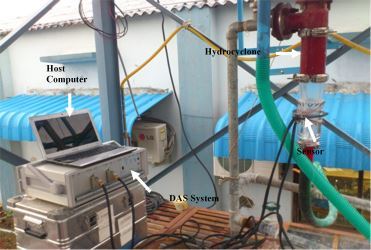
Narasimha Mangadoddy is a Professor in the Department of Chemical Engineering at Indian Institute of Technology Hyderabad. His research focuses on advanced computational fluid dynamics (CFD) applications in mineral processing, including multiphase flow modeling, hydrocyclone optimization, and fluidization studies. He has developed validated CFD models for industrial equipment like dense medium cyclones and hydrocyclones. His work integrates experimental techniques such as Gamma Ray Tomography, Electrical Resistance Tomography, and Laser Doppler Anemometry to validate computational models. Key projects include collaborations with TATA Steel, DST, and Tega Industries for equipment design and process optimization. Recent publications highlight his contributions to CFD modeling of fluidized beds, hydrocyclones, and dense medium cyclones, with applications in coal processing and iron ore beneficiation. Keywords include Computational Fluid Dynamics, Multiphase Flow, and Industrial Process Optimization. Excellence in Teaching Award (IIT Hyderabad, 2016) Best Paper Award (MPT-2016, Pune) University of Queensland International Research Award (UQIRA) He advises multiple PhD and master’s students, with research teams focusing on GPU-based CFD solvers, multi-component particle behavior, and industrial-scale flow simulations. Patents include novel dense medium cyclone and coal feed distributor designs.