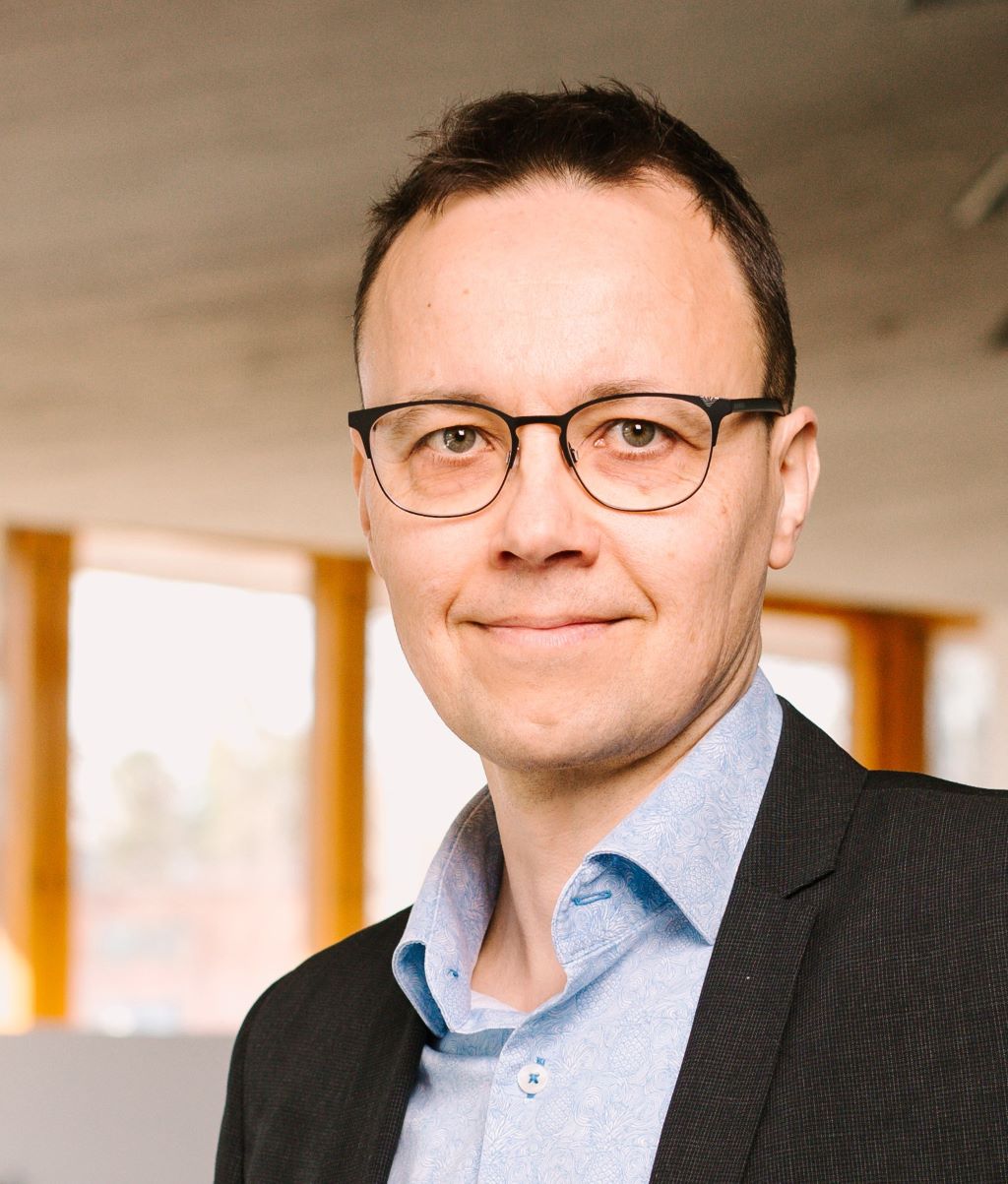
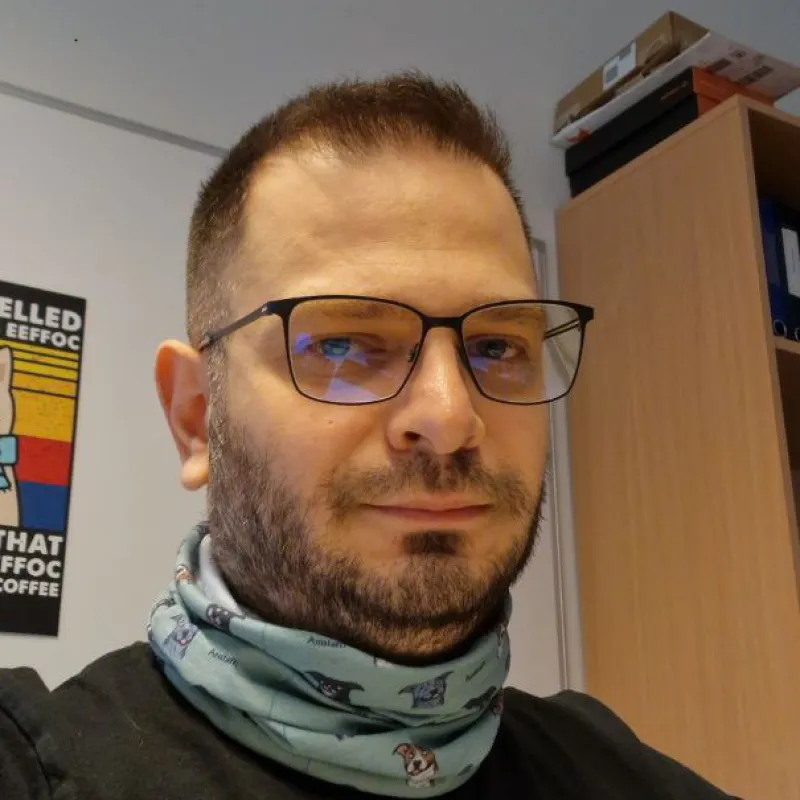
Simo Hostikka is a Professor in the Department of Civil Engineering at Aalto University's School of Engineering. His research focuses on fire safety engineering , utilizing numerical fire simulations to address critical challenges in building and infrastructure safety. Key Expertise: Fire Dynamics Simulator (FDS) development, thermal radiation heat transfer, pyrolysis modeling, fire toxicity calculations, and probabilistic risk analysis. Leadership: Supervises advanced fire safety research and contributes to international fire safety standards. Research Trends: Recent publications emphasize fire toxicity modeling , hydrogen fire safety , radiation heat transfer , and fire retardancy of polymeric materials . His work bridges computational methods with real-world fire safety applications. Scientific Awards: Philip Thomas Medal of Excellence (2008, 2005) Sjölin Award (2012) Interflam Trophy (2007) Harmathy Award (2020, 2019) Dean’s Award for Best MSc Thesis (2020) Best Paper in Rakenteiden Mekaniikka (2009) Advising: Supervised Topi Sikanen, who received the Young Talent Award from the International Water Mist Association.
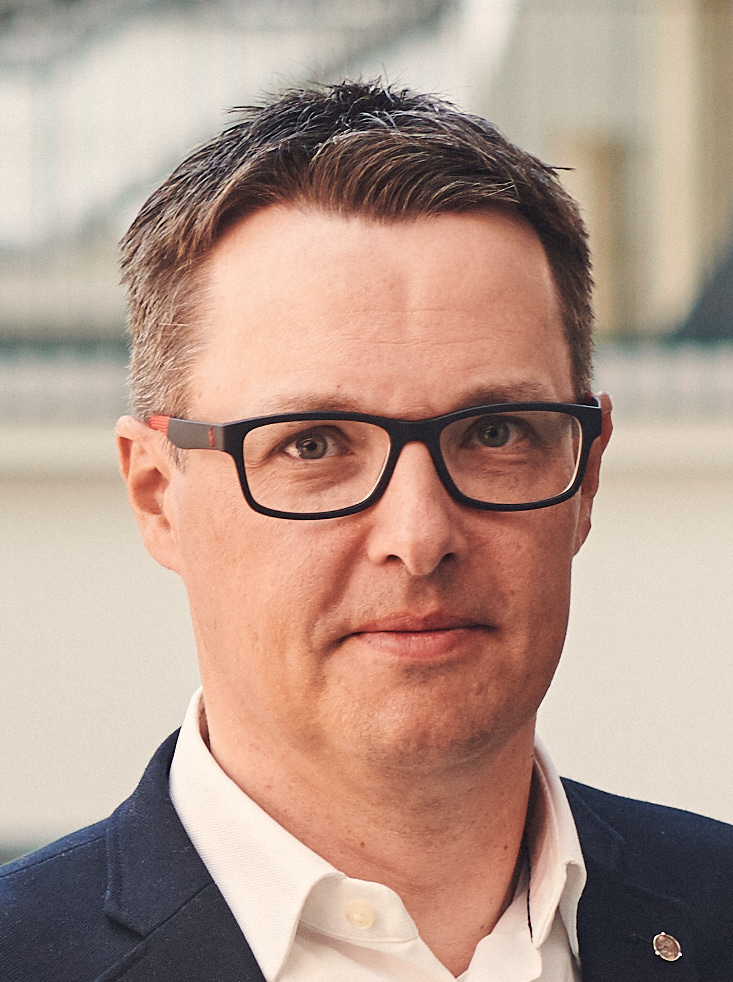
Toni Kotnik is an Associate Professor in the Department of Architecture at Aalto University, Finland. He holds dual expertise in mathematics and architecture, with a Ph.D. from the University of Zurich and a second degree in architecture. His roles include principal of d’HKL , a Zurich-based experimental architecture firm, and adjunct lecturer at institutions like Harvard University and the Bartlett School of Architecture. His research focuses on integrating science, engineering, and computation into architectural design, emphasizing structural innovation and sustainability. Education: Ph.D. in Mathematics (Dr. sc. Nat.), University of Zurich, 1999 Second degree in Architecture Research Interests: Computational design and generative systems Structural aesthetics and neuroaesthetics Sustainable urban and architectural solutions Parametric modeling and material systems Key Contributions: Advances in graphic statics and form-finding Design strategies for high-density urban environments Integration of AI and generative tools in architectural practice Recent Work Trends: Recent articles emphasize computational methods for industrial layout optimization, AI’s role in architecture, and embodied perception in structural design. His work bridges theoretical research with practical applications, such as the Singapore Hawker Centre redesign and experimental structures like hypar-combined shells. Awards: Aalto University Doctoral Thesis Awards (2022) Best Presentation Award (2019) Oscari-Vilamo Award (2023) Advising & Grants: Supervised 4 theses, including recipients of awards like the Metex Award shortlist. Active in international academic networks, serving on conference committees (e.g., International Association for Shell and Spatial Structures) and editorial roles (e.g., Automation in Construction journal). Labs & Teams: Leads the d’HKL studio, collaborating globally on projects like the AA/ETH Pavilion and the Hypercube for Gardens by the Bay. Research focuses on experimental design and material systems.
Jari Holopainen is a Senior Lecturer at the Department of Electronics and Nanoengineering , Aalto University. His work focuses on advanced antenna systems, wireless communication, and RFID technologies, with significant contributions to broadband, tunable, and wearable antenna designs. Current affiliation: Aalto University Academic role: Senior Lecturer Research interests span antenna design for mobile terminals, microwave engineering, and machine learning applications in RF systems. His publications highlight innovations in: Bluetooth antennas for metallic smartwatches and jewelry Wideband and dual-polarized antenna arrays RFID transponders with beam steering Machine learning-driven load optimization 3D-printed and capacitive-coupling antenna structures Wave propagation and scattering analysis Scientific contributions include: 15+ peer-reviewed articles (2025-2020) Collaborations with leading researchers in electromagnetics (e.g., Ville Viikari, Pertti Vainikainen)
Jukka Manner is a Full Professor (tenured) of Networking Technology at Aalto University's Department of Communications and Networking (Comnet), School of Electrical Engineering. With a career spanning over two decades in internet technologies, he leads research in networking, wireless systems, and energy-efficient ICT solutions. Dr. Manner received his MSc (1999) and PhD (2004) degrees in computer science from the University of Helsinki. His academic journey has been marked by significant contributions to internet standardization through the IETF since 1999, where he served as co-chair of the NSIS working group. Professor Manner's research focuses on networking, software and distributed systems, with particular emphasis on wireless and mobile networks, transport protocols, energy efficient ICT and cyber security. His work bridges theoretical advancements with practical applications, addressing critical challenges in modern communication systems, sustainable networking practices, and security frameworks. His research group has made significant contributions to 5G technologies, UAV communications, and energy-efficient network design. His extensive publication record shows a clear evolution toward sustainability in networking technologies, with recent work focusing on energy efficiency in 5G systems, sustainable web technologies, and the environmental impact of digital infrastructure. The research demonstrates strong interdisciplinary connections between telecommunications engineering, computer science, and environmental science, with particular emphasis on reducing the carbon footprint of digital systems while maintaining performance. Cross of Merit, Signals (2014) Medal for Military Merits for contributions in national defence and C4 (2015) Professor Manner has supervised over 200 MSc theses and more than 20 doctoral dissertations, establishing himself as a dedicated mentor in the field. He has been principal investigator and project manager for over 15 national and international research projects, including serving as Academic Coordinator for the Finnish Future Internet research programme (2008-2012). His leadership extends to conference organization, having served as local co-chair of Sigcomm 2012 in Helsinki, and active participation as a peer reviewer and member of various Technical Program Committees. As an active contributor to internet standardization through the IETF, Professor Manner's work has practical impact on global networking technologies. His research group maintains strong connections with industry partners and participates in shaping future networking standards and practices, particularly in the areas of sustainable networking, 5G evolution, and security frameworks for emerging technologies.
Minna Palmroth is a Professor of Computational Space Physics at the University of Helsinki 's Faculty of Science , leading the Department of Physics 's Space Physics Research Group. She directs the Kestävän avaruustieteen ja -tekniikan huippuyksikön (Centre of Excellence in Sustainable Space Science and Technology) and serves as the principal investigator for the Vlasiator hybrid-Vlasov simulation framework.
Jarno Vanne is a Professor at the Department of Computing Sciences, Faculty of Information Technology and Communication Sciences at Tampere University. His research focuses on video coding standards, real-time systems, and hardware acceleration, particularly in the context of FPGA implementations and open-source tools. He leads projects involving VVC (Versatile Video Coding), V-PCC (Volumetric Video Coding), and HEVC (High Efficiency Video Coding), with an emphasis on efficiency, low latency, and machine learning integration. Key research interests include point cloud compression, saliency-guided encoding, parallelization schemes, and real-time video communication protocols. His work often addresses challenges in multi-party video streaming, embedded systems, and encryption mechanisms for privacy protection. He has contributed to open-source projects like the UVG dataset, Kvazaar encoder, and CiThruS simulation frameworks. Recent publications highlight advancements in VVC intra encoding optimizations, machine learning-driven partitioning schemes, and FPGA-accelerated solutions for edge computing. His research bridges theoretical video coding algorithms with practical implementations, aiming to improve compression efficiency while maintaining real-time performance.
Ari Jantunen is a Professor in Strategy Research at the LUT Business School, LUT University, Lappeenranta, Finland. He is affiliated with the Department of Business Studies and has been actively contributing to academic research in strategic management and organizational behavior. University: LUT University School: LUT Business School Department: Business Studies Position: Professor, Strategy Research Email: Ari.Jantunen@lut.fi He earned his D.Sc. (Econ.) from Lappeenranta University of Technology in 2005, establishing a long-standing academic career focused on strategic change and innovation. Ari Jantunen’s research centers on strategic change and renewal, organizational cognition, dynamic capabilities, dominant logic, and industry dynamics . His work explores how managerial cognition influences strategic decisions and organizational performance, particularly in industries undergoing transformation such as media, energy, and forest sectors. He also investigates sustainability strategies, the circular bioeconomy, and corporate social performance. His recent publications reflect a strong trend in using cognitive mapping, qualitative comparative analysis (fsQCA), and simulation modeling to understand strategic phenomena. Articles on dominant logic, strategic renewal, and cognitive diversity highlight his focus on the cognitive underpinnings of strategic management. Among his notable works are studies on the bioeconomy transition in the pulp and paper industry, innovation races in high-tech sectors, and the interplay between corporate social and financial performance. Jantunen has collaborated extensively with researchers such as Anni Tuppura, Satu Pätäri, Kalevi Kyläheiko, and Anssi Tarkiainen, often co-authoring studies in journals like European Management Journal , Journal of Business Research , and Futures . Ari Jantunen is actively engaged in research and supervision, though no specific students are listed in the provided sources. He does not appear to have received any explicitly mentioned scientific awards, but his consistent publication record in high-impact journals underscores his academic contributions. He has been involved in interdisciplinary research projects, particularly those examining the interface between the energy and forest sectors, the diffusion of energy services, and innovation in cleantech firms. His work often combines theoretical rigor with practical insights, contributing to both academic discourse and industry applications.
Heikki Remes serves as Associate Professor in the Department of Energy and Mechanical Engineering at Aalto University's School of Engineering, where he investigates high-performance steel structures for marine environments with emphasis on lightweight ship designs using advanced materials and manufacturing techniques. His research integrates fundamental fatigue and fracture mechanics with practical structural challenges, spanning from crystal-level material behavior to continuum-scale modeling. Key focus areas include welded joint integrity, additive manufacturing defects, and computational analysis of marine structures under extreme conditions. Recent publications reveal strong trends in fatigue assessment methodologies for complex welded geometries, experimental validation of distortion effects, and AI-enhanced damage prediction systems, reflecting his commitment to bridging theoretical mechanics with shipbuilding applications. Scientific Awards: Aalto Education Impact Award (2018) for establishing Marine Technology study programs SNAME Honorable Mention for 2018 Vice Admiral E. L. Cochrane Award Teaching Award of Aalto School of Engineering (2012) for educational tools No specific student advising or grant information appears in available sources, though his active publication record indicates ongoing research leadership. He contributes significantly to the Marine and Arctic Technology research group, driving projects on structural integrity assessment and advanced manufacturing solutions for next-generation marine vessels.
Shahriar Afkhami is a Researcher in the Department of Mechanical Engineering at LUT School of Energy Systems, LUT University. His research focuses on advanced materials science, additive manufacturing processes, and mechanical properties of high-strength steels and dissimilar joints. He specializes in fatigue analysis, welding technologies, and the optimization of structural components for industrial applications. His work integrates experimental methods with computational modeling to address challenges in material behavior under extreme conditions. Key research areas include: Welding of ultra-high strength steels and dissimilar materials Mechanical performance of additively manufactured components Fatigue life assessment of welded joints and cut edges Thermomechanical behavior of heat-affected zones Material characterization of laser powder bed fusion (LPBF) steels Publications highlight trends in additive manufacturing for industrial applications, particularly in optimizing 3D-printed metal structures and analyzing their mechanical integrity. His work on notch-load interactions and fatigue strength has advanced methodologies for predicting component failure under complex loading conditions. Notable contributions include the VERKOTA project exploring 3D printing networks for enhanced industrial adoption. No scientific awards are listed in the provided information. Afkhami's research has been supported by collaborative projects such as the VERKOTA initiative, though specific grants are not detailed here. He maintains an active presence on professional networks including LinkedIn and Google Scholar.
David Hästbacka is an Associate Professor (tenure track) at the Department of Computing Sciences, Faculty of Information Technology and Communication Sciences at Tampere University. His research focuses on software engineering, industrial automation, and energy systems, emphasizing system architecture, interoperability frameworks, and dependable IoT solutions. He leads a research group exploring edge and cloud computing, semantic integration, and smart energy systems. Education & Professional Background : While specific educational details are not provided, his academic career includes roles such as Postdoctoral Researcher in the SEMIS project (2017-2020) and extensive involvement in EU-funded initiatives like COCOP (EU H2020) and Horizon Europe projects. Research Projects : Active in high-impact projects like Hedge-IoT (Horizon Europe, 2024-2027), TwinfFlow (Business Finland), and TRINEFLEX (Horizon Europe), with a focus on industrial automation, distributed systems, and energy grids. Past projects include FEMMa (Business Finland), DisMa (Academy of Finland), and Arrowhead (ECSEL). Teaching & Supervision : Specializes in Web/Cloud architectures, IoT systems, and dependable automation technologies. Supervises students in topics like edge computing frameworks and MLOps pipelines. Technical Contributions : Develops frameworks for industrial interoperability (e.g., OPC UA PubSub integration), edge-cloud toolchains, and MLOps methodologies. His work addresses challenges in microservices, Kubernetes distributions, and semantic data integration. Labs & Teams : Leads a research group advancing automation technologies through interdisciplinary collaboration, with partnerships in industry and academia to bridge theory and practice in smart systems.
Tiina Salmi is an Academy Research Fellow specializing in superconductivity and high-field magnet systems. She holds a Doctor of Science (Technology) in Electrical Engineering (2015) and a Master of Science in the same field (2009). Her research focuses on quench protection systems, superconducting magnet design for particle accelerators (e.g., Future Circular Collider, Muon Collider, and LHC upgrades), and material behavior under extreme conditions. Affiliations: Academy of Finland, collaborating with institutions like CERN and LARP. Key Projects: FCC dipole development, Muon Collider storage ring magnets, and HTS tape mechanical analysis. Editorial Roles: Editorial board member for IEEE Transactions on Applied Superconductivity (2020–present). Research Interests Her work addresses critical challenges in superconducting magnet technology, including quench dynamics, thermal management, and high-field stability. She employs computational models (e.g., FEM simulations) and AI-driven approaches to optimize magnet performance and safety. Recent focus areas include: Superconducting materials (Nb 3 Sn, ReBCO, HTS) under mechanical/thermal stress CLIQ protection systems for FCC-hh dipoles Surrogate models for predicting heater delays Mechanical behavior of 2G HTS tapes Grants & Activities Active in international collaborations like the Muon Collider Project and the LARP (LHC Accelerator Research Program). Conducted over 80 peer-reviewed publications (2011–2025) and presented at conferences since 2013. Her work aligns with SDGs 9 (Industry, Innovation) and 12 (Sustainable Consumption). Future Work Ongoing projects include optimizing superconducting magnets for next-gen colliders and advancing AI applications in magnet design. Exploring sustainable materials and cost-effective high-field magnet solutions for future accelerators.
Eetu Mäkelä is a Professor in Digital Humanities at the University of Helsinki, affiliated with the Helsinki Institute for Social Sciences and Humanities (HSSH). He holds a Doctor of Science in Computer Science and a Title of Docent in Computer Science. He supervises doctoral programs in History and Cultural Heritage, and Theology and Religious Studies. His research focuses on computational methods applied to humanities, including text reuse analysis, historical discourse studies, and digital cultural heritage. He leads the Helsinki Computational History Group (COMHIS) and participates in projects like CASCADE (computational semantic change analysis) and HPC-HD (high-performance computing for historical discourse analysis). Key research areas include computational analysis of historical texts, formulaic language in oral poetry, and linked open data applications in cultural heritage. Notable projects involve developing digital infrastructures for Finnic oral poetry and analyzing WWII data through linked open systems. Awards include the Best Paper Award at DHN 2020 and the Open Data Prize for the WarSampo system. Projects: CASCADE (EU Horizon Europe), HPC-HD (Academy of Finland), COMHIS (ongoing since 2018) Supervision: Doctoral programs in History, Cultural Heritage, and Theology Labs/Teams: Helsinki Computational History Group (COMHIS), leader of digital humanities initiatives
Dr. Otto Lappi is a Research Fellow at the University of Helsinki's Department of Digital Humanities, Faculty of Arts. His work bridges cognitive science and human performance in complex dynamic tasks, particularly focusing on predictive processing in visuomotor control. PhD in Cognitive Science Title of Docent at University of Helsinki Academy Research Fellow (2020-2025) His research explores: Cognitive mechanisms in high-speed sports and driving Predictive gaze strategies and steering control Flow states in skill acquisition VR and eye-tracking applications in archaeomusicology Neural substrates of domain expertise Recent publications analyze: Flow-state dynamics in visuomotor learning Predictive gaze behavior in automated driving Computational models of attention in distracted driving Chunking mechanisms in high-speed sports performance Scientific contributions include: Academy Research Fellow (Research Council of Finland) Editorial work on high-performance cognition Organizing cognitive science workshops As doctoral supervisor, he has guided: Samuel Tuhkanen (Predictive Gaze and Steering) Jesse Kuokkanen (Mechanistic Computationalism) Ida Maasalo (Driver Behavior) Markus Mattsson (Psychometrics)
Sakari Lahti is a Lecturer in the Department of Computing Sciences at Tampere University, within the Faculty of Information Technology and Communication Sciences. His primary responsibilities include teaching digital logic and hardware design. He holds an ORCID identifier: 0000-0002-9915-4784 . Lahti's research focuses on High-Level Synthesis (HLS) for FPGAs, with emphasis on optimizing embedded systems, real-time applications, and digital signal processing. His work spans FPGA implementation techniques, compiler optimizations for HLS tools, and practical applications in media processing and wireless communications. Notable projects include real-time HEVC video encoding and nonlinear self-interference cancellation systems. His publications reflect a sustained contribution to FPGA-based hardware design, with a decade of work from embedded systems (2002) to modern C++ integration in HLS (2023). Collaborations include colleagues like Teemu Hämäläinen and Jari Vanne, focusing on bridging software and hardware design methodologies. His research also extends to educational aspects, such as real-world product development in system design courses. Lahti’s work is peer-reviewed and published in prestigious venues like IEEE Transactions and conferences like DDECS and ISCAS. His research unit is the Unit of Computing Sciences at Tampere University.
Jukka K Nurminen is a Professor of Computer Science at the University of Helsinki (since 2019) and a Research Professor at VTT. He leads the Empirical Software Engineering research group and supervises doctoral students in the Doctoral Programme in Computer Science. His career spans academia and industry, including roles as Adjunct Professor at Aalto University (part-time, 2016-2021) and Principal Scientist at VTT (2016-2019). His research focuses on efficient software systems , particularly energy-efficient software , mobile cloud computing , and data-intensive systems . Recent work addresses AI system testing , ethical decision-making in software , and quantum computing software . His publications highlight trends in quantum algorithms , machine learning for edge computing , and ethical AI . Best Paper Award (2023) Nurminen has supervised 6 PhD theses, 48 MSc theses, and 21 BSc theses. He has secured over 1 MEUR in research funding, including projects like FrameQ and EM4QS for quantum middleware. His teaching innovations include hackathons and summer schools, with excellence recognized in tenure-track evaluation (2018) and adjunct professorship (2015).