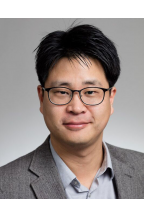
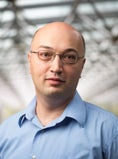
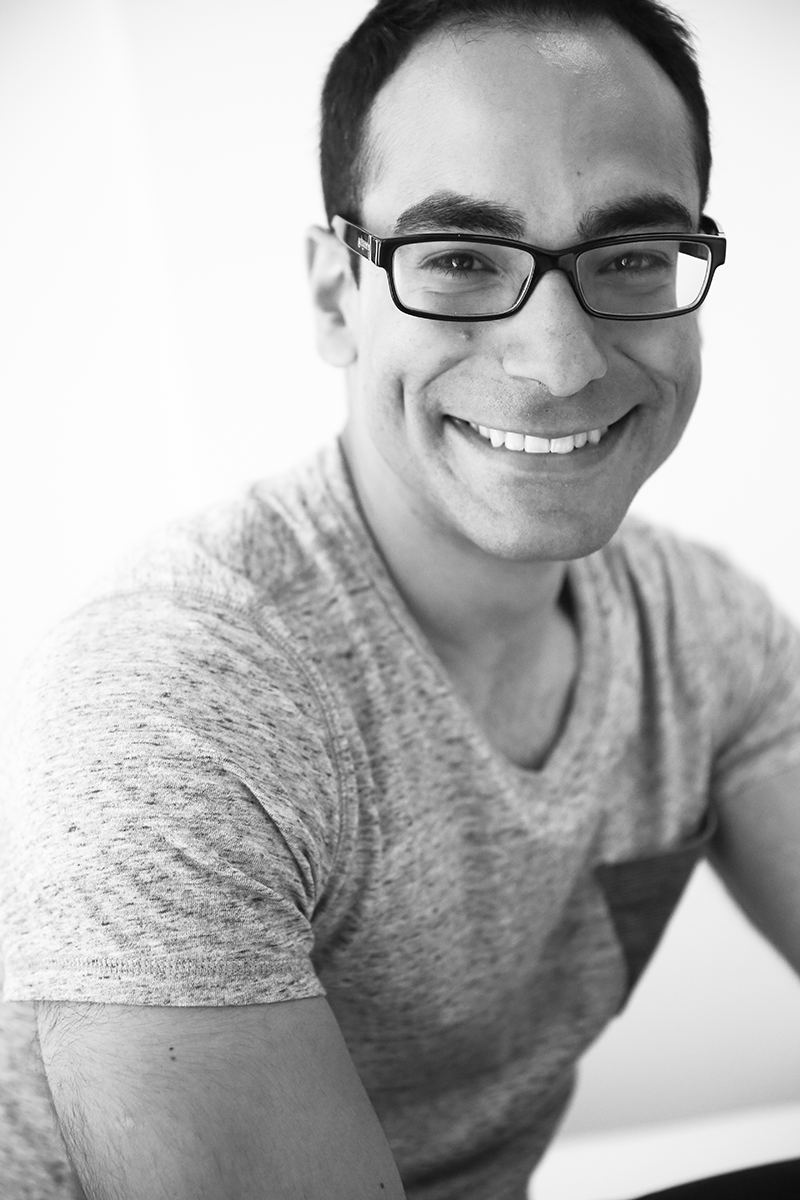
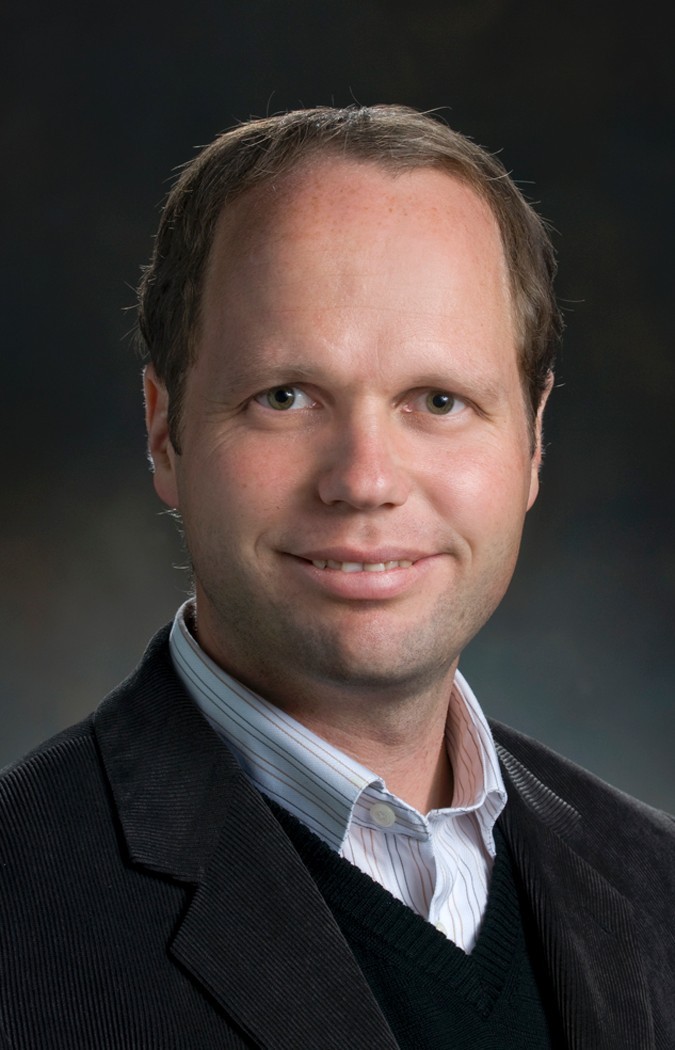
Dr. Simarjeet Saini is Associate Professor and Pearl Sullivan IDEAs Clinic Director at the University of Waterloo's Department of Electrical and Computer Engineering. His research focuses on integrated optoelectronic systems for telecommunications, sensing, and signal processing. He founded Altanet Communications (2004) and previously developed semiconductor technologies at Covega Corporation. Key research areas include monolithic integration of photonic devices, tunable mid-infrared lasers, nanophotonic chem-bio sensors, and high-speed optical networks. The Nanophotonics and Integrated Optoelectronics Laboratory under his direction creates platform technologies enhancing performance in sensing and communication applications. Recent work explores smartphone-based optical sensors for healthcare and environmental monitoring. Education: Ph.D. Electrical Engineering, University of Maryland (2001) B.Tech Electronics Engineering, IIT Kharagpur (1996)
Youngki Yoon is an Associate Professor in Electrical and Computer Engineering at the University of Waterloo, specializing in nanoscale device physics and computational modeling. His research develops quantum transport simulators using the Non-Equilibrium Green's Function method for predictive analysis of emerging nanoelectronic devices. Research focuses on nanoscale transistors/sensors, simulation tools for device analysis, and performance optimization of 2D material-based devices. Recent investigations include negative capacitance FETs, ferroelectric materials, and wafer-scale fabrication of optoelectronic sensors.
Yuying Li is a Professor at the University of Waterloo's Cheriton School of Computer Science. Research focuses on computational optimization algorithms for finance, including neural network approaches for leverage-constrained portfolios, benchmark outperformance strategies, and inflation-regime asset allocation. Holds a BSc from Sichuan University (1982), MMath (1985) and PhD (1988) from Waterloo. Her work bridges continuous optimization, machine learning, and financial engineering. Recent publications develop neural alternatives to dynamic programming for portfolio management, with applications to ETF leverage, decumulation strategies, and high-inflation environments. Methodological innovations address computational scalability and regime-specific modeling.
Tamer Özsu is a University Professor at the David R. Cheriton School of Computer Science, University of Waterloo, where he previously served as Director (2007-2010) and currently holds the role of Associate Dean of Research. He is also a Distinguished Visiting Professor at Tsinghua University. Professor Özsu's research spans distributed data management, graph/RDF systems, and database fundamentals. His current work focuses on: Distributed graph processing algorithms SPARQL query optimization for RDF systems Streaming graph analytics Indexing techniques for modern hardware Distributed database architectures He has authored the seminal textbook Principles of Distributed Database Systems and co-edited the Encyclopedia of Database Systems . As founding Editor-in-Chief of ACM Books, he has shaped computing literature. His recent publications demonstrate continued innovation in graph partitioning, streaming graph algorithms, and scalable RDF processing. Özsu maintains active research leadership in database systems with over 30 years of influential contributions.
Mark Smucker is a Professor at the University of Waterloo, specializing in Information Retrieval and Search Engine Technology. His primary research focuses on evaluating search systems, combating health misinformation, and understanding user behavior in search contexts. He has been actively involved in TREC tracks since 2019, contributing to tracks like Health Misinformation, Decision, and Lateral Reading. His work emphasizes developing robust evaluation measures and preference judgment tools. Research interests include: Advanced evaluation metrics for search systems User interaction and behavior analysis Health misinformation detection and mitigation Design of preference-based ranking algorithms Optimization of high-recall retrieval systems Recent work highlights innovative approaches to: Expanding benchmark datasets for evaluation Visualizing gaze patterns in search interactions Reducing misinformation through trustworthy web source learning Simulating user behavior for predictive system evaluation His contributions to TREC tracks demonstrate leadership in collaborative research. Though no academic awards are listed, his extensive publication record reflects significant scholarly impact.
Stephen Watt is a Professor at the University of Waterloo, affiliated with the Department of Computer Science within the Faculty of Mathematics. He holds a PhD in Computer Science (1986), MMath in Applied Mathematics (1981), and BSc in Honors Mathematics and Physics (1979). His research focuses on enabling computers to handle mathematics intelligently, with key areas including programming languages for mathematical software, symbolic computation algorithms, computer algebra system interoperability, mathematical knowledge management, and STEM education technology. His work spans theoretical and applied domains, such as developing algorithms for block matrices and handwriting recognition systems like the Legendre-Sobolev approach. He has contributed to initiatives like the International Mathematical Knowledge Trust (IMKT) and collaborated on projects like InkML for mathematical collaboration. Recent publications explore generative AI in STEM assessments, software portability, and GPU-optimized arithmetic operations. Dr. Watt’s research also addresses historical perspectives on symbolic computation and its evolution, alongside modern challenges in mathematical collaboration tools and digital ink compression. His contributions span conferences such as ISSAC, CICM, and SYNASC, reflecting interdisciplinary engagement with both theoretical and applied computer science.
Hamid Jahed is a Professor and University Research Chair in Cold Spray Technology at the University of Waterloo's Mechanical and Mechatronics Engineering Department. He directs the Fatigue and Stress Analysis Laboratory (FATSLab), focusing on cold spray technology, materials durability, and structural life enhancement. His research spans additive manufacturing, residual stress analysis, and EV battery durability, with strong industry partnerships. He has received numerous awards, including the International Magnesium Association 2021 Award of Excellence and multiple University of Waterloo distinctions. Education: PhD (1997, University of Waterloo), MEng (1982, University of Houston), BEng (1981, University of Houston). Research interests include cold spray applications (coatings, 3D printing), fracture mechanics, digital twins, and magnesium alloy processing. Recent work explores hydrophilic Teflon coatings, fatigue behavior of additively manufactured alloys, and antimicrobial surface treatments. He supervises 11 graduate students and has trained 100+ researchers. Awards highlight his teaching and research excellence, including the Sandford Fleming Teaching Award and multiple Distinguished Performance Awards. Current projects involve EV battery durability and low-carbon manufacturing innovations. FATSLab investigates fatigue properties of materials under multiaxial loads, residual stress measurement, and cost-effective magnesium alloy fabrication. He collaborates with automotive OEMs and Tier 1 suppliers on large-scale industry projects.
John Magliaro is an Assistant Professor at the University of Waterloo, affiliated with the Faculty as a full-time member. His research focuses on advanced materials and structures, particularly in energy absorption mechanisms, deformation behavior under extreme conditions, and crashworthiness applications. Key areas include the study of metallic alloys (e.g., AA5182, AA6061), polymer composites (e.g., PA6/Glass LFTs, PVC foams), and their performance under dynamic loading, strain rate effects, and environmental factors like moisture and cryogenic temperatures. His work emphasizes experimental and computational investigations into material response during impacts, compression, and cutting deformations. Recent studies explore composite structures combining metals and foams to enhance energy dissipation capabilities, with applications in automotive safety and structural engineering. Notable contributions include developing novel testing apparatuses and semi-empirical models to predict mechanical responses under diverse deformation modes. No scientific awards or grants are explicitly listed in the provided texts. Advising and student supervision details are unavailable. His research aligns with the university’s engineering initiatives, though specific lab affiliations or future projects remain unmentioned.
Dr. Adrian Lupascu is an Associate Professor at the University of Waterloo, affiliated with the Institute for Quantum Computing (IQC) and the Department of Physics and Astronomy. He holds a cross-appointment in the Department of Electrical and Computer Engineering. His research focuses on superconducting quantum devices, including quantum annealing, quantum control, and strong light-matter interactions. Lupascu leads the Superconducting Quantum Devices Group, which explores novel architectures for quantum computing and sensing. Education: BSc in Physics (University of Bucharest, 2000); PhD in Physics (Delft University of Technology, 2005). Postdoctoral training included work at Delft University of Technology and École Normale Supérieure Paris under Professors Haroche and Raimond, supported by a Marie Curie Fellowship. Research Interests: Development of superconducting flux qubits for quantum information processing, quantum sensing, and ultrastrong light-matter interactions. Key projects include quantum annealing error suppression, qubit-qutrit gate optimization, and advanced flux qubit fabrication techniques. Awards: Alfred P. Sloan Fellowship (2011), Early Researcher Award (2011), Waterloo Nanotechnology Institute Research Leader Award (2018, 2022). His work has been funded by NSERC, MRI, and industry partnerships. Teaching: Courses include Quantum Nanophysics (PHYS 461), Nanoelectronics for Quantum Computing (QIC 880/ECE 770), and Quantum Optics Theory (QIC 895). Lab Activities: Active in developing scalable superconducting qubit systems, cryogenic microwave engineering, and quantum device fabrication. Collaborates with industry and academic partners on quantum computing hardware advancements.
Robert Nishida is an Assistant Professor at the University of Waterloo, holding professional engineering (PEng) certification. His research focuses on aerosol dynamics, fuel cell technology, and advanced sensor development. He specializes in computational fluid dynamics (CFD), heat and mass transfer phenomena, and the design of precision instruments for environmental and industrial applications. His work spans aerosol measurement techniques, including bipolar and unipolar charging systems, as well as high-precision sensors for particle analysis. Notable contributions include open-source modelling frameworks for aerosol dynamics and fuel cell performance optimization. Recent studies address SARS-CoV-2 transmission via aerosols and droplets, integrating virology with engineering solutions. Nishida’s research also explores solid oxide fuel cell stacks, emphasizing thermal management and electrochemical performance. He develops novel catalysts for carbon nanotube synthesis and has pioneered methods for measuring nanoparticle charge distribution using the Aerodynamic Aerosol Classifier. His interdisciplinary approach bridges environmental science, energy systems, and advanced instrumentation. His publications emphasize practical applications of computational models and sensor technologies, with a focus on real-world validation through experimental setups. While no specific awards or grants are listed, his prolific output in high-impact journals highlights his expertise in aerosol engineering and energy systems.
Pooya Ronagh is a Research Assistant Professor at the University of Waterloo, affiliated with the Department of Physics & Astronomy and the Institute for Quantum Computing (IQC). He also serves as a Scientific Lead at the Perimeter Institute Quantum Intelligence Lab (PIQuIL) and directs the Hardware Innovation Lab at 1QBit. His work bridges quantum computation, machine learning, and optimal control, focusing on quantum algorithms, error correction, and hybrid quantum-classical systems. Education: PhD in Mathematics (University of British Columbia, 2016), MSc in Mathematics (UBC, 2011), dual BSc in Mathematics and Computer Science (Sharif University of Technology, 2009). Awards include the Benjamin Franklin Fellowship (2009). Research Interests: Quantum algorithms for machine learning, reinforcement learning, fault-tolerant quantum architectures, cryogenic systems, and quantum control. He explores applications of quantum simulation to improve learning efficiency and robustness in AI systems. Recent work includes optimizing quantum error correction decoders, developing scalable superconducting architectures, and advancing neural network-based quantum state tomography. His contributions span theoretical frameworks (e.g., lattice surgery scheduling) and experimental methods (e.g., SFQ pulse control). Teaching: Courses like PHYS 490 (Machine Learning in Physics) emphasize practical coding and interdisciplinary projects. Grants and collaborations involve industry and academic partners in quantum hardware and software development. Labs: Hardware Innovation Lab (1QBit), IQC Quantum Control Group Future Work: Scaling quantum supercomputers, cryogenic neural decoders, quantum-enhanced generative AI
Matthias Schonlau is a Professor in the Department of Statistics at the University of Waterloo. He previously worked as a statistician at the RAND Corporation (1999-2011), where he led the RAND Statistical Consulting Service. He holds a PhD from the University of Waterloo (1997) and a Master's from Queen's University (1993). His research focuses on survey methodology, natural language processing for open-ended questions, data visualization, and statistical software development. Key contributions include the Hammock Plot for mixed data visualization and automated classification algorithms for open-ended survey responses. His work spans algorithmic innovation (e.g., occupation coding, multi-label classification) and statistical software tools (e.g., HAMMOCK and RFOREST modules for Stata). Recent projects address semi-automated classification, one-shot learning, and text dataset distillation. He has held sabbaticals at the University of Auckland (2015-2016) and DIW Berlin (2009-2010), collaborating with the Max Planck Institute. Major awards include the Humboldt Research Prize (2022) and ASA Fellowship. His publications emphasize bridging statistical methods with practical applications, including books like Applied Statistical Learning (2023) and peer-reviewed articles in computational statistics and machine learning.
Mihaela Vlasea is an Associate Professor at the University of Waterloo, specializing in additive manufacturing (AM) and materials science. Her research focuses on advancing AM processes such as laser powder bed fusion (LPBF), electron beam powder bed fusion (EB-PBF), and binder jetting. She explores topics including microstructural evolution, process optimization, material characterization, and defect detection using machine learning and advanced testing techniques. Her work addresses challenges in AM such as surface roughness prediction, pore formation, and mechanical property enhancement through data-driven frameworks. She also investigates novel applications like auxetic structures in orthopaedics and lightweight functional materials. Key areas of interest include the interplay between process parameters, material properties, and final component performance. Dr. Vlasea’s research often employs nondestructive evaluation methods (e.g., phased array ultrasonic testing) and computational modeling to improve AM process control and part quality. Her contributions span both metallic and ceramic materials, with a focus on industrial applications in aerospace, automotive, and biomedical fields. She leads the Multi-Scale Additive Manufacturing Lab , where she develops innovative AM methodologies for complex architectures and functional materials. Her work bridges fundamental materials science with applied manufacturing engineering, emphasizing sustainability and cost-effective solutions for AM processes.
Jabed Tomal is an Associate Professor in Statistics and Data Science at Thompson Rivers University (TRU), Canada. Previously, he held positions as an Assistant Professor at TRU (2018–2023) and the University of Toronto Scarborough (2014–2018), and a Postdoctoral Fellow at the University of British Columbia (2014). He earned a Ph.D. in Statistics (2013) from UBC, specializing in statistical machine learning, and dual M.Sc. degrees in Statistics (University of Windsor, 2007) and Biostatistics (University of Dhaka, Bangladesh). His research focuses on ensemble methods, Bayesian inference, and statistical ecology, with applications in drug discovery, protein homology, and environmental modeling. Key research interests include developing ensemble models for high-dimensional data, Bayesian methods for breakpoints detection in housing markets and ecological systems, and statistical approaches in healthcare. Notable contributions include work on QSAR studies, Bayesian hierarchical modeling of pandemic impacts, and ecological threshold detection. Tomal has secured grants such as the NSERC Discovery Grant ($102,500) and TRU internal funds for projects in big data and environmental thresholds. He has advised numerous graduate and undergraduate students on topics ranging from machine learning in healthcare to single-cell RNA sequencing analysis. His teaching spans courses like Bayesian Machine Learning, Multivariate Statistics, and Theoretical Machine Learning at the graduate level, alongside foundational statistics and calculus courses at TRU and the University of Dhaka. Administrative roles include Chair of the Award and Scholarship Committee for TRU’s Master of Data Science program and membership in Senate Research Committee. Education: Ph.D., Statistics (2013), UBC Vancouver M.Sc., Statistics (2007), University of Windsor M.Sc., Biostatistics (2005), University of Dhaka Awards: NSERC Discovery Grant (2021–2026) Research Training Recognition Fund (TRU,多次) SSC 2013 Talk Honourable Mention Labs/Teams: Active in interdisciplinary projects at TRU’s Department of Mathematics and Statistics, focusing on data science applications in ecology, healthcare, and genetics.
Bernd Stelzer is a Professor in the Department of Physics at Simon Fraser University (SFU). His research focuses on subatomic particle physics, particularly collider experiments at the high-energy frontier using the ATLAS detector at CERN. He leads the High Energy Physics Group, which includes Ph.D. candidates and postdoctoral researchers investigating topics like Higgs boson physics, top quark behavior, and advanced analysis techniques. Education: BSc (Honors) in Physics from the University of Cape Town, Dipl. Phys (Physics) from Heidelberg University, PhD in Physics from the University of Toronto. He was a Feodor Lynen Fellow at UCLA supported by the Humboldt Foundation. Research interests include mechanisms of electroweak symmetry breaking, top quark physics as a probe of beyond-Standard-Model physics, and development of advanced analysis methods. His group actively contributes to ATLAS experiments analyzing proton-proton collisions at the LHC. Key achievements include studies of Higgs boson production and decay mechanisms, searches for new particles like vector-like quarks, and investigations of quantum chromodynamics (QCD) dynamics. He has published extensively on topics ranging from jet flavor tagging to environmental sustainability of high-energy physics computing. Advises several graduate students and collaborates internationally on ATLAS-related projects. His lab focuses on leveraging large-scale computing and machine learning to enhance particle physics analysis capabilities.