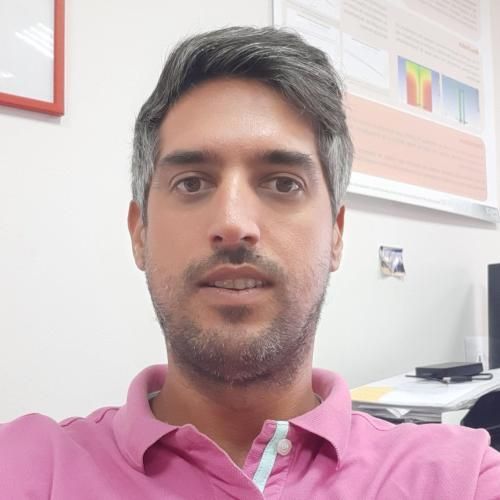
Kia Bazargan is an Associate Professor and the Leroy and Ruth Fingerson Co-op Professor at the University of Minnesota, College of Science and Engineering. He currently serves as Director of the Co-op Program and focuses on VLSI-CAD, FPGA physical design, and hybrid binary-unary computing. University: University of Minnesota School: College of Science and Engineering Department: Electrical and Computer Engineering His research emphasizes stochastic computing and unary computing, where numbers are encoded as streams of bits. He explores techniques to reduce hardware costs while maintaining efficiency, particularly for edge computing and neural network applications. Recent publications highlight his work on hybrid binary-unary computing, FPGA-based inference acceleration, and lossless compression of lookup tables. Grants from Cisco Systems and the National Science Foundation support his projects. Scientific Awards: PFI-TT Grant (2020-2024): Commercializing hybrid computing for modern applications Uniqomp NSF Grant (2020-2021) EAGER Grant (2015): Studying complex dynamical systems His lab (4-162 EE/CSci) investigates scalable computing paradigms to bridge the gap between ASICs and FPGAs in performance and energy efficiency.
Dr. Tim Lynar serves as a Senior Lecturer at the University of New South Wales Canberra within the School of Systems & Computing. With a strong background in both academic research and industry practice, he has established himself as a leading figure in cyber security and computer science. His work bridges theoretical research with practical applications, focusing on innovative solutions for complex computing challenges across multiple domains including IoT security, machine learning applications in cyber defense, and high-performance distributed systems. Dr. Lynar's research interests span a wide spectrum of cyber security applications, with particular emphasis on the application of machine learning techniques to security challenges and the innovative use of epidemiological approaches to understand and combat cyber threats. His work in modeling & simulation, statistical & data analysis, network & systems administration, and high-performance distributed computing demonstrates his commitment to developing comprehensive security frameworks that address evolving threats in digital environments. The interdisciplinary nature of his research connects computer science with biological modeling approaches, creating novel methodologies for understanding security vulnerabilities. Analysis of Dr. Lynar's recent publications reveals a strong trend toward applying advanced machine learning techniques to cyber security challenges, particularly in IoT environments. His work increasingly integrates epidemiological models with security frameworks, creating a unique approach to threat detection and mitigation. The research spans practical applications in network security, drone systems, and AI security, demonstrating both theoretical depth and real-world applicability. A notable pattern is the consistent application of cutting-edge deep learning architectures like Vision Transformers and Variational Autoencoders to solve specific security problems across diverse domains. IBM Master Inventor (2016) Multiple IBM Innovation Awards (2011-2018) Client Value Outstanding Technical Achievement Awards (2015-2016) High Value Patent Awards (2014-2016) Best Article Award – International Journal of Information Systems & Social Change (2010) Multiple research scholarships from 2007-2010 Dr. Lynar's extensive patent portfolio demonstrates significant industry impact, with numerous issued US patents spanning diverse applications from energy efficient supercomputing to vehicle collision avoidance and drone-based microbial analysis. His research has attracted substantial industry collaboration, particularly with IBM, where he received multiple prestigious awards including the IBM Master Inventor designation. The practical applications of his work are evident in the wide range of patented technologies addressing real-world security and optimization challenges across multiple industries. Dr. Lynar's work spans multiple research domains simultaneously, with active projects in cyber security, drone systems, AI safety, and maritime traffic analysis. His research methodology consistently combines theoretical modeling with practical implementation, often leveraging simulation environments to test and validate approaches before real-world deployment. The interdisciplinary nature of his work creates connections between traditionally separate fields, enabling innovative solutions to complex problems.
Dusan Licina is an Associate Professor at the École polytechnique fédérale de Lausanne (EPFL) and director of the Human-Oriented Built Environment Laboratory (HOBEL) within the Smart Living Lab initiative. His research bridges building science, environmental engineering, and human health. Education: BSc/MSc in Mechanical Engineering (University of Belgrade), joint PhD (National University of Singapore & Technical University of Denmark), postdoc (University of California Berkeley) Key research areas: Indoor air quality, human exposure science, building ventilation, IoT sensing, energy-efficient housing His 15 most cited works focus on particle dynamics, ozone chemistry, and occupant-driven building systems. Notable trends include human-clothing interactions in pollution transport, nanocluster aerosol formation, and real-time CO2 monitoring behavior. Awarded Yaglou award (ISIAQ) for sustainable healthy buildings research Ralph G. Nevin’s award (ASHRAE) for human exposure studies and serving on the Indoor Air editorial board. Current PhD students Dong Hui, Liu Tianqi, Loizou Maria, Medina Taylor Oran explore: Occupant behavior in energy systems Smart sensor networks Radon measurement technologies Work-from-home environmental quality His laboratory develops Human-Centric Sensing Platforms and Occupant-Centric Building Design methodologies through experimental chambers and computational models.
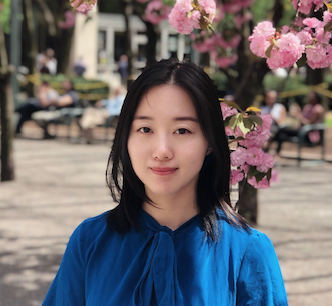
Sophie H. Yu is an Assistant Professor of Operations, Information and Decisions at the Wharton School of Business, University of Pennsylvania. She completed her postdoctoral work in the Department of Management Science and Engineering at Stanford University before joining Wharton. Her academic journey includes a Ph.D. in Decision Sciences from the Fuqua School of Business at Duke University (2023), an M.S. in statistical and economic modeling from Duke University (2017), and a B.S. in Economics from Renmin University of China (2015). Ph.D. in Decision Sciences, Fuqua School of Business, Duke University (2023) M.S. in Statistical and Economic Modeling, Duke University (2017) B.S. in Economics, Renmin University of China (2015) Sophie's research focuses on high-dimensional statistics, algorithm design, and performance evaluation in large-scale networks and stochastic systems . Her work draws inspiration from real-world business, engineering, and natural sciences problems that can be modeled into large and complex networks. She has explored fundamental limits and efficient algorithms on graph matching, online platform policy design with bounded regret, and data confidentiality protection. Her research spans the intersection of operations research, applied probability, statistics, and computer science, with particular emphasis on network science and information theory. Sophie's publications demonstrate a strong focus on matching problems in networks, with significant contributions to understanding random graph matching, network correlation testing, and online matching algorithms. Her work shows a progression from fundamental theoretical questions to practical applications in resource allocation and market design. Recent papers indicate increasing focus on practical implementations of theoretical concepts in real-world matching markets. Thomas M. Cover Dissertation Award from IEEE Information Theory Society (2024) Best Dissertation Award from Fuqua George Nicholson Student Paper Competition finalist, INFORMS 2022 Sophie has been actively involved in academic service, presenting her work at numerous prestigious institutions including University of Texas at Austin, University of Toronto, London School of Business, and MIT. She has taught graduate courses in decision modeling and served as a teaching assistant for various statistics and operations courses during her doctoral studies at Duke University. Her research has been supported through academic appointments and likely research grants related to her work in network science and matching algorithms.
Prof. Dr.-Ing. Marc Reichenbach serves as the Chair of Integrated Systems at the Institute for Applied Microelectronics and Data Technology at the University of Rostock. His office is located at Albert-Einstein-Straße 26, 18059 Rostock, Room 102 (1st floor), with contact information including telephone (0381) 498 7270 and email marc.reichenbach@uni-rostock.de. Professor Reichenbach's research focuses on the intersection of hardware design and artificial intelligence, with particular expertise in memory technologies and computing architectures. His work spans several key areas: Development of specialized computer architectures for deep learning applications Advanced VLSI design and CPU architecture Emerging memory technologies, particularly RRAM (Resistive Random-Access Memory) FPGA-based acceleration systems Hardware implementations for neural networks and AI applications Analysis of Professor Reichenbach's recent publications (2023-2025) reveals a strong focus on memory computing technologies, particularly RRAM-based systems. His work demonstrates expertise across multiple dimensions of computer architecture including ASIC design, FPGA acceleration, and novel memory systems. The publications show a clear trajectory toward implementing AI and machine learning capabilities directly in hardware, with applications ranging from edge computing to satellite systems. A significant portion of his recent work addresses the challenges of implementing neural networks using emerging memory technologies, focusing on efficiency, reliability, and performance optimization. Professor Reichenbach teaches several advanced courses including: Computer architectures for deep learning applications Project seminar Embedded Systems Advanced VLSI Design (Advanced CPU Design) His research group appears to be actively engaged in several cutting-edge projects related to hardware acceleration for AI applications, memory computing, and embedded systems design. The group collaborates on projects involving digital twins for hardware systems, real-time operating systems for heterogeneous architectures, and specialized computing systems for various applications from medical devices to drone technology.
Professor Emese Lazar serves as Professor of Finance and Deputy School Director of Teaching and Learning at the ICMA Centre, Henley Business School, University of Reading. She joined the institution in 2005 and is an active member of the Econometrics with Data Science research cluster, focusing on quantitative finance applications. Her educational background includes: PhD in Finance from the University of Reading BSc in Finance and Banking from the University of Economic Studies, Bucharest BSc in Computer Science from the University of Bucharest Research interests span risk measurement and management , model risk , financial econometrics , derivatives pricing , green finance , climate risk in finance , and machine learning applications . Her work bridges theoretical finance with practical risk management challenges, particularly in climate-related financial risks and algorithmic risk modeling. Recent publications reveal a pronounced shift toward integrating climate risk metrics with traditional financial models and developing neural network-based forecasting for tail risk measures. Her research demonstrates consistent innovation in volatility modeling, model risk quantification, and climate finance applications across top-tier journals. Professor Lazar teaches postgraduate modules in Market Risk and Climate Change and Risk Management, supervising PhD students in her specialized research areas. She actively contributes to the Econometrics with Data Science research cluster, fostering interdisciplinary collaboration between finance, data science, and climate risk modeling.
Dr. Andreas Kopmann serves as Deputy Director of the Institute for Process Data Processing and Electronics (IPE) at Karlsruhe Institute of Technology (KIT) and leads the Process Data Processing group. With over two decades of experience in experimental physics and data systems, he plays a pivotal role in major international research collaborations including the KATRIN neutrino experiment and PANDA detector project. PhD in Electrical Engineering, University of Hannover (2000) Diploma in Electrical Engineering, University of Hannover (1994) Dr. Kopmann's research focuses on data acquisition systems, trigger systems, real-time monitoring, GPU computing, and data management for large-scale physics experiments. His work bridges experimental physics requirements with advanced computing technologies, particularly in high-data-rate applications for particle physics and synchrotron radiation facilities. He has pioneered novel detector technologies and data processing frameworks that enable cutting-edge scientific discoveries in neutrino physics and accelerator science. Analysis of Dr. Kopmann's recent publications reveals a strong trajectory toward higher data rates, sophisticated real-time processing, and integration of machine learning techniques. His work spans neutrino physics through KATRIN, detector development for PANDA and other experiments, and innovative data acquisition systems like KALYPSO and UFO. The interdisciplinary nature of his research combines particle physics, computing science, and electronics engineering to solve complex experimental challenges. KIT Program Lead for "Matter and Technologies" (2021-present) Coordinator of Helmholtz Program Topic "Detector Technologies and Systems" Principal Investigator in Karlsruhe School for Elementary Particle Physics (KSETA) Project Leader for Data Acquisition in KATRIN experiment As Deputy Director of IPE, Dr. Kopmann oversees research groups developing critical technologies for experiments at KIT, DESY, CERN, and other international facilities. His team's work on high-speed data acquisition, detector electronics, and computing infrastructure supports groundbreaking research in particle physics, neutrino physics, and materials science.
PASCUAL ALVAREZ GOMEZ is a Professor at the University of Cádiz, affiliated with the Department of Industrial Engineering and Civil Engineering. His research focuses on Ground Engineering and Thermal Engineering, with a particular emphasis on geothermal heat pumps and thermal performance modeling. He is associated with the TEP221 Thermal Engineering research group and contributes to the PAIDI area of Production Technologies. Education: PhD in Industrial Engineering from the University of Cádiz (2014), with a thesis on "Vertical Ground Heat Exchanger Simulation Model for Geothermal Heat Pumps" Research: Specializes in hybrid thermal modeling, CFD analysis for evaporation rates, and machine learning applications in corrosion prediction His publications highlight advancements in geothermal systems, low-concentration photovoltaics, and biogas environment corrosion analysis. He employs both analytical and computational fluid dynamics (CFD) approaches for energy efficiency improvements.
Roberto Giorgi is an Associate Professor of Computer Engineering at the Department of Information Engineering, University of Siena, Italy. He has held this position since October 1, 2006, following his tenure as an Assistant Professor since March 15, 1999. His educational background includes a Ph.D. in Computer Engineering from the University of Pisa (1999) with a thesis on coherence protocols for shared-memory multiprocessors, and an Electronic Engineering degree (1995) with a thesis on trace-driven performance evaluation of multiprocessors. Giorgi's primary research focuses on Computer Architecture , particularly on multiprocessor/multicore issues including processor design, coherence protocols, programmability, and energy efficiency. His work spans both theoretical and practical aspects of computer architecture, with emphasis on real-world implementations and educational tools. He has coordinated significant EU-funded projects including AXIOM (2014-2018) on Smart Cyber-Physical Systems and TERAFLUX (2009-2014) on Many-Cores. His recent publications (2022-2025) demonstrate a strong progression toward practical applications of computer architecture research, with particular emphasis on RISC-V architecture, FPGA-based acceleration, dataflow computing models (especially DF-Threads), and graph processing. Many of his papers address educational tools for computer architecture education, real-time object detection on embedded platforms, and novel execution paradigms for edge computing and HPC. IEEE Senior Member ACM Lifetime Member Coordinator of EU-funded AXIOM project (2014-2018) on Smart Cyber-Physical Systems Coordinator of EU-funded TERAFLUX project (2009-2014) on Many-Cores Giorgi has been actively involved in securing research funding and building collaborations, particularly in high-performance computer architecture research with emphasis on scalable architectures and embedded systems. He leads the Computer Architecture Lab (ROOM 223) at the University of Siena, which was established in 2007, and has been instrumental in developing practical implementations of architectural concepts including the AXIOM platform for cyber-physical systems.
Kexin Li is an Assistant Professor in the School of Electrical, Computer and Energy Engineering at Arizona State University since August 2023. She earned her Ph.D. in Electrical and Computer Engineering from the University of Illinois Urbana-Champaign in 2022, followed by a postdoctoral position at Columbia University. Education: Ph.D., Electrical and Computer Engineering, University of Illinois Urbana-Champaign (2022) M.Eng., Computer Engineering, New York University (2019) MSc., Analog and Digital IC Design, Imperial College London (2014) B.Eng., Electronic Science and Technology, Southeast University (2012) Her research focuses on semiconductor device physics and modeling for high-power, high-frequency applications, with particular expertise in wide bandgap materials like GaN. She develops frameworks for technology-circuit co-design that bridge nanoelectronics, device physics, and circuit implementation. Current work emphasizes cryogenic device modeling for quantum computing interfaces and ultra-wideband RF systems. Analysis of her recent publications reveals a strong focus on GaN HEMT characterization, device-circuit co-design methodologies, and cryogenic operation for quantum applications. Her work spans fundamental semiconductor physics, advanced TCAD simulation, and practical circuit implementation for next-generation communication systems. Scientific Recognition: Selected as 2022 EECS Rising Star Editor's Pick in Journal of Applied Physics (2022) for GaN HEMT modeling work Professor Li actively mentors graduate and undergraduate researchers, currently advising five Ph.D. students and four MS/UG students. Her research group collaborates with institutions including AFRL and focuses on creating a collaborative, diverse environment for developing new electronic materials and systems. She teaches courses including Analog and Digital Circuits (EEE 335) and Fundamentals of Solid-State Devices (EEE 436).
Dong Li is an Associate Professor at the University of California, Merced , where he directs the Parallel Architecture, System, and Algorithm Lab (PASA) and co-directs the High Performance Computing Systems and Architecture Group . He co-founded Yotta Labs Inc. and previously held research roles at Oak Ridge National Laboratory (2011-2014) and a PhD from Virginia Tech. Research Interests: Dong's work focuses on High performance computing (HPC) Memory heterogeneity and non-volatile memory Systems for machine learning and AI Fault tolerance in large-scale systems His innovations include heterogeneous memory optimization for recommendation models and GNNs, CXL memory integration, and persistent memory debugging tools. Recent Publications highlight advancements in CXL-based inter-node communication Memory tiering for laminography reconstruction ML-guided memory optimization for DLRM and GNN Fault tolerance benchmarks and error analysis Awards & Recognition: NSF CAREER Award (2016) Oracle Research Award (2022) ASPLOS Distinguished Artifact Award (2021) Virginia Tech Early Career Alumni Award (2023) Advising & Funding: Dong has mentored 22 students (8 PhD, 6 Master’s, 8 undergraduates) and secured grants from NSF, NVIDIA, Meta, and national labs (Argonne, Lawrence Berkeley, Lawrence Livermore). Collaborations include Microsoft (DeepSpeed, Intel PMDK), AMD, SK Hynix, and Intel/MICRON hardware donations.
Eilis Hannon is an Associate Professor in Bioinformatics at the University of Exeter Medical School and leads the Complex Disease Epigenetics Group. She holds a prestigious 5-year EPSRC Research Software Engineering Fellowship and serves as Assistant Director for Education in the Institute of Data Science and Artificial Intelligence, driving initiatives in reproducible research and data science education. Education: BSc in Mathematics, Cardiff University (2010) PhD in Bioinformatics, Cardiff University Centre for Psychological Medicine and Clinical Neurosciences (2014) Her research integrates statistical genetics, epigenomics, and bioinformatics to investigate molecular mechanisms in schizophrenia, bipolar disorder, and neurodegenerative diseases. She develops novel computational methods for analyzing DNA methylation dynamics across the lifespan and cell-type-specific epigenetic changes in brain disorders, with strong emphasis on open science and reproducible research practices. Recent publications demonstrate her leadership in multi-omics integration, particularly in cell-type-specific epigenetic epidemiology, biomarker development for neurological conditions, and methodological advances in long-read sequencing. Her work spans psychiatric disorders, Alzheimer's disease, and ALS, consistently linking genetic risk variants to functional epigenetic consequences through innovative analytical frameworks. Scientific Awards: EPSRC Research Software Engineering Fellowship NARSAD Young Investigator Award Alan Turing Pilot Project award Alzheimer's Society PhD studentship Software Sustainability Institute fellowship Alan Turing Institute Skills Policy Award As an educator, she directs the Coding for Reproducible Research training programme and mentors over 20 PhD students. She has secured substantial funding from MRC, NIA, ARUK, and the Brain and Behaviour Research Foundation, serving as PI on the EPSRC Fellowship and co-applicant on multiple international grants. Her leadership extends to the MRC GW4 Biomed DTP and the MSc module Statistics for Health and Life Sciences. She co-leads the Exeter Brain Health Analytics network within the NIHR Exeter Biomedical Research Centre and the Institute for Data Science and Artificial Intelligence, fostering cross-disciplinary collaborations in neurogenetics and computational biology.
Dr. Antony McCabe is a Lecturer in Computer Science who divides his time between academia and the Computational Biology Facility. His work focuses on bridging artificial intelligence with biomedical challenges through software development, data analysis, and user interface design. Lecturer in Computer Science Member of Computational Biology Facility Research Interests McCabe specializes in applying AI techniques like neural networks and large language models to biomedical problems. His contributions include: Developing the lcmsWorld 3D visualization software for mass spectrometry Advancing the Allele Frequency Net Database for HLA diversity analysis Creating immunoinformatics tools for ethnicity-specific vaccine design Building infrastructure for biomedical data processing and storage Research Trends His publications reveal a consistent focus on computational biology infrastructure (4/6 papers), AI applications in immunology (3/6), and software development for proteomics (2/6). Key themes include data standardization, ethnic diversity considerations, and visualization techniques. Current Projects He is currently tuning large language models to analyze biological literature through a Biotechnology & Biological Science Research Council (BBSRC) grant (2024-2026). Teaching McCabe co-ordinates the COMP222 module on computer game design while also teaching algorithmic game theory, programming languages, and human-centric computing.
Dr. Wai Kiong Oswald Chong is an Associate Professor at Arizona State University's School of Sustainable Engineering and the Built Environment, with a dual affiliation as Senior Global Futures Scientist at the Global Futures Scientists and Scholars program. He holds a PhD in Civil Engineering from the University of Texas-Austin, MSc and BSc in Building from the National University of Singapore, and focuses on integrating artificial intelligence with sustainable engineering systems. PhD (2005): Civil Engineering, University of Texas-Austin MSc (1999) & BSc (1997): National University of Singapore His research bridges lunar construction with Earth-bound sustainable systems, covering topics like: Space habitat modularization Resource circularity systems AI-enhanced building codes Climate-resilient infrastructure Advanced energy modeling Construction supply chain optimization Publications demonstrate consistent focus on: Semiconductor facility HVAC optimization Building energy consumption anomalies Life cycle assessment frameworks Construction risk management Deconstruction and material reuse AI-driven system modeling Current research projects include: Lunar MVI (Moon Village Initiative) Semiconductor fab design optimization Human-AI knowledge interfaces Thermal insulation systems for extreme environments Smart grid energy modeling
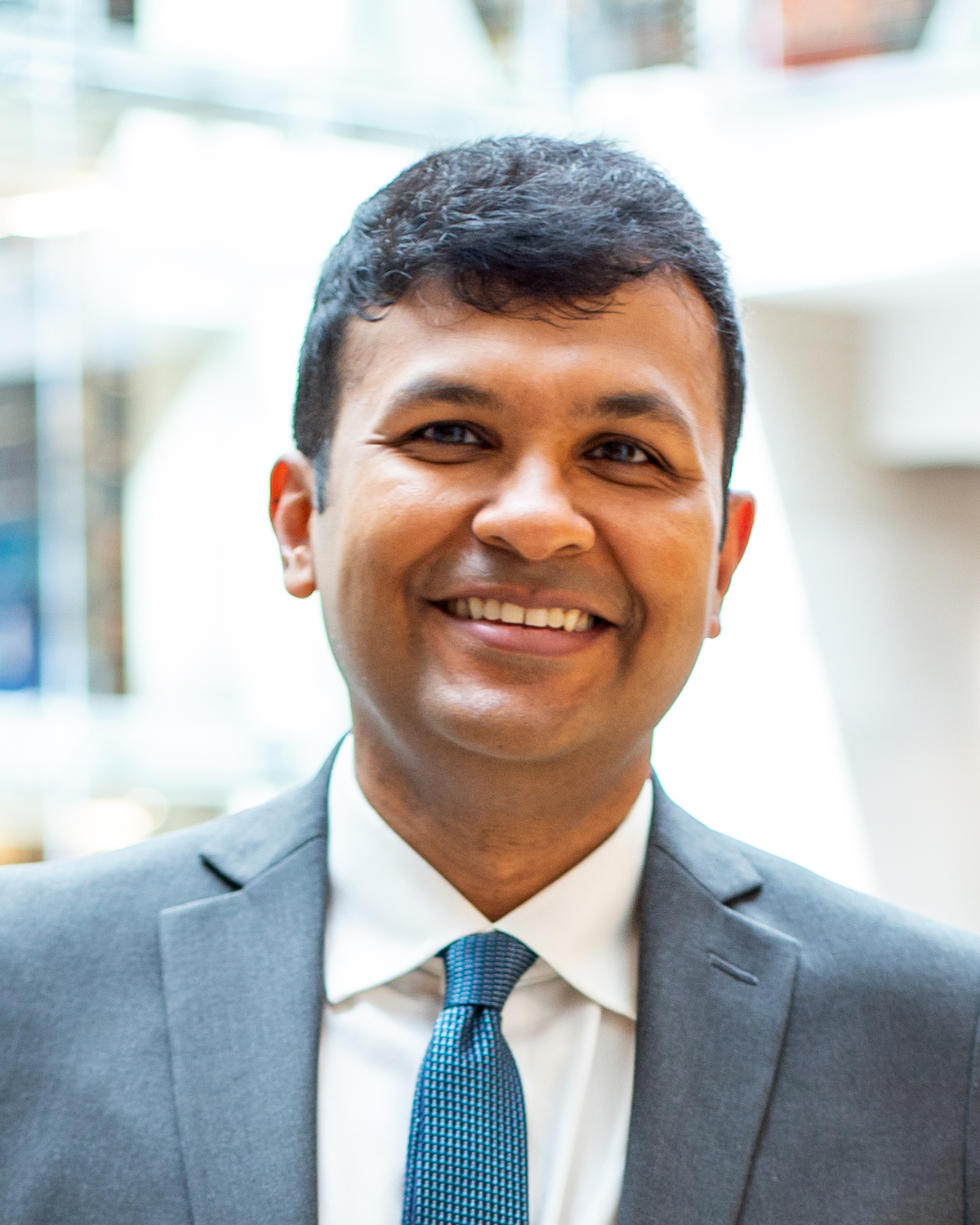
Arnab Nandi is a Professor in the Department of Computer Science & Engineering at The Ohio State University. His work bridges human interaction with data infrastructure, focusing on database systems, LLM-augmented analytics, and immersive query interfaces. Education: PhD in Computer Science & Engineering from the University of Michigan Leadership: Co-founder of OHI/O Hackathon Program and STEAM Factory interdisciplinary network Research spans human-in-the-loop data analytics , vibe querying (natural language + gestural interfaces), LLM integration into education, and climate response systems . Key projects include Omni (multimodal exploration), GestureDB , and Icarus (clinical pipelines). Recent publications analyze LLM-driven query stacks (HILDA 2025), video analytics (SIGMOD 2022), and data sunglasses for cognitive limits (HILDA 2025). Awards include NSF CAREER Google Faculty Research Award IEEE TCDE Early Career Award ACM Distinguished Member Advises students in database innovation , with alumni at Amazon, AWS, Roblox, and Meta. Teaches CSE 3241 (Database Systems), CSE 5889 (Software Startups), and CSE 5242 (Advanced Databases).