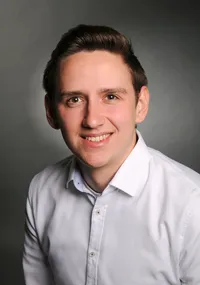
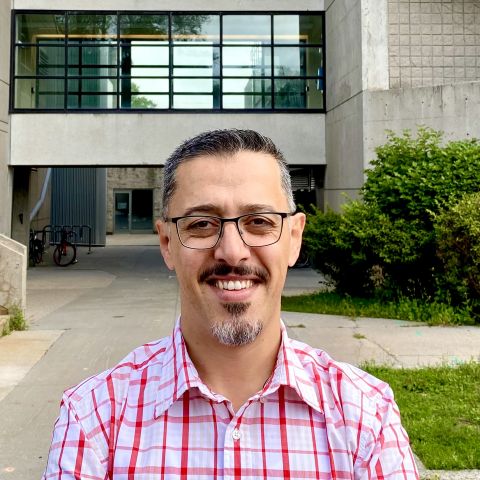
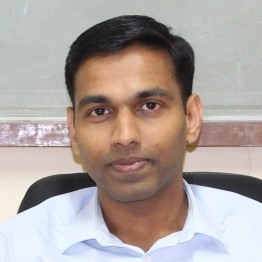
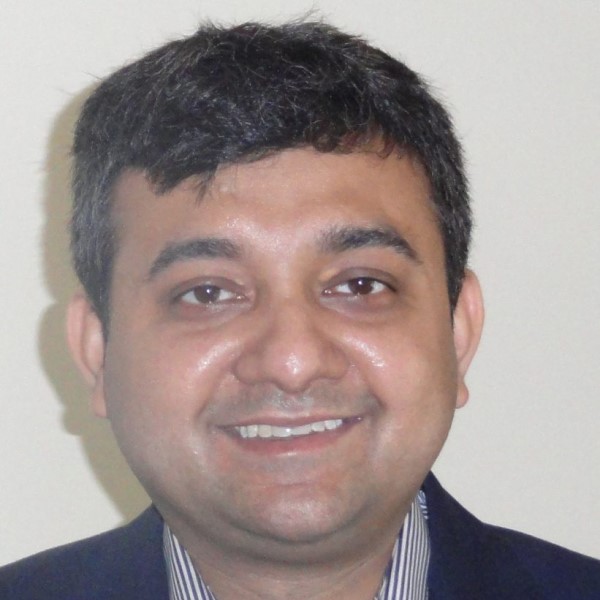
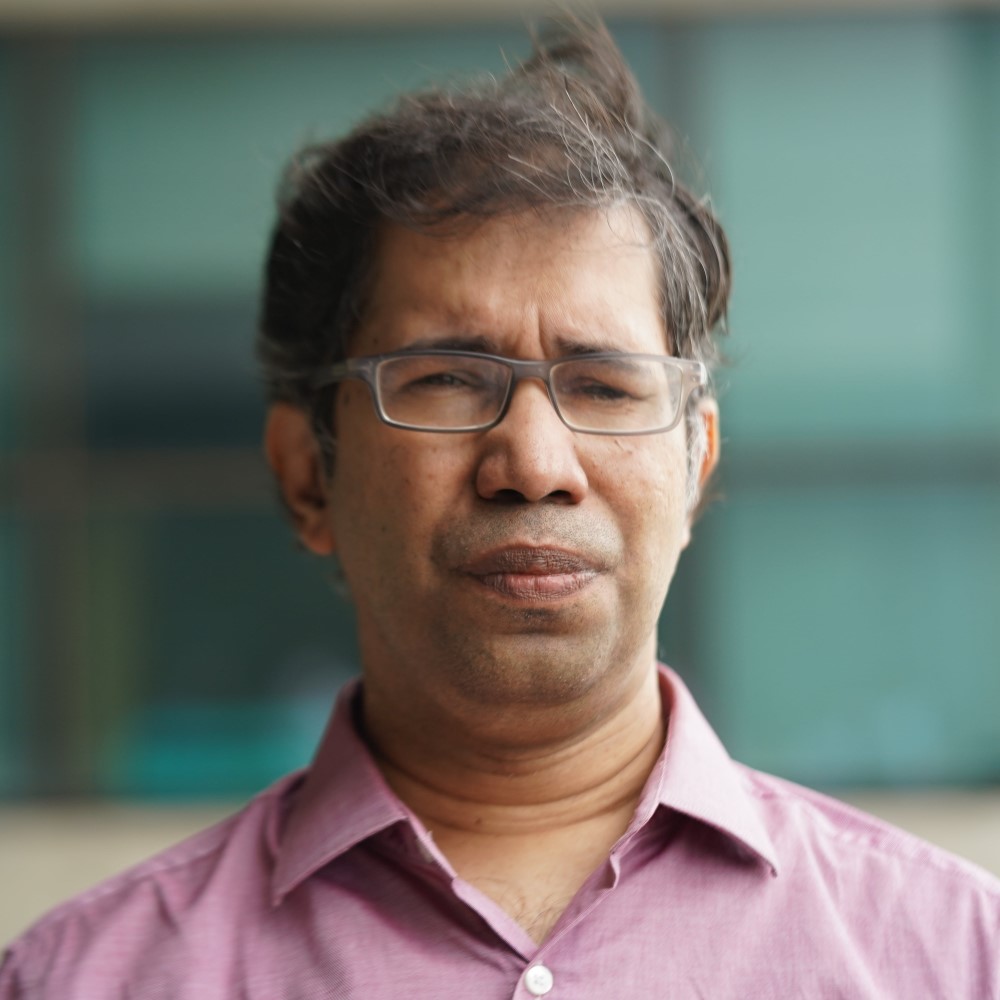
Dirk Stober is a researcher at the Chair of Computer Architecture and Parallel Systems at the Technical University of Munich . As a Ph.D. candidate, his work focuses on low-level programming, heterogeneous computing, and novel computer architectures, with a strong emphasis on FPGA programming and machine learning accelerators. His research explores the intersection of high-performance computing (HPC), quantum computing, and AI hardware development. Research Interests: Low-Level Programming Heterogeneous Computing Machine Learning Accelerators FPGA Programming Novel Computer Architectures His work contributes to advancing programming frameworks and performance modeling techniques for emerging architectures like quantum accelerators and AI-specific hardware. While no explicit scientific awards are listed, his involvement in courses such as Efficient Programming of HPC Systems and projects like SEANERGYS (EuroHPC) and Q-DESSI (MQV) highlights his engagement with cutting-edge computational technologies.
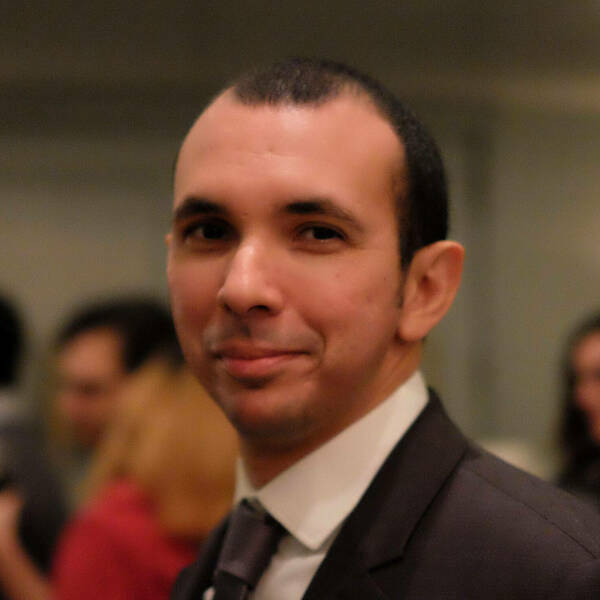
Jonas Winklmann is a researcher at the Chair of Computer Architecture and Parallel Systems at Technische Universität München (TUM), focusing on quantum computing architectures and hardware acceleration. He contributes to projects like SEANERGYS and MUNIQC-ATOMS, integrating quantum systems with high-performance computing (HPC) frameworks. Research: Quantum hardware design, FPGA-based acceleration, and parallel algorithms Collaborations: EuroHPC initiatives, interdisciplinary quantum computing efforts Teaching: Mentoring lab courses on HPC systems and quantum integration His work spans neutral atom quantum computing, algorithm optimization for heterogeneous platforms, and control systems for quantum devices. Publications highlight FPGA applications in quantum simulation and atom detection techniques. He collaborates on software projects like QMPI and SWEET, advancing quantum-HPC hybridization.
Sylvain JUBERTIE serves as a Lecturer at the University of Orleans, affiliated with the LIFO (Laboratoire d'Informatique Fondamentale d'Orléans) research laboratory. His academic career spans over two decades with continuous contributions to high-performance computing, particularly in vectorization techniques and seismic simulation methodologies. His research interests demonstrate deep specialization in: Hardware-specific vectorization (ARM NEON/SVE, SIMD) for seismic kernels GPU acceleration and code portability across architectures High-order spectral finite element methods (EFISPEC3D) Energy efficiency optimization in parallel computing Algorithmic skeleton libraries (OSL, NSIMD) for parallel programming Memory layout reorganization for numerical kernels Analysis of his 15 most recent publications (2013-2025) reveals a consistent research trajectory focused on seismic wave propagation simulation. His work systematically addresses vectorization challenges across ARM architectures, GPU offloading, and memory access patterns, with EFISPEC3D serving as the primary application framework. Notable trends include the development of the NSIMD abstraction layer and rigorous energy-performance trade-off studies on embedded platforms like Jetson boards. Dr. Jubertie maintains active collaboration with key researchers including Fabrice DUPROS, Florent DE MARTIN, and Guillaume QUINTIN through the LIFO laboratory, contributing to France's geophysics research infrastructure while advancing compiler-level optimizations for emerging processor architectures.
Antonello Filippi is an Associate Professor at the Department of Chemistry and Pharmaceutical Technologies, Sapienza University of Rome. His research focuses on structural and supramolecular chemistry, combining experimental mass spectrometry (IRMPD, IM) with theoretical modeling via high-performance computing (HPC). He also applies GC-MS to characterize food matrices for analytical and biomedical purposes. Graduated with honors in Chemistry from Sapienza University of Rome (1992) Researcher at CNR’s Institute of Nuclear Chemistry (1986–1996) University Researcher (1996–2006) His research projects include structural studies of DNA adducts and non-covalent interactions in supramolecular systems. Recent publications highlight applications in food chemistry, pharmaceutical analysis, and chiral recognition mechanisms. Current teaching activities involve courses in General and Inorganic Chemistry, Analytical Chemistry, and laboratory sessions. He has authored textbooks in general chemistry and stoichiometry.
Uroš Lotrič is an Associate Professor at the Faculty of Computer and Information Science, University of Ljubljana, Slovenia. His academic and professional work spans research in soft computing methods, distributed processing, and high-performance computing applications. Education: BSc in Physics (1994), MSc in Computer Science (1997), PhD in Computer Science (2000), all from the University of Ljubljana. Research Interests He focuses on soft computing techniques, distributed systems, and their applications in industrial and computational domains. His work integrates neural networks, wavelet transforms, and predictive modeling to solve complex problems in fields like rubber processing and time series analysis. Scientific Awards Best Assistant 2007 Best Professor 2009 Projects and Laboratory He is involved in national and European research programs such as P2-0241, EUMaster4HPC, and ARISA. Additionally, he is a member of the Adaptive Systems and Parallel Processing laboratory, contributing to advancements in adaptive algorithms and parallel computing.
Alexandre Fournier is a Professor of Geophysics at the Institut de Physique du Globe de Paris (IPGP), where he leads the Geologic Fluid Dynamics research group. He serves as the scientific manager of IPGP's shared HPC and data processing service (S-CAPAD) and coordinates the MOOC 'Our Planet'. From 2016 to 2020, he headed the STPE and GGG master's programs. His research spans Earth's and planetary dynamos, fluid dynamics in planetary settings, inverse problems, data science, and numerical methods for geophysical applications. He completed his Accreditation to Supervise Research at Paris-Diderot University (2012), PhD in Geosciences at Princeton University (2003), DEA in internal geophysics at IPGP (1998), and Master's in Physics at ENS de Lyon (1998). His students include Elisabeth Canet, Sabrina Sanchez, Marie Bocher, Guillaume Pichon, Venkatesh Gopinath, Thijs Franken, Marie Troyano, and Théo Tassin. His recent articles focus on geodynamo simulations, archaeomagnetic studies, and computational methods for planetary fluid dynamics. Notable collaborations include Julien Aubert, Thomas Gastine, and Yves Gallet. His work emphasizes high-performance computing, data assimilation, and applications to Earth and planetary systems.
Dr. Mahmoud Alzoubi is an Assistant Professor at Queen's University , cross-appointed between the Robert M. Buchan Department of Mining Engineering and the Department of Mechanical and Materials Engineering . He leads an interdisciplinary research program that couples advanced transport phenomena with energy-efficient technologies for mining and renewable energy applications. Education: Ph.D. in Mining & Mechanical Engineering, McGill University (2018) M.Sc. in Engineering Systems & Management, Masdar Institute of Khalifa University in collaboration with MIT (2014) B.Sc. in Mechanical Engineering, Jordan University of Science and Technology (2005) Research Interests: His work centers on transport phenomena in porous media , with emphasis on phase-change heat and mass transfer , artificial ground freezing , thermal energy storage , microfluidic devices , and renewable HVAC cycles . By integrating high-fidelity experiments with large-scale numerical simulations performed on high-performance clusters, he advances sustainable solutions for energy-intensive mining operations and green building technologies. Publication Impact: Across 32 peer-reviewed articles (2013-2024), a dominant theme emerges: developing computationally efficient models for coupled thermo-hydraulic processes in freezing, storage and ventilation systems. Studies range from Stefan-problem analytical solutions for phase-change materials to large-eddy simulations of cough-jet dispersion for indoor-air safety, underscoring a methodological breadth that spans pure mathematics, experimental heat transfer, and applied computational fluid dynamics. Funding & Recognition: Total research funding secured: CAD 466,000+ (direct cash CAD 381,000 + high-performance computing allocation CAD 85,000) Former member, Canadian Hydrogen in Mining Advisory Committee , Natural Resources Canada Laboratory & Teams: Dr. Alzoubi directs a research laboratory at Queen’s University equipped with state-of-the-art instrumentation for multiphysics experimentation and access to national HPC facilities. The group collaborates closely with industry partners (mining, HVAC) and government laboratories to translate fundamental findings into scalable, energy-efficient technologies for northern mining and cold-region infrastructure.
Mahesh M S is an Associate Professor in the Mechanical & Aerospace Engineering department at the Indian Institute of Technology Hyderabad . He holds a Ph.D. in Aerospace Engineering from the University of Illinois at Urbana-Champaign. Education Ph.D. (2013), University of Illinois at Urbana-Champaign M.Tech. (2004), Indian Institute of Technology Madras B.Tech. (2004), Indian Institute of Technology Madras Research Interests include Vibroacoustics , Aeroelasticity , Computational Mechanics , Aerodynamics , Aeroacoustics , and High Performance Computing . His group explores compressible multiphase flows, radar cross-section prediction, and shock wave interactions. Current Projects include Internal Ballistics (ARMREB, 2024–2027) and Hydroacoustics (NSTL, DRDO, 2024–2025). Past projects span underwater supersonic jets (DRDO, 2019–2021), cavity aeroacoustics (ADA, 2020–2021), and terminal ballistics (ARB, 2016–2018). Scientific awards : None listed. Students : Dr. Amartya Jana (Ph.D. candidate), Dubba Bhuvana Sai Charan Nath (Ph.D. scholar), Shikshit Nawani (M.Tech), Guruprasad Arya (M.Tech), Akshay Khare (M.Tech), Swapna Yalamanchili (Ph.D. scholar), Vishnu S. B. (Project Scientist), Chele Rajesh (Junior Research Fellow), Sharad Verma (M.Tech), Mangesh Dholwade (M.Tech). Contact : Room C-515, Academic Block C, IIT Hyderabad, Telangana, India. Email: mahesh@mae.iith.ac.in .
Saswata Bhattacharya is the Head (MS) & Professor in the Department of Materials Science and Metallurgical Engineering at the Indian Institute of Technology Hyderabad. He earned his Ph.D. from the Indian Institute of Science in Bengaluru and focuses on computational materials science and data-driven modeling. Education: Ph.D., Indian Institute of Science, Bengaluru Research Interests Phase-field modeling of microstructural evolution in alloys and oxides Phase transformations Micromechanical modeling Multiscale modeling AI/ML integration in materials science High Performance Computing (HPC) applications Materials Processing Office Address: Room MSME-402, MSME Block, Indian Institute of Technology Hyderabad, Kandi-502284, Sangareddy, Telangana, India.
Shantanu Desai is a full-time Professor of Physics (and jointly of Artificial Intelligence) at the Indian Institute of Technology Hyderabad , a position he has held since October 2023 after serving as Associate Professor from 2016-2023. He earned his Ph.D. in Physics from Boston University in 2004 and is a member of several high-profile international collaborations, most notably the Super-Kamiokande Collaboration —sharing the 2016 Breakthrough Prize in Fundamental Physics for the discovery of atmospheric neutrino oscillations and solving the solar neutrino puzzle. Education Ph.D. in Physics, Boston University, May 2004 M.A. in Astronomy, Boston University, May 1997 B.Tech in Physics, Indian Institute of Technology Bombay, May 1995 Research Interests Desai’s work straddles observational cosmology, high-energy astrophysics, and data-driven methodologies. His core research areas include: Cosmology and Galaxy Clusters: probing dark energy, cluster abundances, and large-scale structure. Pulsar Timing & Gravitational Waves: member of the Indian Pulsar Timing Array searching for nano-Hertz gravitational waves. Neutrino Astrophysics: utilizing Super-Kamiokande data to study solar and atmospheric neutrinos. Gravitational Lensing: strong and weak lensing analyses within the Dark Energy Survey and Euclid. Machine Learning & Astrostatistics: developing AI/ML techniques for transient detection, lens finding, and survey optimization. High-Performance Computing: leveraging HPC resources for large-scale simulations and data processing. Publication & Research Trends Across 2024-2025, Desai’s publications reveal a focused synergy between multi-wavelength observations and advanced statistical methods. Topics include joint analyses of DES Y3 weak-lensing and ACT SZ data, targeted gamma-ray searches for dark matter signals in galaxy clusters, cosmological constraints on neutrino masses, and machine-learning-driven lens discoveries. These works consistently integrate large survey datasets (DES, ACT, Fermi-LAT, InPTA) with rigorous profile-likelihood techniques to address tensions in the standard cosmological model. Scientific Awards 2016 Breakthrough Prize in Fundamental Physics – shared as a member of the Super-Kamiokande Collaboration for the discovery of atmospheric neutrino oscillations and resolution of the solar neutrino problem. Student Supervision & Mentorship At IIT Hyderabad, Desai has mentored over 60 students ranging from B.Tech to Ph.D. levels, many proceeding to prestigious graduate programs worldwide (e.g., Penn State, University of Utah, Southern Methodist University, IUCAA, Swinburne, Florida Tech). Current advisees include Ph.D. students Siddhant Manna, Kamal Bora, Aman Srivastava, Gopika K., and Srinadh Reddy (co-supervised). Laboratory & Team Affiliations Desai leads a vibrant research group within the Physics Department at IIT Hyderabad. The group is actively involved in the Indian Pulsar Timing Array (InPTA) , Dark Energy Survey (DES) , Euclid Consortium , and Atacama Cosmology Telescope (ACT) collaborations, maintaining dedicated computational resources and close ties with international partners for joint observations and data analysis.
Rafael Ferreira da Silva is a Research Assistant Professor in the Department of Computer Science at University of Southern California and a Senior Research Scientist at Oak Ridge National Laboratory. He serves as Group Leader for the Workflow and Ecosystem Services group at ORNL's National Center for Computational Sciences and is the Founder and Executive Director of the Workflows Community Initiative. Additionally, he is the Special Content Editor for the Future Generation Computer Systems journal and holds Senior Member status with both IEEE and ACM. Dr. Ferreira da Silva specializes in modeling and simulation of parallel and distributed computing systems, with expertise spanning scientific workflows, hybrid quantum classical systems, and autonomous science. His technical proficiency includes sophisticated scheduling algorithms, high fidelity modeling and simulation, multi-objective optimization, fault tolerant system design, and energy efficient computing across cloud, edge, and HPC environments. His research focuses on creating resilient digital infrastructures that dynamically adapt to changing research demands, accelerating scientific discovery through robust computational foundations. His recent publications demonstrate significant contributions to exascale workflow applications, HPC-quantum convergence, agentic workflow control mechanisms, and terminology standardization for scientific workflow systems. His work bridges multiple disciplines including high-performance computing, artificial intelligence, quantum computing, and autonomous laboratory systems, reflecting a broad research impact across computational science. Professional Recognition: Senior Member of IEEE Senior Member of ACM Special Content Editor for Future Generation Computer Systems journal With 149 scientific publications, 22 chair roles in conferences, 69 PC member roles in conferences, 18 research grants, and involvement in 270+ research projects, Dr. Ferreira da Silva maintains an extensive research portfolio and leadership position in the computational science community. His Workflows Community Initiative has fostered a thriving network of 51 international workflow users, developers, and researchers. As Group Leader at ORNL, he directs research efforts focused on advancing workflow technologies and their applications across scientific domains, with particular emphasis on creating interoperable systems that can operate across multiple computing facilities and environments.
Carl Tape is a Professor at the University of Alaska Fairbanks (UAF), affiliated with the Geophysical Institute (GI) and the Department of Geosciences. His research focuses on seismology, computational modeling of seismic wavefields, and imaging Earth’s internal structure using adjoint tomography and waveform inversion techniques. Current Students: Aakash Gupta, Nealey Sims, Amanda McPherson, Bella Seppi Former Students: Ulrika Cahayani Miller (MS 2014), Celso Alvizuri (PhD 2016), Vipul Silwal (PhD 2018), Kyle Smith (PhD 2020), Cole Richards (MS 2020) His work leverages UAF’s high-performance computing resources to simulate 3D seismic wavefields for earthquakes in Alaska and global subduction zones. These simulations improve ground motion predictions and tectonic interpretations, particularly for regions like the Cook Inlet Basin and the Hikurangi Subduction Margin in New Zealand. Carl also develops open-source tools like adjTomo for automating seismic waveform inversion and adjoint tomography workflows. Collaborations include projects with the Alaska Earthquake Center, the Alaska Volcano Observatory (AVO), and NASA-supported GNSS ground motion studies. He contributes to interdisciplinary initiatives like the NSF-funded Arctic Observing Network, which integrates seismic data with meteorological and geodetic observations to track climate-induced geophysical changes.
Dr. Ernst Gunnar Gran is an Affiliated Researcher at the Simula Research Laboratory , specializing in the Department of High Performance Computing . With a career spanning over a decade, his research focuses on optimizing network performance in large-scale computing environments. PhD in Congestion Management in Lossless Interconnection Networks (2008) Co-developer of the NorNet Core multi-homed research testbed Research Focus Gran’s work addresses critical challenges in: InfiniBand hardware optimization and congestion control Self-adaptive networking for HPC-cloud integration Resource management in multi-tenant clusters Efficient routing algorithms for fat-tree architectures Real-time anomaly detection in time-series data Edge-cloud ecosystem performance modeling Publication Trends His recent research (2020-2022) emphasizes: Distributed traffic prediction using LSTM customization Lightweight anomaly detection frameworks Integration of mobile edge computing with multi-cloud systems Prior work (2015-2018) established foundational advancements in: Fat-tree reconfiguration algorithms Virtualized HPC network architectures Fault-tolerant routing strategies for complex topologies SR-IOV vSwitch implementations Technical Contributions Developed patented network reconfiguration systems Created dynamic cloud architectures with SA query caching Advanced partition-aware routing techniques Optimized load-balancing mechanisms for HPC environments
Nikolaos Lembesis is a tenured Assistant Professor in the Department of Chemistry at the University of Ioannina, specializing in Theoretical Physical Chemistry and Computational Chemistry. His research develops multi-scale computational simulation methods to understand structure-property relationships of matter for applications in energy, environment, and quality of life improvement. His educational background includes: PhD in Chemical Engineering, National Technical University of Athens (2013) BSc in Chemical Engineering, Technical University of Munich (2007) BSc and MSc in Chemical Engineering, National Technical University of Athens (2007) Dr. Lembesis's research integrates molecular dynamics, ab initio simulations, and stochastic methods to model materials at atomic-to-macroscopic scales. His group investigates perovskite solar cell interfaces, droplet absorption phenomena, and defect engineering using advanced computational techniques including classical/ab initio molecular dynamics and high-performance computing. Analysis of his 15 most recent publications (2023-2025) reveals dominant focus on perovskite photovoltaics, with recurring themes of interface engineering, strain manipulation, and defect passivation to enhance efficiency and stability. Key subfields include crystal orientation control, wide-bandgap perovskite optimization, and novel monolayer interface designs. His group offers undergraduate and master's thesis opportunities in Computational Chemistry, providing training in molecular simulation techniques, Unix/Linux systems, HPC resources, and software development for materials modeling. The research team utilizes multi-scale simulation approaches to study water-perovskite interactions, organic monolayer protection mechanisms, and thermomechanical properties of advanced materials, with strong emphasis on bridging computational predictions with experimental validation.
Matt Sinclair is an Assistant Professor in the Computer Sciences Department at the University of Wisconsin–Madison, with affiliate appointments in the Electrical and Computer Engineering Department and the Teaching Academy. He leads the Heterogeneous Architectures Lab (HAL) and is actively involved in the gem5 Project Management Committee, focusing on modern heterogeneous computing systems. His research interests include computer architecture, GPU design, parallel programming, operating systems, and high-performance computing. He develops tools and methodologies for programming and optimizing future heterogeneous systems, particularly focusing on GPUs. His work spans architectural design, efficient software implementation, and simulation frameworks. Recent publications highlight advancements in gem5 simulation accuracy, GPU energy modeling, synchronization mechanisms, and scheduling policies for ML workloads. His research has led to improvements in GPU memory bandwidth modeling, extensible power modeling, and full-system heterogeneous simulation capabilities. Scientific awards include the NSF CAREER Award, the David J. Kuck Outstanding PhD Thesis Award, and a Qualcomm Innovation Fellowship. He has also received honors such as the ACM SIGARCH–IEEE TCCA Outstanding Dissertation Award Honorable Mention and multiple fellowships. He mentors a diverse group of graduate and undergraduate students, many of whom have published at top venues and moved on to roles at NVIDIA, AMD, Microsoft, and leading graduate programs. He is involved in teaching and curriculum development, particularly through the Excel Initiative and as a former Madison Teaching & Learning Fellow. He also stewards the ISCA Hall of Fame, contributing to the academic community beyond research.