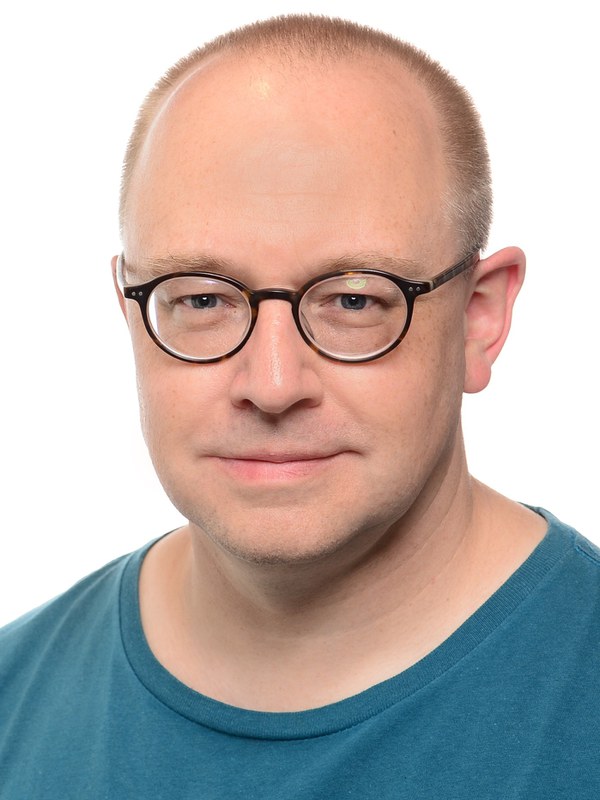
Prof. Dr. Hans Michael Gerndt is a leading academic at the Technical University of Munich (TUM) , affiliated with the TUM School of Computation, Information and Technology . Since 2000, he has headed the Parallel Computer Architecture group within the Faculty of Computer Science, focusing on tools for optimizing parallel supercomputers and cloud applications. His research emphasizes automatic performance analysis and optimization , particularly through the Periscope Tuning Framework . He has contributed to energy efficiency in computing systems, autoscaling mechanisms for cloud environments, and multi-aspect tuning frameworks for HPC applications. His work bridges theoretical advancements with practical tools for computational efficiency. Key publications include studies on energy tuning (2018), autoscaling measurement tools (2018), and MIMD-parallelization for supercomputing (1987). Notable awards include the Virtual Institute for High Productivity Supercomputing (VI-HPS) admission (2009) and Eclipse Innovation Award (2005) .
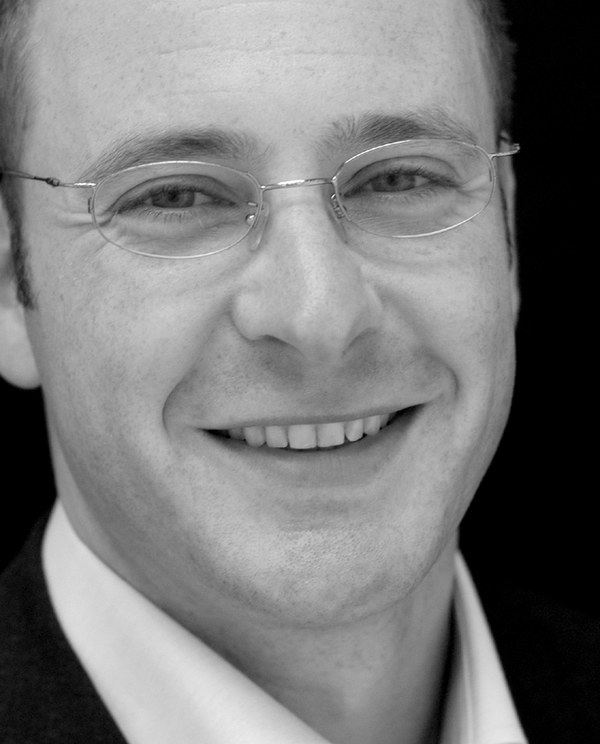
Prof. Sacha van Albada is a Research Professor and Group Leader of Theoretical Neuroanatomy at the Institute for Advanced Simulation (IAS-6, Computational and Systems Neuroscience) at Forschungszentrum Jülich. Her research focuses on constructing and analyzing large-scale spiking neural network models of the cerebral cortex, integrating anatomical and physiological data to understand brain dynamics. Key areas include predictive connectomics, cortical microcircuit organization, and neuromorphic computing applications. Her work emphasizes multi-scale modeling across cell-type interactions, network architectures, and system-level brain functions. She develops computational tools like the NEST simulator for distributed neural network simulations. Recent projects involve modeling neuron-astrocyte interactions and exploring how cortical hierarchies and top-down signals modulate neural activity patterns. She also engages in ethical considerations of brain-inspired AI systems. Dr. van Albada collaborates extensively with experimental neuroscientists and HPC experts, contributing to initiatives like the Human Brain Project. Her models have been applied to study visual and somatosensory cortices, motor cortex dynamics, and resting-state network behavior. Despite no explicit mention of awards/grants, her high publication output and leadership role indicate significant academic impact.
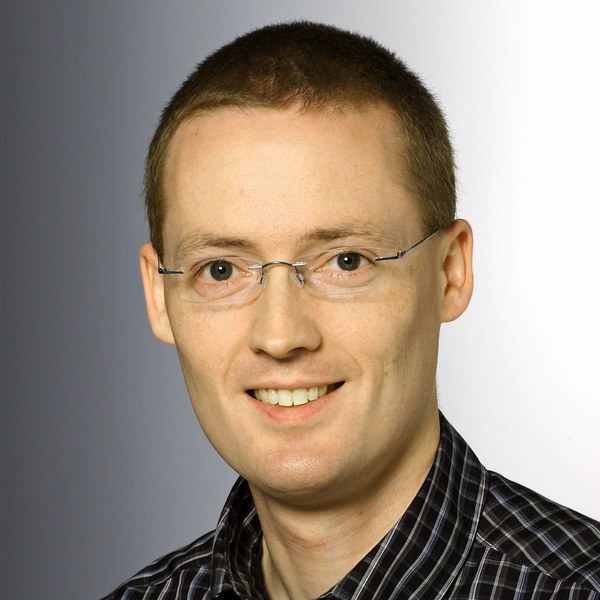
Prof. Julian Kunkel is a Professor at the Institute of Computer Science, University of Göttingen. He holds multiple key roles including Dean of Studies at the Faculty of Mathematics and Computer Science, Deputy Head of High Performance Computing at GWDG (Göttingen Scientific Data Processing), and Head of the Computing Working Group. His teaching responsibilities include courses on environmental sustainability in computer science, databases, AI methods, web development, and HPC. Education: Not explicitly stated in text. Research Focus: High-Performance Computing, AI integration in academic workflows, sustainable computing practices, and scalable systems for Big Data/HPC applications. Grants & Projects: No specific grants mentioned. However, his involvement in HPC leadership roles implies active participation in related research initiatives. Labs/Teams: Associated with GWDG (Gesellschaft für wissenschaftliche Datenverarbeitung mbH Göttingen) and the Institute of Computer Science's HPC working groups.
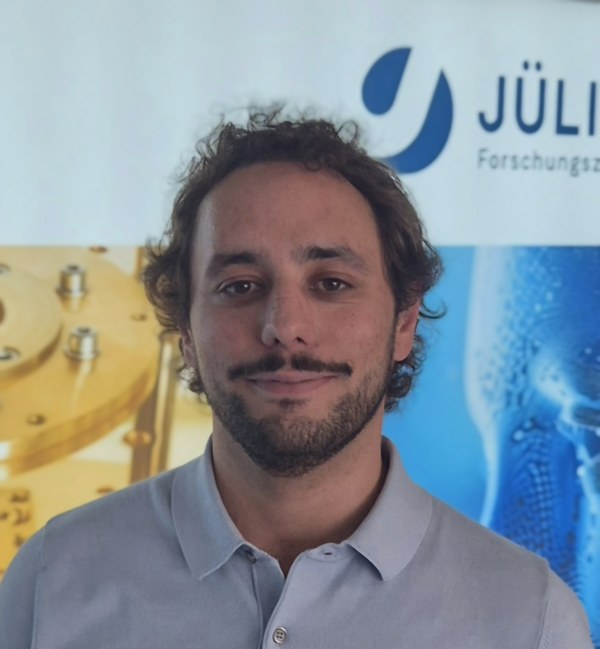
Guido Salvaneschi is a Professor at the School of Computer Science , University of St. Gallen, leading the Programming Group . His work bridges Programming Languages and Software Engineering with applications in Distributed Systems, Reactive Programming, and Secure Software Systems. Research Interests Dr. Salvaneschi focuses on: Multitier Programming Languages Consistency Models in Distributed Systems Reactive Programming for HPC and IoT Secure Software Development with Trusted Execution Environments Recent Publications Trends His recent work spans Infrastructure as Code testing ( CONFLANG ), consistency verification ( POPL ), and CRDT-based local-first software ( TSE journal ). Key themes include hybrid consistency enforcement, type-safe distributed abstractions, and automated verification of algebraic properties. Committee Roles ICSE 2026: Research Track Committee POPL 2025: Reviewer ‹Programming› 2025: Steering Committee Chair ISSTA 2025: Program Committee
Arjun Guha is an Associate Professor of Computer Science at Northeastern University's Khoury College of Computer Sciences, where he also serves as Area Chair for Software. Additionally, he holds a Visiting Professor position at Roblox Research. His work spans programming languages, program synthesis, and the intersection of large language models with computer science education. Guha's research primarily focuses on two areas: program synthesis for "low-resource" programming languages (those not widely supported by existing AI code generation tools but widely used in specialized fields like scientific computing), and understanding how large language models impact computer science education. His work has led to significant contributions in benchmarking neural code generation across multiple languages and examining how students interact with AI-generated code. He is particularly interested in knowledge transfer between high-resource and low-resource programming languages for code LLMs. Guha's recent publications show a strong trend toward examining the practical applications and limitations of large language models in programming contexts. His work spans from developing benchmarks like MultiPL-E for cross-language code generation evaluation to studying how beginners understand and interact with AI-generated code. There's a clear emphasis on making code generation more accessible for specialized domains and understanding the educational implications of these technologies. Guha actively mentors students at all levels, leading a research group within Northeastern's Programming Research Laboratory. His current advisees include several PhD students and postdocs working on topics related to code LLMs, program synthesis, and computer science education. His research has been generously supported by the National Science Foundation, Department of Energy, Office of Naval Research, and industry partners including Google, JPMorgan Chase, MathWorks, Meta, Oracle, and Roblox. Guha is an active contributor to the programming languages research community, serving on program committees for major conferences including PLDI, POPL, SPLASH, and OOPSLA. He has chaired workshops and sessions at these conferences and continues to be an influential voice in the programming languages community.
Xiao He is affiliated with the University of Science and Technology Beijing , actively contributing to academic research in software engineering and programming languages. His work focuses on bidirectional transformations and domain-specific languages.
Justin M. Wozniak is a computational scientist at Argonne National Laboratory’s Mathematics and Computer Science Division within the Computing, Environment and Life Sciences directorate. He is a key contributor to advanced scientific workflow systems such as Swift/T and Parsl, enabling scalable, distributed, and many-task computing for data-intensive science. His work supports major initiatives in cancer research (CANDLE), epidemiological modeling, and exascale computing (ExaWorks). He collaborates extensively with leading researchers including Ian T. Foster, Michael Wilde, and Kyle Chard. His research focuses on high-performance computing, scientific workflows, distributed systems, and machine learning applications in science. He has pioneered techniques in workflow automation, fault tolerance, in-situ data analysis, and performance optimization. His work enables robust, scalable execution of complex computational pipelines across heterogeneous environments, from supercomputers to cloud platforms. His recent publications (2021–2025) emphasize workflow interoperability, resilience, benchmarking, and applications in cancer and epidemic modeling. Themes include automated model comparison, job management portability (PSI/J), adaptive workflow steering, and exascale-ready workflow toolkits. These works reflect a strong trend toward reproducibility, scalability, and real-world scientific impact. Justin M. Wozniak has no listed scientific awards in the provided text. However, his leadership in major DOE-funded projects and high-impact publications in top venues (SC, HPDC, e-Science) underscores his significant contributions to computational science. He has mentored or collaborated with numerous researchers, though specific advisees are not listed. His work is supported by large-scale computing grants and initiatives such as the ExaWorks project and CANDLE, which aim to accelerate scientific discovery through advanced computing infrastructure. He contributes to open science through tools like Parsl and Swift/T, which are widely used in the scientific community. He is a core developer in the ExaWorks ecosystem and contributes to workflow frameworks that integrate with AI/ML pipelines, containerization, and real-time data analysis. His work on Braid-DB and provenance tracking supports AI-driven science with full reproducibility. These efforts are central to modern computational laboratories aiming for autonomous, data-intensive discovery.
Prof. Guido Bartsch serves as a Professor in the Department of Mathematics, Natural Sciences and Computer Science at the Technical University of Central Hesse (THM), Germany. Based in Gießen, he maintains active academic engagement through research leadership and teaching, with contact details indicating current institutional affiliation. Research Focus: He leads the MASSATS project (Modeling and Assessment of Space Surveillance And Tracking Systems), addressing critical Space Situational Awareness (SSA) needs through simulation of sensor networks for space debris monitoring. His work bridges satellite infrastructure protection, digital twin development for complex technical systems, and resilience assessment of Space Surveillance & Tracking (SST) architectures. Teaching Profile: Courses include High Performance Computing (HPC), Computer System Architectures, 3D Simulation/Visualization, Operating Systems, Distributed Systems, and Algorithms. He actively recruits students for research-oriented theses, emphasizing interdisciplinary projects beyond application development into genuine research domains. Scientific Recognition: No awards or fellowships were referenced in the source material. Advising Approach: Offers project, bachelor's, and master's theses focused on space systems modeling, HPC applications, and digital twin creation. Encourages computer science students to engage with MASSATS-related research on satellite infrastructure protection. Research Infrastructure: Directs the MASSATS team developing simulation frameworks for evaluating SST system performance against space debris threats, with implications for global satellite service continuity.
Dr. Florian Berberich is a researcher at the Jülich Supercomputing Center (JSC) , affiliated with the Research Center Jülich GmbH . His work focuses on materials science, particularly utilizing synchrotron radiation and X-ray diffraction for in situ analysis of thin films, superconductors, and alloy microstructures. Key Research Areas: Synchrotron-based in situ characterization Texture analysis of metallic materials Phase transformations under extreme conditions Superconducting YBa2Cu3O7 thin films Notable Projects: Urgent computing applications during crises European HPC infrastructure development Contact: Phone: +49 2461/61-2547, +49 2461/61-6656 Location: Wilhelm-Johnen-Straße 52428 Jülich, Building 16.3 / Room R 305
Junxian Chew is a Researcher at the Jülich Supercomputing Centre (JSC) within Forschungszentrum Jülich, Germany. His work focuses on high-performance computing applications in plasma physics, particularly developing scalable simulation codes for plasma breakdown scenarios in fusion devices. He holds a Master of Science in Simulation Science from RWTH Aachen University. His doctoral research centered on creating a fully 3D first-principles Monte Carlo code to simulate Townsend avalanche breakdown processes, with extensions for magnetized plasma environments in tokamaks. This required exceptional HPC scalability to handle exponential particle growth through electron-neutral impact ionizations. His research integrates Plasma Physics with advanced computational techniques, emphasizing fine time-resolution simulations of charged particle gyromotions without averaged drift approximations. Key methodologies include MPI-OMP hybrid parallelization and large-scale execution on systems like JURECA DC, enabling precise modeling of drift motions in magnetized plasmas. At JSC, Dr. Chew applies his expertise to support diverse scientific applications across disciplines, leveraging supercomputing infrastructure for complex numerical studies beyond plasma physics.
Norbert Eicker serves as Professor at Bergische University of Wuppertal and Head of the Research Group "Software for Modular Supercomputers" at the Jülich Supercomputing Centre (JSC), Forschungszentrum Jülich. His research specializes in advanced computing infrastructure with core competencies in: Modular Supercomputer Architecture HPC Middlewares development and optimization High-performance System Architecture design As a Principal Investigator in Helmholtz Information Program 1, Topic 2, he contributes to Germany's national strategy for computational science advancement through the Helmholtz Association framework. His work addresses critical challenges in creating flexible, scalable supercomputing environments that can adapt to diverse scientific workloads while maintaining performance efficiency. Based at Forschungszentrum Jülich's facilities in Building 16.3, Room 203, he operates within one of Europe's premier supercomputing environments that supports multidisciplinary research across the continent.
Christian Feld is a Researcher at Forschungszentrum Jülich, working within the Jülich Supercomputing Centre (JSC) as a core member of the ATML Parallel Performance team. His role focuses on advancing computational methodologies for large-scale scientific applications through specialized expertise in high-performance systems. His research spans critical areas of modern computational science, with primary emphasis on: Parallel Programming: Developing efficient distributed-memory algorithms and scalable implementations HPC Performance Analysis: Diagnosing bottlenecks and optimizing resource utilization in supercomputing environments High Performance Computing: Architecting solutions for exascale computing challenges The ATML Parallel Performance laboratory serves as his primary research base, where he drives innovation in performance modeling and parallelization techniques. His work directly supports JSC's mission as a European leader in supercomputing infrastructure, enabling breakthroughs across computational physics, climate modeling, and materials science through optimized code performance.
Markus Geimer serves as a Researcher and Head of the ATML Parallel Performance group at the Jülich Supercomputing Centre (JSC), Forschungszentrum Jülich, a position he has held since 2025. He joined JSC in 2006 following completion of his PhD. He earned his PhD in Computer Science from the University of Koblenz-Landau, establishing his foundation in computational research methodologies. Geimer's research centers on developing scalable software tools for parallel performance analysis of high-performance computing (HPC) applications. As lead developer of the Scalasca Trace Tools package and key contributor to the Score-P instrumentation and measurement system, he enables optimization of large-scale scientific computing workloads. His innovations address critical challenges in profiling distributed-memory applications across exascale architectures, significantly advancing HPC performance engineering capabilities. Leading the ATML Parallel Performance team, Geimer directs research efforts toward next-generation performance analysis frameworks that support emerging supercomputing technologies and complex scientific simulations.
Carlos Daniel Gonzalez Calaza serves as a Researcher and JUNIQ Lead Developer at the Jülich Supercomputing Centre (JSC), Forschungszentrum Jülich, where he has led quantum computing infrastructure development since 2019. Concurrently pursuing his PhD since 2022 under Prof. Dr. Kristel Michielsen in the Quantum Information Processing group, he bridges practical platform development with theoretical research in hybrid quantum systems. His research expertise spans: Quantum Computing infrastructure design Quantum Annealing benchmarking methodologies Cloud-based quantum access systems HPC-quantum integration frameworks Hybrid quantum-classical optimization for industrial applications Current research funding is secured through: EuroHPC JU project HPCQS (High Performance Computer – Quantum Simulator hybrid) German project QSolid (Quantum Computer in the Solid State) with prior contributions to the OpenSuperQ initiative. These projects enable cutting-edge work on quantum platform development and hardware validation. As a PhD candidate, he does not supervise students but offers collaboration opportunities through the Quantum Information Processing group's infrastructure projects. The group's flagship JUNIQ platform provides cloud access to quantum devices and integrates them with JSC's supercomputing resources, positioning it as a European leader in practical quantum computing deployment.
Andreas Herten is a Researcher at the Jülich Supercomputing Centre (JSC) within Research Center Jülich GmbH. He serves as Co-Lead of the Novel System Architecture Design division and heads the ATML Accelerating Devices group, focusing on GPU programming, parallel computing, and high-performance computing (HPC) optimizations. Key Expertise: GPU programming, parallel algorithms, HPC systems, benchmarking, Python, LaTeX Research Focus: Accelerating scientific applications on GPUs, European exascale initiatives, AI workload evaluation, and heterogeneous computing architectures His recent publications highlight advancements in GPU-accelerated materials science, AI training on HPC systems, and exascale benchmarking. Herten contributes to projects like OpenGPT-X, JUPITER, and CARAML, with work spanning computational physics, environmental science, and machine learning applications.