Vassilis Papaefstathiou serves as Assistant Professor in the Computer Science Department at the University of Crete, Greece, and holds an Affiliated Researcher position at the Computer Architecture and VLSI Systems Laboratory within FORTH's Institute of Computer Science in Heraklion, Crete. His research spans critical domains in computing systems including Computer Architecture, High-Performance Computing, Packet Switch Architectures, High Speed Interconnects, Network Processing Architectures, Hardware Security, Storage Systems, and Embedded Systems, with emphasis on hardware-level innovations for performance and security. Dr. Papaefstathiou teaches core courses such as Digital Circuits Lab (CS220), Computer Systems Architecture (CS425), and Digital Circuits Design Lab using EDA Tools (CS523). He leads FORTH's contributions to the EU-funded European Processor Initiative (EPI) project, coordinating hardware RTL design, chip bring-up, and testing for next-generation processor development.
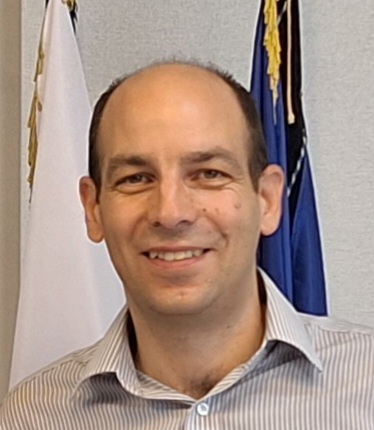
Georgios Kossioris is a Professor at the Department of Mathematics and Applied Mathematics of the University of Crete . He holds a Ph.D. in Applied Mathematics from Brown University (1991) and a Diploma in Naval Architecture from the National Technical University of Athens (1986). His research focuses on Partial Differential Equations and Applications , with significant contributions to stochastic equations, Hamilton-Jacobi modeling, and interdisciplinary work in environmental and biomedical domains. His publications span Numerical Analysis , Stochastic Modeling , and Environmental Economics , including key works on the Shallow Lake Problem , Wind Energy Assessment , and Abdominal Aortic Aneurysm Segmentation . He has secured major grants for projects like Extreme Weather Phenomena Prediction (SYNERGASIA, 2011-2014) and Optimal Control of Dynamic Systems (THALIS, 2012-2014). He has organized workshops such as the 2019 SDEs/SPDEs: Theory, Numerics, and Data Science and taught courses like Weak Theory of PDEs , Differential Equations , and Dynamic Meteorology . His computational methodologies bridge mathematics, economics, and biomedical engineering.
Hadjiefthymiades Stathes is a Professor at the Department of Informatics and Telecommunications, National and Kapodistrian University of Athens. His primary research division focuses on Computer Systems and Applications. He specializes in IoT security, cloud computing, machine learning, and edge computing, with notable contributions to data analytics, trust management, and cybersecurity in distributed systems. Research Interests: His work spans IoT security protocols, optimization of cloud storage systems, anomaly detection in Kubernetes environments, and predictive analytics for sensor networks. He has explored trust models in pervasive computing, energy-efficient node authentication, and hardware-accelerated mixed reality interfaces. His recent projects include frameworks for Earth observation data accessibility and next-generation internet experimentation platforms. Publications: His recent articles highlight advancements in IoT data reduction techniques, trust sustainability in infrastructure, and the application of Markov chains for multivariate event correlation. He has also contributed to the design of experiment description languages for mobile IoT and emergency response platforms for radiological incidents. Awards & Grants: No scientific awards or grants were explicitly mentioned in the provided texts. Labs & Teams: His research involves collaborations on projects like EO4EU-AI (Earth observation with extended reality interfaces) and TRACE (logistics integration systems). He is affiliated with the university's advanced systems research groups focusing on edge computing and secure IoT ecosystems.
Dr. Apostolos Koukouselis is a researcher and lecturer at the Laboratory of Structural Analysis and Design, University of Thessaly (Greece). He holds a Diploma in Civil Engineering (Aristotle University of Thessaloniki, 2011), an M.Sc in Applied Mechanics and Systems Modeling (University of Thessaly, 2013), and a PhD in Structural Engineering (University of Thessaly, 2016). His doctoral research focused on axially compressed cylindrical cementitious shells. Research Focus Dr. Koukouselis specializes in computational mechanics and structural behavior, with emphasis on: Buckling analysis of thin-walled cementitious structures (plates, cylinders, spheres) Ferrocement material performance under shear/compression Nonlinear dynamics of offshore structures including wave/soil interactions Finite element modeling of steel connections and retrofitting techniques Publication Trends His 15 most recent publications (2014-2018) demonstrate concentrated expertise in structural failure analysis, computational modeling of cementitious materials, and offshore engineering. Dominant methodologies include nonlinear finite element analysis and experimental validation of theoretical models. Teaching & Service Teaching assistantships include Structural Analysis I/II, Modeling of Civil Engineering Structures, and Computer Programming (2013-2017). No awards, grants, or student advising roles are documented. Laboratory Affiliation He conducts research at the Laboratory of Structural Analysis and Design, focusing on computational methods for structural integrity assessment.
Lazaros Papadopoulos serves as an Assistant Professor in the Department of Electrical and Computer Engineering at Democritus University of Thrace since May 2024, focusing on computational resource management for embedded and high-performance systems. His work bridges hardware-software co-design with energy-efficient computing paradigms. His academic credentials include: Bachelor's in Electrical and Computer Engineering from Democritus University of Thrace (2005) Master's degree from the same institution (2008) PhD from the National Technical University of Athens (2016) Research centers on optimizing computing infrastructure through real-time resource management, heterogeneous memory architectures, and AI workload acceleration. His investigations target energy-performance tradeoffs in GPU systems, persistent memory integration, and edge-device neural network deployment, with direct applications in sustainable computing and high-performance data processing. Publication analysis (2018-2022) reveals consistent focus on heterogeneous system optimization, particularly energy-aware GPU acceleration frameworks, memory management for DRAM/NVM hybrids, and efficient CNN implementations for edge devices. Key thematic threads include sustainable computing practices, hardware-aware AI deployment, and memory hierarchy innovations. Scientific recognition includes: Two Best Paper Awards Research leadership spans major EU initiatives: Work Package Coordinator for LAGO (Horizon Europe, 2022-2024) and PRAETORIAN (H2020, 2022-2024); Technical Coordinator for EXA2PRO (H2020, 2018-2021); and Work Package Coordinator roles in SDK4ED (H2020, 2018-2020) and EXCESS (H2020, 2013-2016). These projects address embedded systems security, exascale programming models, and energy-efficient computing toolchains. He operates within the Computer Architecture and High Performance Systems laboratory, directing research on computational resource orchestration for next-generation heterogeneous platforms.
Dionysios Pneumatikatos is a Professor at the School of Electrical and Computer Engineering of the National Technical University of Athens (NTUA) since September 2019. Previously, he served as a Professor and Chair of the Department of Electronic and Computing Engineering at the Technical University of Crete (2000–2019) and is an Associate Researcher at the Foundation for Research and Technology (FORTH) since 1997. His primary affiliations include the Computing Systems Laboratory (CSLab) at NTUA and the Computer Architecture and VLSI Systems (CARV) Laboratory at FORTH. Education: B.Sc. in Computer Science, University of Crete (1989) M.Sc. and Ph.D. in Computer Science, University of Wisconsin–Madison (1991, 1995) Research Interests: Computer Architecture Reconfigurable Computing Hardware Acceleration (e.g., FPGA, RISC-V) Energy-Efficient Systems Reliable System Design Application-Specific Architectures His work focuses on heterogeneous parallel systems , bioinformatics accelerators , and virtualization frameworks for reconfigurable platforms . Recent Projects & Contributions: Coordinator of the FASTER (FP7) project Principal Investigator in EDRA (H2020), EXTRA , and dReDBox Key roles in AXIOM , DeSyRe , and VPLANET These projects explore FPGA-based HPC systems , RISC-V ecosystems , and disaggregated data center architectures . Teaching & Mentorship: Teaches courses on Computer Architecture , Parallel Processing , and Logic Design at NTUA and TU Crete Supervised multiple national/EU projects, fostering interdisciplinary research in embedded and high-performance systems Labs & Networks: Active member of the HiPEAC European Network Program Committee roles at ISCA , FPL , and DATE Led the 21st International Conference on Field-Programmable Logic and Applications (FPL)
Xylomenos Georgios is an Associate Professor at the Department of Informatics, School of Information Sciences and Technology, Athens University of Economics and Business. His research focuses on computer networks, telecommunications networks, and systems software. He has published numerous papers in top-tier networking conferences and journals, and has led multiple EU-funded research projects in the field of future internet technologies. Degree in Computer Science, Athens University of Economics and Business, 1993 Master (MS) in Computer Science, University of California, San Diego, 1996 Doctorate (Ph.D.) in Computer Science, University of California, San Diego, 1999 Xylomenos Georgios specializes in Computer Networks, Telecommunications Networks, and Systems Software . His research has particularly focused on enhancing internet performance over wireless links, multimedia broadcast/multicast services, information-centric networking, and reliable storage systems. He has made significant contributions to link layer architectures, quality of service support, and error control mechanisms for wireless networks. His work bridges theoretical networking concepts with practical implementations, addressing real-world challenges in modern communication systems. His publication record shows a clear evolution from foundational work on TCP performance and wireless link protocols to more advanced concepts like publish-subscribe internet technologies and content-centric networking. The research trajectory demonstrates consistent focus on performance optimization in wireless environments, with recent work expanding into multimedia delivery for network music performance and secure data spaces. His publications appear in leading venues including Computer Networks, IEEE Communications Magazine, and Wireless Communications and Mobile Computing. Best non-student paper award at European Wireless (EW) 2007 Xylomenos Georgios has supervised doctoral research, including a dissertation on 'Multi Service Link Layers: An Approach to Enhancing Internet Performance over Wireless Links.' He has secured substantial research funding through multiple EU projects including PURSUIT, PSIRP, EIFFEL, and B-BONE. Currently, he leads newer initiatives including AViD-NMP, SeEDS, and TENeMP projects, demonstrating continued relevance and leadership in networking research. As Scientific Director of the AUEB Network Management Center, he bridges theoretical research with practical network operations. His current research focuses on integrating 5G/6G networks with network music performance, implementing Data Spaces compliant with ETSI standards on Named Data Networking architecture, and developing telepresence-enhanced network music performance applications using holograms and realistic user representations.
Christoforos Kachris is an Assistant Professor at the Department of Electrical and Electronics Engineering, University of West Attica since 2023. Previously, he co-founded and led InAccel, a startup pioneering FPGA deployment in the cloud, securing €500k in funding and winning awards like the Venture Impact Award (2021) and DeepBlue Cup (2019). He led EU projects such as VINEYARD (€6.3M, 2016–2018), the first to deploy FPGAs in cloud data centers. His research spans reconfigurable computing, hardware accelerators, cloud computing, and optical interconnects, with over 90 publications and 2,700+ citations. Education: Ph.D. (2007, Delft University of Technology), M.Sc. (2003, Technical University of Crete), and Diploma (2001, Technical University of Crete). His Ph.D. focused on FPGA-based network processing, with internship at Xilinx Research Labs, resulting in a US patent on configurable transactional memories. Research interests include machine learning on embedded systems, FPGAs, edge AI, reconfigurable computing, and optical interconnects. He has advised numerous students, many now in tech roles at Cisco, IBM, Ericsson, and startups. Notable contributions include a highly cited survey on optical interconnects in data centers and leadership in projects like VINEYARD and CloudAccel (Principal Investigator). Awards include Venture Impact Award and recognition in international hardware competitions.
Meliones Apostolos is an Associate Professor in the Department of Digital Systems at the University of Piraeus. He holds a Diploma in Computer & Informatics Engineering from the University of Patras (1994) and a PhD in Electrical & Computer Engineering from the National Technical University of Athens (NTUA) (1999). With extensive industry experience as R&D Manager and Network Systems Technical Director, he has led numerous research projects including ESA SATWAYS, HTCI Α/2, and T1EDK-593 MANTO. His research focuses on distributed systems, embedded systems, telecommunications, and real-time systems, with over 90 international publications. He currently leads the MANTO project developing smart navigation aids for visually impaired individuals using smartphones. His academic contributions include teaching since 2005 in MSc programs and serving as a scientific reviewer for EU and national research programs. Notable technical achievements include developing ATM network controller software for PowerQUICC-II architectures widely used internationally. Research Interests: Distributed computing, embedded systems, real-time systems, cooperative systems, wireless communications Key Projects: Over 20 EU/national projects including AAL PeerAssist, Eurostars Z-Phone, and HPCN applications Recipient of prestigious scholarships and recognized for technical leadership in system design and project coordination across academia and industry.
Gizopoulos Dimitrios is a Professor in the Department of Computer Systems and Applications at the National and Kapodistrian University of Athens. He holds a faculty position within the university's School of Electrical and Computer Engineering, though the exact school name is not explicitly stated in the provided text. His professional capacity combines teaching and research responsibilities. He teaches core courses including Computer Architecture I and Computer Architecture II , reflecting his expertise in computational infrastructure and systems design. His research interests are inferred to focus on computer architecture, hardware design, and high-performance computing systems based on his course offerings and departmental affiliation. No specific scientific awards, student advisees, or recent publications are listed in the provided information. His office is located in room A32, and he can be reached via email at dgizop@di.uoa.gr or by phone at +30 210 7275145.
Dr. Panagiota Fatourou is a Professor in the Department of Computer Science at the University of Crete and a senior researcher at the Institute of Computer Science (ICS), Foundation for Research and Technology - Hellas (FORTH). She holds a dual affiliation, contributing significantly to both institutions. She has previously served as faculty at the University of Ioannina and held postdoctoral positions at the Max-Planck-Institut für Informatik and the University of Toronto. She has also been a visiting professor at École Polytechnique Fédérale de Lausanne (EPFL). Her research spans the theoretical and practical foundations of parallel and distributed computing. She is a leading expert in concurrent data structures, transactional memory, and the use of persistent memory in system design. Her work integrates theoretical rigor with practical implementation, often publishing in top-tier venues like PPoPP, PODC, SPAA, and PVLDB. Recent publications highlight her focus on efficient garbage collection for multiversioning, persistent data structures, and distributed data series similarity search, reflecting a trend towards high-performance, fault-tolerant systems for modern hardware. Best Paper Award, PPoPP 2022 Marie-Curie Individual Fellowship FSMP Distinguished Professor Fellowship ACM Distinguished Speaker Featured ACM Member Dr. Fatourou has a strong record of leadership and mentorship. She has advised numerous MSc and PhD students and is actively recruiting for her PERSIST project, funded by HFRI. She has led major research initiatives, including the EU-funded TransForm network and the GreenVM project. Her leadership extends to the broader community, where she has served as Past Chair of the ACM Europe Council, Chair of the Greek ACM-W Chapter, and on the steering committees of PODC and OPODIS. She has also co-organized key events on gender equality in computing, such as the Summits on Gender Equality in Computing (GEC) and the WISTEM Summer School. She is deeply involved in the academic service, frequently serving on program committees for premier conferences such as SPAA, NETYS, and SRDS. Her laboratory and research team at FORTH ICS and the University of Crete focus on building the theoretical underpinnings and practical implementations of next-generation concurrent and distributed systems.
Irinakis Pavlos is an Associate Professor at the University of Piraeus, affiliated with the Department of Industrial Management and Technology within the School of Shipping and Industry. His academic career spans industrial engineering, digital transformation, and optimization methodologies applied to manufacturing and maritime sectors. His research interests encompass a broad spectrum of industrial technologies including digital twins for industrial applications, manufacturing systems optimization, process industries, and maritime technology. His work bridges theoretical computer science concepts with practical industrial implementations, demonstrating a strong focus on Industry 4.0 technologies and their applications. Recent publications (2021-2025) reveal a significant emphasis on digital twin technology for industrial water management, production re-configurability, energy-efficient robotics, and optimization of LPG production. His research demonstrates a consistent progression from theoretical optimization methods toward practical industrial applications, particularly in manufacturing and maritime contexts. His work shows strong connections between operations research, mathematical optimization, and industrial applications, with increasing focus on cognitive systems and real-time analytics in recent years. The publication trend indicates active research engagement with multiple high-impact papers annually across leading industrial engineering and operations research venues. Pavlos maintains strong institutional affiliation with the University of Piraeus, contributing to both teaching and research activities within the Department of Industrial Management and Technology, which serves as a nexus between industrial engineering principles and technological innovation in Greek manufacturing and maritime sectors.
Christoph Kirsch is Professor and Chair of the Department of Computer Science at the University of Salzburg, Austria since January 2022, and Chair of the Computational Systems Group since April 2004. He also serves as Chair of the Programming Research Laboratory at Czech Technical University in Prague since October 2022. Dr. Kirsch earned his Dr.-Ing. from Saarland University in 1999 while at the Max Planck Institute for Computer Science. He worked as Postdoctoral Researcher at UC Berkeley (1999-2004) and later returned as Visiting Scholar (2008-2013) and Visiting Professor (2014). His research focuses on: Principled design of programming languages and runtime systems Server, quantum, embedded, real-time, and mobile systems Symbolic reasoning, memory management, and concurrency Dr. Kirsch co-invented embedded programming languages (Giotto, HTL, Embedded Machine) and has designed high-performance concurrent data structures. His recent work centers on symbolic execution frameworks like Selfie, with publications spanning efficient model checking, program analysis, and memory management systems. Professional recognitions include ACM Distinguished Speaker (2017-present). He co-founded EMSOFT (2001), served as ACM SIGBED chair (2011-2013), and was associate editor for IEEE TCAD and ACM TODAES. He has supervised 5 postdocs, 10 PhD students, and 18 Masters students since 2004, teaching undergraduate and graduate courses in Compiler Construction, Systems Engineering, and Introduction to Computer Science. Dr. Kirsch leads the Computational Systems Group at University of Salzburg, advancing programming language design, runtime systems, and formal verification methods.
Christos Kotselidis is an Associate Professor at the University of Manchester's School of Computer Science and serves as Chief Engineer at Pierer Innovation (previously mentioned as KTM Innovation). He leads the TornadoVM project, a groundbreaking Java Virtual Machine for heterogeneous hardware acceleration. His work bridges academia and industry, focusing on hardware/software co-design for virtual machines and embedded systems. His research spans chip design, micro-architecture, compilers, virtual machines, and garbage collection. Dr. Kotselidis has pioneered work in heterogeneous computing, particularly in accelerating Java applications on GPUs, FPGAs, and RISC-V architectures. His team's recent development of GPULlama3.java demonstrates the practical application of his research in bringing LLM inference to pure Java with GPU acceleration. His publications show a consistent focus on bridging hardware capabilities with managed runtime systems. The research trajectory reveals increasing sophistication in handling memory hierarchies, parallelism, and cross-architecture execution. His work has significant implications for high-performance computing, AI acceleration, and sustainable computing practices. Dr. Kotselidis actively contributes to the academic community as a program committee member for conferences like ISMM and as an organizer for workshops including VMIL and MoreVMs. He's also involved in EU-funded projects like AERO and DARE, which focus on European processor initiatives and software ecosystems. As project lead for TornadoVM, he mentors a research team at Manchester including Michalis Papadimitriou, Mary Xekalaki, and Thanos Stratikopoulos. His lab (Beehive Lab) develops open-source tools that are widely used in both academic and industrial settings for heterogeneous computing.
Fabrice Rastello is a leading researcher at Inria, France, where he serves as the leader of the CORSE (Compiler Optimization and Runtime SystEms) research team. His expertise spans automatic parallelization and compiler back-end optimization, with significant contributions to Static Single Assignment (SSA) form theory and register allocation techniques. Affiliated with University Grenoble Alpes - Inria - CNRS - Grenoble INP - LIG, he maintains an active research profile with continuous publications in top-tier conferences including PLDI, CGO, and PPoPP. His research interests focus on combining theoretical foundations with practical applications in compiler design. Key areas include automatic parallelization techniques (building on his PhD work on tiling as a loop transformation), compiler back-end optimization, and the emerging field of hybrid compilation that bridges static compilation with runtime techniques. He has made significant contributions to register allocation for JIT compilation in the context of SSA properties, advising three PhD students on related topics. Analysis of his recent publications reveals a strong trend toward data movement optimization, with numerous papers on I/O complexity bounds, cache modeling, and microarchitectural performance analysis. His work spans both theoretical computer science and practical applications, including contributions to healthcare technology during the pandemic with the eSpiro ventilator project. He has also explored intersections between compiler techniques and machine learning, particularly in using ML for performance modeling. Fabrice Rastello serves on program committees for major conferences in the field, including PLDI, CGO, and CC, demonstrating his standing in the research community. His 2022 book 'SSA-based Compiler Design' as editor further establishes his authority in compiler theory and practice. His recent work shows continued innovation in compiler techniques, with publications in 2024 demonstrating ongoing research activity across multiple domains including cache modeling, program analysis, and machine learning applications.