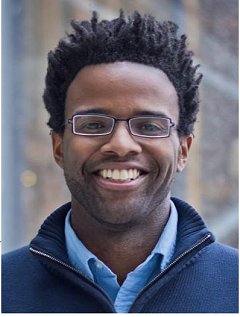
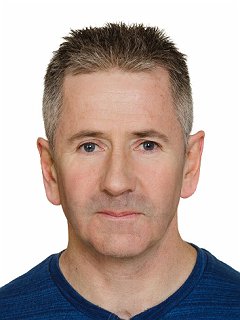
George Alexandropoulos is an Associate Professor at the Department of Informatics and Telecommunications, National and Kapodistrian University of Athens. His research focuses on telecommunications, signal processing, and reconfigurable intelligent surfaces (RIS) for next-generation wireless networks. He has contributed to advancements in integrated sensing and communications (ISAC), 6G technologies, and holographic beamforming. His work includes experimental validation of RIS prototypes, optimization of RIS-assisted systems, and analysis of secure communication strategies. Research interests include RIS hardware design, channel modeling, and applications in IoT, UAV communications, and disaster recovery networks. He explores topics like energy-efficient RIS operation, multi-RIS coordination, and RIS-enabled localization. His studies often address challenges at sub-THz frequencies, mutual coupling effects, and hardware impairments. Publications emphasize practical implementations of RIS in both indoor and outdoor settings, with a focus on real-world performance evaluation. Awards and grants are not explicitly mentioned, but his extensive publication record indicates significant academic contributions. His research often integrates machine learning for RIS configuration and reinforcement learning for resource optimization in dynamic networks.
John Paparrizos is an Assistant Professor of Computer Science and Engineering at The Ohio State University's College of Engineering, where he directs The DATUM Lab (Data Analytics, Understanding, Mining, and Management Lab). He maintains an adjunct affiliation with the School of Informatics at Aristotle University of Thessaloniki. His research spans databases, data science, machine learning, and artificial intelligence , with focus areas including: Time-series analysis (clustering, anomaly detection) Scalable data mining for structured/unstructured data Adaptive algorithms for resource-constrained environments Foundational technologies for data-intensive applications His work addresses real-world challenges across relational, time-series, multimedia, text, graph, web, and IoT data domains. Notable recognition includes: 2025 ACM SIGMOD Test-of-Time Award for k-Shape time-series clustering 2023 IEEE TCDE Rising Star Award ACM SIGMOD Research Highlight Award NetApp Faculty Award His research has been featured in New York Times (front page), Washington Post , Forbes , and adopted by Fortune 500 companies (Exelon, Nokia) and the European Space Agency. He actively serves on program committees for premier conferences including ACM SIGMOD, VLDB, IEEE ICDE, ACM SIGKDD, and NeurIPS. His open-source tools have exceeded 100,000 downloads and are integrated into academic curricula at Brown, Columbia, Purdue, and University of Chicago.
Panagiotis Hadjidoukas is an Associate Professor and Head of the Laboratory for Computing at the Computer Engineering and Informatics Department, University of Patras, within the School of Engineering. His work focuses on high-performance computing systems and parallel programming models. His research spans parallel and distributed computing , runtime support for parallel programming models , and automation of AI/ML workloads . Key contributions include developing the torc runtime system for task parallelism and pioneering work in extreme-scale scientific simulations. His interests bridge theoretical computer science with practical applications in scientific computing and AI acceleration. Notable achievements include the ACM Gordon Bell Prize Winner (2013) for 11 PFLOP/s cloud cavitation simulations and Finalist (2015) for in-silico lab-on-a-chip microfluidics. His software tools ( torc_lite , torcpy ) enable efficient parallelism across diverse architectures. Doctor of Philosophy (2003), University of Patras Master of Science (2001), University of Patras Diploma in Computer Engineering (1998), University of Patras As Head of the Laboratory for Computing, he leads infrastructure development while maintaining active research collaborations with IBM Research and ETH Zurich. His teaching portfolio includes graduate courses on high-performance computing for data sciences and parallel processing principles.
Dr. Christos Antonopoulos is an Associate Professor at the Department of Electrical and Computer Engineering, University of Patras. He holds a Diploma and PhD in Electrical Engineering from the University of Patras (2002, 2008) and has participated in over 16 European research projects (FP5, FP6, FP7, Horizon 2020) and 6 national projects. Research Interests: Wireless Networks Cyberphysical Systems Embedded Software Architecture Internet of Things Cross-Layer Protocols Sensor Networks Technical Expertise: His work involves network simulation, power optimization, and reconfigurable computing. He has published >100 journal/conference papers and 13 book chapters with over 1000 citations.
Professor Dimitra Kaklamani is a distinguished faculty member at the School of Electrical and Computer Engineering at the National Technical University of Athens (NTUA), where she serves as a Professor in the Division of Information Transmission Systems and Material Technology. With over 300 publications to her name, she has established herself as a leading researcher in microwave engineering, wireless communications, and computational electromagnetics, having progressed through academic ranks from Lecturer (1995) to Professor (2009). Her research spans numerous critical areas in electrical engineering: Microwave Theory and Techniques Wireless Communications and MIMO Systems Computational Electromagnetics Object-Oriented and Distributed Computing Security & Privacy in Networked Systems Machine Learning Applications in Telecommunications Professor Kaklamani's research trajectory demonstrates a natural evolution from traditional microwave engineering toward cutting-edge areas like AI-enabled wireless communications and privacy-preserving network architectures. Her recent work (2023-2025) shows particular focus on intelligent metasurfaces for wireless communications, federated learning applications in next-generation networks, and security aspects of 5G/6G systems. This reflects both continuity with her foundational work in computational electromagnetics and adaptation to emerging technological frontiers. She serves as Editor of an international book by Springer-Verlag (2000) in applied Computational Electromagnetics and regularly reviews for IEEE journals, demonstrating her standing in the scholarly community. Her teaching portfolio is equally comprehensive, ranging from foundational courses like Linear Circuits Analysis to advanced topics such as Computational Electromagnetics and Machine Learning in Mobile Computing, reflecting her broad expertise across electrical engineering disciplines.
Steve Blackburn is a research scientist at Google DeepMind and professor of computer science at the Australian National University in the College of Engineering and Computer Science. His primary research focus is on programming language implementation, with expertise spanning memory management, virtual machines, and performance analysis. He has served in significant leadership roles including Associate Dean for Diversity and Inclusion (2016-2019) and as Program Chair for PLDI 2015 and General Chair for PLDI 2023. Blackburn's research interests center on making software run faster and more power-efficiently on modern hardware. His primary areas include microarchitectural support for managed languages, fast and efficient garbage collection, and the design and implementation of virtual machines. He maintains a strong interest in sound methodology and infrastructure for successful research innovation. His work bridges theoretical computer science with practical systems implementation, with particular focus on memory management frameworks and performance benchmarking. His publication record reveals a consistent focus on memory management systems, with recent work exploring garbage collection in modern contexts including CRuby, Julia, mobile devices, and memory-disaggregated datacenters. His research shows an evolution from foundational garbage collection algorithms toward practical implementations addressing real-world constraints in contemporary programming languages and hardware platforms. A notable trend is his increasing focus on quantifying and understanding the true costs of garbage collection in production environments. Fellow of the ACM Blackburn has supervised numerous doctoral students including Zhen He, John Zigman, Robin Garner, Ting Cao, and currently advises Wenyu Zhao, Zixian Cai, and others. He has also served on multiple program committees for major conferences including PLDI, ASPLOS, ISMM, and OOPSLA, demonstrating his significant contributions to the programming languages and systems research community. His service includes editorial roles for ACM Transactions on Programming Language Applications and Systems from 2017-2020. He leads two major research infrastructure projects: the MMTk memory management framework and the DaCapo benchmark suite, both of which have become foundational tools for researchers in programming languages and systems. These projects reflect his commitment to shared research infrastructure and reproducible methodology in systems research.
Christos Liaskos is an Assistant Professor at the Department of Computer Science and Engineering, University of Ioannina (UoI), Greece. He is also a researcher at the Foundation for Research and Technology-Hellas (FORTH). His expertise spans computer networks, wireless communication systems, and nanotechnology, with a focus on reconfigurable intelligent surfaces (RIS), metasurfaces, and their applications in 6G, IoT, and autonomous systems. He holds a PhD in Computer Networking from Aristotle University of Thessaloniki (AUTH) and has published extensively in IEEE venues. Education: Diploma in Electrical and Computer Engineering (AUTH, 2004) MSc in Medical Informatics (AUTH Medical School, 2008) PhD in Computer Networking (AUTH Informatics Department, 2014) Research Interests: Programmable wireless environments using software-defined metasurfaces RIS-assisted architectures for 5G/6G networks IoT and UAV communication systems Energy-efficient trajectory design for drones Beam steering and wavefront control in mmWave systems His recent work explores applications like RIS-based autonomous driving, optical wireless positioning, and fault-tolerant routing in metasurface networks. He contributes to open-source simulation frameworks (e.g., Cooperis) and collaborates on EU projects like VISORSURF, advancing the Internet-of-Materials concept.
Michael Carbin is an Associate Professor at MIT in the Department of Electrical Engineering and Computer Science (EECS), where he leads the Programming Systems Group at the Computer Science and Artificial Intelligence Laboratory (CSAIL). His research centers on developing programming systems that handle uncertainty through probabilistic programming, quantum computing, and neural networks. Carbin's work spans programming languages, systems, and machine learning, with themes including uncertainty management, efficiency optimization, and formal verification. His publications demonstrate a strong focus on probabilistic inference methods, neural network optimization, and quantum programming frameworks. Awards and Honors: Sloan Research Fellowship (2020) Multiple Best Paper Awards (OOPSLA 2013, 2014; ICLR 2019) NSF CAREER Award (2018) Google Faculty Research Award (2018) As the head of the Programming Systems Group, he advises 10+ graduate students and postdocs, focusing on cutting-edge systems research. He has secured grants including Facebook Research Awards and NSF funding.
Irene Kilanioti is a Teaching Professor at the National Technical University of Athens (NTUA), affiliated with the Division of Communication, Electronic and Information Engineering under the School of Electrical and Computer Engineering. She holds a Ph.D. in Computer Science from the University of Cyprus and has extensive experience as a PostDoc researcher at Ludwig-Maximilians-Universität München. Her career includes roles as an informatics teacher in Greece and Germany, software engineer at Vodafone, and teaching assistant in tertiary education. Dr. Kilanioti specializes in knowledge graphs, social media analytics, sustainable development goals, and AI-driven education technologies. Education: B.Sc. in Informatics and Telecommunications (NKUA), M.Sc. in Advanced Information Systems (NKUA with best student award), Ph.D. in Computer Science (University of Cyprus). She completed German teaching licensure studies at Friedrich-Alexander-Universität (Erlangen) and holds a translator’s diploma from the Institute of Linguists (London). Fluent in English and German, she is a member of the Cyprus Scientific and Technical Chamber. Research focuses on knowledge graph optimization, social media misinformation detection, and IoT applications in transportation. Notable achievements include the Best Paper Award at the 2022 IEEE International Conference on Knowledge Graphs and contributions to IEEE/UL Standard 2933™ for Clinical IoT Interoperability. She co-leads the EU-funded cHiPSet initiative for big data simulation and serves as an editor for Frontiers in Digital Education. Awards include a Greek State Scholarship Foundation PhD grant (2012-2015) and the Best Student Award for her M.Sc. Her work bridges technical innovation with societal impact, spanning education technology, healthcare IoT, and global sustainable development.
Zervakis Michalis is a full Professor at the Technical University of Crete (TUC), serving as Rector and Director of the Digital Image and Signal Processing Laboratory (DISPLAY). He holds a Ph.D. in Electrical Engineering from the University of Toronto (1990) and has been a faculty member at TUC since 1995. His expertise spans Digital Image/Signal Processing, biomedical applications, and neural network implementations in automation. Education: Ph.D., Electrical Engineering, University of Toronto (1990) M.Sc., Electrical Engineering, University of Toronto (1985) B.Sc., Electrical Engineering, Aristotle University of Thessaloniki (1983) Research Interests: Signal/image processing for biomedical applications Machine learning for healthcare diagnostics EEG/ECG analysis and seizure detection Neural network architectures for automation Multi-sensor systems and aerial surveillance His research emphasizes clinical applications like epilepsy monitoring and cardiovascular diagnostics, leveraging deep learning and multimodal data fusion. He has led over 20 international projects and published >90 papers in image/signal processing. Current work focuses on AI-driven medical systems and UAV-based infrastructure monitoring. Labs/Teams: Director of the DISPLAY Lab, collaborating on projects like the BorderUAS semiautonomous surveillance platform and the Pulsense cardiovascular monitoring system. Grants/Contributions: Extensive involvement in EU-funded initiatives and industry partnerships, advancing smart farming, power line inspection, and emergency response systems.
Vasileios Tsoukas is a Ph.D. candidate and researcher at the University of Thessaly, actively contributing to the Intelligent Systems Research Laboratory (iSL) in Lamia. His work focuses on FPGA acceleration architectures and algorithms for machine learning applications in healthcare, logistics, and environmental monitoring. BSc in Computer Engineering, Technological Educational Institute of the Peloponnese MSc in Informatics with Security Applications, Big Data and Simulation, University of Thessaly His research bridges hardware acceleration (FPGA) and TinyML to address computational power constraints in portable devices. Applications include medical diagnostics, robotics, bioinformatics, and fraud detection, targeting real-world challenges in telemedicine, smart agriculture, and supply chain security. Recent publications highlight his expertise in TinyML for implantable neurostimulation systems, telemedicine governance, gas leakage detection, and blockchain integration in food supply chains. His work emphasizes low-power, high-accuracy solutions for constrained environments. Vasileios is affiliated with the Intelligent Systems Research Laboratory (iSL), where he develops edge computing systems and contributes to interdisciplinary projects in healthcare and logistics.
Berberidis Kostas is a Professor at the University of Patras, Department of Computer Engineering and Informatics. His academic work focuses on Information Processing over Networks , Adaptive Signal Processing , and Wireless Communications . He is affiliated with the Division of Hardware and Computer Architecture. Specialized in Statistical Learning and Distributed Information Processing Contributed to advancements in Signal Processing for Communications and Array Signal Processing Notable research areas include: Adaptive and distributed learning algorithms Wireless channel equalization and relaying Hyperspectral and biomedical image processing Resource allocation with security constraints Recent publications cover topics like blind hyperspectral unmixing , secure resource allocation , and FIR filter optimization , reflecting his interdisciplinary focus on signal processing, communications, and computational imaging.
Professor Panagiotis Demestichas serves as a faculty member in the Department of Digital Systems at the University of Piraeus, where he has been a Professor since April 2012. He heads the Laboratory of "Telecommunication Networks and Integrated Services" and has held significant leadership positions including Chair of the Department of Digital Systems from 2011 to 2015. His academic journey began with Bachelor's and Doctoral degrees in Electrical Engineering from the National Technical University of Athens. Professor Demestichas' educational background includes: Bachelor's Degree in Electrical Engineering, National Technical University of Athens Doctoral Degree in Electrical Engineering, National Technical University of Athens His research spans the forefront of telecommunications and network technologies, with particular expertise in 5G and emerging 6G systems. Professor Demestichas focuses on smart/cognitive/autonomic management and convergence of ICT infrastructures, SDN/NFV technologies, cognitive radio networks, and cloud and Internet of Things solutions. His work addresses critical challenges in spectrum management, network architecture design for beyond 5G systems, and the integration of artificial intelligence into network management frameworks. His research has significant implications for vertical industries including transportation, manufacturing, and smart cities, where reliable high-speed connectivity is essential. Professor Demestichas' publication record demonstrates a consistent focus on next-generation network technologies, with recent work emphasizing 6G architecture, sustainable network design, and industry-specific applications of advanced telecommunications. His research trajectory shows a clear evolution from 5G foundational work toward pioneering 6G concepts, with increasing emphasis on AI integration, sustainability, and cross-industry applications. The collaborative nature of his research is evident through participation in major European projects. Throughout his career, Professor Demestichas has held leadership positions in numerous significant research initiatives including: Project Coordinator of the OneFIT project (2010-2012) Technical Manager of the E3 project (2008-2009) Chairman of WWRF working groups, most notably the WGC "Communication Architectures and Technologies" (2004-2015) Technical Programme Committee Chair for the European Conference on Networks and Communications (EUCNC 2016) Active participation in European research programs including RACE II, ACTS, BRITE/EURAM, EURET, IST/FP5, IST/FP6, and ICT/FP7 As an educator, Professor Demestichas has made substantial contributions to academic development. He has supervised ten completed PhD theses and currently guides three additional doctoral candidates. He teaches Computer Networks I & II at the undergraduate level and has contributed to the development of research capacity through his leadership roles. His laboratory's research activities are partly funded by the European Union under Horizon 2020, reflecting the significance and impact of his work in the international research community. Professor Demestichas leads the Laboratory "Telecommunication Networks and Integrated Services" (http://tns.ds.unipi.gr), which serves as a hub for advanced research in telecommunications. The laboratory focuses on cutting-edge projects related to 5G/6G technologies, network virtualization, and intelligent network management. Through this laboratory, Professor Demestichas fosters collaboration between academia and industry, particularly in the areas of vertical industry applications of advanced networking technologies.
Wei Yang is an Associate Professor in the Department of Computer Science at the University of Texas at Dallas, actively contributing to software engineering research through program committee roles at ICSE, FSE, ASE, and ISSTA conferences since 2015. His research focuses on software testing innovation , particularly in mobile security, GUI testing, and AI-driven test automation. Key contributions include frameworks for malware analysis (MalScan), UI exploration (Guardian, Vet), and neural network testing (DeepPerform, EREBA), addressing critical challenges in test oracle generation, flaky tests, and resource-constrained environments. Recent work demonstrates a strategic shift toward LLM and foundation model applications for testing, with 2023-2026 publications exploring vision-language models for GUI testing, parameter ownership in collaborative AI development, and instruction alignment in large language models. This evolution reflects the field's broader trajectory toward AI-integrated quality assurance.
Michael F. P. O'Boyle is a Professor of Computer Science at the University of Edinburgh's School of Informatics. He is a leading researcher in compiler technology, specializing in optimizing compilation, machine learning for compilation, and heterogeneous systems. His work addresses the critical challenges of compiling software for increasingly diverse hardware architectures in the post-Moore's Law era. Professor O'Boyle's research interests focus on: Optimizing compilation techniques Machine learning applications in compilation Heterogeneous computing systems Program synthesis Neural machine translation for code Hardware/software co-design His recent publications demonstrate a strong focus on tensor optimization, compiler infrastructure for heterogeneous systems, and machine learning applications in program analysis and transformation. O'Boyle's work bridges traditional compiler techniques with modern AI-driven approaches to code optimization, addressing the growing complexity of hardware-software interfaces. Professor O'Boyle has received several notable honors and awards: ACM CGO Test of Time award (2017) Senior EPSRC Research Fellow Fellow of the British Computer Society (BCS) He holds significant leadership roles including Director of the ARM Research Centre of Excellence at Edinburgh and Director of the EPSRC Centre for Doctoral Training in Pervasive Parallelism. O'Boyle is also a founding member of HiPEAC, a European network for high-performance and embedded architecture and compilation, and has delivered keynote addresses at major conferences including PPoPP 2019 where he presented his vision for "Rethinking Compilation in a Heterogeneous World."