Haijian Sun is an Assistant Professor at the University of Georgia's School of Electrical & Computer Engineering. His research focuses on advanced wireless communication systems, including 5G/6G networks, federated learning, mobile edge computing, and physical layer security. He explores cutting-edge topics like reconfigurable intelligent surfaces (RIS), hybrid active-passive symbiotic radio systems, and UAV-enabled communication. His work integrates machine learning and optimization techniques to address challenges in channel modeling, energy efficiency, and network security. Recent projects include autonomous agricultural monitoring via drones and energy-harvesting sensors, as well as secure IRS-VLC communication strategies. Publications highlight innovations in dynamic wireless charging for electric vehicles, graph-based phishing detection, and radio radiance field modeling. While no specific awards are listed, his contributions reflect significant engagement with industry-relevant 6G research. Research collaborations involve digital twin networks, IoT systems, and smart grid applications. His team develops practical solutions for real-world communication challenges, emphasizing both theoretical rigor and deployable technologies.
Mathieu BACOU is a Lecturer at Telecom SudParis, affiliated with the SAMOVAR research laboratory. His work focuses on cloud computing, distributed systems, and performance optimization, with particular emphasis on virtualization, data center management, and computer architecture challenges. He holds a PhD from the National Polytechnic Institute of Toulouse, where his thesis addressed resource management in multi-virtualized cloud environments. Education: PhD in Networks and Telecommunications, National Polytechnic Institute of Toulouse (2020) Research Interests: BACOU explores scalable systems, including function-as-a-service (FaaS), nested virtualization, and energy-efficient data center designs. Recent work addresses memory architecture limitations (e.g., 128-bit addressing) and containerization transparency. His projects often involve collaboration with industry partners to bridge academic research and practical deployment. Key Contributions: His work on Drowsy-DC introduced smartphone-inspired power management for data centers, while OFC caching systems improved FaaS efficiency. Recent papers like FaaSLoad and 128-bit address extensions highlight his focus on future computing challenges. Labs & Affiliations: Active member of SAMOVAR lab, Telecom SudParis, and collaborator with RISC-V Summit and EUROSYS conferences. Engaged in experimental practices bridging systems research and real-world infrastructure.
Professor Yong Kang Chen is a Professor of Applied Mechanics at the University of Hertfordshire, where he leads the Energy and Sustainable Design research group and serves as Head of the Automotive, Mechanical and Mechatronic Division in the School of Physics, Engineering & Computer Science. He holds a PhD, MSc, and BEng, and is a Chartered Engineer (CEng) with fellowships from the Institution of Mechanical Engineers (FIMechE) and Higher Education Academy (FHEA). His research focuses on applied mechanics with specialized interests in renewable energy systems, computational fluid dynamics, nanomaterials, and structural integrity. Key research themes include: Energy storage systems and flywheel technology optimization Phase change materials for building efficiency Wind turbine design for urban environments Surface engineering of polymer nano-composites Nano-fluid applications in thermal systems His publication portfolio demonstrates strong emphasis on sustainable energy solutions, with recent work exploring wind turbine shroud systems, PCM-enhanced building materials, and flywheel energy storage optimization. Nanomaterial research constitutes a significant secondary focus, particularly carbon quantum dots for optoelectronic applications. Honors include: Fellow of The Institution of Mechanical Engineers (FIMechE) Fellow of the Higher Education Academy (FHEA) He has secured over £1.3 million in research funding from EPSRC, Innovate UK, EU FP7 programs, and industrial partnerships. Notable projects include leadership roles in EU MAAT and SHELL consortiums, thermal analysis for Global Invacom Ltd, and development of structural health monitoring for wind turbine blades. He leads multiple active laboratories focusing on energy systems and advanced materials characterization.
Amanda Bienz serves as an Assistant Professor in the Department of Computer Science at the University of New Mexico (UNM), where she leads the Scalable Solvers Lab and acts as faculty advisor for Women in Computing. Her academic roles include teaching operating systems and parallel computing courses while spearheading efforts to restructure New Mexico's CS4ALL curriculum for statewide computer science education expansion. Her research centers on overcoming communication bottlenecks in high-performance computing systems, specifically targeting the performance gap between emerging exascale hardware and real-world applications. Key focus areas include developing portable communication optimizations, enhancing MPI collective operations, creating topology-aware message passing extensions, and benchmarking heterogeneous architectures. Her work directly addresses critical challenges in scaling parallel applications through innovations in sparse solvers, neighborhood collectives, and node-aware communication strategies for GPU-accelerated systems. Analysis of her 2022-2024 publications reveals consistent emphasis on communication optimization across diverse HPC domains. Her research demonstrates particular expertise in irregular communication patterns, locality-aware algorithms, and performance modeling for heterogeneous architectures. Significant contributions include novel approaches to sparse dynamic data exchange, compressed linear algebra algorithms, and persistent communication techniques that reduce synchronization overhead in large-scale simulations. Scientific Awards: NSF CAREER Award for "Towards Exascale Performance of Parallel Applications" Dr. Bienz actively mentors students through the Scalable Solvers Lab, welcoming new researchers interested in high-performance computing. Her NSF CAREER grant provides substantial research funding supporting both technical innovation and educational initiatives. The CS4ALL curriculum restructuring project demonstrates her commitment to broadening computer science access throughout New Mexico's K-12 education system. The Scalable Solvers Lab develops open-source tools including the Raptor algebraic multigrid solver and MPI-Advance communication library. Current projects focus on benchmarking heterogeneous architectures (Summit/Lassen supercomputers), optimizing FFT implementations, and creating node-aware communication strategies for conjugate gradient methods. The lab maintains active GitHub repositories with substantial community engagement, including contributions to CUDA-aware MPI implementations and halo exchange libraries for multi-GPU systems.
Professor George Ghinea is a distinguished academic in the Department of Computer Science at Brunel University London's College of Engineering, Design and Physical Sciences. With over 350 publications and 33 successfully supervised PhD students, he leads cutting-edge research at the intersection of computer science, media studies, and psychology. His educational background includes a PhD from the University of Reading (1999) where he pioneered the Quality of Perception (QoP) metric - a precursor to today's widely adopted Quality of Experience (QoE) concept. He holds multiple degrees with distinction from the University of the Witwatersrand in South Africa, including BSc, BSc (Hons), and MSc in Computer Science. Professor Ghinea's research focuses on perceptual multimedia quality and human-centered e-systems, with particular emphasis on mulsemedia (multiple sensorial media) - his own conceptual framework extending multimedia to engage non-traditional senses. His work spans eye-tracking applications, telemedicine, multi-modal interaction, and ubiquitous computing. Current research explores mulsemedia integration in autonomous vehicles, security-enhanced systems, and accessibility solutions. His publications reveal strong trends in multisensory computing (42% of recent works), telemedicine applications (28%), accessibility research (18%), and network optimization (12%). The work consistently bridges theoretical frameworks with practical implementations, often incorporating physiological data and user perception metrics. Distinguished Visiting Fellow of the Royal Academy of Engineering (2018) SPARC DUO-India 2020 Fellowship Programme recipient Principal Investigator for multiple EU Horizon 2020 projects Research featured in major media including BBC, Forbes, and Daily Telegraph Professor Ghinea has secured substantial research funding through projects like the EU H2020 NEWTON initiative, Royal Academy of Engineering partnerships, and multiple Newton Fund collaborations. His supervision portfolio includes 33 PhD completions with diverse research spanning security behavior in Ghana, physiological QoE in VR, smart city adoption in Oman, and sustainable digital transformation in Qatar. He leads the IMUSY research group focusing on mulsemedia systems and human perception. His laboratory work centers on the IMUSY research group where they develop mulsemedia applications integrating thermal, wind, and olfactory devices for enhanced user experiences. Current team projects include mulsemedia in autonomous vehicles (MulsEAV), physiological data for QoE assessment, and smart city adoption studies.
Professor Gareth Taylor is a Professor of Power Systems and Director of the Brunel Interdisciplinary Power Systems (BIPS) Research Centre at Brunel University London's College of Engineering, Design and Physical Sciences. He serves as Module Leader for the MSc Sustainable Electrical Power program and has been actively involved with the university since May 2000, progressing from National Grid Post-doctoral Scholar to his current position as Professor (appointed in 2012). He previously served as Head of the Department of Electronic and Electrical Engineering from May 2019 to June 2023 and holds a Visiting Professor position at Imperial College London (2023-2026). Professor Taylor earned his BSc in Applied Physics from Royal Holloway College, University of London (1987), followed by an MSc in Scientific and Engineering Software Technology from the University of Greenwich (1992), and completed his PhD in Computational Solid Mechanics at the University of Greenwich in March 1997. His doctoral research focused on finite volume methods for material non-linearity within multi-physics frameworks. His research spans power systems engineering with particular emphasis on smart grid technologies, renewable energy integration, and advanced computational methods. Professor Taylor has contributed to over 250 research publications in areas including power system operation and management, reactive power control, voltage regulation, and high-performance computing applications in electrical power systems. His work addresses critical challenges in modern power systems, particularly those related to the integration of renewable energy sources and the development of more resilient grid infrastructure. Analysis of his recent publications reveals a strong focus on addressing contemporary power system challenges, particularly the integration of renewable energy sources, smart grid technologies, and advanced computational methods. His work spans from fundamental power system analysis to practical applications in grid operation, with increasing emphasis on cybersecurity aspects of power system monitoring and the challenges posed by reduced system inertia in grids with high renewable penetration. Senior Member of IEEE Fellow of the Institute of Engineering and Technology (FIET) Chartered Engineer Fellow of the Higher Education Academy (FHEA) UK Regular Member for CIGRE Study Committee D2 (2016-2022) Member of Strategic Advisory Group for CIGRE Study Committee D2 (2023) Professor Taylor has led numerous significant research projects including TDX-ASSIST (€5.2M), e-HIGHWAY2050 (€8.2M), and HiPerDNO (€5.4M), with funding from EPSRC, European Commission, National Grid, and other major organizations. His current research portfolio includes projects on novel decoupled active/reactive power oscillation response, digitalization of power systems operation, and examining net zero policy in European energy markets. He also directs the BIPS Research Centre, which focuses on interdisciplinary power systems research with strong industry connections.
Thomas C. Rich serves as Professor of Pharmacology and Director of the Bioimaging Core Facility at the University of South Alabama's Frederick P. Whiddon College of Medicine, where he leads innovative research in cellular signaling dynamics and advanced imaging technologies. His educational background includes: Baccalaureate with Honors in Engineering from Georgia Institute of Technology Masters in Aerospace Engineering from Georgia Institute of Technology Ph.D. in Biomedical Engineering from Vanderbilt University Dr. Rich's research focuses on cellular signaling specificity , particularly cAMP pathways and phosphodiesterase regulation . His laboratory pioneered single-cell cAMP sensors and excitation-scanning hyperspectral imaging (HSI) techniques enabling 100-fold signal-to-noise improvements over traditional FRET. Key contributions include mapping cAMP gradients in pulmonary endothelial cells and airway smooth muscle, revealing previously undetectable signaling microdomains through collaborations with Dr. Silas Leavesley and Dr. Michael Francis. Analysis of his 14 publications (2015-2024) shows consistent innovation in quantitative imaging and signal transduction , with increasing emphasis on multi-parametric measurement (cAMP, Ca2+, NO, cGMP) and real-time dynamic tracking . His work spans fundamental enzymology to clinical applications, particularly in respiratory physiology and endoscopic technology development. No scientific awards were mentioned in the provided documentation. While specific advisees and grant details are not documented, Dr. Rich's research program demonstrates extensive collaboration through co-authorship patterns and facility leadership. His Bioimaging Core Facility serves as a hub for interdisciplinary projects requiring advanced fluorescence measurement capabilities. Dr. Rich leads the Bioimaging Core Facility in a collaborative research ecosystem centered around hyperspectral imaging development. His team works closely with Dr. Leavesley on optical system engineering and Dr. Francis on dynamic region-of-interest algorithms, creating an integrated approach to overcome limitations in cellular signal measurement within the 'turbulent maelstrom of the cellular environment'.
Dr. Sandra Diaz Pier is a Scientific Lead at the Jülich Supercomputing Centre (JSC) within the Jülich Research Centre , Germany. Specializing in computational neuroscience , high performance computing (HPC) , and machine learning , she bridges neuroscience and advanced computational methods through her research. Education: B.Sc. in Electronic Systems Engineering, Mexico M.Sc. in Computer Science (focus: machine learning, quantum computing), Mexico Second M.Sc. in Electrical Engineering, Ontario, Canada Ph.D. in Computer Science, Germany (2021) Her research focuses on modeling and simulating brain dynamics and plasticity at multiple scales, leveraging HPC to accelerate large-scale neural network simulations. She actively contributes to EU projects like the Human Brain Project (HBP) , Virtual Brain Cloud , and EBRAINS 2.0 , emphasizing infrastructure development and educational training. Her work includes open-source tools such as the NEST simulator , The Virtual Brain , and L2L , enabling efficient parameter exploration and multiscale co-simulation frameworks. The 15 most recent publications highlight her interdisciplinary approach, spanning topics from quantum computing in biomolecular simulations to neural plasticity algorithms and cloud-based brain modeling . These articles reflect her expertise in integrating machine learning , multi-scale simulation , and HPC infrastructure for neuroscience challenges, including seizure propagation, Parkinson’s disease progression, and swarm intelligence in spiking networks. She leads technical coordination in projects like EBRAINS and serves as a task leader in the HBP infrastructure work package , while also organizing workshops and hackathons for open-source tools. Her role involves supporting domain scientists through methodological research and workflow optimization for brain simulations.
Dr. Gergely Kocsis serves as an Associate Professor at the University of Debrecen's Faculty of Informatics, Department of Informatics Systems and Networks. His office is located in the Faculty of Informatics building at 4028 Debrecen, Kassai út 26, ground floor, IF13 (Lecturers' room), with contact email kocsis.gergely@inf.unideb.hu and central telephone +36 52 512 900 75013. Dr. Kocsis's research program focuses on: Information spreading phenomena Agent-based and individual-based simulations Cellular automata applications Network structure and dynamics His scholarly output reveals a sophisticated research trajectory evolving from foundational work on cellular automata modeling of social dynamics (2007-2014) to contemporary investigations of transportation networks, VANETs, and AI applications. The 2023-2025 publications demonstrate particular expertise in network extraction methodologies, containerized computing environments, and the application of generative AI to productivity challenges. His work consistently applies computational modeling approaches to understand complex spreading phenomena across diverse network structures. Dr. Kocsis maintains comprehensive scientific profiles across major academic platforms including Google Scholar, ResearchGate, ORCID, Scopus, and Web of Science, demonstrating active participation in the international research community. His departmental colleagues work in complementary areas such as complex networks, embedded systems, and neural networks, suggesting rich collaborative opportunities within the Faculty of Informatics.
Juan Gamero Salinas is a Collaborating Researcher at the Instituto de Ciencia de los Datos e Inteligencia Artificial (DATAI) of Universidad de Navarra . He is affiliated with the research groups StatData (Statistical Design and Data Analysis) and SAVIA (Sustainable Architecture, Environmental Sustainability, Industrialized Housing). His primary focus lies in environmental engineering and climate-adaptive building design. Education: PhD in 2021 with thesis on tropical overheating risk mitigation via semi-outdoor spaces. Academic Contributions: >300 hours of teaching in Master’s and undergraduate programs. Research Themes: His work bridges building design , thermal comfort , and data-driven climate adaptation . Key areas include: Passive cooling strategies in high-density tropical settings Impact of building form on overheating and daylight optimization Statistical modeling for environmental performance Publications & Projects: Juan’s publications (2020-2025) span journals like Energy & Buildings and Building & Environment , focusing on semi-outdoor spaces , thermal resilience , and few-shot AI applications . He served as Principal Investigator in the Trees4HeatResilience project. Labs & Groups: Active member of StatData (statistical modeling) and SAVIA (sustainable architecture) research teams.
Sarah Neuwirth is a tenured Professor for Computer Science at Johannes Gutenberg University Mainz (JGU) and a Visiting Researcher at the Jülich Supercomputing Centre. She manages JGU's High Performance Computing (HPC) division, coordinates regional/national HPC activities, and represents JGU in NHR, Gauss-Allianz, and HPC committees. Education : PhD (Dr. rer. nat.) in Computer Science (2018), Heidelberg University Diplom in Computer Science (2012), University of Mannheim Bachelor of Science in Computer Science (2010), University of Mannheim Research Interests : Parallel File and Storage Systems Modular Supercomputing (resource disaggregation/virtualization) Performance Engineering High Performance Computing Networking Reproducible Benchmarking Parallel I/O Publications Trends : Her work focuses on HPC performance modeling, parallel I/O optimization, modular supercomputing, network characterization, and reproducible benchmarks. Key themes include resource disaggregation, automated workflows, and data-intensive distributed applications. Scientific Awards : 2023 PRACE Ada Lovelace Award for HPC ZONTA Science Award 2019 Grants & Leadership : She leads the High Performance Computing division at JGU, participated in European DEEP projects, and serves on SC conference committees.
Alan Mantooth is a Distinguished Professor holding the Twenty-First Century Research Leadership Chair in Engineering within the Department of Electrical Engineering at the University of Arkansas, Fayetteville. He serves as Director of the National Center for Reliable Electric Power Transmission (NCREPT), Executive Director for GRAPES (NSF I/UCRC) and SEEDS (DoE Center), and Deputy Director of the NSF Engineering Research Center for Power Optimization of Electro-Thermal Systems (POETS). His educational background includes: B.S. in Electrical Engineering, University of Arkansas M.S. in Electrical Engineering, University of Arkansas Ph.D. in Electrical Engineering, Georgia Institute of Technology Dr. Mantooth's research centers on analog/mixed-signal IC design, power electronics CAD, and semiconductor device modeling with emphasis on harsh-environment applications. His pioneering work in silicon carbide (SiC) and gallium nitride (GaN) power systems has enabled high-temperature operation for electric vehicles and renewable energy infrastructure, significantly advancing reliability in extreme conditions. His 2025 publications reveal strong trends toward AI-driven power electronics (e.g., SolarFormer++ for PV profiling), wide-bandgap device modeling (β-Ga2O3, SiC), and innovative packaging solutions. Key themes include reliability engineering for extreme environments, multi-physics optimization, and explainable AI for safety-critical power systems. Major scientific recognition includes: IEEE Fellow (2009) for power electronic device modeling Three R&D 100 Awards (2009, 2014, 2016) for SiC power modules IEEE Power Electronics Society Technical Achievement Award (2019) Multiple university teaching/research awards including SEC Faculty Achievement Award (2015) As an exceptional mentor (UA Outstanding Mentor 2006-2008), he co-founded Lynguent and Ozark Integrated Circuits. His centers NCREPT, GRAPES, and SEEDS have secured major funding from NSF, DoE, and industry partners, supporting over 350 refereed publications and numerous patents. Current research focuses on AI-enhanced power electronics, recyclable packaging, and next-generation wide-bandgap device characterization. He leads the NCREPT test facility and multi-institutional teams developing grid-connected power electronic systems, secure energy delivery architectures, and thermal management solutions for high-power-density applications, with direct impact on electric transportation and renewable energy integration.
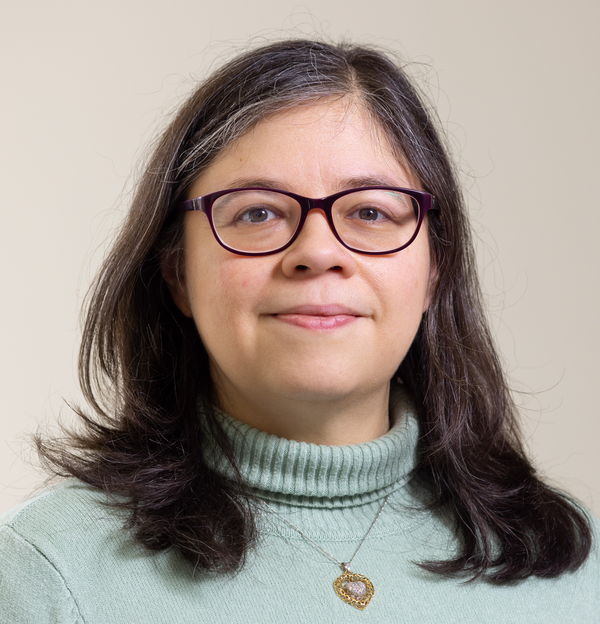
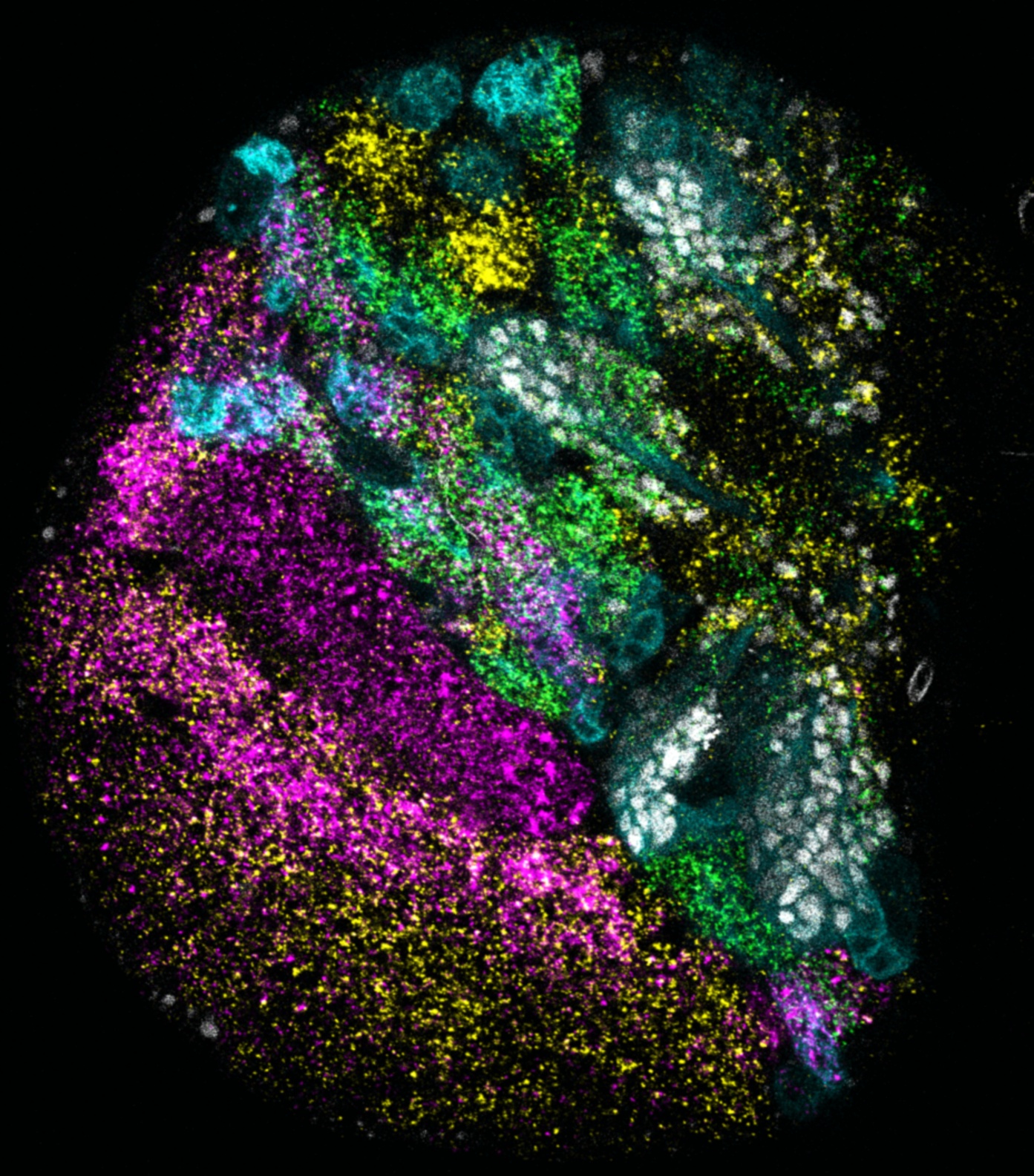
Dawen Cai, Ph.D., is an Associate Professor at the University of Michigan Medical School in the Department of Cell and Developmental Biology , with a secondary affiliation in the Biophysics Department under the College of Literature, Science, and the Arts (LS&A). He is also affiliated with the Neuroscience Graduate Program at the Medical School. His research focuses on integrating computational and experimental approaches to study neuronal subtype determination using scRNA-seq and in situ analysis. His research explores the intersection of RNA biology, neuroscience, and bioinformatics. He develops tools for multispectral imaging and lineage tracing to decode neural development and connectivity in Drosophila and mammalian models. His work combines single-cell transcriptomics with advanced microscopy to identify marker genes and model neuronal architecture. The articles reflect a strong interdisciplinary focus on neuroscience and biomedical imaging. Recent publications highlight innovations in 3D imaging technologies, image compression algorithms, and machine learning applications for medical image segmentation. These works emphasize scalable solutions for high-resolution data analysis, advancing tools for neurophysiology, and leveraging RNA sequencing to map neural development. No scientific awards were explicitly mentioned in the text. Dawen Cai actively recruits PhD students and postdoctoral fellows for the Cai Lab, prioritizing candidates with wet-lab skills, bioinformatics expertise, and experience in quantitative image processing. His lab emphasizes training in interdisciplinary research, paper/grant writing, and critical thinking.
Sudeep Pasricha is a Professor in the Department of Electrical and Computer Engineering at Colorado State University's Walter Scott Jr. College of Engineering, serving as Chair of Computer Engineering and Director of the Embedded, High Performance, and Intelligent Computing (EPIC) Laboratory. His educational background includes: B.E. in Electronics and Communication Engineering from Delhi Institute of Technology, India (2000) Ph.D. in Computer Science from the University of California, Irvine (2008) Prof. Pasricha's research centers on innovative software algorithms, hardware architectures, and hardware-software co-design techniques for energy-efficient, fault-tolerant, real-time, and secure computing. His work drives advancements in embedded systems, IoT, and cyber-physical systems through rigorous interdisciplinary approaches that bridge theoretical innovation with practical implementation challenges. His exceptional contributions have been honored with prestigious awards including: George T. Abell Outstanding Research Faculty Award IEEE-CS/TCVLSI Mid-Career Research Achievement Award IEEE/TCSC Award for Excellence for a Mid-Career Researcher AFOSR Young Investigator Award ACM Technical Leadership Award ACM SIGDA Distinguished Service Award With over 250 peer-reviewed publications yielding seven best paper awards and six nominations, Prof. Pasricha has filed multiple patents and co-authored influential books and book chapters. His academic leadership extends to editorial roles as Vice Chair of ACM SIGDA, Steering Committee Chair for IEEE Transactions on Sustainable Computing, and Senior Associate Editor for ACM Journal on Emerging Technologies in Computing Systems, alongside extensive conference organization spanning 150+ events. At CSU's EPIC Laboratory, he leads cutting-edge research on intelligent computing architectures that address critical challenges in energy efficiency, security, and real-time performance across emerging technology domains.
Ramon Canal is a Professor at the Universitat Politècnica de Catalunya (UPC), affiliated with the Barcelona School of Informatics and the Computer Architecture Department. He has served as Vice Dean of postgraduate studies and leads the VirtuOS (Virtualization and Operating Systems) research group. His academic background includes BSc, MSc, and PhD from UPC, with thesis supervision by Antonio González (UPC) and James E. Smith (University of Wisconsin-Madison). He completed sabbaticals at Harvard University (2006-2007) and University of Cyprus (2019-2020). Education: PhD, MSc, BSc in Computer Engineering (UPC) Research focus: Microarchitecture security, reliability across circuit/system levels, cloud optimization Recent publications address privacy in IoT, secure hardware accelerators, and safety-critical systems. His work contributes to the DRAC project (2019-2022), Red-RISCV network, and Horizon's Vitamin-V project. Awards include HiPEAC Paper Awards, IEEE Senior Member status, Fulbright recognition, and multiple education excellence accolades. Scientific Honors HiPEAC Paper Award (ISCA-44, 2017) IEEE Senior Member (2016) Best Paper Nominee (ICCD-32, 2014) UPC Outstanding PhD Award supervision (2011) He advises current MSc students and has mentored multiple PhD graduates. Professional activities span academic leadership, research collaborations with Barcelona Supercomputing Center (BSC), and technical contributions to reliability analysis frameworks like RECIPE and FRACTAL.







.JPG)