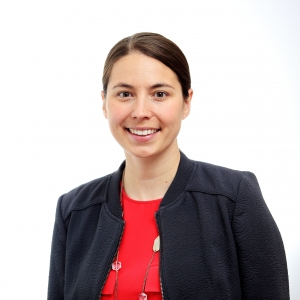
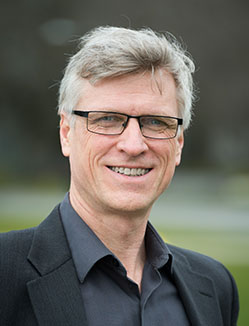
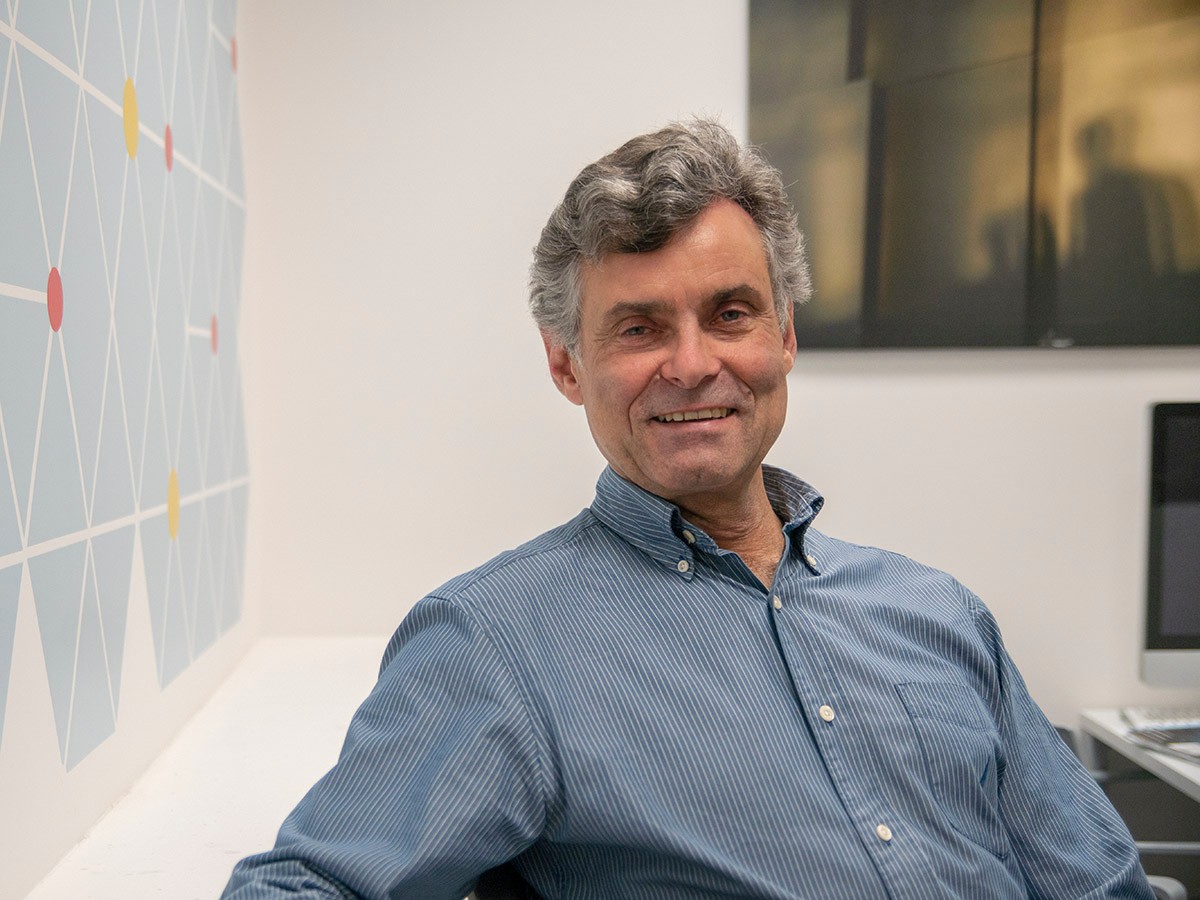
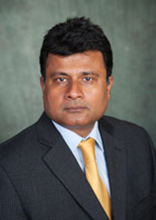
Dr. Paul G. O'Brien is an Associate Professor in the Department of Mechanical Engineering at York University, Canada, affiliated with the Lassonde School of Engineering. His research focuses on interdisciplinary clean energy solutions, including energy storage, thermophotovoltaic systems, decarbonization of buildings, and life cycle assessments. He leads the Advanced Materials for Sustainable Energy Technologies (AM-SET-Lab) and has authored over 50 journal articles. His work spans materials science, photonic crystal engineering, and radiative cooling technologies. Research interests include optimizing thermal energy storage systems, photonic crystal-based filters for solar applications, and CO2 capture via direct air capture systems. His lab develops materials for passive cooling, solar-thermal integration, and advanced photocatalytic CO2 reduction. Dr. O’Brien collaborates across engineering disciplines to address global energy challenges. Recent publications highlight innovations in ellipsoidal optical cavities for thermophotovoltaics, radiative cooling materials, and techno-economic assessments of carbon capture technologies. His work bridges fundamental material science with applied engineering solutions for sustainable energy systems.
Hua Ge is a Professor in the Department of Building, Civil and Environmental Engineering at Concordia University's Faculty of Engineering and Computer Science. She holds a Tier II Concordia University Research Chair in High Performance Building Envelope for Climate Resilient Buildings and leads extensive research in building science and climate adaptation. Her research focuses on wind-driven rain analysis , hygrothermal performance of building envelopes , advanced building facades , innovative wood-frame construction , and low-energy buildings . Current work examines climate change impacts on wind-driven rain loads, urban micro-climate effects, climate-resilient building envelopes, dynamic facades, and low-carbon healthy buildings. Her methodology combines large-scale laboratory testing, field monitoring, and computational modeling. Her 15 most recent publications demonstrate strong trends in nature-based climate resilience solutions , overheating risk mitigation in educational buildings , advanced hygrothermal modeling of wood-frame systems , and carbon sequestration strategies for buildings. The work spans multiple sub-disciplines including computational fluid dynamics, life cycle assessment, stochastic modeling, and field validation studies across Canadian climates. Tier II Concordia University Research Chair (CURC) in High Performance Building Envelope for Climate Resilient Buildings Professional Engineers of Ontario American Society of Heating, Refrigerating and Air-conditioning Engineers ASHRAE TC4.4 Building materials and building envelope performance (Subcommittee Chair) Professor Ge has supervised 42 graduate students (26 PhD, 16 MASc), including current advisees working on nature-based solutions, climate-resilient envelopes, and building integrated photovoltaics. Her research is supported by Concordia University Research Chair funding and collaborative projects with institutions like BCIT. She directs activities at Concordia's Building Envelope Test Facility and contributes to national standards through ASHRAE.
Cynthia Cruickshank is a Full Professor in Mechanical and Aerospace Engineering at Carleton University and currently serves as Associate Dean for Equity, Diversity, and Inclusion within the Faculty of Engineering and Design. She holds degrees including a B.Sc. and Ph.D. from Queen's University. Her research focuses on advanced building energy systems, high-performance buildings, and sustainable construction materials. Key areas include solar-assisted heat pumps, thermal energy storage (both sensible and latent), and solar absorption cooling. She leads the Centre for Advanced Building Envelope Research (CABER), dedicated to innovative building envelope technologies. Her recent work examines telework impacts on home energy use, smart thermostat data analysis, and the integration of bio-based phase change materials in construction. Over 150 peer-reviewed articles highlight her contributions to energy efficiency, renewable energy systems, and building retrofit strategies. Prof. Cruickshank's research teams collaborate on projects such as solar-driven adsorption systems, vacuum insulation panel retrofits, and policy implications of remote work. Her labs emphasize experimental validation of novel materials and systems through guarded hot box testing, hygrothermal modeling, and in-situ evaluations.
Yuxiang Chen is an Associate Professor in the Department of Civil and Environmental Engineering at the University of Alberta. His research focuses on high-performance buildings, net-zero energy systems, and sustainable construction practices. He integrates advanced modeling techniques, renewable energy solutions, and intelligent design strategies to optimize building performance in cold climates. PhD, Building Engineering (2013), Concordia University MASc, Building Engineering (2008), Concordia University BEng, Building Engineering (2006), Concordia University Dr. Chen’s work emphasizes modular construction, thermal energy storage, and data-driven modeling for building systems. He explores the use of robotics in construction, thermal resistance of masonry walls, and energy-efficient community greenhouses tailored for cold regions. His recent publications highlight trends in building thermal dynamics, with a focus on resistor-capacitor (RC) models, hybrid heating systems, and snow accumulation impacts on solar panels. He also contributes to cold-climate energy management and smart home integration.
Dr. Thomas Froese is the Department Chair and Professor of Civil Engineering at the University of Victoria (UVic), within the Faculty of Engineering and Computer Science. He specializes in project and construction management, sustainable infrastructure, and the integration of information technologies such as Building Information Modeling (BIM), IoT, and digital twins into building and infrastructure systems. His work emphasizes sustainability assessment, energy efficiency, and innovation in construction processes. He actively contributes to advancing sustainable building practices through applied research and education. Research Interests: Froese’s expertise spans sustainable building and infrastructure design, digital twin-enabled post-occupancy evaluations, timber-concrete composite systems, and the application of BIM in high-performance construction. He explores how technologies like GIS, IoT, and surrogate modeling can optimize building envelopes and enhance infrastructure resilience. His educational focus includes curriculum development for sustainability-centered civil engineering and fostering innovation in construction management. Articles Trends: His recent publications emphasize sustainability in construction, digital twin applications, and innovative materials like bio-inspired auxetics. He frequently examines case studies such as Brock Commons Tallwood House and UVic’s Engineering Expansion Project, highlighting practical implementation of sustainable technologies. His work bridges theory and practice, addressing challenges in thermal comfort, energy efficiency, and lifecycle assessment. Awards and Grants: No specific awards or grants are listed in the provided texts. Froese’s contributions are primarily reflected in his research output and academic leadership roles. He oversees the Civil Engineering Department and collaborates on projects promoting sustainable development, such as the UBC Living Lab initiative. Labs/Teams: As a department chair, Froese likely leads or collaborates with UVic’s civil engineering research groups focused on sustainable infrastructure and digital construction technologies. His work aligns with UVic’s broader commitment to environmental stewardship through applied engineering solutions.
Dr. David Naylor is a Professor in the Department of Mechanical, Industrial, and Mechatronics Engineering at Toronto Metropolitan University, Faculty of Engineering and Architectural Science. His research focuses on heat transfer, laser interferometry, and computational fluid dynamics, with applications in energy efficiency and engineering education. He is actively involved in both experimental and numerical investigations of thermal systems. Education: PhD, University of Western Ontario (1992) MESc, University of Western Ontario (1985) BESc, University of Western Ontario (1983) Dr. Naylor's research interests center on convective heat transfer, particularly in building envelopes and nanofluids. He employs advanced optical techniques such as laser interferometry to visualize and quantify thermal fields. His work bridges experimental innovation with computational modeling, contributing to energy conservation and sustainable engineering solutions. He has developed a unique laser interferometer capable of real-time temperature field visualization, one of only a few such instruments in Canada. His recent publications demonstrate a consistent focus on convection modeling, thermal measurement techniques, and building energy performance. Key themes include fenestration systems, isothermal boundary problems, and full-field visualization of nanofluids. These works appear in leading journals such as the International Journal of Thermal Sciences and Energy and Buildings , reflecting strong interdisciplinary engagement. Scientific Awards: Engineering Medal for Research and Development, Professional Engineers Ontario (2014) Fellow, Canadian Academy of Engineering (2013) Fellow, Canadian Society for Mechanical Engineers (2004) Teaching Excellence Award, Faculty of Engineering and Architectural Science (2016) Dr. Naylor has supervised graduate students and is currently available to advise new ones. He serves as Editor-in-Chief of the International Journal of Mechanical Engineering Education , highlighting his commitment to pedagogy. His research has been supported through institutional and professional recognition, though specific grants are not listed. He holds a professional engineering license (PEng) and continues to innovate in both research and teaching. His laboratory work centers on experimental heat transfer using custom-built optical instrumentation. The laser interferometry setup enables high-precision, non-intrusive thermal measurements, forming the core of his research team’s experimental capabilities. This apparatus supports both fundamental fluid dynamics studies and applied energy conservation projects.
Carlos 'Lobo' Cruz Noguez is a Professor in the Department of Civil and Environmental Engineering at the University of Alberta's Faculty of Engineering. He concurrently serves as Associate Dean of Education in the College of Natural and Applied Sciences, where he leads initiatives to enhance interdisciplinary educational programs addressing global challenges like sustainability and AI. His research focuses on masonry structures, seismic engineering, nonlinear modeling, and innovative materials. He holds the MCAA Endowed Chair of Masonry Structures, driving advancements in high-performance masonry systems. He teaches CIV E 676: Behavior and Design of Masonry Structures , offered alternate years, covering masonry mechanics, reinforced design, and code applications. His work blends experimental testing, computational modeling, and material innovation to address structural resilience and thermal performance. Dr. Cruz Noguez’s research spans structural simulation, damage mitigation, and large-scale testing of masonry and reinforced concrete systems. His recent studies explore seismic response, thermal resistance of cavity walls, and cross-border standards for masonry walls. His contributions emphasize practical applications of advanced materials for safer, durable infrastructure. Prospective graduate students are invited to apply via email with a cover letter, resume, and transcripts. While no specific awards are listed, his endowed chair highlights his leadership in masonry research. Advising and grants are central to his role, though specific grants are not detailed here. His interdisciplinary approach bridges education, research, and industry collaboration.
Dr. Miljana Horvat is a Professor and Associate Dean of Graduate and Postdoctoral Studies at the Department of Architectural Science, Toronto Metropolitan University. Her expertise spans Energy Efficient Building Design, Solar Neighbourhood Planning, and AI-driven architectural solutions. She holds a PhD from Concordia University (2005) and advanced degrees from McGill University (MArch, 1998) and the University of Belgrade (Dipl.Ing.Arh, 1992). Her research focuses on high-performance building envelopes for cold climates, solar energy integration, and urban sustainability. She leads the International Energy Agency's solar energy guidelines initiatives and mentors graduate students in international collaborations. Courses include BL8101 (Building Envelope Systems) and BL8104 (Building Science Seminar/Studio). Her work bridges architectural design with environmental science, emphasizing AI applications for optimizing solar potential and energy efficiency. Over 30 peer-reviewed articles reflect her contributions to building envelope performance assessment, thermal comfort analysis, and machine learning in energy diagnostics.
Dr. Mohamed Al-Hussein is a Professor and NSERC Industrial Research Chair in the Industrialization of Building Construction at the University of Alberta’s Department of Civil and Environmental Engineering. His work focuses on advancing modular and offsite construction technologies through automation, lean principles, and Building Information Modelling (BIM). PhD, Construction Engineering & Management, Concordia University (1999) MASc, Construction Engineering and Management, Concordia University (1995) MSc, Civil Engineering, University of Architecture & Civil Engineering, Bulgaria (1988) BSc, Civil Engineering, University of Architecture & Civil Engineering, Bulgaria (1983) Dr. Al-Hussein’s research spans five key domains: Modular Construction: Pioneering high-efficiency offsite building systems, including rapid assembly of student dorms and mid-rise residential buildings. BIM & Digitalization: Developing 3D/4D modeling frameworks, automated design systems, and digital twin applications for construction optimization. Environmental Sustainability: Quantifying CO2 emissions, exploring nano energy storage, and advancing solar PV integration in residential construction. Urban Planning: Specializing in age-restricted community design, municipal infrastructure maintenance, and housing affordability analysis related to paving standards. Construction Safety: Applying ergonomic risk assessment tools and virtual reality to enhance worker safety and reduce construction-related hazards. His 400+ peer-reviewed publications reflect cutting-edge applications of AI, deep learning, and simulation across construction processes. Recent work explores metaverse integration, blockchain collaboration tools, and advanced crane operation optimization using reinforcement learning. As Editor-in-Chief of the International Journal of Industrialized Construction , Dr. Al-Hussein remains a global authority in this field. He has developed industry-transforming technologies like the Quikmod-2 modular lift frame and PCL lift frame project , with real-world implementations ranging from Shell Scotford complex equipment replacement to CBC News and Forbes featured projects.
Samir Chidiac is a Professor in the Department of Civil Engineering at McMaster University. His research focuses on Sustainability and Resiliency of Materials and Structures , with key themes including Self-Consolidating Concrete (SCC) , Ultra High-Performance Concrete (UHPC) , Self-Healing Concrete , and Building Energy Efficiency . His work integrates experimental and computational methods across scales. Key Research Areas : Concrete Rheology, Durability, Self-Healing Mechanisms, Radiation Shielding, Climate Resilience Teaching : Courses like CIVENG 732: Concrete Structures , CIVENG 4BP4: Building Science , and CIVENG 4X06A: Design Projects Notable Contributions : Development of BECOP energy metric, MRCsC radiation shielding software, and multiscale models for concrete durability Collaborations : Interdisciplinary work with nuclear engineering, environmental science, and accessibility studies Email : chidiac@mcmaster.ca His recent publications emphasize climate change impacts on buildings , radiation-shielded concrete , and self-healing capsule performance . Despite extensive citations and patent references, specific scientific awards or student lists are not detailed in the provided texts.
Dr. Phalguni Mukhopadhyaya is a Professor and Director of the Master of Engineering in Building Envelopes and Structures program at the University of Victoria's Department of Civil Engineering (Faculty of Engineering and Computer Science). He holds a PhD from the University of Sheffield and certifications including P.Eng. His research focuses on energy-efficient buildings, hygrothermal performance, novel construction materials, and retrofit technologies. Key areas include thermal insulation innovations (e.g., VIPs, aerogels), climate change impacts on building durability, and sustainable design practices. Education: BTech (NIT, India), MS (City University, London), PhD (University of Sheffield). He leads interdisciplinary projects combining experimental, numerical, and field studies, with emphasis on envelope materials' lifecycle performance. He organizes the International Conference on New Horizons in Green Civil Engineering (NHICE) and collaborates with industry on applied research. Research interests span building envelope durability, moisture management, green roofs, and empathetic engineering education. His work integrates design thinking and systems approaches to address sustainability challenges. He currently supervises graduate students and accepts applications for MS/PhD research in building science and materials engineering. Notable contributions include development of thermal performance metrics, hygrothermal modeling frameworks, and sensor technologies for envelope diagnostics. His laboratory work combines hot box testing, CFD simulations, and field assessments to bridge theory and practice.
Dorothy Johns is an Assistant Professor in the Department of Architectural Science at Toronto Metropolitan University (TMU), holding concurrent roles as a PhD Candidate and founder of Woodhouse Studio. She specializes in low-carbon material research and sustainable design strategies, bridging architecture with building science. Johns leads the Catching Carbon Lab, focusing on circular design and bio-based materials to reduce buildings' carbon footprints across their lifecycle. Education includes a PhD in Building Science (2024) from TMU, a Master of Architecture (Honours, 2016) from the University of Calgary, and a Bachelor of Architectural Science (Honours, 2014) from TMU. Her professional certifications include Passive House Expert (CPHC). Research emphasizes socially resilient design, high-performance building envelopes, and community-informed practices. She teaches courses like Sustainable Architecture and Theorizing Technology in Architecture, mentoring students to integrate climate-focused research into practice. Collaborations span academia and industry through interdisciplinary projects and professional practice. Johns advocates for socially responsible design through her work with the Ontario Building Envelope Council's education subcommittee. Her professional practice at Woodhouse Studio aligns with her research, applying low-carbon materials and techniques in real-world projects.
Jennifer Fisher is a Professor in the Department of Visual Art and Art History at York University's School of the Arts, Media, Performance & Design (AMPD). She holds a BFA from NSCAD University, and MA and PhD degrees from Concordia University. Her academic work integrates curatorial practice with research in contemporary art, sensory aesthetics, and feminist theory. Research Focus Fisher's research explores interdisciplinary intersections including: Exhibition studies and archival reinterpretation Affect theory and non-visual sensory aesthetics Feminist performance and display practices Curatorial methodologies and artist archives Professional Recognition Contemporary Art Fellow at the National Gallery of Canada Research affiliations at Cornell University and NYU Tisch School of the Arts Co-founder of the Journal of Curatorial Studies Founding member of DisplayCult curatorial collective Notable Projects Fisher co-curated 'Archives by Artists' (2024) at the Archives of Ontario, featuring 18 international artists who reconceptualize archival practice through interactive multiples. The exhibition engaged AMPD students in hands-on curation and will travel to Québec in 2025. Her work frequently integrates academic research with public-facing curation.