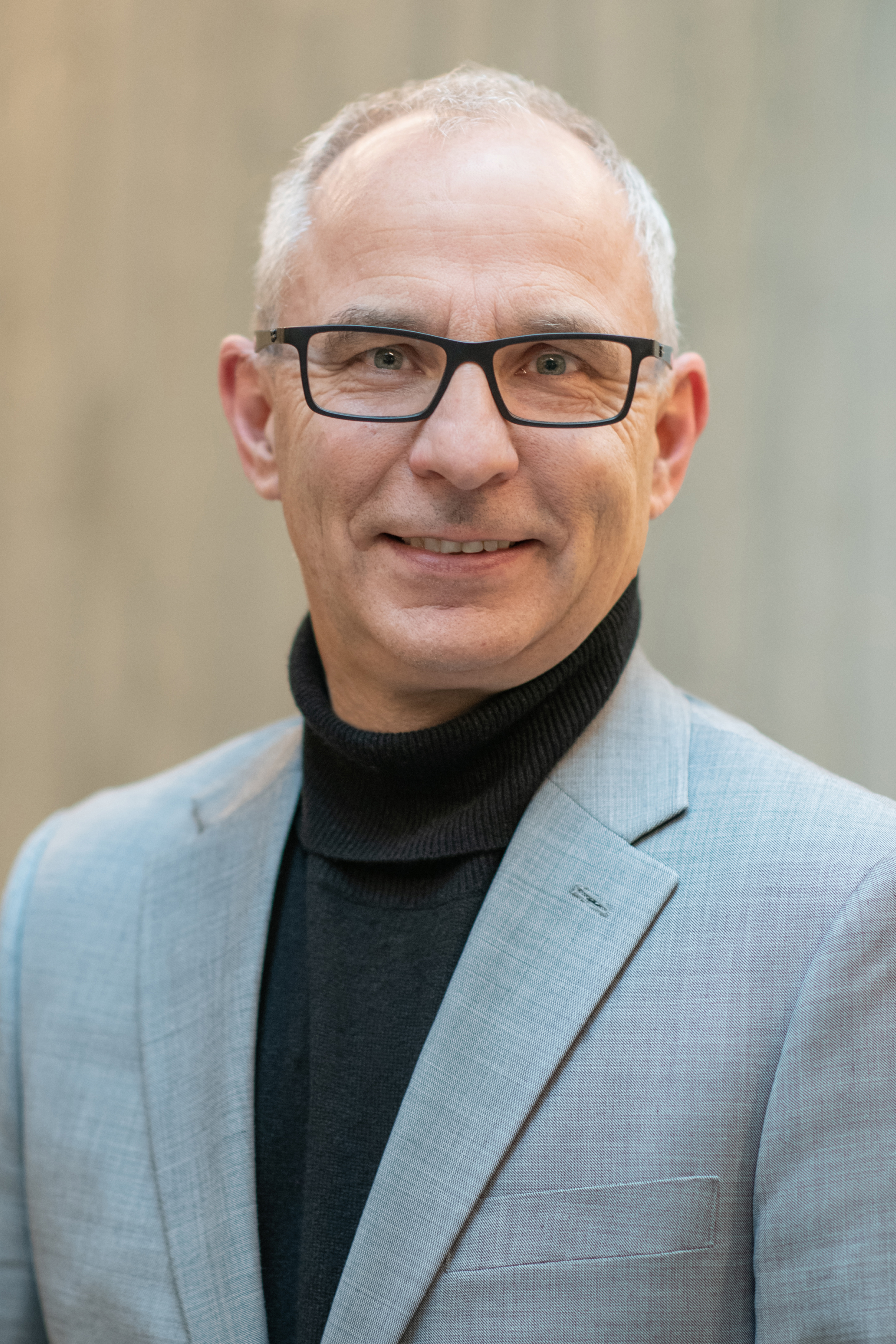
Associate Professor Ivan Guo is a faculty member at Monash University's School of Mathematics, where he leads research in mathematical finance and stochastic modeling. He obtained his PhD in Mathematics from the University of Sydney in 2014 and currently accepts PhD students. His work bridges theoretical mathematics and practical financial applications, with active projects spanning 2022-2026. Research Focus Dr. Guo's research centers on three interconnected areas: Optimal Transport Applications : Developing transport-based methods for financial model calibration and derivatives pricing Market Microstructure : Analyzing market-making strategies, liquidity, and high-frequency trading dynamics Sustainable Finance : Modeling green investment impacts and energy market transitions using game-theoretic approaches Active Projects Can green investors drive transition to a low-emission economy? (2022-2026) Integrating energy storage into electricity markets (2022-2024) Data61 CRP #46 - Risklab mathematical sciences (2020-2023) Efficient computational techniques for econophysics (2019-2021) The role of liquidity in financial markets (2017-2020) His research consistently addresses model uncertainty, volatility dynamics, and computational methods across 18+ publications since 2012.
Rajesh Ranjan is an Assistant Professor in the Department of Aerospace Engineering at the Indian Institute of Technology Kanpur. His academic career spans multiple prestigious institutions including Ohio State University and Jawaharlal Nehru Centre for Advanced Scientific Research. Dr. Ranjan completed his PhD (2016) from Jawaharlal Nehru Centre for Advanced Scientific Research, Bengaluru, ME (2007) from Indian Institute of Science, Bengaluru, and BE (2005) from Bihar Institute of Technology, Sindri where he achieved First Rank with Roll of Honor. His educational background laid the foundation for his expertise in fluid dynamics and computational methods. His research focuses on fundamental and applied aspects of fluid dynamics with specialization in turbomachinery flows, applied aerodynamics, stability and flow control, transition and relaminarization phenomena, and high performance computing applications. Dr. Ranjan employs a multidisciplinary approach combining theoretical analysis, advanced computational techniques, and experimental validation to address complex fluid flow problems in aerospace engineering. His work has significant implications for improving efficiency in turbomachinery design and understanding fundamental flow physics in complex geometries. Dr. Ranjan's publication record reveals a strong trajectory in computational fluid dynamics with recent work spanning traditional aerospace applications like turbomachinery and aircraft aerodynamics while also demonstrating adaptability through interdisciplinary research such as his data-driven approach to modeling the COVID-19 pandemic. His publications consistently demonstrate rigorous methodology and innovative approaches to complex fluid flow problems. All India Rank-3, Graduate Aptitude Test in Engineering (GATE), India (2005) Roll of Honor (First Rank), B.E., BIT, Sindri, India (2001-2005) Outstanding Performance Award (thrice), TATA CRL, Pune, India (2008-10) ICAM International Travel Award, Institute for Complex Adaptive Matter (2013) International Travel Support Award, DST, Govt. of India (2014) Best Poster Award, JNCASR In-house Symposium, Bengaluru, India (2015) Dr. Ranjan has mentored multiple students through research projects at IIT Kanpur and previously at Ohio State University. His research has been supported by institutional funds and travel awards from national agencies including the Department of Science and Technology, Government of India. He maintains active collaborations with researchers in India and internationally to advance computational fluid dynamics methodologies and their application to real-world engineering problems.
Dr. Fengyan Li is a Professor in the Department of Mathematical Sciences at Rensselaer Polytechnic Institute (RPI). She holds a PhD in Applied Mathematics from Brown University (2004) and previously held a postdoc at the University of South Carolina. Her research focuses on numerical analysis and scientific computing, particularly discontinuous Galerkin methods for applications in wave propagation, fluid dynamics, plasma physics, and nonlinear optics. She has received prestigious awards including the NSF-CAREER Award (2009) and Alfred P. Sloan Fellowship (2008). Dr. Li serves on editorial boards of journals like SIAM Journal of Numerical Analysis and IMA Journal of Numerical Analysis. Education: PhD in Applied Mathematics (Brown University, 2004); MS & BS in Computational Mathematics (Peking University, 2000 & 1997). Research interests emphasize multi-scale simulations, reduced-order modeling, and high-order methods. Her work addresses challenges in kinetic transport, nonlinear optics, and plasma dynamics. She has delivered plenary talks at major conferences, including ICOSAHOM (2018) and NAHOMCon (2022). Professional service includes leadership roles in the Association for Women in Mathematics (AWM), co-organizing symposiums, and mentoring. She is a 2025 AWM Fellow and advises RPI's AWM Student Chapter.
Negin Alemazkoor is an Assistant Professor at the University of Virginia's School of Engineering and Applied Science, specializing in interdisciplinary research on infrastructure resilience. Her work focuses on developing AI-driven methodologies for analyzing interconnected systems like power grids, urban flood models, and transportation networks under uncertainty. Key areas include enhancing grid reliability through multi-fidelity modeling, hurricane evacuation equity analysis, and precision-compression techniques for large-scale data. She co-leads a NSF-funded initiative to democratize AI education in high schools. Her research integrates graph neural networks, physics-informed models, and machine learning to address challenges in energy systems, environmental monitoring, and disaster response. Notable projects include hurricane-induced power outage risk analysis under climate change and precision guarantees for smart-meter data analytics. She emphasizes computational efficiency and multi-fidelity approaches to balance accuracy with resource constraints. Recent contributions span AI applications in flood forecasting, renewable energy integration, and infrastructure cybersecurity. Her NSF grant aims to create inclusive AI curricula, reflecting her commitment to education and societal impact. She is affiliated with UVA Engineering’s research initiatives on resilient systems and data-driven decision-making.
Mauro Maggioni is a Professor in the Departments of Mathematics and Applied Mathematics and Statistics at Johns Hopkins University. His research focuses on the mathematical foundations of Data Science, with applications in molecular dynamics, hyperspectral imaging, and reinforcement learning. He employs techniques from Harmonic Analysis, Approximation Theory, and Probability to develop scalable algorithms, particularly multiscale methods for analyzing high-dimensional data. Maggioni’s work bridges theoretical mathematics and practical applications, including cardiac electrophysiology modeling, unsupervised segmentation of hyperspectral images, and reduced-order modeling of complex systems. Education: B.S. in Mathematics from Università degli Studi in Milan, Italy; Ph.D. in Mathematics from Washington University in St. Louis. He held a Gibbs Assistant Professorship at Yale before moving to Duke University and later becoming a Bloomberg Distinguished Professor at JHU. Research Interests: Mathematical foundations of Data Science, Machine Learning, Partial Differential Equations, and their applications in physical and biological systems. Notable contributions include diffusion wavelets, interaction kernel learning, and multiscale geometric analysis of molecular dynamics data. Scientific Awards: Popov Prize in Approximation Theory (2007), NSF CAREER Award and Sloan Fellowship (2008), Fellow of the American Mathematical Society (2013), Simons Fellowship (2020). Advising & Grants: Maggioni mentors postdocs and students in areas like stochastic systems and signal processing. His group’s work is supported by Simons Foundation grants, NSF funding, and collaborations with institutions like MINDS and CIS at JHU. Labs/Teams: Leads a research group focused on data-driven discovery in mathematics and applied sciences, emphasizing interdisciplinary collaboration across computational methods, statistics, and domain-specific applications.
Diego Donzis is a Professor in the Department of Aerospace Engineering at Texas A&M University, affiliated with the College of Engineering. He holds the Presidential Impact Fellow title. His work focuses on high-performance computing for fluid dynamics, particularly compressible turbulence, turbulent mixing, and shock-turbulence interactions. Donzis earned his Ph.D. and M.S. in Aerospace Engineering from the Georgia Institute of Technology. Research interests include large-scale simulations of turbulent flows, thermal boundary condition effects on turbulence, and the development of advanced numerical methods like Selected-Eddy Simulations (SES) for extreme-scale computing. His studies explore universality in turbulence scaling, energy spectra dynamics, and the interplay between compressibility and fluid mixing. Publications emphasize turbulence decay laws, shock-turbulence interactions, and the role of thermal non-equilibrium in turbulent flows. Notable contributions include advancing asynchronous algorithms for exascale CFD and analyzing density gradient statistics in compressible turbulence. Awards include the Presidential Impact Fellow distinction. Donzis collaborates on grants such as the Frontera Travel Grant for compressible turbulence research. His work bridges computational methods with fundamental fluid dynamics, addressing challenges in both numerical accuracy and physical modeling.
Diane Guignard is an Assistant Professor in the Department of Mathematics and Statistics at the University of Ottawa. Her research focuses on numerical analysis, partial differential equations, and computational methods with applications to mechanics and stochastic systems. She holds a position in a leading mathematics department and can be contacted at dguignar@uOttawa.ca . Her research interests include finite element methods, model reduction, uncertainty quantification, and optimal transport-based mesh adaptation. She explores nonlinear approximation theories for high-dimensional anisotropic functions and develops computational frameworks for thin structures and colloidal flow simulations. Her work bridges numerical analysis with practical engineering challenges, emphasizing adaptive algorithms and error estimation techniques. Her recent publications (2021-2024) highlight contributions to goal-oriented mesh adaptation, stochastic field approximations on surfaces, and large deformation analyses of prestrained plates. These studies emphasize interdisciplinary approaches combining mathematical rigor with computational innovation. Dr. Guignard has not been explicitly noted for awards in the provided materials. Her advising record is currently unspecified, though her research group likely engages in advanced numerical methods and computational mechanics projects.
Mikael Johansson is a Professor at Kungliga Tekniska Högskolan (KTH), specializing in Control Technology . He teaches and coordinates courses such as Distributed Optimization (FEL3311) and various advanced-level degree projects in computer science, electrical engineering, and systems engineering. His research spans Control Systems , Machine Learning , and Optimization , with a focus on asynchronous algorithms, federated learning, and applications in energy systems and construction. His work includes 15 recent publications on topics like neural networks, distributed optimization, and battery technology. Notable areas of contribution are in asynchronous learning, federated learning with privacy constraints, and quasi-Newton methods for optimization. His research bridges theoretical advancements with practical applications in urban design, healthcare, and autonomous systems.
Dr. Yongjie Jessica Zhang is a Professor at Carnegie Mellon University, holding appointments in both the Department of Mechanical Engineering and the Department of Biomedical Engineering . She received her B.S. and M.S. in Engineering Mechanics from Tsinghua University, followed by an M.S. in Aerospace Engineering and a Ph.D. in Computational Engineering and Sciences from the University of Texas at Austin. After a postdoctoral fellowship at ICES, she joined CMU in 2007, advancing from assistant to full professor by 2016. Research Interests : Image-based geometric modeling, mesh generation, finite element analysis (FEA), isogeometric analysis, and applications in computational biomedicine, materials science, and computer-assisted surgery. Leadership Roles : Chair of Solid Modeling Association (2019-2020), USACM Executive Committee Member-at-Large (2017-2021), and ELATE Fellow (2017-2018). Her work addresses the critical challenge of automating high-fidelity geometric modeling and mesh generation for complex domains (e.g., human anatomy), which traditionally consumes ~80% of FEA time. Her group develops AI-driven methods for multiscale modeling (molecular to organ), with applications in neuroscience , biomechanics , and 4D printing . Notable awards include the Presidential Early Career Award (PECASE) , NSF CAREER Award , and ASME Van C. Mow Medal (2025) . Dr. Zhang’s publications span over 170 peer-reviewed articles, focusing on truncated hierarchical B-splines , polycube meshing , and neurite transport modeling . She has advised more than 40 students, including PhD candidates and postdoctoral fellows. Her editorial roles include Associate Editor of Computer Aided Geometric Design and editorial board memberships in Computer-Aided Design and Engineering with Computers .
Matthias Ihme is a Professor in the Department of Mechanical Engineering and Photon Science Directorate at Stanford University. His research focuses on large-eddy simulation (LES) of turbulent reacting flows, aeroacoustics, combustion-generated noise, numerical methods, and high-order schemes. He holds a Ph.D. from Stanford University (2008), an M.Sc. in Computational Engineering from the University of Erlangen (Germany, 2002), and a Dipl.-Ing. in Mechanical Engineering from Munich University of Applied Sciences (Germany, 2000). His work bridges computational fluid dynamics, combustion science, and photon science, with notable contributions to supercritical fluid dynamics, machine learning integration in fluid simulations, and high-fidelity atmospheric transport modeling. Recent research emphasizes ultrafast cluster dynamics, shock-induced interface behavior, and stochastic ignition mechanisms in advanced fuel systems. Publications highlight interdisciplinary advancements, including physics-informed ML frameworks for reacting flows and experimental studies using X-ray photon correlation spectroscopy. His projects often involve high-performance computing and collaboration with national labs like SLAC.
Prof. Karsten Urban is a Full Professor of Numerical Mathematics at the University of Ulm, leading the Institute for Numerical Mathematics. He holds roles such as Dean of Studies in Computational Science and Engineering (CSE) and Deputy Spokesman for the Research Association for Scientific Computing in Baden-Württemberg. He is an active member of prestigious societies including the Deutsche Mathematikervereinigung (DMV) and SIAM. His academic journey includes a PhD from RWTH Aachen (1995), Habilitation (2001), and a full professorship at Ulm since 2005. Research focuses on numerical methods for PDEs, reduced basis techniques, multiscale simulations in fluid mechanics, biomechanics, quantum sciences, and financial mathematics. He has pioneered wavelet-based methods and collaborated with industries on ship propulsion and energy trading models. His work integrates mathematical rigor with real-world applications, emphasizing model reduction and computational efficiency. Editorial Roles: Managing Editor of Advances in Computational Mathematics , Editor of SN Partial Differential Equations and Applications . Awards: Teaching award of Baden-Württemberg (2005), Science-Economy Cooperation Awards (2004, 2008). Administrative Roles: Member of the University Council and ASIIN expert committee. Supervises doctoral students in numerical analysis, quantum simulations, and biomechanics. Active in interdisciplinary projects, including quantum systems (IQST) and fracture healing modeling in collaboration with biomechanics experts. His contributions bridge academia and industry, driving innovation in computational methods.
Professor Matthew Jonathan Rosseinsky holds the Chair of Inorganic Chemistry at the University of Liverpool, a position he has occupied since October 1999. His career includes significant appointments at the University of Oxford (1992-1999) and Bell Laboratories in New Jersey (1990-1992), following his DPhil at Merton College, Oxford. As a Fellow of the Royal Society and recipient of numerous prestigious awards, Professor Rosseinsky maintains an active research program and leadership roles in the international chemistry community. Professor Rosseinsky's educational background includes a First Class Honours degree in Chemistry with Quantum Chemistry from the University of Oxford (1987) and a DPhil in "Physical Properties of Superconducting Oxides and Radical Cation Salts" completed in 1990 under Professor P. Day FRS. His research focuses on the synthesis of new materials with applications in energy storage and generation, communications, separation, and catalysis. The Rosseinsky Group employs a broad range of synthesis and characterization techniques, including neutron and synchrotron X-ray diffraction, combined with computational methods in collaboration with Dr. George Darling. Current research areas include Dynapore, CO2 fuels, SOLBAT, and CATMAT projects that target specific material challenges. Professor Rosseinsky's publication record is exceptional, with 304 papers including 11 in Nature, 6 in Science, and 3 in Nature Materials, accumulating over 15,000 citations and an h-index of 56 as of 2012. His work demonstrates consistent excellence across materials chemistry, with particular emphasis on porous frameworks, electronic materials, and solid-state chemistry. Among his numerous accolades are the Harrison Memorial Prize (1991), Corday-Morgan Medal (2000), Royal Society Wolfson Research Merit Award (2002), De Gennes Prize (2009), and the prestigious Hughes Medal from the Royal Society (2011). He also holds an ERC Advanced Investigator Grant and has delivered distinguished lectures worldwide. Professor Rosseinsky has served in numerous editorial and advisory capacities, including as Associate Editor for Chemical Sciences, membership on the Royal Society Conference and Travel Grant Committee since 2007, and as a member of the International Advisory Board for the Max Planck Institut for Solid State Research since 2011. His professional activities extend to international review committees for research institutions in France, South Korea, and Saudi Arabia. The Rosseinsky Group operates within the Department of Chemistry at the University of Liverpool, collaborating extensively with researchers including Dr. John Claridge, Professor Andrew Cooper, and Professor Paul Chalker. The group maintains strong international partnerships and utilizes advanced facilities for materials synthesis and characterization to drive innovation in functional materials development.
Shaun Lui is Professor and Head of Mathematics at the University of Manitoba's Faculty of Science. His research develops advanced numerical methods for partial differential equations with applications in fluid dynamics and electromagnetics. Education includes B.Sc./M.Sc. from University of Toronto and Ph.D. from Caltech. Research focuses on spectral collocation methods in space-time, domain decomposition, and finite volume schemes. Recent work establishes spectral accuracy for Stokes flows and matrix singularity bounds. Supervises graduate students in numerical PDE projects.
Jay D. Sau is a Professor of Physics at the University of Maryland, College Park, and Co-Director of the Joint Quantum Institute (JQI). His research focuses on theoretical condensed matter physics, particularly topological quantum computing, quantum many-body systems, and Majorana fermions. He holds affiliations with the Condensed Matter Theory Center (CMTC) and JQI. Sau received his Ph.D. from UC Berkeley in 2008. His work bridges theoretical concepts in topological materials, superconductivity, and quantum information processing. Research Interests: Sau's primary interests include applying topological principles to solid-state and cold-atomic systems for quantum computation. Key areas include topological superconductivity, Majorana fermions, quantum Hall effects, and spin-orbit coupled systems. His group explores phenomena like topological degeneracy, Weyl semimetals, and cold atomic gases. Awards: He has been recognized with the National Science Foundation CAREER Award (2016) and the Sloan Research Fellowship (2016). His work has been published extensively in high-impact journals and covers topics ranging from Majorana physics to quantum phase transitions. Advising & Labs: Sau mentors graduate students including Tamoghna Barik, Stuart Thomas, Huan-Kuang Wu, and Shuyang Wang. His research group collaborates on projects at JQI and CMTC, focusing on experimental realizations of topological qubits and quantum devices.
Prosper Dovonon serves as a Full Professor in the Department of Economics at Concordia University in Montreal, Canada, where he holds a prestigious Concordia University Research Chair, Tier 1, in Econometrics of Large Datasets. He previously held positions as Associate Professor (2015-2023) and Assistant Professor (2010-2015) at the same institution. Additionally, he maintains an adjunct professorship at the University of Adelaide's School of Economics since 2021 and previously served as a Visiting Professor at HEC Montreal's Department of Finance (2017-2018). His educational background includes a PhD in Economics from Universite de Montreal (2007), an MSc in Statistics and Economics from ENSEA, Abidjan, Cote d'Ivoire (2000), and an MSc in Mathematics from Universite Nationale du Benin, Abomey-Calavi, Benin (1996). Dovonon's research focuses on advanced econometric methodologies, particularly in time series analysis and financial econometrics. His work addresses complex identification issues, develops robust estimation techniques, and creates innovative testing procedures for economic models. He specializes in moment condition models, GMM estimation, volatility modeling, and handling identification failures in econometric frameworks. His publication record shows a consistent focus on theoretical econometrics with practical applications in finance. Recent work emphasizes mixed identification strength scenarios, instrument exogeneity testing, and specification testing under challenging identification conditions. His research demonstrates increasing sophistication in handling complex econometric problems with real-world financial data applications. His notable recognition includes the Concordia University Research Chair, Tier 1, in Econometrics of Large Datasets, highlighting his significant contributions to the field. Dovonon has supervised numerous graduate students and collaborated extensively with leading econometricians worldwide. His research has been supported by institutional funding through his Research Chair position, enabling significant contributions to econometric theory and methodology. He maintains active research collaborations across international institutions and continues to push the boundaries of econometric theory with applications to financial markets and economic modeling.