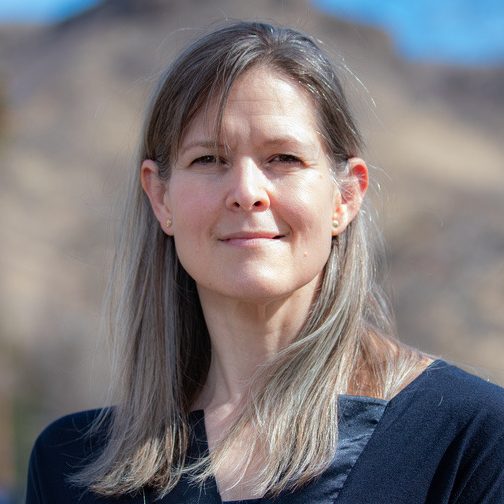
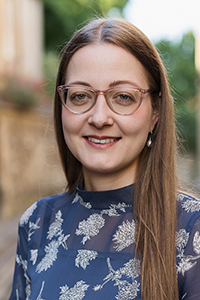
Jennifer K. Ryan is a Professor and Division Head for Numerical Analysis, Optimization & Systems Theory at the Department of Mathematics, KTH Royal Institute of Technology, Stockholm. She is affiliated with the Digital Futures Faculty, a cross-disciplinary research center jointly established by KTH, Stockholm University, and RISE Research Institutes of Sweden. Her research focuses on developing numerical schemes for extracting enhanced accuracy from simulations, with applications in imaging, data analysis, and fluid dynamics. Ryan’s work emphasizes improving computational efficiency through theoretical insights and practical algorithms. Her academic roles include teaching courses like Numerical Methods for Differential Equations II and supervising student projects in numerical analysis. She has contributed to the SIAC MAGIC toolbox, a software package for accuracy-enhancing filtering techniques. Ryan’s research group actively explores discontinuous Galerkin methods, SIAC filtering, and multi-resolution analysis, addressing challenges in computational physics and engineering. Her publications span high-order numerical methods, mesh adaptivity, and applications in plasma physics and wave equations. Projects include error estimation for boundary integral methods and developing filters for noisy data. Ryan collaborates internationally, contributing to both theoretical advancements and practical implementations in computational science.
Guglielmo Scovazzi is a Professor at Duke University with appointments across multiple departments including the Department of Civil and Environmental Engineering, the Thomas Lord Department of Mechanical Engineering and Materials Science, and as Professor of Mathematics. His interdisciplinary research bridges computational mechanics, scientific computing, and engineering applications. Dr. Scovazzi earned his B.S/M.S. in aerospace engineering (summa cum laude) from Politecnico di Torino (Italy), followed by an M.S. and Ph.D. in mechanical engineering from Stanford University. Prior to joining Duke, he was a Senior Member of the Technical Staff at Sandia National Laboratories' Computer Science Research Institute. His research focuses on developing advanced numerical methods for computational mechanics, particularly finite element methods for fluid and solid mechanics. Key areas include multiphase porous media flows, computational methods for materials under extreme conditions, turbulent flow computations, and instability phenomena. His work emphasizes creating accurate computational approaches that reduce design/analysis costs for complex engineering problems involving fluid-structure interactions and transient phenomena in complex geometries. Dr. Scovazzi's most significant recent contribution is the development of the Shifted Boundary Method, an innovative computational framework that enables efficient simulations on complex geometries without requiring boundary-fitted meshes. This method has found applications in geomechanics, energy systems, and resilient infrastructure design. Kavli Fellow, National Academy of Sciences & Kavli Foundation (2018) Presidential Early Career Award for Scientists and Engineers (PECASE), White House (2017) Early Career Award, U.S. Department of Energy, Advanced Scientific Computing Research Program (2014) Dr. Scovazzi teaches multiple courses in computational mechanics including Nonlinear Finite Element Analysis and Introduction to the Finite Element Method. His research has been supported by substantial federal funding, and he actively collaborates across disciplines to address challenging problems in energy, environment, and infrastructure resilience through advanced computational methods.
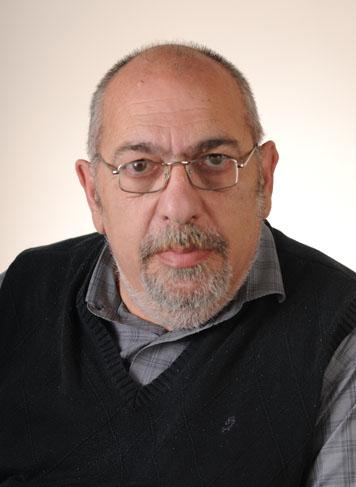
Jee Choi is an Assistant Professor in the Department of Computer and Information Science within the College of Arts and Sciences at the University of Oregon. His research focuses on developing high-performance algorithms for big data analytics, particularly in tensor decomposition and parallel computing systems. Education: PhD in Electrical and Computer Engineering, Georgia Institute of Technology, 2015 MS in Electrical and Computer Engineering, Georgia Institute of Technology, 2004 BS in Electrical and Computer Engineering, Georgia Institute of Technology, 2000 Research Interests: Dr. Choi specializes in High Performance Computing with expertise in parallel algorithm design, performance modeling, and energy efficiency. His work targets Tensor Decomposition & Data Mining for big data, developing scalable solutions for sparse and dense tensor computations. He advocates leveraging HPC systems to transform massive datasets into societal benefits through efficient data mining techniques. Publication Trends: Choi's recent publications (2021-2025) demonstrate consistent innovation in tensor decomposition methodologies, with increasing focus on adaptive storage (Alto), streaming data factorization, and energy-aware autotuning. His work spans GPU clusters, distributed systems, and emerging architectures, maintaining strong connections to real-world big data challenges while advancing theoretical algorithm design. Professional Background: After completing his PhD under Richard Vuduc at Georgia Tech (notable for SpMV GPU autotuning and Energy Roofline Model), Choi conducted DoD-funded research on tensor decomposition at IBM Watson Research Center (2015-2018) before joining the University of Oregon faculty.
Olof Runborg is a Professor in Numerical Analysis at the Royal Institute of Technology (KTH) in Stockholm, Sweden. He works in the Division of Numerical Analysis, Optimization and Systems Theory within the Department of Mathematics at KTH. His research focuses on developing and analyzing numerical methods for partial differential equations, particularly for wave propagation problems. His educational background includes: MSc in Electrical Engineering from KTH (1992) BSc in Economics & Business Administration from SSE (1994) PhD in Numerical Analysis/Applied Mathematics from KTH (1998) Postdoc at Paris VI University (1999) Postdoc at Princeton University's Program in Applied and Computational Mathematics (2000-2001) Became Docent at NADA in 2003 Appointed Professor at KTH in 2010 Professor Runborg's research centers on the numerical treatment of partial differential equations, with special emphasis on wave propagation problems. His work spans multiple areas including high-frequency waves, multiscale phenomena, numerical homogenization, uncertainty quantification, multiresolution analysis, Gaussian beams, and mesh generation. A recurring theme in his research is developing methods to solve computationally expensive problems more efficiently while maintaining accuracy. His approach often involves coupling different numerical methods or reformulating equations to create more efficient computational approaches. His research has applications across physics and engineering domains where wave phenomena are important. An analysis of his recent publications (2015-2025) shows continued focus on high-frequency wave propagation with expanding applications to areas like the Landau-Lifshitz equation for magnetic materials and elastic wave propagation. His work bridges theoretical numerical analysis with practical computational techniques, often developing novel methods like the WaveHoltz iteration for solving the Helmholtz equation. The publications demonstrate increasing attention to uncertainty quantification and multiscale methods while maintaining strong theoretical foundations in error analysis. Professor Runborg teaches several courses at KTH including Numerical Methods (basic course), Applied Numerical Methods, Numerical Algorithms for Data-Intensive Science, and Selected Topics in Numerical Analysis II. He serves as examiner for degree projects in Scientific Computing. His teaching reflects his research expertise in numerical methods and computational mathematics, providing students with both theoretical foundations and practical implementation skills. Beyond his core research, Professor Runborg has engaged in interesting side projects, such as his analysis of 'Numbers on the Web' where he investigated the frequency of numbers 11-1000 in web content, revealing patterns related to dates, time, computer systems, and cultural phenomena. This demonstrates his broader interest in data analysis and computational approaches to understanding patterns in information.
Sara Zahedi is a Professor of Numerical Analysis at the Department of Mathematics, KTH Royal Institute of Technology, working within the Division of Numerical Analysis, Optimization and Systems Theory. She serves as an Associate Editor for the SIAM Journal on Numerical Analysis and contributes to the SCI Faculty Board to enhance collaboration and transparency in academic decision-making. Her educational background includes a doctorate from KTH on numerical methods for fluid interface problems followed by a postdoctoral position at Uppsala University. Doctorate: KTH Royal Institute of Technology Postdoctoral Position: Uppsala University Zahedi's research bridges mathematical theory and practical applications, focusing on computational methods for partial differential equations in evolving domains. She pioneers Cut Finite Element Methods (CutFEM) to eliminate re-meshing requirements in multiphase flow simulations, ensuring accuracy and robustness when interfaces separate immiscible fluids. Her work specifically targets challenges in large deformations and time-dependent geometries. Analysis of her recent publications reveals a concentrated research trajectory in advancing CutFEM for diverse applications including Stokes flow, Darcy flow, Maxwell's equations, and hyperbolic conservation laws. Key trends include high-order conservative schemes, divergence preservation, stabilization techniques for unfitted meshes, and extensions to surface PDEs and multi-physics problems. Her scientific recognition includes: European Mathematical Society Prize (2016) for outstanding contributions by young researchers Wallenberg Fellowship (2019) with extension granted in 2024 Zahedi serves as examiner for Degree Projects in Scientific Computing (SF250X, SF259X) and course responsible for Engineering Mathematics projects (SA120X). Her Wallenberg Fellowship provides substantial research funding supporting her work on numerical algorithm development. While specific lab structures aren't detailed, her research operates within KTH's Division of Numerical Analysis, emphasizing collaborative development of simulation tools for industrial and scientific applications. Her current research focuses on extending CutFEM to complex multi-physics scenarios with emphasis on conservation properties and computational efficiency, with potential applications in aerospace, biomedical engineering, and environmental modeling.
Ali Mani is an Associate Professor of Mechanical Engineering at Stanford University and a faculty affiliate at the Institute for Computational and Mathematical Engineering. He earned his PhD in Mechanical Engineering from Stanford in 2009, following an M.S. (2004) and B.S. (2002) from Stanford and Sharif University of Technology, respectively. His research focuses on fluid mechanics, turbulence, and numerical simulations, with applications in multiphase flows, electrokinetic systems, and applied mathematics. His group develops high-fidelity simulation tools and reduced-order models to understand transport processes in turbulent and chaotic systems. Research interests include turbulence modeling, two-phase flow dynamics, and electrochemical transport. Recent work explores eddy viscosity operators, nonlocal transport phenomena, and computational methods for multiphase systems. The group's studies often bridge experimental validation and numerical analysis to improve predictive engineering models. Key contributions span electrokinetic transport in porous media, superhydrophobic surface slip effects, and phase field modeling. His lab’s work is supported by grants focusing on fluid dynamics, renewable energy systems, and advanced simulation frameworks.
Yuri Bazilevs is the E. Paul Sorensen Professor of Engineering at Brown University's School of Engineering and Co-Director of the Mechanics of Undersea Science and Engineering Center. His research focuses on computational mechanics, isogeometric analysis, fluid-structure interaction, and high-performance computing. Prior to Brown, he held positions at UC San Diego, where he advanced to Full Professor in 2014 after a rapid tenure. He earned his PhD in 2006 and postdoc training in computational engineering at UT Austin's ICES. Research interests span computational fluid dynamics, solid mechanics, and advanced discretization methods like isogeometric analysis (IGA) and meshfree approaches. He has developed novel formulations for complex phenomena such as underwater explosions, composite material failure, and hypersonic flow dynamics. His work integrates cutting-edge numerical methods with practical engineering applications in aerospace, energy, and biomedical systems. Recent publications highlight advancements in IGA for architected materials, RKPM-based crack modeling, and stabilized formulations for compressible flows. His contributions bridge theoretical mechanics with computational innovation, addressing challenges in multiphysics coupling and large-scale simulations. Collaborations span academia and industry, emphasizing practical validation and real-world impact. Bazilevs' expertise includes variational multiscale methods, peridynamics for fracture mechanics, and immersive particle methods for fluid-structure interaction. His work has been applied to wind turbine aerodynamics, gas turbine optimization, and cardiovascular flow analysis. He actively contributes to computational infrastructure development, such as the tIGAr software framework for IGA automation.
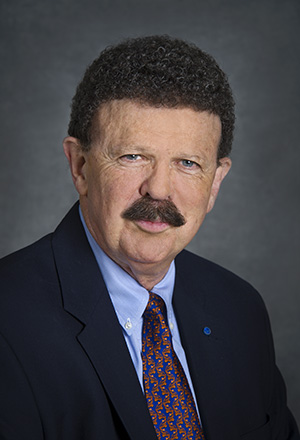
Robert O. Ritchie is the H. T. & Jessie Chua Distinguished Professor of Engineering at the University of California, Berkeley, where he holds dual appointments as Professor of Materials Science & Engineering and Professor of Mechanical Engineering. He is also a Faculty Senior Scientist at Lawrence Berkeley National Laboratory. His distinguished career spans over four decades with significant contributions to the field of materials science and engineering. Professor Ritchie received his B.A. in Physics & Metallurgy (1969), M.A. in Materials Science (1973), Ph.D. in Materials Science (1973), and Sc.D. in Materials Science (1990), all from Cambridge University, UK. His research focuses on the mechanical behavior of advanced materials, with particular emphasis on fracture mechanics, fatigue properties, and damage tolerance. Professor Ritchie's work spans multiple domains including metallic glasses, high-entropy alloys, biomaterials, and nature-inspired structural materials. His laboratory employs cutting-edge techniques such as in situ high-temperature computed tomography to study failure mechanisms in ceramic-matrix composites and nuclear graphite. His research has significant implications for aerospace, biomedical, and energy applications. Analysis of Professor Ritchie's recent publications reveals a strong focus on advanced structural materials, particularly metallic glasses and high-entropy alloys. His work combines experimental approaches with computational modeling to understand deformation mechanisms at multiple length scales. There is a clear trend toward bioinspired materials design, with several papers examining natural structures like fish scales, horn sheaths, and bone to develop new engineering materials with exceptional mechanical properties. Member, National Academy of Sciences (2025) Foreign Fellow, Academy of Athens, Greece (2024) Robert Henry Thurston Award (ASME) (2022) ASM Gold Medal (ASM Intl.) (2021) William D. Nix Medal, inaugural winner (TMS) (2020) Fellow (Foreign Member) of the Royal Society (FRS), London, UK (2017) Morris Cohen Award (TMS) (2017) Acta Materialia Gold Medal (2014) David Turnbull Award (MRS) (2013) A. Cemel Eringen Medal (Society of Engineering Science) (2010) Professor Ritchie has advised numerous graduate students and postdoctoral researchers throughout his career. His research has been supported by various funding agencies including the Department of Energy, National Science Foundation, and industry partners such as Rolls-Royce. He has served on numerous advisory boards including the Rolls-Royce Materials & Structures Advisory Board (2011-2019) and the Scientific Advisory Board of the Advanced Light Source at LBNL (2013 to date). Professor Ritchie leads the Ritchie Group at UC Berkeley, which maintains strong collaborations with Lawrence Berkeley National Laboratory. The laboratory employs state-of-the-art techniques including electron microscopy, x-ray tomography, and mechanical testing across multiple length and time scales. His team has developed innovative in situ characterization methods that have significantly advanced the understanding of material failure mechanisms under extreme conditions.
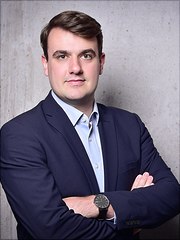
Henrik Wyschka is a doctoral researcher and scientific staff member at the University of Hamburg's Department of Mathematics, affiliated with the Faculty of Mathematics, Computer Science and Natural Sciences. His research focuses on shape optimization with fluid dynamic applications, algorithms for p-Laplace problems, and Lipschitz sequences. He is part of the DFG Research Training Group 2583, "Modeling, Simulation and Optimization with Fluid Dynamic Applications," under project O3. Education: M.Sc. (2021) and B.Sc. (2019) in Technomathematics from TU Hamburg and University of Hamburg. His work integrates theoretical analysis and numerical methods to advance computational techniques in shape optimization. Key contributions include presentations at major conferences (e.g., IFIP TC7, SIAM, GAMM) and publications on trust-region methods for p-harmonic optimization and high-order descent direction algorithms. His research emphasizes efficient numerical solutions for fluid dynamics-related challenges. Funding: Supported by the DFG through Graduiertenkolleg 2583. Office location: Geomatikum Building, Room 1517. ORCID: 0009-0000-2242-2464 .
Professor Paul Goulart is a full Professor of Engineering Science at the University of Oxford and Tutorial Fellow at St Edmund Hall, positions he has held since 2014. He leads research and teaching in robust optimization, control systems, and high-speed numerical methods, with applications spanning fluid flows, traffic networks, and economics. Education SB & MSc, Aeronautics and Astronautics – Massachusetts Institute of Technology (MIT) PhD, Control Engineering – University of Cambridge (Gates Scholar, 2007) Research Interests Professor Goulart’s work lies at the intersection of control engineering and optimization . His core expertise includes: Robust and high-speed convex optimization Model predictive control (MPC) and control barrier functions Neural-network-based control and system identification Optimization over traffic and economic networks Real-time and embedded optimization solvers These interests are reflected in prolific publication output and active supervision of doctoral researchers. Publications & Trends From 2020 to 2025 Professor Goulart has co-authored more than thirty papers. A dominant theme is the development of fast, reliable algorithms for conic optimization and robust control , often leveraging machine-learning techniques to enhance scalability and real-time performance. Recent works emphasize safety certificates, GPU-accelerated solvers, and neural-network controllers for uncertain systems. Awards & Honors Gates Cambridge Scholar (2003) Advising & Grants Professor Goulart actively seeks DPhil students in control engineering and optimization . He leads the Control Group within the Department of Engineering Science and has been involved in multiple industrially funded projects, although specific grant identifiers are not provided in the supplied text. Laboratory & Teams He is a member of the Control Group , Department of Engineering Science, University of Oxford, and serves as Secretary to the Governing Body of St Edmund Hall (Michaelmas Term 2024).
Melanie Weber is an Assistant Professor of Applied Mathematics and Computer Science at Harvard University's John A. Paulson School of Engineering and Applied Sciences (SEAS), leading the Geometric Machine Learning Group. Her research focuses on leveraging geometric structures in data for designing efficient machine learning and optimization algorithms with theoretical guarantees. She holds a PhD from Princeton University (2021) and has held fellowships at the Mathematical Institute of Oxford, Brasenose College, and the Simons Institute. Her work bridges geometry, optimization, and machine learning, with funding from NSF, Sloan Foundation, and Harvard initiatives. Education : PhD in Applied Mathematics, Princeton University (2021) BSc/MSc in Mathematics and Physics, University of Leipzig (2016) Research Interests : Dr. Weber's research integrates geometric principles into machine learning and optimization, focusing on non-Euclidean spaces, graph structures, and manifold-based methods. Key areas include optimization on Riemannian manifolds, curvature-based analysis (e.g., Ricci curvature), and developing algorithms resilient to data geometry challenges like over-smoothing in graph neural networks. Her work emphasizes theoretical foundations while addressing practical scalability in high-dimensional data. Awards & Recognition : 2024 Sloan Research Fellowship 2023 Leslie Fox Prize in Numerical Analysis 2023 NSF Grant for Geometric Optimization Grants & Funding : Supported by National Science Foundation (NSF), Alfred P. Sloan Foundation, Aramont Foundation, Harvard Dean’s Fund, and Harvard Data Science Initiative. Labs & Collaborations : Leads the Geometric Machine Learning Group at SEAS, collaborating with institutions like MIT, Max Planck Institute, and industry labs (Facebook, Google, Microsoft). Active in organizing workshops on geometric methods and curvature analysis.
Yuxin Chen is a Professor at the University of Pennsylvania , holding joint appointments in the Department of Statistics and Data Science and the Department of Electrical and Systems Engineering . Prior to UPenn, he was an Assistant Professor at Princeton University (2017-2021) and a Postdoctoral Researcher at Stanford University (2015-2017). His research spans statistics, optimization, reinforcement learning theory, diffusion models, and information theory , with a focus on theoretical foundations and practical algorithms for machine learning. Education : Ph.D. in Electrical Engineering (Stanford, 2015), M.S. in Statistics (Stanford, 2013), M.S. in Electrical and Computer Engineering (UT Austin, 2010), B.E. in Electrical/Microelectronics (Tsinghua, 2008). Research Interests encompass theoretical and applied aspects of machine learning, including nonconvex optimization , sample complexity analysis , low-dimensional adaptation , and generative modeling . His work bridges mathematical rigor with real-world applications, particularly in scientific imaging and high-dimensional data analysis. Scientific Awards include the SIAM Activity Group on Imaging Science Best Paper Prize (2024) Alfred P. Sloan Fellowship (2022) NSF Career Award (2022) Google Research Scholar Award (2022) IEEE Transactions on Power Electronics Prize Paper Award (2024) Advising and Grants : He has mentored numerous students who have transitioned to academic roles at institutions like UIUC and UW-Madison. His research is supported by grants from the NSF , Amazon , and Google , with recent projects focusing on controllable diffusion models and efficient reinforcement learning algorithms .
Arkadi Nemirovski is the John P. Hunter, Jr. Chair and Professor at the H. Milton Stewart School of Industrial and Systems Engineering, Georgia Tech. He holds a Ph.D. in Mathematics (1974) from Moscow State University, a Doctor of Sciences in Mathematics (1990) from the USSR Supreme Attestation Board, and an honorary Doctor of Mathematics from the University of Waterloo (2009). Ph.D. in Mathematics, Moscow State University (1974) Doctor of Sciences in Mathematics, USSR Supreme Attestation Board (1990) Doctor of Mathematics (Honoris Causa), University of Waterloo (2009) His research focuses on Optimization Theory and Algorithms , with emphasis on complexity analysis, efficient methods for nonlinear convex programs, robust optimization, optimization under uncertainty, and applications in engineering and nonparametric statistics. He has pioneered advancements in interior-point methods, semidefinite programming, and stochastic approximation, shaping modern convex optimization. His article trends highlight a trajectory from foundational interior-point algorithms (1990s) to robust optimization (2000s) and recent works on first-order methods, polyhedral estimates, and applications in machine learning, signal processing, and tomography. Key subfields include matrix norms , large-scale optimization , and stochastic uncertainty handling . Scientific awards include: 1982 Fulkerson Prize (joint with L. Khachiyan and D. Yudin) 1991 Dantzig Prize (joint with M. Grotschel) 2003 John von Neumann Theory Prize (joint with M. Todd) 2017 Member, National Academy of Engineering 2018 Fellow, American Academy of Arts and Sciences 2020 Norbert Wiener Prize (joint with M. Berger) He has supervised students like Dmitry Gabelev (polynomial-time cutting plane algorithms), Daureen Steinberg (matrix norms in robust optimization), and Eitan Rubinstein (SVMs via advanced optimization), with their works later formalized in academic journals.
Prof. Dr. Michael Klasen is a leading theoretical physicist at the Institute of Theoretical Physics at the University of Münster, where he heads his eponymous research group. His work bridges nuclear and particle physics, with significant contributions to quantum chromodynamics and physics beyond the Standard Model. His research focuses on Particle Physics , Quantum Chromodynamics , and Physics beyond the Standard Model , with particular emphasis on understanding the quark-gluon structure of atomic nuclei and dark matter phenomena. His innovative approach connects microscopic quark-gluon dynamics with nuclear binding phenomena, creating a crucial bridge between nuclear and particle physics. Prof. Klasen's recent work analyzing nucleon binding at the quark-gluon level was recognized as a "Breakthrough of the Year 2024" by Physics World. His research group's publication in Physical Review Letters demonstrated how quarks and gluons behave differently in nucleon pairs than in free nucleons, fundamentally advancing our understanding of nuclear binding. Breakthrough of the Year 2024 from Physics World Leadership of Research Training Group 2149 "Strong and weak interactions - from hadrons to dark matter" Supervision of award-winning doctoral research including the Infineon Dissertation Prize 2025 Prof. Klasen has successfully mentored numerous PhD students, with 20 of his group's graduates continuing their academic careers at prestigious institutions including CERN and Stanford University. His research has been supported by major funding bodies including the German Research Foundation (DFG), the Helmholtz Alliance for Astroparticle Physics, and BMBF collaborative research programs. The Klasen working group maintains active collaborations with international research networks including CTEQ, DM@NLO, and RESUMMINO.
Nathan (Nati) Linial is a Professor at the School of Computer Science and Engineering at the Hebrew University of Jerusalem, where he has been a faculty member since completing his postdoctoral period at UCLA. He earned his undergraduate degree in mathematics from the Technion and his PhD in graph theory from the Hebrew University. His research spans multiple areas of theoretical computer science and mathematics, with primary focus on combinatorics, theoretical computer science, and bioinformatics. Linial's work has made significant contributions to high-dimensional combinatorics, expander graphs, metric embeddings, and computational molecular biology. His research often bridges geometry, analysis, and combinatorial structures, demonstrating deep connections between seemingly disparate mathematical fields. Linial's recent publications reveal a strong trend toward high-dimensional combinatorial structures, including simplicial complexes, hypertrees, and high-dimensional permutations. His work frequently employs probabilistic methods, linear programming techniques, and geometric approaches to solve fundamental combinatorial problems. The breadth of his research is evident in both pure mathematical contributions and applications to computational biology. Fellow of the American Mathematical Society ISI Highly Cited Researcher Conant Prize (2008) for the influential survey paper "Expander graphs and their applications" Linial has served on the editorial boards of several prestigious journals including the Israel Journal of Mathematics (as Chief Editor 2013-2017), Random Structures and Algorithms, and Combinatorica. His academic leadership extends to organizing conferences and workshops in combinatorics and theoretical computer science. He has mentored numerous students whose work spans theoretical computer science, combinatorics, and computational biology. Linial is associated with research projects including ProtoNet (for protein sequence classification) and EVEREST (for evolutionary conserved protein domains), demonstrating his commitment to interdisciplinary research that bridges computer science with molecular biology.