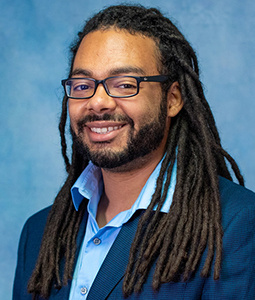
Jacob Gardner is an Assistant Professor in the Department of Computer & Information Science at the School of Engineering and Applied Science, University of Pennsylvania. His research bridges machine learning and scientific discovery with emphasis on computational biology and molecular design. His primary research interests include: Machine Learning Bayesian Optimization Computational Biology Molecular Design Artificial Intelligence Gaussian Processes Analysis of his 2024-2025 publications reveals a dominant focus on Bayesian optimization techniques integrated with large language models for biological applications. Key trends include therapeutic design using knowledge distillation from scientific literature, RNA splicing prediction, antibiotic development, and scalable Gaussian process methods. His work consistently addresses dimensionality challenges in molecular modeling while improving computational efficiency for high-dimensional biological data. No scientific awards were mentioned in the provided text. No information regarding student advising or research grants was provided in the source material. His research appears supported by institutional initiatives including Penn AI, Innovation in Data Engineering and Science (IDEAS), and the Data Driven Discovery Initiative (DDDI).
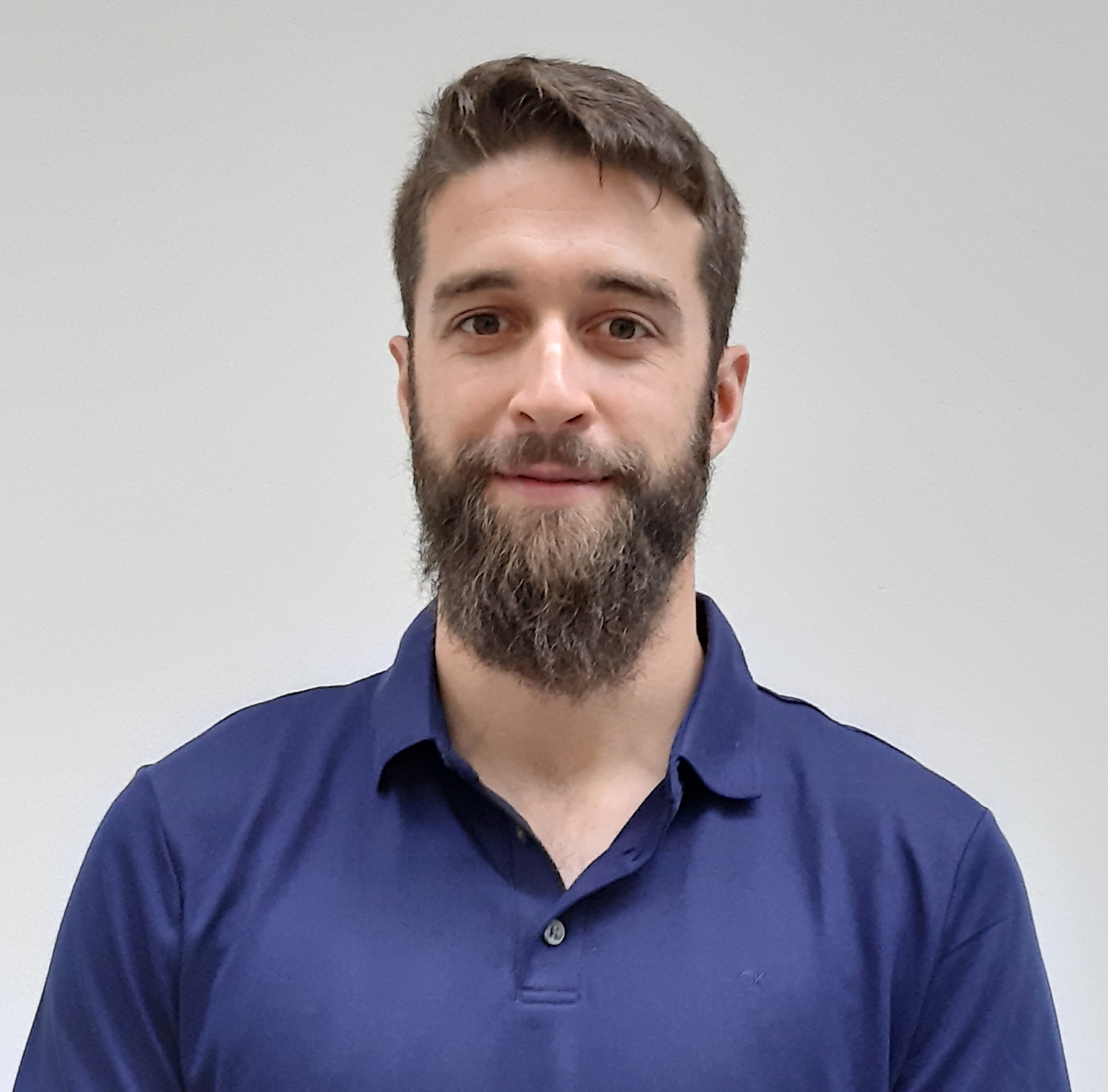
Forest Agostinelli is an Assistant Professor in the Department of Computer Science and Engineering at the Molinaroli College of Engineering and Computing, University of South Carolina, where he is also affiliated with the AI Institute. His research focuses on designing AI algorithms for pathfinding problems, integrating deep learning, reinforcement learning, heuristic search, and formal logic. He holds a Ph.D. in Computer Science from the University of California, Irvine, an M.S. from the University of Michigan, and a B.S. in Electrical and Computer Engineering from The Ohio State University. Research Overview : Agostinelli’s work emphasizes solving pathfinding problems in domains like robotics, theorem proving, and molecular optimization. His group develops explainable AI methods to enable collaboration between humans and machines. Key projects include DeepCubeA (solving the Rubik’s Cube via deep reinforcement learning) and neural activation function research. Funding & Awards : He has secured grants from NSF, NASA EPSCoR, and South Carolina’s ASPIRE and MADE programs. Notable awards include the NSF Graduate Research Fellowship and the Graduate Education for Minority Students Fellowship. Teaching : He teaches courses in Artificial Intelligence (CSCE 580) and Deep Reinforcement Learning and Search (CSCE 790), mentoring over 15 students at undergraduate and graduate levels. Labs & Collaborations : Active in AI-driven education and interdisciplinary projects, his lab contributes to tools like ALLURE for children’s learning and Bioinformatics platforms like CircadiOmics.
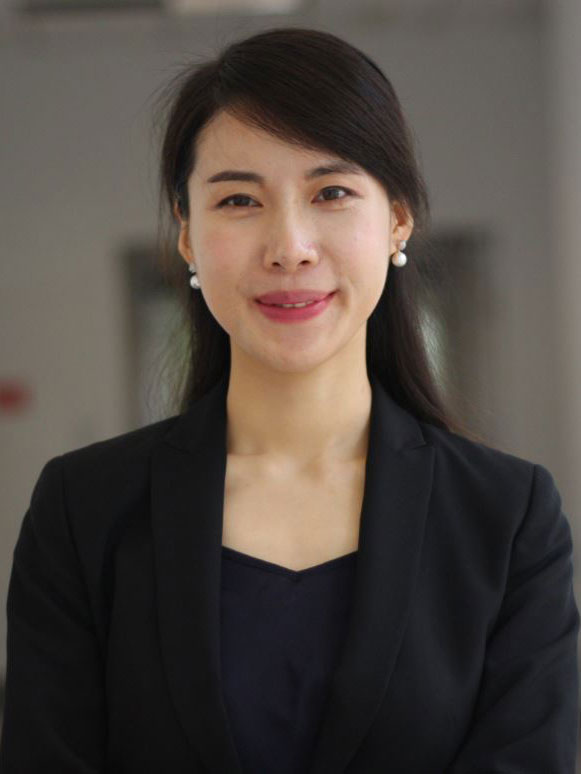
Professor Yizhou Sun is affiliated with the University of California Los Angeles (UCLA) and the Henry Samueli School of Engineering and Applied Science . Her academic work focuses on Machine Learning , Artificial Intelligence , and Graph Neural Networks within the Computer Science department. Her research spans High-Level Synthesis , Causal Inference , and Computational Biology , with recent publications addressing neural network compression, language model safety, and dynamical system modeling. The trends in her recent 2025 and 2024 publications emphasize Deep Learning , Graph Theory , and Language Model Optimization , reflecting interdisciplinary applications in Biomedical Data , Hardware Design , and Physical Simulation .
Dr. Jonathan Cant is an Associate Professor at the Department of Psychology, University of Toronto Scarborough (UTSC). His research focuses on cognitive neuroscience, particularly visual perception and cognition using fMRI and behavioral techniques. Born in Hamilton, Ontario, educated at Western University (Psychology) and Harvard University (postdoctoral) Expertise: Object perception, ensemble processing, texture/shape perception, scene recognition The Cant Lab investigates high-level human visual cortex organization, with a focus on the ventral stream's role in perception. Key research includes dissociating shape and surface property processing, material properties in cognition, and object-scene interactions in neural systems. Recent publications highlight ensemble encoding of facial expressions (2025), cross-modal ensemble coding (2024), and texture-shape relationships in ventral cortex (2015). His work bridges modular/distributed cortical organization theories and explores neural substrates for 3D shape vs. material compliance. Teaching includes PSY5222 (Visual Cognitive Representation), PSYC75 (Cognitive Psychology Laboratory), and PSYC51 (Cognitive Neuroscience of Vision). The lab welcomes motivated students and researchers through direct email applications.
Dr. Jose Luis SANCHEZ LOPEZ is a Research Scientist at the Interdisciplinary Centre for Security, Reliability and Trust (SnT) of the University of Luxembourg, leading the Aerial Robotics Lab (AeRoLab) within the Automation & Robotics Research Group (ARG). He joined SnT in 2017 as a Postdoc Research Associate, promoted to Research Scientist in 2021. His research focuses on autonomous robotics, particularly aerial systems, emphasizing situational awareness, SLAM, and trajectory planning. Education: Ph.D. in Robotics (2017), M.Sc. in Automation & Robotics (2012), and Engineering degree in Industrial Engineering (2010), all from the Technical University of Madrid. Visiting Research: Arizona State University (2012), LAAS-CNRS (2014–2016). Research Interests: Multi-agent robotic systems, sensor fusion, localization/mapping, computer vision, machine learning, and trajectory control. He has authored over 56 peer-reviewed publications, with an h-index of 18. Projects: Leads projects like DEUS (PI), NEDA, ÄerdFly (PI), and RoboSAUR. Contributions span European, Luxembourg, and Spain-funded initiatives, focusing on autonomous systems, 5G integration, and construction-site robotics. Teaching: Lectured in MICS, BiCS, BING (Uni.lu) and GITI (UPM). Actively involved in academic service as a reviewer, editor, and competition participant (e.g., IMAV, IARC). Outreach: National Coordinator for Luxembourg’s Robotics European Week, promotes robotics education in schools and public events.
Stéphane Doncieux is a University Professor in Computer Science at Sorbonne University, where he is affiliated with the Institute of Intelligent Systems and Robotics (ISIR), a joint research laboratory with CNRS. Since January 2024, he has served as Director of ISIR, following a term as Deputy Director from 2019 to 2023. He leads the ASIMOV research team and is based at the Pierre and Marie Curie Campus in Paris. His primary research interests lie in cognitive and developmental robotics, with a strong focus on open-ended learning, evolutionary algorithms, and adaptive systems. He investigates how robots can autonomously learn diverse skills through mechanisms such as novelty search, quality-diversity optimization, and intrinsic motivation. His work bridges theoretical foundations in artificial life and practical applications in robotic manipulation, perception, and control. The recent publications highlight a consistent trend in advancing robotic learning under sparse rewards and in open-ended environments. Key themes include quality-diversity optimization for grasping, state representation learning, sim-to-real transfer, and the development of behavioral repertoires. These works are published in high-impact journals such as IEEE Transactions on Robotics, Evolutionary Computation, and Frontiers in Robotics and AI. Coordinator, DREAM FET H2020 project (2015–2018) Principal Investigator, ANR projects on Creative Adaptation by Evolution, Learning Movement Skills, and Grasping with Multimodal Feedback Involved in European initiatives including VeriDREAM and HumanE-AI-Net He has supervised numerous PhD and Master’s students, including Leni Le Goff, Giuseppe Paolo, Alban Laflaquière, and Achkan Salehi, often in collaboration with leading researchers like Olivier Sigaud and Jean-Baptiste Mouret. He teaches computer science and robotics at both undergraduate and graduate levels at Sorbonne University. Doncieux has been instrumental in shaping research directions in evolutionary and developmental robotics, notably through his leadership in the IEEE Task Force on Evo-Devo-Robotics and his editorial contributions. His lab, ASIMOV, fosters interdisciplinary research integrating computer science, neuroscience, and engineering to create more autonomous and intelligent robotic systems.
Dr. Hongli (Julie) Zhu is an Associate Professor in the Department of Mechanical and Industrial Engineering at Northeastern University's College of Engineering. Her research focuses on sustainable energy storage, multifunctional materials, and advanced manufacturing, with emphasis on developing environmentally friendly biomass-derived materials, all solid-state batteries, and flow batteries. She leads the ZHU Lab at Northeastern University, which is dedicated to creating safer, cheaper, and higher performance energy storage solutions while exploring multifunctional materials derived from nature. Dr. Zhu received her PhD from South China University of Technology and Western Michigan University (2004-2009). She conducted postdoctoral research at KTH Royal Institute of Technology in Sweden (2009-2011), focusing on biodegradable and renewable biomaterials from natural wood, followed by additional postdoctoral work at the University of Maryland (2012-2015), where she researched nanocellulose and energy storage. Dr. Zhu's research spans multiple disciplines at the intersection of materials science, energy storage, and sustainable manufacturing. Her work addresses critical challenges in energy storage technology, including developing all solid-state batteries, flow batteries, and high energy density battery systems. She has pioneered research in sustainable biomass-derived materials, particularly investigating cellulose, hemicellulose, and lignin for applications in bendable, implantable, and biocompatible electronics. Her lab also focuses on advanced manufacturing techniques, including high-speed roll-to-roll processing for emerging advanced materials and devices. Analysis of Dr. Zhu's publication record reveals a strong focus on next-generation battery technologies, particularly solid-state systems. Her research demonstrates significant contributions to understanding and improving lithium dendrite suppression, electrode architecture optimization, and interface stabilization in solid-state batteries. She has also made substantial advances in sustainable materials derived from natural resources, developing applications for cellulose nanostructured fibers, paper, and aerogel/hydrogel systems. MRS Communications Early Career Distinguished Presenters and JMR Distinguished Invited Speakers (2024) Selected in Stanford University List of Top 2% Scientists Worldwide (2021-2024) College of Engineering Faculty Fellow (2023) Soren Buus Outstanding Research Award (2022) Women in Materials Science, Advanced Materials (2021 and 2022) Women Scientists at the Forefront of Energy Research, ACS Energy Letters (2020) Innovator of the Year 2013, Maryland Jakob Wallenberg Scholarship, Sweden Dr. Zhu has secured significant research funding from various sources, including the National Science Foundation and Department of Energy. Her current projects include "Uncovering the mechano-electro-chemo mechanism of fresh Li in sulfide based all solid-state batteries through operando studies" (NSF), "Enabling Advanced Electrode Architecture through Printing Technique" (DOE), and "Engineering the Metal Sulfide Interface in All Solid State Batteries through Operando Study" (NSF). She collaborates with industry partners including Rogers Corporation and has developed patented technologies related to sustainable materials and energy storage. Dr. Zhu serves as Codirector of Advanced & Intelligent Manufacturing, Editor of Progress in Materials Science, and on the Editorial Advisory Board of Chemical Society Reviews. The ZHU Lab at Northeastern University is a highly interdisciplinary research group that bridges scales from the nanoscopic to macroscopic and system level. The lab's work has led to numerous patents, including "Natural fiber composites as a low-cost plastic alternative" and "Fire-retardant Nanocellulose Aerogel, and Methods of Preparation and Uses Thereof." The group focuses on making energy storage safer, cheaper, and higher performing while exploring multifunctional materials derived from nature, with particular emphasis on applying high-speed roll-to-roll manufacturing to emerging advanced materials and devices.
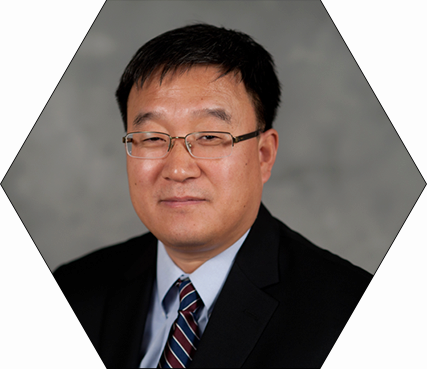
Professor Jerome Liang is a distinguished faculty member at Stony Brook University's Renaissance School of Medicine, holding professorships in Radiology, Biomedical Engineering, Electrical and Computer Engineering, and Computer Science. He serves as Co-Director of Radiology Research and has established himself as a leading expert in medical imaging reconstruction techniques. Dr. Liang's educational background includes a Ph.D. in Physics from City University of New York, postdoctoral training at Duke University, and fellowship at Albert Einstein College of Medicine. His undergraduate degree in Modern Physics was obtained from Lanzhou University in China. His primary research interests focus on advanced medical imaging techniques, particularly low-dose computed tomography image reconstruction, quantitative SPECT reconstruction, high-resolution PET imaging, tissue segmentation from multi-spectral images, computer-aided diagnosis systems, and virtual colonoscopy development. His work bridges engineering principles with clinical applications to improve diagnostic imaging capabilities while reducing radiation exposure. Analysis of his recent publications reveals a strong focus on machine learning applications in medical imaging, particularly in polyp classification, dual-energy CT spectral analysis, and virtual endoscopy. His research consistently aims to enhance diagnostic accuracy while optimizing radiation dose and improving visualization techniques for various medical conditions. 1981 China-US Physics Examination and Application Program (CUSPEA) Winner (Top 25 among 250,000 candidates) 1990 NIH First Investigator Award 1996 American Heart Association Established Investigator Award 1996 Radiological Society of North America Certificate of Merit Award 2002 SUNY Chancellor's Entrepreneur Award 2007 IEEE Society Fellow 2011-2013 SBU, BNL and CSHL Certificates of Excellence in Research and Invention 2013 Stony Brook School of Medicine Award for Excellence in Translational Research Dr. Liang has secured significant research funding including NIH/NCI R01 grants for "Advanced Virtual Colonoscopy for Early Cancer Screening" and "Radiogenomics of Colorectal Polyps." He currently leads active protocols including IRB 93995-MODCR005 focused on integrating virtual and optical colonoscopies with pathological analysis. His laboratory (IRIS - Imaging Research and Informatics) continues to advance medical imaging technology while mentoring the next generation of researchers in this critical field.
Houman BOROUCHAKI is a Professor at the University of Technology of Troyes (UTT), France, with over 20 years of academic leadership. He has served as Head of the Automatic Mesh Generation and Advanced Methods (GAMMA3) project team since 2008 and previously led the Laboratory of Mechanical Systems and Concurrent Engineering (LASMIS) (2005-2007). His work bridges academic research and industrial applications through collaborations with INRIA , French Petroleum Institute (IFPEN) , Dassault Aviation , and others. Research Interests: A pioneer in adaptive meshing , he focuses on finite element methods , geometric modeling , and numerical simulations . His innovations underpin mesh generation algorithms , 3D triangulation software , and industrial applications in metal forming, composite simulation, and subterranean modeling. Scientific Trends: His recent work emphasizes metric-based meshing , high-order geometric validity , and parallel processing for mesh generation , with applications in petroleum reservoirs, aviation surfaces, and nanomaterials. His Google Scholar profile reflects 25+ years of contributions to meshing and simulation. Teaching: With 22 years of experience, he teaches courses on meshing , numerical analysis , geometric modeling , and computer graphics at UTT, covering undergraduate to PhD levels. Labs & Teams: He leads the interdisciplinary GAMMA3 team and has contributed to LASMIS (mechanical engineering), L2n (CNRS-UMR 7076) (nanomaterials), and LIST3N (computer science).
Jianjun (Jan) Shi is the Carolyn J. Stewart Chair and Professor at the H. Milton Stewart School of Industrial and Systems Engineering (ISyE) and holds a joint appointment with the George W. Woodruff School of Mechanical Engineering at Georgia Institute of Technology. He previously served as the G. Lawton and Louise G. Johnson Chair Professor of Engineering at the University of Michigan. His research focuses on system informatics and control for manufacturing and service systems, with notable contributions to quality improvement, cyber-physical systems, and data-driven methodologies. B.S. & M.S. in Electrical Engineering, Beijing Institute of Technology (1984–1987) Ph.D. in Mechanical Engineering, University of Michigan (1992) Dr. Shi’s research interests include process modeling, control systems, and quality engineering. He pioneered methodologies for in-process quality improvement and developed advanced frameworks for high-dimensional data analysis in manufacturing. His work integrates statistical methods, machine learning, and system informatics to enhance operational efficiency and product quality. He has published over 150 peer-reviewed papers and secured $19 million+ in research grants from NSF, DOE, and industry partners. His lab, the System Informatics and Control Group, collaborates with automotive, aerospace, and pharmaceutical sectors. Shi leads initiatives such as the Quality Science Center at the Chinese Academy of Sciences and serves on editorial boards of journals like IIE Transactions and ASME Transactions . Recipient of the IIE Albert G. Holzman Distinguished Educator Award (2011) Fellow of INFORMS, ASME, and IIE Academician of the International Academy for Quality Shi advises 26 Ph.D. graduates, many of whom hold faculty positions or leadership roles in industry. His research group’s innovations have been implemented in global manufacturing systems, yielding significant economic impacts. Current work includes 4D printing, cyber-physical system resilience, and federated learning for industrial data.
Jeff Zhang is an Assistant Professor in the School of Electrical, Computer and Energy Engineering at Arizona State University. He joined ASU in January 2023 after completing a postdoctoral fellowship at Harvard University. His research spans deep learning, computer architecture, embedded systems, and EDA, with particular emphasis on energy-efficient and fault-tolerant design for AI/ML systems and hardware accelerators. Education: Ph.D., New York University M.Eng., B.Eng., Hunan University Dr. Zhang's research bridges theoretical machine learning with practical hardware implementation, developing novel architectures that optimize performance, power consumption, and reliability. He has pioneered approaches for hardware acceleration of large language models, efficient sparse matrix operations, and novel memory technologies for AI workloads. His work has received multiple awards including IEEE Top Picks in Test and Reliability (2023) and IEEE Micro Best Paper Award (2022). His recent publications demonstrate a strong trend toward heterogeneous computing, with significant work in chiplet-based AI accelerators, photonic computing for AI, and 2.5D/3D integration techniques. The research spans from high-level compiler frameworks to circuit-level innovations, with a consistent theme of co-designing algorithms and hardware for optimal AI performance. His work on the SODA toolchain has been particularly influential in bridging Python to silicon. Scientific Awards: IEEE Top Picks in Test and Reliability, IEEE ITC, 2023 Best Paper Award, IEEE Micro, 2022 Best Paper Award Candidate, IEEE DATE, 2022 Best Presentation Award Nomination, ACM SIGDA DATE PhD Forum, 2020 Best Paper Award Nomination, IEEE VLSI Test Symposium, 2018 Ernst Weber Ph.D. Fellowship, New York University, 2015, 2016 Dr. Zhang actively mentors a diverse group of graduate and undergraduate students, with several alumni now working at leading technology companies including Apple, TSMC, and Ansys. His research is supported by prestigious grants from NSF, Sandia National Labs, and industry partners. He serves on technical program committees of numerous top conferences and has organized special sessions on emerging topics like Gen AI for Chip Design and LLM-Aided Design. Dr. Zhang leads a vibrant research group that collaborates extensively with industry partners and national laboratories. Current projects focus on next-generation AI hardware, including chiplet-based systems, photonic accelerators, and novel memory technologies for large language models. His group has developed several open-source tools and frameworks, including the SODA toolchain for bridging Python to silicon.
Kyprianos Papadimitriou is a Researcher at the Microprocessor and Hardware Laboratory within the School of Electrical and Computer Engineering at the Technical University of Crete . He holds a PhD in Electronic and Computer Engineering (2012) and has been involved in teaching laboratory courses such as Logic Design , Computer Architecture , and VLSI/ASIC Circuit Design . Research Areas : His work spans Reconfigurable Systems , Hardware Design , Computer Architecture , RFID Systems , and Real-Time Systems . He has developed innovative approaches in FPGA-based dynamic reconfiguration, MPSoC security, and 3D stereo vision for surveillance. Key Trends : Runtime reconfiguration for FPGAs Security frameworks for NoC-based MPSoCs Low-cost embedded vision systems Optimization of reconfiguration overhead Hardware task scheduling methodologies Genetic algorithm implementations on FPGAs Scientific Contributions : 1 USA patent (2005) Co-author of VLSI-SoC 2013 paper nominated for 1st Prize Active member of scientific committees (FPL, ReConFig) Peer reviewer for IEEE, Elsevier, and Springer journals Session chair at IEEE CNS and HPCC conferences Grants & Projects : Participated in competitive European and national programs, serving as scientific manager, coordinator, and technical coordinator. Developed spin-off company (2003-2005) to commercialize master's thesis research. Laboratory & Teaching : Affiliated with the Microprocessor and Hardware Laboratory , focusing on practical training in digital systems, processor-based systems, and VLSI design.
Albert H. Titus is a Professor in the Department of Biomedical Engineering and an Adjunct Professor in the Department of Electrical Engineering at the University at Buffalo, State University of New York. He serves as Associate Vice President for Regulatory Support in the Office of the Vice President for Research and Economic Development. His research focuses on analog VLSI design for neuromorphic visual processing, biosensors, wearable devices, optoelectronic systems, and neural networks. Education: PhD in Electrical and Computer Engineering, Georgia Institute of Technology (1997) MS in Electrical Engineering, University at Buffalo (1991) BS in Electrical Engineering, University at Buffalo (1989) Research Interests: His work spans wearable and implantable sensors, bioinstrumentation, neural network-based visual processing, analog VLSI implementations, optoelectronics, and electronic packaging. He pioneered CMOS-based neuromorphic systems and developed patented technologies for glare sensing and RF power calorimetry. Publication Trends: His recent articles emphasize CMOS-integrated sensors, machine learning for bioimpedance analysis, implantable medical devices, and xerogel-based optical biosensors. These works bridge biomedical engineering and microelectronics. Scientific Recognition: He is a Fellow of the National Academy of Inventors and has received the SUNY Chancellor’s Award for Excellence in Service (2017), NSF CAREER award, and Western New York Inventor of the Year (2010). His inventions include a patented low-power glare sensor (U.S. Patent 7,586,079) featured in Popular Science’s 2011 Top Ten Inventions. Academic Leadership: As a faculty member, he has supervised nearly 20 PhD and over 40 MS students, while teaching courses in circuits, IC design, sensors, and signal processing across electrical and biomedical engineering disciplines.
Dr. Jason D. Bakos is a Professor in the Department of Computer Science and Engineering at the University of South Carolina's Molinaroli College of Engineering and Computing. His research focuses on high-performance domain-specific architectures, including reconfigurable computing, embedded systems, and machine learning acceleration. He has held academic positions since 2005, progressing from Assistant to Associate Professor before becoming a full Professor in 2017. Education : Ph.D., Computer Science, University of Pittsburgh (2005) B.S., Computer Science, Youngstown State University (1999) Research Interests : Dr. Bakos specializes in computer architecture at multiple levels (circuit, micro-architectural, and system) with a focus on VLSI design, reconfigurable computing, high-performance computing, and applications in embedded systems. His recent work includes FPGA acceleration of machine learning algorithms, structural health monitoring systems, and real-time signal processing. Awards : 2018 Teaching Award in Computer Science and Engineering 2009 NSF CAREER Award Multiple design competition awards for innovative chip and circuit designs Grants & Funding : He leads and co-leads projects funded by NSF, Savannah River National Laboratory, and industry partners like Texas Instruments. Recent grants focus on edge computing for real-time machine learning, FPGA-based accelerators, and corrosion analysis of nuclear materials. Labs & Teams : His research group collaborates on projects involving embedded systems, FPGA design, and interdisciplinary applications in structural engineering and bioinformatics. He advises a dynamic team of graduate students and post-doctoral researchers.
Marat I. Latypov serves as Assistant Professor in the Department of Materials Science and Engineering at the University of Arizona's College of Engineering. He is also a member of the Applied Mathematics Graduate Interdisciplinary Program and leads the Materials Informatics Lab. His research spans computational materials science, sustainable alloy design, and machine learning applications for materials development. Dr. Latypov holds a PhD in Materials Science and Engineering from Pohang University of Science and Technology (POSTECH, South Korea, 2014) and a Dipl.-Ing. in Engineering Physics from Ufa State Aviation Technical University (Russia, 2011). His postdoctoral training included appointments at Georgia Tech/CNRS in France and the University of California, Santa Barbara. His research focuses on materials informatics , physics-informed machine learning , and sustainable structural alloys . Key methodologies include graph neural networks for polycrystal mechanics, vision transformers for microstructure representation, and adaptive experimental design for materials optimization. Recent work emphasizes circular economy applications through construction waste recycling and copper mine tailings valorization. Analysis of his publication record reveals strong emphasis on computational microstructure-property linkages (35% of recent work), machine learning for materials design (30%), and sustainable materials processing (25%), with growing integration of large language models for materials knowledge extraction. NSF CAREER Award (2025) : For damage control in recycled aluminum alloys ISTI Distinguished Faculty Scholar (2024) : At Los Alamos National Laboratory Novelis Hackathon First Prize (2021) : Computer vision application Acta Materialia Outstanding Reviewer (2018) Young Researcher Award (2017) : NanoSPD7 Conference Dr. Latypov advises PhD students including Herbold Fellow Zhuocheng Huang and leads projects funded by NSF and the Grantham Foundation. Current initiatives include chalcopyrite leaching optimization for copper mining and graph neural network development for fatigue prediction. His Materials Informatics Lab maintains collaborations with Los Alamos National Laboratory, MIT, and industry partners including Novelis. The lab operates at the intersection of metallurgy , machine learning , and high-performance computing , with capabilities spanning deep learning, Bayesian inference, and cloud-based computational infrastructure. Recent news highlights participation in CODAS-HEP summer school and publication of vision transformer work in Acta Materialia.