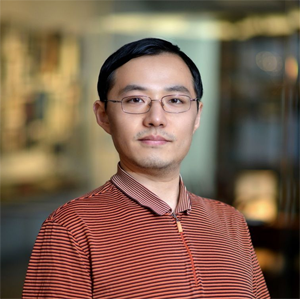
Partha S. Ghoshdastidar is a Professor (Higher Academic Grade) in the Department of Mechanical Engineering at the Indian Institute of Technology Kanpur. With over three decades of academic experience, he has established himself as a leading expert in Computational Heat Transfer, specializing in rotary kiln modeling, non-Newtonian flow, boiling heat transfer, electronic cooling, and nanofluid heat transfer. Dr. Ghoshdastidar earned his PhD from the University of South Carolina, Columbia, USA in 1984, with a thesis on 'Heat Transfer in a Rotary Kiln During Incineration of Solid Waste' under Prof. C. A. Rhodes. His academic career at IIT Kanpur began as Visiting Faculty in 1984, progressing through Lecturer, Assistant Professor, Associate Professor, and Professor positions, currently holding the title of Professor (Higher Academic Grade) since August 2014. He also served as Guest Professor at Universität Hannover, Germany (2000-2001). His research focuses on computational approaches to heat transfer problems, particularly using the Coupled Map Lattice Method (CML) for modeling complex thermal phenomena. Current research areas include numerical simulation of nanofluids flow, heat transfer modeling in rotary kilns, electronic equipment cooling, LED street lighting heat sink design, and pool boiling simulation of nanofluids. Notable achievements include the Institution Prize of the Institution of Engineers (India), multiple Certificates of Merit, election as Fellow of the World Innovation Foundation, U.K. (2002), and the 2012 A. M. Strickland Prize from the Institution of Mechanical Engineers, U.K. He serves as Associate Editor for HEAT TRANSFER RESEARCH and Editorial Board Member for Engineering Science and Technology. His extensive teaching portfolio includes undergraduate and postgraduate courses in Heat Transfer, Fluid Mechanics, Numerical Methods, and specialized topics. He has mentored numerous students across BTech, MTech, and PhD programs, with current research students including Ashish Agrawal, Dileep V. Nair, and Rajat Dhingra. His sponsored research projects, funded by DST and CSIR, demonstrate the practical applications of his theoretical work in industrial settings.