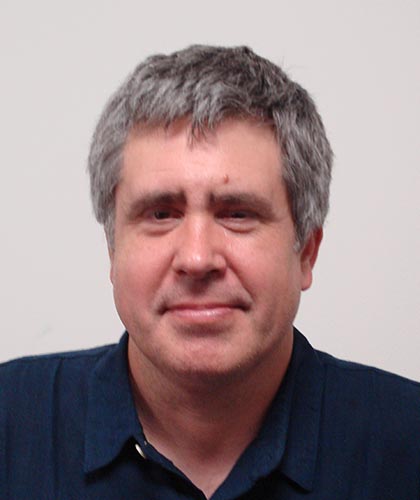
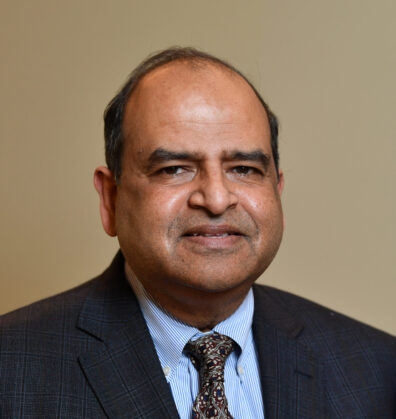
Dr. Roman Volkov is a researcher previously affiliated with the Max Born Institute for Nonlinear Optics and Short Pulse Spectroscopy (no longer employed there). His work focuses on ultrafast laser-matter interactions, attosecond science, and nonlinear optics. Key research themes include pulse compression techniques, laser filamentation, and plasma dynamics under high-intensity laser pulses. His research spans experimental and theoretical studies of ultrafast phenomena, with contributions to all-attosecond pump-probe spectroscopy and dense plasma physics. Notable experimental setups involve advanced laser systems for generating and analyzing ultra-short pulses. No scientific awards or advising activities are explicitly documented here. His work has been published in journals like Optics Letters , Science Advances , and Laser Physics Letters .
Dr. Tamás Nagy is the Department Head and Project Coordinator for the Ultrafast Lasers and Nonlinear Optics group at the Max Born Institute , Berlin, Germany. His research focuses on energy scaling of few-cycle pulse generation using hollow-core fiber compressors and optical parametric amplification systems, with recent breakthroughs in TW-level sub-2-cycle pulses and attosecond pump-probe spectroscopy. PhD in Physics (summa cum laude), University of Szeged (2004) MS in Physics, Attila József University Szeged (1997) His work spans ultrafast laser physics , nonlinear optics , and attosecond science , with innovations in hollow-core fiber technology for spectral broadening and pulse compression. Recent publications highlight advancements in high-energy few-cycle pulses , attosecond wavepackets , and MIR radiation generation . Key article trends include: Development of stretched hollow-core fibers for scalable energy compression Optimization of OPCPA systems for near-IR few-cycle pulses Novel techniques in attosecond spectroscopy and pulse characterization Exploration of plasmonic nanoantennas and relativistic laser interactions Scientific Awards : OSA Senior Member (2018) General Chair and Program Chair for High-Intensity Lasers and High-Field Phenomena (HILAS) conferences Collaborates with team members including Martin Kretschmar , Günter Steinmeyer , and Uwe Morgner , contributing to projects in time-resolved XUV science and laser-plasma interactions .
Yunus Can Gültekin is a Researcher at the Eindhoven University of Technology (TU/e), affiliated with the Signal Processing Systems department within the Electrical Engineering school. He holds a B.Sc. and M.Sc. from Middle East Technical University (Turkey) and a Ph.D. from TU/e (2020). His research focuses on future wireless/optical communication systems, quantum key distribution, and signal processing solutions using information theory tools. Key contributions include developing coded modulation techniques and mitigating nonlinear interference in optical systems. Education: B.Sc., Middle East Technical University, Ankara, Turkey (2013) M.Sc., Middle East Technical University, Ankara, Turkey (2015) Ph.D., Eindhoven University of Technology, Netherlands (2020) Research Interests: Quantum Key Distribution (QKD) systems Optical and free-space communication systems Probabilistic shaping and nonlinear mitigation Coded modulation design for high-speed transmission Notable Achievements: Best Paper Award at WIC/IEEE Symposium (2018) Optica Student Paper Award (2022) Quantum Delta NL Exchange Visit Grant (2023) International Excellence Fellowship (2024) Teaching: Current courses: Communication Theory, Digital Wireless Communication Exploration Lab Past courses: Analog Electronics Lab, Digital Design Lab Key Projects: LaiQa: Quantum Satellite Communications (2024–2026) BIT-FREE: Free-Space Optics (2024–2028) COCOLI: Optical Link Complexity (2022–2028) Labs/Teams: Active in the Signal Processing Systems group, collaborating on quantum and optical communication initiatives at TU/e.
Thomas D. Donnelly is a Professor in the Department of Physics at Harvey Mudd College. He leads the Donnelly group, which specializes in experimental studies of high-intensity laser interactions with microstructured targets for applications in nuclear fusion and high-energy-density physics research. Research Focus: High-intensity laser physics, microtarget fabrication, laser-driven fusion, and energy absorption mechanisms in solid-density materials. Collaborations: Collaborates with the University of Texas at Austin to access advanced laser systems. The group has published notable works in optics and laser interaction experiments, with a focus on developing undergraduate laboratory tools and levitation traps for microscale studies. They also maintain open-access Mie Scattering Codes for optical modeling, available through the department's website.
Professor Johann Rafelski is a distinguished theoretical physicist at the University of Arizona's Department of Physics within the College of Science. With over 37 years of service at the university, he holds additional appointments in the Applied Mathematics Program and Theoretical Astrophysics Program, and is tenured in the Arizona Research Laboratory. His academic journey includes professorships at the University of Frankfurt and University of Cape Town, along with significant research positions at CERN, Argonne National Laboratory, and the University of Pennsylvania. Rafelski's research focuses on the quantum vacuum structure, behavior of matter under extreme conditions, and quark-gluon plasma. His work explores how energy transforms into matter and antimatter, particularly through strangeness production, and applies laboratory insights to early universe processes. He investigates radiation effects from strong acceleration, including those generated by ultra-intense laser pulses, and participates in pulsed laser fusion research. His scholarly contributions include two influential textbooks: Relativity Matters (2017) and Modern Special Relativity (2022), which connect historical developments with current research frontiers. Analysis of his recent publications reveals a sustained focus on quark-gluon plasma physics, cosmic evolution, strong field quantum electrodynamics, and innovative fusion approaches. His work increasingly integrates cosmological perspectives with laboratory-scale physics, particularly examining how primordial conditions inform contemporary high-energy experiments. The recurring themes across his recent articles demonstrate a cohesive research program bridging particle physics, cosmology, and quantum field theory under extreme conditions. Elected Fellow, American Physical Society (2013) Elected to Faculty Senate University of Arizona (2018-2022) Named Fulbright Fellow (Summers 2019-2021) Elected member of Academia Europea (2021) Elected foreign member of Hungarian Academy of Science (2022) Professor Rafelski has mentored 15 graduate students since 2000 and served as principal investigator for international programs strengthening US research ties with Brazil, Germany, and Poland. He founded the international conference series on Strangeness in Quark Matter and remains active in related committees. With 45 years of sustained involvement with CERN, where he continues as a guest scientist, he has built extensive international collaborations. His research has been supported by various grants enabling his exploration of quantum vacuum phenomena, quark-gluon plasma, and applications to cosmology and fusion energy. The establishment of his YouTube channel 'Creation of Matter' demonstrates his commitment to science communication and education.
Nikolaos Papadakis is an Associate Professor at the Department of Electrical and Computer Engineering of the Hellenic Mediterranean University (HMU). He holds additional roles including Vice President of the Department of Social Work at HMU and Head of the Telecommunication and Informatic Technology team at the same department. His academic journey includes a BSc in Computer Science from the University of Cyprus (1997), an MSc from the University of Crete (1999), and a PhD in Computer Science from the University of Crete (2004). Prior to HMU, he held visiting professorships at the University of Crete, Technical University of Crete, and Technological Educational Institute of Crete, alongside research contributions at FORTH from 1997-2006. His research focuses on Databases and Knowledge Representation Artificial Intelligence Applications Semantic Web Technologies Software Engineering Methodologies Distributed Algorithms and Communication Protocols Renewable Energy Systems (wind, solar, energy efficiency) Notable projects include the SAVE initiative for net-zero sports facilities and studies on wind turbine blade optimization. His work bridges theoretical computer science with applied engineering solutions. Recent publications emphasize sustainable energy systems, composite material analysis, and quantum optics technologies. He maintains active collaborations in interdisciplinary areas such as epidemiological data modeling and space optical systems development. His career trajectory includes tenure at the Technological Educational Institute of Crete (2009-2019), reflecting a consistent commitment to academic innovation and applied research. Current research continues to explore emerging trends in renewable energy integration and advanced material science.
Tomonao Hosogai is a Professor at Osaka University's Institute of Scientific and Industrial Research and Team Leader at RIKEN's Synchrotron Radiation Research Center. His research focuses on developing laser plasma accelerators for tabletop GeV-class systems and pioneering quantum beam applications in medicine and materials science. He holds a Ph.D. in Science from Tokyo Institute of Technology (1997) and has held multiple academic and industrial roles since 1997. Education: Ph.D. (Science), Tokyo Institute of Technology, 1997 His research interests span laser-driven electron acceleration, plasma wave dynamics, and innovative uses of high-energy beams. Recent work emphasizes modular nozzle designs for stable acceleration and controllable self-injection mechanisms. His team collaborates on multistage acceleration and beam chirp control, advancing applications in drug discovery and material science. Key achievements include developing plasma optical waveguides and characterizing ionization injection in gas mixtures. Advising and grants involve interdisciplinary projects at Osaka University and RIKEN, with a focus on commercializing tabletop accelerators. The Hosogai Lab hosts state-of-the-art facilities for laser experiments and numerical simulations, enabling breakthroughs in relativistic plasma physics.
René Widera is a researcher at the Helmholtz-Zentrum Dresden-Rossendorf (HZDR), specifically within the Laser Particle Acceleration department of the Institute of Radiation Physics. His work focuses on advancing high-performance computing (HPC) techniques for plasma simulations, particularly leveraging GPU architectures and exascale computing frameworks. He contributes to the development and optimization of the PIConGPU code, a leading particle-in-cell (PIC) simulation tool. His research integrates machine learning for real-time data analysis, parallel algorithms for HPC scalability, and cross-platform visualization strategies. Areas of expertise include laser plasma acceleration, high-energy-density physics, and the design of efficient numerical methods for large-scale simulations. He explores hardware-agnostic solutions for computational challenges, including memory access optimizations and DAG-based parallelism. Collaborations involve international HPC initiatives and open-source software projects like openPMD and alpaka . Key projects include the TWEAC initiative to overcome limitations in laser-wakefield acceleration and the development of in-situ visualization pipelines for real-time simulation insights. He also evaluates modern GPU architectures (e.g., AMD, ARM-based systems) for scientific workloads. His contributions bridge theoretical plasma physics with practical computational advancements, aiming to enable next-generation high-intensity laser experiments.
Prof. Dr. Ulrich Schramm serves as Director of the Institute for Radiation Physics and Head of the Laser Particle Acceleration Division at the Helmholtz Center Dresden-Rossendorf (HZDR). His work focuses on advanced laser-driven particle acceleration techniques, plasma physics, and applications in radiobiology. Dresden High Magnetic Field Laboratory Fluid Dynamics Ion Beam Physics and Materials Research Radiation Physics Radiation Oncology (OncoRay) Research interests include: Ultrafast X-ray diagnostics for high-density plasmas Laser wakefield acceleration optimization Hybrid plasma wakefield acceleration systems Medical applications of laser-accelerated ion beams Time-resolved optical and X-ray diagnostics Machine Learning applications in plasma simulations Recent publications demonstrate expertise in: Ultrafast heating dynamics in solid plasmas Relativistic transparency effects for ion acceleration 3D beam diagnostics with free-electron lasers Computational modeling of particle-in-cell simulations High-repetition rate laser experiments with cryogenic targets Radiation detection systems for laser-accelerated particles
Dr Julian Fells is an EPSRC Research Fellow and Lecturer in the Department of Engineering Science at the University of Oxford, affiliated with Trinity College. He holds a First Class degree in Electronic Engineering from University College London (1991) and a PhD in Optical Modulators from the University of Bath (1995). With 20 years of industrial research experience, he has pioneered innovations in wireless power transfer and optical fiber sensor systems. His research focuses on femtosecond laser inscription of optical fibers for extreme environment sensing, including applications in aero engines and fusion reactors. He leads a £1.2M EPSRC-funded project on sapphire-based optical fiber sensors and advises on photonics strategy for the Mathematical, Physical and Life Sciences Division. His work emphasizes optimizing energy systems through high-precision sensing in harsh conditions. Education: BEng (First Class), Electronic Engineering, University College London (1991) PhD, Optical Modulators, University of Bath (1995) Research Interests: Optical fiber sensors for ultra-high temperature environments Femtosecond laser fabrication of structured optical fibers Adaptive optics for fiber inscription correction Wireless power transfer systems Applications in energy systems, aerospace, and healthcare Scientific Awards: EPSRC Research Fellowship (2020–2025) Grants & Projects: £1.2M EPSRC Fellowship for sapphire fiber sensor research Development of optical fiber Bragg gratings for industrial monitoring Labs & Groups: Dynamic Optics and Photonics Research Group Soft Matter Photonics Collaboration
Brian Beaudoin is an Associate Research Professor at the University of Maryland, College Park, affiliated with the Institute for Research in Electronics & Applied Physics (IREAP). His research focuses on charged particle interactions, plasma physics, and accelerator technologies. He leads the Centrifugal Mirror Fusion Experiment (CMFX) and the Bright Beams Collective Research Group (BBC), advancing fusion energy and high-brightness beam physics. Beaudoin teaches undergraduate courses including 'Audio Electronics Engineering' (ENEE408J) and 'Introduction to Engineering Design' (ENES100), and co-created the 'Building the 5 MeV Cyclotron' capstone. He mentors students in NSF-funded TRENDS programs and the Gemstone Honors Program's ChargeX team, developing novel technologies for electric vehicle charging. His research interests span fusion concepts, microwave electronics, and particle accelerators. Key projects include developing high-efficiency RF sources for ionospheric heaters and studying beam dynamics in storage rings. Recent work focuses on CMFX's low-cost fusion pathway and high-power microwave systems. Publications highlight advancements in fusion plasma diagnostics, beam manipulation, and material characterization. Collaborations include institutions like UMBC and national labs. Funding includes ARPA-E's BETHE program for CMFX.
Vikas Prakash is a Professor and Associate Director at the Institute for Shock Physics, Washington State University (WSU), where he leads research in dynamic material behavior under extreme conditions. He previously served as a faculty member in the Department of Mechanical and Aerospace Engineering at Case Western Reserve University from 1993 to 2020, rising from Assistant Professor to full Professor. His educational background includes a Ph.D. in Engineering (Mechanics of Solids and Structures) from Brown University (1993), an M.S. in Mechanical Engineering and Applied Mechanics from the University of Rhode Island (1988), and a B.Tech. in Mechanical Engineering from the Indian Institute of Technology, Kanpur (1985). Dr. Prakash’s research focuses on shock physics , dynamic deformation , failure of materials under intense stress waves , and development of in-situ diagnostics for short-duration events. A parallel thrust involves nanomaterials engineering , particularly 3D hybrid carbon nanomaterials for structural, energy storage, and thermal applications. His work bridges experimental mechanics, high-pressure physics, and materials science. The 15 most recent publications reflect a consistent trend in pressure-shear plate impact experiments , laser-driven shocks , spall strength , and in-situ diagnostics under extreme conditions. Keywords span mechanics of solids, materials under shock, polymer and ceramic deformation, and optical measurement techniques, highlighting interdisciplinary contributions to understanding material response at high strain rates and extreme environments. His scientific honors include: Fellow, American Society of Mechanical Engineers (ASME), 2007–Present Fellow, Society of Experimental Mechanics (SEM), 2022–Present 2018 R.E. Peterson Award, SEM Faculty Research and Engineering Fellow, Army Research Laboratory, 2004–2005 Invited Participant, NAE Frontiers of Engineering (2004), NAKFI (2013), and Global Grand Challenges Summit (2013) Leadership roles in ASME and SEM, including Chair of ASME Materials Division (2011–2012) Dr. Prakash has actively advised graduate students and collaborated extensively across institutions. He has secured significant research funding, particularly through Army Research Laboratory and national laboratories. He has played a foundational role in the Dynamic Behavior of Materials technical division of SEM and served on editorial boards of key journals including the International Journal of Experimental Mechanics and Frontiers in NanoEnergy . His leadership extends to organizing national conferences and advising scientific boards, demonstrating deep engagement in the scientific community. He is a key figure in the Institute for Shock Physics at WSU, contributing to its mission in dynamic compression science. His team utilizes advanced facilities such as the Laser Shock Laboratory and Dynamic Compression Sector at APS , working on cutting-edge instrumentation and material modeling. His research group integrates experimental, computational, and diagnostic development efforts to address grand challenges in material science under extreme conditions.
Oleksandr Yefanov is a Senior Scientist at the Center for Free-Electron Laser Science (CFEL) in Hamburg, Germany, affiliated with DESY and XFEL.EU. His work focuses on advancing X-ray crystallography techniques using free-electron lasers and synchrotrons. He has contributed to data reduction methods, high-resolution imaging, and sample delivery systems for structural biology. Key Affiliations: CFEL, DESY, XFEL.EU Research Interests: X-ray crystallography, serial femtosecond crystallography, diffraction imaging, structural biology, data analysis algorithms. Article Trends (2017-2025): Yefanov's publications emphasize improving resolution in X-ray microscopy, developing computational tools for diffraction data, and optimizing sample delivery for XFEL experiments. Recent work explores sub-3nm focusing, in situ monitoring of chemical processes, and multi-dimensional serial crystallography. Advising: Supervised Galchenkova M.'s 2024 PhD dissertation on diffraction analysis methods.
Guoxing Xia is a Senior Lecturer in Accelerator Physics at the Department of Physics and Astronomy, University of Manchester, and an academic staff member at the Cockcroft Institute. He leads research on advanced acceleration techniques, including plasma wakefield acceleration (PWFA), laser wakefield acceleration (LWFA), and proton-driven plasma wakefield acceleration (AWAKE). His work focuses on collaborations with CERN, DESY, and other institutions on projects like the CERN AWAKE experiment and the EuPRAXIA design study. Key areas include dielectric wakefield acceleration, ultra-cold plasma research, and applications of nano-materials like graphene in particle accelerators. He actively supervises PhD students, offering access to funding via STFC, EPSRC, and the Chinese Scholarship Council (CSC). Research interests span plasma physics, beam dynamics, and accelerator instrumentation. Notable projects include studies at Daresbury Laboratory’s VELA/CLARA facilities and CERN’s CLEAR facility. His group explores novel radiation sources and low secondary electron yield coatings using graphene. He also contributes to UN Sustainable Development Goals through advanced accelerator technologies. Recent experimental work includes ion motion studies in plasma wakefields, bunch length monitoring via Cherenkov radiation, and optimization of laser-driven acceleration using Bayesian methods. His team has published extensively on topics like carbon nanotube-based accelerators and plasmonic excitations in graphene. Collaborations span global institutions, reflecting his role in shaping next-generation accelerator science.
Zulfikar Najmudin is a Professor of Physics and Deputy Director of the John Adams Institute for Accelerator Science at Imperial College London. He leads the plasma-based particle acceleration research group within the Blackett Laboratory, specializing in ultrafast laser-plasma interactions and high-energy physics. His affiliations include the Plasma Physics Group, the Space, Plasma and Climate Community, and the John Adams Institute, which collaborates with the University of Oxford and Royal Holloway College. His research focuses on high-intensity laser interactions with matter, laser-driven fusion, and next-generation particle accelerators. Key contributions include pioneering work on laser wakefield acceleration (e.g., achieving >100 MeV electron beams and narrow-energy proton beams) and novel X-ray imaging techniques using plasma-based sources. His work bridges fundamental plasma physics with applied technologies, such as compact accelerator-driven X-ray sources for medical imaging and industrial applications. Notable advancements include radiation reaction observations in strong fields and optimization of laser-driven ion acceleration through plasma density control. He holds a permanent researcher position at Imperial’s Physics Department and has contributed to major international collaborations like the EuPRAXIA project for plasma wakefield-based accelerators. His research spans theoretical modeling, experimental validation, and automation of high-intensity laser experiments.