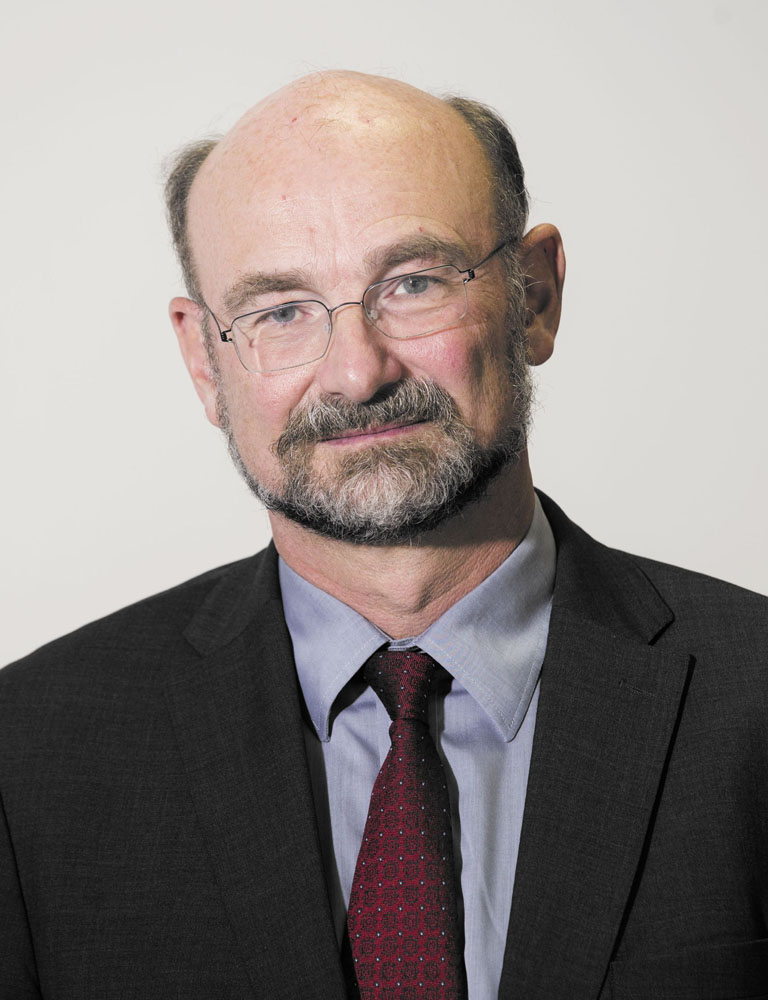
Christoph H. Keitel is a Professor and Director at the Max Planck Institute for Nuclear Physics, with an honorary professorship at Heidelberg University. His research spans quantum electrodynamics, laser-matter interactions, and precision atomic physics. He leads investigations into radiation reaction, particle acceleration, and fundamental symmetries using high-intensity lasers and atomic spectroscopy. Keitel has received the Willis E. Lamb Award and Gustav Hertz Prize for pioneering contributions to laser science and quantum optics. His group develops advanced theoretical frameworks for testing QED and particle physics through high-precision experiments.
Christoph Helmut Keitel is an honorary professor at Heidelberg University's Faculty of Physics and Astronomy and serves as Director at the Max Planck Institute for Nuclear Physics (MPIK) in Heidelberg, Germany. His research spans quantum electrodynamics, strong-field laser physics, atomic and nuclear physics, with a focus on precision measurements and quantum dynamics. Director at Max Planck Institute for Nuclear Physics (2004-present) Managing Director of MPIK (2006-2008, 2024-present) Founding Speaker of the International Max Planck Research School for Quantum Dynamics (2005-present) Advisory Board member of ELI (Extreme Light Infrastructure) (2008-present) Keitel's research interests focus on the interaction of intense laser fields with matter, quantum electrodynamics in strong fields, precision measurements of fundamental constants, and nuclear physics. His work bridges theoretical and experimental physics, developing advanced theoretical frameworks to interpret cutting-edge experiments in strong-field physics. His research group investigates phenomena such as radiation reaction, quantum tunneling in strong fields, electron-positron pair creation, and precision spectroscopy of highly charged ions. He has made significant contributions to understanding the dynamics of particles in extreme electromagnetic fields and developing novel methods for precision measurements that test the limits of quantum electrodynamics and search for physics beyond the Standard Model. His scientific work has been recognized with numerous awards including the Willis E. Lamb Award for Laser Science and Quantum Optics (2023), APS "Outstanding Referee" Award (2008), Fellowship in the Optical Society of America (2006), and the Gustav Hertz Prize of the German Physical Society (2003). Keitel has supervised numerous doctoral students through the International Max Planck Research School for Quantum Dynamics and has been involved in major collaborative research projects including the SFB 1227 DQ-mat. His research has practical applications in developing novel light sources, precision measurement techniques, and advancing our understanding of fundamental physical processes that could lead to breakthroughs in quantum technologies.
Matteo Tamburini is a Group Leader at the Max Planck Institute for Nuclear Physics (MPIK) in Heidelberg, leading the Extreme Field Quantum Plasma Dynamics and Relativistic Laboratory Astrophysics group. He also serves as a Lecturer at the International Max Planck Research School in Quantum Dynamics (IMPRS-QD). His academic journey includes a PhD in Physics from the University of Pisa, Italy, and postdoctoral research at MPIK. Research Interests: Tamburini specializes in quantum plasma dynamics, strong-field quantum electrodynamics (QED), and high-intensity laser-plasma interactions. He focuses on topics such as radiation reaction effects, relativistic astrophysical simulations, and the generation of ultra-high energy particles and gamma-ray bursts. His work bridges theoretical modeling with experimental validation at facilities like FACET-II (SLAC), Gemini (UK), and DESY. Experimental Contributions: Key projects include devising experiments to probe quantum radiation reaction (E-332, E-320, E-305), developing the SFQEDtoolkit for QED simulations, and advancing polarized laser-wakefield acceleration. His research often involves close collaboration with international teams and leverages cutting-edge facilities like the Gemini laser and FACET-II. Awards & Service: Tamburini is recognized as an IOP trusted reviewer for peer review excellence. He organizes the Seminar Theoretical Quantum Dynamics and contributes to reviewing for journals like Physical Review Letters and Nature Physics. He has secured significant funding, including a 4-year scholarship for student Michael Quin. Lab/Teams: Leads the Extreme Field Group at MPIK, focusing on advancing understanding of quantum plasma phenomena and relativistic astrophysical processes through theoretical and computational approaches.
Petros Rakitzis is a Professor in the Department of Physics at the University of Crete and affiliated with the Foundation for Research and Technology - Hellas (FORTH) at the Institute of Electronic Structure and Laser (IESL). He received his B.A. in Physics and Chemistry from Cornell University (1992) and his Ph.D. in Physics from Stanford University (1997), focusing on atomic and molecular angular momentum in chemical reactions. Since 2001, he has progressed from Lecturer to Professor, securing the prestigious ERC Starting Grant in 2008. His research spans quantum angular momentum, spin polarization, photodissociation dynamics, and cavity-enhanced spectroscopy. Education: B.A. in Physics and Chemistry, Cornell University (1992); Ph.D. in Physics, Stanford University (1997) Rakitzis's work explores spin manipulation in particle beams, polarization phenomena in spectroscopy, and chirality sensing using parity-time-symmetric systems. His research has applications in nuclear fusion, laser-plasma acceleration, and quantum metrology. He leads the PREFER collaboration, focusing on polarization research for fusion experiments and reactors, and has developed techniques like signal-reversing cavity ring-down polarimetry for precision measurements. His recent publications highlight trends in spin-polarized hydrogen production, cavity-based chiral sensing, and parity nonconservation studies. These works intersect atomic physics, quantum optics, and nuclear fusion, with methodologies involving laser excitation, relativistic plasmas, and advanced spectroscopic techniques. Scientific Awards: ERC Starting Grant (2008) Rakitzis has contributed to experimental techniques and theoretical frameworks in spin polarization and photodissociation, securing grants and advancing polarized beam applications. His research impacts fusion energy, quantum sensing, and fundamental symmetry studies.
Zoltán Harman is a Leading Scientist at the Max Planck Institute for Nuclear Physics (MPIK) in Heidelberg, Germany, and is affiliated with Heidelberg University. He conducts cutting-edge research in atomic physics, quantum electrodynamics, and precision measurements, particularly using highly charged ions and Penning trap techniques. He holds a habilitation in physics from Heidelberg University and regularly lectures there on advanced topics such as quantum electrodynamics and theoretical physics. Research Interests: Quantum Electrodynamics (QED) in strong fields Precision spectroscopy of highly charged ions g-factor measurements and tests of fundamental physics Development of atomic clocks using highly charged ions Determination of fundamental constants (e.g., electron mass, fine-structure constant) Searches for new physics beyond the Standard Model, including fifth forces Neutrino mass determination via Penning trap measurements His recent publications (2024–2025) focus on high-precision g-factor measurements in ions like tin and beryllium, two-loop QED calculations, King plot analyses for new boson searches, and neutrino mass studies. These works appear in top journals such as Nature , Physical Review Letters , and Science , reflecting his leadership in precision atomic physics. Scientific Awards and Grants: Postdoctoral scholarship from the Max Planck Society (2005–2007) EMMI Visiting Professor Scholarship (2012, 2013) Erasmus student scholarship (1999–2000) Primary investigator of the ISOQUANT Collaborative Research Centre (SFB1225) Teaching and Advising: Harman has been a regular lecturer at Heidelberg University since 2008, teaching courses in quantum electrodynamics, theoretical physics, and experimental physics. He co-organizes advanced lecture series and supervises student research projects, including poster sessions and talks. He is also a lecturer in the International Max Planck Research School on Quantum Dynamics. Research Group and Collaborations: Harman is a key member of the quantum dynamics group at MPIK, led by Prof. Christoph H. Keitel. His work involves close collaboration with experimental teams at MPIK, GSI, and Heidelberg University, combining theoretical and experimental efforts in precision physics. He is actively involved in major projects such as PENTATRAP and ALPHATRAP, which aim to push the limits of atomic and nuclear measurements.
Kirsten Andrea Schnorr is a Researcher at the Paul Scherrer Institute (PSI) in Switzerland, working within the Center for Photon Science and Laboratory for Femtochemistry. She joined the SwissFEL team in 2018 to develop the Maloja endstation for atomic, molecular, and non-linear physics, leading its design, construction, and operational commissioning for cutting-edge XUV/X-ray experiments. Her educational background includes: PhD in Physics (2014), Ruprecht Karl University Heidelberg, completed at the Max Planck Institute for Nuclear Physics under PD Dr. Robert Moshammer; thesis focused on XUV pump-probe experiments of electron rearrangement and interatomic Coulombic decay in diatomic molecules. Schnorr's research centers on photo-induced ultrafast relaxation mechanisms in atoms, molecules, and nanoparticles using time-resolved techniques at Free-Electron Lasers and High Harmonic Generation sources. She pioneers multi-color pump-probe schemes with ultrashort X-ray pulses to steer non-local decay processes like Interatomic Coulombic Decay and Electron Mediated Decay, enabling real-time observation of electron dynamics and proton transfer in molecular systems. Her publication trends (2025-2020) reveal dual expertise in fundamental molecular dynamics and instrumental innovation. Key themes include proton transfer in water dimers (Science Advances 2023), Coulomb explosion in iodinated compounds (2025), and engineering breakthroughs like compact gas attenuators (2023) and polarization control systems (2024), frequently published in Physical Review Letters, Nature Communications, and Journal of Synchrotron Radiation. Scientific awards: Peter Paul Ewald Fellowship from the Volkswagen Foundation (2015), supporting her research on non-linear relaxation processes at UC Berkeley's Physical Chemistry Department under Prof. Stephen Leone. No formal advisees or student supervision are documented. The Volkswagen Foundation fellowship served as her primary grant, funding postdoctoral work on real-time relaxation studies; no additional grants are specified. Her instrumental leadership at SwissFEL suggests mentorship of junior scientists, though no individual students are named. Schnorr directs the Maloja instrument at SwissFEL while contributing to the ATHOS beamline development. She collaborates extensively with PSI's detector teams (e.g., JUNGFRAU advancements) and international groups like UC Berkeley's Physical Chemistry Department, driving initiatives in ultrafast beamline technology and molecular dynamics experiments.
Dustin Froula serves as Assistant Professor in the Department of Physics and Astronomy at the University of Rochester and leads the Plasma and Ultrafast Physics group at the Laboratory for Laser Energetics (LLE). His research focuses on experimental plasma physics for inertial confinement fusion and high-energy-density science using major facilities including OMEGA, OMEGA EP, and the National Ignition Facility. His academic credentials include: MS in Physics, University of California, Davis (2000) PhD in Physics, University of California, Davis (2002) Froula's research centers on laser-plasma interactions , Thomson scattering diagnostics , and laser-plasma acceleration in inertial confinement fusion contexts. He investigates phenomena like stimulated Brillouin/Raman scattering, cross-beam energy transfer, and turbulent dynamos, with applications spanning fusion energy development and laboratory astrophysics. His work combines advanced experimental techniques with computational modeling to address fundamental plasma transport questions. Analysis of his 2023-2025 publications reveals dominant trends in flying-focus laser techniques for particle acceleration, laboratory dynamos for astrophysical modeling, and instability mitigation for fusion ignition. Key thematic clusters include high-resolution plasma diagnostics, advanced laser pulse shaping, and magnetized turbulence studies using multi-facility experimental platforms. His scientific recognition includes: Department of Energy's Outstanding Mentor Award (2007) APS Fellowship (2017) John Dawson Award (2019) Ernest Orlando Lawrence Award (2020) Thomas H. Stix Award (2023) Froula has mentored numerous students earning the DOE Mentor Award, with research funded by Department of Energy and National Science Foundation grants supporting his work on OMEGA, NIF, and OPAL facilities. His group develops novel diagnostic techniques like continuous angular-resolution Thomson scattering and flying-focus pulse systems for electron acceleration. He directs the Plasma and Ultrafast Physics group at LLE, operating the OMEGA 60-beam laser, OMEGA EP petawatt system, and MTW short-pulse facility while collaborating with Lawrence Livermore's Jupiter Laser Facility and National Ignition Facility. Current projects include dephasingless wakefield acceleration platforms and turbulent dynamo experiments for astrophysical analog studies.
Anh-Thu Le is an Assistant Professor in the Department of Physics at the University of Connecticut, within the College of Liberal Arts and Sciences. Her research focuses on Attosecond and Strong-Field Physics, particularly tunneling ionization, high-harmonic generation, and laser-induced electron diffraction. She holds a Ph.D. and B.Sc. in Physics from Belarusian State University (1994). Prior to UConn, she held professorial roles at Missouri University of Science and Technology (2018–2021) and Kansas State University (2001–2018). She is a member of the American Physical Society and American Chemical Society. Education: Ph.D., Physics, Belarusian State University, 1994 B.Sc., Physics, Belarusian State University, 1994 Research Interests: Ultrafast electron dynamics in molecules Laser-atom/molecule interactions Attosecond spectroscopy and imaging Quantum control of high-harmonic generation Molecular structure determination via electron diffraction Recent Trends in Articles: Recent work emphasizes attosecond-scale imaging of molecular structures, coherent electron dynamics, and control of quantum pathways in laser fields. Key themes include symmetry analysis in photoelectron spectroscopy and ultrafast molecular vibration studies. Awards: None explicitly listed. Advising & Grants: Advises students like Phi-Hung Tran. Research supported by grants focusing on ultrafast physics and strong-field phenomena. Labs/Teams: Leads the Ultrafast AMO Theory Group , conducting theoretical research on intense laser-molecule interactions and attosecond physics. Collaborates on imaging techniques like laser-induced electron diffraction.
Dr. Hans-Peter Schlenvoigt is a researcher at the Helmholtz-Zentrum Dresden-Rossendorf (HZDR), working in the Department of Laser Particle Acceleration. His research focuses on experimental and theoretical aspects of high-intensity laser-matter interactions, with emphasis on advancing laser-driven particle acceleration techniques. Research Interests: Dr. Schlenvoigt's work spans laser-plasma physics, laser-driven ion acceleration, X-ray polarimetry, and strong-field quantum electrodynamics. Key themes include: Development of diagnostic methods for relativistic plasmas Optimization of laser-driven proton/ion sources Applications in radiobiology and fundamental physics Advanced laser technologies for extreme conditions Publication Trends: His recent articles (2023-2025) demonstrate a focus on laser-driven particle acceleration mechanisms, plasma diagnostics using X-ray techniques, and quantum electrodynamics in strong fields. The research integrates experimental work at major facilities like J-KAREN-P and theoretical modeling, with growing emphasis on medical applications of laser-accelerated particles. Facilities and Tools: He utilizes HZDR's DRACO-PW laser system and collaborates on projects at international facilities including the Helmholtz International Beamline for Extreme Fields (HIBEF).
Prof. Markus Roth is a leading plasma physicist at the Technische Universität Darmstadt , heading the Laser and Plasma Physics Group within the Department of Physics . His research focuses on experimental investigations of laser-plasma interactions, particularly in developing novel radiation sources and advancing inertial fusion technologies. Research Interests : Energy loss mechanisms in laser-generated plasmas Laser ion acceleration (TNSA, BOA, and relativistic transparency) Laser-driven neutron sources for radiography Warm dense matter generation and diagnostics Target development for high-energy experiments Integration of laser-accelerated ions into accelerators Scientific Awards : APS Fellow (2013) Defense Physics Award of Excellence (2014) Rosen Scholar Award (2012, 2016) Collaborations : Active in international projects including FAIR, ELI-NP, and LIGHT collaboration. His group develops detectors for laser-driven neutron sources and contributes to fusion research.
Professor Dirk Lars Engelberg is a Professor in Materials Performance & Corrosion at the Department of Materials, University of Manchester. He holds multiple affiliations including the Dalton Nuclear Institute and the Sellafield Effluent & Decontamination Centre of Expertise (SEDCoE). As Corrosion@Manchester lead and SEDCoE Decontamination Lead, he plays a pivotal role in advancing corrosion science with applications in nuclear energy, net zero engineering, and materials performance. Professor Engelberg's educational background includes a PhD in Metallurgy & Materials Science, an MSc in Corrosion Science & Engineering from UMIST, and a Diplom-Ingenieur (FH) in Surface Engineering & Materials Science from Aalen University in Germany. His industry experience as an electroplater (1991-1994) provided foundational knowledge that has informed his academic career. His research spans carbon steels, stainless steels, aluminum alloys, and nickel alloys, with particular emphasis on their performance in nuclear applications and hydrogen-related environments. Professor Engelberg's expertise covers metallurgy & processing, grain boundary engineering, hydrogen effects, bipolar electrochemistry, in-situ imaging techniques, and cementitious materials for nuclear waste disposal. Professor Engelberg's recent publications demonstrate a strong focus on advanced corrosion testing methodologies, hydrogen effects on material performance, and innovative imaging techniques for corrosion monitoring. His work increasingly addresses challenges related to net zero engineering and sustainable materials solutions, reflecting the growing importance of these areas in materials science. Best Paper Award 2018 - Welding in the World (2019) Henri Coriou Award 2024 (2024) As an educator and mentor, Professor Engelberg has supervised numerous PhD and Master's students. He leads several major research projects funded by EPSRC, NNL, and other organizations. Currently, he serves as Vice Chair of the European Federation of Corrosion Working Party 5 on Environment Sensitive Fracture and as Section Editor for Shreir's Corrosion Handbook, highlighting his standing as a leading expert in the international corrosion science community.
Roland Sauerbrey is a Professor of Quantum Optics at the Technical University of Dresden and Scientific Director at Helmholtz-Zentrum Dresden-Rossendorf since 2006. He previously held faculty positions at Friedrich Schiller University Jena (1994-2006), Rice University (1985-1994), and served as President of the German Physical Society (2002-2004). Education: Ph.D. in Physics (1981), University of Würzburg; Postdoc at Rice University (1981-1982). His research spans quantum optics, laser physics, and strong-field laser-matter interactions, focusing on high-intensity lasers and their applications in atmospheric sensing and plasma acceleration. His work includes pioneering studies on laser-induced filamentation, proton acceleration, and supercontinuum generation. The most recent articles reflect his expertise in laser-matter coupling, atmospheric propagation, and advanced laser applications. Key themes include nonlinear optical phenomena, precision sensing, and high-energy physics experiments. Scientific Awards: Member of Leopoldina (2013), Dr. h.c. from University of Rostock (2010) and Russian Academy of Science (2004), Le Prix La Recherche (2005), Thueringer Forschungspreis (2004), Fellow of OSA and IOP (2002), Rodolf Kangslake Medal (1993). Roland Sauerbrey leads the Helmholtz-Zentrum Dresden-Rossendorf, a multidisciplinary research institution, and has contributed to major advancements in laser technology and its applications across physics and engineering.
Professor Anne L'Huillier is a renowned French/Swedish physicist at Lund University, specializing in atomic physics and attosecond science. She holds the rank of Professor in the Department of Atomic Physics within the Faculty of Engineering (LTH). Her research focuses on ultrafast phenomena, particularly high-order harmonic generation and attosecond light pulses for studying electron dynamics. She leads projects like QU-ATTO and New Trends in Attosecond Science, funded by the EU and Swedish Research Councils. Education: Earned her PhD in 1986 from Université Pierre et Marie Curie (Paris) and CEA. Postdoctoral roles at Chalmers Institute of Technology (1986) and University of Southern California (1988). Became Associate Professor at Lund University in 1995 and Full Professor in 1997. Research Interests: Experimental and theoretical studies of attosecond pulses, laser-atom interactions, and ultrafast electron dynamics. Her work enables insights into quantum processes at the atomic scale. Collaborations span global institutions, advancing applications in condensed matter physics and quantum information science. Key Contributions: Pioneered methods to generate attosecond pulses, recognized by the 2023 Nobel Prize in Physics. Her team's innovations include optimizing attosecond source development and applying these pulses to study electron motion in matter. Awards: Nobel Prize in Physics (2023), Wolf Prize in Physics (2022), and multiple grants including Horizon Europe and Wallenberg Foundation funding. Active in conferences and mentoring, with 34 supervised works and 352 research outputs. Labs/Teams: Principal Investigator at NanoLund, a nanoscience center, and member of strategic initiatives like Light & Materials and Photon Science and Technology profile areas.
Nigel Woolsey is Professor at University of York's School of Physics, Engineering and Technology, specializing in laser-plasma physics and inertial confinement fusion. His research includes laboratory astrophysics, particle transport, and ultra-intense laser interactions. He leads projects on fast ignition fusion pathways and magnetized plasma experiments. Current PhD students investigate ultra-intense laser-solid interactions, ICF physics, and spectroscopy under his supervision. Awarded Daiwa Adrian Prize (2007) for UK-Japan scientific collaboration.
Prof. Thomas Cowan is the Director of the Institute of Radiation Physics at the Helmholtz Center Dresden-Rossendorf (HZDR). His research focuses on high-intensity laser-matter interactions, quantum electrodynamics (QED) under extreme conditions, and plasma diagnostics. He leads projects involving ultra-short pulse lasers, vacuum birefringence experiments, and advanced X-ray scattering techniques. Key collaborations include the Helmholtz International Beamline for Extreme Fields (HIBEF) and the European XFEL facility. Research interests include laser-driven proton acceleration, solid-density plasma dynamics, and material behavior under megabar pressures. His work bridges fundamental physics with applications in radiobiology and advanced diagnostics. Notable projects involve developing spatio-temporal diagnostics for solid plasmas and exploring QED effects in strong electromagnetic fields. Publications highlight advancements in X-ray Thomson scattering, femtosecond temperature measurements, and vacuum birefringence experiments. His group uses facilities like the DiPOLE laser and ELBE radiation source to study ultrafast phenomena. Ongoing efforts focus on optimizing laser-driven proton beams for medical applications and improving the theoretical understanding of relativistic plasma interactions.