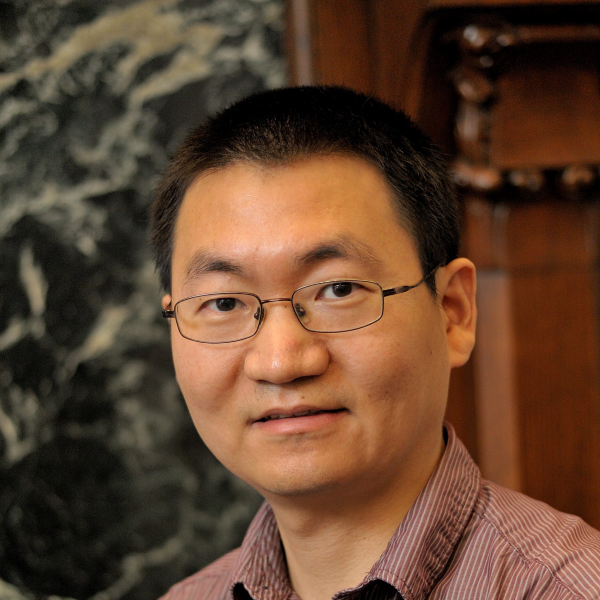
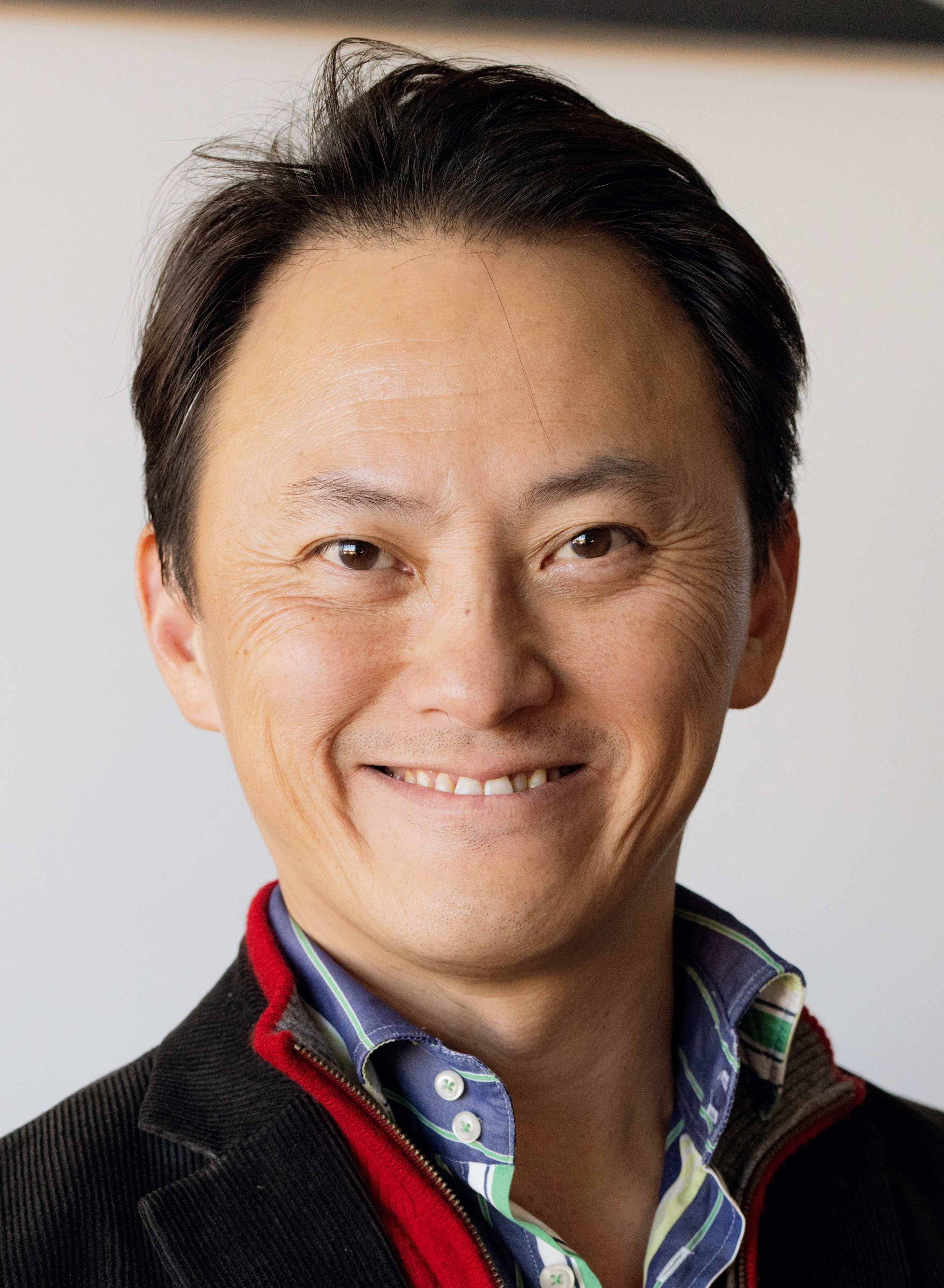
Ronnie Sircar is the Eugene Higgins Professor of Operations Research and Financial Engineering at Princeton University , where he contributes to the Department of Operations Research and Financial Engineering (ORFE). His work spans financial mathematics, stochastic modeling, and applied probability, with a focus on market volatility, optimal investment strategies, and dynamic game theory. Email: sircar@princeton.edu Office: Sherrerd Hall, Room 208, Princeton, NJ 08544 His research interests include: Stochastic Volatility: Asymptotic analysis, calibration, and impact on option pricing and portfolio optimization. Mean Field Games: Applications to cryptocurrency mining, energy markets, and interbank network formation. Portfolio Theory: Forward performance processes, drawdown constraints, and risk-averse strategies. Credit Risk: Multi-name credit derivatives, CDO valuation, and risk measures. Energy Systems: Renewable reliability, unit commitment, and electricity market design. Recent publications emphasize mean field games in energy and blockchain, stochastic volatility in portfolio optimization, and machine learning applications for financial engineering. He has advised graduate students such as Giulia Crippa, Nicolas Garcia, and Burak Aydin, often collaborating with researchers including M. Soner, P. Chan, and A.M. Reppen.
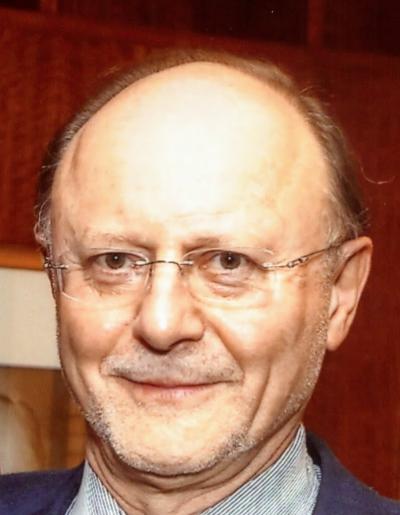
Prof. Dr. Peter Gomber is Chair of e-Finance at the Faculty of Economics and Business, Goethe University of Frankfurt, Germany. He serves as Co-Chairman and member of the Board of the 'efl – the Data Science Institute', an industry-academic partnership between Frankfurt and Darmstadt Universities and leading industry partners. Additionally, he is a member of the Exchange Council of the Frankfurt Stock Exchange, Supervisory Board of Clearstream Banking AG, and Research Fellow at the Leibniz Institute for Financial Research SAFE in Frankfurt. Prof. Gomber received his Ph.D. at the Institute of Information Systems at the University of Giessen in 1999 after graduating in Business Administration. Before joining Goethe University in 2004, he worked for five years as Director, Head of Market Development Cash Markets and Xetra Research at Deutsche Börse AG, where he developed new market models and products for cash market trading on Xetra. His research focuses on market microstructure theory, digital finance and fintech, regulatory impact on financial markets, and electronic trading systems. With over 150 publications in leading international journals, his work has significantly influenced the field, particularly his highly cited papers on the Fintech Revolution. His recent research examines market fragmentation, circuit breakers, research unbundling under MiFID II, and the application of AI in financial markets. Prof. Gomber's extensive publication record shows a clear evolution from traditional market microstructure and electronic trading systems toward digital finance, fintech innovations, and regulatory impact analysis. His work bridges technical aspects of financial markets with regulatory considerations, demonstrating how technological innovations interact with market structure and regulation. His scientific recognition includes: IBM Shared University Research Grant (2007) Reuters Innovation Award (2000) Best Paper Award of the Journal of the Association for Information Systems (2020) Best Information Systems Publications Award (2020) Top 1 and Top 3 most cited articles in Fintech research (2025 bibliometric analysis) Prof. Gomber has successfully supervised numerous PhD students, including Tino Cestonaro who won the Best PhD Paper Award 2025. He has acquired significant research funds from both public institutions and the private sector. Notably, a market model invention by Prof. Gomber was granted a patent by the United States Patent and Trademark Office, with two additional market model inventions filed for patent in Europe and the US. He leads an active research team at the Chair of e-Finance, including researchers like Benjamin Clapham, Micha Bender, and Tino Cestonaro. The team collaborates closely with the efl – the Data Science Institute and the Leibniz Institute for Financial Research SAFE, bridging academic research with practical applications in financial markets.
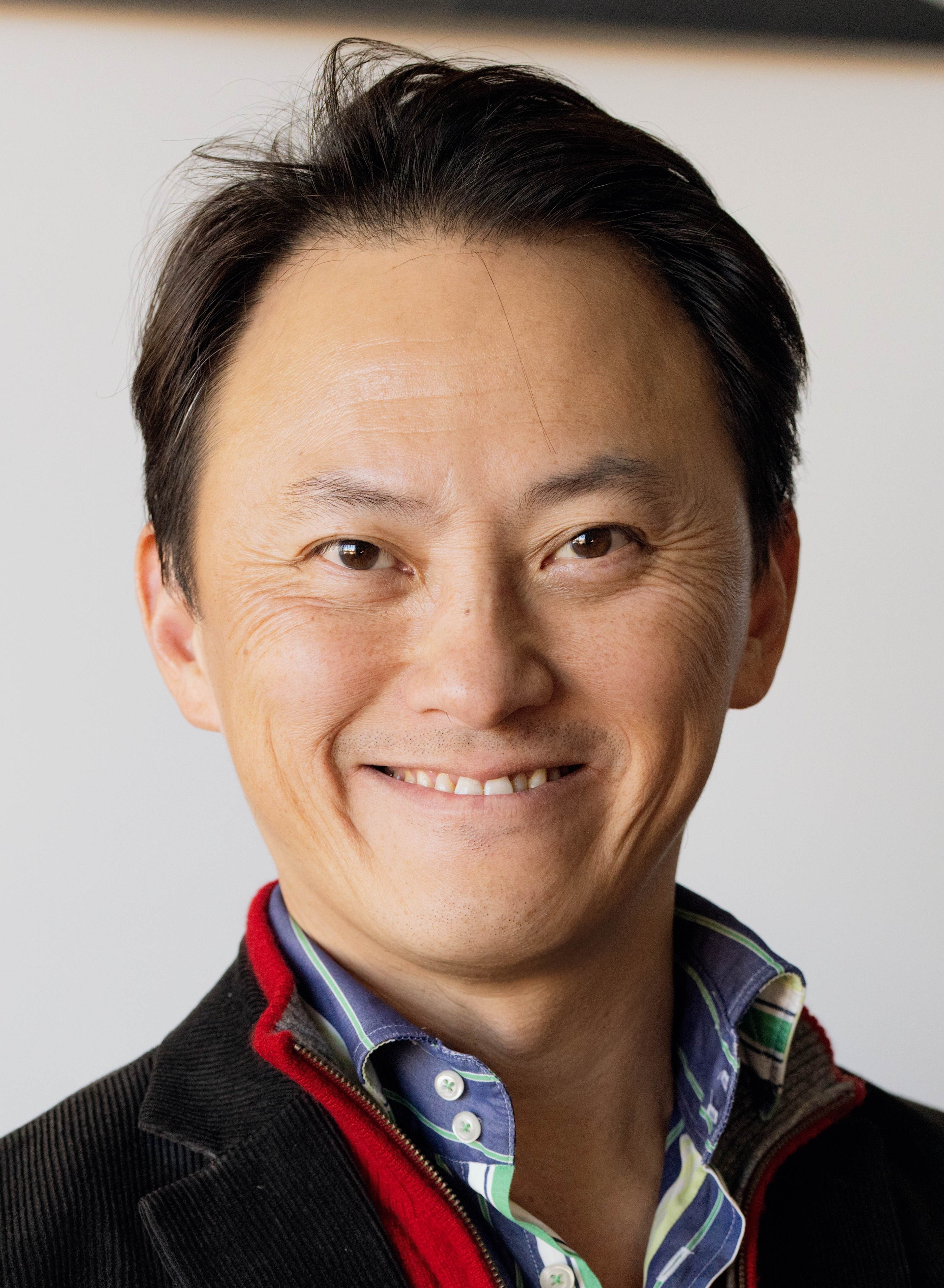
Xiaofeng Shao is a Professor of Statistics & Data Science at Washington University in St. Louis, with a joint appointment in the Department of Economics. He holds a PhD from the University of Chicago and previously served at the University of Illinois at Urbana-Champaign for 18 years. He is a Fellow of the Institute of Mathematical Statistics and the American Statistical Association. His research focuses on econometrics, time series analysis, change-point detection, high-dimensional statistics, nonparametric methods, and functional data analysis. Recent work emphasizes object-valued time series modeling and machine learning applications in high-dimensional and imaging data. Notable contributions include the dependent wild bootstrap method and self-normalization techniques for time series inference. Key awards include Fellowships from leading statistical societies. His publications span over 20 years, addressing topics like change-point detection in climate projections, statistical methods for COVID-19 infection trends, and high-dimensional dependence testing.
W. Brent Lindquist is a Professor in the Department of Mathematics and Statistics at Texas Tech University, affiliated with the TTU Mathematical Finance Program. His contact details include office location in the Mathematics & Statistics building (Room 104), phone (+1 806 834 2348), and email brent.lindquist@ttu.edu. His research spans computational financial mathematics, porous media flow, neuroscience applications, and quantum electrodynamics. Key contributions include dynamic asset pricing with market microstructure integration, pore-scale flow modeling using 3D micro-tomography, automated neuron morphology identification, and QED computations for electron magnetic moments. Recent work emphasizes ESG factor incorporation into financial models. Analysis of 2023–2025 publications reveals a dominant focus on sustainable finance, particularly ESG-integrated option pricing and portfolio optimization. Methodologies include random forests for market microstructure analysis, skew random walks for volatility modeling, and Lévy processes for Bitcoin dynamics. Cross-cutting themes involve hedonic real estate models with ESG factors and unified asset pricing frameworks bridging classical finance theories.
Academic Profile: Damir Filipovic is a Full Professor and the Swissquote Chair in Quantitative Finance at the College of Management of Technology (CDM) of École Polytechnique Fédérale de Lausanne (EPFL), Switzerland. He previously held academic positions at the University of Vienna, University of Munich, and Princeton University, and served as Head of the Vienna Institute of Finance. Research Focus: Quantitative finance, risk management, stochastic processes, term structure modeling, volatility risk, and machine learning applications in financial markets. Industry Collaboration: Co-developed the Swiss Solvency Test for insurance capital requirements while consulting for the Swiss Federal Office of Private Insurance. Publications: Contributed extensively to journals like Journal of Financial Economics, Mathematical Finance, and Annals of Applied Probability, with a textbook on Term-Structure Models. Academic Service: Editorial board member of multiple journals and organizer of advanced workshops on systemic risk and financial technology. Recent Research: His work emphasizes machine learning for portfolio risk management, kernel-based yield curve estimation, and robust stochastic modeling. Keynote speaker at international conferences on finance and insurance mathematics, with over 15 recent publications in 2023-2025 addressing high-dimensional financial problems, neural control systems, and causal inference in market data. Education: Ph.D. in Mathematics from ETH Zurich (2000). Graduate of ETH Zurich and University of Vienna. Teaching & Mentorship: Supervises current and former EPFL Ph.D. students in quantitative finance, including Nicolas Camenzind, Joshua Hayes, Andrea Ruglioni, and ten others. Former students like Damien Ackerer and Lotfi Boudabsa now lead research in risk management. Labs & Programs: Directs EPFL's Finance and Technology Programme, leads the Computational Finance Group (CSF) at EPFL, and contributes to Swiss Finance Institute initiatives. Scientific Leadership: Served on EPFL Committee of Academic Evaluation and Doctoral Program Finance committee.
Joshua Aizenman is the Robert R. and Katheryn A. Dockson Chair in Economics and International Relations, and Professor of Economics and International Relations at the University of Southern California (USC), Dornsife College of Letters, Arts and Sciences. He joined USC in 2013 and holds a Research Associate position at the National Bureau of Economic Research (NBER). His research focuses on applying cost-benefit analysis to international economics, examining policies, institutions, and their impacts on economic performance, particularly in emerging markets. Key areas include commercial policies, crises management, capital controls, exchange rate regimes, and macroeconomic resilience. Previously, he held positions at UC Santa Cruz (Presidential Chair in Economics), Dartmouth (Champion Professor of International Economics), Hebrew University of Jerusalem, University of Chicago GSB, and University of Pennsylvania. He has served as Co-Editor for the Journal of International Money and Finance (2010–2021) and consults with institutions like the IMF, World Bank, and Federal Reserve Bank of San Francisco. His research highlights include analyzing the Mundell-Fleming Trilemma/Quadrilemma, fiscal-monetary policy interactions during crises, and the role of international reserves. Notable awards include the USC Endowed Chair since 2013. Recent work addresses post-pandemic economic challenges, central bank policies during crises, and resilience of emerging markets under global monetary cycles.
Kingsley Fong is an Associate Professor of Finance at the UNSW Business School , specifically within the School of Banking and Finance . He holds a PhD from the University of Sydney and a BCom (Hons) from UNSW. His research focuses on market microstructure , investment , household finance , and sustainable finance , and he co-founded the RISE Finance Lab to explore finance's role in societal well-being. He also developed the DATKIS framework for systemic coherence in financial practices. Research Interests : Market microstructure, household finance, sustainable finance, and empirical finance. Teaching : Courses such as WEALTH MANAGEMENT AND CLIENT ENGAGEMENT , SUSTAINABLE INVESTING , and SUSTAINABLE FINANCE . Key Trends in Research : His work spans liquidity proxies, algorithmic trading impacts, broker-client dynamics, and sustainable finance innovations. Notable collaborations include studies on market quality, tax-driven trading, and household investment behavior. Scientific Awards : 2017 Review of Finance Spängler IQAM Prize 2021 Aspen Institute Ideas Worth Teaching Award 2022 S&P Global Decarbonisation Hackathon Engagement : Co-Founder of UNSW RISE Finance Lab (2025) Australian Sustainable Finance Institute Reference Group (2024) Deputy Head of School Banking and Finance (2011–2019) Contact : k.fong@unsw.edu.au | Location : UNSW Business School, Ref E12, Level 3, Room 344B.
Claus Thustrup Kreiner is a Professor of Economics and Director of the Center for Economic Behavior and Inequality (CEBI) at the University of Copenhagen's Faculty of Social Sciences, Department of Economics. He also serves as Area Director of Public Economics in the CESifo network and was co-editor of the Journal of Public Economics from 2014 to 2020. Kreiner has held various leadership positions including Director of the Economic Policy Research Unit (EPRU) since 2005 and Director of the Center of Excellence WEST from 2011-2013. Education: Ph.D. in Economics, University of Copenhagen, 1998 Visiting Ph.D. student, University of York, 1996 M.Sc. in Economics, University of Copenhagen, 1994 B.Sc. in Economics, University of Copenhagen, 1991 Claus Thustrup Kreiner's research primarily focuses on Public Economics , with secondary specializations in Labor Economics, Household Finance, Applied Microeconometrics, and Experimental Economics. His work examines inequality in income, wealth and health, optimal redistribution policy, and behavioral responses to public policy. Kreiner has conducted significant research using Danish administrative data to analyze tax compliance, labor supply responses, and inequality dynamics. His research often involves collaborations with institutions like Columbia University, London School of Economics, and UC Berkeley. His recent publications reveal a strong focus on inequality across multiple dimensions (income, wealth, health, life expectancy), tax policy design and compliance, labor market responses to policy changes, and the intersection of behavioral economics with public policy. Kreiner frequently employs high-frequency administrative data from Denmark to provide empirical evidence on how individuals and households respond to economic policies and shocks. Scientific Awards and Recognition: Appointed Knight of The Order of Dannebrog by Queen Margrethe II (2018) The Invisible Hand Award from the Society of Social Economics (2006, 2001) Best Teacher Award from the Study Board of Economics at University of Copenhagen (2002) Research Fellow at Centre for Economic Policy Research (CEPR), London (2009-) Kreiner has supervised numerous students primarily in Public Economics and has received multiple research grants including from the Danish Social Science Research Council (2003, 2006, 2009), International Growth Center (2009), and Danish National Research Foundation (1998-2003). He has served on important policy bodies including as co-chair of the Danish Economic Council (2010-2014) and member of the Danish Tax Commission (2008-2009). As Director of CEBI (Center for Economic Behavior and Inequality), Kreiner leads a major research center funded by the Danish National Research Foundation. He also directs the Economic Policy Research Unit (EPRU) and has been instrumental in establishing research collaborations through networks like CESifo. His work bridges academic research and policy application, as evidenced by his practical policy experience with government commissions.
Justin Wan is a Professor in the Department of Computer Science at the University of Waterloo. His research focuses on scientific computing, medical image processing, computational finance, and machine learning. He holds a Ph.D. from UCLA (1998), an M.A. from UCLA (1995), and a B.Sc. from the Chinese University of Hong Kong (1992). Wan’s work bridges numerical methods, optimization, and deep learning, with applications in financial modeling, medical imaging, and fluid dynamics. His research interests include advanced techniques in scientific computing (e.g., multigrid methods), computer graphics simulation, and medical image enhancement (e.g., CT scan artifact reduction). He has pioneered applications of machine learning to computational finance, including option pricing and hedging using deep neural networks and GANs. His recent work explores denoising diffusion models and multi-agent systems for optimal execution in finance. Publications span topics like volatility surface computation, optimal mass transport for image registration, and parallel solvers for fluid dynamics. His methods address challenges in high-dimensional problems, robust numerical valuation, and scalable algorithms for large datasets. Wan collaborates across disciplines, integrating mathematical rigor with practical engineering solutions.
Toomas Laarits is an Assistant Professor of Finance at the Leonard N. Stern School of Business, New York University, where he joined in 2019. His research lies at the intersection of asset pricing, financial intermediation, and monetary policy, with a focus on investor behavior, safe assets, and macroeconomic announcements. Education: PhD in Financial Economics, Yale University, 2019 MPhil in Financial Economics, Yale University, 2017 MA in Financial Economics, Yale University, 2016 AB in Mathematics, Harvard University, 2010 His research investigates puzzles in financial markets, such as the pre-FOMC announcement drift, retail investor behavior, and the role of safe assets in times of crisis. By combining empirical analysis with theoretical modeling, he explores how investors interpret public information, the hedging demand for Treasuries, and the impact of fiscal stimulus on equity markets. His interdisciplinary work also extends into financial history, examining the 1930 downturn and the evolution of financial architecture. The most recent research articles show a strong trend toward understanding decision-making under uncertainty, the role of information in asset pricing, and the behavior of retail investors using novel datasets such as browser activity. His work frequently appears in top finance journals and receives media attention from outlets like the Financial Times, Wall Street Journal, and The Economist. Scientific Awards: No awards mentioned in the text. Professor Laarits has advised or collaborated with researchers such as Marco Sammon and has been involved in multiple high-impact projects with leading scholars including Gary Gorton, Viral Acharya, and Robin Greenwood. While no formal grants are listed, the scope and publication record suggest active funding. He teaches Foundations of Finance at the undergraduate level and contributes to the academic life at NYU Stern through research and mentorship. Labs and Research Teams: No formal lab is mentioned. However, his extensive co-authorship network indicates active participation in collaborative research groups focused on financial economics, macro-finance, and market microstructure.
George Athanasopoulos is Professor and Head of the Department of Econometrics and Business Statistics at Monash University, a position he has held since 2022. He was appointed Professor in 2019 and has established himself as an internationally recognized expert in forecasting, time series analysis, and applied econometrics. He serves as Past President (since 2024) and former Director (2014-2024) of the International Institute of Forecasters, and is Associate Editor of the International Journal of Forecasting since 2014. His research focuses on hierarchical and grouped time series forecasting, where he has pioneered methods for forecast reconciliation and cross-temporal coherence. His work has significantly influenced forecasting practices across diverse fields including national statistics offices, energy markets, and public health. He is particularly renowned for his contributions to tourism forecasting and macroeconomic modeling in big data environments. Awarded the Australian Awards for University Teaching in 2022 for outstanding contributions to student learning, Professor Athanasopoulos has also received multiple Dean's Awards from Monash Business School for research excellence, teaching innovation, and publication quality. His research output includes over 49 publications and leadership of six major research projects, including the ARC-funded 'Macroeconomic forecasting in a Big Data world' and the RACE for 2030 CRC project on clean energy forecasting. His work contributes to UN Sustainable Development Goals through applications in economic forecasting, energy modeling, and sustainable tourism development. He has supervised numerous research students and collaborated extensively with institutions including Australian National University, Griffith University, and international partners across multiple continents.
Prof. Dr. Peter Gomber is a Professor of e-Finance at the Faculty of Economics and Business Administration , Goethe University Frankfurt, since 2004. He co-chairs the Data Science Institute (efl) and holds adjunct professorships at the University of Bamberg (2004), Mannheim (2009), and Luxembourg (2018). His roles include board memberships at the Frankfurt Stock Exchange, Clearstream Banking AG, and advisory positions for European regulatory bodies. Education : Diplom-Kaufmann in Economics, University of Gießen (1999), PhD in Business Informatics. Research Interests focus on market microstructure , FinTech , electronic trading , and regulatory impacts on financial markets. His work explores algorithmic trading , liquidity dynamics , and AI-driven compliance . Publication Trends (15 most recent) emphasize digital finance , market fragmentation , regulatory analysis , and AI applications in trading and compliance. Key subfields include blockchain , high-frequency trading , and news-driven liquidity shocks . Scientific Awards : Reuters Innovation Award (2000) Hochschulpreis des Deutschen Aktieninstituts (1999) IBM SUR Grant (2007) Best Paper Awards (multiple conferences) Best Information Systems Publications Award (2020) Advising & Grants : Teaches in executive programs (Goethe Business School, Amsterdam Institute of Finance). Secured grants from public/private institutions, including a U.S. patent for market model innovation. Labs & Teams : Leads the e-Finance professorship and contributes to the Data Science Institute (efl) , fostering industry-academia collaborations with Deutsche Börse, Capveriant, and others.
Kingsley Yuen Lung Fong is an Associate Professor of Finance at the UNSW Business School, specializing in Banking and Finance. He has published extensively in leading international finance journals and co-founded the RISE Finance Lab to explore how finance can better foster well-being, relational trust, and long-term stewardship. Institution: University of New South Wales School: UNSW Business School Department: Banking and Finance His academic work is guided by the principle that finance is an evolving design for organizing life and activity across individuals and society. Fong's research expertise spans market microstructure, investment, household finance, and sustainable finance. He has made significant contributions to understanding the connections between finance, society, and nature for a flourishing future. The analysis of his 15 most recent publications reveals a strong focus on market microstructure, trading behavior, and sustainable finance. His work examines algorithmic trading impacts, liquidity measurement, household investment decisions, and regulatory aspects of financial advice. Fong's research demonstrates consistent interest in how financial systems can be designed to better serve societal needs while maintaining market efficiency. 2017 Review of Finance Spängler IQAM Prize 2021 Aspen Institute Ideas Worth Teaching Award 2022 S&P Global Decarbonisation Hackathon As an educator, Fong teaches Wealth Management and Client Engagement, Sustainable Investing, and Sustainable Finance. His leadership roles include serving as Deputy Head of School for Banking and Finance (2011-2019), Co-Founder of UNSW RISE Finance Lab (2025), and member of the Australian Sustainable Finance Institute Sustainable Finance Capability Reference Group (2024). Beyond traditional finance, he created DATKIS, an intellectual framework that grounds common sense and intelligence in truth, awareness, and design.
Professor Moncef Gabbouj is a distinguished academic and researcher currently serving as Professor of Signal Processing at the Department of Computing Sciences, Faculty of Information Technology and Communication Sciences, Tampere University, Finland. Previously, he held the same position at Tampere University of Technology before the merger in 2019. He has also held visiting professorships at prestigious institutions including Hong Kong University of Technology and Science, University of Southern California, and Purdue University. Ph.D. and MSc. in Electrical Engineering from Purdue University, USA (1989 and 1986) B.Sc. in Electrical Engineering from Oklahoma State University, USA (1985) Prof. Gabbouj's research spans multiple domains within signal and image processing, with a strong focus on machine learning applications. His primary research interests include artificial intelligence, machine learning, Big Data analytics, multimedia content-based analysis, indexing and retrieval, nonlinear signal and image processing, voice conversion, and video processing and coding. His work bridges theoretical advancements with practical applications across various industries, particularly in multimedia communications and biomedical applications. His extensive publication record demonstrates a clear evolution from traditional signal processing techniques toward more sophisticated machine learning and deep learning approaches. Recent work shows increasing focus on convolutional neural networks for various applications including ECG classification, video processing, financial time-series analysis, and image recognition tasks, reflecting the broader trend in the field toward deep learning methodologies while maintaining strong foundations in signal processing theory. IEEE Fellow (2011) Member, Finnish Academy of Science and Letters (2014) Knight, First Class, of the Order of the White Rose of Finland (2006) Nokia Foundation Recognition Award (2005) Nokia Foundation Visiting Professor Award (2012) Finnish Cultural Foundation for Art and Science Award (2017) TUT Foundation Grand Award (2015) Prof. Gabbouj has supervised 64 doctoral and 72 Master's theses, demonstrating his significant contribution to academic mentoring. His research has been supported by substantial funding, including research grants totaling 8.5 million Euro (2001-2015). He has served as Academy of Finland Professor during 2011-2015 and has been involved in numerous EU research projects including Horizon, ESPRIT, HCM, IST, COST, Tempus and Erasmus programs. As Editor, Guest Editor or member of the Editorial Board of 6 international scientific journals, he has significantly influenced the academic discourse in his field. He leads the Signal Analysis and Machine Intelligence (SAMI) research group at Tampere University and serves as the Finland Site Director of the NSF IUCRC funded Center for Visual and Decision Informatics. His research unit focuses on applying advanced machine learning techniques to solve complex problems in signal processing, computer vision, and multimedia analytics, with applications ranging from healthcare to multimedia communications and financial analysis.
Prof. Rama Cont is a Statutory Professor of Mathematics at the University of Oxford and a Professorial Fellow at St Hugh's College . He serves as Director of the Centre for Doctoral Training in Mathematics of Random Systems , Faculty Member of the Stochastic Analysis Group , and Senior Research Fellow at the Institute for New Economic Thinking . Additional roles include Director of the Oxford Martin Programme on Systemic Resilience , Principal Investigator at the Oxford Suzhou Centre for Advanced Research , and Editor-in-Chief of Mathematical Finance . His research interests span pathwise methods in stochastic analysis, rough analysis, functional Ito calculus, mathematical modeling in finance, systemic risk, and data-driven decision systems. Recent publications focus on causal transport, rough volatility, and deep residual networks, reflecting his interdisciplinary approach to mathematics and finance. Functional Ito calculus and pathwise integration Rough volatility and financial market dynamics Systemic risk in financial networks Deep learning applications to finance and stochastic processes He has received prestigious awards including the Louis Bachelier Prize , SIAM Fellowship, Royal Society APEX Award, and IMA Fellowship. His editorial roles and seminar leadership underscore his influence in mathematical finance and stochastic analysis.